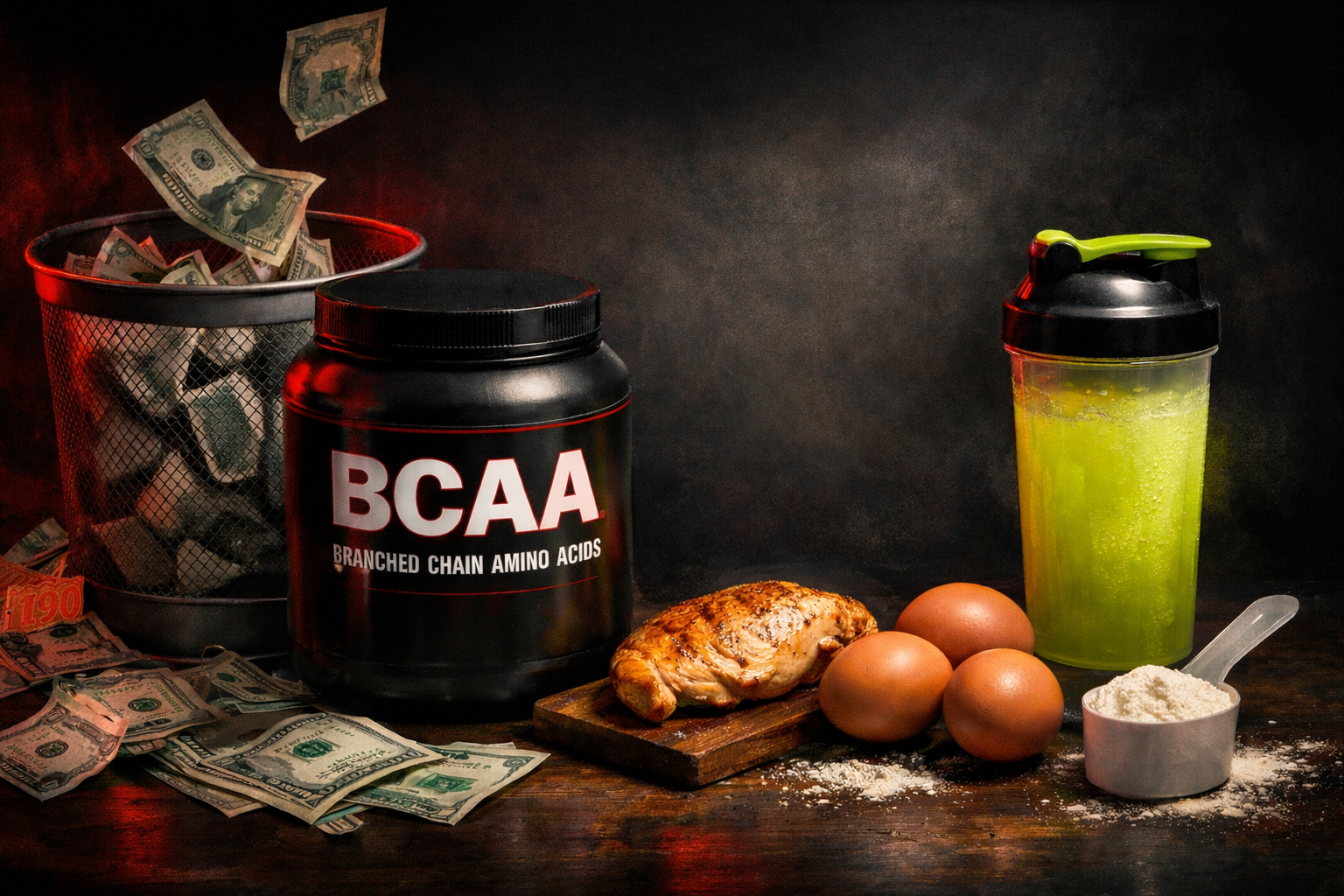
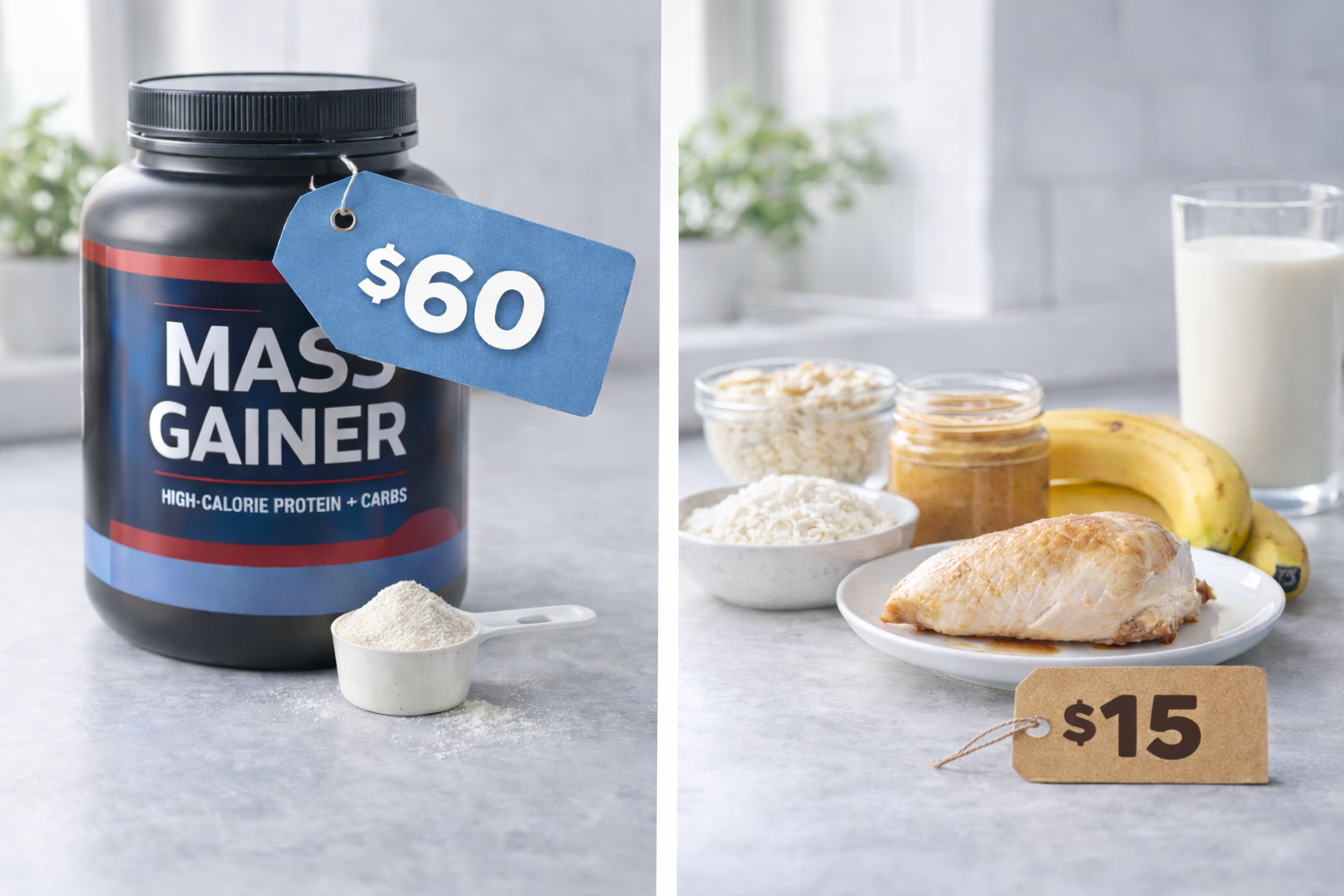
Spending $30-50 monthly on BCAAs? Here’s the uncomfortable truth about whether this popular supplement actually works or if you’re wasting your money.
Walk into any gym and you’ll see them everywhere.
Brightly colored shaker bottles. Fluorescent liquids. People sipping BCAAs before, during, and after training.
The supplement industry has convinced millions that BCAAs (branched-chain amino acids) are essential for:
- Building muscle faster
- Preventing muscle breakdown during training
- Recovering quicker between workouts
- Reducing soreness
- Training harder and longer
Annual BCAA sales exceed $250 million globally. That’s a lot of money spent on three amino acids.
But here’s the question nobody wants to ask: Do BCAAs actually work, or is this just brilliant marketing?
After examining hundreds of studies and the latest research, I’m going to give you the uncomfortable truth: For most people eating adequate protein, BCAAs are a waste of money. The science doesn’t support the marketing claims, and you’re likely getting zero additional benefit.
In this comprehensive guide, I’ll explain exactly what BCAAs are, break down the most common myths with scientific evidence, reveal the few specific situations where they might help, show you what actually works instead, and help you decide if BCAAs deserve a place in your supplement stack.
This isn’t what supplement companies want you to hear. But it’s what you need to know.
Let’s separate marketing hype from scientific reality.
TABLE OF CONTENTS
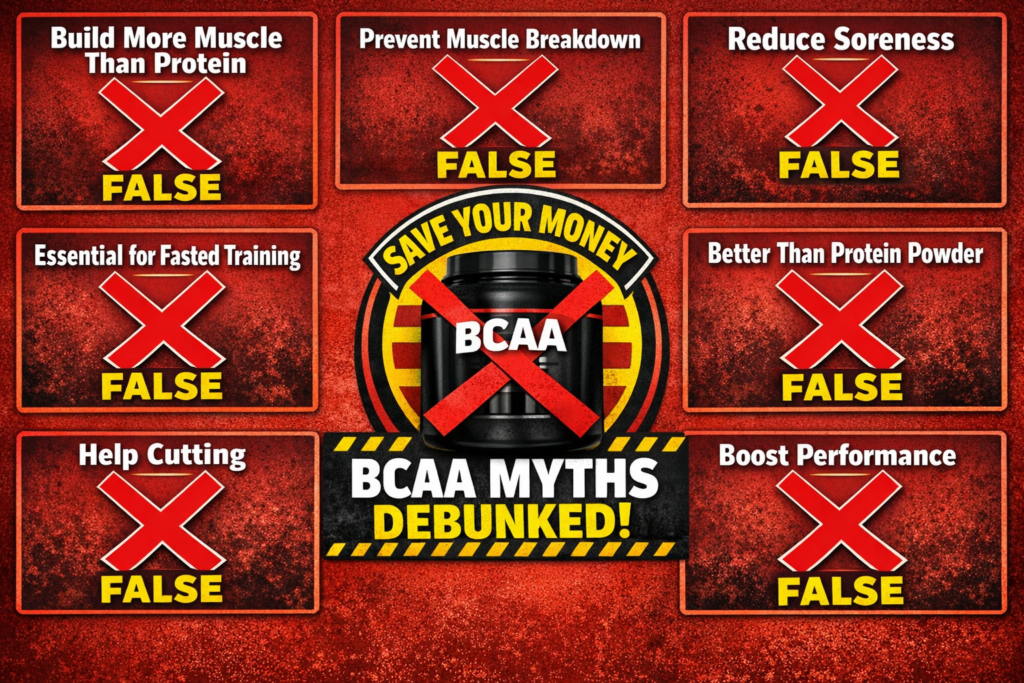
- Myth 1: BCAAs Build More Muscle Than Whole Protein
- Myth 2: BCAAs Prevent Muscle Breakdown During Training
- Myth 3: BCAAs Reduce Muscle Soreness
- Myth 4: You Need BCAAs During Fasted Training
- Myth 5: BCAAs Help You Build Muscle While Cutting
- Myth 6: BCAAs Are Better Than Protein Powder
- Myth 7: BCAAs Boost Performance and Endurance
- The Bottom Line: Save Your Money
What Are BCAAs?
Before we can evaluate the claims, you need to understand what you’re actually buying.
The Basic Science
BCAA stands for Branched-Chain Amino Acids.
The three BCAAs are:
- Leucine
- Isoleucine
- Valine
What makes them “branched-chain”? Their molecular structure has a branched side chain (hence the name). This is chemistry, not magic.
Why They’re Considered “Essential”
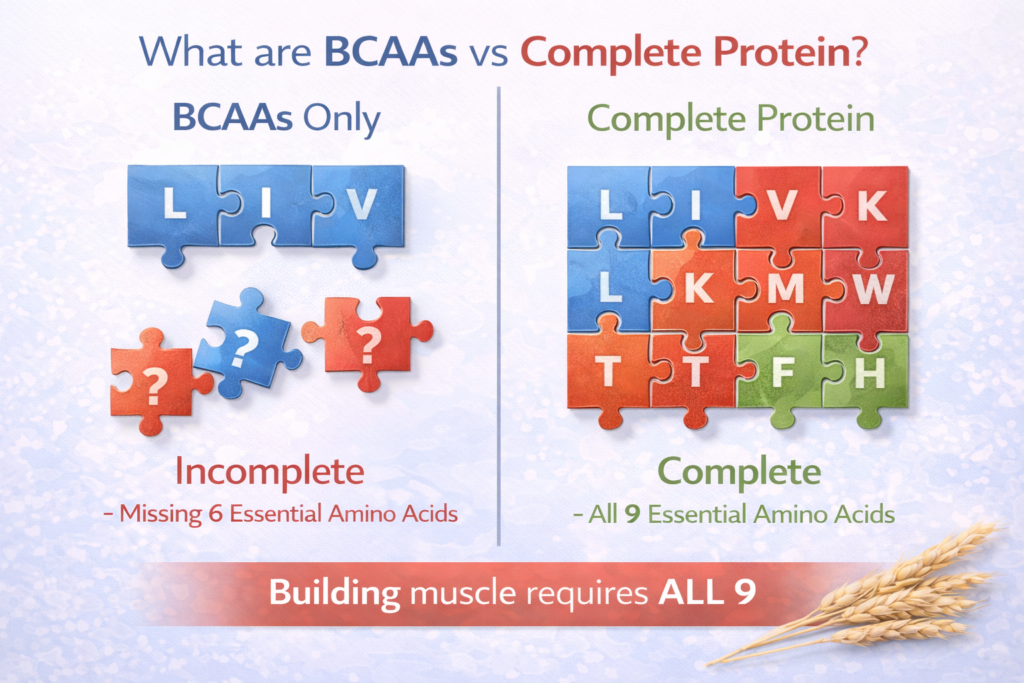
BCAAs are three of the nine essential amino acids.
“Essential” means: Your body cannot produce them. You must obtain them from food or supplements.
All nine essential amino acids:
- Leucine (BCAA)
- Isoleucine (BCAA)
- Valine (BCAA)
- Lysine
- Methionine
- Phenylalanine
- Threonine
- Tryptophan
- Histidine
BCAAs represent 3 of the 9 essential amino acids your body needs.
BCAAs and Muscle Protein Synthesis
Here’s why supplement companies emphasize BCAAs:
Leucine specifically is the most anabolic (muscle-building) amino acid. It activates mTOR (mechanistic target of rapamycin), a key pathway that signals your body to build muscle protein.
The marketing logic:
- Leucine triggers muscle growth
- BCAAs contain leucine
- Therefore, BCAA supplements build muscle
Sounds reasonable, right?
The problem: This logic ignores basic nutritional science and how protein actually works in your body.
The Biggest BCAA Myths (Completely Debunked)
Let’s examine the most common claims and what the science actually shows.
Myth 1: BCAAs Build More Muscle Than Whole Protein
The claim: “BCAAs are the most anabolic amino acids. Supplementing with BCAAs builds more muscle than consuming whole protein sources.”
The truth: This is completely backwards.
What the research shows:
BCAAs alone are LESS effective than complete protein for stimulating muscle protein synthesis.
Why? Building muscle requires all nine essential amino acids, not just three.
The analogy: Imagine building a house. You need wood, nails, concrete, wiring, plumbing, etc. BCAAs provide only wood and nails. You can’t build a complete house with just those materials, no matter how much wood and nails you have.
Similarly, you can’t build muscle with just BCAAs. You need all the essential amino acids.
The landmark study:
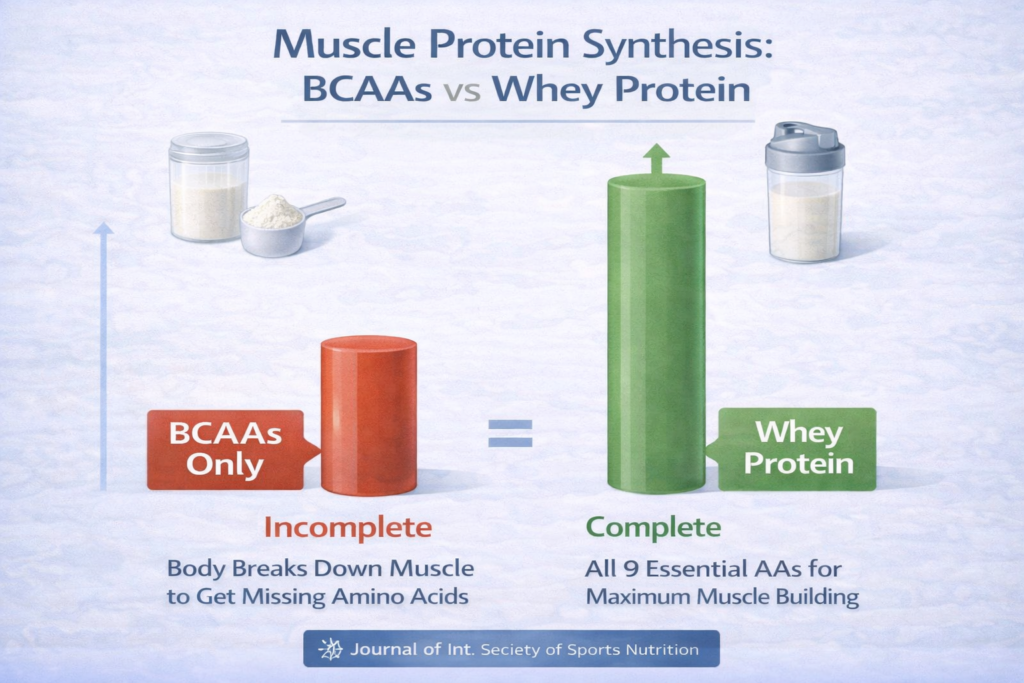
Research published in the Journal of the International Society of Sports Nutrition compared muscle protein synthesis between:
- BCAAs alone
- Whey protein (complete protein with all amino acids)
Results: Whey protein increased muscle protein synthesis significantly more than BCAAs alone.
Why this happens:
When you consume only BCAAs, your body must break down existing muscle tissue to obtain the other six essential amino acids needed to build new protein.
You’re actually cannibalizing muscle to build muscle. This is counterproductive.
Complete protein sources provide all nine essential amino acids in one package, allowing your body to build muscle without breaking down existing tissue.
The verdict: BCAAs alone are inferior to any complete protein source (whey, casein, meat, eggs, etc.).
Myth 2: BCAAs Prevent Muscle Breakdown During Training
The claim: “Taking BCAAs during training prevents muscle catabolism (breakdown) and preserves muscle mass.”
The truth: If you’ve eaten protein within the past several hours, BCAAs provide no additional anti-catabolic benefit.
What the research shows:
Muscle protein breakdown during training is normal and necessary for adaptation and growth. You don’t need to prevent it.
More importantly: If you’ve consumed protein 2-4 hours before training, amino acids are already circulating in your bloodstream throughout your workout.
Study evidence:
A comprehensive review in the Journal of the International Society of Sports Nutrition examined whether BCAAs prevent exercise-induced muscle damage.
Conclusion: “The evidence does not support the efficacy of BCAA supplementation for reducing muscle damage or accelerating recovery.”
Why the myth persists:
Supplement companies cite older studies done on fasted subjects (people who hadn’t eaten for 8+ hours). In truly fasted states, BCAAs might provide some benefit.
But who trains completely fasted? Even if you train first thing in the morning, you ate dinner the night before. Amino acids from that meal are still available.
The verdict: If you eat adequate protein daily, BCAAs provide zero additional muscle-preserving benefit during training.
Myth 3: BCAAs Reduce Muscle Soreness
The claim: “BCAAs reduce delayed onset muscle soreness (DOMS) and help you recover faster between workouts.”
The truth: The evidence is extremely weak and inconsistent.
What the research shows:
Some studies show minor reductions in soreness. Other studies show no effect at all.
The largest meta-analysis on BCAAs and muscle soreness:
Researchers analyzed all available studies on BCAAs and DOMS.
Conclusion: “The current body of evidence does not support a beneficial role for BCAA supplementation in reducing exercise-induced muscle soreness.”
Even in studies showing small benefits:
- The effect size was minimal (reducing soreness by maybe 10-15%)
- Benefits were inconsistent across different training protocols
- Other interventions (sleep, proper nutrition, active recovery) were far more effective
What actually reduces soreness:
- Adequate total protein intake (0.7-1g per pound body weight)
- Sufficient sleep (7-9 hours)
- Progressive overload (not shocking your muscles with random workouts)
- Adequate hydration
- Strategic deload weeks
- Active recovery (light movement)
BCAAs are not on this list for a reason.
The verdict: BCAAs provide minimal to no benefit for reducing muscle soreness. Save your money.
Myth 4: You Need BCAAs During Fasted Training
The claim: “If you train fasted (no food before workouts), BCAAs prevent muscle loss and support performance.”
The truth: This is the ONE scenario where BCAAs might provide some benefit, but even here, the evidence is mixed.
What the research shows:
In truly fasted states (8+ hours without food), BCAAs may:
- Reduce muscle protein breakdown slightly
- Provide minimal performance support
- Offer some psychological benefit (feeling like you’re “protecting” muscle)
However, even fasted training research shows:
Complete protein sources work better than BCAAs even when fasted. If you’re going to consume something before fasted training, whey protein or EAAs (essential amino acids) are superior choices.
The practical reality:
Most people don’t train in truly fasted states. Even “fasted morning training” occurs 8-12 hours after your last meal. Amino acids from that meal are still circulating.
Better strategies for fasted training:
- Consume 20-30g whey protein 30 minutes before training
- Use EAAs instead of BCAAs (provides all nine essential amino acids)
- Just eat a small meal 1-2 hours before training (breaks the fast but optimizes performance)
The verdict: Even for fasted training, BCAAs are not optimal. Complete protein sources or EAAs are superior.
Myth 5: BCAAs Help You Build Muscle While Cutting
The claim: “When dieting in a caloric deficit, BCAAs prevent muscle loss and maintain muscle mass better than protein alone.”
The truth: If you’re consuming adequate total protein, BCAAs provide zero additional muscle-preserving benefit during fat loss.
What the research shows:
The key to preserving muscle during a cut:
- High protein intake (1.0-1.2g per pound body weight)
- Progressive resistance training
- Moderate caloric deficit (not extreme)
- Adequate sleep
BCAAs are NOT a key factor.
Studies comparing muscle retention during cuts:
Research examining muscle preservation during caloric deficits consistently shows:
- High total protein intake prevents muscle loss
- BCAAs supplementation provides no additional benefit when protein is adequate
The mechanism:
When total protein intake is sufficient, you’re already getting plenty of BCAAs from your food. Additional supplementation offers no advantage.
The verdict: During a cut, prioritize total protein intake. BCAAs are irrelevant if you’re eating enough protein.
Myth 6: BCAAs Are Better Than Protein Powder
The claim: “BCAAs are absorbed faster and utilized more efficiently than protein powder, making them superior for muscle building.”
The truth: This is nutritionally backwards and scientifically false.
What the research shows:
Whey protein is superior to BCAAs for:
- Muscle protein synthesis
- Recovery
- Muscle preservation
- Satiety
- Overall nutrition
Why whey wins:
Whey contains:
- All nine essential amino acids (not just three)
- High leucine content (similar to BCAAs)
- Additional beneficial compounds (immunoglobulins, lactoferrin, etc.)
- Actual calories and nutrition
BCAAs contain:
- Just three amino acids
- Missing six essential amino acids your body needs
- Often zero calories (means less muscle-building substrate)
The absorption argument is meaningless:
Yes, BCAAs are absorbed quickly. But absorption speed doesn’t matter if you don’t have all the building blocks needed for muscle growth.
It’s like rushing to a construction site with only wood and nails but no concrete, wiring, or plumbing. Fast delivery doesn’t help if you’re missing essential materials.
The verdict: Whey protein (or any complete protein) is vastly superior to BCAAs for any muscle-building goal.
Myth 7: BCAAs Boost Performance and Endurance
The claim: “BCAAs improve workout performance, increase endurance, and help you train harder and longer.”
The truth: The evidence is weak and inconsistent.
What the research shows:
Some studies show minor performance benefits. Most show no effect at all.
The proposed mechanism:
Supplement companies claim BCAAs reduce central nervous system fatigue by competing with tryptophan (an amino acid that creates serotonin, which causes tiredness) for entry into the brain.
The problem with this theory:
In real-world conditions with normal eating, this mechanism provides negligible benefit.
What actually improves performance:
- Adequate carbohydrate intake (fuels high-intensity exercise)
- Caffeine (proven ergogenic aid)
- Creatine (proven strength and power enhancer)
- Proper hydration
- Adequate sleep and recovery
- Progressive training program
BCAAs don’t make this list.
The verdict: If you want better performance, focus on proven ergogenic aids (caffeine, creatine, carbs). BCAAs are not performance enhancers for properly fed athletes.
When BCAAs MIGHT Be Useful (The Rare Exceptions)
To be fair, there are a few specific scenarios where BCAAs might provide some value.
Scenario 1: You’re Vegan/Vegetarian With Low Protein Intake
If you struggle to eat adequate protein from plant sources, BCAAs might help fill the gap.
However:
Better solutions exist:
- Increase whole food protein (legumes, tofu, tempeh, seitan)
- Use plant-based protein powder (pea, rice, hemp, blends)
- These provide complete amino acid profiles, not just three
BCAAs might help in this scenario, but they’re still not optimal.
Scenario 2: You Train Completely Fasted and Refuse to Consume Protein
If you:
- Train first thing in the morning
- Refuse to consume any food or protein before training
- Can’t stomach anything but flavored water
BCAAs might provide minimal muscle-preserving benefit compared to training with nothing.
However:
Better options still exist:
- 10-20g EAAs (essential amino acids) provide superior benefit
- Small whey protein shake (20g) provides complete nutrition
- Even 10g protein is better than 5g BCAAs
BCAAs are not the best choice even here, just better than nothing.
Scenario 3: You’re An Elite Endurance Athlete With Extreme Training Volume
If you:
- Train 2-3+ hours daily at high intensity
- Compete in ultra-endurance events
- Need every marginal gain possible
- Have unlimited budget
BCAAs during very long training sessions might provide minor benefits for reducing central fatigue.
However:
The effect is minimal, and most elite athletes prioritize:
- Carbohydrates for fuel
- Electrolytes for hydration
- Complete protein sources for recovery
BCAAs are not a priority even for elite endurance athletes.
Scenario 4: You Have Digestive Issues With Whole Protein
If you:
- Experience severe digestive distress from whey, casein, or other proteins
- Have tried all protein sources and none work
- Can’t consume whole food protein before/after training
BCAAs might provide some amino acids without digestive issues.
However:
First, try:
- Different protein sources (whey isolate, egg white, plant-based)
- Digestive enzymes with protein
- Smaller protein doses more frequently
- Hydrolyzed protein (pre-digested)
BCAAs should be a last resort, not first choice.
What Actually Works Instead of BCAAs
Stop wasting money on BCAAs. Here’s what actually supports muscle growth and recovery.
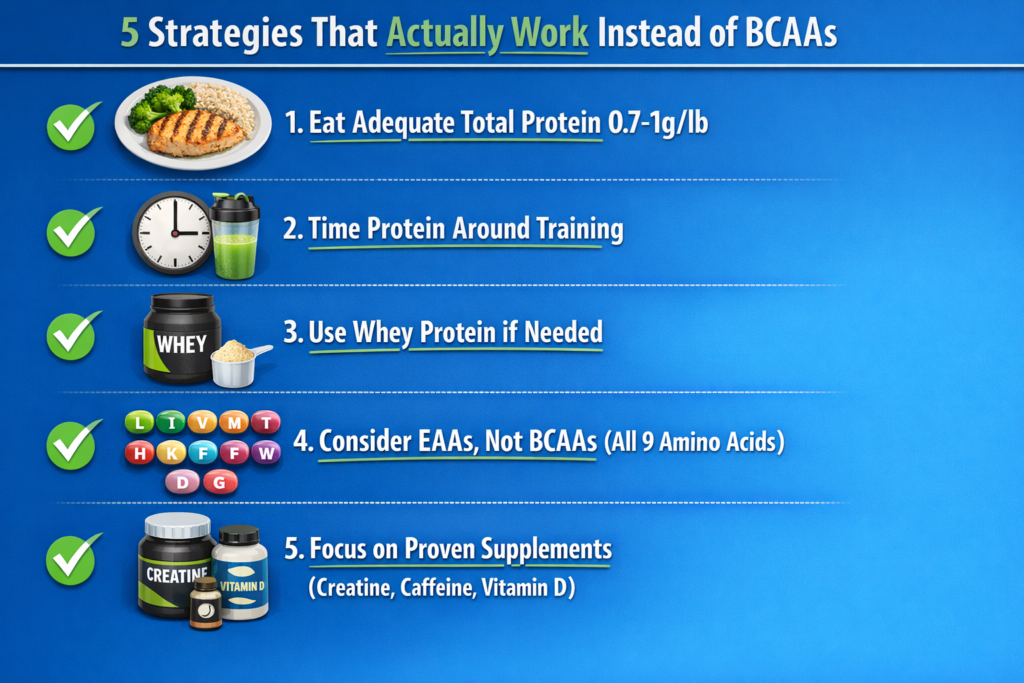
Strategy 1: Eat Adequate Total Protein
This is the foundation. Nothing else matters if this isn’t in place.
Target protein intake:
- Muscle building: 0.7-1.0g per pound body weight
- Fat loss (muscle preservation): 1.0-1.2g per pound body weight
- Maintenance: 0.6-0.8g per pound body weight
Quality protein sources:
- Chicken breast
- Lean beef
- Fish (salmon, tuna, tilapia)
- Eggs
- Greek yogurt
- Cottage cheese
- Whey protein
- Casein protein
- Plant-based protein powder (for vegans)
This provides all the BCAAs you need plus the other six essential amino acids required for muscle building.
You don’t need BCAA supplements if you eat adequate protein.
Strategy 2: Time Your Protein Intake Around Training
Spread protein throughout the day with emphasis around training.
Optimal protein timing:
Pre-workout (1-2 hours before):
- 20-40g protein
- Provides amino acids during training
- Supports performance and recovery
Post-workout (within 2 hours after):
- 20-40g protein
- Maximizes muscle protein synthesis
- Supports recovery
Other meals:
- 20-40g protein per meal
- 3-5 meals daily
- Keeps amino acids constantly available
This approach provides far more benefit than sipping BCAAs during training.
Strategy 3: Use Whey Protein (If You Need Supplementation)
If you can’t get enough protein from whole foods, whey protein is vastly superior to BCAAs.
Why whey wins:
- Complete amino acid profile (all nine essential amino acids)
- High leucine content (just like BCAAs)
- Additional beneficial compounds
- More cost-effective per gram of protein
- Actually builds muscle effectively
Whey protein dosage:
- 20-40g per serving
- 1-3 servings daily as needed
- Mix with water, milk, or in smoothies
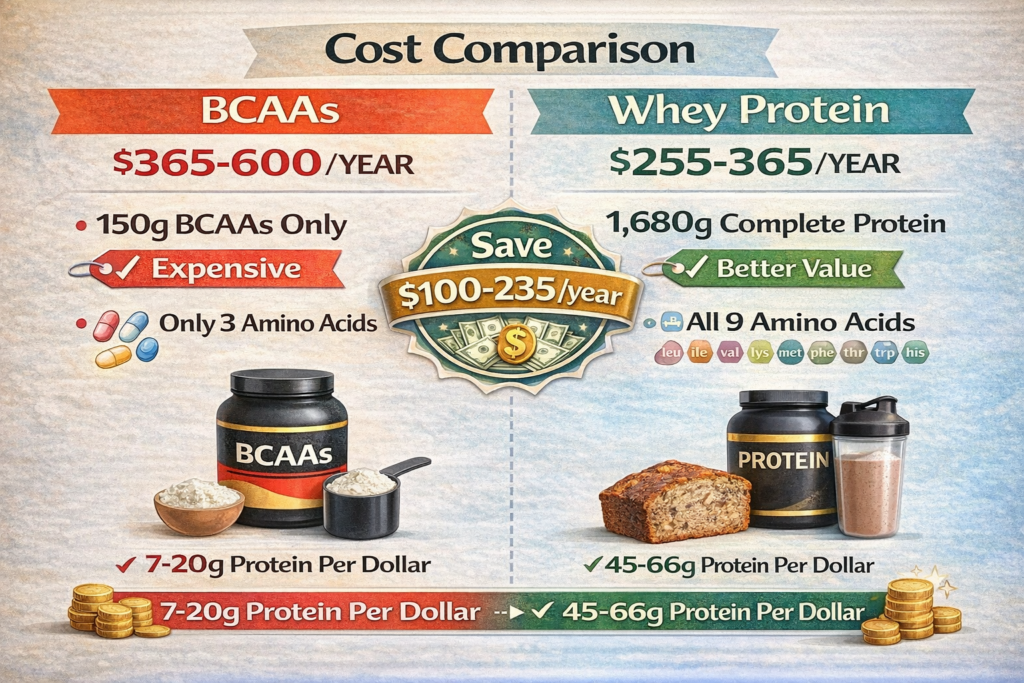
A 5lb tub of quality whey protein ($50-70) provides:
- Approximately 70 servings
- 1,680g total protein
- All essential amino acids
- Cost: $0.70-1.00 per serving
A 30-serving container of BCAAs ($30-50) provides:
- 30 servings
- 150-180g BCAAs (not complete protein)
- Only three amino acids
- Cost: $1.00-1.65 per serving
Whey provides more actual protein for less money and superior muscle-building benefits.
Strategy 4: Consider EAAs Instead (If You Insist on Intra-Workout Amino Acids)
If you’re convinced you need amino acids during training, use EAAs (essential amino acids), not BCAAs.
EAAs provide:
- All nine essential amino acids (not just three)
- Everything needed for muscle protein synthesis
- Superior muscle-building potential
- Usually similar price to BCAAs
EAA dosage:
- 10-15g during training
- Provides complete amino acid profile
- Actually supports muscle building
EAAs are what BCAAs should have been.
Strategy 5: Focus on Proven Supplements That Actually Work
Instead of wasting money on BCAAs, invest in supplements with strong scientific support.
Supplements worth your money:
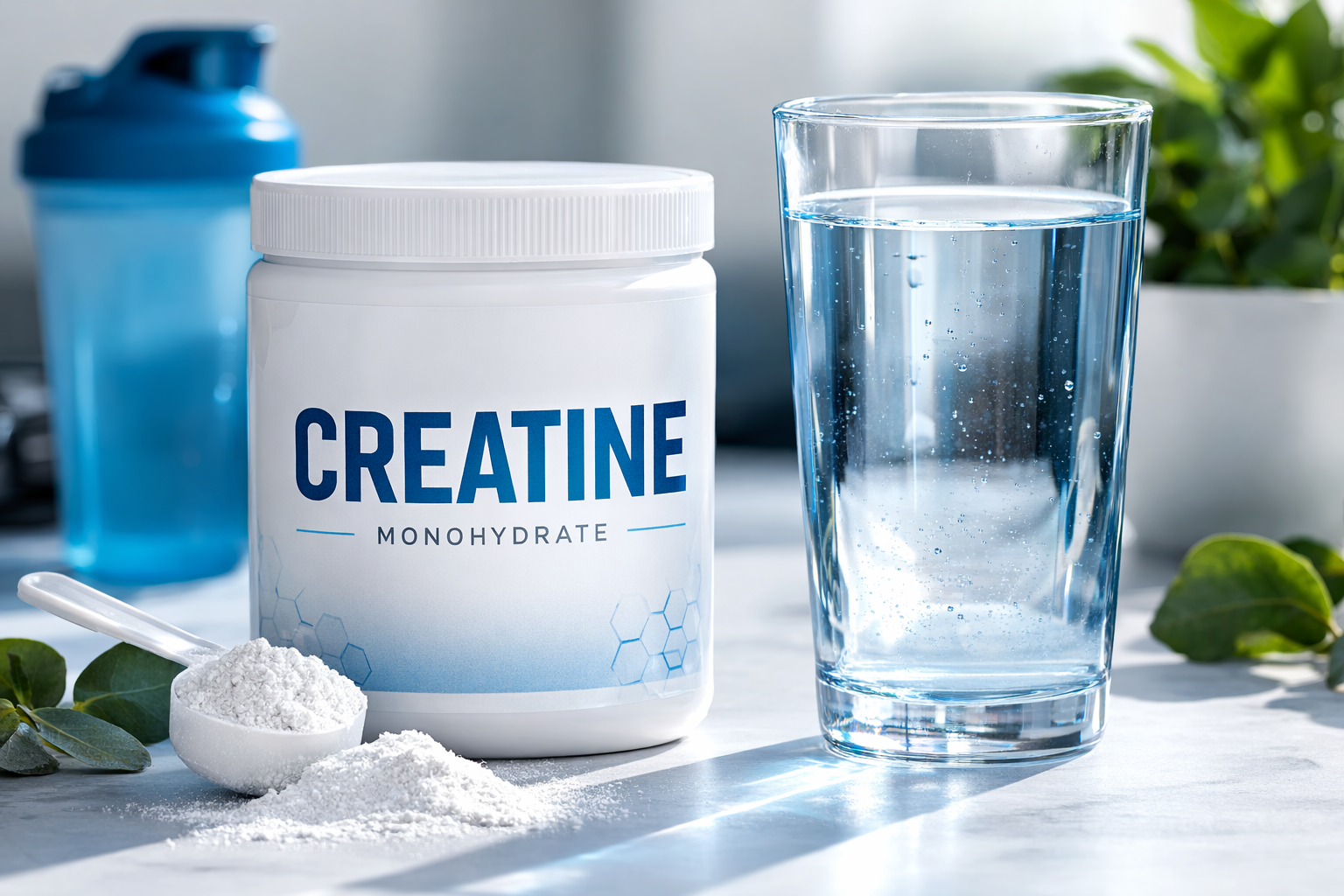
Creatine monohydrate:
- Increases strength 5-15%
- Enhances muscle growth
- Improves recovery
- Extensively researched
- Very affordable
- Dosage: 3-5g daily
Whey protein:
- Complete protein source
- Convenient and effective
- Supports muscle growth and recovery
- Dosage: As needed to hit protein targets
Caffeine:
- Proven performance enhancer
- Increases strength and endurance
- Improves focus and energy
- Very affordable
- Dosage: 3-6mg per kg body weight (200-400mg for most people)
Vitamin D:
- Many people are deficient
- Supports testosterone production
- Enhances immune function
- Improves bone health
- Dosage: 2,000-5,000 IU daily (get blood tested)
Fish oil (Omega-3):
- Reduces inflammation
- Supports heart health
- May enhance muscle protein synthesis
- Improves joint health
- Dosage: 1-3g EPA+DHA daily
These supplements actually work and have decades of research supporting their use.
BCAAs don’t make this list for a reason.
The BCAA Industry’s Marketing Tactics
Understanding how supplement companies sell BCAAs helps you avoid falling for the hype.
Tactic 1: Cherry-Picking Studies
What they do:
Cite studies done on fasted subjects or people with inadequate protein intake, then claim the results apply to everyone.
The reality:
Most people eat adequate protein and don’t train truly fasted. Those study results don’t apply to typical gym-goers.
Tactic 2: Confusing Correlation With Causation
What they claim:
“Leucine activates mTOR, which builds muscle. Our BCAAs contain leucine. Therefore, our BCAAs build muscle.”
The reality:
Leucine from complete protein sources activates mTOR just as effectively (actually more effectively) than isolated BCAAs.
Tactic 3: Using Impressive-Sounding Ratios
What they advertise:
“Our BCAAs use the scientifically-proven 2:1:1 ratio!” (or 4:1:1, or 8:1:1, or whatever ratio is trendy)
The reality:
The ratio doesn’t matter if you’re missing the other six essential amino acids. It’s like advertising the “perfect ratio” of wood to nails while ignoring that you need concrete and wiring to build a house.
Tactic 4: Sponsored Athlete Endorsements
What they show:
Massive bodybuilders drinking BCAAs, implying the supplements built their physique.
The reality:
Those athletes built their physiques through:
- Years of consistent training
- Meticulous nutrition (including adequate complete protein)
- Often pharmaceutical assistance (steroids, growth hormone)
- Elite genetics
- Professional coaching
The BCAAs they’re holding for the photo shoot had nothing to do with their development.
Tactic 5: Creating Fear of Muscle Loss
What they claim:
“Without BCAAs, your body breaks down muscle during training! Protect your gains!”
The reality:
Normal muscle protein breakdown during training is necessary for adaptation. If you eat adequate protein daily, you don’t need BCAAs to “protect” your muscle.
This fear-based marketing sells supplements, not results.
The Cost Analysis: Are BCAAs Worth It?
Let’s examine whether BCAAs provide value for money.
Typical BCAA Costs
Average BCAA product:
- 30 servings per container
- 5g BCAAs per serving
- Price: $30-50
- Cost per serving: $1.00-1.65
Annual cost if taken daily:
- 365 servings per year
- Total cost: $365-600 annually
Whey Protein Cost Comparison
Average whey protein:
- 70 servings per 5lb container
- 24g protein per serving (including 5g+ BCAAs naturally)
- Price: $50-70
- Cost per serving: $0.70-1.00
Annual cost if taken daily:
- 365 servings per year
- Total cost: $255-365 annually
What you get:
- Complete protein (all amino acids)
- More total protein per dollar
- Actually builds muscle effectively
- Lower annual cost
The Verdict on Value
BCAAs provide:
- Incomplete amino acid profile
- No additional benefit if eating adequate protein
- Higher cost per gram of amino acids
- Inferior muscle-building potential
Whey protein provides:
- Complete amino acid profile
- Superior muscle-building benefits
- Lower cost per gram of protein
- Proven effectiveness
BCAAs are objectively poor value for money.
Should You Take BCAAs? The Final Verdict
After examining all the evidence, here’s the bottom line:
You DON’T Need BCAAs If:
❌ You eat adequate total protein daily (0.7-1g per pound body weight)
❌ You consume protein before and/or after training
❌ You have access to complete protein sources (whey, meat, eggs, etc.)
❌ You’re on a budget and need to prioritize supplements
❌ You want evidence-based supplementation
This describes 95%+ of gym-goers.
For these people, BCAAs are a complete waste of money.
You MIGHT Consider BCAAs If:
✓ You’re vegan with very low protein intake and can’t access plant-based protein powder
✓ You train completely fasted and absolutely refuse to consume any protein beforehand
✓ You have severe digestive issues with all protein sources (try EAAs first though)
✓ You’re an elite endurance athlete with extreme training volume and unlimited budget
This describes less than 5% of people.
Even then, better options usually exist (EAAs, small amount of whey, etc.).
What to Do Instead
The evidence-based approach:
1. Prioritize total daily protein:
- 0.7-1.2g per pound body weight
- From complete protein sources
- Spread throughout the day
2. Time protein around training:
- 20-40g protein 1-2 hours pre-workout
- 20-40g protein within 2 hours post-workout
3. Use whey protein if you need supplementation:
- More cost-effective than BCAAs
- Actually builds muscle
- Complete amino acid profile
4. Consider proven supplements:
- Creatine (definitely)
- Caffeine (for performance)
- Vitamin D (if deficient)
- Fish oil (for health)
5. Save your money:
- BCAAs cost $365-600 annually
- That money is better spent on quality food or proven supplements
Common BCAA Questions Answered
Will I lose muscle if I stop taking BCAAs?
No. If you were seeing results while taking BCAAs, it was from your training and adequate protein intake, not the BCAAs themselves.
My friend swears BCAAs work for him. Is he wrong?
Placebo effect is real and powerful. If he believes BCAAs work, he might train harder or be more consistent, leading to better results he attributes to the supplement.
The results come from the training and consistency, not the BCAAs.
Are there any side effects from BCAAs?
BCAAs are generally safe with minimal side effects. Some people experience:
- Digestive discomfort
- Nausea (especially on empty stomach)
- Fatigue (from tryptophan competition in some people)
But safety doesn’t mean effectiveness.
What about BCAA ratios (2:1:1 vs 4:1:1 vs 8:1:1)?
The ratio is irrelevant. You’re still missing six essential amino acids regardless of the BCAA ratio.
It’s marketing, not science.
Can I use BCAAs for hydration during training?
You can, but it’s expensive flavored water.
Better options:
- Water with electrolytes (much cheaper)
- Gatorade or sports drink (if you need carbs)
- Water with a pinch of salt
Don’t pay $1+ per serving for hydration.
The Bottom Line: Save Your Money
After examining hundreds of studies and the current scientific consensus:
BCAAs are unnecessary for anyone consuming adequate protein from complete sources.
The marketing claims don’t hold up to scientific scrutiny:
❌ BCAAs don’t build more muscle than complete protein
❌ BCAAs don’t prevent muscle breakdown if you eat adequate protein
❌ BCAAs don’t significantly reduce soreness
❌ BCAAs don’t enhance performance in fed athletes
❌ BCAAs don’t provide unique benefits during cutting
What actually works:
✅ Adequate total protein intake (0.7-1.2g per pound)
✅ Quality complete protein sources
✅ Protein timing around training
✅ Progressive resistance training
✅ Adequate sleep and recovery
✅ Proven supplements (creatine, whey, caffeine)
The BCAA industry generates over $250 million annually by convincing people they need supplemental amino acids despite eating complete protein sources.
You’re smarter than that.
Stop wasting $30-50 monthly on BCAAs. Invest that money in:
- Quality whole food protein sources
- Whey protein (if needed)
- Creatine monohydrate
- Actually beneficial supplements
BCAAs are one of the most overhyped, unnecessary supplements in the fitness industry.
Now you know the truth. What you do with this information is up to you.
SKIP THE BCAAs. EAT REAL PROTEIN. SAVE YOUR MONEY.
Ready to optimize your entire supplement strategy with evidence-based recommendations that actually deliver results? BCAAs are just one of many overhyped supplements wasting your money. Get a complete guide to which supplements actually work (backed by research), which are complete scams, how to build an effective stack on a budget, and how to maximize your training and nutrition without falling for marketing hype. Stop wasting money. Start getting results.

Leave a Reply
You must be logged in to post a comment.