
Want to finally see your abs and reveal all that hard-earned muscle? Here’s your step-by-step roadmap to cutting fat intelligently while preserving every ounce of muscle mass.
Let’s be honest cutting sucks when you do it wrong.
Most people approach fat loss like they’re preparing for a survival expedition: eating bland chicken and broccoli, doing endless cardio, feeling constantly starving, and watching their strength plummet.
Then they step on stage (or just take their shirt off at the beach) only to discover they’ve lost a disappointing amount of muscle along with the fat.
There’s a smarter way to cut.
In this comprehensive guide, I’m going to show you exactly how to execute your first cutting phase properly minimizing hunger, preserving muscle mass and strength, and actually enjoying the process.
Sound impossible? Keep reading.
What Is a Cutting Phase?
A cutting phase is a dedicated period where you focus your efforts on burning body fat while maintaining (or even building) muscle mass.
In practical terms, this is achieved through a strategic reduction in calorie intake combined with increased energy expenditure through physical activity.
In simpler words: you eat fewer calories while burning more calories, forcing your body to tap into stored body fat for energy.
Meanwhile, you continue training with intensity to signal your body that it needs to preserve muscle tissue. The end result? A leaner, more defined physique that actually shows the muscle you’ve worked so hard to build.
The Danger of Doing It Wrong
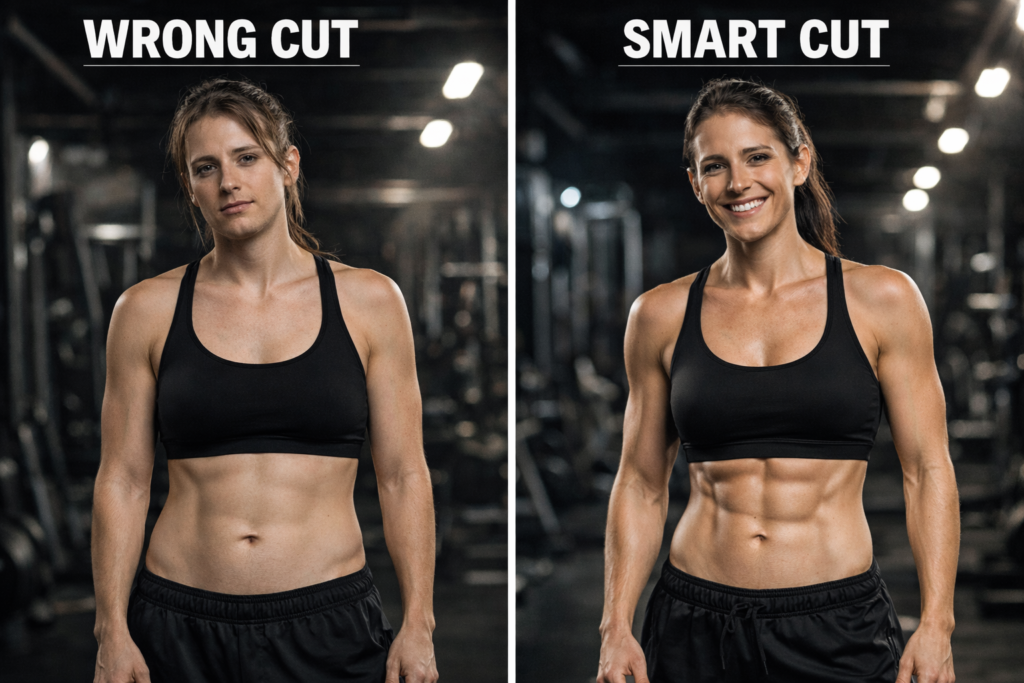
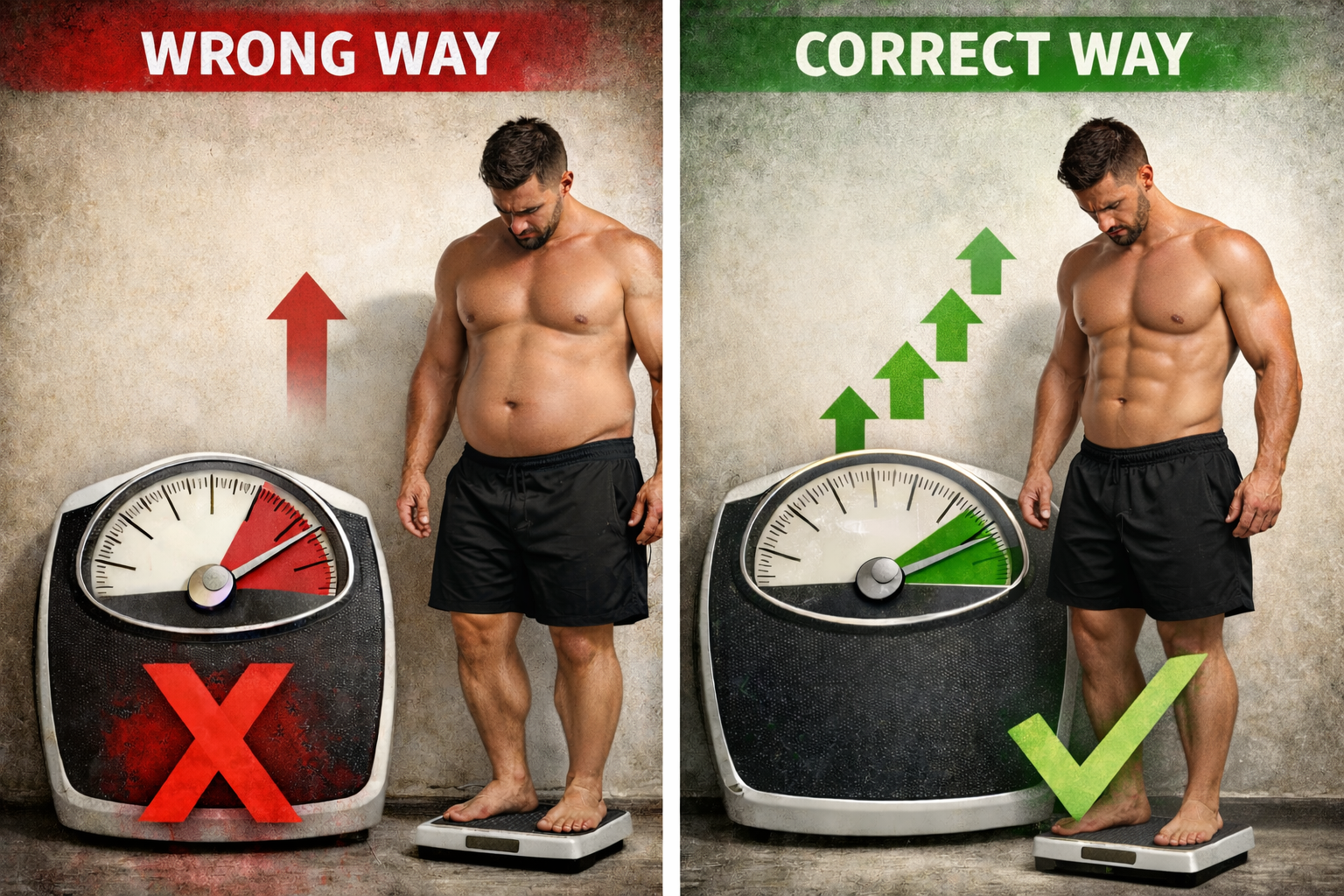
However, if you approach cutting the wrong way especially with extreme measures you can create the opposite effect:
- Losing precious muscle mass
- Retaining stubborn body fat
- Destroying your metabolism
- Killing your motivation and energy
- Creating an unsustainable situation that leads to rebound weight gain
So how do you do it correctly? Let’s dive in.
Before You Start Your Cutting Phase
Before jumping headfirst into a cut, you need to take proper precautions to ensure your plan doesn’t fail immediately.
The Pre-Cut Consolidation Phase
If you’ve been bulking or eating in a significant calorie surplus for an extended period, you need to stabilize your diet and prepare your body before initiating an aggressive cut.
Here’s why this matters:
Your body adapts to your eating patterns. If you’ve been consuming high calories for months, your body has adjusted to that intake level. Your hunger hormones (ghrelin and leptin), metabolic rate, and appetite have all adapted to your current eating pattern.
Imagine you’ve been eating around 3,500 calories daily and suddenly slash your intake to 2,000 calories overnight while simultaneously adding extra cardio. The chances of experiencing:
- Excessive hunger and cravings
- Severe fatigue and lethargy
- Dramatic strength loss
- Hormonal disruption
- Psychological distress
…are extremely high because the change is too drastic.
The Solution: A Mini-Consolidation Phase
To avoid this metabolic shock, implement a 2-week “pre-cutting” or consolidation phase where you reduce calories just enough to maintain your current body weight.
Here’s the protocol:
- Calculate your current maintenance calories (we’ll cover this soon)
- Reduce your surplus calories to maintenance level
- Maintain this intake for 2 weeks
- Allow your body and hormones to stabilize
- Then begin your actual cutting phase
This simple strategy dramatically improves adherence, reduces negative side effects, and sets you up for long-term success.
Think of it like preparing for a road trip you wouldn’t slam on the brakes from 100 mph to zero instantly. You gradually slow down. Same principle applies here.
How to Build Your Cutting Diet

Now let’s construct your actual cutting diet using a systematic, science-based approach.
Step 1: Create a Calorie Deficit
The absolute foundation of any cutting diet is creating a calorie deficit consuming fewer calories than your body requires to maintain its current weight based on your daily activity level.
To discover your maintenance calories and create an appropriate deficit, you need to:
- Calculate your Total Daily Energy Expenditure (TDEE)
- Subtract a strategic amount to create your deficit
- Monitor results and adjust accordingly
How to calculate your TDEE:
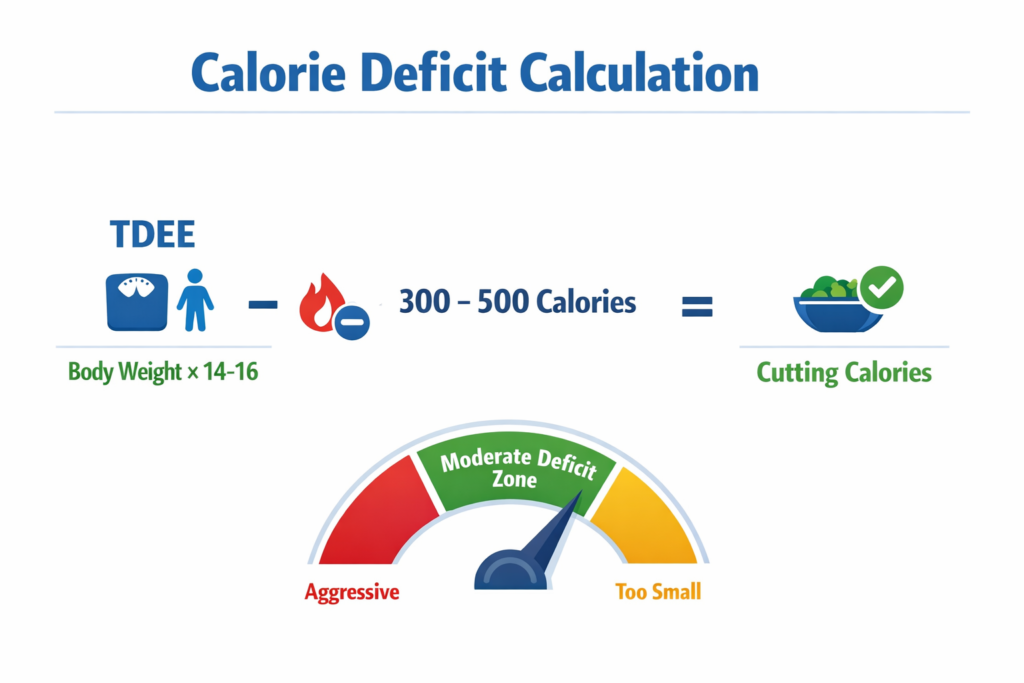
The simplest method: Multiply your body weight (in pounds) by 14-16.
- Less active individuals or women: use 14-15
- More active individuals or men: use 15-16
- Very active individuals: use 16+
For example, a 180-pound moderately active person: 180 × 15 = 2,700 calories for maintenance.
Creating your deficit:
For optimal fat loss while preserving muscle, create a moderate deficit of 300-500 calories below maintenance.
Using our example: 2,700 – 400 = 2,300 calories daily for cutting.
Why a moderate deficit? Aggressive deficits (1,000+ calories below maintenance) lead to:
- Excessive muscle loss
- Metabolic adaptation
- Hormonal disruption
- Unsustainable hunger
- Energy depletion
A moderate approach allows steady fat loss (0.5-1% body weight per week) while maintaining muscle, strength, and sanity.
Critical point: Without knowing your calorie target, nothing works. Period. There’s no successful cutting phase without tracking calories. If you’re planning to wing it based on instinct, you’re setting yourself up for failure from day one.
Step 2: Set Your Macronutrient Intake (Protein, Carbs, Fats)
Macronutrients provide the calories in your diet. While hitting the correct proportions is important, extreme approaches will result in muscle loss and make cutting unnecessarily difficult.
For natural lifters (those not using performance-enhancing drugs), you need all three macronutrients to maximize your genetic potential:
- Protein to preserve muscle mass
- Carbohydrates to fuel training and preserve glycogen
- Fats for hormone production, including testosterone
Protein: Your Muscle-Preserving Foundation
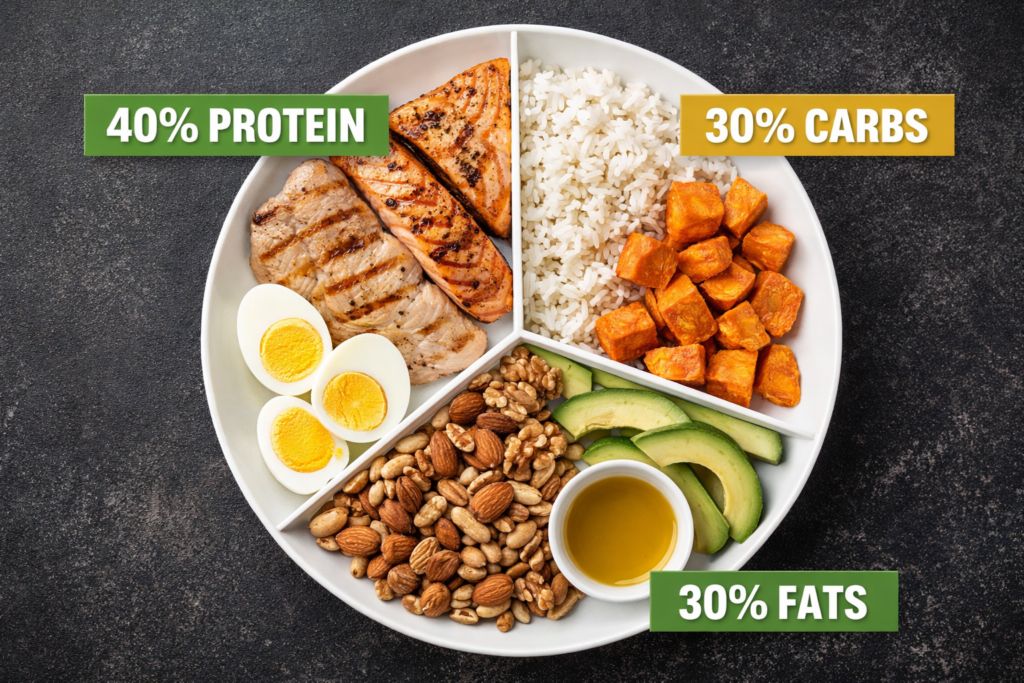
Target: 1.0-1.2 grams per pound of body weight daily
At 180 pounds: 180-216 grams of protein daily.
During a cut, protein becomes even more critical than during bulking. Higher protein intake:
- Maximizes muscle retention in a calorie deficit
- Increases satiety (keeps you fuller longer)
- Has the highest thermic effect of food (burns more calories during digestion)
- Supports recovery and immune function
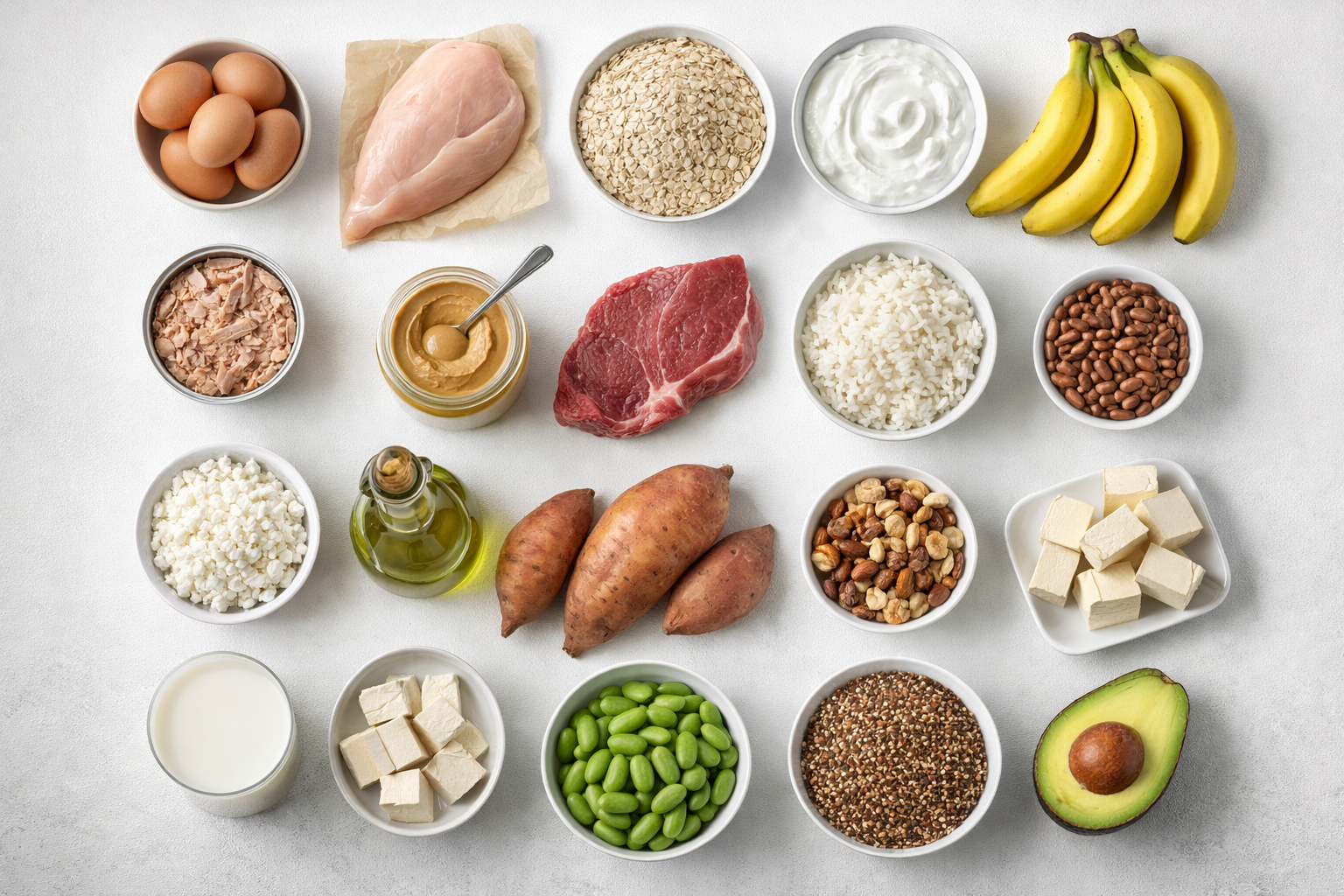
Quality protein sources:
- Chicken breast and turkey
- Lean beef and bison
- Fish (salmon, tilapia, cod)
- Eggs and egg whites
- Greek yogurt and cottage cheese
- Protein powder (whey, casein, plant-based)
Fats: Essential for Hormones
Target: 0.3-0.4 grams per pound of body weight daily
At 180 pounds: 54-72 grams of fat daily.
Dietary fat is crucial during cutting because it:
- Supports testosterone and other hormone production
- Enables absorption of fat-soluble vitamins (A, D, E, K)
- Provides satiety
- Supports brain function and mood
Going too low on fats? You risk hormonal disruption, decreased testosterone, increased hunger, and impaired recovery.
Quality fat sources:
- Avocados and olive oil
- Nuts and nut butters
- Seeds (chia, flax, hemp)
- Fatty fish
- Egg yolks
- Coconut oil
Carbohydrates: Fill the Remainder
After setting protein and fat, fill remaining calories with carbs.
Using our 180-pound example with 2,300 cutting calories:
- Protein: 200g × 4 = 800 calories
- Fat: 60g × 9 = 540 calories
- Used so far: 1,340 calories
- Remaining: 960 calories for carbs
- Carbs: 960 ÷ 4 = 240 grams daily
Carbohydrates are your performance fuel. They:
- Power your training sessions
- Preserve muscle glycogen
- Support workout intensity
- Help maintain strength during deficit
- Regulate mood and energy
Quality carb sources:
- Rice (white or brown)
- Potatoes and sweet potatoes
- Oats and oatmeal
- Quinoa and other grains
- Fruits (berries, bananas, apples)
- Beans and legumes
Step 3: Implement Intermittent Fasting (Optional But Effective)
Most studies show that intermittent fasting (IF) doesn’t directly increase fat loss compared to continuous calorie restriction when calories and protein are matched.
However, IF provides powerful practical advantages during a cut:
- Reduced hunger: Keeping insulin low during fasting suppresses appetite
- Simplified eating: Removes the need to eat every 2-3 hours
- Larger meals: Fitting calories into fewer meals means more satisfying portions
- Improved adherence: Many find it easier to stick to
- Potential metabolic benefits: May improve insulin sensitivity and fat oxidation
The most common protocol: 16:8
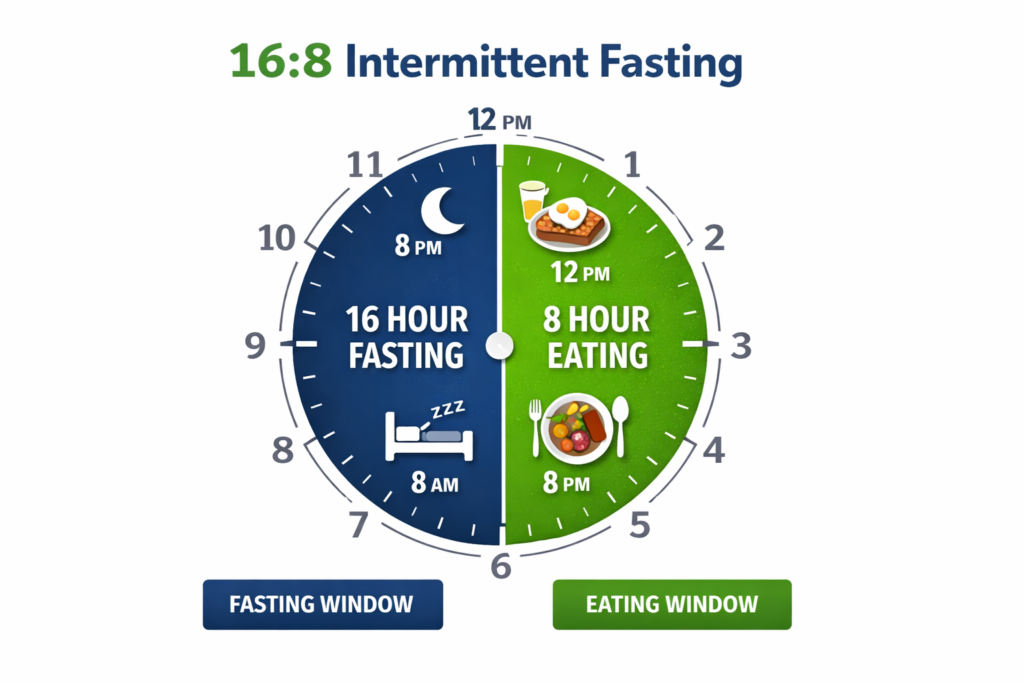
- Fast for 16 hours
- Eat within an 8-hour window
- Example: Stop eating at 8 PM, resume eating at 12 PM the next day
Important guideline: Don’t train during your fasting window. Schedule training during your eating window when you’re properly fueled.
IF isn’t magic and isn’t necessary, but if it helps you adhere to your deficit more easily, it’s a powerful tool.
Step 4: Strategic Supplementation for Cutting
While the vast majority of “fat burner” supplements are overpriced garbage that don’t deliver results, a few supplements can genuinely help during a cutting phase.
Creatine Monohydrate
One of the most researched and effective supplements available. Creatine helps you maintain strength during a deficit, which is crucial for preserving muscle.
Dosage: 5 grams daily
Myth-busting: No, creatine won’t make you “bloated” or hide your definition. The water retention from creatine is primarily intramuscular (inside muscle cells), which actually makes muscles appear fuller and more defined.
Caffeine
A natural thermogenic and appetite suppressant that’s incredibly cost-effective.
Protocol for caffeine newcomers:
- Start with the minimum effective dose: 100mg
- Only increase when effects diminish (1-2 weeks)
- Increase in 50-100mg increments
- Avoid building tolerance too quickly by starting high
Your body builds tolerance to caffeine rapidly. Starting with huge doses means you’ll need even larger doses later, and there’s a ceiling to how much you can safely consume.
Fish Oil (Omega-3s)
Supports overall health, reduces inflammation, may improve insulin sensitivity and nutrient partitioning.
Dosage: 2-3 grams EPA+DHA daily
Vitamin D3
Many people are deficient, especially during winter months. Adequate vitamin D supports hormone production, mood, and immune function.
Dosage: 2,000-5,000 IU daily
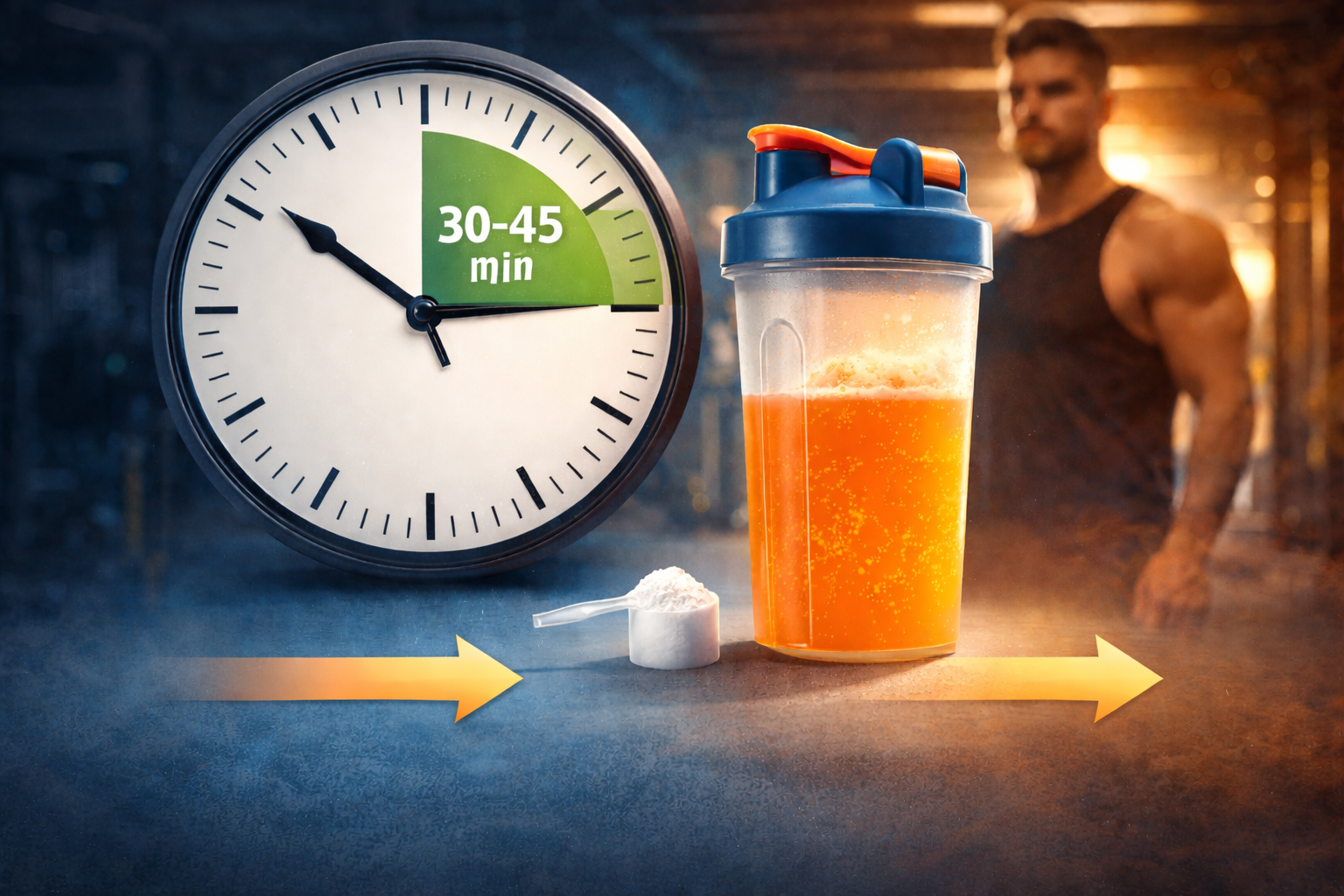
Protein Powder
Not magical, just convenient. Helps hit protein targets easily.
Step 5: Training During Your Cut
Your training approach during cutting should remain largely unchanged from bulking.
Heavy, progressive training is the primary signal telling your body to maintain muscle mass.
Following philosophies that suggest training lighter during cuts because of the calorie deficit consistently leads to unnecessary muscle loss.
Maintain these training principles:
- Keep lifting heavy (relative to your capacity)
- Maintain or slightly reduce training volume if needed
- Prioritize compound movements
- Continue progressive overload when possible
- Focus on maintaining strength levels
However, be smart about recovery:
Recovery becomes more challenging during a cut due to:
- Reduced calorie intake
- Lower glycogen levels
- Increased fatigue
- Hormonal changes
If a muscle group is still very sore from the previous session and you’re feeling depleted, skip that workout. Overtraining in a deficit is counterproductive and risks injury.
Just be honest with yourself don’t skip workouts out of laziness, only when genuinely needed for recovery.
Step 6: Cardio Strategy
Contrary to popular belief, cardio is NOT the primary component of a successful cut (that’s the calorie deficit through diet).
However, strategic cardio can accelerate results and provide additional benefits.
Recommended cardio protocol:
- Frequency: 3-4 sessions per week
- Duration: 20-30 minutes per session
- Intensity: Low to moderate (walking, cycling, swimming)
- Purpose: Maintain cardiovascular conditioning and improve insulin sensitivity
Why not endless cardio? Excessive cardio:
- Increases hunger significantly
- Impairs recovery
- Can lead to muscle loss
- Makes deficit harder to adhere to
- Creates unnecessary stress
Think of cardio as a tool to slightly enhance your deficit and maintain fitness, not as the foundation of your cut.
Pro tip: Low-Intensity Steady State (LISS) cardio like walking is underrated. It burns calories, doesn’t impair recovery, can be done daily, and is sustainable long-term.

Step 7: Monitor Progress and Adjust
Consistency is critical, but so is tracking and adjusting based on results.
Weekly monitoring protocol:
- Weigh yourself once weekly, same day, same conditions (e.g., every Sunday morning upon waking, after using the bathroom, before eating or drinking)
- Track the trend, not day-to-day fluctuations
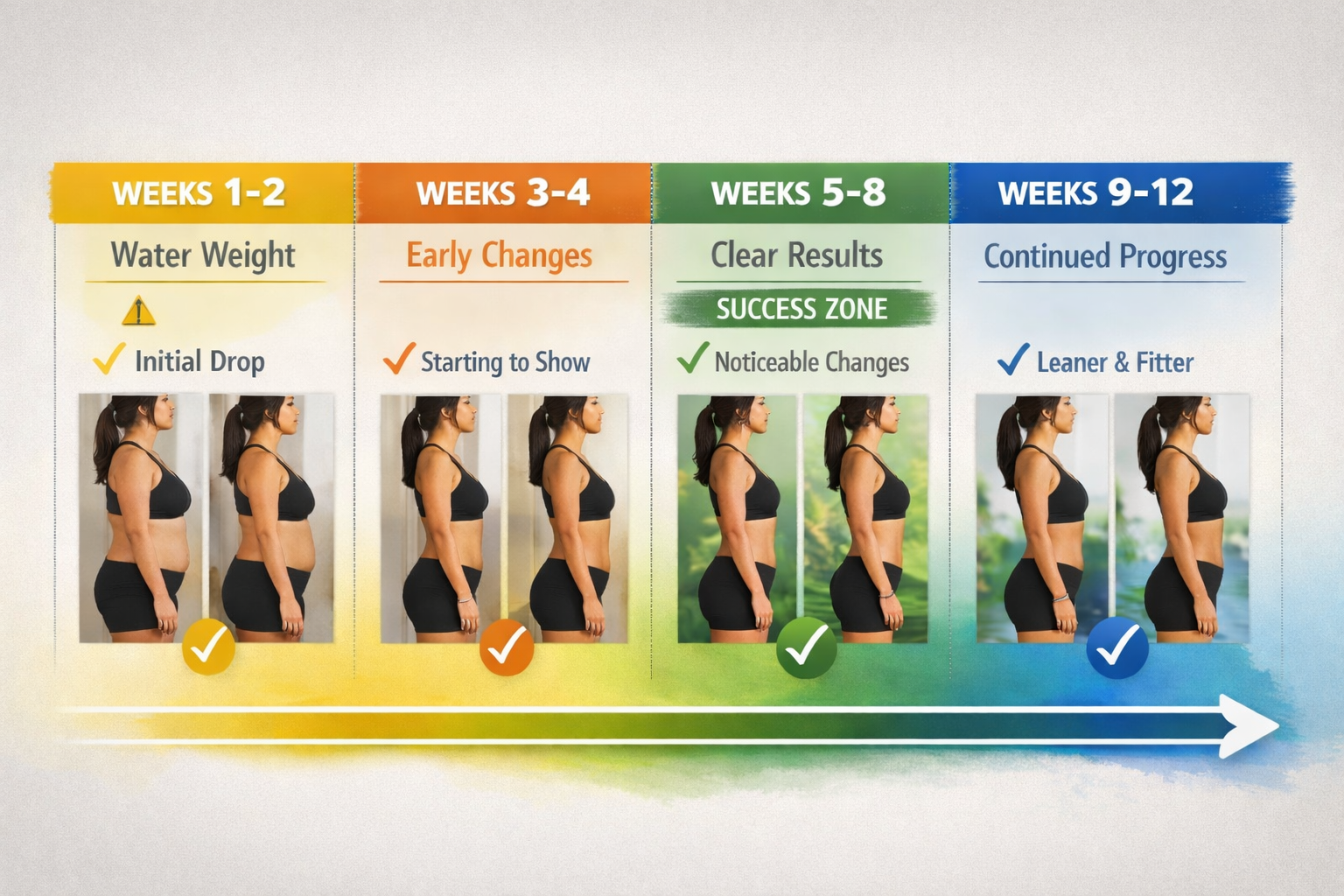
- Take progress photos every 2-4 weeks
- Track key body measurements (waist, chest, arms, thighs)
After 2-3 weeks, assess:
If you lost 0.5-1% of body weight weekly: Perfect! Maintain current calorie intake.
If you didn’t lose weight: Reduce calories by 100-200 and reassess in 2 weeks.
Critical reality check: Before reducing calories, verify you’re actually tracking accurately. The number one reason people claim “I’m not losing weight despite a deficit” is simple: they’re not actually in a deficit because they’re miscounting calories.
Use tracking apps like MyFitnessPal, Cronometer, or MacroFactor. Never and I mean NEVER try to eyeball your intake during a cut.
Step 8: How Long Should Your Cut Last?
Bodybuilders cut for predetermined timeframes because they have competition deadlines. You don’t need that constraint, which is actually great news.
The gradual approach is superior because:
- More sustainable physically and psychologically
- Better muscle preservation
- Easier adherence
- More likely to maintain results long-term
- Healthier for hormones and metabolism
Remember: bodybuilding is a marathon, not a sprint. Progress comes to those with patience who treat this as a lifestyle, not a temporary project with arbitrary deadlines.
Duration depends on your starting point:
The higher your initial body fat percentage, the longer your cut will take. That’s just reality.
Target rate of loss: 0.5-1 pound per week (0.5-1% of body weight)
Keep in mind that during the first 1-2 weeks, you’ll lose more weight due to water and glycogen depletion. After that, aim for steady fat loss at the target rate.
When to end your cut:
- When you’ve reached your goal body composition
- When you’re satisfied with how you look and feel
- When energy levels and performance have declined significantly
As a natural lifter, there’s no reason to push below 10% body fat unless you’re competing. At 10-12%, you’ll have excellent muscle definition and visible abs.
For perspective, many fitness influencers who claim to be 6-8% body fat are actually closer to 10-12% when measured with accurate methods like DEXA scans.
Step 9: Frequently Asked Questions
You might be wondering about various details not covered yet:
- Should I eat large or small meals?
- How often should I eat?
- Every 2-3 hours or every 4-5 hours?
- Should I eat only “clean” foods?
- Do I need a cheat day?
- Should I avoid certain macronutrients at specific times (like carbs after 6 PM)?
- What about meal timing and nutrient timing?
The straightforward answer to all these questions:
If you’re maintaining your calorie deficit, training with intensity, and hitting your macronutrient targets correctly, these factors make minimal to zero difference in your results.
The Flexible Dieting Approach
You can consume foods you actually enjoy as long as they help you hit your macro targets.
However, this doesn’t mean eating only sugar and protein powder. It means you can be flexible in your food choices without thinking you need to eat nothing but unseasoned chicken, plain sweet potatoes, and steamed broccoli.
This flexibility eliminates the need for “cheat days”, which are problematic for several reasons:
If you need a “vacation” from your diet and require cheat days, your diet isn’t sustainable long-term. You should be able to incorporate foods you enjoy regularly in moderate amounts while maintaining your deficit.
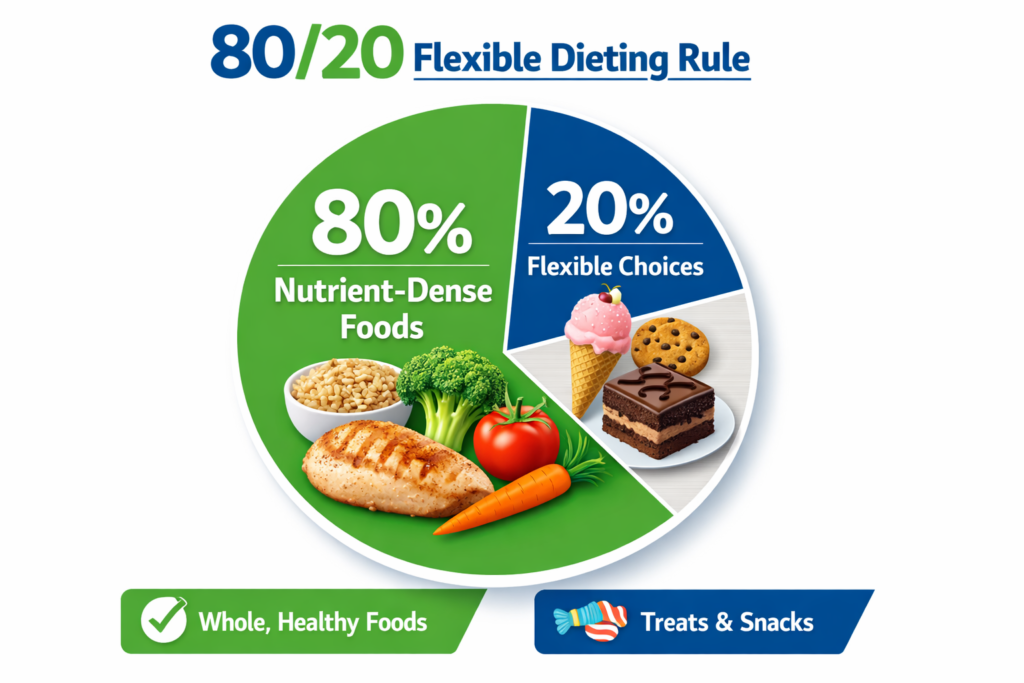
The 80/20 or 90/10 approach works well:
- 80-90% of calories from nutrient-dense whole foods
- 10-20% of calories from whatever fits your macros and makes you happy
You can eat what you enjoy occasionally while maintaining your calorie deficit just track the calories and make appropriate adjustments to ensure your daily total is on target.
This is why it’s crucial to make your cut fit your life, not make your entire life revolve around your cut.
Summary: Your Cutting Phase Blueprint
Let’s consolidate everything into actionable steps:
✓ Create a moderate calorie deficit (300-500 calories below maintenance) with gradual, sustainable reductions
✓ Consume macronutrients in balanced proportions without extremes:
- Protein: 1.0-1.2g per pound body weight
- Fat: 0.3-0.4g per pound body weight
- Carbs: Fill remaining calories
✓ Consider intermittent fasting (16:8 protocol) to simplify your life and potentially accelerate results
✓ Continue training heavy to signal your body to preserve strength and muscle mass
✓ Add strategic cardio (3-4 sessions weekly, 20-30 minutes) to maintain conditioning and improve nutrient partitioning
✓ Weigh yourself weekly under consistent conditions and make dietary adjustments based on results
✓ Avoid extreme measures in your diet be flexible and focus solely on maintaining your calorie deficit while providing quality nutrition (regardless of specific foods used)
✓ Track everything using apps and tools never rely on guesswork
The Bottom Line
Cutting doesn’t need to be complex, but it does need to be intelligent and executed with discipline for sufficient time to see results.
Most people fail their cutting phases not because the science is complicated, but because they:
- Try to cut too aggressively
- Don’t track accurately
- Follow unsustainable approaches
- Give up before seeing results
- Lose unnecessary muscle by training incorrectly
You now have a complete blueprint to avoid these mistakes.
Your first cut might not be perfect, but following these evidence-based principles will put you miles ahead of the average person spinning their wheels with outdated advice and extreme approaches.
Ready to reveal the physique you’ve been building? Stop torturing yourself with unnecessary restrictions and start following a cutting approach that’s actually sustainable and effective. Your shredded future self is waiting.
Want to guarantee your cutting success? The right program combines strategic nutrition with optimized training protocols designed specifically for fat loss and muscle preservation. Stop wasting time with guesswork get the proven system that delivers the lean, defined physique you’re working toward.
Leave a Reply
You must be logged in to post a comment.