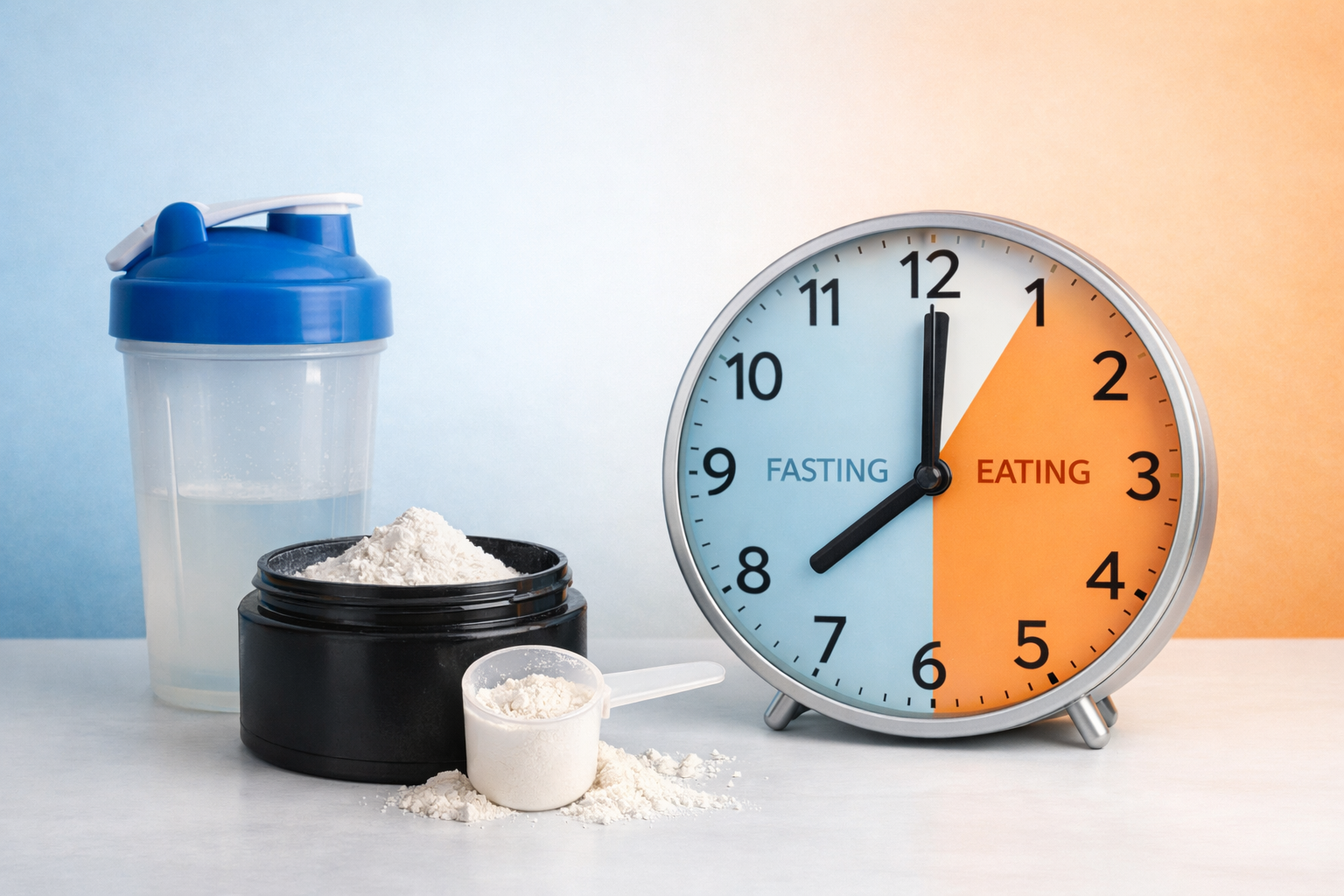
You’re committed to intermittent fasting and seeing great results. You’ve also discovered that training with a pre-workout supplement dramatically improves your performance in the gym. But now you’re stuck with a frustrating question: if you take pre-workout during your fasting window, does it ruin everything you’re working toward?
Whether pre-workout breaks intermittent fasting depends on the specific ingredients in your pre-workout supplement. If your pre-workout provides less than 50 calories (or ideally zero calories) and contains no components that cause significant insulin spikes, it won’t break your fast. However, pre-workouts containing protein, BCAAs, or significant amounts of carbohydrates will break your fast by triggering insulin release and shifting your body out of the fasted state.
For people trying to combine fasting with optimal training performance, this is critical information. You don’t want to accidentally sabotage your fasting benefits, but you also don’t want to train in a completely depleted state if a few carefully chosen supplements could help.
In this comprehensive guide, I’ll explain exactly what it means to “break a fast” from a metabolic perspective, which specific pre-workout ingredients will and won’t break your fast, the benefits of taking pre-workout while fasted, potential side effects of training on an empty stomach with stimulants, and how to choose or create a fasting-friendly pre-workout that maximizes performance without disrupting your metabolic state.
Whether you’re using intermittent fasting for fat loss, autophagy, mental clarity, or metabolic health, understanding how pre-workout fits into your fasting protocol will help you optimize both your training and your fasting results.
Let’s break down the science and give you clear, actionable answers.
TABLE OF CONTENTS
What Does It Actually Mean to “Break a Fast”?
Before we can determine whether pre-workout breaks your fast, we need to understand what “breaking a fast” actually means from a physiological and metabolic perspective.
The Definition of Breaking a Fast
Breaking an intermittent fast means consuming food or beverages with calories that initiate metabolic and hormonal processes in your body after a period without eating.
Fasting is a state where you’ve abstained from consuming calories for a certain period, and your body is utilizing stored energy reserves – primarily stored fat – to maintain its vital functions.
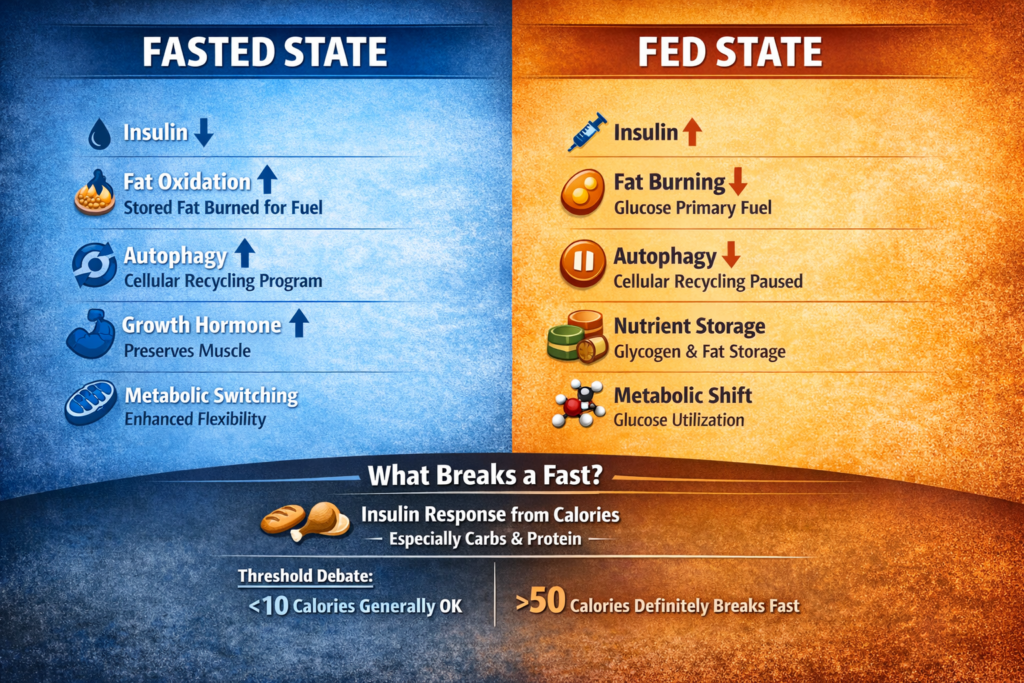
What happens during a fast:
Your body isn’t just “waiting around” when you’re fasting. Specific metabolic changes occur that differentiate the fasted state from the fed state:
Insulin levels drop significantly:
- Insulin is released when you eat, particularly in response to carbohydrates and protein
- During fasting, insulin levels gradually decrease
- Lower insulin levels allow your body to access stored fat for energy
- This is one of the primary mechanisms by which fasting promotes fat loss
Fat oxidation increases:
- With low insulin and depleted glycogen stores, your body shifts to burning fat
- Free fatty acids are released from adipose tissue
- These fatty acids are used directly for energy or converted to ketones
- Fat becomes your primary fuel source instead of glucose
Autophagy is activated:
- Autophagy is your body’s cellular “recycling program”
- Damaged proteins and cellular components get broken down and recycled
- This process is upregulated during fasting states
- Considered one of the key longevity and health benefits of fasting
Growth hormone increases:
- Human growth hormone (HGH) can increase significantly during fasting
- Helps preserve muscle mass during the fasted state
- Supports fat burning
- May have anti-aging effects
Metabolic switching occurs:
- Your body becomes more metabolically flexible
- Better able to switch between glucose and fat as fuel sources
- Improved insulin sensitivity over time
- Enhanced mitochondrial function
What Actually Breaks These Fasted State Benefits?
The primary fast-breaking mechanism: Insulin response
The consumption of calories – particularly from carbohydrates and protein – triggers insulin release. Insulin is the hormone responsible for regulating blood glucose levels and signaling nutrient storage.
How insulin breaks the fast:
When you consume food (especially carbs or protein), blood sugar rises. Your pancreas detects this rise and secretes insulin. Insulin then:
- Promotes glucose uptake by cells (lowering blood sugar)
- Signals the body to stop burning fat for fuel
- Promotes storage of nutrients (glucose as glycogen, excess as fat)
- Inhibits autophagy and other fasting-related processes
- Essentially tells your body “food is available, stop using stored energy”
This insulin response marks the end of the fasting period – your body transitions from a state of energy conservation and fat burning to a state of nutrient processing and storage.
The Nuance: Not All Calorie-Containing Substances Break a Fast Equally
This is where things get more complex and where most confusion arises.
The “strict” definition: Any caloric intake whatsoever breaks the fast (even 1 calorie triggers some metabolic response).
The “practical” definition: Small amounts of certain substances (typically <10-50 calories) that don’t significantly raise insulin or disrupt ketosis/autophagy are often considered “fasting-friendly.”
The “goal-dependent” definition: Whether something breaks your fast depends on why you’re fasting in the first place.
Different fasting goals have different sensitivities:
If fasting for fat loss:
- Primarily concerned with calorie deficit and insulin control
- Small amounts of non-insulinogenic substances (black coffee, certain supplements) probably fine
- Major concern is anything with significant calories or that spikes insulin
If fasting for autophagy:
- More strict interpretation needed
- Even small amounts of protein/amino acids can partially inhibit autophagy (mTOR activation)
- Prefer zero-calorie substances only
If fasting for metabolic health/insulin sensitivity:
- Focus on avoiding insulin spikes
- Zero-calorie, non-insulinogenic substances are fine
- Even artificial sweeteners are debated (some evidence they may affect insulin sensitivity in some people)
If fasting for religious/spiritual reasons:
- Entirely depends on the specific religious tradition and its rules
- Often the strictest interpretation (no consumption of anything except water)
For our purposes (fitness-focused fasting combined with training), we’ll primarily focus on whether pre-workout ingredients significantly disrupt fat burning, raise insulin, or provide meaningful calories that would negate the metabolic benefits of fasting.
The Calorie Threshold Debate
There’s ongoing debate about whether small amounts of calories “count” as breaking a fast.
The common thresholds discussed:
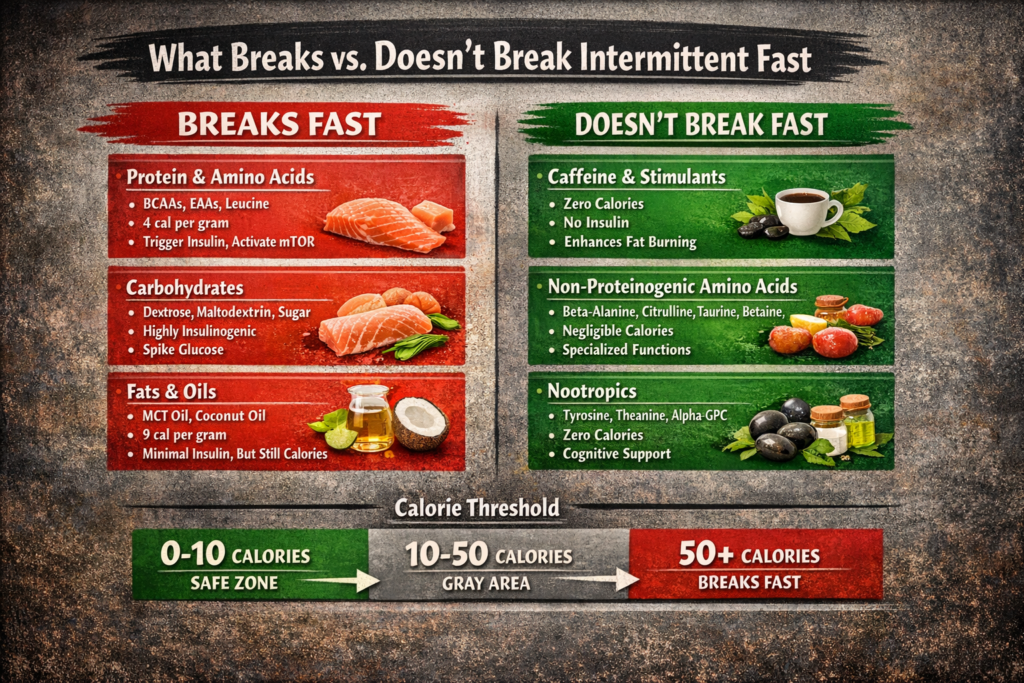
Under 10 calories: Generally considered “doesn’t break the fast” by most flexible fasting protocols. This is roughly the amount in black coffee or tea.
10-50 calories: Gray area. May cause minimal insulin response but unlikely to significantly disrupt fat burning or autophagy. Some protocols allow this, others don’t.
50+ calories: Almost universally considered breaking the fast. Enough to trigger meaningful insulin response and shift metabolism.
The practical reality: Individual responses vary. Some people are more insulin-sensitive and respond to smaller amounts. Others can consume up to 50 calories with minimal metabolic impact.
For pre-workout purposes: Most fasting-friendly pre-workouts aim for zero calories or as close to zero as possible (typically <5 calories per serving). This ensures you’re not triggering any meaningful insulin response.
Does Pre-Workout Break Intermittent Fasting? (The Ingredient-by-Ingredient Breakdown)
Since pre-workout supplements contain a wide variety of ingredients, it’s impractical to give a single yes/no answer to “does pre-workout break a fast?”
The appropriate answer depends on which specific ingredients are present in your pre-workout. Let’s break down the most common pre-workout ingredients and their impact on fasting.
Ingredients That WILL Break Your Fast
1. Protein and Proteinogenic Amino Acids
What they are:
- Whey protein, casein protein, or protein blends
- Individual amino acids that are incorporated into proteins (the 20 standard amino acids)
- BCAAs (branched-chain amino acids: leucine, isoleucine, valine)
- Essential amino acids (EAAs)
Why they break the fast:
Caloric content: Protein and proteinogenic amino acids provide 4 calories per gram. Even a small 5g serving of BCAAs provides 20 calories.
Insulin response: Protein and amino acids (particularly leucine) are insulinogenic, meaning they trigger insulin release even without carbohydrates present. BCAAs alone can stimulate a significant insulin response.
mTOR activation: Amino acids, especially leucine, activate the mTOR (mechanistic target of rapamycin) pathway. This is anabolic (good for muscle building) but directly inhibits autophagy (one of fasting’s key benefits).
Protein synthesis activation: BCAAs and EAAs trigger muscle protein synthesis, which is a fed-state process, not a fasted-state process.
The verdict: If your pre-workout contains protein powder, BCAAs, EAAs, or significant amounts of individual proteinogenic amino acids, it will break your fast.
Common pre-workouts with this issue: Many “complete” pre-workouts include BCAAs for muscle support. Check your label carefully.
2. Carbohydrates (Sugars and Starches)
What they are:
- Dextrose (glucose)
- Maltodextrin
- Sucrose (table sugar)
- Any other simple or complex carbohydrates
Why they break the fast:
Highly insulinogenic: Carbohydrates, especially high-glycemic options like dextrose and maltodextrin, cause rapid and significant insulin spikes. This is literally the opposite of what you want during fasting.
Caloric content: Carbohydrates provide 4 calories per gram. Even 2-4 grams (8-16 calories) will trigger insulin response.
Direct glucose supply: Provides immediate fuel, eliminating the need for your body to burn fat or produce ketones.
Blood sugar spike: Rapidly increases blood glucose, which is the primary signal for insulin release.
The verdict: If your pre-workout contains dextrose, maltodextrin, or any other carbohydrate source, it will definitely break your fast.
How much is too much? Even 2-4 grams (found in some pre-workouts for flavor or quick energy) is enough to disrupt fasting. Some pre-workouts contain 10-20+ grams, which completely breaks the fast.
3. Fats
What they are:
- MCT oil (medium-chain triglycerides)
- Coconut oil powder
- Any other fat sources
Why they break the fast (sort of):
Caloric content: Fats provide 9 calories per gram, making them very calorie-dense.
Minimal insulin response: Unlike carbs and protein, fats cause very little insulin release. This is why “bulletproof coffee” (coffee with butter/MCT oil) is sometimes considered “fasting-friendly” despite having calories.
May preserve ketosis: MCT oil in particular can be converted to ketones quickly, potentially maintaining some fasted-state benefits.
The nuance: Fats are the most debated. Technically, consuming calories breaks a fast. Practically, small amounts of fats (especially MCTs) may maintain some fasting benefits while providing energy.
For autophagy: Fats will still inhibit autophagy to some degree (any caloric intake does).
The verdict: Fats break the fast in the strict sense (calories consumed), but may preserve some benefits like ketosis. Most pre-workouts don’t contain fats anyway, so this is rarely an issue.
Ingredients That WON’T Break Your Fast
1. Caffeine and Other Stimulants
What they are:
- Caffeine (from various sources: caffeine anhydrous, green tea extract, guarana)
- Synephrine
- Yohimbine
- Hordenine
- Other stimulant compounds
Why they don’t break the fast:
Zero calories: Stimulants contain no calories.
No insulin response: Don’t trigger insulin release.
May enhance fasting: Caffeine actually supports fasting by:
- Increasing metabolic rate (more calories burned)
- Enhancing fat oxidation (more fat burned for fuel)
- Suppressing appetite (makes fasting easier)
- Providing energy when you have no food in your system
- Improving mental clarity and focus
The verdict: Caffeine and other stimulants are completely fasting-friendly and may actually enhance fasting benefits.
Practical consideration: Some people experience jitters, nausea, or anxiety when consuming caffeine on an empty stomach. Start with lower doses if you’re sensitive.
2. Non-Proteinogenic Amino Acids
What they are:
- Amino acids that are NOT incorporated into proteins
- Beta-alanine (causes the tingling sensation)
- L-citrulline (pump/nitric oxide)
- Taurine (cellular hydration, performance)
- Betaine (power output, cellular hydration)
- L-theanine (focus, anxiety reduction)
- Agmatine (pump/nitric oxide)
Why they don’t break the fast:
Minimal/zero caloric impact: While these technically contain some calories, they’re used for specific metabolic functions rather than energy, making their caloric contribution negligible.
No significant insulin response: These amino acids don’t trigger meaningful insulin release.
Different metabolic roles: Unlike proteinogenic amino acids (which build proteins and activate mTOR), these have specialized functions:
- Beta-alanine: Increases muscle carnosine for buffering acid
- Citrulline: Converted to arginine for nitric oxide production
- Taurine: Cellular osmolyte and antioxidant
- None of these roles involve protein synthesis or mTOR activation
The verdict: Non-proteinogenic amino acids are generally considered fasting-friendly. They provide performance benefits without breaking the fast.
The caveat: In extremely strict autophagy-focused fasting, even these might have minor inhibitory effects, but for practical fitness-focused fasting, they’re fine.
3. Nootropics (Cognitive Enhancers)
What they are:
- Alpha-GPC (choline source for focus)
- Huperzine A (acetylcholine support)
- L-tyrosine (dopamine precursor for motivation)
- Rhodiola rosea (adaptogen)
- Various other focus-enhancing compounds
Why they don’t break the fast:
Zero or negligible calories: Dosed in milligrams (50-500mg typically), providing essentially no caloric content.
No insulin response: Don’t affect blood sugar or insulin.
Support fasting state: May actually enhance mental clarity and focus during fasting, which is already elevated in many people when fasted.
The verdict: Nootropics are completely fasting-friendly.
4. Vitamins and Minerals
What they are:
- B-vitamins (B6, B12, folate, etc.)
- Vitamin C
- Electrolytes (sodium, potassium, magnesium)
- Other micronutrients
Why they don’t break the fast:
Zero calories: Micronutrients contain no calories.
No insulin impact: Don’t affect blood sugar or insulin.
Support fasting: Electrolytes especially are important during fasting to prevent deficiencies and cramping.
The verdict: Vitamins and minerals are completely fasting-friendly.
Important note: Some vitamins are fat-soluble (A, D, E, K) and are better absorbed with food, but their presence in a pre-workout won’t break your fast – you just may not absorb them optimally.
5. Artificial Sweeteners (The Controversial One)
What they are:
- Sucralose (Splenda)
- Aspartame
- Acesulfame potassium (Ace-K)
- Stevia
- Monk fruit extract
Why they theoretically don’t break the fast:
Zero calories: Artificial sweeteners provide no caloric energy.
Minimal to no insulin response in most people: Most research shows no significant insulin spike from artificial sweeteners in the absence of actual sugar.
The controversy:
Some studies suggest artificial sweeteners may have minor effects on:
- Insulin sensitivity (possibly worsening it over time in some individuals)
- Gut microbiome (potentially negative alterations)
- Appetite hormones (may increase hunger in some people)
- “Cephalic phase insulin response” (small insulin release from taste alone, though this is debated)
The current evidence: The majority of well-designed studies show that calorie-free artificially sweetened beverages don’t significantly impact fasting results for most people, especially in the context of fat loss and metabolic health.
Individual variation: Some people report feeling hungrier or experiencing reduced fasting benefits with artificial sweeteners. Others notice no difference. You may need to experiment.
The verdict: Artificial sweeteners are technically fasting-friendly (zero calories, minimal insulin impact for most), but individual responses vary. If you’re concerned, choose unflavored pre-workouts or those sweetened with stevia/monk fruit (natural zero-calorie options).
How to Know If YOUR Pre-Workout Breaks Your Fast
Step 1: Check the nutrition label
Look at:
- Calories per serving: If it’s 0-5 calories, you’re likely fine. If it’s 10+ calories, check where those calories come from.
- Protein content: Any protein listed? That breaks the fast.
- Carbohydrates: Any carbs listed (including sugars)? That breaks the fast.
- Fats: Any fats listed? Technically breaks it, though minimal MCT might be acceptable depending on your goals.
Step 2: Check the ingredient list
Look for:
- BCAAs, EAAs, or specific amino acids like leucine, valine, isoleucine (these break the fast)
- Dextrose, maltodextrin, sugar, glucose (these definitely break the fast)
- Protein powder, whey, casein (these break the fast)
Fasting-friendly ingredients you want:
- Caffeine
- Beta-alanine
- Citrulline
- Taurine
- Betaine
- Nootropics (tyrosine, alpha-GPC, etc.)
- Vitamins and minerals
- Artificial or natural zero-calorie sweeteners
Step 3: When in doubt
If your pre-workout lists <10 calories and doesn’t contain protein, BCAAs, or significant carbs, it’s almost certainly fasting-friendly.
If your pre-workout has 50+ calories, contains BCAAs, or has carbs listed, it will break your fast.
Benefits of Taking Pre-Workout While Fasted
If you choose a fasting-friendly pre-workout (one that doesn’t break your fast), there are actually several advantages to consuming it during your fasting window before training.
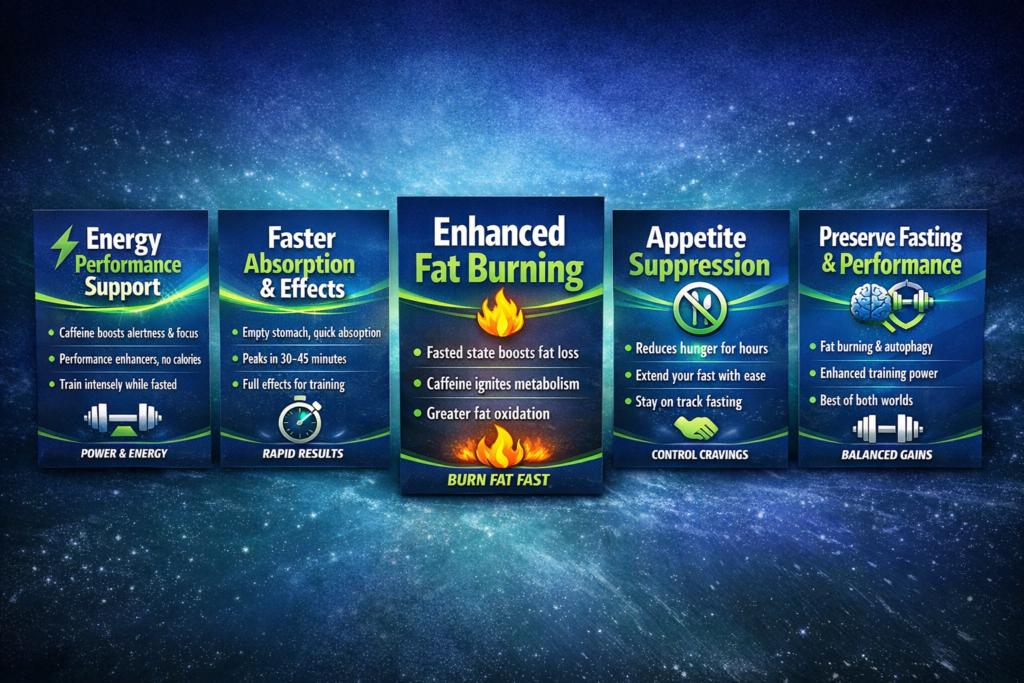
Benefit 1: Energy and Performance Support Without Breaking the Fast
The primary benefit of fasting-friendly pre-workout is providing energy, alertness, and focus when you need it most – during training while in a fasted state.
Why this matters:
When you’re fasted, especially if training in the morning after an overnight fast or midday during a longer fast, you don’t have the body’s preferred immediate energy source (glucose from recently consumed carbohydrates) readily available.
How pre-workout helps:
Caffeine provides central nervous system stimulation:
- Increases alertness and reduces perceived exertion (training feels easier)
- Enhances focus and concentration (better mind-muscle connection)
- Improves power output and strength
- Delays fatigue (you can train harder for longer)
Other stimulants amplify these effects:
- Synephrine, yohimbine, and similar compounds enhance energy and fat burning
- Particularly useful when you’re training without food in your system
Performance enhancers maintain output:
- Beta-alanine buffers muscle acid, allowing more reps
- Citrulline increases blood flow and reduces fatigue
- Betaine supports power output
- These don’t provide energy from calories, but they optimize your body’s use of available energy
The practical outcome: You can train intensely while fasted without feeling lethargic or weak, thanks to the non-caloric performance support from pre-workout.
Benefit 2: Faster Absorption and Stronger Effects
You’ll feel the effects of your pre-workout more quickly and more intensely when taken in a fasted state because there’s no food in your stomach to slow absorption.
The mechanism:
Digestion timeline without food:
- Empty stomach: Pre-workout enters small intestine rapidly (10-20 minutes)
- Absorption begins immediately
- Peak blood levels of caffeine and other ingredients within 30-45 minutes
- Full effects felt quickly
Digestion timeline with food:
- Full stomach: Pre-workout must wait for food to be partially digested first
- Delayed gastric emptying (food, especially protein and fat, slows this)
- Absorption delayed by 30-60+ minutes
- Peak blood levels take 60-90 minutes or longer
- Effects feel “diluted” or weaker
Why this happens:
Protein, fats, and fiber slow gastric emptying (the rate at which your stomach contents move into the small intestine, where absorption occurs). When you consume pre-workout with or shortly after food, the supplements must “wait in line” behind the food.
The practical benefit:
Taking pre-workout 20-30 minutes before training while fasted means:
- You feel the effects right when you start training
- The peak effect aligns with your most intense training period
- No wasted time waiting for it to “kick in”
The consideration:
This faster, stronger effect can be overwhelming for stimulant-sensitive individuals. If you normally take pre-workout with food and switch to fasted consumption, you might need to reduce your dose initially.
Benefit 3: Enhanced Fat Burning
Training while fasted with caffeine and other stimulants may enhance fat oxidation (fat burning) compared to training fed or training fasted without stimulants.
How this works:
Fasted training already promotes fat burning:
- Low insulin levels (allows fat release from cells)
- Depleted glycogen stores (forces reliance on fat)
- Elevated catecholamines like epinephrine (stimulate fat breakdown)
Caffeine amplifies fat burning:
- Increases release of epinephrine and norepinephrine (fat-mobilizing hormones)
- Directly stimulates lipolysis (breakdown of stored fat into free fatty acids)
- Increases metabolic rate (more calories burned, including from fat)
- May spare muscle glycogen (so limited glycogen lasts longer during training)
Other stimulants add to this effect:
- Yohimbine blocks alpha-2 receptors (helps mobilize stubborn fat)
- Synephrine increases thermogenesis and fat oxidation
- Combined effect is greater than any single ingredient
The research evidence:
Studies show that fasted cardio or training can increase fat oxidation during the exercise session. Adding caffeine further increases this fat burning effect. However, total 24-hour fat loss is more dependent on overall calorie balance than acute exercise fat burning.
The practical reality:
Training fasted with a fasting-friendly pre-workout optimizes fat burning during that training session. Whether this translates to more total fat loss over weeks depends primarily on maintaining a calorie deficit overall.
Who benefits most: People doing fasted cardio or metabolic conditioning for fat loss may see the most benefit from this enhanced acute fat oxidation.
Benefit 4: Appetite Suppression
Caffeine and other stimulants suppress appetite, making it easier to extend your fast after training if that’s part of your protocol.
How this helps:
Many people train in the morning while fasted, then continue fasting for several more hours before their eating window (e.g., 16:8 protocol where you train at 8 AM but don’t eat until noon or 1 PM).
Without pre-workout: You might finish training ravenously hungry, making it difficult to wait 3-4 more hours before eating.
With pre-workout: The caffeine and stimulants blunt hunger signals for 2-4 hours post-training, making it much easier to complete your fasting window.
The mechanism:
Caffeine and stimulants:
- Increase catecholamines (epinephrine, norepinephrine), which suppress appetite
- Stimulate the central nervous system, which can override hunger signals
- Increase energy expenditure, which may paradoxically reduce hunger in some people
Practical application:
If you struggle with hunger after fasted training, a fasting-friendly pre-workout can act as an appetite suppressant to help you complete your fast before your eating window opens.
Benefit 5: Preserved Fasting Benefits With Performance Support
The ultimate benefit is that you get to maintain all the metabolic advantages of fasting (fat burning, autophagy, insulin sensitivity, mental clarity) while supporting training performance with carefully selected supplements.
The best of both worlds:
Without pre-workout while fasted:
- Maintain fasting benefits ✓
- But training performance may suffer (low energy, difficulty concentrating, reduced power output)
With regular (non-fasting-friendly) pre-workout:
- Training performance supported ✓
- But fasting benefits are lost (insulin spike, broken fast, no autophagy)
With fasting-friendly pre-workout:
- Maintain fasting benefits ✓
- Support training performance ✓
- No compromise necessary
This is particularly valuable for people who:
- Train early morning before breaking fast
- Use longer fasting protocols (20:4, OMAD) and must train during the fasting window
- Value the mental and metabolic benefits of fasting but refuse to accept poor training sessions
- Want to optimize both fat loss AND muscle retention/building
Is Taking Pre-Workout on an Empty Stomach Dangerous or Harmful?
Generally, taking pre-workout with an empty stomach is not harmful for most people. However, there are some potential side effects and considerations, especially if you’re sensitive to caffeine or have a sensitive stomach.
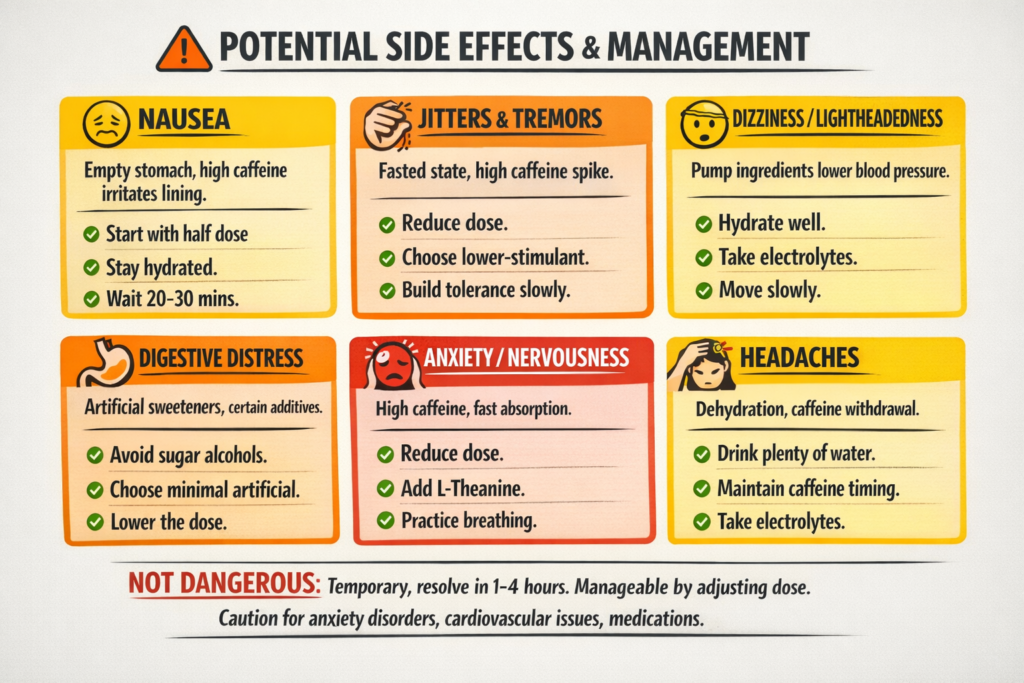
Potential Side Effects of Pre-Workout on Empty Stomach
1. Nausea
Why it happens:
- High caffeine content on an empty stomach can irritate gastric lining
- Stimulants increase stomach acid production
- Beta-alanine can cause an unsettled stomach feeling in some people
- Individual tolerance varies significantly
Who’s affected: People with sensitive stomachs, those new to pre-workout, or those taking very high doses (300+ mg caffeine).
How to minimize: Start with half-dose to assess tolerance, stay well-hydrated, avoid training immediately after consuming (wait 20-30 minutes), consider taking with a small amount of food (though this may slightly reduce fasting benefits).
2. Jitters and Tremors
Why it happens:
- Caffeine stimulates the central nervous system
- Empty stomach = faster absorption = higher peak blood caffeine levels
- Stimulant combination (caffeine + synephrine + yohimbine) amplifies this
- Low blood sugar while fasted makes you more sensitive to stimulant effects
Who’s affected: Caffeine-sensitive individuals, those taking high-stimulant pre-workouts, people who don’t regularly consume caffeine.
How to minimize: Reduce pre-workout dose, choose a lower-stimulant option, build caffeine tolerance gradually, ensure adequate electrolytes and hydration.
3. Dizziness or Lightheadedness
Why it happens:
- Vasodilation from citrulline/arginine (pump ingredients) can lower blood pressure temporarily
- Combined with empty stomach and standing up quickly = potential dizziness
- Dehydration while fasted exacerbates this
- Blood sugar may be lower while fasted
Who’s affected: People prone to low blood pressure, dehydrated individuals, those standing up quickly after sitting.
How to minimize: Stay well-hydrated (drink water with pre-workout), consume electrolytes, avoid sudden position changes, sit down if you feel dizzy.
4. Digestive Distress
Why it happens:
- Artificial sweeteners (especially sugar alcohols if present) can cause bloating and gas
- High doses of certain ingredients (beta-alanine, citrulline) may cause GI upset in sensitive people
- Empty stomach may be more sensitive to certain compounds
Who’s affected: People with IBS or sensitive digestion, those intolerant to specific sweeteners.
How to minimize: Choose pre-workouts with minimal artificial ingredients, avoid sugar alcohols, reduce dose, experiment with different brands/formulas.
5. Anxiety or Nervousness
Why it happens:
- High caffeine doses stimulate release of stress hormones (cortisol, epinephrine)
- Empty stomach = faster, higher peak blood levels
- Some people are genetically more sensitive to caffeine’s anxiogenic effects
Who’s affected: Anxiety-prone individuals, those with high stress levels already, people consuming 300+ mg caffeine at once.
How to minimize: Reduce caffeine dose, add L-theanine (balances caffeine, reduces anxiety), practice breathing exercises pre-workout, consider stimulant-free pre-workout options.
6. Headaches
Why it happens:
- Dehydration (common while fasted)
- Caffeine withdrawal (if you normally consume caffeine earlier but are delaying it)
- Vasodilation (from pump ingredients) can trigger headaches in some people
Who’s affected: Dehydrated individuals, regular caffeine consumers, people prone to vascular headaches.
How to minimize: Hydrate thoroughly before and during training, maintain consistent caffeine timing, ensure adequate electrolyte intake.
Are These Side Effects Dangerous?
The short answer: No, these side effects are generally harmless but can be uncomfortable and impact your training quality.
They are NOT dangerous unless:
- You have underlying heart conditions (in which case, consult doctor before using any stimulants)
- You experience chest pain, severe heart palpitations, or difficulty breathing (seek medical attention immediately)
- Symptoms are severe or persistent (may indicate allergy or intolerance)
For the vast majority of healthy individuals, these side effects are:
- Temporary (resolve within 1-4 hours as caffeine is metabolized)
- Manageable (by adjusting dose, hydration, timing)
- More about comfort than safety
Who Should Be More Cautious?
Consider avoiding pre-workout on empty stomach (or using stimulant-free versions) if you:
- Have a diagnosed anxiety disorder (high-dose caffeine while fasted may trigger panic)
- Have cardiovascular issues (heart arrhythmias, high blood pressure)
- Are pregnant or breastfeeding (limit caffeine intake overall)
- Take medications that interact with caffeine (check with pharmacist/doctor)
- Have chronic gastritis or ulcers (empty stomach + acid-increasing stimulants = pain)
- Are highly caffeine-sensitive (some people metabolize caffeine very slowly genetically)
For everyone else: Start conservatively (half dose first time), assess tolerance, adjust as needed.
Strategies to Minimize Side Effects
1. Start with lower doses:
- Cut your normal pre-workout serving in half initially
- Gradually increase over 1-2 weeks as tolerance builds
- Find your personal sweet spot
2. Hydrate thoroughly:
- Drink 16-24 oz water with pre-workout
- Ensure adequate hydration throughout fasting window
- Consider adding electrolytes (sodium, potassium, magnesium)
3. Time it appropriately:
- Take pre-workout 20-30 minutes before training (not immediately before)
- Gives time for initial absorption and lets you gauge effects before intense exercise
4. Choose quality formulas:
- Avoid proprietary blends (you don’t know exact doses)
- Look for third-party tested products
- Avoid excessive stimulant combinations (300+ mg caffeine + multiple other stimulants)
5. Consider stimulant-free options:
- If stimulants cause issues, many effective stimulant-free pre-workouts exist
- Focus on pump ingredients (citrulline, arginine), beta-alanine, nootropics
- Still enhance performance without caffeine side effects
6. Don’t train immediately after consumption:
- Wait 15-20 minutes after drinking pre-workout before starting intense exercise
- Lets stomach settle and absorption begin
- Reduces nausea risk
How to Choose or Create a Fasting-Friendly Pre-Workout
If you’re committed to combining intermittent fasting with optimal training performance, here’s how to select or create the perfect fasting-friendly pre-workout.
What to Look For in a Fasting-Friendly Pre-Workout
Essential criteria:
Zero or minimal calories (<5 calories per serving):
- This is non-negotiable
- Check nutrition label, not just marketing claims
No protein, BCAAs, or EAAs:
- These will break your fast via insulin response and mTOR activation
- Even “small amounts” are enough to disrupt fasting
No carbohydrates:
- No dextrose, maltodextrin, sugar, or other carb sources
- These spike insulin immediately
Key beneficial ingredients to include:
Caffeine (100-300 mg depending on tolerance):
- The foundation of most effective pre-workouts
- Dose: Beginners 100-150 mg, regular users 200-250 mg, high tolerance 300+ mg
Beta-alanine (2-5 grams):
- Buffers muscle acid buildup
- Improves endurance and allows more reps
- Causes harmless tingling sensation
L-citrulline (6-8 grams) or citrulline malate (8-10 grams):
- Increases nitric oxide production
- Improves blood flow (“pump”)
- Reduces fatigue and improves endurance
Betaine (2.5-5 grams):
- Improves power output
- Supports cellular hydration
- May improve body composition over time
Optional beneficial ingredients:
L-tyrosine (1-3 grams):
- Dopamine precursor
- Improves focus and motivation, especially when fasted/stressed
L-theanine (100-200 mg):
- Pairs with caffeine beautifully
- Reduces jitters and anxiety
- Smooth, focused energy
Alpha-GPC or other choline sources (300-600 mg):
- Supports focus and mind-muscle connection
- Enhances acetylcholine (neurotransmitter for muscle contraction)
Electrolytes (sodium, potassium, magnesium):
- Important during fasting (easy to become depleted)
- Prevents cramping
- Supports hydration and performance
Ingredients to avoid:
❌ BCAAs, EAAs, or any proteinogenic amino acids ❌ Protein powder (whey, casein, etc.) ❌ Dextrose, maltodextrin, or any carbohydrates ❌ Excessive proprietary blends (you can’t verify what’s in them) ❌ Fats (MCT oil, coconut oil powder) if you’re strict about fasting
Pre-Made Fasting-Friendly Pre-Workout Examples
While I can’t endorse specific brands, here’s what to look for when shopping:
Check the label for:
- “0 calories” or “<5 calories”
- “Sugar-free”
- “No BCAAs” or “No amino acids” (except non-proteinogenic ones like beta-alanine, citrulline)
Common fasting-friendly pre-workout categories:
- Stimulant-focused pre-workouts (caffeine + focus ingredients, minimal else)
- Pump-focused pre-workouts (citrulline, arginine, betaine)
- Nootropic pre-workouts (cognitive enhancement focus)
Red flags on labels:
- Lists BCAAs, EAAs, or leucine prominently
- Contains 50+ calories
- Includes protein or carbs in nutrition facts
- “Complete” or “all-in-one” formulas (usually include everything, including fast-breaking ingredients)
DIY Fasting-Friendly Pre-Workout Recipe
If you want complete control and cost-effectiveness, create your own:
Basic Fasting-Friendly Pre-Workout:
- Caffeine: 200 mg (or adjust to preference)
- From caffeine powder, caffeine pills, or strong coffee
- Beta-alanine: 3-5 grams
- Pure powder, mixed in water
- L-citrulline: 6-8 grams
- Pure powder (not citrulline malate unless you adjust dose)
- Betaine: 2.5 grams
- Pure powder
- Pink Himalayan salt: 1/4 teaspoon
- Provides sodium (electrolyte)
- Optional: L-tyrosine: 1-2 grams
- For focus/motivation boost
- Optional: L-theanine: 100-200 mg
- To smooth out caffeine, reduce jitters
Mixing:
- Combine all powders in 12-16 oz water
- Shake or stir vigorously
- Drink 20-30 minutes before training
Flavoring (optional, if you don’t mind artificial sweeteners):
- Add zero-calorie flavor drops or drink mix (Crystal Light, Mio, etc.)
- Or use stevia/monk fruit with flavor extracts (lemon, berry, etc.)
- Makes it more palatable than plain powder water
Cost comparison:
- Pre-made pre-workout: $1.00-2.50 per serving
- DIY pre-workout: $0.30-0.80 per serving
- Significant savings over time if you train frequently
Timing Your Pre-Workout Consumption
Optimal timing relative to training:
20-30 minutes before training:
- Allows absorption to begin
- Peak effects align with training start
- Stomach has time to settle
Not recommended:
- Immediately before training (may cause nausea)
- 60+ minutes before training (effects may peak too early)
Optimal timing relative to fasting window:
Example 1: Morning training, 16:8 fasting (eating window noon-8 PM)
- Wake at 6 AM
- Pre-workout at 7:30 AM
- Train 8:00-9:00 AM
- Continue fasting until noon
- Pre-workout doesn’t break fast, maintain benefits until eating window
Example 2: Midday training, OMAD (one meal at 6 PM)
- Pre-workout at 11:30 AM
- Train noon-1:00 PM
- Continue fasting until 6 PM
- Pre-workout supports performance without breaking extended fast
Example 3: Evening training, 16:8 (eating window noon-8 PM)
- Pre-workout at 4:30 PM
- Train 5:00-6:00 PM
- Eat post-workout at 6:30 PM (within eating window)
- Can use regular pre-workout if preferred since you’re eating soon anyway
THE BOTTOM LINE: PRE-WORKOUT AND INTERMITTENT FASTING COMPATIBILITY
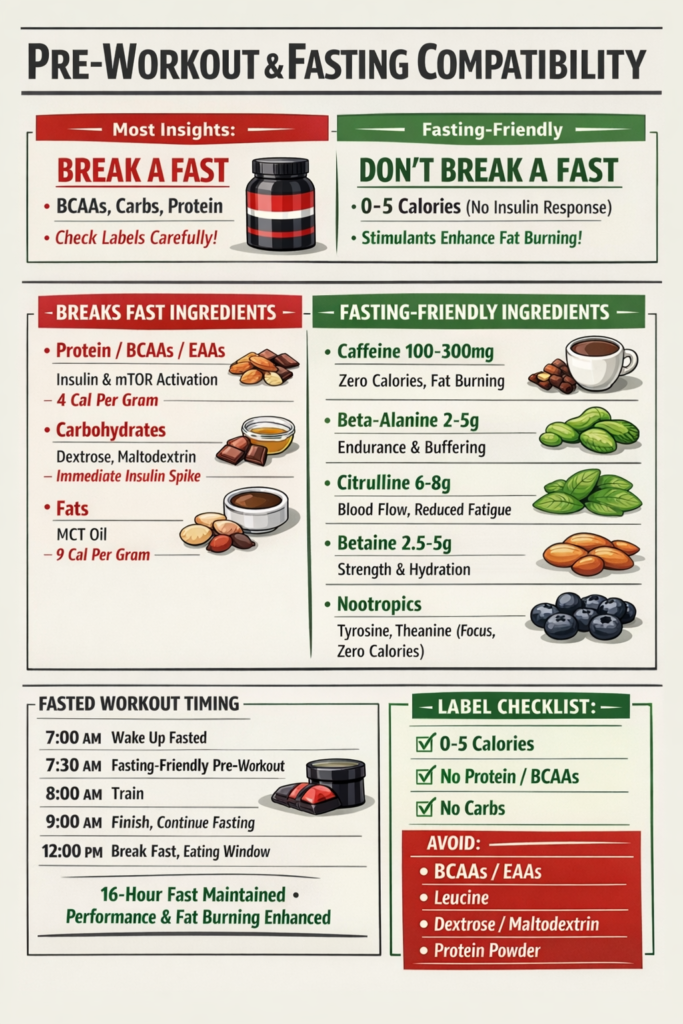
After examining all aspects of pre-workout supplements and intermittent fasting, here’s what you need to understand:
✅ Most Pre-Workouts Break The Fast Due To BCAAs Or Carbs (Check Label Carefully)
✅ Fasting-Friendly Pre-Workouts Contain Zero Calories (Or <5 Calories)
✅ Caffeine And Stimulants Don’t Break The Fast (Actually Enhance Fat Burning)
✅ Non-Proteinogenic Amino Acids Are Fasting-Safe (Beta-Alanine, Citrulline, Taurine, Betaine)
✅ Nootropics And Electrolytes Are Fine (Support Performance Without Insulin Response)
✅ Avoid Any Pre-Workout With Protein, BCAAs, EAAs, Or Carbs (These Break The Fast)
Perfect For:
- People Training During Fasting Windows
- Those Seeking Energy Without Breaking Fast
- Anyone Doing Morning Fasted Training
- Individuals Using Extended Fasting Protocols (OMAD, 20:4)
- Fat Loss Focused Trainees Wanting Performance Support
Not Ideal For:
- Those Using BCAAs For Muscle Preservation (Breaks Fast)
- Anyone Wanting “Complete” Pre-Workouts With Everything (Usually Contains Fast-Breaking Ingredients)
- People Who Tolerate Stimulants Poorly On Empty Stomach
- Those Following Religious Fasts With Zero Consumption Rules
Fast-Breaking Pre-Workout Ingredients:
Contains BCAAs or EAAs:
- Breaks fast via insulin response and mTOR activation
- Even 5g BCAAs provides 20 calories and disrupts fasting
- Common in many complete pre-workouts
Contains Carbohydrates (Dextrose, Maltodextrin):
- Immediate insulin spike
- Completely breaks fast
- Even 2-4g is enough to disrupt fasting state
Contains Protein Powder:
- 4 calories per gram
- Insulin response
- Breaks fast
Fasting-Friendly Pre-Workout Ingredients:
Caffeine (100-300mg):
- Zero calories
- Enhances fat burning
- Suppresses appetite
- Improves performance
Beta-Alanine (2-5g):
- Negligible calories
- Buffers muscle acid
- Improves endurance
L-Citrulline (6-8g):
- Negligible calories
- Increases blood flow
- Reduces fatigue
Betaine (2.5-5g):
- Negligible calories
- Improves power output
- Supports hydration
Tyrosine, Theanine, Nootropics:
- Zero calories
- Enhance focus
- Reduce jitters
Sample Fasting-Friendly Pre-Workout Timeline:
7:00 AM: Wake up (fasted since 8 PM previous night) 7:30 AM: Consume fasting-friendly pre-workout (caffeine + beta-alanine + citrulline) 8:00 AM: Begin training 9:00 AM: Finish training, continue fasting 12:00 PM: Break fast with first meal (eating window opens)
Result: Maintained 16-hour fast, supported training performance, enhanced fat burning throughout morning.
STOP BREAKING YOUR FAST ACCIDENTALLY. START READING PRE-WORKOUT LABELS. CHOOSE ZERO-CALORIE FORMULAS. AVOID BCAAS AND CARBS. TRAIN HARD WHILE FASTED. MAXIMIZE BOTH PERFORMANCE AND FASTING BENEFITS.
Ready To Build A Complete Fasting And Training Protocol That Maximizes Fat Loss, Preserves Muscle, And Optimizes Performance, Without Guesswork About Supplements Breaking Your Fast? Understanding which pre-workout ingredients break your fast is just the beginning. Get a comprehensive fasting and training system that includes personalized fasting protocol recommendations based on your schedule and goals, supplement timing strategies for maximum performance without disrupting fasting benefits, meal timing and composition guidance for your eating windows, training program design optimized for fasted performance, and evidence-based approaches to combining intermittent fasting with muscle building or fat loss. Stop sabotaging your fasting benefits with the wrong supplements. Start optimizing both your nutrition timing and training performance with a science-based integrated approach.
REFERENCES
SECTION 1 — Fasting mechanisms: insulin, fat oxidation, autophagy, and mTOR
[1] Mattson MP et al. — Cell Metabolism, 2014 Comprehensive review of intermittent fasting mechanisms; during fasting, depletion of glycogen stores activates AMPK while suppressing mTOR and insulin signaling; this metabolic switch promotes fatty acid oxidation and ketone body production from fat; autophagy is upregulated as a protective cellular response; growth hormone increases during fasting to preserve muscle mass; insulin drops, enabling lipolysis; fasting reverses major metabolic abnormalities including insulin resistance and chronic inflammation; provides the physiological basis for why preserving the fasted state — avoiding insulin spikes from calories — matters https://pubmed.ncbi.nlm.nih.gov/24440038/ (Note: this is the Mattson 2014 Cell Metab review — confirm via search result URL from cell.com PDF above)
[2] Nakamura S & Yoshimori T — PubMed/Autophagy, 2018 Review confirming fasting and calorie restriction as the most potent non-genetic inducers of autophagy; autophagy is upregulated across a wide variety of tissues in response to food deprivation; fasting activates autophagy by inhibiting mTOR signaling and activating AMPK; autophagy serves to recycle damaged organelles and proteins, with proposed roles in longevity and disease prevention; directly validates the article’s description of autophagy as a key fasting benefit and its sensitivity to nutrient-sensing pathways https://pubmed.ncbi.nlm.nih.gov/30172870/
SECTION 2 — BCAAs/leucine activate mTOR and stimulate insulin, breaking the fast
[3] Lynch CJ & Adams SH — PMC/Nature Reviews Endocrinology, 2014 Comprehensive review of branched-chain amino acids in metabolic signaling; leucine is a primary activator of mTORC1 complex, which is a central nutrient-sensing pathway; BCAAs — particularly leucine — potentiate insulin secretion and mTOR-mediated protein synthesis; mTORC1 activation by leucine directly inhibits autophagy through downstream S6K1 signaling; leucine-mediated mTOR activation in muscle cells shifts the metabolic state from catabolic (fasting) to anabolic (fed); provides the precise mechanism for why BCAAs in pre-workout would inhibit fasting benefits including autophagy https://pmc.ncbi.nlm.nih.gov/articles/PMC4424797/
[4] Neinast M et al. — PMC/Nutrients, 2022 Review of branched-chain amino acids and insulin resistance; BCAAs regulate protein homeostasis via mTORC1 signaling and activation of postprandial protein synthesis; leucine additionally potentiates insulin secretion from pancreatic beta cells; BCAAs and insulin are co-anabolic signals that activate mTORC1 through parallel pathways; mTORC1-S6K1 activation by BCAAs induces serine phosphorylation of IRS-1/2, which uncouples insulin signaling; directly supports the article’s claim that BCAA-containing pre-workouts break the fast through insulin release and mTOR activation https://pmc.ncbi.nlm.nih.gov/articles/PMC9824001/
SECTION 3 — Caffeine enhances fat oxidation without breaking the fast
[5] Collado-Mateo D et al. — PubMed/Nutrients, 2021 Meta-analysis of 19 fasted-exercise studies examining caffeine’s effect on fat oxidation; caffeine significantly increased the fat oxidation rate during exercise (SMD=0.73; 95% CI 0.19–1.27), consistent with a significant reduction in respiratory exchange ratio; dose-response effect observed — more than 3.0 mg/kg required for statistically significant fat oxidation enhancement; effect was larger in sedentary compared to aerobically trained individuals; pre-exercise caffeine in fasted state is an effective strategy to increase fat utilization during submaximal aerobic exercise; directly validates the article’s claim that caffeine enhances fat burning during fasted training https://pubmed.ncbi.nlm.nih.gov/33255240/
[6] Gutiérrez-Hellín J et al. — PubMed/European Journal of Nutrition, 2022 Dose-response study in 18 recreationally active males; both 3 mg/kg and 6 mg/kg caffeine significantly increased maximal fat oxidation rate (0.40 g/min vs. 0.31 g/min placebo, p<0.05) during submaximal cycling; fat oxidation was enhanced at multiple exercise intensities (30–70% VO₂max); both doses reduced perceived fatigue at 80% VO₂max; 3 mg/kg is sufficient to enhance fat utilization; confirms the fat-burning advantage of combining caffeine with fasted training at doses typical of pre-workout supplements https://pubmed.ncbi.nlm.nih.gov/35972531/
SECTION 4 — Fasting combined with caffeine: performance in CHO-restricted state
[7] Melin AM et al. — PubMed/Frontiers in Nutrition, 2025 Randomized crossover study in 17 female endurance athletes; maximal fat oxidation was higher in the fasted + caffeine condition (0.57 g/min) vs. fed condition (0.50 g/min; p=0.039); critically, caffeine ingestion in the carbohydrate-restricted/fasted state compensated for the reduced work capacity associated with fasting alone — 20-minute time trial power was significantly higher with fasted+caffeine vs. fasted alone (+6.9%, p=0.022); demonstrates that fasting-friendly pre-workout (caffeine without carbohydrates) preserves both fat oxidation benefits AND restores training performance — the “best of both worlds” the article advocates https://pubmed.ncbi.nlm.nih.gov/39834686/



Leave a Reply
You must be logged in to post a comment.