
Experiencing stomach discomfort after drinking protein shakes? You’re not alone. Here’s why it happens and exactly how to fix it.
You’re trying to do everything right. You bought whey protein to hit your daily protein targets, support muscle growth, and make your nutrition more convenient.
But instead of feeling energized and ready to tackle your workouts, you’re dealing with:
- Bloating and gas that makes you uncomfortable for hours
- Cramping stomach pain that disrupts your day
- Nausea that makes you regret drinking that shake
- Digestive issues that send you running to the bathroom
Sound familiar?
You’re not imagining it. While whey protein is generally well-tolerated, a significant number of people experience digestive discomfort ranging from mild bloating to severe stomach pain.
The good news? In most cases, this problem is completely fixable once you identify the underlying cause.
In this comprehensive guide, I’m going to walk you through the seven most common reasons why whey protein causes stomach issues, explain the science behind each one, and give you actionable solutions to fix the problem so you can enjoy the benefits of protein supplementation without the misery.
Let’s solve this once and for all.
TABLE OF CONTENTS
The Short Answer: Yes, Whey Can Cause Stomach Pain
Can whey protein cause stomach pain? Absolutely, though it’s not universal and isn’t “normal” if you’re using quality products correctly.
Common digestive issues from whey include:
- Bloating and gas
- Stomach cramping and pain
- Nausea
- Diarrhea
- Acid reflux
- General digestive discomfort
Why this happens: Several factors contribute to whey-related stomach issues, including lactose intolerance, poor product quality, specific additives, consumption timing, drinking too quickly, genuine milk allergies, or underlying digestive sensitivities.
The important distinction: Occasional mild gas or bloating is common and usually harmless. Consistent, severe stomach pain is not normal and indicates a problem that needs addressing.
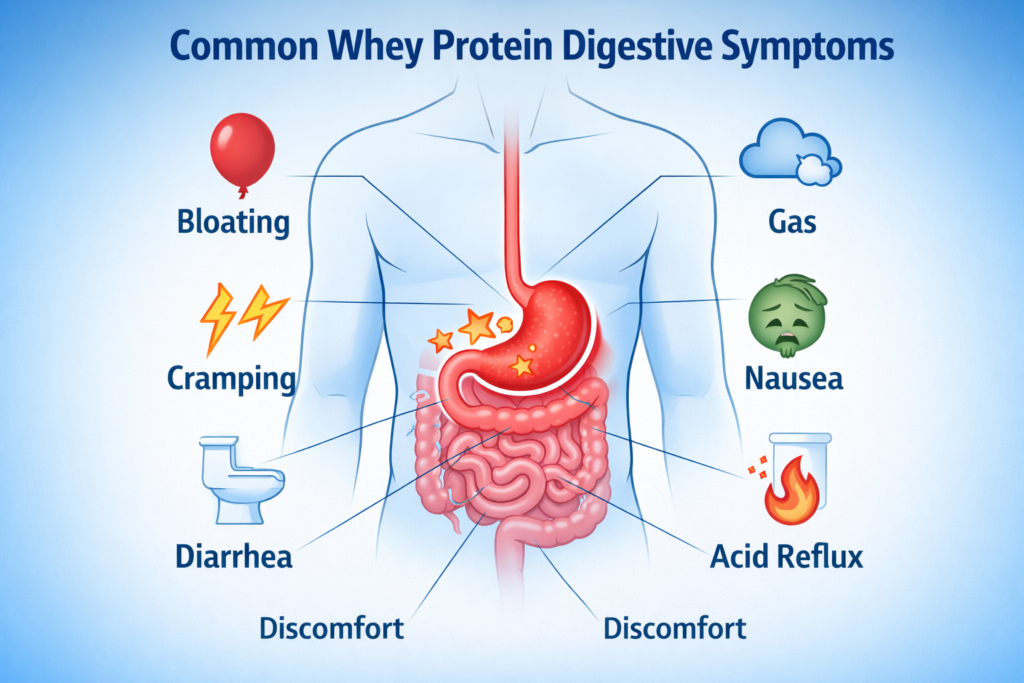
Let’s examine each cause in detail and, more importantly, how to fix it.
Cause 1: Low-Quality Whey Protein
This is perhaps the most common and easily fixable cause of whey-related stomach issues.
The Problem With Cheap Whey
Due to whey protein’s relatively high price point, many companies cut corners to reduce costs or increase profit margins.
Common quality-cutting tactics:
1. Minimal filtration
Cheap whey undergoes less thorough filtration, leaving higher amounts of:
- Lactose (milk sugar that causes digestive issues)
- Fat remnants
- Impurities and contaminants
- Non-protein components
Result: More lactose means more digestive distress for sensitive individuals, even those without diagnosed lactose intolerance.
2. Protein spiking (amino spiking)
Unscrupulous manufacturers add cheap amino acids like glycine, taurine, or creatine to artificially inflate protein content on the label.
The scam: These additives show up in protein tests but don’t provide the muscle-building benefits of complete whey protein. Worse, some people react badly to high doses of isolated amino acids.
3. Filler ingredients
Low-quality products bulk up their formulas with:
- Maltodextrin (cheap carb filler)
- Cellulose and other thickeners
- Excessive amounts of artificial ingredients
Result: Your digestive system struggles to process these unnecessary additives, leading to discomfort.
4. Contamination and poor manufacturing
Cheap facilities may have:
- Poor quality control
- Cross-contamination with allergens
- Bacterial contamination
- Heavy metal presence
5. Misleading labeling
Some products with “whey” in the name actually contain:
- Mostly other cheaper proteins (soy, wheat)
- Minimal actual whey protein
- Undisclosed ingredients
This is legal in many countries because regulations allow products to include “whey” in the name even if it’s not the primary ingredient.
How to Identify Low-Quality Whey
Red flags indicating poor quality:
Price is suspiciously low
If whey costs significantly less than competitors (30-50%+ below market average), something is wrong. Quality whey has established production costs. Rock-bottom prices mean corners were cut.
Protein percentage is low
Calculate: (Protein grams ÷ Total serving size) × 100
- Good concentrate: 70-80% protein
- Good isolate: 90-95% protein
- Suspicious: Below 65% protein
Example:
- 30g serving contains 18g protein
- 18 ÷ 30 = 60% protein (too low, likely filled with junk)
Ingredient list is long and confusing
Quality whey has short, clear ingredient lists:
- Whey protein concentrate or isolate (first ingredient)
- Natural or artificial flavoring
- Sweetener (stevia, sucralose, etc.)
- Lecithin (for mixability)
- Maybe a few other minimal ingredients
Suspicious ingredients include:
- “Protein blend” without breakdown
- Maltodextrin high on the list
- Multiple types of cheaper proteins
- Excessive thickening agents
- Amino acids listed separately (potential spiking)
No third-party testing
Quality brands invest in third-party certification from:
- NSF Certified for Sport
- Informed-Choice
- Banned Substances Control Group (BSCG)
Lack of certification doesn’t guarantee poor quality, but it’s a warning sign.
Proprietary blends
When a label says “proprietary blend” without disclosing exact amounts of each ingredient, the company is hiding something. Usually, it’s that effective ingredients are severely underdosed.
The Solution
Buy quality whey from reputable brands:
Look for:
- Transparent ingredient labels with exact amounts
- Third-party testing certification
- Protein content of 70%+ (concentrate) or 90%+ (isolate)
- First ingredient is clearly “whey protein concentrate” or “whey protein isolate”
- Reasonable price (not suspiciously cheap)
- Positive reviews specifically mentioning digestive tolerance
Recommended approach:
Don’t necessarily buy the most expensive brand (you’re often paying for marketing), but avoid the absolute cheapest options. Aim for mid-range pricing from established, transparent brands.
Test before buying bulk:
Purchase the smallest container available first. Test for 1-2 weeks to ensure you tolerate it well before committing to a large tub.
Cause 2: Excessive Additives (Inulin, Sugar Alcohols, Artificial Sweeteners)
Even quality whey can cause stomach issues if it contains certain additives in high amounts.
The Inulin Problem
What is inulin? A type of fiber found naturally in foods like onions, garlic, chicory root, and asparagus.
Why it’s added to whey: Inulin serves as a thickening agent and prebiotic fiber, improving shake texture and marketing appeal (“contains probiotics!”).
The digestive issue:
Your body cannot digest fiber. Inulin reaches your intestines intact, where gut bacteria ferment it.
For many people, this causes:
- Excessive gas production
- Bloating and abdominal distension
- Cramping and pain
- Diarrhea (in high amounts)
Individual tolerance varies wildly. Some people handle inulin fine; others experience severe discomfort from even small amounts.
How much is too much? Even 5-10g of inulin can cause issues for sensitive individuals. Some protein powders contain 3-8g per serving.
The Sugar Alcohol Problem
Common sugar alcohols in protein powder:
- Erythritol
- Xylitol
- Sorbitol
- Maltitol
Why they’re used: Provide sweetness with fewer calories than sugar, appealing for low-carb or “keto-friendly” formulas.
The digestive issue:
Sugar alcohols are only partially absorbed in the small intestine. The remainder reaches the colon, where they:
- Draw water into the intestines (osmotic effect)
- Get fermented by gut bacteria
Result: Gas, bloating, cramping, and diarrhea, especially in amounts above 10-15g.
The sneaky problem: Multiple servings throughout the day compound the effect. Two shakes with 8g sugar alcohols each = 16g total, likely causing issues.
The Artificial Sweetener Problem
Common artificial sweeteners:
- Sucralose (Splenda)
- Aspartame
- Acesulfame potassium (Ace-K)
The controversy: While approved as safe by regulatory agencies, some individuals report digestive issues from artificial sweeteners.
Possible mechanisms:
- Altering gut bacteria composition
- Increasing gut permeability in sensitive individuals
- Direct irritation of the digestive tract
Individual response varies greatly. Most people tolerate artificial sweeteners fine; a subset experiences problems.
Natural Sweetener Issues
Even “natural” sweeteners like stevia can cause issues in some people, though less commonly than artificial options.
The Solution
If you suspect additive-related issues:
Step 1: Switch to unflavored whey
Unflavored whey contains:
- Just whey protein
- Lecithin (for mixability)
- Nothing else
Drawback: Tastes bland or slightly milky. Not pleasant alone.
Solution: Add your own flavoring:
- Cocoa powder (unsweetened)
- Fresh or frozen fruit
- Cinnamon or vanilla extract
- Small amount of honey or maple syrup (if calories allow)
Step 2: Choose minimally sweetened options
Look for products sweetened only with stevia or monk fruit, with no added fibers or sugar alcohols.
Step 3: Reduce serving size
If you tolerate small amounts but not full servings, use half a scoop more frequently rather than full scoops less often.
Step 4: Track which flavors cause problems
Many people report issues with certain flavors (especially heavily sweetened ones like cookies and cream, birthday cake, etc.) but tolerate simpler flavors (vanilla, chocolate) fine.
Keep a log:
- Date and time
- Product and flavor
- Serving size
- Symptoms and severity
This helps identify patterns.
Cause 3: Lactose Intolerance
This is the most common reason people experience digestive issues with whey protein.
Understanding Lactose Intolerance
What is lactose? The sugar naturally present in milk and dairy products.
What is lactose intolerance? The inability to properly digest lactose due to insufficient lactase enzyme production.
How common is it? Research indicates approximately 65-70% of the global adult population has some degree of lactose intolerance, though prevalence varies dramatically by ethnicity:
- East Asian descent: 70-100%
- African, Native American, or Mediterranean descent: 50-80%
- Northern European descent: 5-15%
The spectrum of severity:
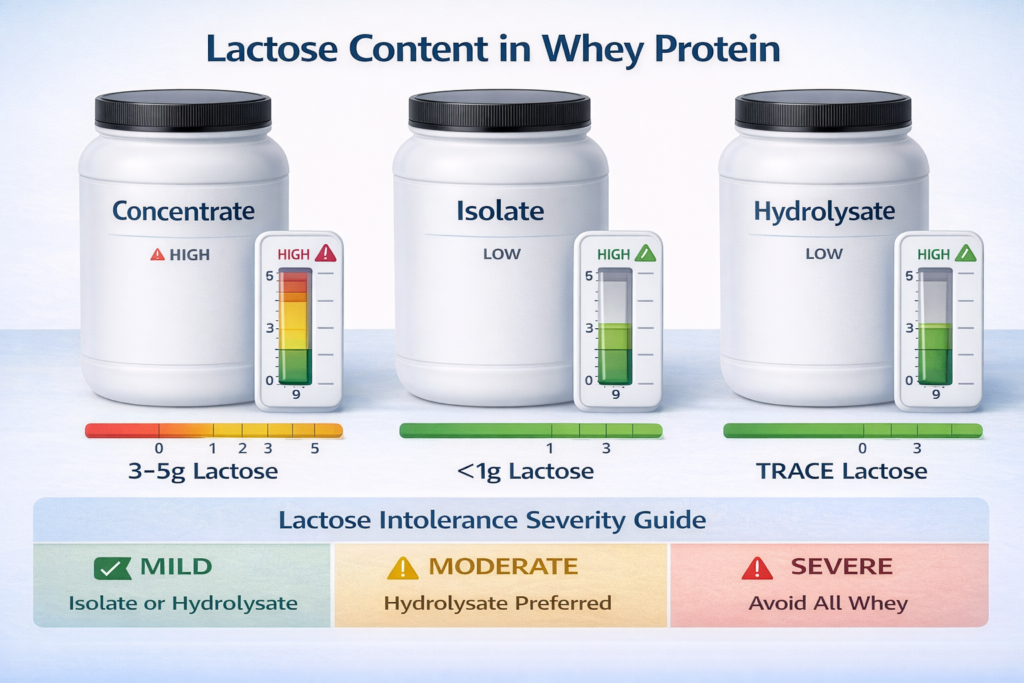
Mild: Can tolerate small amounts of lactose (10-12g) without significant symptoms
Moderate: Experiences discomfort from moderate lactose amounts (5-10g)
Severe: Reacts to even trace amounts of lactose (<1g)
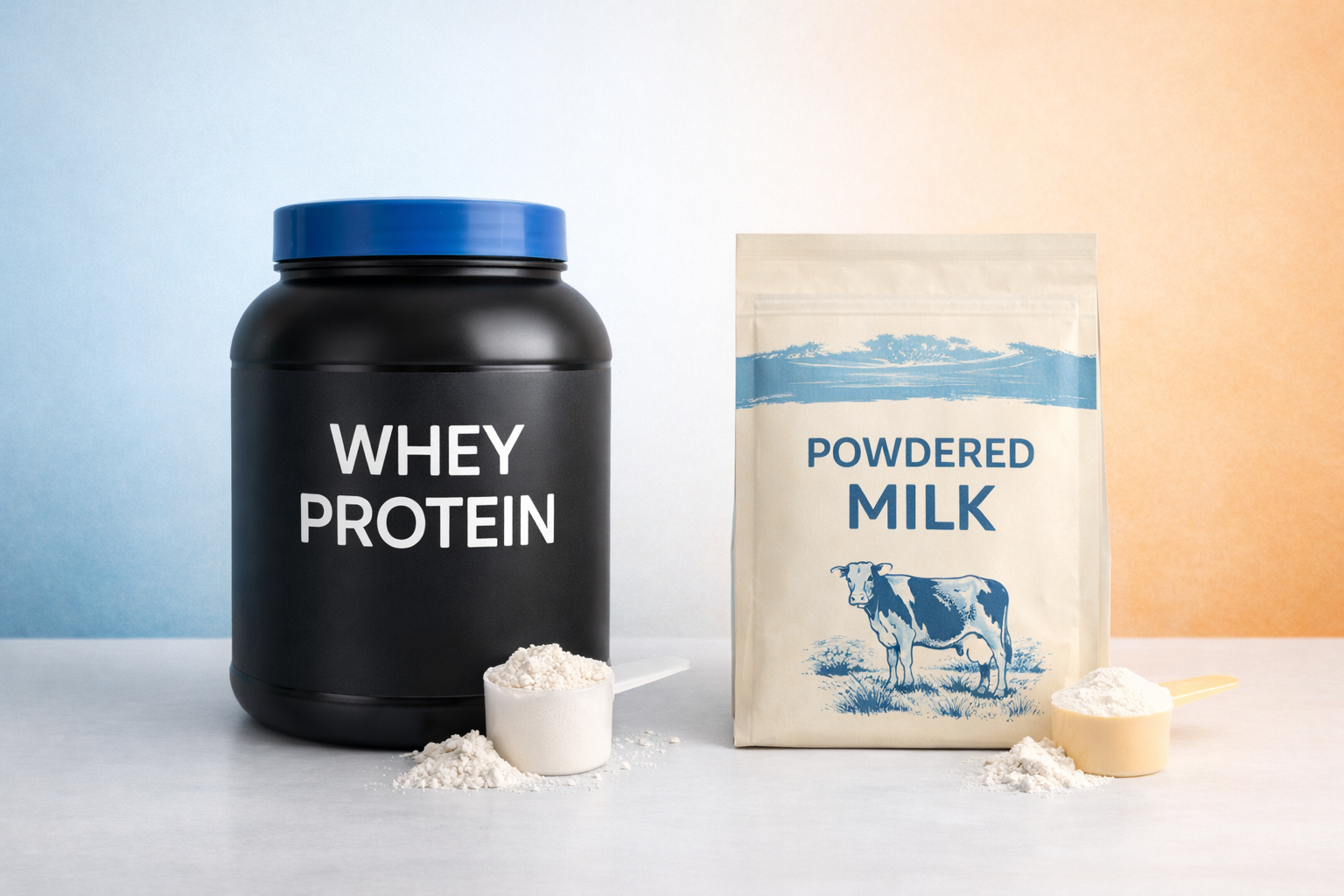
Lactose Content in Different Whey Types
Whey protein concentrate: 3-5g lactose per serving (30g scoop)
Whey protein isolate: <1g lactose per serving (often 0.5g or less)
Whey protein hydrolysate: Trace amounts, nearly lactose-free
Symptoms of Lactose Intolerance
Common symptoms (appearing 30 minutes to 2 hours after consumption):
- Bloating and gas
- Abdominal cramping
- Diarrhea
- Nausea
- Gurgling stomach sounds
Severity depends on:
- Amount of lactose consumed
- Individual tolerance threshold
- What else you ate with it
The Confusing Part
Many people with mild lactose intolerance tolerate whey concentrate fine because the lactose content is relatively low compared to drinking milk directly.
Comparison:
- 1 cup whole milk: 12-13g lactose
- 1 scoop whey concentrate: 3-5g lactose
- 1 scoop whey isolate: <1g lactose
However, if you consume 2-3 protein shakes daily, you’re getting 6-15g lactose from whey alone, potentially exceeding your tolerance threshold.
The Solution
Test your lactose tolerance level:
Step 1: Eliminate whey for 1 week
Stop all whey protein and dairy products. See if symptoms resolve.
Step 2: Reintroduce gradually
Start with whey isolate (very low lactose):
- Day 1: Half scoop
- Day 3: Full scoop
- Day 5: Two scoops
Monitor symptoms. If isolate causes no issues, lactose was likely the problem.
Step 3: Try concentrate (if desired)
If you tolerate isolate well and want to save money, test concentrate:
- Start with half scoop
- Gradually increase
- Find your personal threshold
Alternative solutions:
Switch to whey isolate permanently
The most straightforward solution. Isolate contains minimal lactose (<1g) that most lactose-intolerant individuals tolerate fine.
Cost consideration: Isolate costs 30-50% more than concentrate. If lactose is causing issues, the extra cost is worth it.
Use lactase enzyme supplements
Lactase pills (like Lactaid) provide the enzyme needed to digest lactose.
How to use:
- Take 1-2 tablets immediately before consuming whey
- Works for many people with mild to moderate intolerance
- Inexpensive solution if you prefer concentrate
Try plant-based protein alternatives
If even isolate causes issues, or if you have a milk allergy (different from lactose intolerance), switch to:
- Pea protein isolate
- Rice protein
- Hemp protein
- Blended plant proteins
- Beef protein isolate (expensive but effective)
Drawback: Plant proteins often taste worse and have incomplete amino acid profiles (though blends solve this). Beef protein is expensive.
Benefit: Zero lactose, zero dairy.
Cause 4: Drinking Your Shake Too Quickly
This is a simple but overlooked cause of stomach discomfort.
The Problem With Speed
When you chug a protein shake quickly:
1. You swallow excessive air
Rapid drinking forces you to take in large amounts of air along with the liquid.
Result: Trapped gas in your stomach and intestines causes:
- Bloating and distension
- Burping
- Cramping pain
- Flatulence
2. You overwhelm your digestive system
Your stomach suddenly receives a large volume of liquid protein. This can:
- Cause immediate fullness and discomfort
- Trigger nausea
- Lead to acid reflux
- Slow digestion
3. You don’t give satiety signals time to register
Drinking too fast bypasses natural feedback mechanisms telling you to slow down.
Who This Affects Most
People particularly prone to this issue:
- Those drinking shakes between meetings or classes
- Pre-workout shake consumers rushing to the gym
- Anyone multitasking while drinking
- People using very thick, hard-to-drink shakes
The Solution
Simple fix: Slow down
Recommended approach:
- Take 5-10 minutes to finish your shake
- Sip, don’t chug
- Put the bottle down between sips
- Treat it like a meal, not a race
Make shakes easier to drink:
If your shake is too thick and you feel forced to chug it:
Thin it out:
- Add more liquid (water or milk)
- Use less powder
- Blend longer to reduce thickness
Use a straw: Surprisingly, some people find straws help them drink at a more controlled pace (though others swallow more air with straws, so test this individually).
Practical tip for busy people:
If you’re truly rushed and must drink quickly, consider:
- Splitting the shake into two smaller servings spread 30-60 minutes apart
- Making a thinner shake that’s easier to consume quickly
- Switching to whole food protein sources when possible
Cause 5: Milk Protein Allergy (Not Lactose Intolerance)
This is often confused with lactose intolerance but is a completely different issue.
Understanding the Difference
Lactose intolerance:
- Inability to digest lactose (milk sugar)
- Not an immune response
- Causes digestive symptoms only
- Can often tolerate lactose-free dairy
Milk protein allergy:
- Immune system reaction to milk proteins (casein and whey)
- True allergic response
- Can cause digestive AND systemic symptoms
- Must avoid all dairy, even lactose-free
Two Types of Milk Proteins
Milk contains two protein types:
Casein (80% of milk protein): Slow-digesting, found mostly in cheese
Whey (20% of milk protein): Fast-digesting, what’s in your protein powder
People can be allergic to:
- Just casein
- Just whey (rare)
- Both (most common in true milk allergy)
Symptoms of Milk Protein Allergy
Digestive symptoms:
- Nausea and vomiting
- Severe abdominal pain and cramping
- Diarrhea
- Blood in stool (severe cases)
Non-digestive symptoms:
- Skin reactions (hives, eczema, itching)
- Respiratory issues (wheezing, coughing, nasal congestion)
- Swelling (lips, tongue, throat)
- Anaphylaxis (rare, severe cases)
Timing: Symptoms typically appear within minutes to 2 hours after consumption.
The Critical Test
If you experience symptoms even with:
- Whey isolate (virtually lactose-free)
- Lactase enzyme supplements
- Lactose-free dairy products
You likely have a milk protein allergy, not lactose intolerance.
The Solution
Confirm with medical testing:
See an allergist for proper testing:
- Skin prick test
- Blood test (IgE antibodies)
- Oral food challenge (supervised)
Don’t self-diagnose a true allergy. Severe reactions can be dangerous.
Complete dairy avoidance:
If confirmed allergic to milk proteins, you must avoid:
- All whey protein (concentrate, isolate, hydrolysate)
- All dairy products
- Foods containing milk ingredients
Switch to alternative proteins:
Plant-based options:
- Pea protein isolate (most popular)
- Rice protein
- Hemp protein
- Soy protein isolate
- Mixed plant blends (best amino acid profile)
Animal-based non-dairy options:
- Beef protein isolate
- Egg white protein
- Collagen protein (incomplete, use with other sources)
Important note: Beef and egg proteins are complete proteins but more expensive than whey. Plant proteins often need blending for complete amino acid profiles.
Cause 6: Consuming Too Close to Training
Timing your protein shake relative to exercise significantly affects how well you tolerate it.
The Digestive Slowdown During Exercise
What happens when you train:
1. Blood flow redirects
During exercise, your body prioritizes:
- Skeletal muscles (need oxygen and nutrients)
- Heart and lungs (working harder)
- Brain (maintaining coordination)
Blood flow decreases to:
- Digestive organs
- Kidneys
- Liver
Result: Digestion slows dramatically or nearly stops.
2. Sympathetic nervous system activation
Exercise activates “fight or flight” mode, which:
- Suppresses digestive enzyme secretion
- Reduces gut motility
- Slows stomach emptying
The problem: Liquid protein sitting in your stomach during intense exercise can cause:
- Nausea
- Cramping
- Reflux and burping
- Feeling of heaviness
- Urge to vomit
Why Liquid Meals Make This Worse
Thick shakes containing:
- Protein powder
- Milk or other liquids
- Fruit
- Nut butter
- Oats
Create a heavy liquid meal that, despite being liquid, still requires significant digestion.
Liquid doesn’t always mean easy to digest, especially when the shake contains fats (nut butter), fiber (fruit, oats), and concentrated protein.
Who This Affects Most
Particularly problematic for:
- High-intensity training (sprints, HIIT, heavy lifting)
- Activities with lots of jumping or impact
- People with sensitive stomachs
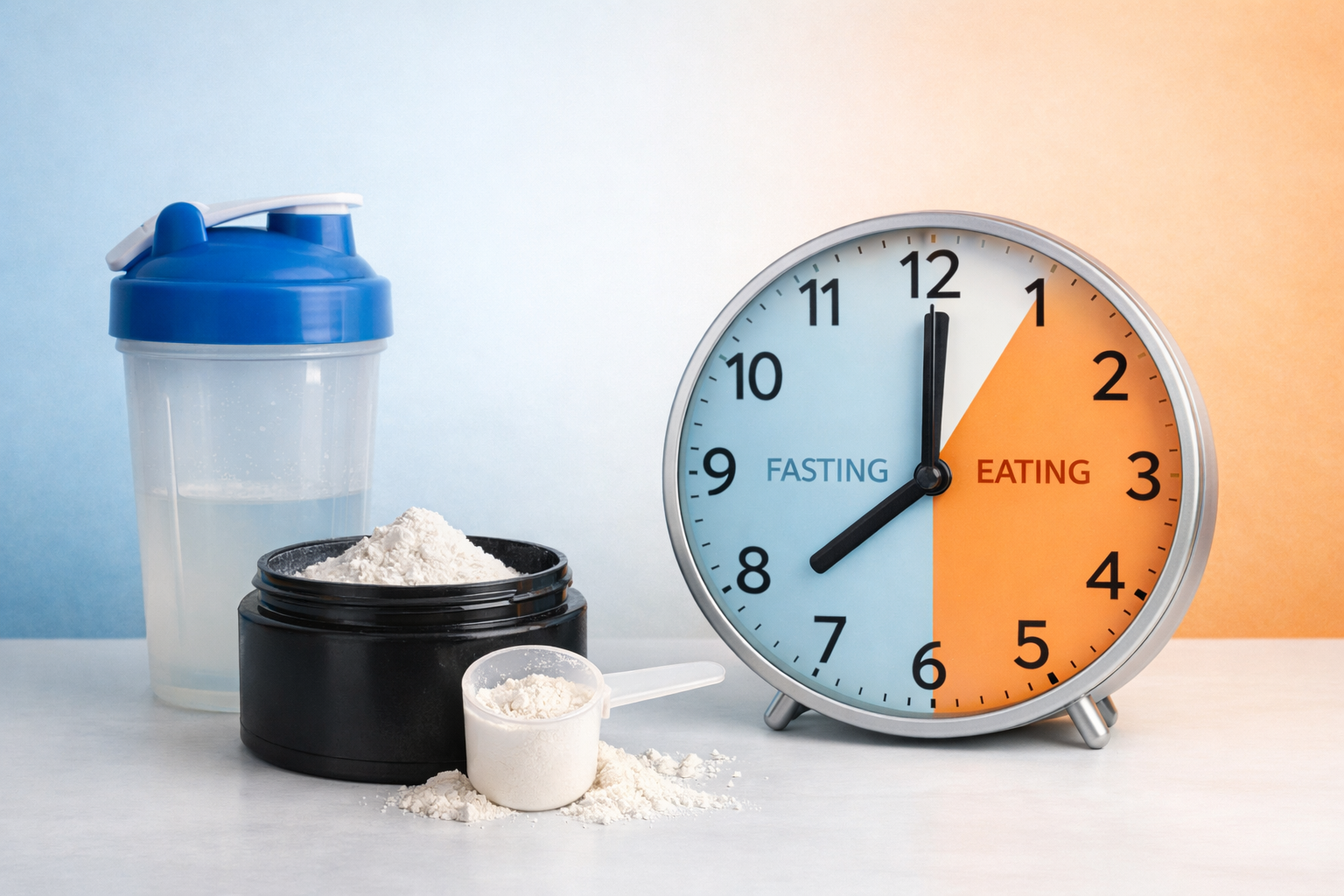
- Morning workouts when you’re fasted
Less problematic for:
- Low-intensity steady cardio (walking)
- Yoga or stretching
- Light resistance training
The Solution
Adjust timing based on shake complexity:
Simple shake (just protein powder + water):
- Can consume 30-60 minutes pre-workout
- Digests relatively quickly
- Minimal stomach contents during training
Complex shake (protein + milk + fruit + fats):
- Consume 2-3 hours pre-workout
- Requires more digestion time
- Treat like a whole food meal
Post-workout is usually fine:
Most people tolerate protein shakes immediately post-workout without issues because:
- You’re no longer in high-intensity activity mode
- Digestion starts returning to normal
- Post-workout nutrient delivery is beneficial
Personal experimentation:
Everyone’s digestive system responds differently. Experiment with:
- Different timing windows
- Shake thickness and complexity
- Type of training intensity
Keep a log to identify your personal tolerance.
Cause 7: Consuming Excessive Amounts
While not as common, some people experience stomach issues simply from drinking too much whey at once or too frequently throughout the day.
The Protein Overload Problem
Your digestive system has limits on how much protein it can comfortably process at once.
What happens with excessive protein:
1. Incomplete digestion
When you consume very high amounts of protein in one sitting (50g+), some may pass through the small intestine partially undigested.
Result: Undigested protein reaches the colon where bacteria ferment it, producing:
- Hydrogen sulfide gas (smells like rotten eggs)
- Excessive flatulence
- Bloating
- Discomfort
2. Digestive enzyme depletion
Your body produces digestive enzymes to break down protein. Overwhelming the system with too much protein can temporarily deplete these enzymes.
3. Dehydration
Protein metabolism requires water. Excessive protein without adequate hydration can lead to:
- Constipation
- Harder digestion
- Stomach discomfort
How Much Is Too Much?
Per serving: Most research suggests 20-40g protein per meal is optimal for muscle protein synthesis. Going significantly above this (60g+) provides no additional muscle-building benefit and increases digestive stress.
Per day: While you can safely consume 0.7-1g protein per pound of body weight daily, getting too much from whey alone (vs. whole foods) can cause issues.
Recommendation: Limit whey to 2-3 servings daily maximum. Get 50-70% of total protein from whole food sources.
The Solution
Reduce serving size:
Instead of double scoops (50g protein), stick to single scoops (25g protein).
Space out servings:
Don’t drink multiple shakes within a few hours. Spread them throughout the day:
- Morning
- Post-workout
- Before bed (if needed)
Minimum 3-4 hours between shakes.
Prioritize whole food protein:
Build your protein intake primarily from:
- Chicken, turkey, fish
- Eggs
- Lean beef
- Greek yogurt, cottage cheese
Use whey to fill gaps, not as primary protein source.
Stay hydrated:
When consuming higher protein:
- Drink at least 8-10 glasses of water daily
- More if you’re training intensely
- Helps protein metabolism and digestion
Additional Factors That Can Worsen Stomach Issues
Beyond the main causes, several factors can exacerbate whey-related digestive problems.
Mixing With Dairy Milk
If you’re lactose intolerant, mixing whey (which already contains some lactose) with dairy milk compounds the problem.
Solution: Use lactose-free milk, almond milk, oat milk, or just water.
Combining With High-Fat Foods
Fat slows digestion. Mixing whey with high-fat ingredients (whole milk, nut butters, coconut oil) creates a heavy shake that sits in your stomach longer.
For some people, this increases discomfort, especially if consuming pre-workout.
Solution: Keep pre-workout shakes simple (protein + water or low-fat milk). Save complex shakes for post-workout or between-meal snacks.
Dehydration
Inadequate water intake impairs protein digestion and can cause constipation and bloating.
Solution: Drink plenty of water throughout the day, especially when consuming protein supplements.
Stress and Anxiety
High stress levels impair digestion through multiple mechanisms:
- Reduced digestive enzyme production
- Altered gut motility
- Increased gut sensitivity
If you’re chronically stressed, your digestive system is more reactive to everything, including whey.
Solution: Address stress through sleep, meditation, exercise (not overtraining), and lifestyle management.
Pre-Existing Digestive Conditions
Conditions that make whey tolerance worse:
- Irritable Bowel Syndrome (IBS)
- Inflammatory Bowel Disease (IBD)
- Small Intestinal Bacterial Overgrowth (SIBO)
- Leaky gut syndrome
- Gastritis or ulcers
If you have diagnosed digestive conditions, consult your doctor before using protein supplements.
Step-by-Step Troubleshooting Guide
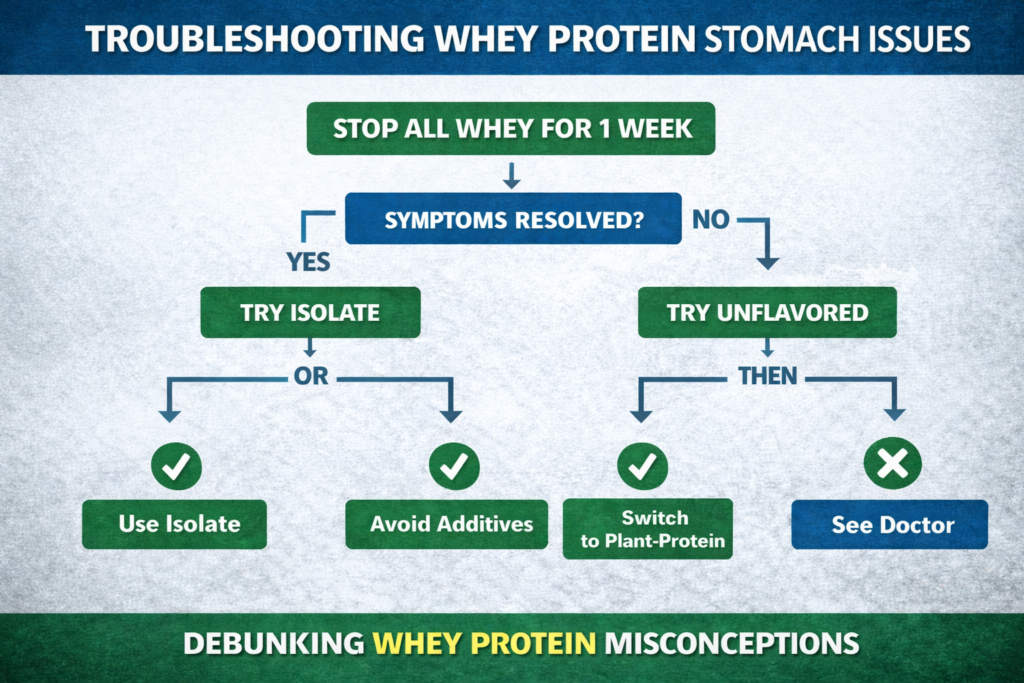
Follow this systematic approach to identify and fix your whey protein stomach issues.
Step 1: Eliminate Whey Completely (1 Week)
Stop all whey protein for 7 days. Monitor whether symptoms resolve.
If symptoms disappear: Whey is definitely contributing to the problem. Proceed to Step 2.
If symptoms persist: The issue may be unrelated to whey. Consider other dietary factors or see a doctor.
Step 2: Identify the Type of Issue
Test A: Try whey isolate (low lactose)
Purchase a high-quality whey isolate with minimal additives.
Start with half a scoop mixed with water only.
If you tolerate isolate well: Lactose was likely the problem. Continue with isolate or try lactase enzyme supplements with concentrate.
If isolate also causes issues: Proceed to Test B.
Test B: Try unflavored whey
Purchase unflavored whey isolate with no additives.
If you tolerate unflavored but not flavored: Additives (sweeteners, fibers, flavorings) were the problem.
If even unflavored isolate causes issues: Proceed to Test C.
Test C: Try plant-based protein
Switch to pea protein isolate or other plant-based alternatives.
If plant protein is fine: You likely have milk protein sensitivity or allergy. Consider seeing an allergist.
Step 3: Optimize Consumption Method
Once you’ve identified a whey type you tolerate:
Adjust timing:
- Don’t consume immediately before intense training
- Space servings 3-4 hours apart
- Try different times of day
Adjust preparation:
- Mix with different liquids (water vs. milk alternatives)
- Adjust thickness (more or less liquid)
- Keep it simple (avoid complex shakes initially)
Adjust consumption speed:
- Drink slowly over 5-10 minutes
- Don’t chug
Step 4: Support Digestive Health
Consider digestive enzyme supplements:
Products containing proteases (protein-digesting enzymes) can help some people.
Take with first sip of your shake.
Improve gut health:
- Eat probiotic foods (yogurt, kefir, sauerkraut)
- Consider probiotic supplements
- Consume adequate fiber from whole foods
- Stay hydrated
Manage stress and sleep:
Improving overall health improves digestive tolerance.
Step 5: Know When to See a Doctor
Consult a healthcare provider if:
- Symptoms are severe or worsening
- You experience blood in stool
- Significant weight loss occurs
- Pain is persistent even after eliminating whey
- You suspect a serious allergy or condition
Don’t ignore persistent digestive issues. They may indicate underlying problems requiring medical attention.
The Best Whey Alternatives If Nothing Works
If you’ve tried everything and still cannot tolerate any form of whey, here are quality alternatives.
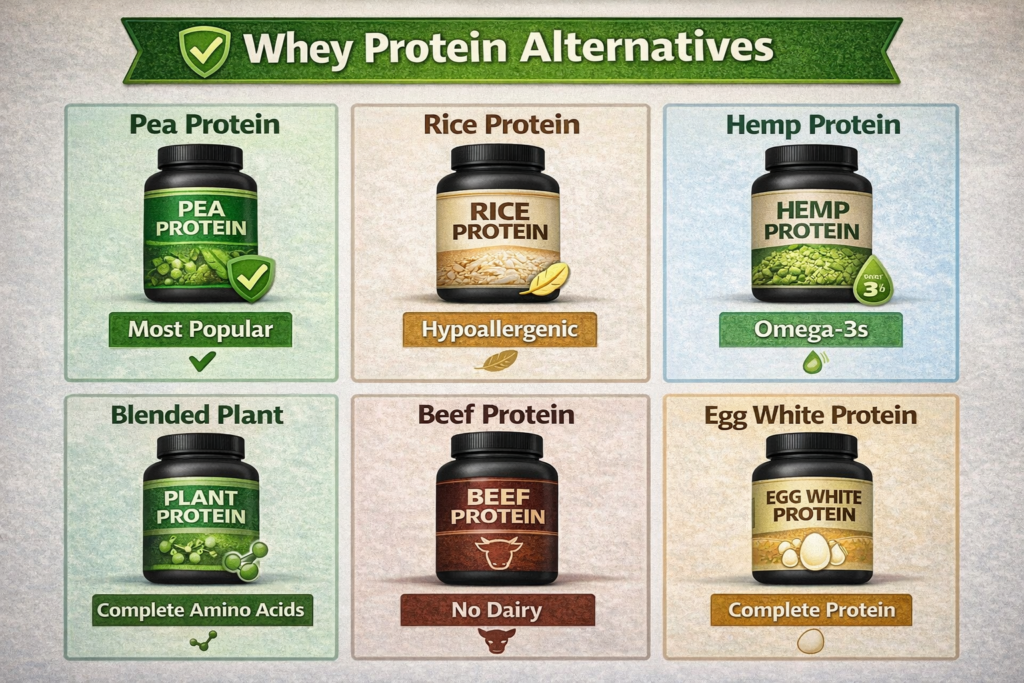
Plant-Based Protein Powders
Pea protein isolate:
- Most popular plant option
- Complete amino acid profile
- Good digestibility for most people
- Reasonable price
- Slightly earthy taste
Rice protein:
- Hypoallergenic
- Easy to digest
- Incomplete amino acid profile (low in lysine)
- Best combined with other plant proteins
Hemp protein:
- Contains omega-3 fatty acids
- Good fiber content
- Incomplete amino acid profile
- Strong flavor (not for everyone)
Blended plant proteins:
- Combine pea, rice, hemp, etc.
- Complete amino acid profile when blended properly
- Usually taste better than single-source
- Slightly more expensive
Animal-Based Non-Dairy Proteins
Beef protein isolate:
- Complete protein from beef
- No dairy, no lactose
- Expensive
- Taste varies by brand
Egg white protein:
- Complete, high-quality protein
- No dairy
- Can cause issues for those with egg allergies
- Sometimes chalky texture
Collagen protein:
- Easy to digest
- Good for joint and skin health
- Incomplete amino acid profile (low in tryptophan)
- Not ideal as sole protein source
- Best combined with other proteins
Whole Food Protein Sources
Don’t forget the obvious: You don’t need protein powder at all.
Whole foods provide excellent protein:
- Chicken, turkey, fish
- Eggs
- Lean beef
- Legumes and beans
- Tofu and tempeh
Yes, it requires more preparation, but if supplements consistently cause problems, whole foods are the answer.
The Bottom Line: Solutions Exist For Almost Everyone
Experiencing stomach pain from whey protein is frustrating, but it’s almost always solvable.
The most common causes:
- Low-quality whey with excessive lactose and fillers
- Additives like inulin, sugar alcohols, or artificial sweeteners
- Lactose intolerance
- Drinking too quickly
- Consuming too close to training
- Milk protein allergy (less common)
- Excessive amounts
The systematic solution approach:
✅ Start by buying high-quality whey from reputable brands
✅ If issues persist, try whey isolate (minimal lactose)
✅ Test unflavored versions to eliminate additive sensitivity
✅ Adjust timing (don’t drink immediately pre-workout)
✅ Slow down consumption (take 5-10 minutes)
✅ Reduce serving size if needed
✅ Consider lactase enzyme supplements
✅ Switch to plant-based alternatives if nothing else works
✅ See a doctor if symptoms are severe or persistent
Remember: Whey protein is a convenience tool, not a requirement for building muscle. If it consistently causes problems despite troubleshooting, simply get your protein from whole foods or alternative supplements.
Your health and comfort matter more than forcing yourself to use a supplement that makes you miserable.
The goal is to support your training and nutrition goals, not create new problems.
Find what works for YOUR body, stick with it, and stop stressing about following what everyone else does.
LISTEN TO YOUR BODY. ADJUST ACCORDINGLY. TRAIN HARD.
Ready to build muscle without digestive misery? Get a complete nutrition and training system that shows you exactly how to meet your protein needs through multiple sources, optimize supplement timing, and build serious muscle without relying exclusively on protein powder. Your gains shouldn’t come with stomach pain.



Leave a Reply
You must be logged in to post a comment.