
Chronically elevated cortisol is silently sabotaging your muscle growth, fat loss, and overall health. Here’s how to fix it naturally.
You’re training hard. Eating clean. Staying consistent. Yet progress has stalled.
Your recovery sucks. You’re always tired. Sleep is terrible. Body fat won’t budge despite a solid diet. Muscle growth has plateaued.
Sound familiar?
There’s a good chance chronically elevated cortisol is the hidden culprit destroying your results.
Cortisol is known as the “stress hormone,” and while it serves vital functions in your body, chronic elevation wreaks havoc on virtually everything that matters for building muscle, losing fat, and staying healthy.
The problem: Most people don’t realize their cortisol is chronically high until the damage is already done.
In this comprehensive guide, I’ll explain exactly what cortisol is and why it matters, reveal the signs that yours might be elevated, show you seven science-backed strategies to lower it naturally, and help you optimize this critical hormone for maximum gains and health.
This isn’t about eliminating stress entirely (impossible and undesirable). It’s about managing cortisol so it helps rather than hinders your goals.
Let’s get into it.
TABLE OF CONTENTS
What Is Cortisol and Why Does It Matter?
Before we discuss how to lower it, you need to understand what cortisol actually does.
Cortisol: The Stress Hormone
Cortisol is a steroid hormone produced by your adrenal glands (located on top of your kidneys).
It’s released in response to stress as part of your body’s “fight or flight” response.
Cortisol’s Important Functions
When functioning properly, cortisol:
Regulates metabolism: Helps control how your body uses carbohydrates, fats, and proteins.
Reduces inflammation: Acts as a powerful anti-inflammatory agent.
Controls blood sugar: Increases glucose availability during stress.
Regulates blood pressure: Helps maintain cardiovascular function.
Supports immune function: Modulates immune response appropriately.
Influences memory formation: Particularly for stressful or emotional events.
Controls sleep-wake cycle: Highest in the morning, lowest at night (when healthy).
All of these are beneficial and necessary for survival.
When Cortisol Becomes a Problem
Cortisol is designed for acute stress, not chronic stress.
The issue: Modern life creates constant, unrelenting stress. Your body can’t distinguish between:
- A genuine physical threat (lion attack)
- Work deadline pressure
- Relationship conflict
- Financial worry
- Sleep deprivation
- Overtraining
Your adrenal glands respond to all of these by pumping out cortisol.
When cortisol stays elevated chronically (weeks, months, years), it causes serious problems.
The Devastating Effects of Chronically High Cortisol
Let’s examine exactly how chronic cortisol elevation sabotages your physique and health.
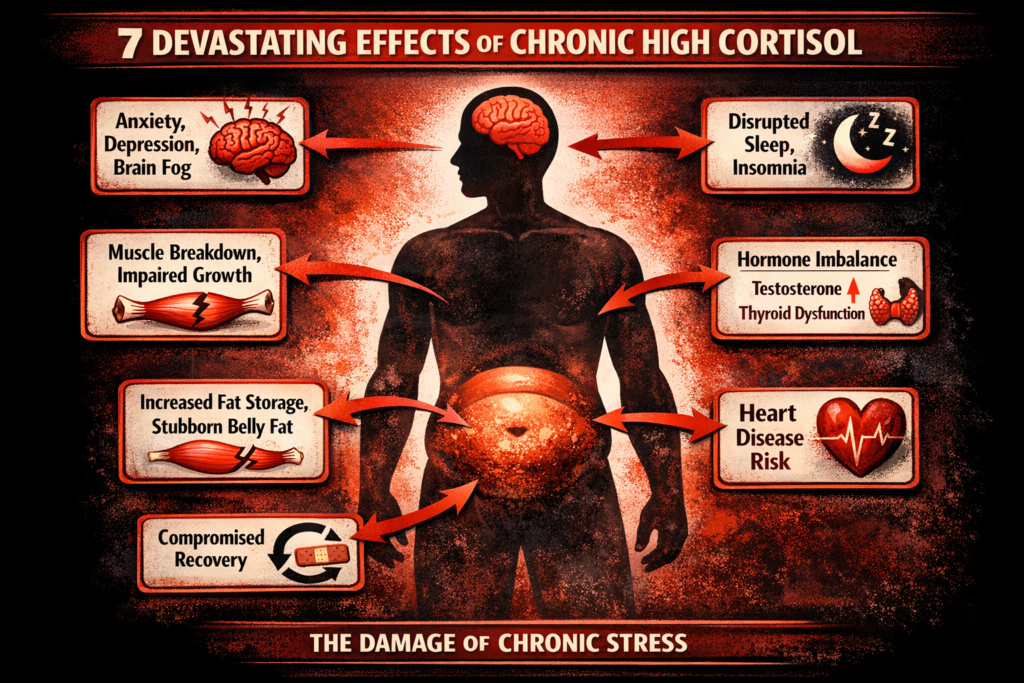
Effect 1: Muscle Breakdown and Impaired Growth
High cortisol is directly catabolic (breaks down muscle tissue).
The mechanism:
Cortisol increases protein breakdown in muscle tissue to provide amino acids for glucose production (gluconeogenesis). Your body literally cannibalizes muscle to make sugar.
Simultaneously, cortisol inhibits protein synthesis, preventing new muscle from being built.
The result: You’re breaking down more muscle than you’re building, leading to net muscle loss or inability to gain muscle despite training.
Even worse: Elevated cortisol reduces testosterone and growth hormone, further impairing muscle growth and recovery.
Effect 2: Increased Fat Storage (Especially Belly Fat)
Chronic cortisol elevation promotes fat accumulation, particularly visceral fat around the abdomen.
How it happens:
Increased appetite: Cortisol stimulates appetite and cravings for high-calorie, sugary foods.
Insulin resistance: Chronic cortisol leads to insulin resistance, making fat storage more likely.
Fat redistribution: Cortisol specifically promotes abdominal fat deposition.
Metabolic slowdown: Chronic stress can reduce metabolic rate.
The visible result: Stubborn belly fat that won’t disappear despite diet and training.
Effect 3: Compromised Recovery and Performance
High cortisol severely impairs your ability to recover from training.
Effects on recovery:
Reduced protein synthesis: Less muscle repair after training.
Impaired glycogen replenishment: Slower recovery of muscle energy stores.
Increased inflammation: Despite cortisol being anti-inflammatory acutely, chronic elevation actually increases systemic inflammation.
Disrupted sleep: High nighttime cortisol prevents deep, restorative sleep.
Weakened immune system: More susceptible to illness and infection.
The practical impact: You’re constantly fatigued, getting sick frequently, and not recovering between workouts.
Effect 4: Disrupted Sleep Quality
Cortisol should follow a specific daily rhythm:
- Highest in the morning (to wake you up)
- Gradually declining throughout the day
- Lowest at night (allowing deep sleep)
Chronic stress disrupts this rhythm, keeping cortisol elevated at night when it should be low.
The result:
- Difficulty falling asleep
- Waking frequently during the night
- Poor sleep quality despite adequate duration
- Waking feeling unrefreshed
And poor sleep further increases cortisol, creating a vicious cycle.
Effect 5: Mental and Emotional Problems
Chronically elevated cortisol affects brain function:
Mood issues:
- Increased anxiety and worry
- Depression and low mood
- Irritability and mood swings
- Emotional volatility
Cognitive impairment:
- Brain fog and poor focus
- Memory problems
- Reduced decision-making ability
- Decreased motivation
The impact on training: Reduced mental drive, poor mind-muscle connection, inability to push through hard workouts.
Effect 6: Hormonal Disruption
Cortisol doesn’t exist in isolation. It affects other hormones:
Reduced testosterone: Cortisol directly suppresses testosterone production in men.
Thyroid dysfunction: Chronic cortisol can suppress thyroid function, slowing metabolism.
Disrupted sex hormones: In women, can cause menstrual irregularities and hormonal imbalances.
Insulin resistance: Impaired glucose metabolism and increased diabetes risk.
The cumulative effect: Your entire hormonal system becomes dysregulated.
Effect 7: Increased Disease Risk
Long-term cortisol elevation increases risk for:
- Cardiovascular disease
- Type 2 diabetes
- Obesity
- Osteoporosis
- Autoimmune conditions
- Depression and anxiety disorders
- Digestive issues
In summary: Chronically high cortisol destroys your gains, makes you fat, keeps you tired, ruins your sleep, and threatens your long-term health.
Time to fix it.
Signs Your Cortisol Might Be Too High
How do you know if cortisol is your problem?
Common Symptoms of Chronic Cortisol Elevation
Physical signs:
✓ Stubborn abdominal fat despite diet and exercise
✓ Difficulty building or maintaining muscle
✓ Constant fatigue and low energy
✓ Frequent illness and weakened immune system
✓ Poor workout recovery
✓ Increased blood pressure
✓ Digestive issues
✓ Headaches
Sleep-related signs:
✓ Difficulty falling asleep despite being tired
✓ Waking frequently during the night
✓ Waking between 2-4 AM consistently
✓ Feeling tired but “wired”
✓ Waking unrefreshed despite adequate sleep duration
Mental and emotional signs:
✓ Constant anxiety or worry
✓ Irritability and mood swings
✓ Brain fog and poor concentration
✓ Depression or low mood
✓ Reduced motivation
Performance signs:
✓ Strength plateaus or declines
✓ Inability to complete normal training volume
✓ Feeling exhausted mid-workout
✓ Extreme cravings for sugar and carbs (especially post-workout)
✓ Needing excessive caffeine to function
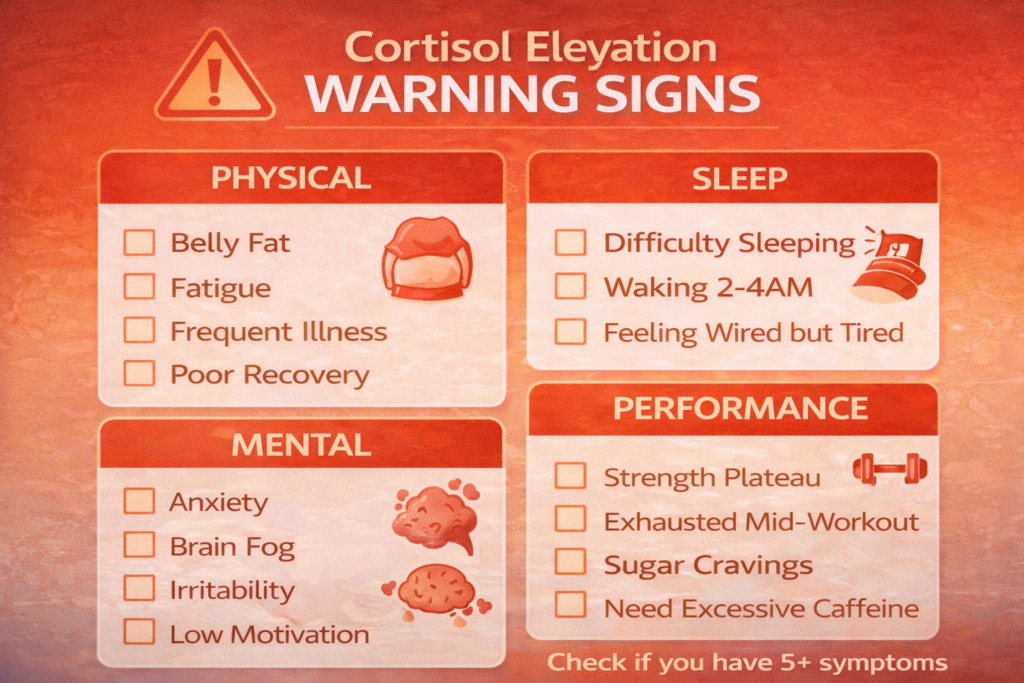
If multiple symptoms sound familiar, chronically elevated cortisol is likely contributing.
Getting Tested
The gold standard: Salivary cortisol testing at four time points throughout the day (morning, noon, evening, night).
This shows your cortisol rhythm and whether it’s dysregulated.
Talk to your doctor if you suspect chronically high cortisol. Testing provides concrete answers.
Strategy 1: Prioritize 7-9 Hours of Quality Sleep
This is non-negotiable. Sleep is the foundation of cortisol management.
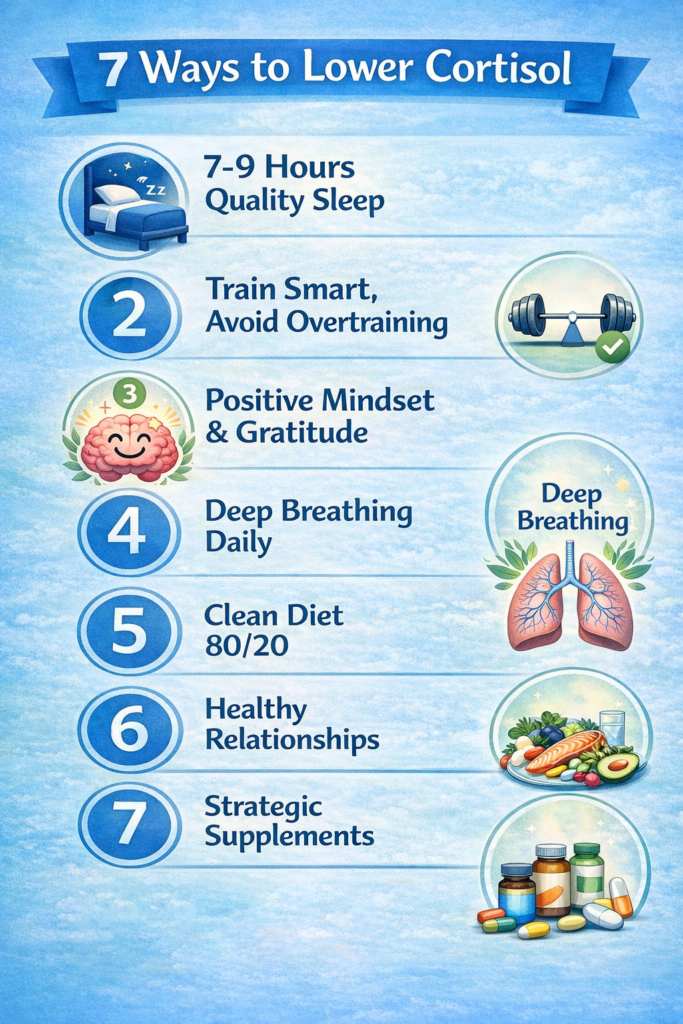
Why Sleep Matters for Cortisol
Research is crystal clear: The more disrupted and neglected your sleep, the higher your cortisol levels.
Studies show:
- Even partial sleep deprivation increases cortisol
- Poor sleep quality (frequent waking) elevates cortisol
- Insufficient sleep duration raises cortisol
- Irregular sleep schedules disrupt cortisol rhythm
The relationship is bidirectional: High cortisol disrupts sleep, and poor sleep raises cortisol. Breaking this cycle requires prioritizing sleep.
How to Optimize Sleep for Cortisol Control
Sleep duration:
Target: 7-9 hours nightly (individual needs vary, but most people need at least 7).
Consistency:
Go to bed and wake up at the same time every day, even weekends. This regulates your circadian rhythm and cortisol pattern.
Sleep environment:
Make your bedroom as dark as possible. Light suppresses melatonin (sleep hormone) and can keep cortisol elevated.
Solutions:
- Blackout curtains
- Remove all LED lights
- Cover or remove electronics with lights
- Use a sleep mask if needed
Cool temperature: 65-68°F (18-20°C) is optimal for most people.
Quiet environment: Use earplugs or white noise machine if needed.
Pre-sleep routine:
Avoid caffeine after 2 PM (or at minimum 6+ hours before bed). Caffeine blocks adenosine, preventing natural tiredness and potentially keeping cortisol elevated.
Eliminate screens 1-2 hours before bed. Blue light from phones, tablets, computers, and TVs suppresses melatonin and can elevate cortisol.
Solutions:
- Read a physical book
- Take a warm bath
- Practice relaxation techniques
- Light stretching or yoga
- Meditation
Wind down gradually: Don’t go from intense activity straight to bed. Create a transition period.
Strategic supplementation:
Melatonin: 0.5-3mg taken 30-60 minutes before bed can help if falling asleep is difficult.
Magnesium: 300-400mg before bed supports sleep quality and has calming effects.
L-theanine: 100-200mg promotes relaxation without sedation.
Important: Fix sleep habits first. Supplements are helpful but not substitutes for good sleep hygiene.
Strategy 2: Train Hard, But Don’t Overtrain
Exercise is a stressor. Managed correctly, it’s beneficial. Overdone, it chronically elevates cortisol.
The Fine Line Between Enough and Too Much
Appropriate training stress:
- Stimulates adaptations (muscle growth, strength gains)
- Causes acute cortisol elevation that returns to baseline
- Enhances health and fitness
Excessive training stress:
- Overwhelms recovery capacity
- Causes chronic cortisol elevation
- Prevents adaptations
- Damages health and performance
The line between these is individual and changes based on:
- Training experience
- Recovery capacity
- Life stress
- Nutrition and sleep quality
- Genetics
Signs You’re Overtraining (Chronically High Cortisol from Training)
Performance indicators:
✓ Difficulty completing normal workouts
✓ Feeling exhausted after warm-up or first exercise
✓ Strength declining or plateaued for weeks
✓ Wanting to leave mid-workout
✓ Needing progressively more rest between sets
Recovery indicators:
✓ Extreme fatigue after training that interferes with work/life
✓ Excessive muscle soreness lasting 3+ days
✓ Persistent muscle tension and tightness
✓ Frequent injuries or nagging pains
Physiological indicators:
✓ Getting sick frequently
✓ Weakened immune system
✓ Disrupted sleep despite being exhausted
✓ Intense cravings for sugar and carbs (cortisol-driven)
✓ Loss of appetite or unusual hunger patterns
Psychological indicators:
✓ Loss of motivation to train
✓ Increased irritability
✓ Anxiety about training
✓ Depression or low mood
How to Train for Gains Without Cortisol Overload
Follow a well-designed program:
Don’t just randomly hammer yourself in the gym. Use a structured program that manages volume, intensity, and recovery.
Key principles:
- Progressive overload (gradually increasing demands)
- Appropriate volume (not maximally tolerable volume)
- Planned deload weeks (reduced volume/intensity every 4-6 weeks)
- Adequate rest days
Monitor recovery markers:
Track:
- Sleep quality
- Morning resting heart rate (elevated = poor recovery)
- Mood and energy
- Training performance
- Body composition changes
Adjust training if recovery markers decline.
Limit high-intensity sessions:
Every workout doesn’t need to be balls-to-the-wall intensity. Save maximum effort for key sessions.
Example weekly structure:
- 2-3 hard/intense sessions
- 2-3 moderate sessions
- 1-2 easy/light sessions or rest days
Manage training volume:
More isn’t always better. Find minimum effective dose for progress.
General guidelines:
- 10-20 sets per muscle group per week for most people
- Advanced lifters may handle more, beginners need less
- If in doubt, start lower and add volume gradually
Prioritize compound movements:
Get more stimulus from fewer exercises. Five hard sets of squats provide more growth with less total stress than twenty sets of isolation exercises.
Take deload weeks:
Every 4-6 weeks, reduce volume by 40-50% for one week. This allows supercompensation and cortisol normalization.
Strategy 3: Cultivate Positive Thinking and Mindset
This sounds like self-help nonsense, but the science is solid.
The Mind-Cortisol Connection
Research shows pessimistic people who constantly expect the worst have significantly higher cortisol levels than optimists.
Why this happens:
Your brain cannot fully distinguish between real and imagined stress.
If you constantly worry about negative outcomes and imagine worst-case scenarios, your brain interprets these thoughts as actual threats and triggers cortisol release.
Even if your life is objectively fine, chronic negative thinking keeps cortisol elevated.
Practical Strategies for Positive Mindset
Reframe negative thoughts:
When you catch yourself catastrophizing or expecting the worst, consciously reframe:
Negative: “This workout is going to suck. I’m too tired. I won’t hit my numbers.”
Reframed: “I might feel tired now, but I often feel better once I start. I’ll do my best today and that’s enough.”
Practice gratitude:
Daily gratitude practice reduces cortisol and improves psychological well-being.
Simple method:
- Write down 3 things you’re grateful for each morning or evening
- Be specific (not just “family” but “my partner made me coffee this morning”)
- Focus on the feeling of gratitude, not just listing items
Limit negative media consumption:
Constant exposure to negative news, social media arguments, and fear-mongering content keeps your stress response activated.
Solution: Curate your information diet carefully. Limit news consumption. Unfollow negative social media accounts.
Surround yourself with positive people:
This is critical. People in your life significantly impact your stress levels and cortisol.
Remove or limit:
- Chronically negative, complaining people
- Those who constantly criticize or put you down
- Drama-prone individuals
- Energy vampires who drain you
Cultivate:
- Supportive, encouraging relationships
- People with positive outlooks
- Those who celebrate your successes
- Friends who challenge you constructively
Avoid victim mentality:
Taking responsibility (even when things aren’t entirely your fault) reduces stress and cortisol.
Victim thinking: “Nothing ever works for me. The world is against me. Why does this always happen to me?”
Responsibility thinking: “This situation sucks, but what can I control? What’s my next best move?”
The second approach activates problem-solving (lower cortisol) instead of helplessness (higher cortisol).
Remember: Being positive requires the same energy as being negative. Choose wisely.
Strategy 4: Practice Deep Breathing Techniques
One of the simplest, most effective, instantly accessible cortisol-reduction techniques.
The Science of Breathing and Cortisol
A study involving middle-aged women showed a 50% reduction in cortisol from deep breathing techniques alone.
Why it works:
Deep, controlled breathing activates your parasympathetic nervous system (rest and digest), which directly counteracts the sympathetic nervous system (fight or flight) that releases cortisol.
How to Practice Deep Breathing
The basic technique (diaphragmatic breathing):
1. Sit or lie comfortably
2. Place one hand on your chest, one on your belly
3. Inhale slowly through your nose for 4 counts, letting your belly expand (not your chest)
4. Hold for 2-4 counts
5. Exhale slowly through your mouth for 6-8 counts, letting belly deflate
6. Repeat for 5-10 minutes
Box breathing (Navy SEAL technique):
1. Inhale for 4 counts
2. Hold for 4 counts
3. Exhale for 4 counts
4. Hold empty for 4 counts
5. Repeat for several minutes
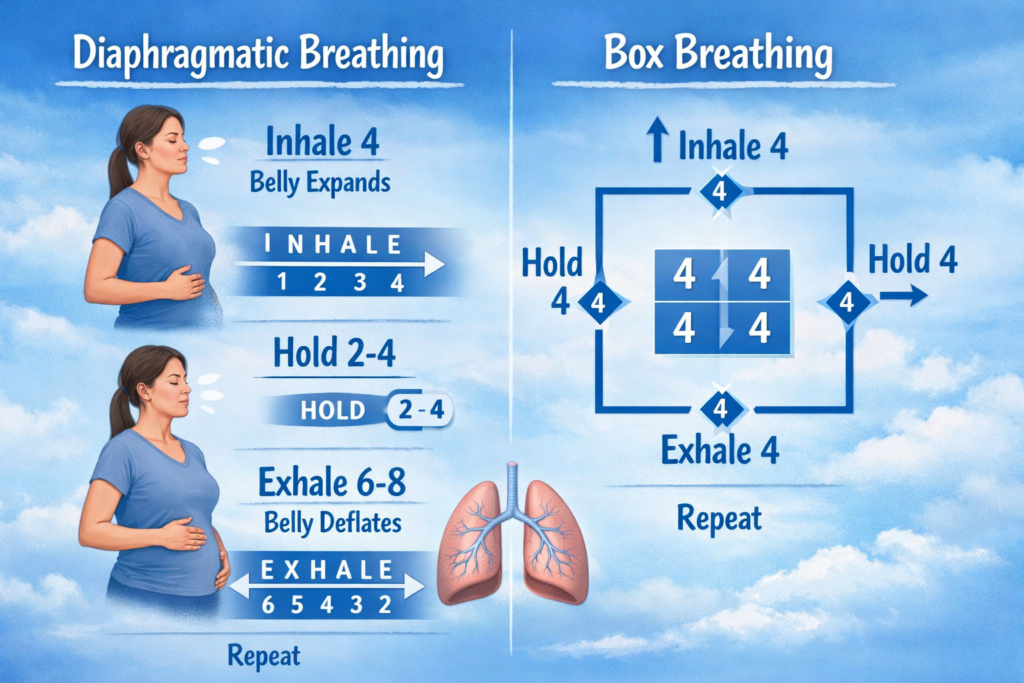
Particularly effective for acute stress situations.
When to Use Deep Breathing
Proactively:
- Morning routine (sets positive tone for the day)
- Before bed (promotes relaxation and sleep)
- Pre-workout (centers focus, reduces pre-training anxiety)
Reactively:
- When you feel stressed or anxious
- After receiving bad news
- During work pressure
- In traffic or other frustrating situations
- Any time you notice tension building
You can’t breathe deeply all day, but strategic use provides powerful cortisol management.
Strategy 5: Fix Your Diet (Don’t Let It Be Complete Garbage)
Nutrition profoundly influences cortisol levels.
Foods That Raise Cortisol
Refined sugar and high-glycemic carbs:
Constant intake of refined sugar causes blood sugar spikes and crashes, triggering cortisol release and keeping it elevated longer.
Sources to limit:
- Candy and sweets
- Soda and sweetened beverages
- White bread and refined grains
- Processed snacks and desserts
- High-sugar breakfast cereals
Trans fats and highly processed foods:
These increase systemic inflammation, which triggers cortisol release.
Sources to avoid:
- Deep-fried foods
- Packaged baked goods
- Margarine and shortening
- Processed meats
- Fast food
Excessive caffeine:
While moderate caffeine is fine, excessive consumption (especially on an empty stomach or late in the day) can elevate cortisol.
Guideline: Limit to 200-400mg daily (2-4 cups of coffee), avoid after 2 PM.
Alcohol:
Regular or excessive alcohol consumption raises cortisol and disrupts sleep (further raising cortisol).
Guideline: Limit to moderate intake, avoid before bed.
Foods That Help Manage Cortisol
Omega-3 fatty acids:
Research shows omega-3s can reduce cortisol levels.
Sources:
- Fatty fish (salmon, mackerel, sardines)
- Fish oil supplements (1-3g EPA+DHA daily)
- Walnuts
- Flaxseeds and chia seeds
Dark chocolate (in moderation):
Contains flavonoids that may reduce cortisol.
Guideline: 1-2 squares (not the whole bar) of 70%+ dark chocolate.
Green tea:
Contains L-theanine, which promotes relaxation and may reduce cortisol.
Whole, nutrient-dense foods:
The foundation of cortisol-friendly nutrition:
- Lean proteins
- Vegetables (unlimited)
- Fruits (moderate amounts)
- Whole grains
- Nuts and seeds
- Healthy fats (avocado, olive oil)
The 80/20 rule:
80% of your diet: Whole, minimally processed, nutrient-dense foods
20% of your diet: Whatever you want (treats, less optimal choices)
This balance maintains health without creating the stress of overly restrictive eating (which itself raises cortisol).
Strategy 6: Maintain Healthy Relationships
The people in your life dramatically impact your cortisol levels.
The Research on Relationships and Cortisol
Studies show:
Children raised in high-conflict households have chronically elevated cortisol compared to those in stable environments.
Adults with supportive partners have significantly lower cortisol during psychological stress compared to those without support.
Social isolation and loneliness are associated with elevated cortisol and numerous health problems.
Toxic relationships chronically elevate cortisol, while healthy relationships buffer against stress.
Types of Relationships That Raise Cortisol
Romantic relationships:
- Constant conflict and fighting
- Lack of emotional support
- Criticism and contempt
- Feeling unappreciated or unloved
- Abuse (verbal, emotional, or physical)
Family relationships:
- Toxic family dynamics
- Unsupportive or critical parents/siblings
- Family members who drain your energy
- Unresolved conflicts
Friendships:
- One-sided friendships (you always give, they always take)
- Drama-prone friends
- Negative, complaining friends
- Competitive or envious friends
Work relationships:
- Toxic boss or coworkers
- Hostile work environment
- Lack of support or recognition
- Bullying or harassment
How to Protect Your Cortisol Through Relationship Management
Set boundaries:
Learn to say no. Protect your time and energy. Don’t let others’ problems become your constant burden.
Limit or eliminate toxic relationships:
This is hard but essential. Some relationships cannot be fixed and continuing them destroys your health.
You have permission to:
- Distance yourself from toxic family members
- End friendships that drain you
- Leave jobs with toxic cultures (when possible)
- Exit romantic relationships that harm your wellbeing
Prioritize supportive relationships:
Actively cultivate relationships with people who:
- Support your goals
- Celebrate your successes
- Provide constructive feedback
- Are positive and uplifting
- Reciprocate care and effort
Seek professional help for relationship issues:
Couples therapy, family therapy, or individual therapy can help navigate difficult relationship situations and reduce associated stress.
Build a support network:
Don’t rely on one person for all your emotional support. Have multiple supportive relationships (friends, family, mentors, community).
Strategy 7: Use Strategic Supplementation
Several supplements have solid research supporting cortisol reduction.
Supplement 1: Fish Oil (Omega-3 Fatty Acids)
What it is: Essential fatty acids EPA and DHA from fish.
How it helps cortisol:
Studies show omega-3 supplementation can reduce cortisol levels, particularly during stress.
Dosage: 1-3g combined EPA+DHA daily
Additional benefits:
- Reduced inflammation
- Improved cardiovascular health
- Enhanced brain function
- Better mood
- Supported testosterone production
Quality matters: Choose third-party tested fish oil to avoid mercury and contaminants.
Supplement 2: Ashwagandha
What it is: An adaptogenic herb used in traditional medicine for stress and anxiety.
How it helps cortisol:
Multiple studies show ashwagandha significantly reduces cortisol:
Study 1: 98 adults taking 125mg once or twice daily showed reduced cortisol levels.
Study 2: 64 adults with chronic stress taking 300mg daily for 60 days experienced cortisol reduction.
Dosage: 300-600mg of standardized extract daily
Additional benefits:
- Reduced anxiety and stress
- Improved sleep quality
- Enhanced testosterone levels
- Better strength and muscle recovery
Important: Use standardized extract (withanolides content). May take 4-8 weeks for full effects.
Supplement 3: Rhodiola Rosea
What it is: An adaptogenic herb that helps balance cortisol.
How it helps cortisol:
Rhodiola is an adaptogen, meaning it helps your body adapt to stress and maintain hormonal balance. It regulates cortisol, bringing it up when too low and down when too high.
Studies show rhodiola:
- Reduces fatigue
- Improves cognitive function
- Enhances sense of wellbeing
- Helps manage stress response
Dosage: 200-600mg of standardized extract daily
Best timing: Morning or early afternoon (can be slightly stimulating for some people).
Supplement 4: Magnesium
What it is: An essential mineral involved in over 300 bodily processes.
How it helps cortisol:
Magnesium has calming effects on the nervous system and can help reduce cortisol, particularly when deficiency exists.
Dosage: 300-400mg daily (magnesium glycinate or threonate for best absorption)
Best timing: Evening or before bed (promotes sleep).
Additional benefits:
- Better sleep quality
- Reduced muscle tension
- Improved recovery
- Enhanced bone health
Supplement 5: Phosphatidylserine
What it is: A phospholipid compound found in cell membranes.
How it helps cortisol:
Research shows phosphatidylserine can blunt cortisol response to exercise and mental stress.
Dosage: 200-400mg daily
Best for: Athletes dealing with training-induced cortisol elevation.
Supplement 6: Vitamin C
What it is: A water-soluble antioxidant vitamin.
How it helps cortisol:
High-dose vitamin C can reduce cortisol response to stress and support adrenal health.
Dosage: 1,000-2,000mg daily, divided into multiple doses
Additional benefits:
- Immune support
- Antioxidant protection
- Collagen production
- Enhanced iron absorption
Important Supplementation Notes
Supplements support, they don’t replace:
No supplement compensates for poor sleep, bad diet, overtraining, or toxic relationships. Fix the fundamentals first.
Quality matters:
Choose third-party tested supplements from reputable brands (NSF, Informed-Sport, USP certifications).
Individual responses vary:
Some people respond dramatically to certain supplements, others notice minimal effects. Experiment to find what works for you.
Consult a healthcare provider:
Especially if you have medical conditions or take medications. Some supplements interact with medications.
Putting It All Together: Your Cortisol Management Action Plan
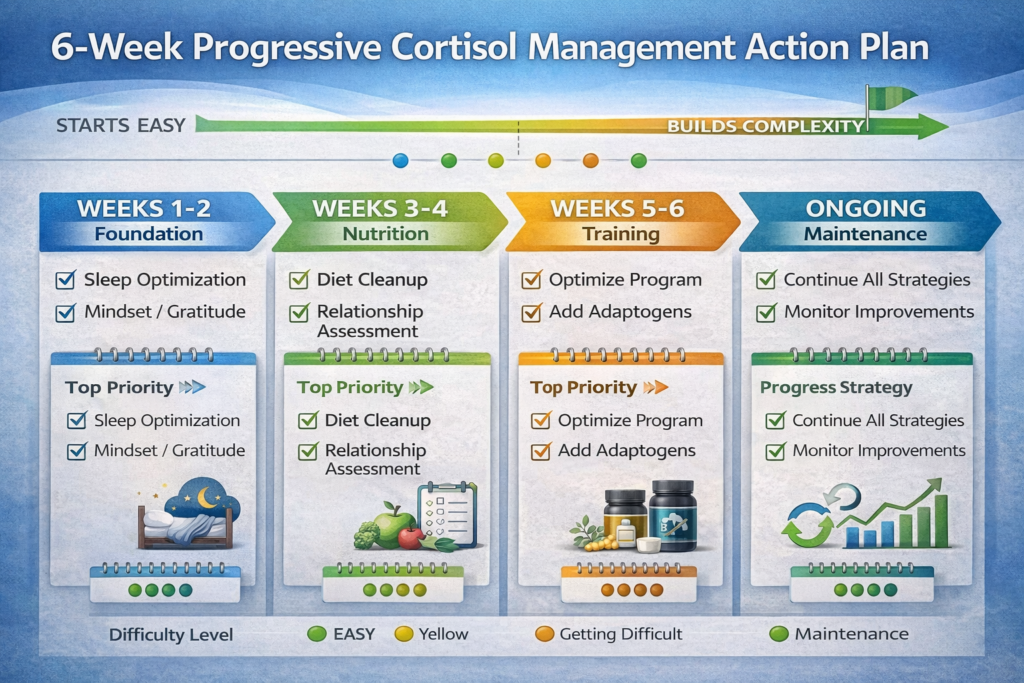
Here’s how to implement everything systematically:
Week 1-2: Foundation (Sleep and Mindset)
Priority 1: Fix sleep
- Set consistent sleep/wake times
- Create dark, cool sleep environment
- Eliminate screens 1 hour before bed
- Start magnesium supplementation
Priority 2: Start gratitude practice
- Write 3 things you’re grateful for daily
- Practice 5 minutes of deep breathing daily
Week 3-4: Nutrition and Relationships
Priority 3: Clean up diet
- Reduce refined sugar and processed foods
- Increase whole foods to 80% of diet
- Start fish oil supplementation
- Limit caffeine to mornings only
Priority 4: Assess relationships
- Identify toxic or draining relationships
- Start setting boundaries
- Prioritize time with supportive people
Week 5-6: Training and Advanced Strategies
Priority 5: Optimize training
- Review training program for excessive volume
- Ensure adequate recovery days
- Plan deload week if needed
- Monitor recovery markers
Priority 6: Add adaptogenic support
- Start ashwagandha (300-600mg daily)
- Consider rhodiola if needed
- Track how you feel over 4-6 weeks
Ongoing: Maintenance and Refinement
Continue all strategies as lifestyle habits
Monitor for signs of improvement:
- Better sleep quality
- Improved recovery
- Enhanced mood
- Easier fat loss
- Better muscle growth
- Increased energy
- Reduced anxiety
Adjust as needed based on results and life circumstances
Final Words: Balance, Not Elimination
Critical perspective: Cortisol exists for important reasons. You need it to handle stress appropriately, wake up in the morning, respond to exercise, and function optimally.
The goal is NOT to eliminate cortisol entirely (impossible and dangerous).
The goal is to maintain healthy cortisol balance:
- Normal elevation during acute stress (good)
- Return to baseline after stress passes (good)
- Healthy circadian rhythm (high morning, low evening)
- Avoidance of chronic elevation (bad)
The seven strategies in this article will:
- Prevent chronic cortisol elevation
- Support healthy cortisol rhythm
- Optimize recovery and gains
- Protect your long-term health
If you’re going through a particularly stressful period (work demands, relationship issues, major life changes), these strategies become even more critical.
When in doubt, consult your doctor. You can request a cortisol test (salivary panel is best) to confirm whether your levels are problematic.
Most people can dramatically improve cortisol management through lifestyle changes alone.
Start with sleep. Add the other strategies gradually. Be patient. Changes take time.
Your gains, health, and quality of life depend on it.
MANAGE YOUR STRESS. OPTIMIZE YOUR CORTISOL. MAXIMIZE YOUR GAINS.
Ready to optimize every aspect of your hormonal health for maximum muscle growth, fat loss, and performance? Cortisol is just one piece of the hormonal puzzle. Get a complete, science-based system for naturally optimizing testosterone, managing estrogen, supporting thyroid function, and creating the ideal hormonal environment for building your best body. Stop letting stress sabotage your results. Start taking control.





Leave a Reply
You must be logged in to post a comment.