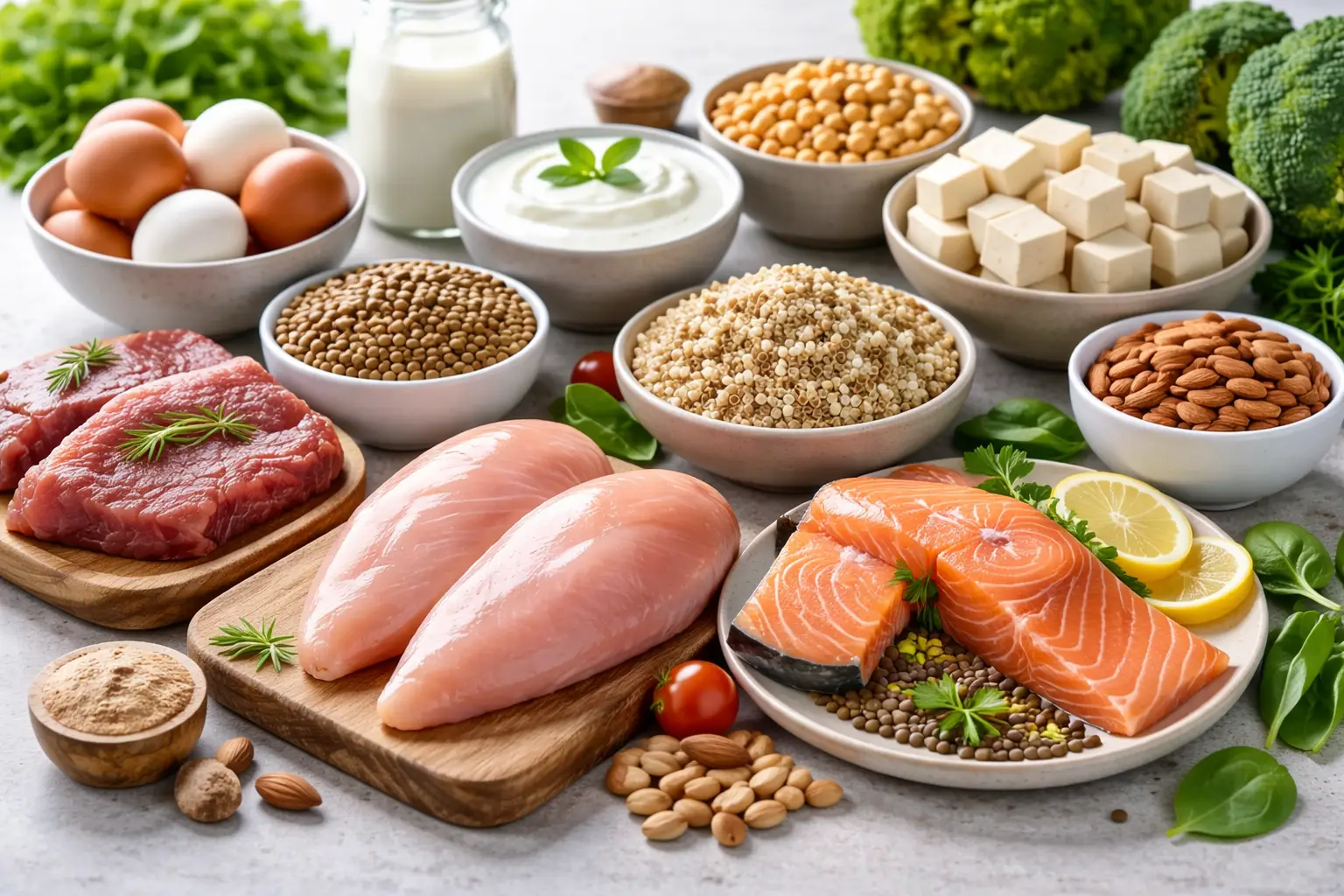
Want to build muscle, lose fat, or simply improve your health? Here’s your complete guide to the best high-protein foods that actually taste good and fit your budget.
Whether you’re trying to pack on muscle, shed body fat, or simply maintain a healthy lifestyle, protein is your nutritional foundation.
For optimal muscle growth or fat loss, you should aim to consume 0.7-1.0 grams of protein per pound of body weight daily. At 180 pounds, that’s 126-180 grams daily.
Sounds like a lot? It doesn’t have to be complicated.
This comprehensive guide breaks down the 24 best high-protein foods from both animal and plant sources so you can choose what’s most convenient, affordable, and enjoyable for YOUR situation.
Let’s dive into the protein powerhouses that will fuel your transformation.
TABLE OF CONTENTS
High-Protein Animal Foods
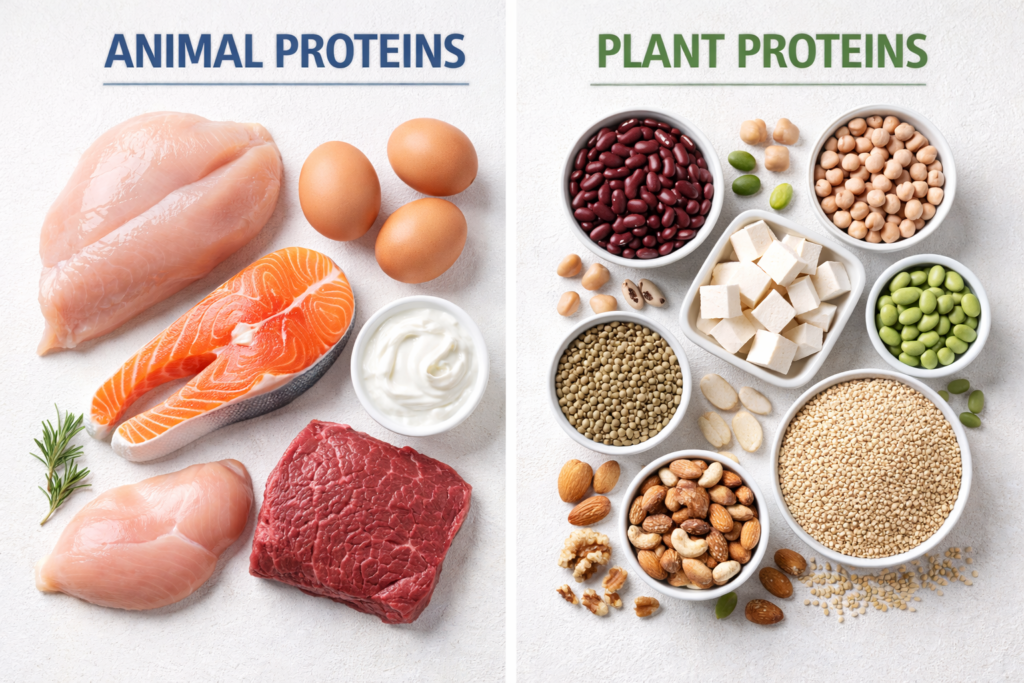
These animal-based protein sources provide complete proteins with all essential amino acids your body needs for muscle building and recovery.
1. Milk (Whole or Skim)
Protein content: 8g per 8 oz (240ml)
If you’re not lactose intolerant or allergic to dairy, milk is one of the most convenient and affordable protein sources available.
Milk’s protein is approximately 80% casein and 20% whey both high-quality proteins with excellent bioavailability.
Why it’s awesome: You’re literally drinking protein. It’s cheap, tastes good, requires zero preparation, and provides both fast-digesting whey and slow-digesting casein.
Whole vs. skim? It depends on your goals. If you’re bulking and need extra calories and healthy fats, whole milk is perfect. If you’re cutting and need to minimize calories, go with skim or low-fat options.
Pro tip: Use milk as your liquid base for protein shakes to instantly boost protein and calorie content.
2. Cottage Cheese
Protein content: 14g per 1/2 cup (100g)
Cottage cheese is the richest food source of casein protein available.
Casein is a complete protein with excellent bioavailability and slow absorption, providing a gradual, sustained release of essential amino acids to support muscle growth.
Perfect timing: Ideal before bed or during long periods without eating (like overnight) due to its slow-digesting properties.
Additional benefits:
- Low in fat and calories
- High in calcium for bone health
- Rich in phosphorus and selenium
- Contains vitamin B12 and riboflavin (B2)
- Supports muscle preservation during calorie deficits
Budget-friendly tip: Cottage cheese provides premium protein at a fraction of the cost of protein powder.
3. Greek Yogurt
Protein content: 15-20g per 6 oz (170g) serving
Greek yogurt is thicker and more protein-dense than regular yogurt because much of the liquid whey has been strained out.
This concentrated form provides both whey protein and casein, plus beneficial probiotics that support gut health and nutrient absorption.
Why gut health matters for muscle building: Better nutrient absorption means your body can actually use the protein you’re eating more effectively.
What to look for: Choose plain, unsweetened varieties and add your own fruits or honey to control sugar content. Avoid “Greek-style” yogurts that add thickeners instead of using the traditional straining process.
Versatility factor: Mix with protein powder, oats, berries, or use as a sour cream substitute to sneak extra protein into any meal.
4. Whole Eggs
Protein content: 6-7g per large egg
Eggs are nature’s multivitamin and arguably one of the most nutrient-dense foods on the planet.
Beyond high-quality protein, eggs provide:
- Essential vitamins (A, D, E, B12, riboflavin)
- Important minerals (iron, selenium, phosphorus)
- Healthy fats including omega-3s
- Choline for brain health
- Lutein and zeaxanthin for eye health
The whole egg advantage: Don’t toss the yolks! That’s where most of the nutrition lives. While egg whites are pure protein, whole eggs provide the complete nutritional package.
Cholesterol myth-busting: Decades of research have shown that dietary cholesterol from eggs doesn’t significantly impact blood cholesterol for most people. Eggs are incredibly healthy.
Cost-effectiveness: At roughly $0.20-0.40 per egg, you’re getting premium nutrition for pennies.
5. Lean Red Meat (Beef)
Protein content: 25-30g per 4 oz (113g) cooked
Beef is a complete protein source containing all essential amino acids needed for muscle building and maintenance.
Unique benefits:
- Highly bioavailable iron: The heme iron in beef is absorbed more efficiently than plant-based iron
- Natural creatine: Beef is one of the richest natural sources of creatine
- Zinc for testosterone: Essential for natural testosterone production
- Vitamin B12: Critical for energy production and nervous system health
Best lean cuts for muscle building:
- Top sirloin
- Eye of round
- Top round
- Bottom round
- Flank steak
- 93/7 or 95/5 ground beef
Budget hack: Buy cheaper cuts and use slow-cooking methods (slow cooker, pressure cooker) to make them tender and delicious.
6. Chicken Breast
Protein content: 26-31g per 4 oz (113g) cooked
Chicken breast is the classic bodybuilding staple for good reason it’s protein-dense, relatively inexpensive, and incredibly versatile.
Beyond the breast: Don’t limit yourself to chicken breast only. Chicken thighs are often cheaper, more flavorful due to higher fat content, and still provide excellent protein (26g per 4 oz).
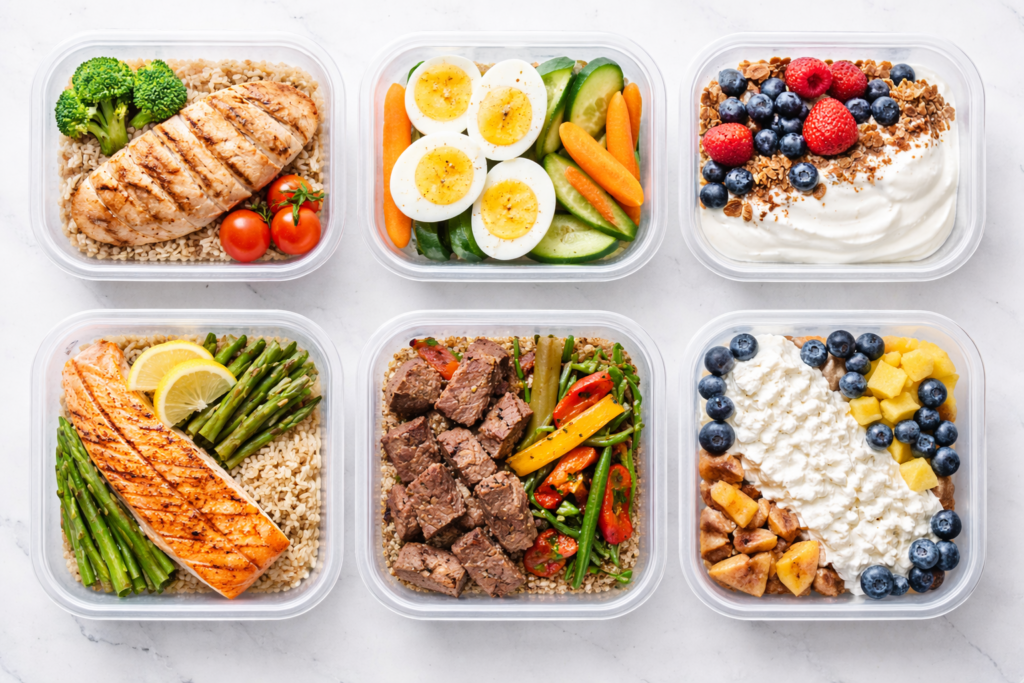
Meal prep champion: Chicken is easy to cook in bulk, stores well, and can be seasoned countless ways to prevent flavor fatigue.
Cost comparison: Typically cheaper per gram of protein than beef or fish, making it ideal for budget-conscious muscle builders.
7. Tilapia
Protein content: 23-26g per 4 oz (113g) cooked
Tilapia is a mild-flavored fish that’s extremely high in leucine the key amino acid that triggers muscle protein synthesis.
Why I love tilapia:
- Quick cooking time: Faster to prepare than chicken
- Mild flavor: Easily takes on whatever seasonings you use
- Flaky texture: Mixes easily with rice or other sides
- Affordable: Usually one of the cheapest fish options
Farm-raised concerns? While wild-caught fish have better omega-3 profiles, farm-raised tilapia is still an excellent protein source. The omega-6 content isn’t a major concern when you’re eating a balanced diet with varied protein sources.
8. Turkey Breast
Protein content: 26-30g per 4 oz (113g) cooked
Turkey breast is nutritionally almost identical to chicken breast high protein, low fat, and very affordable.
Strategic advantages:
- Switch between chicken and turkey without affecting your macros
- Buy whichever is cheaper at the moment
- Adds dietary variety to prevent boredom
- Some people prefer turkey’s slightly different flavor
Critical note: Buy actual turkey breast, not processed deli meat. Processed turkey contains added sodium, preservatives, and doesn’t deliver the same nutritional value.
9. Shrimp
Protein content: 24g per 4 oz (113g) cooked
If you’re not allergic to shellfish, shrimp is an exceptional low-calorie, high-protein food.
Bonus nutrients:
- Rich in omega-3 fatty acids (if wild-caught)
- High in selenium for thyroid function
- Contains astaxanthin, a powerful antioxidant
- Provides vitamin B12 and iodine
Versatility: Cooks in minutes, works in countless cuisines, and adds variety to your meal rotation.
Safety first: Confirm you’re not allergic to shellfish before incorporating shrimp into your diet.
10. Protein Powder (Whey, Casein, Plant-Based)
Protein content: 20-30g per scoop (typically 30-40g powder)
Protein powders are concentrated food supplements that make hitting protein targets incredibly convenient.
Types and when to use them:
- Whey protein: Fast-digesting, ideal post-workout or anytime
- Casein protein: Slow-digesting, perfect before bed
- Plant-based protein: For vegans or those with dairy allergies
Beyond shakes: Mix into oatmeal, yogurt, pancakes, baked goods, or coffee to boost protein in any meal.
When it’s worth it:
- Struggling to hit protein targets with whole foods
- Need convenient protein on-the-go
- Post-workout nutrition
- Limited budget (quality protein powder can be cost-effective per gram of protein)
Quality matters: Look for products with minimal ingredients, third-party testing, and avoid excessive fillers.
11. Canned Tuna
Protein content: 20-25g per 3 oz can (drained)
Canned tuna is shelf-stable, incredibly affordable, requires zero preparation, and is almost pure protein with minimal calories.
Benefits:
- Available in every grocery store
- Very low calorie and fat content
- Contains omega-3 fatty acids
- Long shelf life for emergency protein
Mercury concerns? Limit consumption to 2-3 servings per week. Rotate with other fish like salmon or sardines.
Budget protein: At around $1-2 per can, you’re getting 20g+ of quality protein for the price of a coffee.
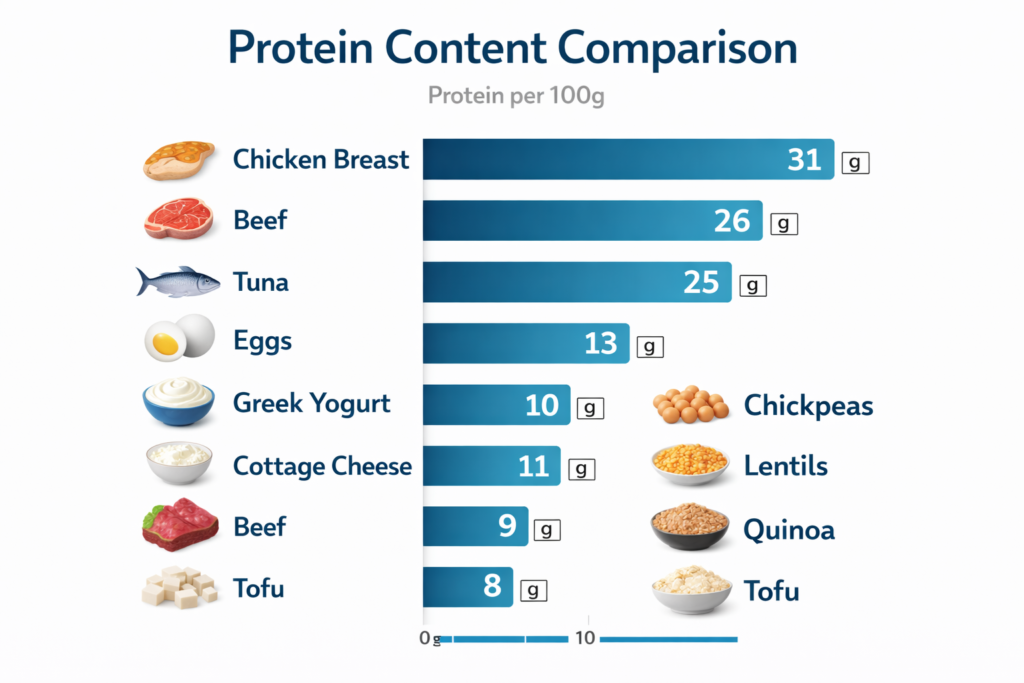
High-Protein Plant-Based Foods
These plant-based options provide quality protein for vegetarians, vegans, or anyone wanting to diversify their protein sources.
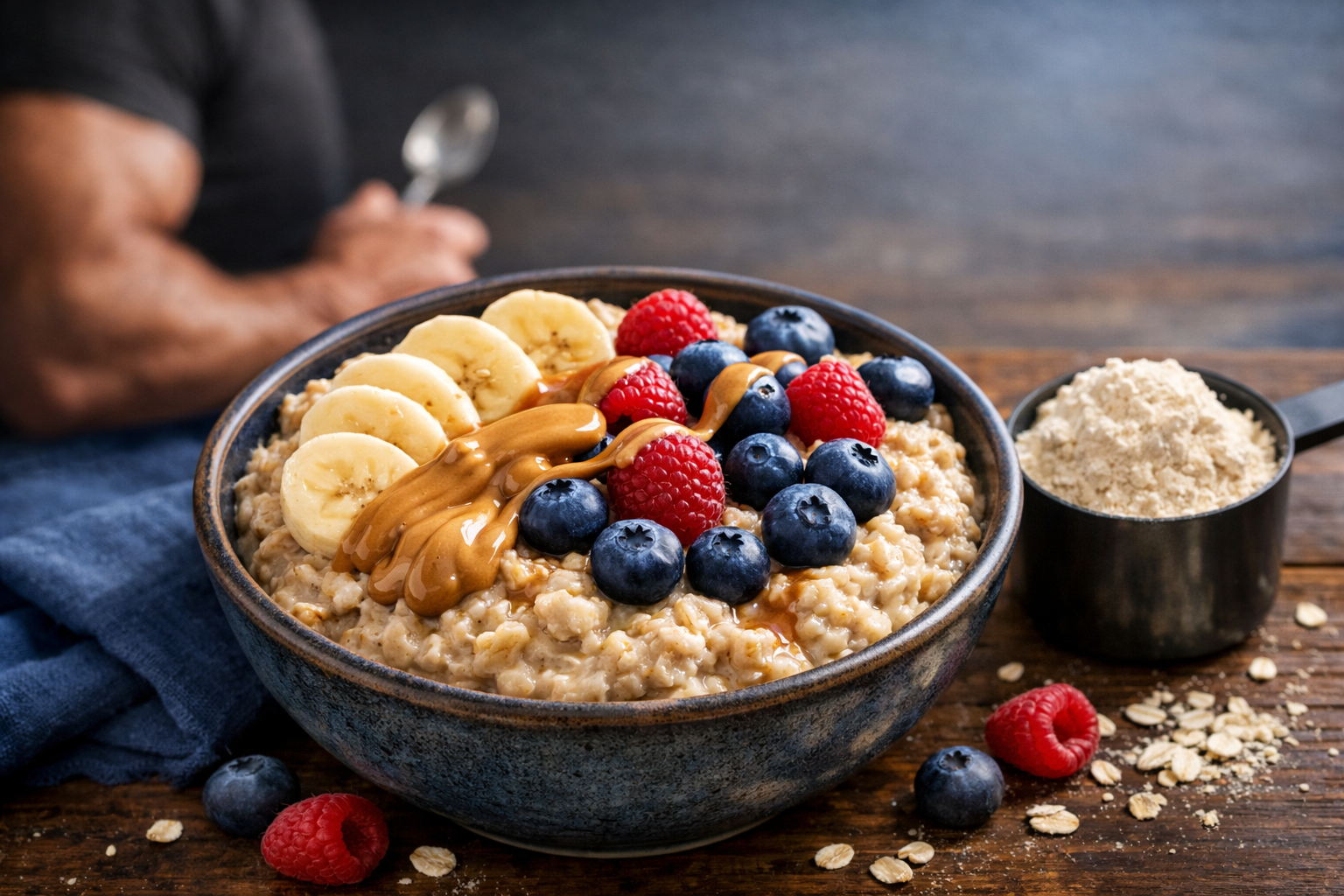
12. Oats
Protein content: 13g per 1 cup (80g) dry
Oats are one of the healthiest grains available, providing not just protein but also abundant fiber, vitamins, and minerals.
Additional benefits:
- Beta-glucan fiber for heart health
- Slow-digesting carbs for sustained energy
- Rich in manganese, phosphorus, and magnesium
- Contains avenanthramides (antioxidants unique to oats)
Pro tip: Buy steel-cut or rolled oats (thick flakes) for maximum nutrition. The less processed, the better.
Versatility: Use in breakfast bowls, protein pancakes, smoothies, or even as a rice substitute.
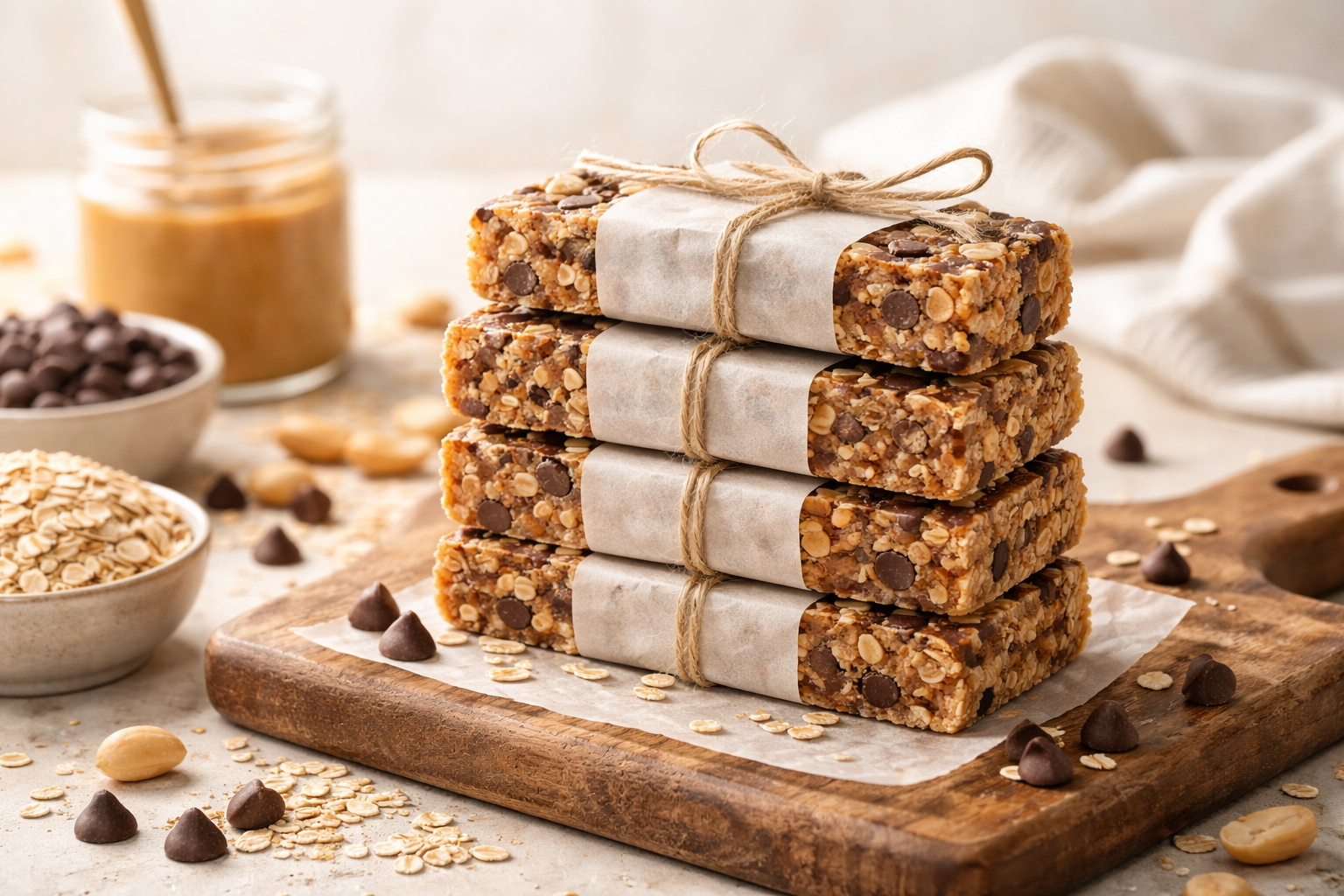
13. Peanut Butter (Natural)
Protein content: 8g per 2 tablespoons (32g)
Natural peanut butter provides protein, healthy fats, fiber, vitamins, minerals, and significant calories perfect for bulking.
What to buy: Choose natural or organic peanut butter with only one or two ingredients (peanuts and maybe salt). Avoid products with added sugars and hydrogenated oils.
Calorie-dense advantage: Each tablespoon packs about 100 calories, making it easy to increase calorie intake for hard-gainers.
Budget-friendly: Pound for pound, peanut butter is one of the most affordable protein and calorie sources.
14. Peas (Green Peas)
Protein content: 8-9g per 1 cup (145g) cooked
Green peas are an underrated plant protein source that’s naturally gluten-free and lactose-free.
Perfect for:
- People with food allergies or sensitivities
- Vegetarians and vegans
- Anyone wanting varied protein sources
Additional benefits:
- High in fiber for digestion
- Rich in vitamins A, C, and K
- Contains folate and iron
- Very affordable
15. Almonds
Protein content: 6g per 1 oz (28g, about 23 almonds)
Almonds are nutrient powerhouses loaded with vitamin E, manganese, magnesium, fiber, and healthy monounsaturated fats.
Heart health benefits: Regular almond consumption is associated with improved cholesterol levels and reduced heart disease risk.
Snacking strategy: Pre-portion into small bags to control calories it’s easy to overeat nuts.
Alternative forms: Almond butter provides similar benefits in a spreadable form.
16. Broccoli
Protein content: 3-4g per 1 cup (90g) cooked
“But broccoli barely has protein!” True, but hear me out.
Why it matters: Broccoli is one of the most nutrient-dense vegetables available. While it won’t replace chicken as your primary protein source, it contributes protein while providing:
- Vitamin C for immune function
- Vitamin K for bone health
- Fiber for digestion
- Sulforaphane (may reduce inflammation)
- Compounds that may support healthy testosterone levels
Calorie-for-calorie: Broccoli actually has more protein than most vegetables, with almost zero calories.
Bottom line: Every gram counts when you’re eating multiple protein sources daily.
17. Soybeans (Edamame)
Protein content: 18-20g per 1 cup (155g) cooked
Soybeans provide more protein than any other plant food approximately 36-40g per 100g of dry soybeans.
Complete protein: Unlike most plant proteins, soy contains all essential amino acids, making it comparable to animal proteins.
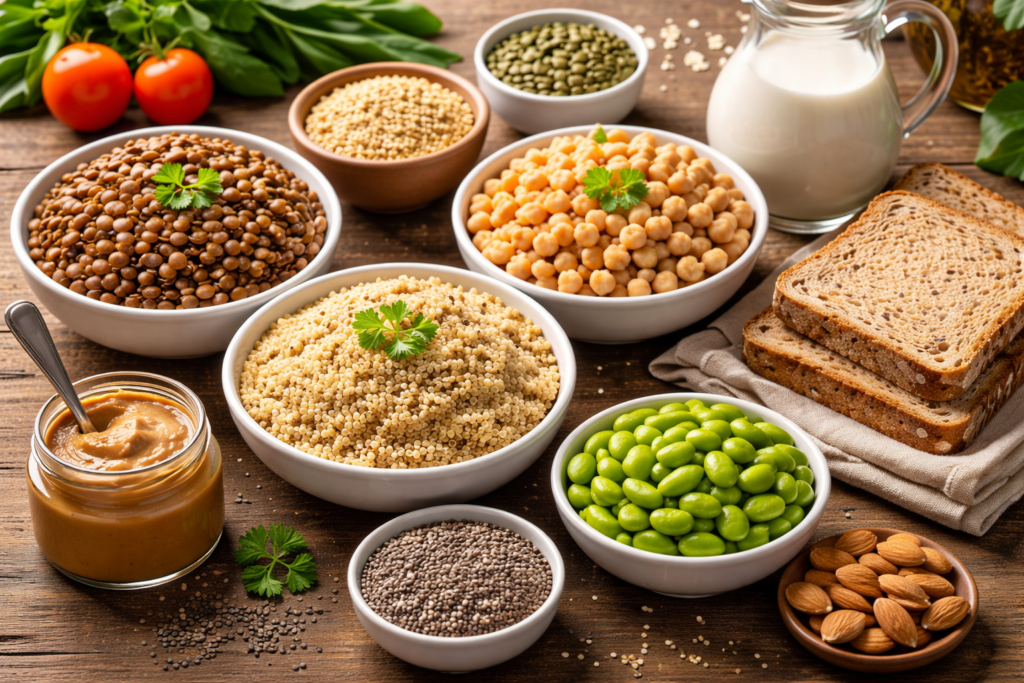
The soy controversy: Despite fears about soy affecting testosterone, research in men shows moderate soy consumption doesn’t negatively impact testosterone levels or estrogen in healthy males. For vegans who avoid all animal products, soy’s benefits far outweigh potential concerns.
Forms to try:
- Edamame (whole soybeans)
- Tofu
- Tempeh
- Soy milk
18. Quinoa
Protein content: 8g per 1 cup (185g) cooked
Quinoa is technically a seed but eaten as a grain. It’s one of the few plant foods considered a complete protein.
Why it’s special:
- Contains all nine essential amino acids
- Rich in fiber, iron, and magnesium
- Gluten-free
- Easy rice substitute
Meal prep advantage: Use quinoa in place of rice to “smuggle” extra protein into meals without changing your eating pattern.
Taste and texture: Fluffy, slightly nutty flavor that pairs well with any protein and vegetables.
19. Chia Seeds
Protein content: 5g per 2 tablespoons (28g)
These tiny seeds pack an impressive nutritional punch far beyond their protein content.
Standout benefits:
- Richest plant source of omega-3 fatty acids
- Extremely high in fiber (aids digestion and satiety)
- Contains calcium, magnesium, and phosphorus
- Provides zinc (supports testosterone production)
How to use: Add to smoothies, oatmeal, yogurt, or make chia pudding. They absorb liquid and create a gel-like consistency.
For vegans: Chia seeds are crucial for getting omega-3s without fish oil.
20. Lentils
Protein content: 18g per 1 cup (198g) cooked
Lentils provide solid protein along with exceptional fiber, folate, iron, phosphorus, and potassium.
Budget superstar: Lentils are incredibly cheap, making them accessible to anyone.
Varieties to try:
- Red lentils (cook fastest)
- Green lentils (hold shape well)
- Black lentils
- Yellow lentils
Meal applications: Soups, stews, curries, salads, or as a ground meat substitute.
21. Black Beans
Protein content: 15g per 1 cup (172g) cooked
Black beans are a staple in many cuisines and for good reason they’re affordable, versatile, and nutrient-dense.
Benefits beyond protein:
- Excellent source of fiber (15g per cup)
- Rich in iron and folate
- Contains antioxidants
- Supports digestive health
Already in your pantry: Most people already have beans at home, making them immediately accessible.
22. Peanuts
Protein content: 7g per 1 oz (28g, about 28 peanuts)
Raw or dry-roasted peanuts provide protein, healthy unsaturated fats, vitamins, and minerals.
Cost-effective: Peanuts are among the cheapest nuts available while providing similar benefits to more expensive options.
Nutrient profile:
- Vitamin E
- Niacin (B3)
- Folate
- Magnesium
- Phosphorus
Watch portions: Like all nuts, peanuts are calorie-dense (about 160 calories per ounce).
23. Ezekiel Bread
Protein content: 5g per slice
Ezekiel bread is made from sprouted whole grains and legumes, making it nutritionally superior to regular bread.
What makes it special:
- Made from sprouted grains (increases nutrient availability)
- Contains no refined flour
- Higher in protein than regular bread
- Lower glycemic index
- No added sugars
Where to find it: Usually in the freezer section of grocery stores, especially health food stores.
Use it like: Regular bread for sandwiches, toast, or alongside meals.
24. Soy Milk
Protein content: 7-8g per 1 cup (240ml)
For those who can’t consume dairy, soy milk is the best plant-based alternative that matches cow’s milk’s protein content.
Advantages:
- Lactose-free
- Often fortified with calcium and vitamin D
- Complete protein source
- Neutral flavor works in smoothies and cooking
Cost consideration: Typically more expensive than cow’s milk but cheaper than many other plant-based milk alternatives.
25. Beans (General)
Protein content: 15g per 1 cup (varies by type)
All varieties of beans pinto, kidney, navy, white beans provide excellent protein, fiber, and nutrition at rock-bottom prices.
Universal advantages:
- Extremely affordable
- Long shelf life (dried or canned)
- Versatile in countless recipes
- Fill you up with fiber
- Stabilize blood sugar
The best cheap protein: For people on tight budgets, beans provide more protein per dollar than almost any other food.
Putting It All Together: Building Your High-Protein Diet
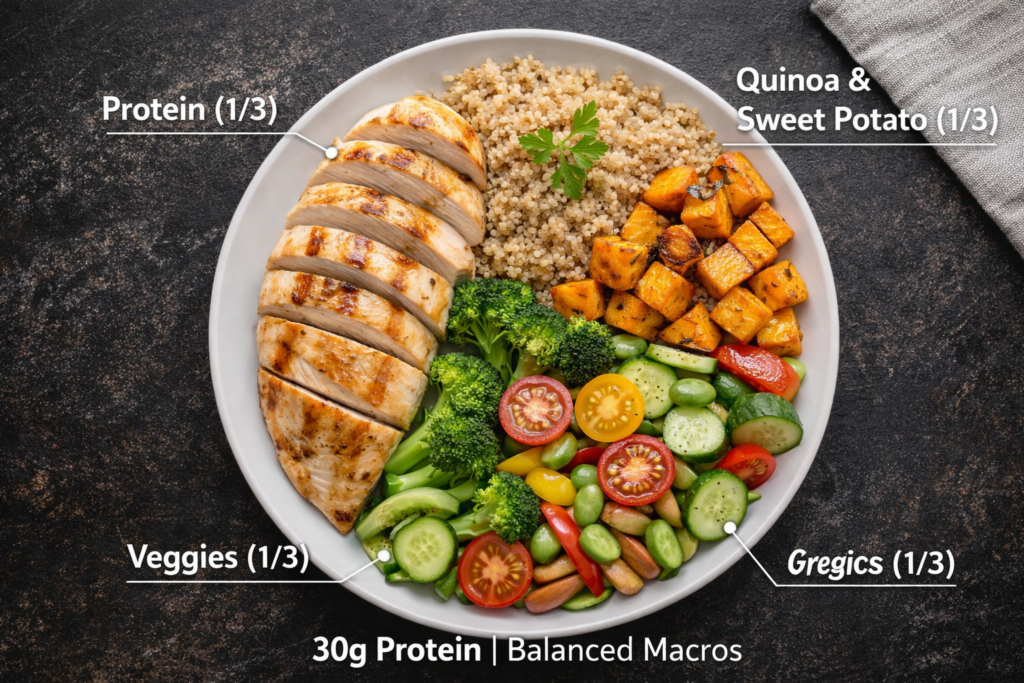
Now that you know the best high-protein foods, how do you actually use this information?
The Strategic Approach
1. Choose variety: Don’t rely on just 2-3 protein sources. Rotate through multiple options to ensure complete amino acid profiles and prevent dietary boredom.
2. Consider your budget: Mix expensive proteins (like beef and fish) with affordable options (like eggs, chicken thighs, beans, and lentils).
3. Prioritize what you enjoy: The best protein source is the one you’ll actually eat consistently. Don’t force yourself to eat foods you hate.
4. Plan for convenience: Stock both quick-prep proteins (eggs, canned tuna, protein powder) and meal-prep friendly options (chicken, beef, beans).
5. Meet your targets: Use a food tracking app to ensure you’re hitting 0.7-1.0g protein per pound of body weight daily.
Sample Daily Protein Distribution
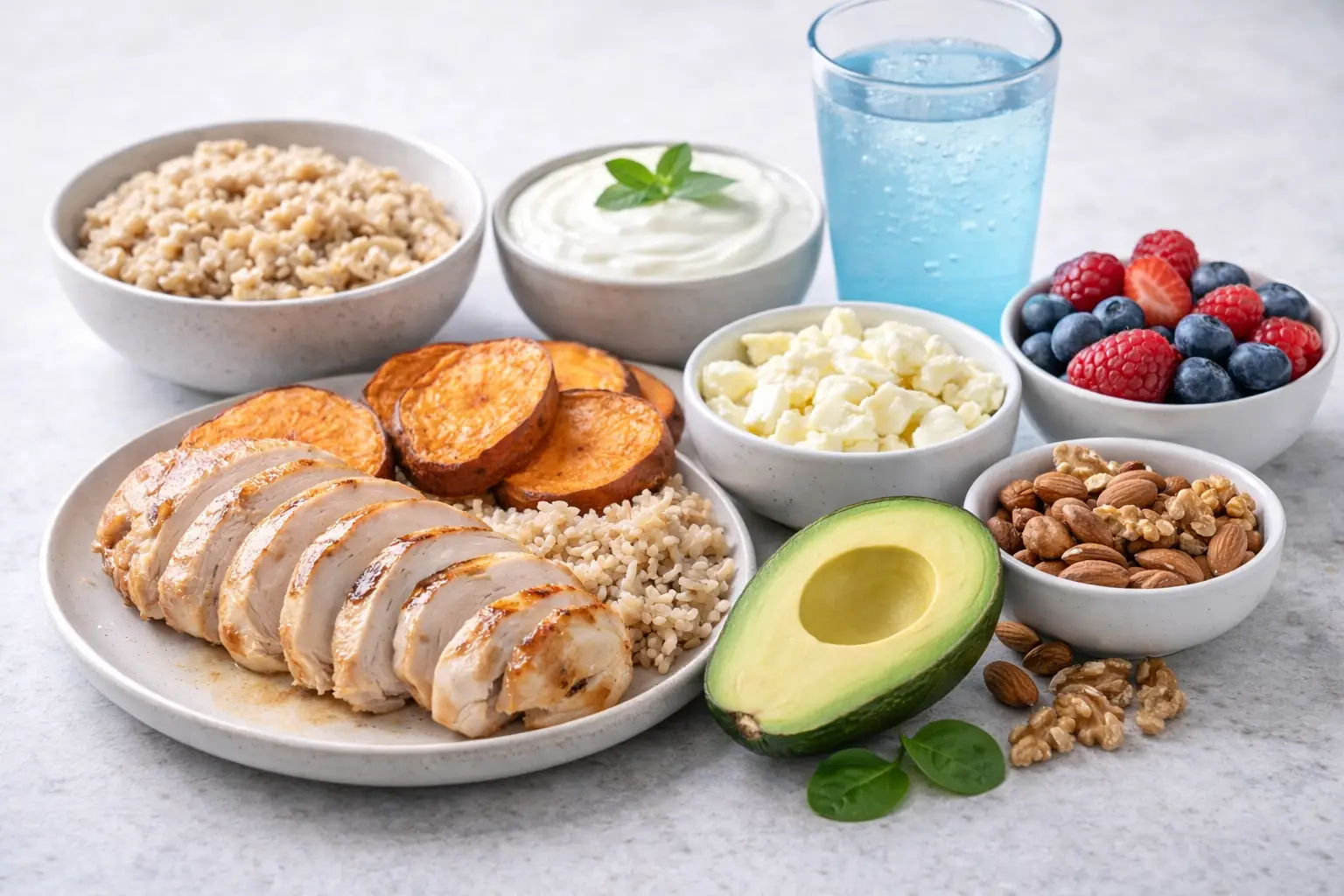
For a 180-pound person targeting 150g protein daily:
- Breakfast: 3 whole eggs + 2 egg whites (26g)
- Snack: Greek yogurt with berries (20g)
- Lunch: Chicken breast with quinoa and vegetables (35g)
- Pre-workout: Protein shake (25g)
- Dinner: Lean beef with sweet potato and broccoli (35g)
- Before bed: Cottage cheese (14g)
Total: 155g protein
The Bottom Line
Protein consumption is absolutely essential not just for building muscle and strength, but for maintaining optimal health.
Virtually every process in your body from enzymes and organs to brain function relies on adequate protein to work correctly.
Through this comprehensive list of the 24 best high-protein foods, you now have everything needed to create a varied, sustainable meal plan that fits your preferences and budget.
The winning strategy: Choose the protein sources that work best for YOUR wallet, YOUR taste preferences, and YOUR lifestyle. Consistency beats perfection every time.
Ready to transform your physique? Now you know exactly which foods to eat. The only question is: are you ready to take action?
Want a complete nutrition plan that takes the guesswork out of hitting your protein targets? Stop struggling with meal planning and get a proven system that shows you exactly what to eat, when to eat it, and how much you need to build the body you want. Your muscle-building journey starts with proper nutrition make it simple, sustainable, and effective.


Leave a Reply
You must be logged in to post a comment.