Took your pre-workout but wondering when you’ll actually feel it working? Here’s the science-backed truth about pre-workout timing and how to maximize its effectiveness.
You just mixed your pre-workout. You’re ready to dominate the gym.
But when will it actually start working?
You don’t want to start training too early (before it kicks in). You don’t want to wait too long (and waste the peak effects sitting around).
You need to know the optimal timing.
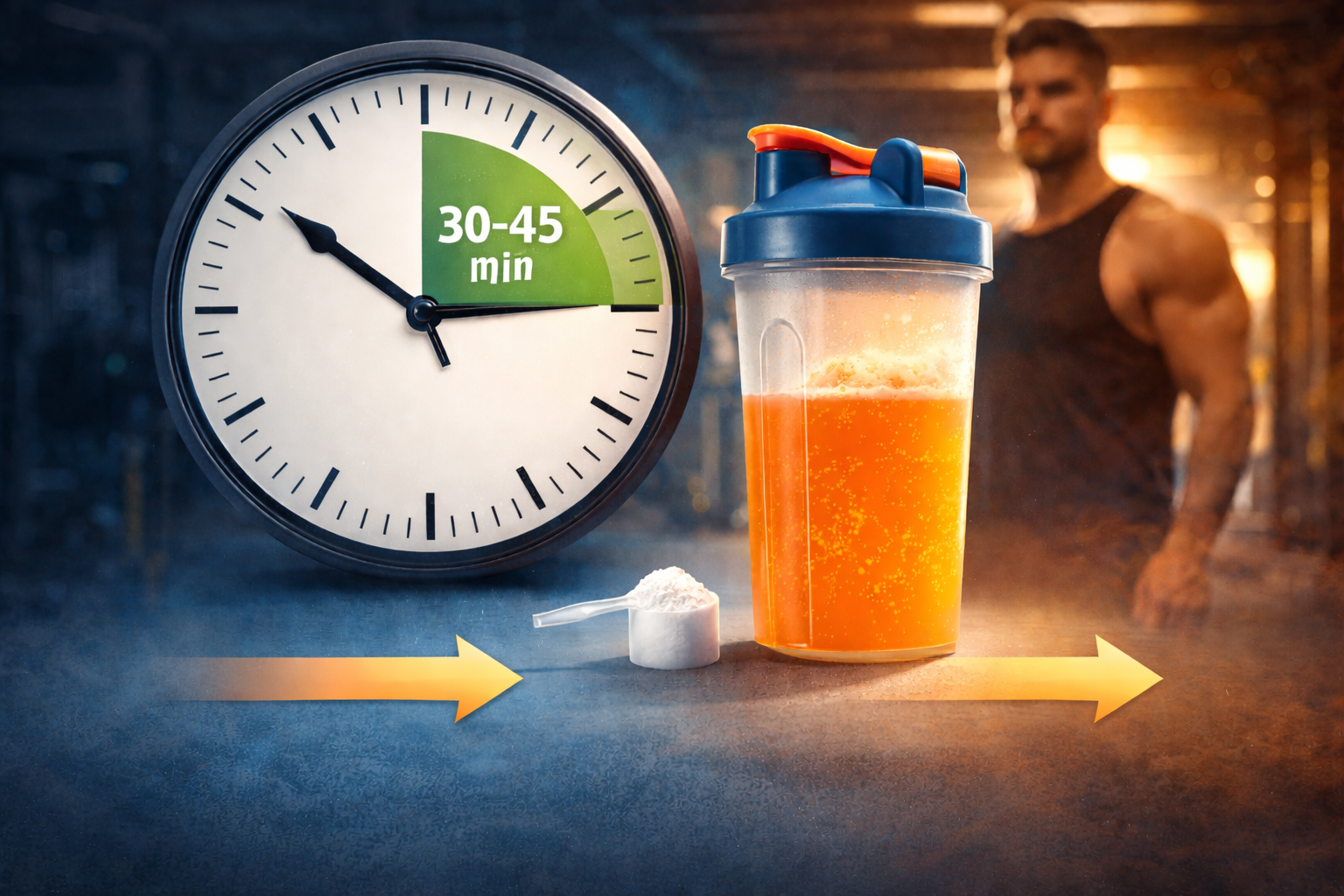
Here’s the straightforward answer: Most pre-workouts take 30-45 minutes to start working, with peak effects occurring at 45-60 minutes after consumption. However, caffeine (the primary active ingredient) begins working within 10-15 minutes for some people. For best results, take pre-workout 30-45 minutes before training to hit peak effects during your workout.
In this comprehensive guide, I’ll explain exactly how long each pre-workout ingredient takes to work, reveal what effects you should actually expect from pre-workout supplements, show you the factors that speed up or delay absorption, provide optimal timing strategies for different training schedules, and help you maximize pre-workout effectiveness without wasting money or experiencing side effects.
Whether you’re new to pre-workouts or trying to optimize your current routine, this article will answer all your timing questions.
Let’s dial in your pre-workout timing.
TABLE OF CONTENTS
How Long Does Pre-Workout Take to Kick In?
The direct answer with important context.
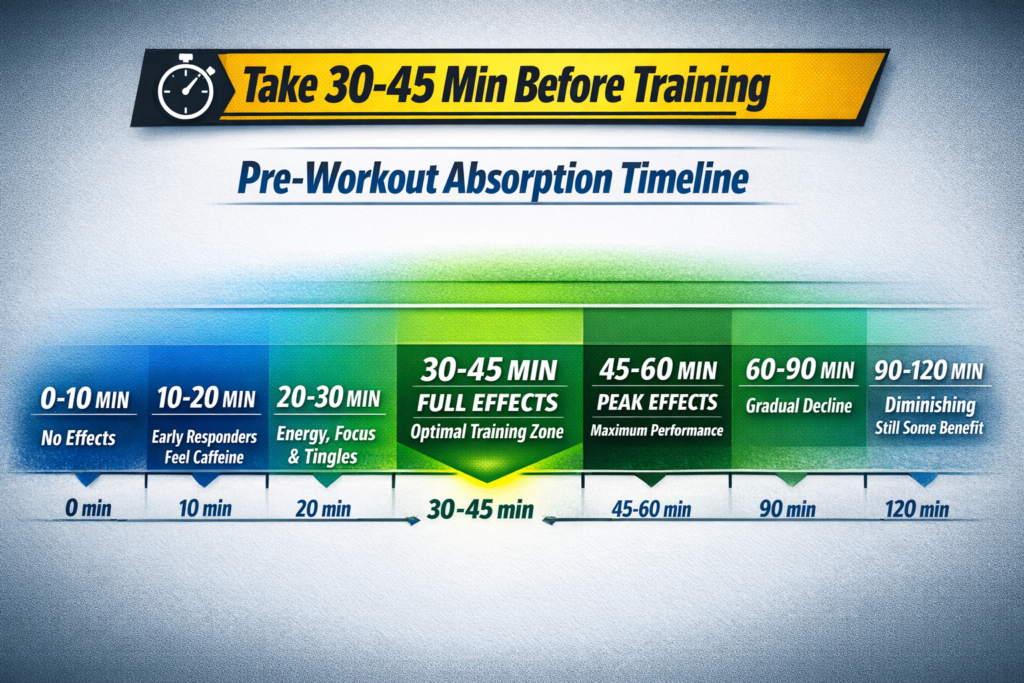
The General Timeline: 30-45 Minutes
For most people using typical pre-workout supplements:
10-15 minutes:
- Early responders start feeling caffeine effects
- Slight energy increase
- Mental alertness beginning
- Tingles from beta-alanine may start
20-30 minutes:
- Most people start feeling caffeine
- Noticeable energy boost
- Improved focus
- Beta-alanine tingles intensifying
- Heart rate may increase slightly
30-45 minutes:
- Full effects kicking in for most people
- Peak energy and focus
- Maximum motivation
- All ingredients actively working
- Optimal time to start training
45-60 minutes:
- Peak blood caffeine levels reached
- Maximum performance enhancement
- Strongest effects present
- Ideal for most intense training
- Peak window for heavy lifts
60-90 minutes:
- Effects still strong
- Beginning gradual decline
- Still beneficial for training
- Good for longer workouts
90-120 minutes:
- Effects diminishing
- Still some benefit remaining
- Caffeine half-life means partial effects
- Better than nothing
Why 30-45 Minutes Is the Sweet Spot
Taking pre-workout 30-45 minutes before training ensures:
Benefits arrive on time:
- Start warming up as effects begin
- Hit peak during main lifts
- Maximize performance window
- Don’t waste effects sitting around
Digestive comfort:
- Enough time for stomach to process
- Reduces risk of nausea during training
- No sloshing liquid during exercise
- Comfortable training experience
Psychological readiness:
- Time to change, get to gym
- Mental preparation happens
- Anticipation builds
- Ready to dominate when effects peak
Practical logistics:
- Drive to gym during onset (if training at gym)
- Set up equipment as effects build
- Warm up during early effects
- Main training during peak
Individual Variation Exists
Not everyone experiences the same timeline:
Fast metabolizers (20-30 minutes):
- Feel caffeine within 10-15 minutes
- Peak effects at 30 minutes
- Should take pre-workout 20-30 minutes before training
- Genetics play a role
Average metabolizers (30-45 minutes):
- Standard timeline applies
- Most people fall here
- Follow general recommendations
- 30-45 minutes before training
Slow metabolizers (45-60 minutes):
- Take longer to feel effects
- Peak at 60+ minutes
- Should take pre-workout 45-60 minutes before training
- Less common but significant for these individuals
How to determine your type:
- Experiment with timing
- Track when you feel peak effects
- Adjust future timing accordingly
- Individual experimentation crucial
What Effects to Expect From Pre-Workout
Understanding what pre-workout actually does helps you recognize when it’s working.
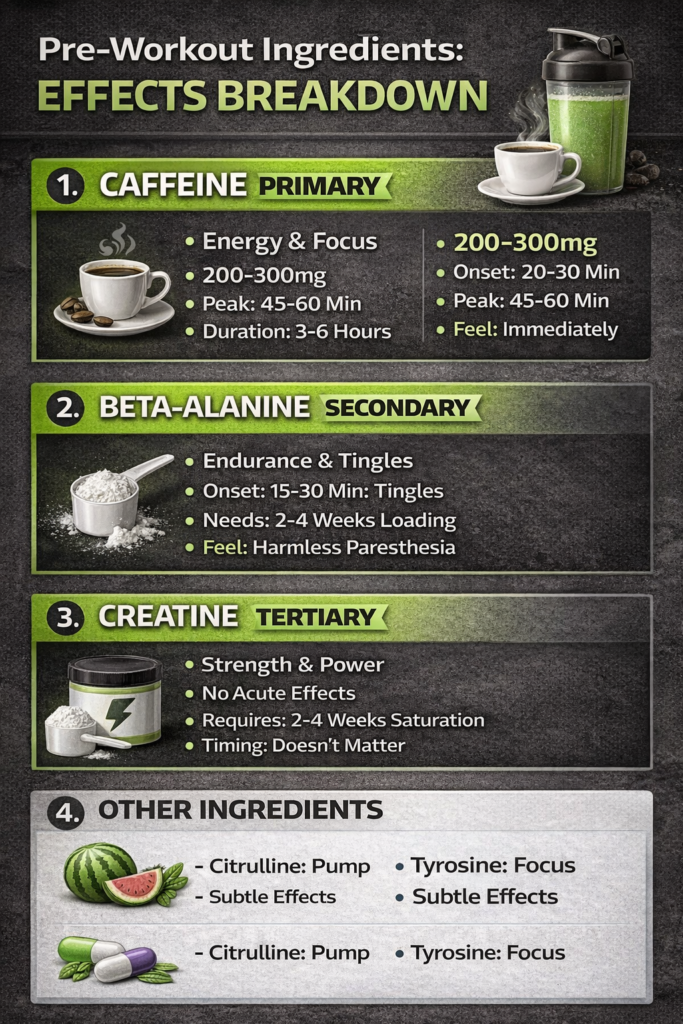
Primary Effect: Caffeine (Energy and Focus)
Caffeine is the star ingredient in almost all pre-workouts.
Typical dosing in pre-workouts:
- Low dose: 150-200mg
- Moderate dose: 200-300mg
- High dose: 300-400mg
- Very high dose: 400mg+ (often excessive)
What caffeine does:
At low to moderate doses (150-200mg):
- Enhanced mental alertness
- Improved focus and attention
- Better reaction time
- Elevated mood
- Reduced perceived exertion
At moderate to high doses (200-400mg):
- All the above benefits
- Increased muscular strength
- Enhanced muscular endurance
- Delayed fatigue
- Improved power output
- Better time to exhaustion
How it feels:
- Increased energy (not jittery if dosed properly)
- Mental clarity and focus
- Motivation to train
- Reduced awareness of fatigue
- Feeling “locked in”
Onset timeline:
- Some people: 10-15 minutes
- Most people: 20-30 minutes
- Peak: 45-60 minutes
- Duration: 3-6 hours (depending on individual caffeine metabolism)
Important notes:
Start lower if new to caffeine:
- Minimum effective dose: ~100mg (1.5mg per kg body weight)
- Assess tolerance first
- Gradually increase if needed
- Don’t start with 400mg doses
Very high doses (400mg+) can backfire:
- Anxiety and jitters
- Gastrointestinal distress
- Actually impair performance
- Diminishing returns
- More isn’t always better
Individual tolerance varies dramatically:
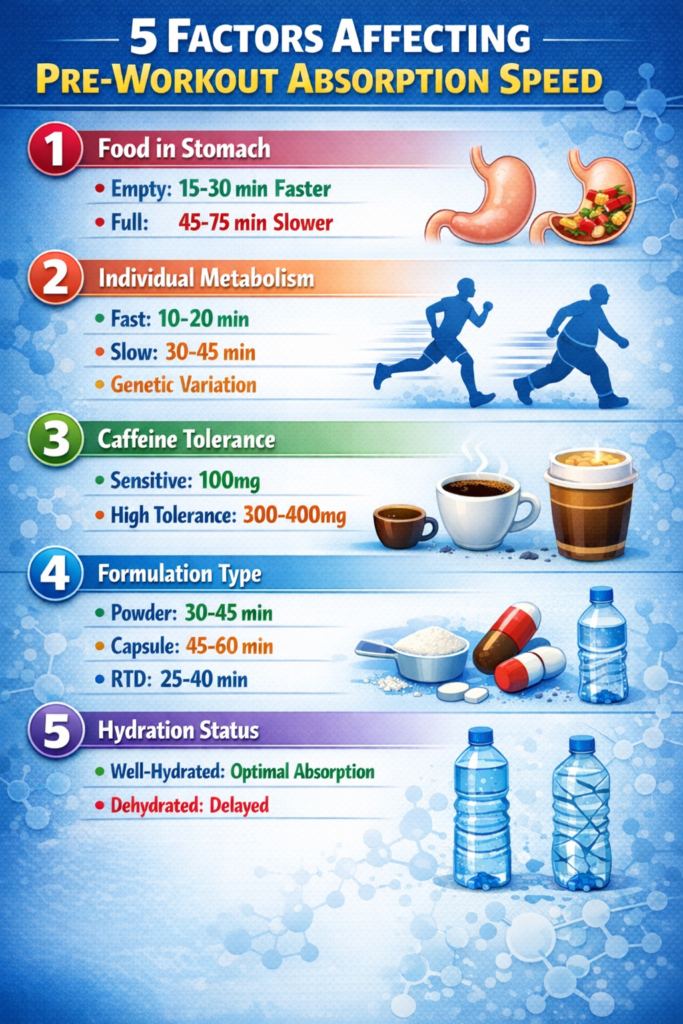
- Some people sensitive to 100mg
- Others need 300mg for effects
- Genetics determine caffeine metabolism
- Experiment to find your sweet spot
Secondary Effect: Beta-Alanine (Endurance)
Beta-alanine is in most pre-workouts and creates a unique sensation.
What beta-alanine does:
Mechanism:
- Increases muscle carnosine levels
- Carnosine buffers hydrogen ions (acidity)
- Delays muscle fatigue during high-intensity work
- Allows more reps before failure
Performance benefits:
- 1-3 additional reps per set
- Enhanced performance in 60-240 second efforts
- Reduced fatigue sensation
- Better muscular endurance
The tingles:
- Causes harmless tingling (paresthesia)
- Usually felt in face, ears, neck, shoulders
- Starts 15-20 minutes after consumption
- Peaks at 30-45 minutes
- Lasts 60-90 minutes
- Completely harmless
Timeline:
- Absorption: 30-45 minutes
- Tingles start: 15-30 minutes
- Performance benefits: Require chronic use (2-4 weeks loading)
- Acute effects: Minimal (benefits build over time)
Important clarification:
The tingles don’t equal performance:
- Tingles are a side effect, not the benefit
- Performance improvements require weeks of consistent use
- One dose won’t dramatically improve endurance
- Loading takes 2-4 weeks (4-6g daily)
Tertiary Effect: Creatine (Strength and Power)
Some pre-workouts include creatine.
What creatine does:
Mechanism:
- Increases phosphocreatine stores in muscles
- Enhances ATP regeneration
- Provides energy for short, intense efforts
- Supports strength and power output
Performance benefits:
- 5-15% increase in strength
- Enhanced power output
- More reps at given weight
- Better training quality
- Supports muscle growth over time
Timeline for creatine:
- Absorption from single dose: 1-2 hours
- Acute effects from one dose: Minimal to none
- Actual benefits require: 2-4 weeks consistent use
- Loading phase: 20g daily for 5-7 days (optional)
- Maintenance: 3-5g daily ongoing
Critical point about creatine in pre-workouts:
Creatine doesn’t provide acute benefits:
- Taking it pre-workout won’t boost that specific session
- Benefits come from muscle saturation over weeks
- Timing doesn’t matter for creatine
- Including it in pre-workout is for convenience only
Dosing issues in many pre-workouts:
- Many contain insufficient creatine (1-2g)
- Need 5g daily for maintenance
- Pre-workout dose alone often inadequate
- May need to supplement separately
Better approach:
- Take creatine daily (5g)
- Timing doesn’t matter (pre, post, or anytime)
- Pre-workout inclusion is convenience, not performance timing
- Don’t rely solely on pre-workout for creatine
Additional Effects: Other Common Ingredients
Pre-workouts contain various other ingredients:
Citrulline/Citrulline Malate:
- Increases nitric oxide production
- Enhances blood flow (“pump”)
- May improve endurance
- Absorption: 30-60 minutes
- Effects: Subtle, some people notice increased pump
BCAAs (Branch Chain Amino Acids):
- May reduce fatigue during training
- Minimal acute benefits if eating adequate protein
- Absorption: 15-30 minutes
- Effects: Negligible for most people
Taurine:
- May enhance exercise performance
- Possible cognitive benefits
- Absorption: 30-60 minutes
- Effects: Subtle, hard to notice acutely
B-Vitamins:
- Energy metabolism support
- No immediate “energy boost”
- Effects: Not acutely noticeable
L-Tyrosine:
- Cognitive function support
- May help with focus under stress
- Absorption: 30-60 minutes
- Effects: Subtle, individual variation
The reality:
Caffeine and beta-alanine drive most noticeable effects.
- Other ingredients provide support
- Benefits often subtle
- Marketing emphasizes these ingredients
- Caffeine is what you actually feel
Factors That Affect When Pre-Workout Kicks In
Several variables influence absorption speed and onset.
Factor 1: Food in Your Stomach
This is the most significant variable you can control.
Empty stomach (fasted state):
Pros:
- Fastest absorption (15-30 minutes for many people)
- Strongest peak effects
- Most intense experience
- Earlier onset
Cons:
- Higher risk of nausea
- Jitters more likely
- Stomach discomfort possible
- Crash may be harder
Best for:
- Morning training (after overnight fast)
- People with strong stomachs
- Those wanting maximum intensity
- Short, intense workouts
Full stomach (recent meal):
Pros:
- Reduced nausea risk
- Smoother energy curve
- More comfortable digestion
- Sustained effects
Cons:
- Slower absorption (45-75 minutes)
- Delayed onset
- Potentially reduced peak intensity
- May need to wait longer
Best for:
- People sensitive to stimulants on empty stomach
- Afternoon/evening training after eating
- Those prone to nausea
- Longer training sessions
Optimal approach:
Small snack 30-60 minutes before pre-workout:
- Piece of fruit
- Rice cakes
- Small protein shake
- Enough to settle stomach, not delay absorption significantly
Or larger meal 2-3 hours before pre-workout:
- Full digestion occurs
- Stomach relatively empty by pre-workout time
- Provides training fuel
- Balances absorption speed and comfort
Avoid:
- Taking pre-workout immediately after large, heavy meal
- High-fat meals within 60-90 minutes of pre-workout
- Excessive protein immediately before (slows gastric emptying)
Factor 2: Individual Metabolism and Genetics
Your genetic makeup significantly affects caffeine metabolism.
CYP1A2 gene variations:
Fast metabolizers (~50% of population):
- CYP1A2*1A/*1A genotype
- Rapidly process caffeine
- Feel effects quickly (10-20 minutes)
- Effects fade faster (2-3 hours)
- Can tolerate higher doses
- May need to time pre-workout closer to training
Slow metabolizers (~50% of population):
- CYP1A2*1F variant
- Process caffeine slowly
- Feel effects later (30-45 minutes)
- Effects last longer (4-6+ hours)
- More sensitive to dosing
- Should take pre-workout 45-60 minutes before training
How to determine your metabolism:
- Notice how long coffee/caffeine affects you
- Fast: Feel it quickly, effects gone in few hours
- Slow: Takes time to feel, keeps you wired for hours
- Adjust pre-workout timing accordingly
Factor 3: Tolerance to Caffeine
Regular caffeine use builds tolerance.
No tolerance (caffeine naive):
- Feel effects from 50-100mg
- Very sensitive to timing
- Strong acute response
- Onset within 10-20 minutes
Low tolerance (occasional user):
- Need 100-200mg for effects
- Moderate sensitivity
- Noticeable response
- Onset 20-30 minutes
Moderate tolerance (daily coffee drinker):
- Need 200-300mg for pre-workout boost
- Reduced sensitivity
- Still effective but blunted
- Onset 30-45 minutes
High tolerance (excessive caffeine use):
- Need 300-400mg+ for effects
- Significantly blunted response
- Risk of diminishing returns
- May not feel onset clearly
Managing tolerance:
- Cycle caffeine (2 weeks on, 1 week off)
- Reduce daily background caffeine
- Reserve high doses for training only
- Reset tolerance periodically
Factor 4: Pre-Workout Formulation
Different products have different absorption profiles.
Powder mixed with water:
- Standard absorption
- 30-45 minutes typical
- Most common form
- Predictable timing
Ready-to-drink (RTD) pre-workout:
- Similar to powder
- Perhaps slightly faster (already liquid)
- 25-40 minutes typical
- Convenience factor
Capsule/pill form:
- Slower absorption
- 45-60 minutes typical
- Capsule must dissolve first
- Adds 10-15 minutes to timeline
Sustained-release formulations:
- Designed for extended release
- 60-90 minutes to peak
- Longer-lasting effects
- Different use case (endurance events)
Ingredient-specific factors:
Anhydrous caffeine (most common):
- Standard absorption
- Peaks 45-60 minutes
Di-caffeine malate:
- Slower, sustained release
- Peaks 60-90 minutes
- Longer duration
Combination of caffeine forms:
- Some immediate, some delayed
- Extended effect window
- More complex timing
Factor 5: Hydration Status
Your hydration level affects absorption.
Well-hydrated:
- Better blood flow
- Faster nutrient transport
- Optimal absorption
- Recommended state
Dehydrated:
- Reduced blood volume
- Slower circulation
- Potentially delayed absorption
- Reduced performance anyway
Best practice:
- Drink 16-24oz water with pre-workout
- Maintain hydration throughout day
- Don’t rely on pre-workout to hydrate
- Water enhances all supplement absorption
Optimal Pre-Workout Timing Strategies
How to time pre-workout for different situations.
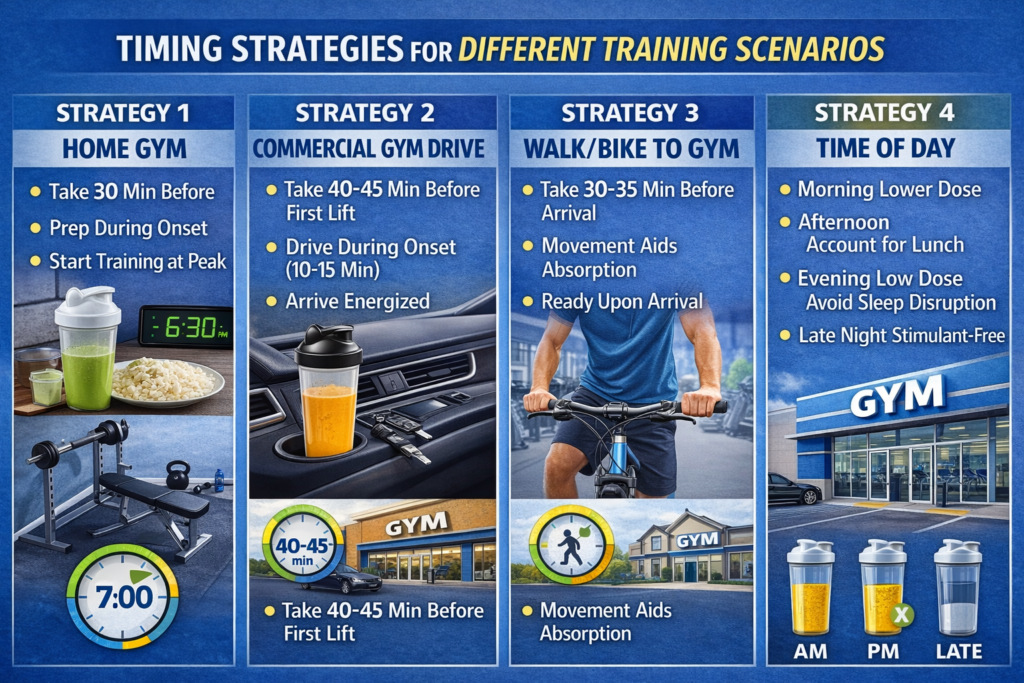
Strategy 1: Home Gym Training
If you train at home, timing is simpler.
Recommended approach:
30 minutes before training:
- Take pre-workout
- Use bathroom, change clothes
- Set up equipment
- Light stretching or movement
- Start training as effects kick in
Why this works:
- No commute delay
- Immediate training access
- Warming up as effects build
- Peak effects during main lifts
Example timeline:
- 5:00 PM: Take pre-workout
- 5:05-5:20 PM: Prep and light movement
- 5:20-5:30 PM: Warm up (effects starting)
- 5:30-6:30 PM: Main training (peak effects)
Strategy 2: Commercial Gym (Driving)
If you drive to gym, factor in commute time.
Recommended approach:
40-45 minutes before first lift:
- Take pre-workout
- Drive to gym (10-15 minutes)
- Change clothes (5 minutes)
- Light warm-up (10 minutes)
- Effects peaking as you start main training
Example timeline:
- 5:00 PM: Take pre-workout at home
- 5:05 PM: Drive to gym (feeling onset during drive)
- 5:20 PM: Arrive, change (effects building)
- 5:25 PM: Warm up (strong effects starting)
- 5:35 PM: Main training begins (peak effects)
Why this works:
- Effects kick in during non-training activities
- Arrive at gym energized and ready
- No wasted peak effects
- Optimal performance window
Strategy 3: Walking/Biking to Gym
If you walk or bike to gym.
Recommended approach:
30-35 minutes before arrival:
- Take pre-workout
- Light walk/bike to gym
- Effects building during commute
- Ready to train immediately upon arrival
Benefits:
- Movement aids absorption
- Blood flow increased during walk/bike
- Arrive pumped and ready
- Efficient use of time
Strategy 4: Training at Different Times of Day
Morning training (6-8 AM):
Challenge: Stomach empty, may be caffeine sensitive first thing
Solution:
- Small snack (banana, rice cake) 15 minutes before pre-workout
- Take pre-workout 30 minutes before training
- Start lower dose if new to morning caffeine
Afternoon training (12-2 PM):
Challenge: Usually have eaten lunch or will soon
Solution:
- If before lunch: Take 30-45 minutes before training (fasted or light snack)
- If after lunch: Wait 90-120 minutes after eating, then take pre-workout 30-45 min before training
Evening training (5-8 PM):
Challenge: Late caffeine may affect sleep
Solution:
- Train earlier if possible (finish by 6-7 PM)
- Use lower dose (150-200mg caffeine)
- Or use stimulant-free pre-workout
- Consider individual caffeine sensitivity
Late night training (8 PM+):
Challenge: Caffeine will definitely affect sleep
Solution:
- Use stimulant-free pre-workout
- Or just creatine + beta-alanine
- Accept that you won’t have caffeine boost
- Focus on other motivation sources
Common Pre-Workout Timing Mistakes
Avoid these errors.
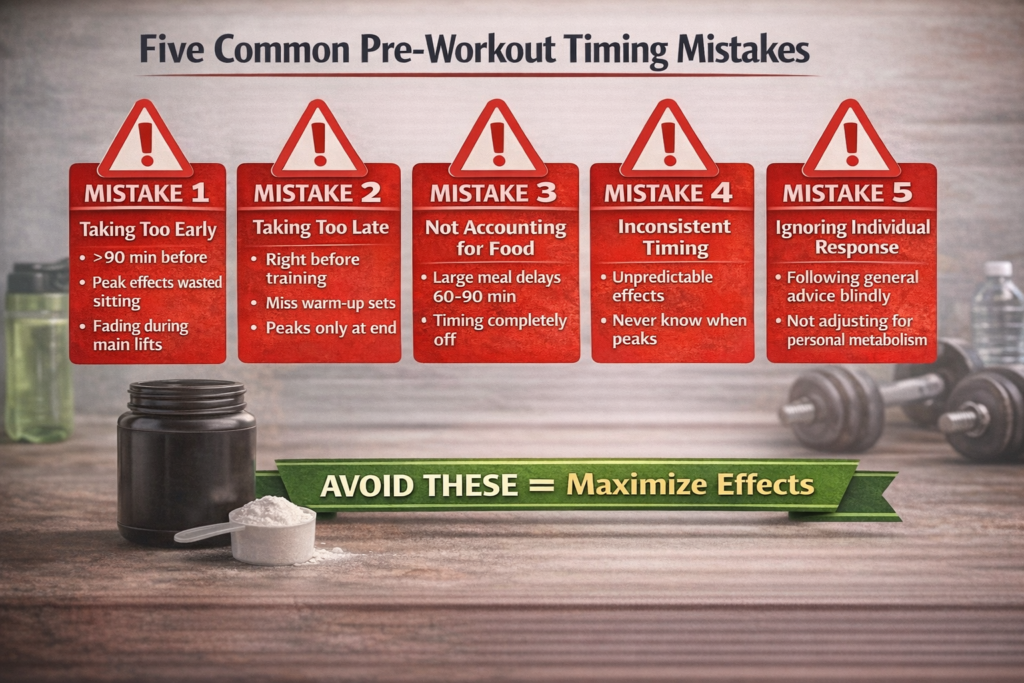
Mistake 1: Taking Too Early
The problem:
- Take pre-workout 90+ minutes before training
- Peak effects occur before or early in workout
- Fading during main lifts
- Wasted money and effects
Example:
- 4:00 PM: Take pre-workout
- 4:00-5:00 PM: Sit at work
- 5:00-5:30 PM: Commute home, change
- 5:30 PM: Start training (effects already fading)
- Peak effects wasted sitting around
The fix:
- Time pre-workout 30-45 minutes before actual training
- Account for all pre-training activities
- Don’t take when leaving work if training is 90 minutes away
Mistake 2: Taking Too Late
The problem:
- Take right before training
- Start lifting before effects kick in
- Waste warm-up and early sets
- Peak effects only for last part of workout
Example:
- 5:00 PM: Arrive at gym
- 5:00 PM: Take pre-workout, start warming up
- 5:10 PM: Main lifts begin (no effects yet)
- 5:30 PM: Finally feeling it (workout half over)
- Missed opportunity for peak performance
The fix:
- Take pre-workout before leaving for gym
- Or take 30 minutes before first lift
- Plan timing around when you actually start lifting
Mistake 3: Not Accounting for Food
The problem:
- Eat large meal
- Immediately take pre-workout
- Effects extremely delayed (60-90 minutes)
- Timing completely off
The fix:
- Wait 90-120 minutes after large meal
- Or take pre-workout first, eat later
- Small snack okay 30-60 minutes before
- Consider meal timing in planning
Mistake 4: Inconsistent Timing
The problem:
- Sometimes 20 minutes before
- Sometimes 60 minutes before
- Never sure when effects will peak
- Unpredictable performance
The fix:
- Find your optimal timing
- Stick to consistent window
- Same timing builds pattern
- Predictable effects
Mistake 5: Ignoring Individual Response
The problem:
- Following general recommendations blindly
- Not adjusting for personal metabolism
- Suboptimal timing for your body
The fix:
- Experiment with timing
- Track when you feel peak effects
- Adjust based on personal response
- Individualize your approach
Frequently Asked Questions
Can I take pre-workout on an empty stomach?
Yes, but with considerations.
Benefits:
- Faster absorption
- Stronger effects
- Earlier onset
Risks:
- Nausea
- Jitters
- Stomach discomfort
Recommendation:
- If you tolerate well, it’s fine
- Start with lower dose to assess
- Have small snack if needed
- Stay well hydrated
What if I don’t feel my pre-workout working?
Several possible reasons:
High caffeine tolerance:
- Solution: Reduce daily caffeine, cycle usage
Underdosed product:
- Solution: Check label, switch brands
Taking too soon after eating:
- Solution: Adjust timing relative to meals
Individual low sensitivity:
- Solution: Try different product, accept you may not feel strong effects
Remember: Not feeling it doesn’t mean it’s not working. Performance is what matters.
Can I take pre-workout twice in one day?
Possible but not recommended for most people.
If training twice daily:
- Morning session: Full dose pre-workout
- Evening session: Lower dose or stimulant-free version
- Total daily caffeine: <400mg
Concerns:
- Excessive total caffeine
- Sleep disruption
- Tolerance building faster
- Unnecessary for most people
Better approach:
- Full pre-workout for main session
- Just creatine + beta-alanine for second session
- Or coffee for second boost
How long do pre-workout effects last?
Typical duration:
- Peak effects: 45-90 minutes
- Noticeable effects: 2-4 hours
- Caffeine half-life: 3-6 hours
- Beta-alanine tingles: 60-90 minutes
Varies by:
- Individual metabolism
- Caffeine tolerance
- Dosage taken
- Ingredients in formula
The Bottom Line: Take Pre-Workout 30-45 Minutes Before Training
After examining all the timing considerations:
The optimal pre-workout timing:
✅ 30-45 minutes before first lift (most people)
✅ 20-30 minutes before training (fast metabolizers, empty stomach)
✅ 45-60 minutes before training (slow metabolizers, after eating)
Why this timing works:
- Effects peak during your workout
- Allows for warm-up as effects build
- Maximizes performance window
- Accounts for absorption time
Factors to consider:
- Food in stomach (delays 15-30 minutes)
- Individual metabolism (fast vs. slow)
- Caffeine tolerance (affects sensitivity)
- Commute to gym (factor into timing)
- Time of day (morning vs. evening considerations)
What to expect:
10-20 minutes: Early effects for some (caffeine sensitive)
20-30 minutes: Most people start feeling effects
30-45 minutes: Full effects for average person
45-60 minutes: Peak effects
60-120 minutes: Effects gradually declining
The experimentation process:
Week 1: Try 30 minutes before training
- Track how you feel
- Note when effects peak
- Assess performance
Week 2: Adjust based on Week 1
- Earlier if peaked too late
- Later if peaked too early
- Fine-tune timing
Week 3+: Lock in your personal optimal timing
- Consistent timing
- Predictable effects
- Maximum performance
EXPERIMENT TO FIND YOUR TIMING. STAY CONSISTENT. MAXIMIZE PERFORMANCE.
Ready to optimize your entire training and supplementation strategy for maximum results in the gym? Pre-workout timing is just one piece of effective training. Get a complete guide to building a science-based training program, timing all your nutrition optimally, using supplements strategically, and maximizing every workout for serious muscle growth. Stop guessing about pre-workout timing. Start training smarter and getting better results.

Leave a Reply
You must be logged in to post a comment.