
Getting 7 to 9 hours of quality sleep every night is essential for maximizing muscle growth, recovery, and overall health.
If you’re serious about building muscle, you’ve probably focused heavily on your training program and nutrition plan. But here’s the truth: without adequate sleep, you’re leaving massive gains on the table.
Sleep isn’t just downtime where your body shuts off. It’s an active, critical biological process where the real magic of muscle building happens.
Let’s dive into why sleep is your secret weapon for hypertrophy and how to optimize it for maximum results.
TABLE OF CONTENTS
Why 7-9 Hours of Sleep Is Non-Negotiable for Muscle Growth
Think of sleep as your body’s prime time for construction work. While you’re resting, your body is busy repairing damaged muscle fibers, balancing hormones, and preparing you for tomorrow’s workout.
The Hormone Connection: Your Natural Anabolic Window
Here’s where things get fascinating. During deep sleep stages, your body orchestrates a powerful hormonal symphony that directly impacts your ability to build muscle.
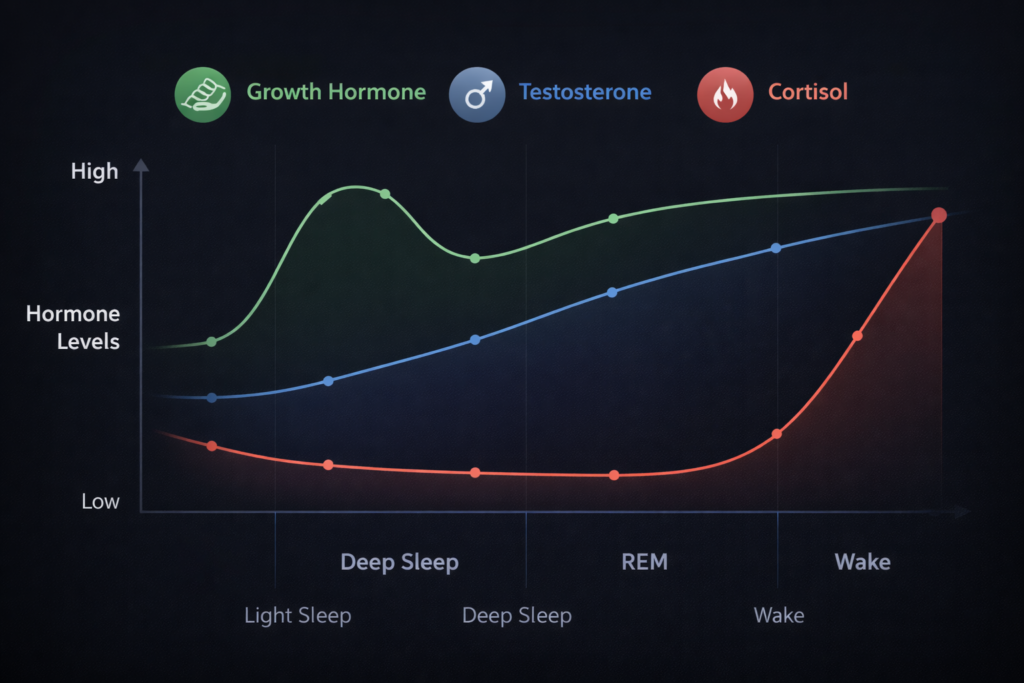
Growth Hormone Release: Up to 75% of your daily growth hormone (GH) secretion occurs during deep sleep phases. This isn’t just a minor detail GH is absolutely crucial for tissue repair and muscle protein synthesis. Without reaching those deep sleep stages, you’re essentially cutting your natural anabolic hormone production by three-quarters.
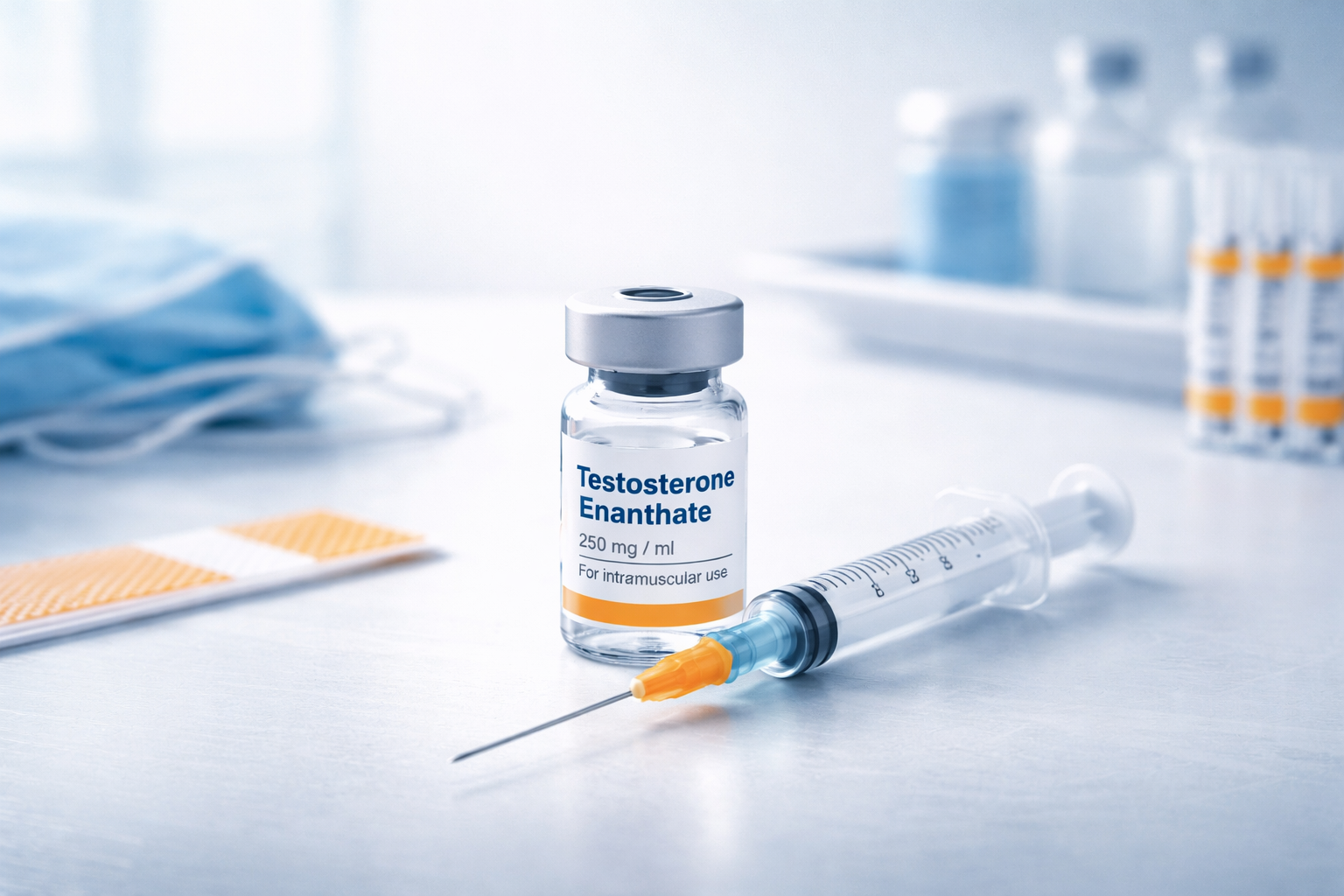
Testosterone Optimization: Your testosterone levels gradually climb throughout the night, peaking when you wake up in the morning. Studies show that men who sleep only 5 hours per night can experience testosterone levels that are 10-15% lower than those who get adequate rest. One study even found that a single week of restricted sleep (5 hours per night) reduced testosterone by up to 25% in young, healthy men.
This matters because testosterone is your body’s master switch for protein synthesis and muscle building. Lower testosterone means slower gains, period.
Cortisol Control: When you don’t get enough quality sleep, cortisol (your stress hormone) stays elevated. High cortisol works against your muscle-building hormones, essentially creating a catabolic environment where your body breaks down tissue instead of building it up.
Beyond Hormones: The Complete Recovery Picture
Sleep does more than just balance your hormones. It’s when your body:
- Replenishes glycogen stores in your muscles, ensuring you have the energy for your next workout
- Repairs micro-tears in muscle fibers caused by training
- Strengthens neural pathways that improve coordination and mind-muscle connection
- Reduces inflammation throughout the body, speeding up recovery
- Consolidates motor learning, making you more efficient at complex movements
The Mental Edge You Can’t Ignore
Here’s something many people overlook: sleep dramatically affects your neurotransmitters, including dopamine and serotonin. These brain chemicals regulate:
- Your motivation to hit the gym consistently
- Your ability to push through challenging sets
- Your discipline to stick to your nutrition plan
- Your stress resilience and mental clarity
Without adequate sleep, you’ll find it harder to maintain the consistency and intensity required for serious muscle growth.
Ready to take your muscle-building journey to the next level? Understanding sleep is just one piece of the puzzle. The right training program combined with proper recovery can accelerate your results dramatically.
Quality Trumps Quantity: How to Optimize Your Sleep for Maximum Gains
Setting a goal of 7-9 hours is a great start, but here’s the reality: not all sleep is created equal.
You could spend 9 hours in bed tossing and turning, waking up frequently, and never reaching the deep, restorative sleep stages your body needs. That’s why sleep quality is just as important as sleep duration.
Let me share the most effective, science-backed strategies to improve your sleep hygiene.
Create a Cave-Like Sleep Environment
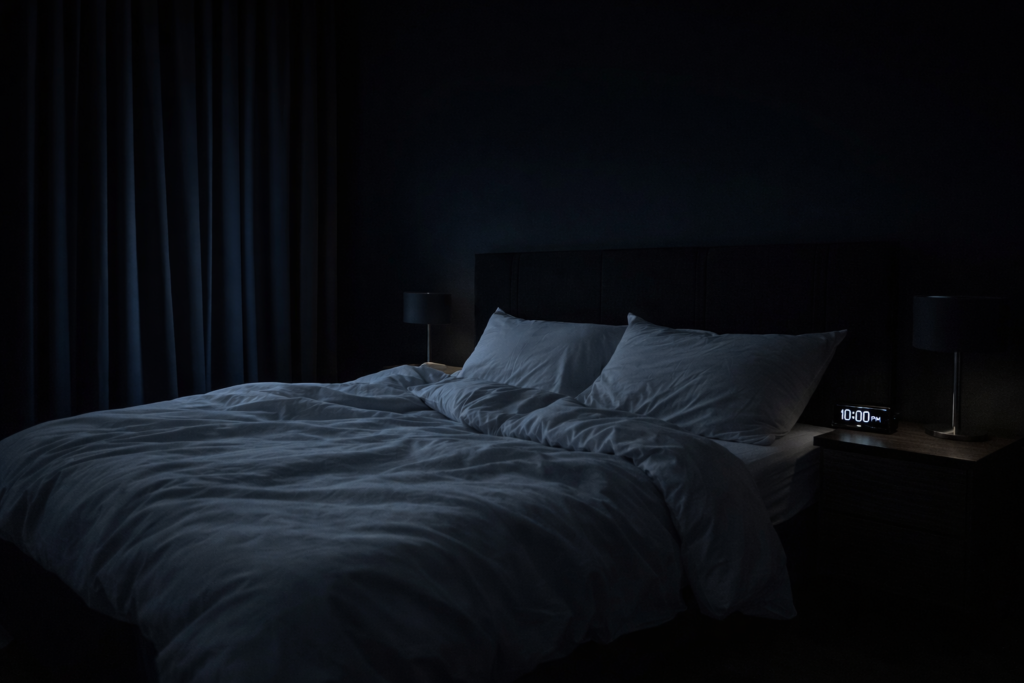
Your bedroom should be pitch black. Here’s why: your body produces melatonin (the sleep hormone) in response to darkness. Even small amounts of light from streetlights, electronics, or a hallway can disrupt this process.
Light exposure activates photoreceptor cells in your retina that signal your brain to suppress melatonin production, making it harder to fall asleep and stay asleep.
Quick fix: Use blackout curtains or a high-quality sleep mask. This simple change can dramatically improve your sleep onset time and depth.
Master Your Caffeine Timing
Caffeine is a powerful tool for training, but terrible for sleep when used incorrectly.
As a stimulant, caffeine blocks adenosine receptors in your brain. Adenosine is a molecule that builds up throughout the day, creating “sleep pressure” that makes you feel tired. By blocking these receptors, caffeine essentially tricks your brain into feeling alert.
The problem? Caffeine has a half-life of 5-6 hours, meaning it can stay active in your system for up to 10-12 hours. That afternoon coffee at 3 PM could still be affecting your sleep at midnight.
Pro tip: Cut off all caffeine consumption by 12-2 PM. Remember, it’s not just coffee pre-workout supplements, energy drinks, tea, and even some sodas contain significant caffeine.
Time Your Training Strategically
Intense exercise is essential for muscle growth, but it can work against you if done too close to bedtime.
High-intensity training elevates cortisol, adrenaline, core body temperature, and sympathetic nervous system activity. In other words, it puts your body in “fight or flight” mode the exact opposite state you need for sleep.
Your body needs approximately 4 hours to return to baseline after intense exercise. Training too late can act like taking a stimulant before bed.
Optimal timing: Finish your workouts at least 3-4 hours before your target bedtime. If you must train later, consider lower-intensity sessions like stretching, yoga, or light cardio.
Watch Your Evening Nutrition
Large, heavy meals before bed can sabotage your sleep quality in multiple ways.
Digesting a big meal raises your core body temperature, which opposes the natural temperature drop your body needs to initiate sleep. Additionally, lying down with a full stomach can cause digestive discomfort, acid reflux, and frequent awakenings.
Smart strategy: Finish your last substantial meal 2-3 hours before bedtime. If you need something closer to sleep time, opt for a light, easily digestible snack like Greek yogurt or a protein shake.
This doesn’t mean you need to worry about the “no carbs before bed” myth as long as your total daily calories and macros are on point, meal timing is flexible. Just keep pre-bed meals lighter.
Lock In Your Sleep Schedule
Your body runs on a circadian rhythm an internal 24-hour clock that regulates countless biological processes.
Going to bed and waking up at consistent times synchronizes this clock, strengthening two critical processes:
- Adenosine accumulation that creates healthy sleep pressure
- Timed melatonin release that promotes natural sleepiness
When you constantly change your sleep schedule (going to bed at 10 PM on weekdays but 2 AM on weekends), you create chronic circadian misalignment. This phenomenon, often called “social jet lag,” reduces sleep quality and makes it harder to fall asleep.
Implementation: Set a consistent bedtime and wake time, even on weekends. Your body will reward you with faster sleep onset and deeper, more restorative rest.
Additional Sleep Optimization Strategies
Want to go even further? Consider these advanced tips:
- Keep your bedroom cool (60-67°F or 15-19°C is optimal)
- Limit screen time 1-2 hours before bed to reduce blue light exposure
- Develop a relaxing pre-sleep routine (reading, light stretching, meditation)
- Avoid alcohol close to bedtime (it fragments sleep and reduces REM stages)
- Consider magnesium supplementation (300-400mg before bed can improve sleep quality)
The Bottom Line: Sleep Is Your Competitive Advantage
If you’re investing hours in the gym and carefully tracking your nutrition but neglecting your sleep, you’re essentially training with the handbrake on.
Seven to nine hours of quality sleep isn’t a luxury it’s a requirement for optimal muscle growth, hormone balance, recovery, and performance.
The good news? Unlike genetics or training experience, sleep quality is almost entirely under your control. By implementing these evidence-based sleep hygiene practices, you can unlock your body’s full muscle-building potential.
Want a comprehensive system that combines training, nutrition, AND recovery for maximum muscle growth? The right program can help you build muscle faster while avoiding common mistakes that waste months of effort.
Start tonight. Your future, more muscular self will thank you.
Ready to transform your physique? Don’t let poor sleep hold you back from the gains you deserve. Optimize your recovery, and watch your results skyrocket.




Leave a Reply
You must be logged in to post a comment.