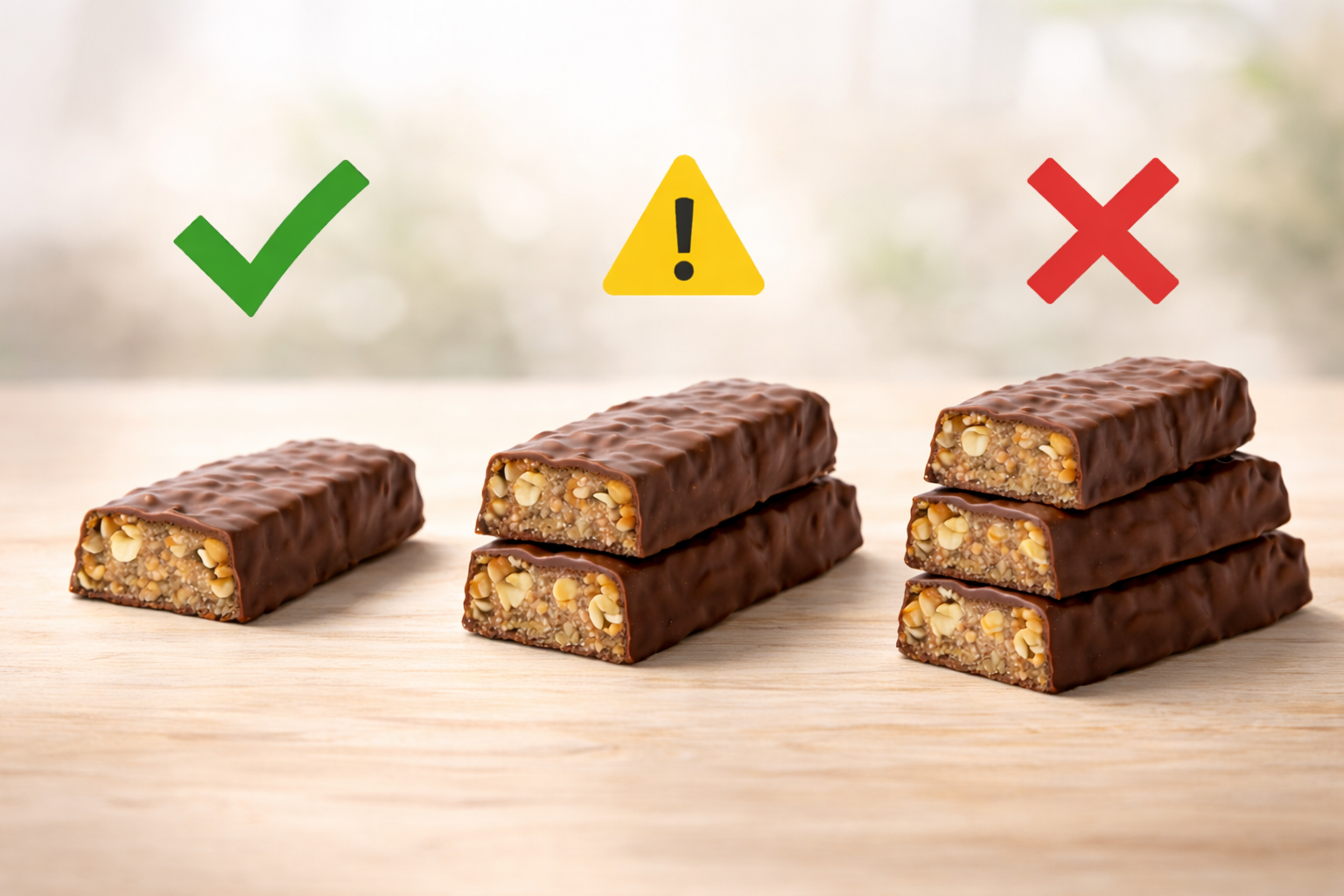
Eating protein bars daily but unsure if you’re overdoing it? Here’s the science-backed truth about how many protein bars are safe, beneficial, and when you’re eating too many.
You discovered protein bars. They’re convenient, taste like candy bars, and supposedly help you build muscle.
Now you’re hooked.
One for breakfast. Another post-workout. Maybe one as an afternoon snack. Sometimes two before bed.
But questions start creeping in:
- How many protein bars per day is too many?
- Am I replacing too much real food?
- Are these even healthy?
- Could I be hurting my progress?
- Is there such a thing as too many protein bars?
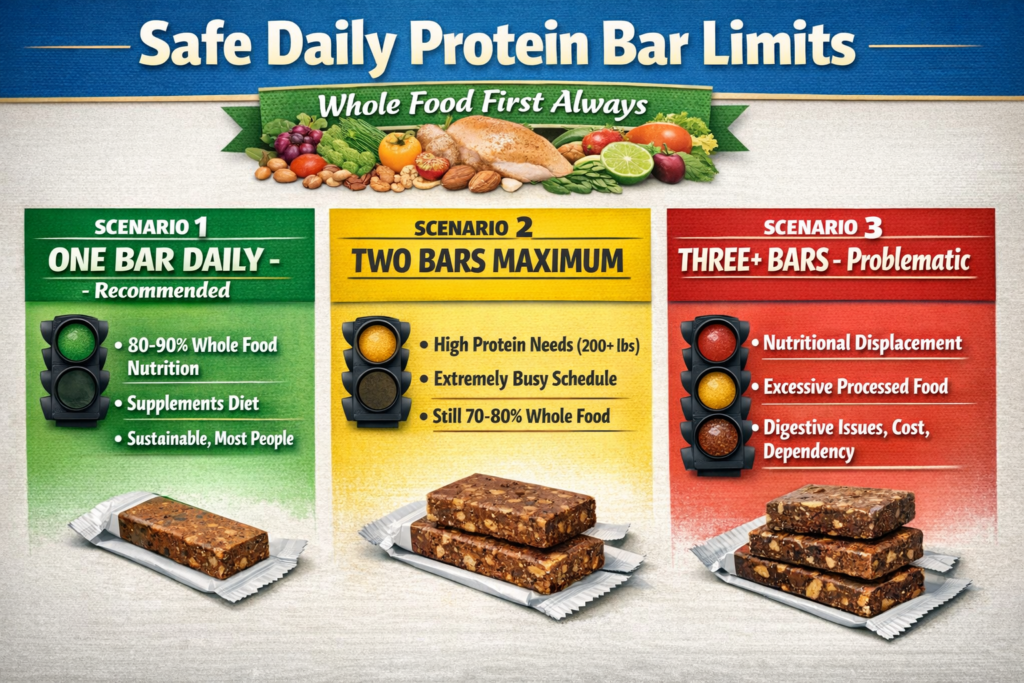
Here’s the straightforward truth: For most people, one protein bar daily is the safe, practical recommendation (maximum two). This helps supplement your protein intake without displacing whole foods that provide essential nutrients protein bars lack. Eating more than two daily typically means you’re replacing too much whole food nutrition with processed supplements.
In this comprehensive guide, I’ll explain exactly how many protein bars are safe to consume daily, reveal whether protein bars can replace actual meals, show you the best times to eat protein bars for maximum benefit, teach you how to identify quality bars worth eating, and help you avoid the common mistakes that turn protein bars from helpful supplements into dietary problems.
Whether you’re using protein bars for convenience, muscle building, or weight management, this article will give you clarity.
Let’s optimize your protein bar strategy.
TABLE OF CONTENTS
How Many Protein Bars Is Safe to Eat Per Day?
The direct answer with important context.
The General Recommendation: One Bar Daily
For most people, one protein bar per day is the sweet spot.
Why one bar works well:
Supplements your diet:
- Adds 10-20g protein to daily intake
- Fills gaps when whole food isn’t available
- Provides convenience without overdoing processed foods
- Keeps real food as your nutritional foundation
Maintains balance:
- 80-90% of nutrition from whole foods
- 10-20% from convenient supplements (protein bars, powders)
- Prevents nutritional deficiencies
- Ensures adequate micronutrient intake
Practical and sustainable:
- Easy to maintain long-term
- Doesn’t break the bank
- Provides convenience where needed
- Doesn’t create dependency on processed foods
Supports goals:
- Helps hit protein targets (0.7-1g per pound body weight)
- Convenient for busy schedules
- Satisfies sweet cravings in healthy way
- Works for cutting, maintaining, or bulking
When Two Bars Daily Might Make Sense
Some situations justify eating two protein bars daily:
Scenario 1: Very high protein needs
- Bodyweight over 200 pounds
- Need 180-220g protein daily
- Struggle to eat enough whole food protein
- Two bars provide 20-40g additional protein
Scenario 2: Extremely busy schedule
- Working 60+ hour weeks
- Limited meal prep time
- Traveling frequently
- Two convenient protein sources needed daily
Scenario 3: Bulking with high caloric needs
- Need 3,500-4,500 calories daily
- Two bars add 300-500 convenient calories
- Still eating majority from whole food
- Using bars strategically to hit surplus
Scenario 4: Specific meal timing needs
- One bar pre-workout
- One bar post-workout
- Training twice daily
- Need quick protein between sessions
Important caveat: Even with two bars daily, ensure 70-80% of nutrition comes from whole foods.
Why More Than Two Is Problematic
Eating three or more protein bars daily creates issues:
Nutritional displacement:
- Bars replacing too much whole food
- Missing essential micronutrients from vegetables, fruits
- Inadequate fiber from whole grains
- Poor nutritional diversity
Excessive processed food intake:
- Protein bars are ultra-processed foods
- Contain additives, preservatives, artificial ingredients
- Long-term health effects of excessive processing
- Not what your body is designed to thrive on
Digestive issues:
- Many protein bars cause bloating, gas
- Sugar alcohols in bars ferment in gut
- Excessive fiber from multiple bars
- Chronic digestive discomfort
Cost:
- Quality protein bars cost $2-4 each
- Three bars daily = $6-12 daily = $180-360 monthly
- Whole food protein often cheaper
- Unsustainable expense
Dependency:
- Relying on convenience instead of learning proper nutrition
- Never developing meal prep skills
- Can’t maintain progress without bars
- Unhealthy relationship with processed foods
Individual Factors That Affect the Answer
Your optimal protein bar intake depends on:
Total daily protein needs:
- 140-pound person needing 120g protein: Maybe one bar
- 200-pound person needing 200g protein: Possibly two bars
- Scale to your specific requirements
Quality of your regular diet:
- Eating varied whole foods with adequate protein: One bar maximum
- Struggling to hit protein targets from food: Two bars acceptable
- Already eating processed foods frequently: Minimize bars
Training intensity and goals:
- Casual gym-goer: One bar sufficient
- Serious bodybuilder: Two bars might help
- Elite athlete: Individual assessment needed
Budget:
- Limited budget: Minimize bars, prioritize whole food
- Comfortable budget: Can afford convenience of 1-2 bars
- Unlimited budget: Still shouldn’t exceed two daily
Digestive tolerance:
- Sensitive stomach: Limit to one or avoid entirely
- Good tolerance: Can handle two if needed
- Any digestive issues: Reduce or eliminate
Can Protein Bars Replace Meals?
This is a critical question many people get wrong.
The Short Answer: Occasionally, But Not Regularly
Protein bars CAN replace meals in specific situations, but shouldn’t become a habit.
When Protein Bars Work as Meal Replacements
Emergency situations:
Scenario 1: Traveling
- Airport between flights
- No access to quality food
- Protein bar prevents going hours without nutrition
- Better than fast food or skipping meals entirely
Scenario 2: Extremely busy days
- Back-to-back meetings
- No time for proper meal
- Need something quick between commitments
- Temporary solution for unusual circumstances
Scenario 3: Post-workout when whole food not available
- Gym doesn’t allow outside food
- Can’t get home for 1-2 hours
- Need protein relatively soon after training
- Bar provides immediate nutrition
Key principle: These are OCCASIONAL situations, not daily habits.
Why Protein Bars Shouldn’t Regularly Replace Meals
Nutritional inadequacy:
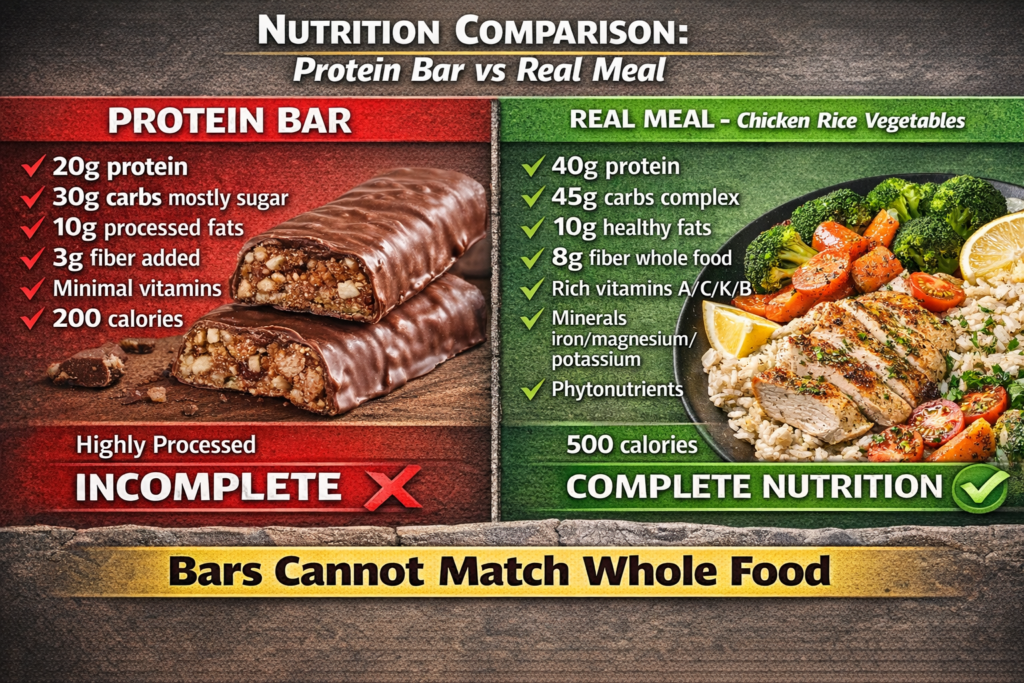
What protein bars provide:
- Protein: 10-20g (good)
- Carbs: 20-40g (often from sugar)
- Fat: 5-15g (often from processed sources)
- Fiber: 3-10g (sometimes from added fiber, not whole food)
- Calories: 150-300 (low for a full meal)
What protein bars typically lack:
- Adequate vitamins and minerals (minimal amounts)
- Phytonutrients from fruits and vegetables (none)
- Antioxidants from whole foods (minimal)
- Quality whole food nutrition (highly processed instead)
- Adequate calories for actual meal replacement (too low)
What a real meal provides:
Example: Chicken, rice, and vegetables
- Protein: 40g (chicken breast)
- Carbs: 45g (brown rice)
- Healthy fats: 10g (cooking oil)
- Fiber: 8g (vegetables, rice)
- Vitamins A, C, K, B-complex (vegetables, chicken)
- Minerals: Iron, magnesium, potassium (varied sources)
- Phytonutrients and antioxidants (vegetables)
- Calories: 450-500 (adequate for meal)
The comparison shows protein bars can’t match whole food nutrition.
The Maximum Meal Replacement Frequency
Safe limits for using protein bars as meal replacements:
Maximum: 5-7 times per month
- Once or twice weekly when necessary
- Not daily or even every other day
- Occasional emergency solution only
- Majority of meals from whole food
Never acceptable: Daily meal replacement
- Eating protein bar instead of breakfast every day
- Using bars for lunch regularly
- Replacing dinner with bars
- This creates nutritional deficiencies over time
Red flag: Multiple meals daily
- Two or more meals replaced by bars daily
- Severe nutritional inadequacy
- Health consequences likely
- Need to restructure entire approach
Better Alternatives When You Need Convenience
If you frequently need convenient meals, better options exist:
Meal prep:
- Cook large batches Sunday
- Portion into containers
- Grab and go like protein bars
- Actual complete nutrition
Quick whole food meals:
- Greek yogurt + granola + fruit (5 minutes)
- Rotisserie chicken + microwaved sweet potato (7 minutes)
- Canned tuna + whole grain bread + vegetables (5 minutes)
- Faster than you think, infinitely better nutrition
Protein shakes with whole food ingredients:
- Whey + oats + peanut butter + banana + milk
- Complete nutrition in liquid form
- Better than protein bars
- Still convenient
Strategic snacking:
- Protein bar as snack between proper meals
- Not as meal replacement
- Supplements diet, doesn’t replace it
- Healthier pattern
Best Times to Eat Protein Bars
When you eat protein bars matters less than total daily intake, but timing can optimize their use.
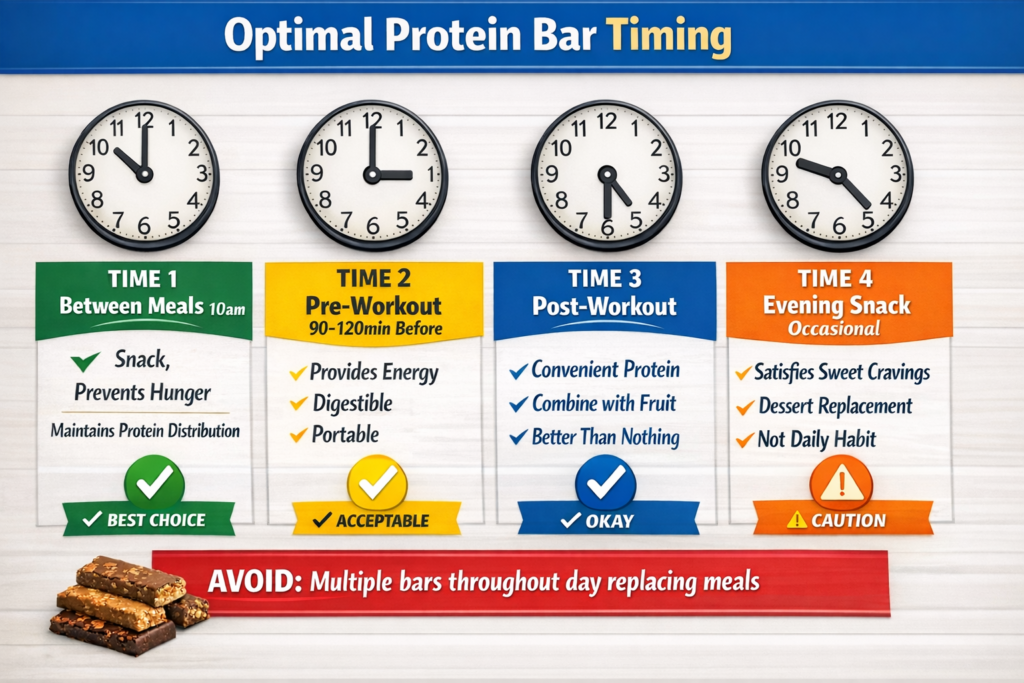
Timing 1: Between Meals as Snack
Why this works well:
Prevents hunger:
- 3-4 hour gap between meals gets uncomfortable
- Protein bar at 2-hour mark maintains satiety
- Prevents overeating at next meal
- Keeps metabolism active
Maintains protein distribution:
- Research suggests eating protein every 3-5 hours
- Optimizes muscle protein synthesis
- Protein bar fills timing gap
- Better than going 6-8 hours without protein
Convenient:
- Portable, no refrigeration
- No preparation needed
- Eat anywhere
- Perfect for work or school
Example schedule:
- 7 AM: Breakfast (whole food)
- 10 AM: Protein bar (snack)
- 12:30 PM: Lunch (whole food)
- 3:30 PM: Greek yogurt with fruit
- 6:30 PM: Dinner (whole food)
This uses one bar strategically without replacing meals.
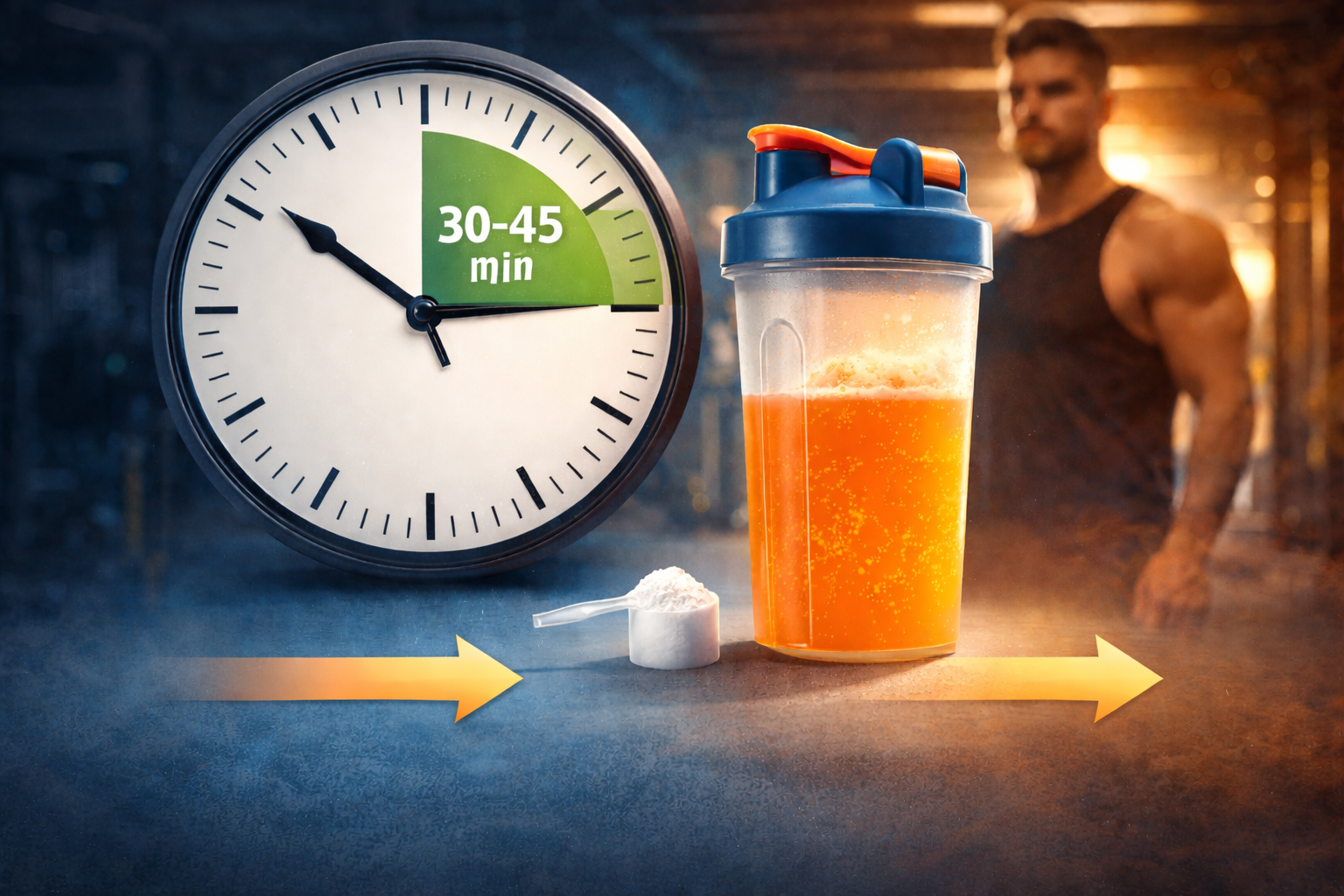
Timing 2: Pre-Workout (90-120 Minutes Before)
Why this can work:
Provides energy:
- Carbs from bar fuel training
- Protein primes muscles
- Convenient before gym
- No heavy meal needed
Digestible:
- 90-120 minutes allows digestion
- Won’t cause stomach discomfort during training
- Lighter than full meal
- Still provides nutrition
Practical:
- Eat at work before heading to gym
- No meal prep required
- Portable
- Consistent routine
Important considerations:
Add carbs if needed:
- Protein bars often low in carbs (20-30g)
- May need banana or rice cakes additionally
- Depends on training intensity
- Individual experimentation required
Some people prefer different timing:
- 2-3 hours before: Full meal preferred
- 30-60 minutes before: Nothing or just caffeine
- Immediately before: Just carbs, no protein
- Find what works for you
Timing 3: Post-Workout
Why this is popular:
Convenient protein source:
- Can’t always eat whole meal immediately post-workout
- Protein bar provides quick protein hit
- Portable from gym
- Better than nothing
Combines protein and carbs:
- Protein for muscle repair
- Carbs for glycogen replenishment
- All-in-one convenience
- Supports recovery
Satisfies hunger:
- Training increases appetite
- Protein bar holds you over until proper meal
- Prevents ravenous overeating later
- Psychological satisfaction
However, limitations exist:
Not optimal:
- Whole food meal better when possible
- Protein bar lower in total calories (150-300 vs. 500+ for meal)
- May not provide adequate post-workout nutrition alone
- Should add fruit or other carbs
Better post-workout approach:
- Protein bar + banana + Gatorade
- Or proper meal within 60-90 minutes
- Protein bar as immediate solution, meal later
- Don’t rely solely on bar
Timing 4: Evening Snack or Dessert Replacement
Why this works:
Satisfies sweet cravings:
- Protein bars often taste like candy
- Prevents eating actual candy or ice cream
- Provides protein instead of just sugar
- Psychologically satisfying
Before bed protein:
- Some research supports pre-sleep protein
- Supports overnight recovery
- Prevents overnight muscle breakdown
- Protein bar convenient option
Portion controlled:
- Pre-wrapped, single serving
- Prevents overeating
- Better than open bag of cookies
- Satisfying but controlled
Considerations:
Choose lower sugar options:
- Evening metabolism slower
- Don’t need high sugar before bed
- Choose bars with <10g sugar
- Prioritize protein content
Don’t make it daily habit:
- Occasional dessert replacement fine
- Every single night becomes dependency
- Vary evening snacks
- Include whole food options
Worst Timing: Multiple Bars Throughout Day
Avoid this pattern:
Morning: Protein bar for breakfast Mid-morning: Another protein bar Lunch: Quick protein bar Afternoon: Yep, another bar Post-workout: Fifth protein bar
Why this fails:
- Zero whole food nutrition
- Excessive processed food intake
- Nutritional deficiencies developing
- Digestive issues inevitable
- Expensive and unsustainable
- Not building healthy habits
If this describes you, completely restructure your nutrition approach.
How to Choose a Quality Protein Bar
Not all protein bars are created equal. Here’s how to identify the good ones.
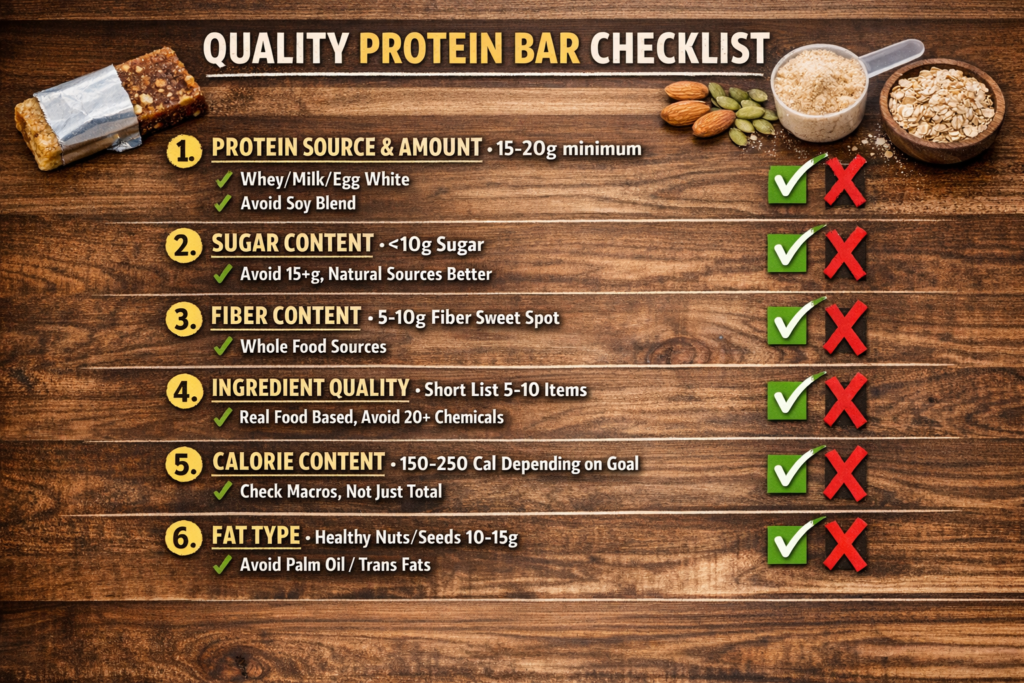
Quality Factor 1: Protein Source and Amount
What to look for:
High-quality protein sources:
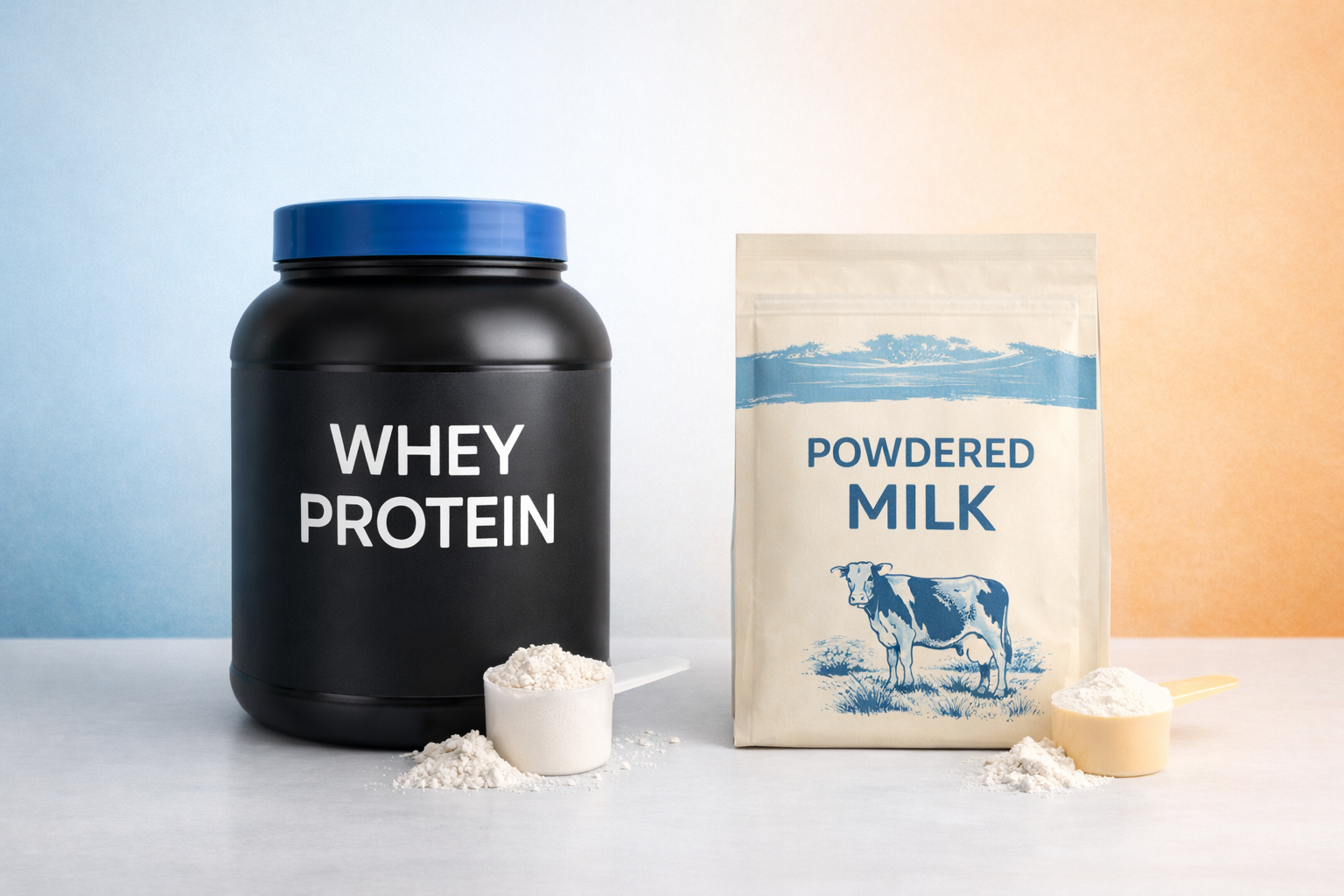
- Whey protein isolate or concentrate (best)
- Milk protein isolate
- Egg white protein
- Avoid “protein blend” without specifics (hiding soy)
Adequate protein content:
- Minimum: 10g protein per bar
- Good: 15-20g protein per bar
- Excellent: 20-25g protein per bar
- More isn’t always better (check other factors)
Protein to calorie ratio:
- Calculate: Grams of protein ÷ total calories
- Good ratio: 0.10 or higher (10g protein per 100 calories)
- Example: 20g protein, 200 calories = 0.10 ratio ✓
- Example: 10g protein, 250 calories = 0.04 ratio ✗
Why this matters:
- You’re eating protein bars for protein
- Low protein content defeats the purpose
- Quality protein sources digest better
- Affects muscle building effectiveness
Quality Factor 2: Sugar Content
The sugar problem with protein bars:
Many bars are glorified candy bars:
- 15-25g sugar per bar (equivalent to candy)
- Often from cheap ingredients (corn syrup)
- Blood sugar spike and crash
- Defeats health purpose
What to look for:
Total sugars:
- Excellent: <5g sugar per bar
- Good: 5-10g sugar per bar
- Acceptable: 10-15g sugar (if from whole food sources)
- Avoid: >15g sugar
Sugar sources:
- Natural: Dates, honey, fruit (better)
- Added: Corn syrup, cane sugar, etc. (worse)
- Sugar alcohols: Erythritol, maltitol (can cause digestive issues)
- Artificial sweeteners: Sucralose, aspartame (individual tolerance varies)
Read ingredient lists:
- First few ingredients shouldn’t be sugars
- Multiple types of sugar = red flag
- “Protein bar” should emphasize protein, not sugar
Quality Factor 3: Fiber Content
Why fiber matters:
Benefits:
- Increases satiety (keeps you full)
- Supports digestive health
- Slows sugar absorption
- Indicates whole food ingredients
What to look for:
- Minimum: 3g fiber per bar
- Good: 5-8g fiber per bar
- Excellent: 10+ g fiber per bar
Fiber sources:
- Whole food: Oats, nuts, seeds, dates (best)
- Added: Chicory root, inulin (can cause gas but acceptable)
- Avoid bars with zero fiber (highly processed)
Warning:
- Some bars add excessive fiber (15-20g per bar)
- Can cause severe bloating and digestive distress
- More isn’t always better
- 5-10g is the sweet spot for most people
Quality Factor 4: Ingredient Quality and Length
The ingredient list reveals everything:
Short ingredient lists (better):
- 5-10 recognizable ingredients
- Real food based (nuts, oats, dates, protein)
- Minimal processing
- Transparent formulation
Example good ingredient list: “Dates, almonds, whey protein isolate, cashews, cocoa powder, sea salt”
Long ingredient lists (worse):
- 20+ ingredients with chemical names
- Multiple artificial additives
- Excessive preservatives
- Hiding quality issues with complexity
Example bad ingredient list: “Protein blend (soy protein isolate, whey protein concentrate, calcium caseinate), corn syrup, sugar, palm kernel oil, inulin, glycerin, natural and artificial flavors, soy lecithin, salt, sucralose, acesulfame potassium…”
Red flag ingredients to avoid:
- Soy protein isolate (cheap, poor quality)
- High fructose corn syrup
- Partially hydrogenated oils (trans fats)
- Excessive preservatives
- Multiple artificial additives
Quality indicators:
- Organic ingredients (when possible)
- Non-GMO
- No artificial colors or flavors
- Minimal processing
Quality Factor 5: Calorie Content
There’s no universal “right” calorie amount, but context matters:
For cutting/weight loss:
- Lower calories preferred: 150-200 per bar
- Allows fitting into restricted calories
- Provides protein without excessive energy
- Leaves room for whole food meals
For maintenance:
- Moderate calories: 200-250 per bar
- Balanced snack
- Supplements diet appropriately
- Not too much, not too little
For bulking:
- Higher calories acceptable: 250-350+ per bar
- Helps hit caloric surplus
- Convenient calories
- Still check protein and sugar content
Warning signs:
- Very low calories (<120): Probably low protein too
- Very high calories (>400): Often from sugar and fat, not protein
- Check macro breakdown, not just total calories
Quality Factor 6: Fat Content and Type
Fat in protein bars:
Healthy fats (good sources):
- Nuts (almonds, cashews, peanuts)
- Seeds (sunflower, pumpkin)
- Nut butters
- Coconut
- These provide 5-15g fat per bar
Unhealthy fats (avoid):
- Palm kernel oil
- Partially hydrogenated oils
- Excessive saturated fat (>8g per bar)
- Trans fats (any amount)
Total fat guidelines:
- Cutting: 5-10g fat per bar
- Maintenance: 10-15g fat per bar
- Bulking: 15-20g fat per bar acceptable
Check saturated fat:
- Limit to <5g saturated fat per bar
- Higher amounts indicate poor fat sources
- Exception: Coconut-based bars (naturally higher)
Common Protein Bar Mistakes to Avoid
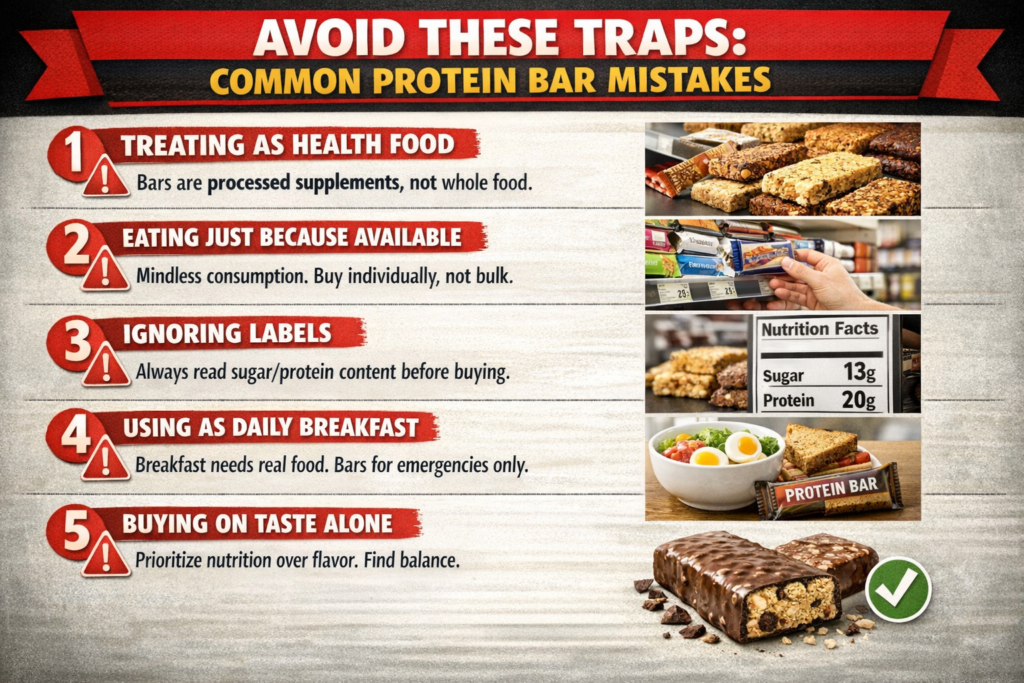
Don’t fall into these traps.
Mistake 1: Treating Protein Bars as Health Food
The reality:
- Protein bars are processed supplements
- Not equivalent to whole food
- Convenience products, not health foods
- Should supplement diet, not define it
The fix:
- View bars as occasional conveniences
- Prioritize whole food nutrition
- Use strategically, not habitually
- Maintain perspective
Mistake 2: Eating Bars Just Because They’re Available
The trap:
- Buying bulk boxes of bars
- Eating them because they’re there
- Not because you’re hungry or need protein
- Mindless consumption
The fix:
- Buy bars individually or small packages
- Only eat when genuinely serving a purpose
- Ask: “Do I actually need this right now?”
- Save for times whole food isn’t available
Mistake 3: Ignoring Nutritional Labels
The problem:
- Assuming all protein bars are good
- Not reading sugar content
- Missing poor protein quality
- Overlooking excessive calories
The fix:
- Always read labels before buying
- Compare multiple bars
- Apply quality criteria from above
- Make informed choices
Mistake 4: Using Bars as Daily Breakfast
Why this fails:
- Breakfast is important meal
- Bars don’t provide adequate nutrition to start day
- Creates pattern of processed food reliance
- Missing opportunity for quality whole food
Better approach:
- Make time for real breakfast
- Overnight oats take 5 minutes to prepare night before
- Greek yogurt + granola + fruit is quick and complete
- Eggs and toast faster than you think
- Reserve bars for genuine emergencies
Mistake 5: Buying Based on Taste Alone
The trap:
- Choosing bars that taste like candy
- Ignoring nutritional content
- Prioritizing enjoyment over quality
- Usually means high sugar, low protein
The balance:
- Find bars that taste good AND meet quality criteria
- Don’t sacrifice nutrition for flavor
- Acceptable taste with good nutrition beats delicious junk
- Quality bars can still taste very good
Frequently Asked Questions
Can I eat two protein bars at once?
Short answer: Yes, but it’s usually unnecessary.
When it might make sense:
- Very high protein needs (200+ pounds)
- Need quick 30-40g protein
- Bulking and need convenient calories
- Can’t eat whole meal but very hungry
Why it’s usually not ideal:
- One bar should be sufficient for a snack
- If you need that much protein/calories, eat a meal
- Expensive to consume two at once
- Likely displacing whole food
Better approach: One bar now, one bar 3-4 hours later if needed.
Is it okay to eat protein bars every day?
Answer: One bar daily is generally fine if your overall diet is solid.
Keys to making daily bars work:
- Choose high-quality bars (using criteria above)
- Ensure 80%+ of diet is whole foods
- Use bar strategically (not as meal replacement)
- Rotate with other protein sources
- Monitor for any digestive issues
Red flags that daily bars are a problem:
- Replacing meals regularly
- Neglecting whole food nutrition
- Experiencing digestive issues
- Depending on bars emotionally
- Budget strain
Reassess if you notice these signs.
Can protein bars make you gain weight?
Answer: Only if they cause caloric surplus.
The truth:
- Protein bars contain calories (150-350)
- Weight gain comes from eating more calories than you burn
- Bars themselves don’t cause fat gain
- Overconsumption of total calories causes fat gain
How bars might contribute to unwanted weight gain:
- Eating bars as extra snacks (not replacing anything)
- Multiple bars daily adding 500+ calories
- Not accounting for bar calories in daily total
- Treating as “free” because they’re “healthy”
How to use bars without gaining fat:
- Count bar calories in daily total
- Use to replace other snacks/meals (not add to them)
- Choose lower calorie bars when cutting
- Track total daily intake
Are protein bars good for building muscle?
Answer: They can help, but they’re not special for muscle building.
What builds muscle:
- Progressive resistance training
- Adequate total daily protein (0.7-1g per pound)
- Caloric surplus (when bulking)
- Consistency over months/years
How protein bars fit:
- Help hit daily protein targets conveniently
- Provide protein when whole food isn’t available
- Make hitting macros easier
- Support muscle building indirectly (through protein intake)
What they don’t do:
- Build more muscle than equivalent protein from whole food
- Work better than chicken, fish, eggs, etc.
- Provide unique muscle-building properties
- Replace need for proper training
The verdict: Protein bars are convenient protein sources, not magic muscle builders.
The Bottom Line: One Bar Daily, Two Maximum
After examining all the evidence:
The safe protein bar consumption guidelines:
✅ One bar per day is the general recommendation for most people
✅ Two bars maximum in rare circumstances (very high needs, extremely busy)
✅ Bars should supplement diet, not replace it (80%+ whole food nutrition)
✅ Occasional meal replacement okay (1-2 times weekly max, not daily habit)
✅ Quality matters enormously (15-20g protein, <10g sugar, real ingredients)
When to eat protein bars:
- Between meals as convenient protein source
- Pre-workout (90-120 minutes before)
- Post-workout (when whole food not immediately available)
- Evening snack/dessert replacement (occasionally)
What to avoid:
- Using bars as regular meal replacements
- Eating 3+ bars daily
- Choosing bars based on taste alone
- Replacing whole food nutrition with processed bars
- Ignoring nutritional labels
Signs you’re eating too many:
- Three or more bars daily
- Majority of protein from bars, not food
- Daily meal replacements with bars
- Digestive issues developing
- Spending $100+ monthly on bars
The optimal approach:
Priority 1: Build diet on whole food nutrition
- Quality protein: Chicken, fish, eggs, Greek yogurt
- Complex carbs: Rice, oats, potatoes
- Healthy fats: Olive oil, nuts, avocado
- Vegetables and fruits
- This is 80-90% of your diet
Priority 2: Use protein bars strategically
- One bar daily for convenience
- Between meals or post-workout
- When whole food not available
- Quality bars only
Priority 3: Monitor and adjust
- Track total daily protein
- Ensure bars help, not replace
- Watch for digestive issues
- Stay flexible based on schedule and needs
Remember: Protein bars are tools, not foundations. Use them wisely.
ONE BAR DAILY. PRIORITIZE WHOLE FOOD. BUILD MUSCLE INTELLIGENTLY.
Ready to optimize your entire nutrition strategy with a science-based approach that maximizes muscle building without over-relying on processed foods? Protein bar usage is just one small piece of effective nutrition. Get a complete guide to calculating your exact protein needs, building a whole food diet that works, timing your nutrition optimally, and using supplements (including bars) only when they truly help. Stop depending on processed foods. Start building serious muscle with real nutrition.




Leave a Reply
You must be logged in to post a comment.