
Gain weight just by looking at food? Struggle to lose fat no matter how hard you diet? You’re about to discover why traditional weight loss advice fails you and exactly what actually works.
I’ve heard this story countless times, from frustrated dieters everywhere:
“I barely eat anything. I work out regularly. I’ve tried every diet imaginable. But the weight just won’t come off or it comes back immediately when I stop dieting!”
And here’s what most people don’t want to admit: you’re probably eating way more than you think.
Sound harsh? Maybe. But understanding this truth is the first step to finally losing that stubborn weight and keeping it off permanently.
In this comprehensive guide, I’m going to reveal the uncomfortable reality about why you’re not losing weight, then give you 10 proven strategies to shed fat efficiently while preserving muscle and actually enjoying the process.
Let’s cut through the nonsense and get you real results.
TABLE OF CONTENTS
- Rule 1: Calculate Your True Calorie Needs (And Actually Track)
- Rule 2: Accept the Hunger (And Learn to Manage It)
- Rule 3: Eat Fewer Meals and Consider Intermittent Fasting
- Intermittent Fasting for Fat Loss
- Rule 4: Prioritize Low-Calorie, High-Volume Foods
- The Best Low-Calorie, High-Volume Foods
- Foods to Limit or Avoid
- Rule 5: Maximize Protein Intake
- Rule 6: Eliminate Liquid Calories Completely
- Common Liquid Calorie Culprits
- Rule 7: Strength Train to Preserve Muscle
- The Best Training Approach for Fat Loss
- What About Cardio?
- Rule 8: Consistency and Patience Trump Motivation
- Rule 9: Track Everything and Adjust Based on Data
- When and How to Adjust
- Rule 10: Reduce Calories Gradually as You Lose Weight
- The Bottom Line: You Can Lose Weight
The Truth About Why You Can’t Lose Weight
Before diving into solutions, you need to understand the fundamental problem plaguing your weight loss efforts.
The calorie equation is ironclad and unavoidable:
Everything you eat and drink (except water and zero-calorie beverages) contains calories. Everything you do from sleeping to intense exercise burns calories for energy.
- If calories consumed = calories burned: Your weight stays the same
- If calories consumed > calories burned: You gain weight
- If calories consumed < calories burned: You lose weight
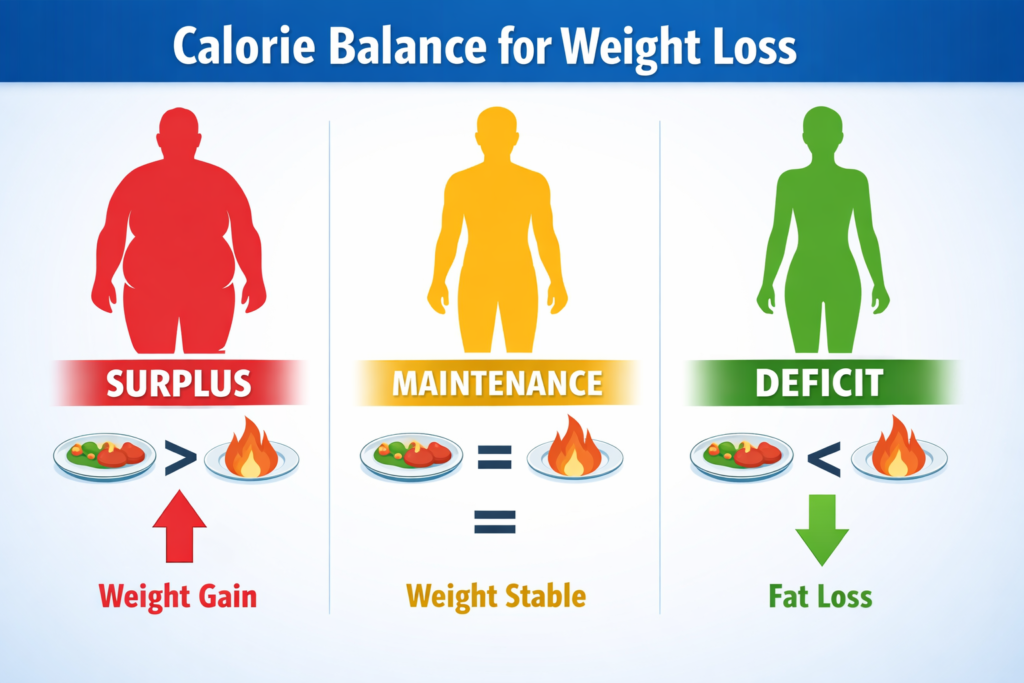
To lose weight, you MUST consume fewer calories than your body uses. Without this caloric deficit, nothing no supplement, no workout program, no “fat-burning” food will make you lose weight.
“But I barely eat anything!”
Let’s talk about that.
The “Eating Very Little” Illusion
Here’s the uncomfortable truth that most people don’t want to hear: you’re almost certainly eating more than you think.
Research consistently shows that people underestimate their calorie intake by an average of 30-50%. Some studies show even higher discrepancies.
Why “easy gainers” struggle to lose weight:
1. Efficient fat storage: Your body is genetically optimized to store energy efficiently. This was an evolutionary advantage when food was scarce; now it’s a liability in a world of abundant, calorie-dense foods.
2. Strong hunger signals: You experience intense, persistent hunger that makes adhering to a calorie deficit extremely challenging. Your body fights back hard when you try to lose weight.
3. Metabolic adaptation: When you cut calories, your body reduces energy expenditure to compensate. Your metabolism slows down, you move less unconsciously (lower NEAT), and weight loss stalls.
4. Weekend amnesia: You might eat perfectly Monday through Friday, then completely blow your deficit with untracked weekend meals, alcohol, and snacks.
5. Liquid calories: You’re drinking significant calories without realizing it sodas, juices, coffee drinks, alcohol, smoothies. These add up fast.
6. “Healthy” food overconsumption: Nuts, avocados, olive oil, nut butters these are healthy, but they’re also extremely calorie-dense. You can easily overeat them.
7. Portion size blindness: Restaurant portions are 2-3x what you actually need. “Normal” portions have become supersized.
All of this makes losing weight more challenging but it doesn’t change the fundamental law: you’re consuming more calories than you’re burning, and that’s why you’re not losing weight.
So what’s the solution?
10 Essential Rules for Losing Weight Fast
Let’s transform knowledge into action with proven strategies that actually work for easy gainers.
Rule 1: Calculate Your True Calorie Needs (And Actually Track)
You cannot lose weight without a caloric deficit, and you cannot create a deficit based on vague feelings of “eating less.”
You need concrete, accurate data.
The only way to ensure you’re truly in a deficit:
- Calculate your daily calorie target
- Track every single thing you consume
- Adjust based on actual results (not feelings)
How to calculate your calorie needs:
Step 1: Estimate your Total Daily Energy Expenditure (TDEE)
Use this simple formula: Body weight (in pounds) × 14-16 = maintenance calories
- Sedentary or less active: multiply by 12-14
- Moderately active: multiply by 14-16
- Very active: multiply by 16-18
For example, a 180-pound person: 180 × 15 = 2,700 maintenance calories
Step 2: Create a deficit for fat loss
Subtract 300-500 calories from your maintenance number for sustainable fat loss.
Using our example: 2,700 – 400 = 2,300 calories daily for weight loss
For more aggressive fat loss: Subtract 500-750 calories (only if you have significant weight to lose)
Step 3: Track everything obsessively
Download a calorie tracking app:
- MyFitnessPal
- Cronometer
- Lose It!
- MacroFactor
Log EVERYTHING:
- Every meal, no matter how small
- Every snack and “taste” while cooking
- Every beverage (coffee creamer, alcohol, juice)
- Every condiment and sauce
- Every “cheat” or “treat”
Weigh your food using a digital food scale. This is non-negotiable if you’re serious about results.
Why this is critical: Studies show people underestimate portions by massive amounts. What you think is 1 tablespoon of peanut butter is often 2-3 tablespoons (an extra 200 calories). Your “small handful” of nuts might be 400 calories, not 150.
The scale doesn’t lie. Your estimation does.
Rule 2: Accept the Hunger (And Learn to Manage It)
Once you calculate your deficit and start tracking accurately, you’ll face an uncomfortable reality:
You’re going to feel hungry sometimes. That’s normal and doesn’t mean something is wrong.
Why you’ll feel hungry:
Your body has a “set point” the weight it’s comfortable maintaining. When you eat below maintenance, your body perceives this as a threat and triggers:
- Increased ghrelin (hunger hormone)
- Decreased leptin (satiety hormone)
- Stronger food cravings
- Constant thoughts about food
- Lower energy levels
This is your biology working exactly as designed. Your body doesn’t know you’re trying to get a six-pack for summer. It thinks you’re starving and is doing everything possible to make you eat more.
The mindset shift: Accept that some hunger is part of the process. It’s not an emergency. It won’t kill you. It’s temporary.
Hunger management strategies:
1. Eat high-volume, low-calorie foods: Vegetables, fruits, lean proteins. These fill your stomach without filling your calorie budget.
2. Prioritize protein: It’s the most satiating macronutrient. High-protein meals keep you full longer.
3. Drink more water: Often thirst masquerades as hunger. Drink a full glass of water when you feel hungry.
4. Strategic caffeine: Black coffee and tea suppress appetite. Use them strategically between meals.
5. Stay busy: Boredom eating is real. Keep your mind and hands occupied.
6. Accept the discomfort: Stop viewing hunger as something to immediately fix. Sit with it. Recognize it. Let it pass.
Remember: Some hunger is healthy and normal. Constant, severe hunger means your deficit is too aggressive.
Rule 3: Eat Fewer Meals and Consider Intermittent Fasting
This might seem counterintuitive (traditional advice says “eat 6 small meals”), but for fat loss, eating less frequently often works better.
Why fewer, larger meals work for weight loss:
Psychological satisfaction: Would you rather eat 3 satisfying 600-calorie meals or 6 tiny 300-calorie “snacks” that never feel like real meals?
Better adherence: It’s easier to stay disciplined when you actually feel satisfied after eating, rather than constantly feeling deprived.
Reduced decision fatigue: Fewer meals = fewer opportunities to make poor choices.
Natural calorie control: It’s harder to overeat when you have a limited eating window.
Intermittent Fasting for Fat Loss
What it is: Restricting your eating to a specific window each day.
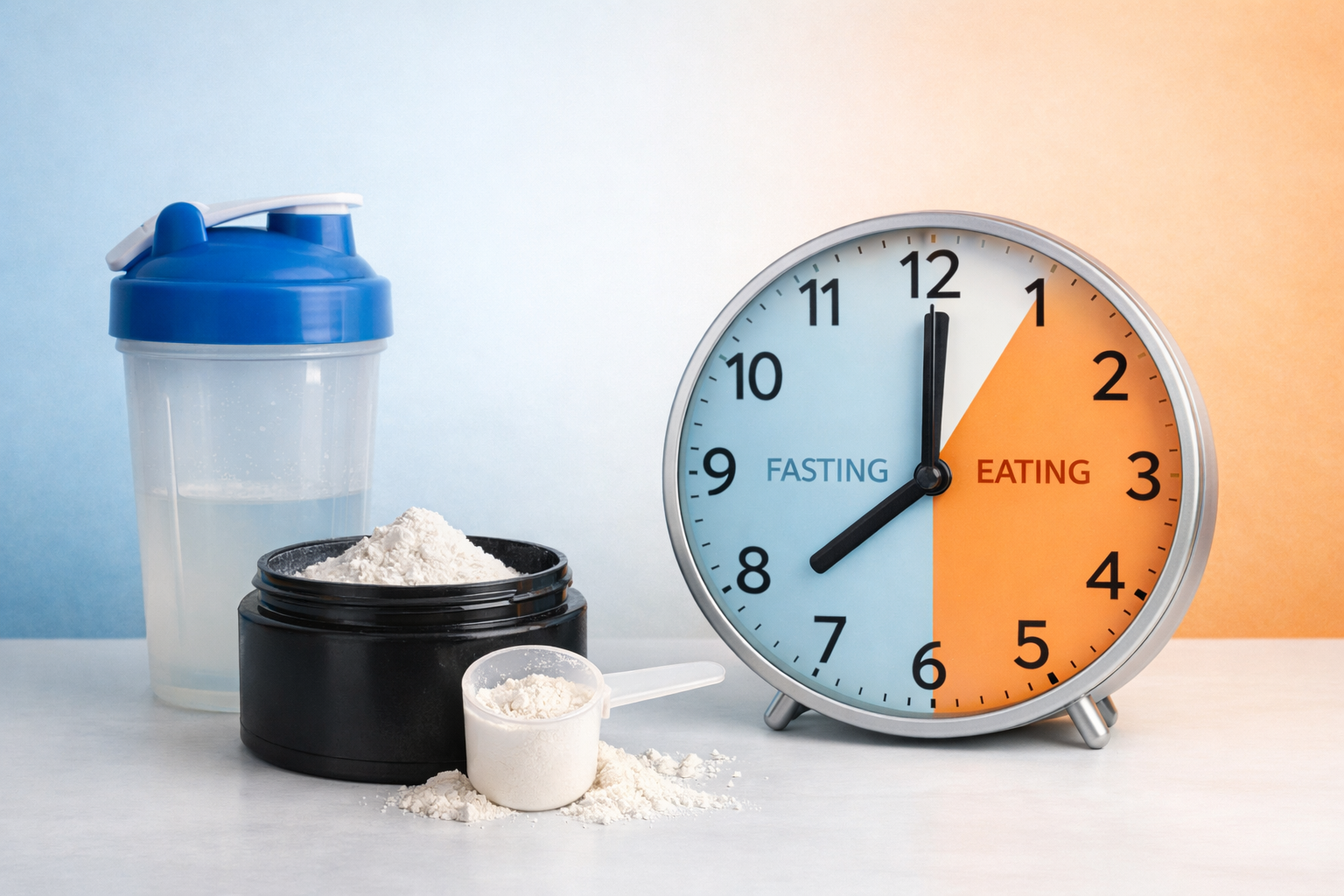
Most common protocol: 16:8
- Fast for 16 hours
- Eat all your calories within an 8-hour window
- Example: Stop eating at 8 PM, don’t eat again until 12 PM the next day
Why it works for easy gainers:
1. Automatic calorie reduction: Skipping breakfast eliminates 400-600 calories without effort.
2. Larger, more satisfying meals: Fitting 1,800 calories into 2-3 meals feels abundant, not restrictive.
3. Simplified decision-making: No morning meal prep, no breakfast decisions.
4. Reduced snacking opportunities: Can’t snack when you’re not eating.
5. Metabolic benefits: May improve insulin sensitivity, increase fat oxidation, and preserve muscle during deficits.
Important notes:
- Don’t use fasting as an excuse to binge during your eating window
- Still need to track calories and hit your deficit
- Not magic, just a useful tool for calorie control
Alternative schedules:
- 18:6 (18-hour fast, 6-hour eating window)
- 20:4 (20-hour fast, 4-hour eating window)
- OMAD (One Meal A Day)
Start with 16:8 and adjust based on your lifestyle and preferences.
Rule 4: Prioritize Low-Calorie, High-Volume Foods
The strategy: Fill your plate with foods that provide maximum fullness for minimum calories, so you can eat large portions while staying in your deficit.
The concept: Caloric density
Some foods pack tons of calories into small portions (calorie-dense). Others provide large portions for few calories (low caloric density).
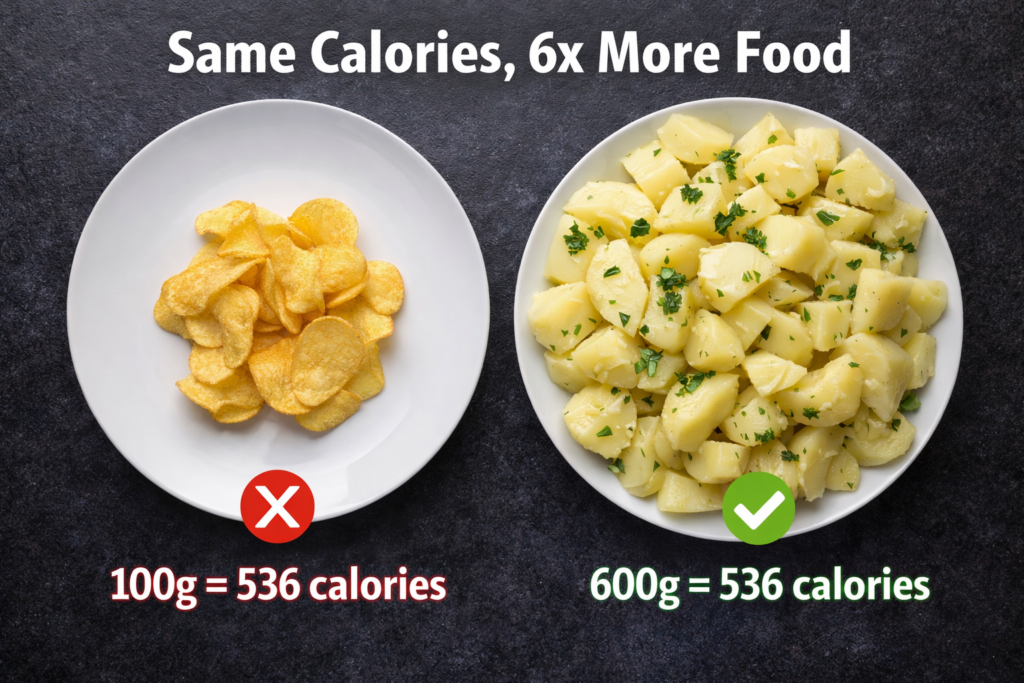
Comparison example:
- 100g potato chips = 536 calories
- 100g boiled potatoes = 87 calories
You could eat 600g of potatoes (more than a pound!) for the same calories as 100g of chips.
The Best Low-Calorie, High-Volume Foods
Vegetables (almost unlimited):
- Broccoli: 34 calories per cup
- Cauliflower: 27 calories per cup
- Spinach: 7 calories per cup
- Zucchini: 20 calories per cup
- Bell peppers: 30 calories per cup
- Cucumber: 16 calories per cup
- Tomatoes: 32 calories per cup
- Mushrooms: 15 calories per cup
- Asparagus: 27 calories per cup
- Brussels sprouts: 38 calories per cup
Lean proteins (highly satiating):
- Chicken breast: 165 calories per 4 oz
- Turkey breast: 153 calories per 4 oz
- White fish (tilapia, cod): 110 calories per 4 oz
- Shrimp: 112 calories per 4 oz
- Egg whites: 17 calories per egg white
- 0% Greek yogurt: 100 calories per cup
- Cottage cheese (low-fat): 163 calories per cup
Fruits (satisfies sweet cravings):
- Strawberries: 49 calories per cup
- Watermelon: 46 calories per cup
- Cantaloupe: 54 calories per cup
- Blueberries: 84 calories per cup
- Apples: 95 calories per medium apple
- Oranges: 62 calories per medium orange
Whole grains (in moderation):
- Oatmeal: 150 calories per cooked cup
- Brown rice: 215 calories per cooked cup
- Quinoa: 222 calories per cooked cup
- Whole wheat bread: 80 calories per slice
Volume eating meals example:
Massive salad (400 calories total):
- 4 cups mixed greens: 40 calories
- 1 cup vegetables: 30 calories
- 6 oz grilled chicken: 250 calories
- 2 tablespoons light dressing: 80 calories
This huge plate of food is only 400 calories but will keep you full for hours.
Foods to Limit or Avoid
High-calorie, low-volume foods to minimize:
- Oils and butter (120 calories per tablespoon)
- Nuts and nut butters (160-200 calories per ounce)
- Cheese (110 calories per ounce)
- Dried fruit (concentrated sugar)
- Granola (extremely calorie-dense)
- Processed snack foods
- Sugary beverages
You don’t have to eliminate these completely, but be extremely mindful of portions.
Rule 5: Maximize Protein Intake
Critical principle: While total calories determine fat loss, protein determines whether you lose mostly fat or a mix of fat and muscle.
Why protein is non-negotiable during fat loss:
1. Preserves muscle mass: In a caloric deficit, your body will break down tissue for energy. High protein intake signals your body to preserve muscle and burn fat instead.
2. Maximum satiety: Protein is the most filling macronutrient. High-protein meals keep you satisfied for hours.
3. Highest thermic effect: Your body burns 20-30% of protein calories just digesting it (vs. 5-10% for carbs, 0-3% for fats). This means 100 calories of protein only contributes about 70-80 net calories.
4. Prevents metabolic slowdown: Adequate protein helps minimize the metabolic adaptation that occurs during dieting.
5. Supports training performance: You need protein to recover from workouts and maintain strength while cutting.
Optimal protein intake for fat loss: 1.0-1.2 grams per pound of body weight
For a 180-pound person: 180-216 grams of protein daily
“That seems like a lot!”
It is. That’s the point. Protein should comprise 30-40% of your total calories during a cut.
How to hit high protein targets:
Every meal should contain 30-50g protein:
Breakfast (40g):
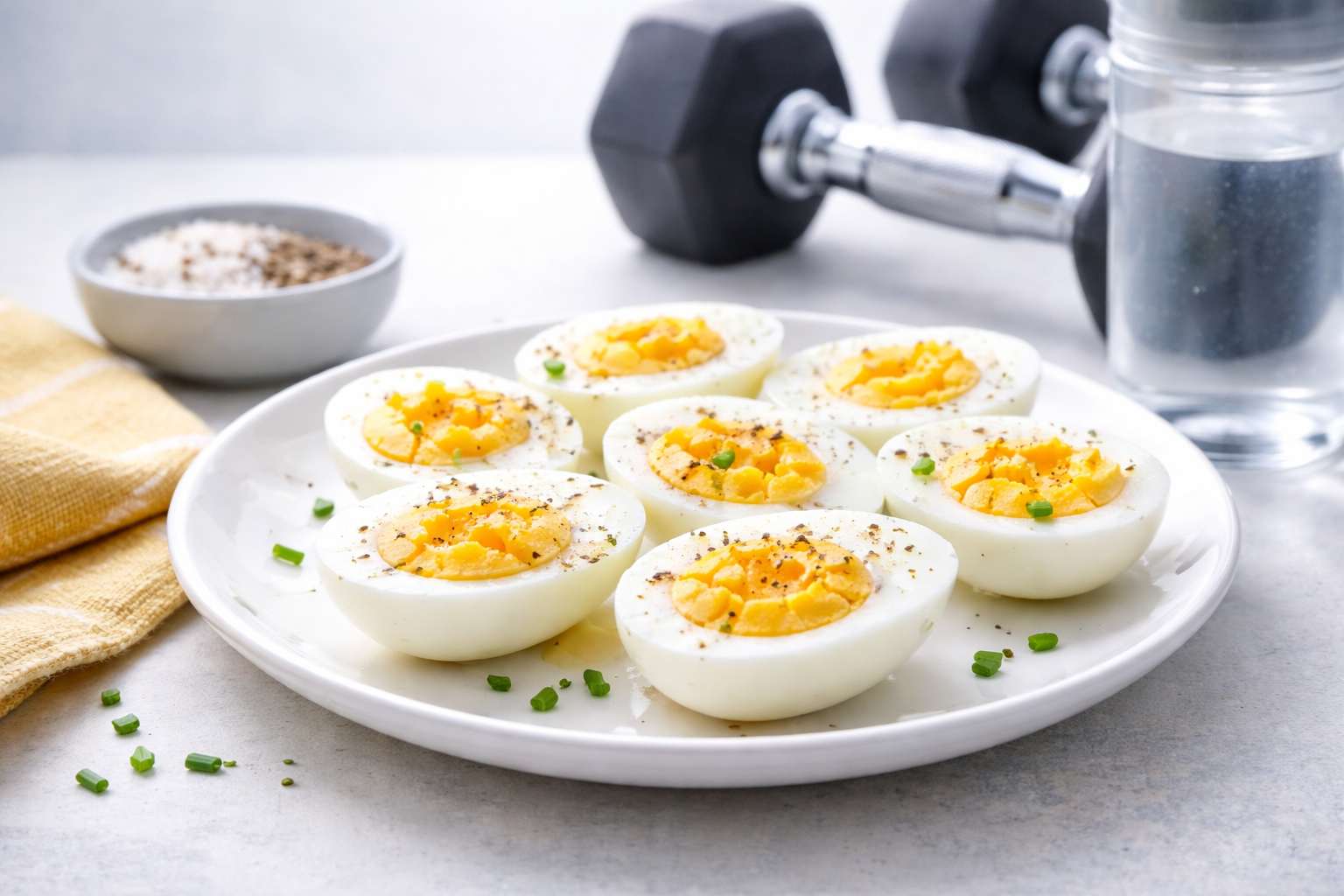
- 6 egg whites + 2 whole eggs
- Or Greek yogurt with protein powder
Lunch (40g):
- 6-8 oz chicken breast
- Or 2 cans of tuna
Dinner (45g):
- 8 oz lean fish or beef
- Or 8 oz turkey
Snacks (30-40g):
- Protein shake
- Cottage cheese
- Beef jerky
Total: 150-165g protein
Protein-rich foods ranked by calories:
Best (lean, high protein-to-calorie ratio):
- Chicken breast: 31g protein, 165 calories per 4 oz
- White fish: 22g protein, 110 calories per 4 oz
- Shrimp: 23g protein, 112 calories per 4 oz
- Egg whites: 18g protein, 85 calories per 5 whites
- 0% Greek yogurt: 17g protein, 100 calories per cup
- Protein powder: 24g protein, 120 calories per scoop
Good (moderate):
- Lean beef (93/7): 24g protein, 175 calories per 4 oz
- Pork tenderloin: 26g protein, 160 calories per 4 oz
- Cottage cheese (low-fat): 28g protein, 163 calories per cup
Use sparingly (high calories relative to protein):
- Salmon: 25g protein, 233 calories per 4 oz
- Whole eggs: 6g protein, 70 calories per egg
- Cheese: 7g protein, 110 calories per ounce
Rule 6: Eliminate Liquid Calories Completely
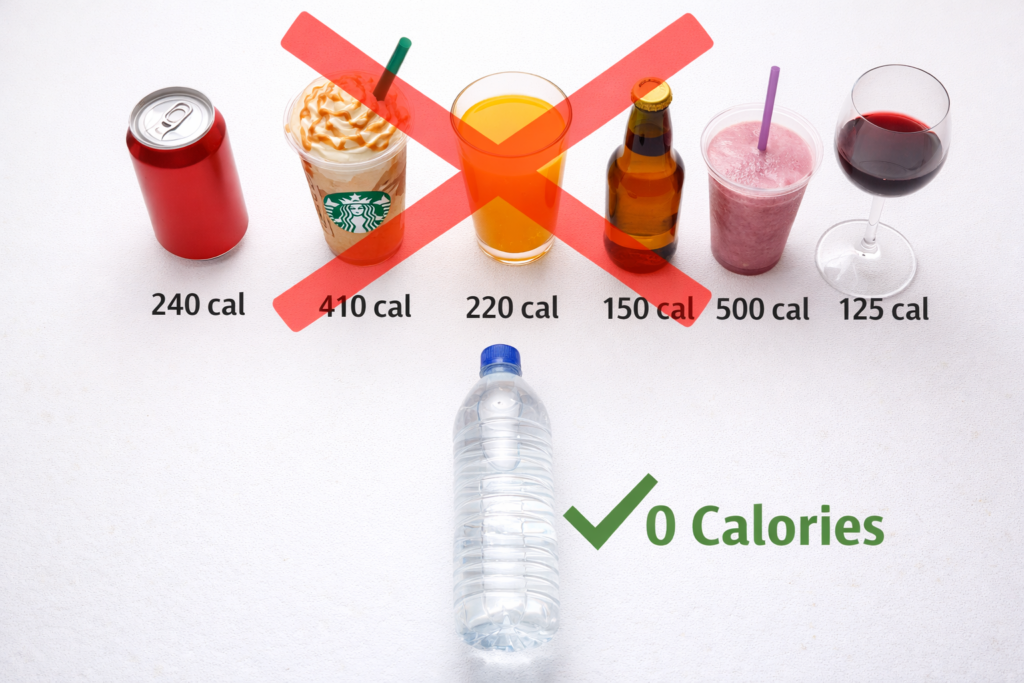
Harsh truth: Liquid calories are sabotaging your fat loss efforts more than any other single factor.
Why liquid calories are devastating for weight loss:
1. Zero satiety: You can drink 500 calories and feel just as hungry as before. Try that with chicken and broccoli.
2. Rapid consumption: You can consume 1,000 calories in 5 minutes with a Starbucks drink. That’s your entire deficit for the day, gone.
3. Invisible calories: People don’t mentally register drinks as “food,” leading to massive under-tracking.
4. Blood sugar spikes: Liquid sugar causes rapid insulin spikes and crashes, triggering more hunger.
5. Easy overconsumption: It’s much harder to overeat solid protein than to drink an extra soda.
Common Liquid Calorie Culprits
Beverages to eliminate completely:
Soda and soft drinks:
- 20 oz Coke: 240 calories
- 20 oz Mountain Dew: 290 calories
- Sweetened iced tea: 180 calories per 16 oz
Fancy coffee drinks:
- Starbucks Frappuccino (Grande): 410 calories
- Caramel Macchiato (Grande): 250 calories
- Pumpkin Spice Latte (Grande): 380 calories
- Just add the syrup and milk: +150-200 calories
Fruit juices (even “healthy” ones):
- Orange juice: 110 calories per 8 oz (and you’re drinking 16 oz)
- Apple juice: 120 calories per 8 oz
- Smoothie from Jamba Juice: 300-500 calories
Alcohol (the worst offender):
- Beer (12 oz): 150 calories (and you’re having 3-4)
- Wine (5 oz): 125 calories
- Cocktails: 200-500 calories each
- Plus the late-night food you eat when drunk: +1,000 calories
Sports and energy drinks:
- Gatorade (20 oz): 140 calories
- Red Bull (12 oz): 160 calories
- Vitamin Water: 120 calories
“Healthy” smoothies:
- Typical smoothie: 400-600 calories
- Green juice from juice bar: 200-300 calories
What to drink instead:
Zero-calorie options:
- Water (the best choice)
- Black coffee
- Plain tea (hot or iced)
- Sparkling water
- Diet soda (if you must)
- Zero-calorie energy drinks (in moderation)
Strategic exception: Protein shakes can be useful for hitting protein targets, but keep them simple (protein powder + water = 120 calories, 24g protein). Don’t add fruit, nut butter, and make them 600-calorie bombs.
The challenge: Go 30 days drinking only water, black coffee, and tea. Track how much easier fat loss becomes.
Rule 7: Strength Train to Preserve Muscle
Critical misconception: “I need to do tons of cardio to lose weight.”
The reality: Strength training is far more important for fat loss than cardio.
Why lifting weights is essential during fat loss:
1. Preserves muscle mass
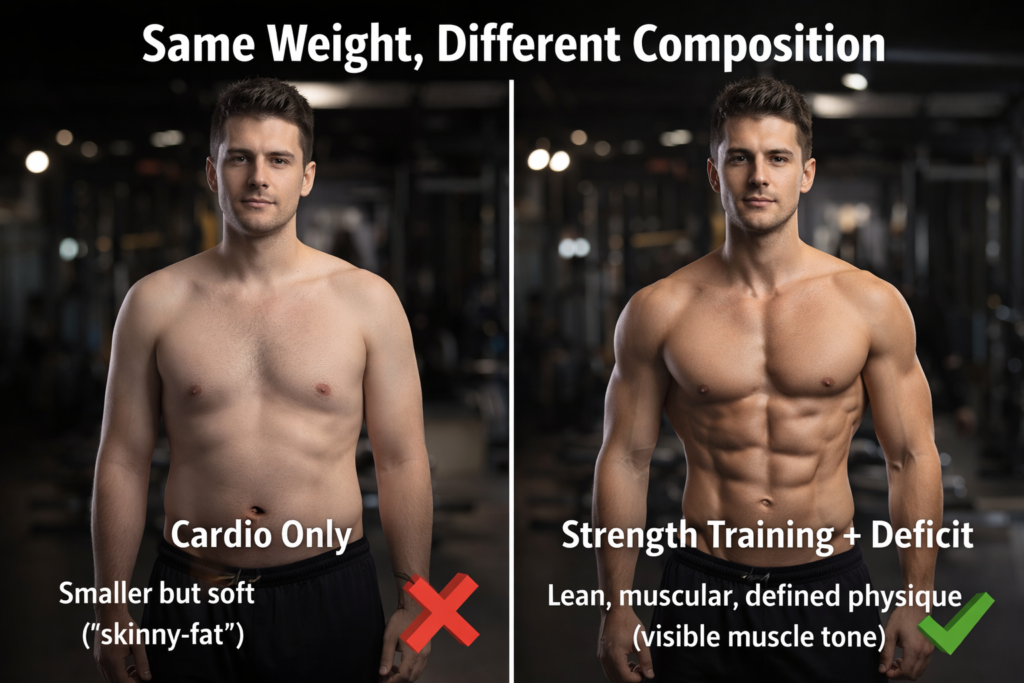
When you’re in a caloric deficit, your body will break down tissue for energy. Without the stimulus from heavy lifting, your body will cannibalize muscle along with fat.
The result? You’ll end up “skinny fat” smaller but still soft, with no muscle definition.
Heavy resistance training signals your body: “We need this muscle. Burn fat instead.”
2. Maintains metabolic rate
Muscle tissue is metabolically active it burns calories even at rest. The more muscle you preserve during fat loss, the higher your metabolism stays.
Losing muscle = slower metabolism = harder to keep weight off
3. Improves body composition
The goal isn’t just to weigh less it’s to look better. Maintaining muscle while losing fat creates the lean, defined physique you actually want.
4. Allows you to eat more
More muscle = higher daily calorie burn = you can eat more while still losing fat. Win-win.
5. Burns calories during and after training
Heavy lifting creates an “afterburn effect” (EPOC) where you continue burning extra calories for 24-48 hours post-workout.
The Best Training Approach for Fat Loss
Focus on compound movements with heavy weights:
Primary lifts:
- Squats
- Deadlifts
- Bench press
- Overhead press
- Rows
- Pull-ups/chin-ups
Why compounds? They work multiple muscle groups, allow you to lift heavy loads, and create the strongest stimulus for muscle retention.
Training parameters:
Frequency: 3-5 days per week
Rep ranges: 5-12 reps per set (focus on progressive overload trying to maintain or increase strength)
Volume: 10-20 sets per muscle group per week
Intensity: Train hard, but listen to your body. Recovery is compromised in a deficit.
Best programs for fat loss:
- Push/Pull/Legs split
- Upper/Lower split
- Full-body 3x per week
- 5/3/1 variants
Critical rule: Don’t decrease weights significantly. Fight to maintain your strength levels. If you’re getting noticeably weaker, you’re either:
- Not eating enough protein
- Deficit is too aggressive
- Not recovering adequately
What About Cardio?
Cardio is optional, not mandatory, for fat loss.
Advantages of adding cardio:
- Burns additional calories (allows you to eat more)
- Improves cardiovascular health
- Can accelerate fat loss
- Some people enjoy it
Disadvantages:
- Increases hunger significantly
- Can interfere with recovery from strength training
- Time-consuming
- Can lead to muscle loss if overdone
Smart cardio approach:
Low-Intensity Steady State (LISS):
- Walking: 30-60 minutes daily
- Light cycling
- Swimming
Benefits: Minimal impact on recovery, can be done daily, burns calories without increasing hunger dramatically.
High-Intensity Interval Training (HIIT):
- Sprints, bike sprints, rowing intervals
- 15-20 minutes, 2-3x per week
Benefits: Time-efficient, preserves muscle better than long slow cardio, creates afterburn effect.
How much cardio?
Minimum: 2-3x per week, 20-30 minutes LISS (like walking)
Maximum: 4-5x per week, mix of LISS and HIIT (don’t overdo it)
Priority: Strength training first, cardio second. If time is limited, lift weights.
Rule 8: Consistency and Patience Trump Motivation
The brutal reality: Fat loss requires consistent effort over months, not weeks. No shortcuts exist.
You will face challenges:
- Days when you’re incredibly hungry
- Weeks when the scale doesn’t move
- Social pressure to eat and drink
- Plateaus that make you want to quit
- Constant temptation from food advertisements
This is normal. Everyone faces these obstacles.
The difference between success and failure: Successful people persist anyway, even when motivation is zero.
Strategies for long-term consistency:
1. Build systems, not goals
Don’t rely on willpower and motivation they’re finite resources. Instead, create systems:
- Meal prep every Sunday
- Pack lunch the night before
- Keep no junk food in the house
- Schedule workouts like important meetings
2. Plan for challenges
Restaurants: Look up the menu beforehand, decide what you’ll order, track it in advance.
Social events: Eat before you go, bring a low-calorie drink, focus on socializing not food.
Travel: Pack protein bars, research healthy restaurant options at your destination.
3. Use the 80/20 rule
Perfection isn’t necessary. Aim for 80% adherence:
- Hit your calories 6 days per week
- One flexible meal per week where you don’t track
- Don’t let one bad meal become a bad day, or a bad week
4. Focus on process goals, not outcome goals
Bad goal: “Lose 30 pounds”
Good goals:
- “Track my calories every day”
- “Hit protein target 6 days per week”
- “Strength train 4x per week”
- “Walk 10,000 steps daily”
Why this works: You control the process, not the outcome. Focusing on daily actions builds momentum.
5. Expect slow progress
Healthy, sustainable fat loss: 0.5-1% of body weight per week
For a 200-pound person: 1-2 pounds per week
“That’s so slow!”
It’s not. That’s 8-16 pounds in 2 months, 24-48 pounds in 6 months. That’s life-changing progress.
Faster isn’t better. Aggressive deficits lead to:
- Excessive muscle loss
- Metabolic damage
- Rebound weight gain
- Unsustainable suffering
Slow and steady wins. Always.
Rule 9: Track Everything and Adjust Based on Data
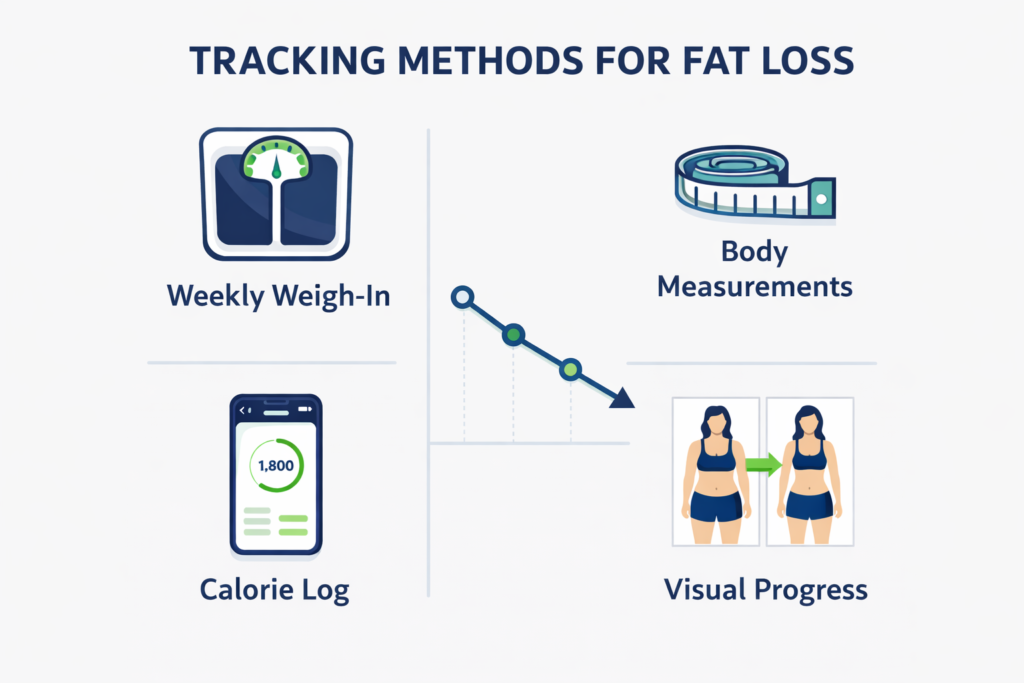
What gets measured gets managed. What gets managed gets improved.
Comprehensive tracking protocol:
Weekly weigh-ins:
When: Same day, same time every week (ideally first thing in the morning after using the bathroom, before eating)
Why weekly? Daily weight fluctuates wildly based on:
- Water retention (sodium, carbs, hormones, stress)
- Digestive contents
- Glycogen storage
- Menstrual cycle (for women)
Weekly averages reveal the actual trend.
How to interpret results:
Losing 1-2 pounds per week: Perfect! This is ideal, sustainable fat loss.
Losing 2.5-3+ pounds per week: Too fast (unless you’re significantly overweight). Risk losing muscle. Increase calories by 100-200.
Losing 0.5 pounds or less per week: Too slow (unless you’re already very lean). Decrease calories by 100-200 or add cardio.
No change for 2+ weeks: You’re not in a deficit. Reduce calories by 200-300 or increase activity.
Gaining weight: You’re in a surplus, not a deficit. Track more carefully you’re eating more than you think.
Additional tracking methods:
Progress photos:
- Take weekly photos from multiple angles (front, side, back)
- Same lighting, same location, same time of day
- Wear minimal clothing
- The camera doesn’t lie like the mirror does
Body measurements:
- Waist (at belly button)
- Hips
- Thighs
- Arms
- Chest
Measure monthly. Sometimes measurements change even when weight doesn’t.
Strength tracking:
- Log all your lifts
- If strength is dropping significantly, adjust your approach (eat more, reduce deficit, increase protein)
How clothes fit:
- Are your pants looser?
- Do your shirts fit better?
- This is real-world feedback
Energy and mood:
- If you’re constantly exhausted, irritable, and brain-fogged, your deficit might be too aggressive
When and How to Adjust
Every 2-4 weeks, evaluate:
If fat loss has stalled for 2+ weeks:
Option 1: Reduce calories by 100-200 Option 2: Add 2-3 cardio sessions per week Option 3: Increase daily step count by 2,000-3,000
Pick one, implement it, wait 2 weeks, reassess.
If you’re losing too quickly and feeling terrible:
Option 1: Increase calories by 100-200 Option 2: Reduce cardio volume Option 3: Take a diet break (eat at maintenance for 1-2 weeks to restore hormones and sanity)
Diet breaks:
After 8-12 weeks of dieting, consider a 1-2 week diet break where you eat at maintenance. This:
- Restores leptin and metabolic rate
- Provides psychological relief
- Improves adherence long-term
- Doesn’t significantly impact overall progress
Rule 10: Reduce Calories Gradually as You Lose Weight
Here’s what most dieters don’t understand: As you lose weight, your calorie needs decrease.
Why your needs change:
1. Less body mass to maintain: A 150-pound body burns fewer calories than a 200-pound body, even with identical activity levels.
2. Metabolic adaptation: Your body becomes more efficient, burning fewer calories for the same activities.
3. Reduced spontaneous movement: You unconsciously move less (lower NEAT) when in a caloric deficit.
4. Lower energy expenditure from digestion: You’re eating less, so you burn fewer calories through digestion.
The practical problem: The 2,000 calories that created a deficit initially might only maintain your new weight after several months.
The solution: Gradually reduce calories or increase activity to maintain your rate of loss.
When to reduce:
If weight loss has stalled for 2+ consecutive weeks despite consistent tracking and adherence, it’s time to adjust.
How much to reduce: Decrease by 100-200 calories OR add 30-60 minutes of cardio weekly
Example progression:
- Weeks 1-4: 2,200 calories, losing 1.5 lbs/week
- Weeks 5-8: Weight loss slows to 0.5 lbs/week → reduce to 2,000 calories
- Weeks 9-12: Stalls again → reduce to 1,800 calories or add 3x cardio
- Weeks 13-16: Continue adjusting as needed
Warning signs you’ve cut too low:
- Constant, severe hunger
- Complete loss of energy
- Strength dropping rapidly
- Can’t sleep
- Irritable and moody constantly
- Loss of menstrual cycle (women)
If you experience these, you’ve gone too far. Increase calories and/or reduce training volume.
The floor: Never go below:
- Men: 1,500 calories
- Women: 1,200 calories
If you’re at these minimums and still not losing, the problem is likely:
- Inaccurate tracking (most common)
- Medical issue (rare, but possible get checked)
- Need for a diet break to reset hormones
Common Mistakes That Sabotage Fat Loss
Let’s address the pitfalls that derail most dieters:
Mistake 1: The Weekend Warrior Syndrome
The problem: Eating perfectly Monday-Friday (1,800 calories daily), then completely blowing it on weekends (3,500+ calories both days).
The math:
- Monday-Friday: 1,800 × 5 = 9,000 calories
- Saturday-Sunday: 3,500 × 2 = 7,000 calories
- Weekly total: 16,000 calories
- Daily average: 2,286 calories (no deficit)
The reality: Your body doesn’t care about your work week schedule. Total weekly calories determine fat loss.
The fix: Plan weekend meals just as carefully. Allow one flexible meal, not two entire cheat days.
Mistake 2: Not Tracking “Healthy” Foods
The problem: “I don’t need to track my salad, it’s just vegetables.”
The reality: That salad has:
- 3 tablespoons olive oil dressing: 360 calories
- ¼ cup nuts: 200 calories
- ½ avocado: 120 calories
- Cheese: 110 calories
- Total: 790 calories (not the “free” food you thought)
The fix: Track everything, especially calorie-dense “healthy” foods like nuts, oils, avocados, and nut butters.
Mistake 3: Eating Back All Your Exercise Calories
The problem: “I burned 500 calories running, so I can eat 500 extra calories!”
The reality:
- Fitness trackers overestimate calorie burn by 20-40%
- You already accounted for some activity in your TDEE calculation
- You’re likely overestimating portion sizes
The result: You eat back more than you burned, erasing your deficit.
The fix: Either don’t eat back exercise calories at all, or only eat back 25-50% of estimated burn.
Mistake 4: Obsessing Over “Clean Eating”
The problem: “I can only eat chicken, broccoli, and rice. Everything else will make me fat.”
The reality: Fat loss is about calories, not food “purity.” You can eat ice cream and still lose weight if it fits your calorie and macro targets.
The fix: Follow the 80/20 rule 80% whole, nutritious foods for health and satiety; 20% whatever fits your calories and keeps you sane.
Mistake 5: Extreme Restriction Leading to Binges
The problem: “I’ll eat 1,000 calories per day to lose weight faster!”
What actually happens:
- Day 1-3: You suffer through it
- Day 4-5: Intense cravings begin
- Day 6-7: You break and binge on 4,000+ calories
- Repeat cycle, never making progress
The fix: Use a moderate deficit (300-500 calories). It’s sustainable long-term and prevents binge cycles.
Mistake 6: Neglecting Strength Training
The problem: “I just need to lose weight, so I’ll only do cardio.”
The reality: Without strength training, you’ll lose significant muscle along with fat. You’ll end up smaller but still soft and undefined “skinny fat.”
The fix: Prioritize strength training 3-5x per week. Add cardio as supplemental, not primary.
The Bottom Line: You Can Lose Weight
If you’re an easy gainer who’s struggled to lose weight despite “barely eating anything,” the problem isn’t broken metabolism, genetics, or thyroid issues (though get checked if concerned).
The problem is simple: you’re consuming more calories than you think, and not creating a sufficient deficit consistently enough, for long enough.
The solution is straightforward (though not easy):
✅ Calculate your actual calorie needs accurately
✅ Track every single thing you eat and drink
✅ Maintain a moderate deficit (300-500 calories) every day
✅ Prioritize protein (1.0-1.2g per pound body weight)
✅ Eliminate liquid calories completely
✅ Eat high-volume, low-calorie foods for satiety
✅ Strength train 3-5x per week to preserve muscle
✅ Be patient expect 1-2 pounds per week
✅ Stay consistent for months, not weeks
✅ Adjust calories as needed based on results
Will it be easy? Absolutely not. You’ll feel hungry sometimes. You’ll want to quit. You’ll be tempted by delicious food everywhere you look.
Will it work? Guaranteed. I’ve never seen someone who genuinely followed this approach consistently for 3-6 months fail to lose significant fat.
The only question is: are you willing to face the truth, track honestly, and commit to the process?
Stop making excuses. Stop blaming slow metabolism. Stop claiming you “barely eat” without any data to prove it.
Start tracking accurately. Start eating in a real deficit. Start training. Start building the lean, defined body you deserve.
Your transformation starts with brutal honesty and relentless consistency.
Let’s go.
Ready to finally lose that stubborn weight and keep it off permanently? Stop spinning your wheels with fad diets and elimination protocols that never work long-term. Get a proven, science-based system that shows you exactly how many calories to eat, what macros to hit, and how to train for maximum fat loss while preserving muscle. The right program makes fat loss straightforward, sustainable, and actually enjoyable. Your lean, defined physique is waiting make it happen.


Leave a Reply
You must be logged in to post a comment.