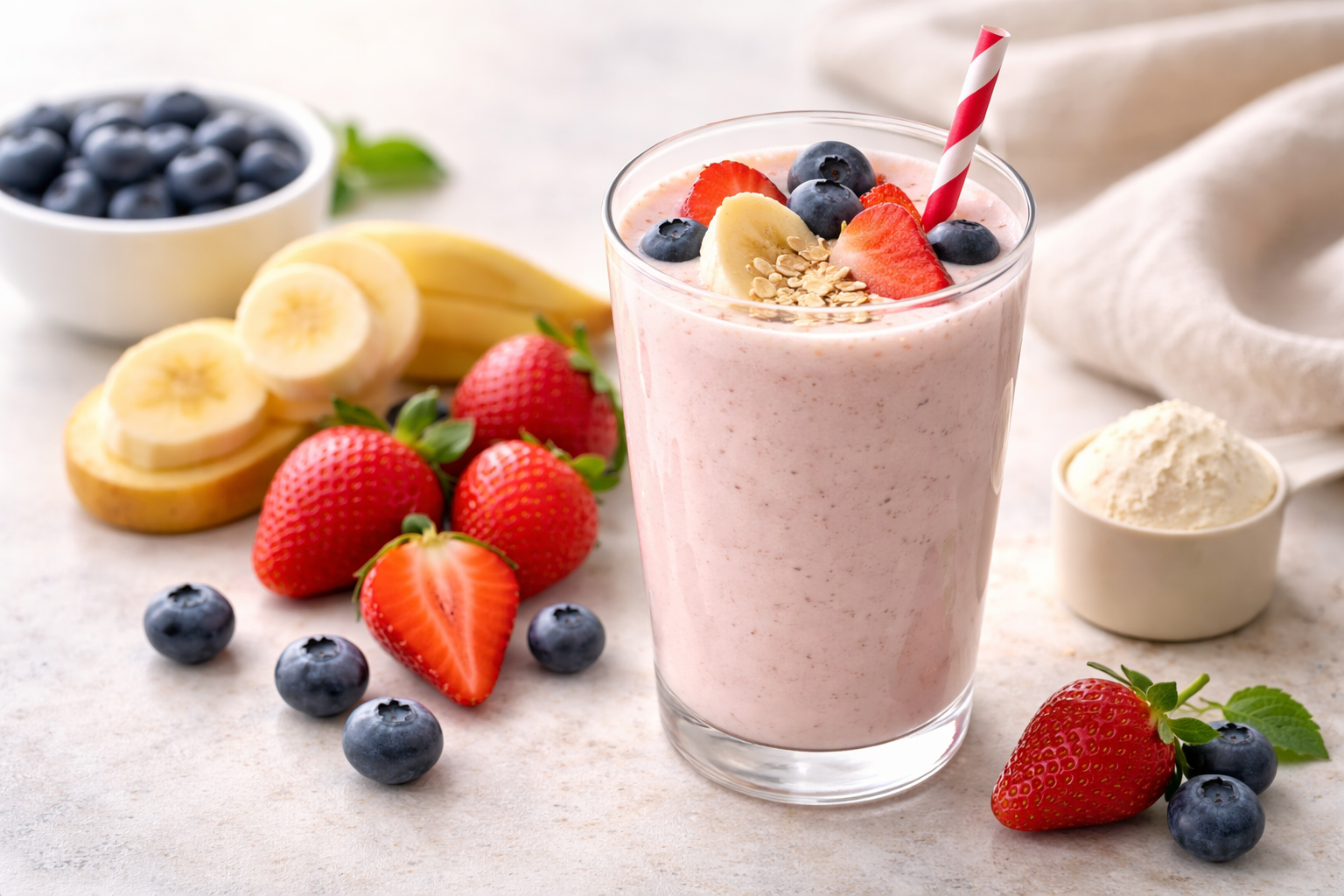
Your protein powder tastes like chalky sadness. You force it down daily. There’s a better way that doesn’t involve suffering.
You buy protein powder. Mix it with water. Take a sip. Immediately regret your life choices.
You think you’re stuck with terrible-tasting protein shakes because “that’s just how protein powder is.” But you’re wrong.
You believe:
- Mixing protein with anything but water ruins it
- All protein powder tastes bad
- You just have to suffer through it
- Good-tasting protein doesn’t exist
Most of this is wrong. The truth: Protein powder can taste good with simple adjustments. Mixing with milk, using a blender, adding fruit, choosing quality brands, and strategic flavoring transform chalky protein into enjoyable shakes. The protein itself isn’t ruined by mixing with other ingredients. The absorption isn’t impaired. The effectiveness isn’t reduced. You’ve just been using the wrong methods.
In this comprehensive guide, I’ll reveal 8 proven methods to improve protein taste (simple changes, big impact), explain why some protein tastes bad (quality and sweetener issues), show you what to mix protein with (milk, fruit, and more), address common myths (mixing doesn’t ruin protein), and provide flavor combination ideas (tested recipes that work).
Whether you’re choking down unflavored protein or suffering through a flavor you hate, these methods will help.
Let’s make protein powder actually enjoyable to drink.
TABLE OF CONTENTS
- Method 1: Don't Use Only Water (Use Better Liquids)
- Method 2: Use a Blender (Not Just a Shaker)
- Method 3: Add Fresh or Frozen Fruit
- Method 4: Choose a Quality Protein Brand
- Method 5: Avoid "Exotic" Flavors (Stick to Basics)
- Method 6: Add Spices and Flavorings
- Method 7: Add Calorie-Dense Ingredients (For Bulking)
- Method 8: Drink Immediately After Preparing
- The Bottom Line: Good-Tasting Protein Is Achievable
Why Protein Powder Tastes Bad
Understanding the problem.
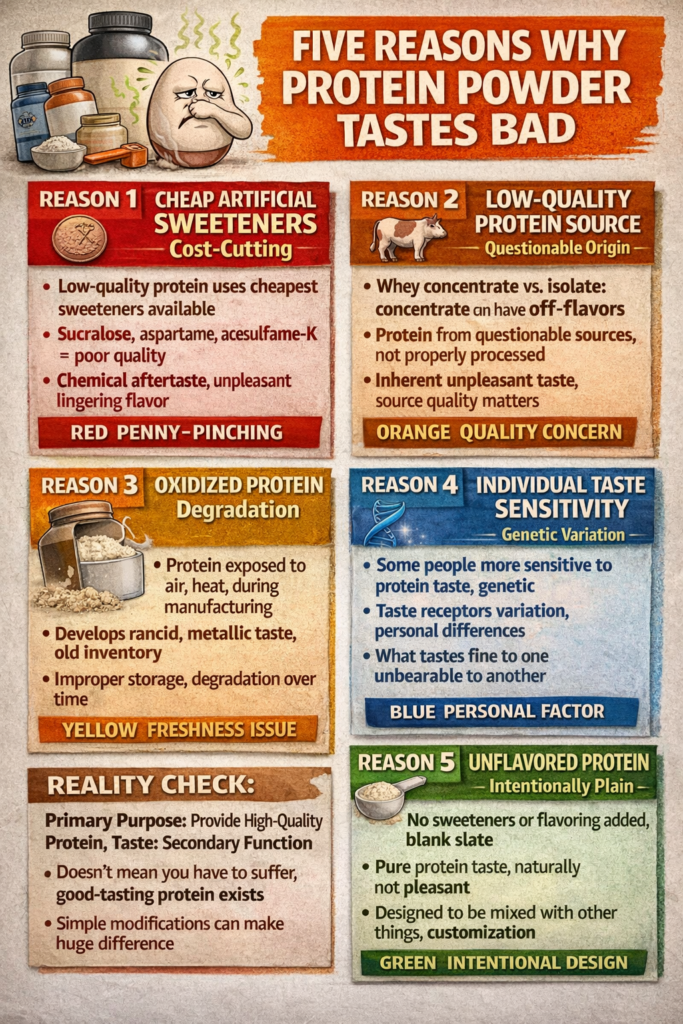
The Primary Culprits
Reason 1: Cheap artificial sweeteners
- Low-quality protein uses cheapest sweeteners available
- Sucralose, aspartame, acesulfame-K (when low quality)
- Chemical aftertaste
- Unpleasant lingering flavor
- Cost-cutting measure
The budget protein formula:
- Minimize protein cost
- Use cheapest sweeteners
- Minimal flavor development
- Result: Terrible taste
- Penny-pinching approach
Reason 2: Low-quality protein source
- Whey concentrate vs. isolate (concentrate can have off-flavors)
- Protein from questionable sources
- Not properly processed
- Inherent unpleasant taste
- Source quality matters
Reason 3: Oxidized protein
- Protein exposed to air/heat during manufacturing
- Develops rancid or metallic taste
- Old inventory sitting on shelves
- Improper storage
- Degradation
Reason 4: Individual taste sensitivity
- Some people more sensitive to protein taste
- Genetic variation in taste receptors
- What tastes fine to one person is unbearable to another
- Personal variation
Reason 5: Unflavored protein (intentionally plain)
- No sweeteners or flavoring added
- Pure protein taste (naturally not pleasant)
- Designed to be mixed with other things
- Blank slate product
The Reality Check
Important perspective:
- Primary purpose of protein powder: Provide high-quality protein
- Taste is secondary goal (nice to have, not essential)
- It’s a supplement, not a dessert
- Function over flavor
That said:
- Doesn’t mean you have to suffer
- Good-tasting protein exists
- Simple modifications make huge difference
- Improvement possible
8 Proven Methods to Improve Protein Taste
Simple changes, big impact.
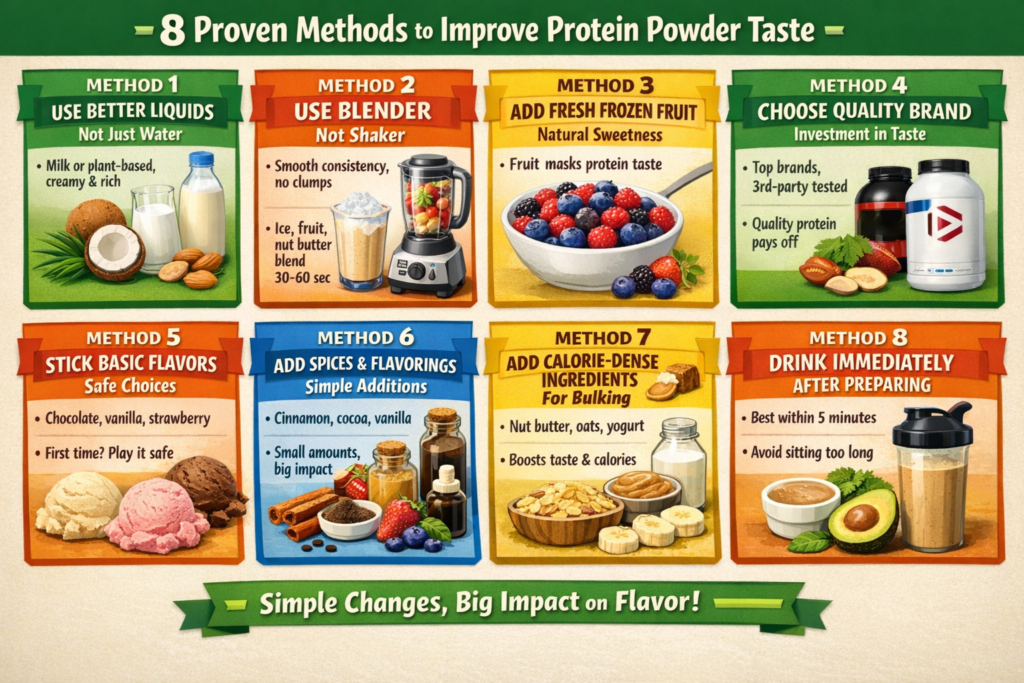
Method 1: Don’t Use Only Water (Use Better Liquids)
The myth:
- “Mixing protein with anything but water ruins the protein”
- “You won’t absorb it properly”
- “It interferes with protein quality”
- All false
The truth:
- Protein powder is just food in powder form
- Mixing with other liquids doesn’t damage protein
- Absorption not impaired
- Quality unchanged
- No harm in mixing
Better liquid options:
Milk (dairy):
- Whole milk: Creamy, rich, adds calories (good for bulking)
- 2% milk: Balanced creaminess and calories
- Skim milk: Low fat, still creamy texture
- Adds protein (8g per cup), improves taste significantly
- Best overall option for taste
Plant-based milk alternatives:
- Almond milk: Nutty flavor, low calorie (30-40 cal per cup)
- Oat milk: Creamy texture, slightly sweet
- Cashew milk: Rich and smooth
- Coconut milk: Tropical flavor, creamy
- Soy milk: High protein (7g per cup), neutral flavor
- Dairy-free options
Other liquids:
- Coffee (iced): Creates protein coffee, energizing
- Cold brew: Less acidic than regular coffee
- Tea (chai, green tea): Unique flavors
- Coconut water: Light, refreshing, electrolytes
- Creative alternatives
The impact:
- Water alone: Thin, watery, protein taste dominant
- Milk: Thick, creamy, protein taste masked
- Night and day difference
Calorie consideration:
- If cutting: Use low-calorie options (almond milk, skim milk)
- If bulking: Use whole milk, oat milk (adds beneficial calories)
- Adjust to goals
Method 2: Use a Blender (Not Just a Shaker)
Why blenders make a difference:
Texture improvement:
- Blenders create smoother consistency
- Break up clumps completely
- No gritty texture
- Better mouthfeel
- Mechanical smoothing
Incorporate other ingredients:
- Can add ice (thick, cold shake)
- Can add fruit (fresh or frozen)
- Can add nut butter (creamy richness)
- Shaker bottles can’t handle these well
- Versatility
Speed and efficiency:
- 30-60 seconds to perfect shake
- No shaking for 2 minutes
- Easier and faster
- Convenience
The ice advantage:
- Add 4-6 ice cubes
- Creates thick, milkshake-like texture
- Refreshing and cold
- Masks protein taste better
- Texture transformation
The technique:
- Add liquid first (prevents sticking)
- Add protein powder
- Add other ingredients
- Blend 30-60 seconds
- Proper order
Shaker bottles still useful:
- When traveling or at gym
- Quick protein-only shakes
- Convenience factor
- Situational use
But for home:
- Always use blender if available
- Superior results every time
- Clear winner
Method 3: Add Fresh or Frozen Fruit
Why fruit works:
Natural sweetness:
- Fruit sugars mask protein taste
- Reduces need for artificial sweeteners
- Clean, natural flavor
- Flavor masking
Texture improvement:
- Blended fruit creates smooth consistency
- Frozen fruit makes thick, creamy shakes
- Better mouthfeel
- Texture enhancement
Nutritional boost:
- Vitamins and minerals
- Fiber
- Antioxidants
- Micronutrients
- Health benefits
Best fruits for protein shakes:
Berries:
- Strawberries: Classic flavor, widely loved
- Blueberries: Antioxidants, mild flavor
- Raspberries: Tart, interesting
- Blackberries: Rich flavor
- Mixed berries: Variety
- Berry category
Tropical fruits:
- Banana: Thick, creamy texture (best for texture)
- Mango: Sweet, tropical
- Pineapple: Sweet and tart
- Papaya: Mild, smooth
- Tropical options
Other fruits:
- Apple: Mild sweetness
- Pear: Subtle flavor
- Peach: Sweet and delicate
- Cherries: Rich flavor
- Additional options
Fresh vs. frozen:
Fresh fruit:
- Pros: Brighter flavor, no need to thaw
- Cons: Less thick texture, goes bad quickly
- Fresh option
Frozen fruit:
- Pros: Thick milkshake texture, lasts months, no ice needed
- Cons: Need to blend well (harder when frozen)
- Frozen advantage
The verdict:
- Frozen fruit superior for shakes (texture and convenience)
- Always have frozen fruit in freezer
- Stock frozen
Amount to use:
- 1/2 to 1 cup fruit per shake
- Adjust based on desired sweetness and thickness
- Flexible amount
Method 4: Choose a Quality Protein Brand
Why brand matters:
Quality ingredients:
- Reputable brands use better protein sources
- Higher-quality sweeteners (stevia, monk fruit vs. cheap sucralose)
- Better flavor development
- Ingredient quality
Manufacturing standards:
- Third-party tested (verified protein content)
- Proper processing (prevents off-flavors)
- Quality control
- Production quality
Taste investment:
- Good brands invest in flavor research
- Test extensively before release
- Iterate on formulas
- Flavor priority
Recommended brands (quality and taste):
- Optimum Nutrition (Gold Standard): Industry standard, reliable
- Dymatize (ISO100): Excellent flavor, clean
- MyProtein: Good value, decent taste
- Transparent Labs: Clean ingredients, good flavor
- Levels: Grass-fed, excellent taste
- Trusted options
What to avoid:
- Unknown brands with no reviews
- Suspiciously cheap protein (corners cut somewhere)
- Brands with many complaints about taste
- Red flags
The reality:
- Good protein costs slightly more ($30-50 per 2 lbs vs. $20)
- Worth it for taste you’ll actually enjoy
- Better adherence (drink it consistently)
- Cost-benefit positive
Method 5: Avoid “Exotic” Flavors (Stick to Basics)
The exotic flavor problem:
What are exotic flavors:
- Anything beyond chocolate, vanilla, strawberry
- Examples: Passion fruit mousse, key lime pie, birthday cake, cinnamon roll
- Creative but risky
- Non-traditional flavors
Why they often disappoint:
Artificial vs. real:
- “Birthday cake” flavor doesn’t taste like actual cake
- Artificial flavoring distant from real food
- Expectation vs. reality mismatch
- Flavor gap
Questionable sweeteners:
- More exotic flavor = more complex sweetener blends
- Often lower quality to achieve flavor
- Chemical aftertaste common
- Quality concerns
Individual variation:
- What one person loves, another hates
- More divisive than basic flavors
- Higher risk of dislike
- Polarizing
The safe choices:
Chocolate:
- Most universally liked
- Hard to mess up
- Versatile (pairs with many additions)
- Safe bet
Vanilla:
- Neutral, easy to flavor
- Pairs with anything
- Good base for customization
- Versatile choice
Strawberry:
- Fruity, light
- Less rich than chocolate
- Refreshing
- Classic option
The strategy:
- First time trying a brand? Choose chocolate or vanilla
- Once you know you like the brand, experiment
- Conservative start
Exception:
- If brand has excellent reviews for specific exotic flavor
- And you love that flavor in general
- Worth trying
- Informed risk
Method 6: Add Spices and Flavorings
Simple additions, big impact:
Cinnamon:
- 1/2 to 1 tsp per shake
- Warm, sweet spice
- Pairs well with vanilla, chocolate
- Blood sugar benefits
- Versatile spice
Cocoa powder (unsweetened):
- 1-2 tbsp for richer chocolate flavor
- Deepens chocolate protein
- Adds antioxidants
- Chocolate enhancement
Vanilla extract:
- 1/2 to 1 tsp
- Enhances vanilla protein or adds vanilla to chocolate
- Pure extract (not imitation)
- Flavor booster
Peppermint extract:
- 1/4 tsp (strong, use sparingly)
- Creates mint chocolate flavor with chocolate protein
- Refreshing
- Minty twist
Almond extract:
- 1/4 tsp
- Nutty flavor
- Pairs well with vanilla or chocolate
- Almond flavor
Instant coffee or espresso powder:
- 1 tsp
- Creates mocha flavor with chocolate protein
- Adds caffeine
- Coffee addition
Nutmeg:
- Pinch (very strong)
- Warm, cozy flavor
- Holiday vibe
- Seasonal spice
Matcha powder:
- 1 tsp
- Green tea flavor
- Caffeine and antioxidants
- Pairs with vanilla
- Green tea option
The approach:
- Start with small amounts
- Taste and adjust
- Easy to add more, can’t remove
- Gradual addition
Method 7: Add Calorie-Dense Ingredients (For Bulking)
If bulking or wanting more calories:
Nut butters:
- Peanut butter: 2 tbsp = 190 cal, creamy, delicious
- Almond butter: 2 tbsp = 200 cal, smooth
- Cashew butter: 2 tbsp = 190 cal, sweet
- Improves taste AND adds healthy fats and calories
- Nut butter advantage
Oats:
- 1/2 cup = 150 cal, 27g carbs
- Adds thickness and creaminess
- Slow-digesting carbs
- Must blend well
- Carb addition
Avocado:
- 1/2 avocado = 120 cal, healthy fats
- Makes shake incredibly creamy
- Neutral flavor (doesn’t overpower)
- Healthy fat source
Greek yogurt:
- 1/2 cup = 80-100 cal, 12-15g protein
- Adds creaminess and protein
- Slightly tangy
- Protein and texture
Honey or maple syrup:
- 1 tbsp = 60 cal
- Natural sweetness
- If shake not sweet enough
- Natural sweetener
Coconut cream:
- 2 tbsp = 100 cal
- Rich, tropical flavor
- Very creamy
- Indulgent addition
The bulking shake:
- 1 scoop protein (chocolate)
- 1 cup whole milk
- 1 banana
- 2 tbsp peanut butter
- 1/2 cup oats
- Total: ~700 calories, 50g protein, 70g carbs, 25g fat
- Complete meal
Method 8: Drink Immediately After Preparing
Why timing matters:
Freshness:
- Flavors at peak when freshly mixed
- Ingredients haven’t separated
- Best texture
- Optimal taste
Texture degradation:
- Protein shakes get thicker as sit
- Can become gel-like after hours
- Separation occurs
- Consistency changes
Protein degradation (minor):
- Protein stable for hours
- But flavor compounds can change
- Slight oxidation possible
- Quality decrease
Temperature:
- Fresh shakes are cold (if ice/frozen fruit used)
- Room temperature shakes less appealing
- Temperature matters
The guidelines:
Best: Immediate consumption
- Within 5 minutes of making
- Optimal
Acceptable: Refrigerated
- Up to 4-6 hours in fridge
- Shake well before drinking
- Short-term storage
Not recommended: Room temperature
- Maximum 2 hours at room temp
- Bacterial growth risk
- Texture and taste degradation
- Safety concern
Meal prep shakes:
- Can prep dry ingredients night before
- Add liquid and blend in morning
- Best of both worlds
- Compromise approach
Flavor Combination Ideas
Tested recipes that work.
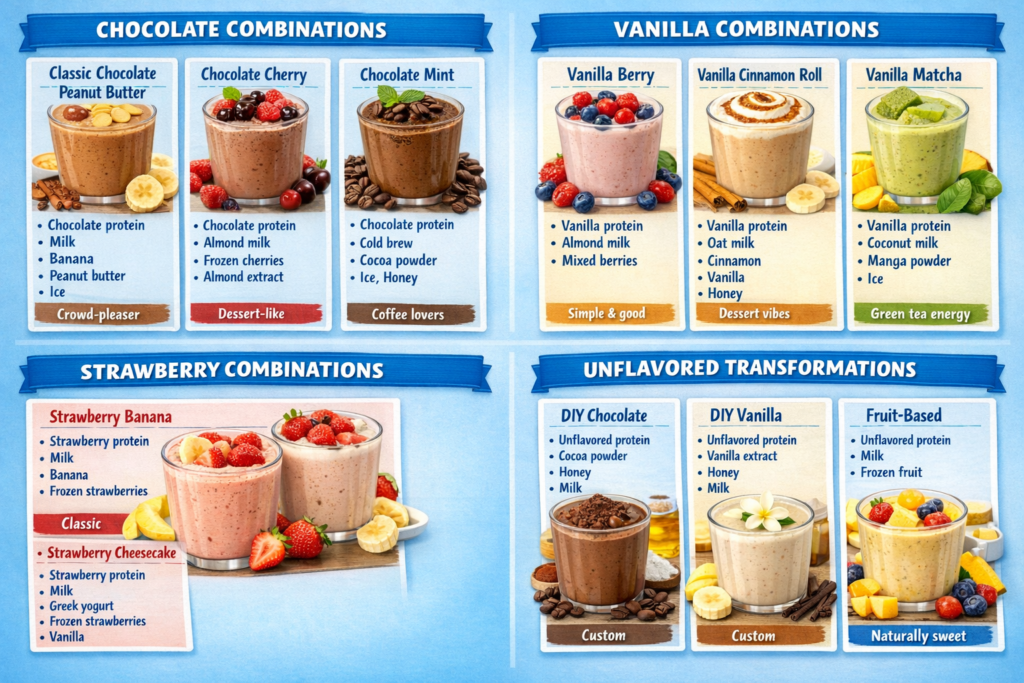
Chocolate Combinations
Classic Chocolate Peanut Butter:
- 1 scoop chocolate protein
- 1 cup milk
- 1 banana
- 2 tbsp peanut butter
- Ice
- Crowd-pleaser
Chocolate Cherry:
- 1 scoop chocolate protein
- 1 cup almond milk
- 1 cup frozen cherries
- 1/4 tsp almond extract
- Dessert-like
Mocha:
- 1 scoop chocolate protein
- 1 cup cold brew coffee
- 1 tbsp cocoa powder
- Ice
- Optional: 1 tbsp honey for sweetness
- Coffee lovers
Chocolate Mint:
- 1 scoop chocolate protein
- 1 cup milk
- 1/4 tsp peppermint extract
- Ice
- Optional: Spinach (won’t taste it, adds nutrients)
- Refreshing
Vanilla Combinations
Vanilla Berry:
- 1 scoop vanilla protein
- 1 cup almond milk
- 1 cup mixed berries (frozen)
- Simple and good
Vanilla Cinnamon Roll:
- 1 scoop vanilla protein
- 1 cup oat milk
- 1 tsp cinnamon
- 1/2 tsp vanilla extract
- 1 tbsp honey
- Dessert vibes
Vanilla Matcha:
- 1 scoop vanilla protein
- 1 cup coconut milk
- 1 tsp matcha powder
- Ice
- Green tea energy
Vanilla Tropical:
- 1 scoop vanilla protein
- 1 cup coconut milk
- 1/2 cup frozen mango
- 1/2 cup frozen pineapple
- Vacation vibes
Strawberry Combinations
Strawberry Banana:
- 1 scoop strawberry protein
- 1 cup milk
- 1 banana
- 1/2 cup frozen strawberries
- Classic
Strawberry Cheesecake:
- 1 scoop strawberry protein
- 1 cup milk
- 1/2 cup Greek yogurt
- 1/2 cup frozen strawberries
- 1/2 tsp vanilla extract
- Indulgent
Unflavored Protein Transformations
If you have unflavored protein (intentionally plain):
DIY Chocolate:
- 1 scoop unflavored protein
- 2 tbsp cocoa powder
- 2 tbsp honey or maple syrup
- 1 cup milk
- Custom chocolate
DIY Vanilla:
- 1 scoop unflavored protein
- 1 tsp vanilla extract
- 1-2 tbsp honey
- 1 cup milk
- Custom vanilla
Fruit-based (no added sweetener needed):
- 1 scoop unflavored protein
- 1 cup milk
- 1-2 cups frozen fruit (naturally sweet)
- Fruit-sweetened
What NOT to Mix with Protein
Avoiding bad combinations.
Generally Fine to Mix
Almost everything is safe:
- Protein powder is just food
- No magical interactions
- Mix with what you like
- Very permissive
Individual Intolerances
Watch out for:
Lactose intolerance:
- Avoid dairy milk if sensitive
- Use lactose-free milk or plant-based
- Personal sensitivity
Dairy sensitivity:
- Some people react to whey protein itself (dairy-derived)
- Switch to plant-based protein (pea, rice, hemp)
- Protein source issue
Specific food allergies:
- Don’t add foods you’re allergic to (obviously)
- Check protein ingredients for allergens
- Common sense
Taste Combinations to Avoid
What generally tastes bad:
Citrus + dairy protein:
- Orange juice + whey protein = curdled, awful
- Lemon + dairy protein = same problem
- Acidic + dairy = bad texture
- Avoid acidic liquids with whey
Very hot liquids:
- Hot coffee + protein = clumpy, denatured
- Protein denatures at high heat
- Makes thick, undrinkable mess
- Use cold or room temp liquids
Excessive salt:
- Adding salt doesn’t improve taste
- Makes shake unpalatable
- Skip the salt
Common Questions
Addressing confusion.
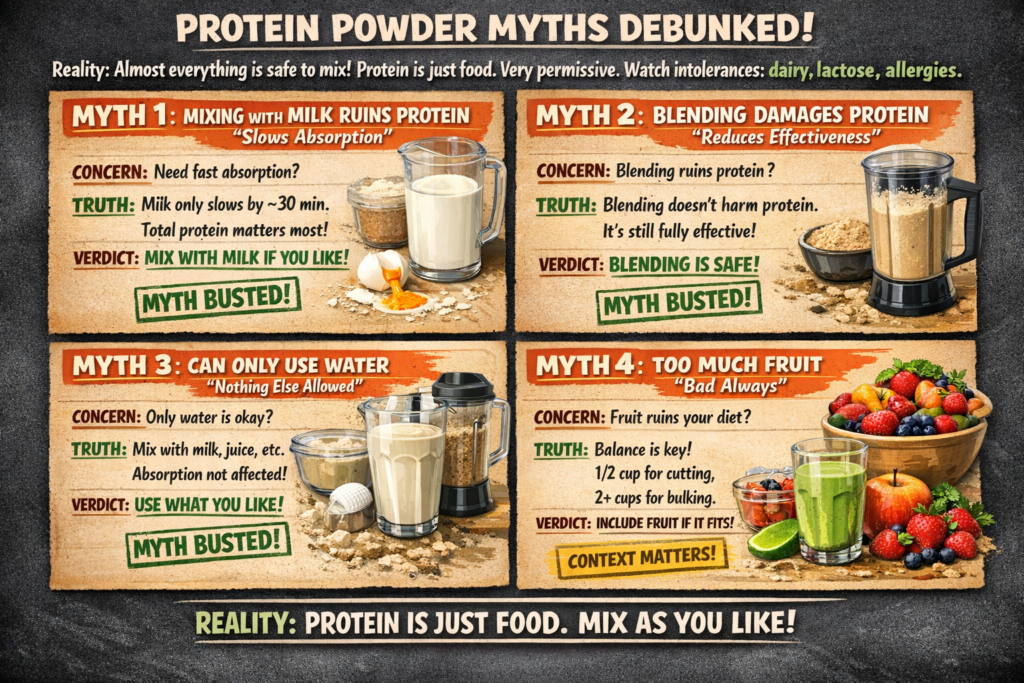
“Will mixing protein with milk slow absorption?”
The concern:
- “Need fast-absorbing protein post-workout”
- “Milk slows it down”
- Speed worry
The truth:
- Difference in absorption speed is minimal (maybe 30 min slower)
- Doesn’t matter for results
- Total daily protein matters most
- Timing window is hours, not minutes
- Irrelevant concern
The verdict:
- Mix with milk if it tastes better
- Absorption speed not important enough to suffer bad taste
- Taste trumps speed
“Does blending protein damage it?”
The concern:
- “Blending denatures protein”
- “Reduces effectiveness”
- Damage worry
The truth:
- Blending does NOT damage protein
- Mechanical action doesn’t change protein structure
- Still fully effective
- No harm
What DOES denature protein:
- High heat (cooking)
- Extreme pH (very acidic or alkaline)
- But blending? Completely fine
- Blending is safe
“How much fruit is too much?”
The balance:
- Fruit adds carbs and calories
- If cutting: Keep moderate (1/2 to 1 cup)
- If bulking: Go wild (2+ cups fine)
- Goal-dependent
The recommendation:
- Track total calories and carbs
- Fit fruit into daily targets
- Don’t just add fruit on top of plan
- Include in totals
“Can I meal prep protein shakes?”
The answer:
- Yes, but with considerations
- Conditionally yes
Best approach:
- Prep dry ingredients (protein, oats, etc.)
- Store in container
- Add liquid and blend morning of
- Partial prep
Full liquid prep:
- Can make shake and refrigerate
- Consume within 24 hours
- Shake well before drinking (separates)
- Texture may change
- Less ideal but works
The Bottom Line: Good-Tasting Protein Is Achievable
After explaining everything:
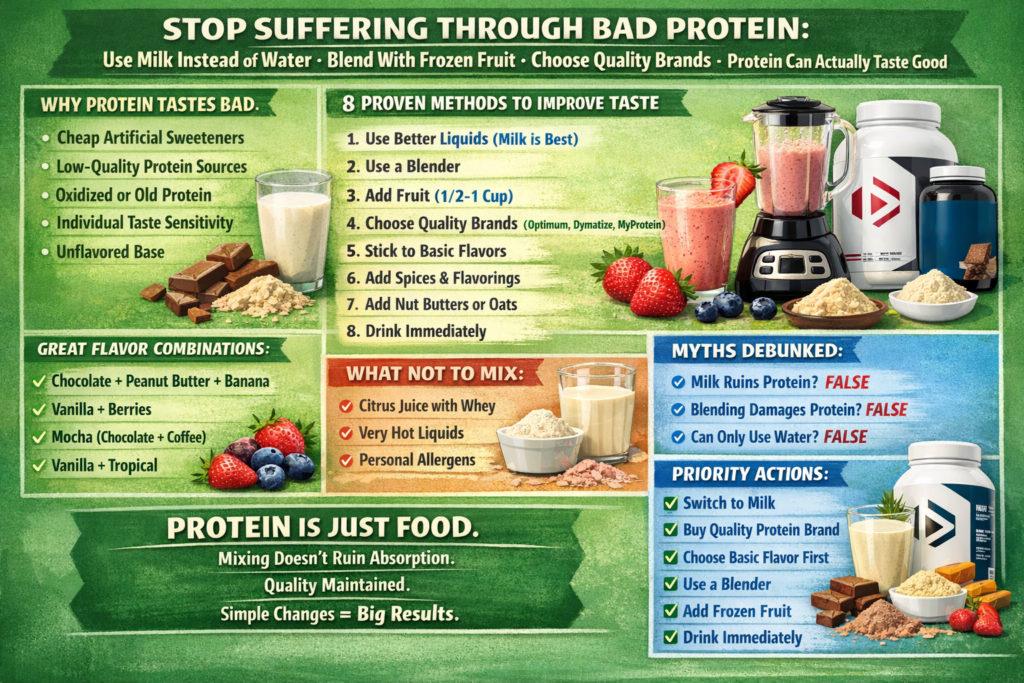
The truth about protein powder taste:
✅ Protein can taste good with simple methods (not doomed to suffering)
✅ Mixing with other ingredients doesn’t ruin protein (absorption and quality maintained)
✅ Brand and flavor choice matter significantly (quality difference is real)
✅ Fresh ingredients and blending transform texture (night and day difference)
✅ Strategic additions mask protein taste (fruit, spices, nut butters)
Key takeaways:
Why protein tastes bad:
- Cheap artificial sweeteners (low-quality brands cut costs)
- Low-quality protein sources (off-flavors)
- Oxidized protein (old or improperly stored)
- Individual taste sensitivity (genetic variation)
- Unflavored protein (intentionally plain)
- Multiple factors
8 proven methods:
1. Don’t use only water
- Milk (dairy or plant-based) drastically improves taste
- Adds creaminess and masks protein flavor
- Doesn’t ruin protein or absorption
- Biggest single improvement
2. Use a blender
- Creates smooth texture (no clumps)
- Allows adding ice (thick, cold shake)
- Incorporates other ingredients well
- Texture transformation
3. Add fruit
- Natural sweetness masks protein taste
- Frozen fruit creates milkshake texture
- Nutritional boost (vitamins, fiber)
- 1/2 to 1 cup per shake
- Flavor and nutrition
4. Choose quality brand
- Better sweeteners, better protein source
- Taste investment worth it
- Recommended: Optimum Nutrition, Dymatize, MyProtein, Transparent Labs
- Quality matters
5. Stick to basic flavors
- Chocolate, vanilla, strawberry safest
- Exotic flavors often disappoint
- Less risk with classics
- Conservative choice
6. Add spices/flavorings
- Cinnamon, vanilla extract, cocoa powder
- Small amounts, big impact
- Customize to preference
- Simple enhancement
7. Add calorie-dense ingredients (if bulking)
- Nut butters, oats, avocado, Greek yogurt
- Improves taste AND adds calories
- Dual benefit
8. Drink immediately
- Freshness = best taste and texture
- Refrigerate if storing (up to 4-6 hours)
- Don’t leave at room temp >2 hours
- Timing matters
Flavor combinations:
- Chocolate + peanut butter + banana (classic)
- Vanilla + berries (light and fruity)
- Chocolate + coffee (mocha)
- Vanilla + tropical fruit (vacation vibes)
- Tested recipes
What NOT to mix:
- Citrus juice with whey (curdles)
- Very hot liquids (denatures, clumps)
- Personal allergens/intolerances
- Avoid these
Common myths debunked:
- “Mixing with milk ruins protein” (FALSE, absorption slightly slower but irrelevant)
- “Blending damages protein” (FALSE, mechanical action doesn’t hurt it)
- “Can only use water” (FALSE, use whatever tastes good)
- Misconceptions corrected
Priority actions:
- Switch from water to milk (biggest improvement)
- Buy quality protein brand (Optimum Nutrition, Dymatize, etc.)
- Choose basic flavor first (chocolate or vanilla)
- Use blender instead of shaker (smoother texture)
- Add frozen fruit (1/2 to 1 cup per shake)
- Drink immediately after preparing (best taste)
- Simple implementation
STOP SUFFERING THROUGH BAD PROTEIN. USE MILK INSTEAD OF WATER. BLEND WITH FROZEN FRUIT. CHOOSE QUALITY BRANDS. PROTEIN CAN ACTUALLY TASTE GOOD.
Ready to optimize your entire supplementation strategy with evidence-based protein timing, dosing protocols, and complete nutrition systems that support your training goals? Making protein taste good is just one piece. Get comprehensive supplement guidance. Stop forcing down bad shakes. Start enjoying your nutrition.
REFERENCES
SECTION 1 — Milk vs. water: absorption kinetics and muscle protein synthesis
[1] Kanda A et al. — PubMed/Nutrients, 2016 Animal study comparing whey protein, caseinate, milk protein, and soy protein on post-exercise muscle protein synthesis; whey protein peak synthesis occurred at 60 minutes, milk protein (whey + casein blend) at 90 minutes, and caseinate at 120 minutes; all dairy proteins produced significantly greater muscle protein synthesis than soy protein; total area under the curve for synthesis was similar across dairy proteins despite the timing differences; demonstrates that slowing whey absorption by adding milk (and its casein content) does not reduce total anabolic response — it extends it https://pubmed.ncbi.nlm.nih.gov/27271661/
[2] Reidy PT et al. — PMC/Nutrients, 2015 RCT in 16 healthy middle-aged males comparing 20g milk protein vs. 20g whey protein on resting myofibrillar fractional synthetic rate; during the first 90 minutes, synthesis rates increased equivalently in both groups (0.057% vs. 0.052% per hour, p=0.810); no significant difference between groups at any measured time point; directly supports the article’s claim that mixing whey protein with milk — which shifts the absorption kinetics toward a slower, mixed-protein profile — produces equivalent muscle protein synthesis outcomes https://pmc.ncbi.nlm.nih.gov/articles/PMC4632440/
[3] Margolis LM et al. — PMC/Journal of Nutrition, 2020 Review of protein feeding formats (free-form EAAs, intact proteins, protein-containing mixed meals) and their effects on muscle protein synthesis; digestion and absorption kinetics are altered by food form (liquid vs. solid) and food matrix (co-ingestion of other nutrients); temporal differences in amino acid appearance between protein sources exist but overall muscle protein synthesis outcomes converge; the co-ingestion of other nutrients with protein modifies absorption without impairing anabolic response — supporting the article’s position that mixing protein with milk or other foods does not harm effectiveness https://pmc.ncbi.nlm.nih.gov/articles/PMC7469068/
SECTION 2 — Protein denaturation: heat and pH, not mechanical blending
[4] Li H et al. — PubMed/Food Chemistry, 2021 Experimental study on whey protein denaturation under heat treatment; denaturation degree of whey protein and its combination with casein increased with rising temperature and heating time; meaningful denaturation occurs at temperatures from 70–100°C; at lower temperatures and shorter times, denaturation is partial; mechanical processing (stirring, mixing) is not identified as a denaturing force — only heat and extended exposure produce structural changes; provides the mechanistic basis for the article’s distinction between cooking protein (harmful) and blending it (harmless) https://pubmed.ncbi.nlm.nih.gov/28316470/
[5] Akkerman M et al. — PubMed/Journal of Dairy Science, 2016 Pilot-scale study revisiting whey protein denaturation using LC/MS Q-TOF analysis; high denaturation degrees of β-lactoglobulin and α-lactalbumin were obtained at temperatures above 100°C; denaturation increased significantly with both temperature and holding time; confirms that protein structural changes require sustained high-heat exposure; blending at ambient temperature — which generates no significant heat — produces no meaningful denaturation; validates the article’s reassurance that blending protein is completely safe https://pubmed.ncbi.nlm.nih.gov/26506552/
SECTION 3 — Individual taste sensitivity and bitter perception
[6] Keast RSJ & Roper SD — PubMed/Chemical Senses, 2007 Review of genetic variation in bitter taste receptor expression; TAS2R gene family encodes bitter taste receptors with substantial individual variation; individuals differ in sensitivity to bitter compounds based on receptor expression levels; supertasters experience bitter flavors at significantly lower concentrations than average tasters or non-tasters; directly explains the article’s observation that protein powder which tastes acceptable to one person can be genuinely unbearable to another — not a matter of preference but of receptor biology https://pubmed.ncbi.nlm.nih.gov/17374600/
SECTION 4 — Whey vs. casein absorption: fast vs. slow protein kinetics
[7] Boirie Y et al. — PubMed/Proceedings of the National Academy of Sciences, 1997 Landmark study establishing the “fast” and “slow” protein classification; whey protein produced a rapid, large, but transient rise in plasma amino acids peaking within 60–90 minutes; casein produced a slower, lower, but more sustained amino acid release over 5–7 hours; whey promoted greater acute protein synthesis; casein better inhibited protein breakdown; foundational evidence for the article’s explanation of why mixing whey protein with milk (adding casein) moderately slows absorption — shifting from a pure fast-protein profile toward an intermediate one without eliminating the anabolic stimulus https://pubmed.ncbi.nlm.nih.gov/9405716/

Leave a Reply
You must be logged in to post a comment.