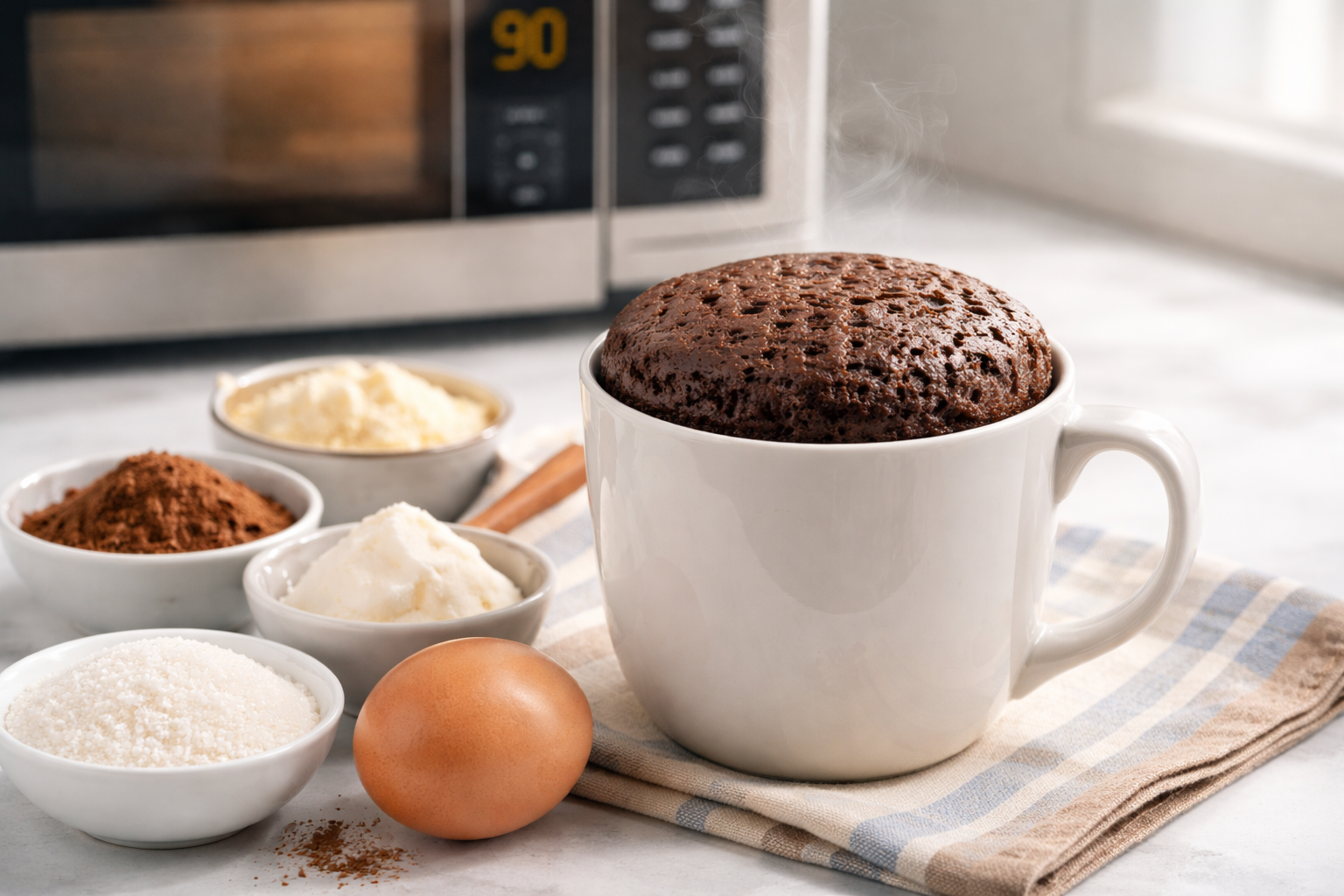
Craving chocolate cake but want to stay low carb? Here’s the perfect solution that takes 90 seconds to make.
You’re following a low carb diet. You’re making progress. You feel good.
But you’re craving chocolate cake.
Every low carb dessert you’ve tried has been:
- Dry and chalky
- Tastes nothing like real cake
- Uses weird, expensive ingredients
- Takes forever to make
You want real chocolate cake that actually fits your macros.
Here’s the perfect solution: This low carb chocolate mug cake contains only 8g net carbs per serving, takes exactly 90 seconds to make in the microwave, uses simple ingredients you already have, tastes like real chocolate cake (not cardboard), and provides complete nutrition information so you can track macros accurately. No flour, no sugar, but all the chocolate satisfaction.
In this comprehensive guide, I’ll provide the complete low carb chocolate mug cake recipe with exact measurements, reveal detailed nutritional information (calories, net carbs, protein, fat), show you ingredient substitutions and variations for different dietary needs, explain the science behind why this recipe works perfectly, and provide troubleshooting tips for common problems (too dry, too rubbery, not rising).
Whether you’re keto, low carb, or just want a quick healthy dessert, this recipe delivers.
Let’s make the perfect guilt-free chocolate cake.
TABLE OF CONTENTS
What Is Low Carb Chocolate Mug Cake?
Understanding what makes this recipe special.
The Concept
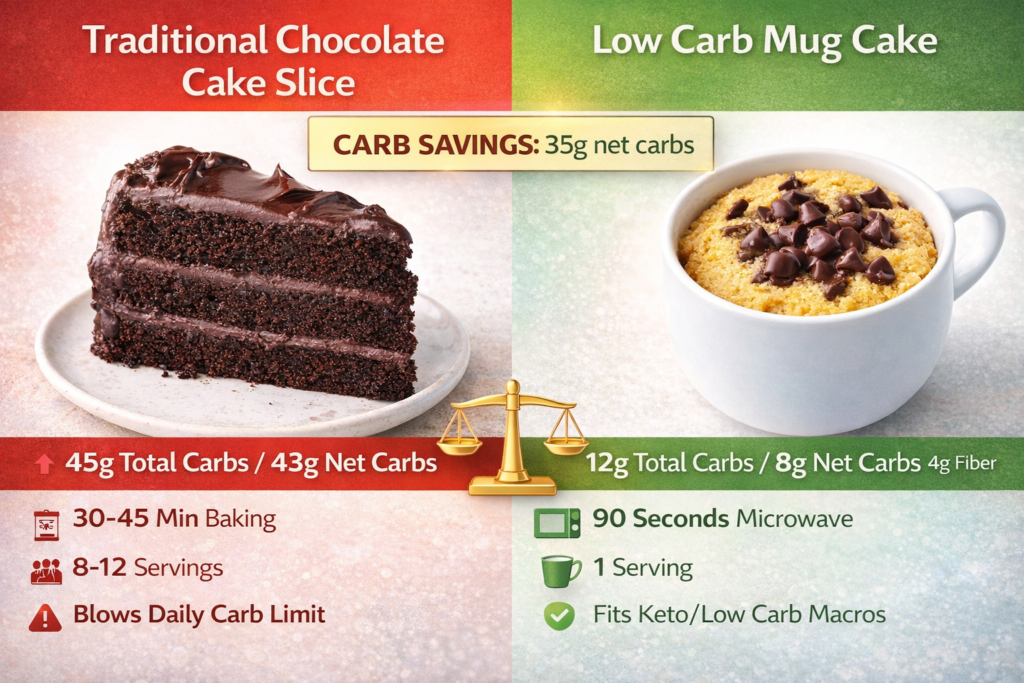
Traditional chocolate cake:
- Made with wheat flour (high carb)
- Lots of sugar (high carb)
- Takes 30-45 minutes to bake
- Makes 8-12 servings
- ~45g carbs per slice
Low carb mug cake:
- Made with low carb flours (almond, coconut, oat)
- Sugar-free sweeteners
- Cooks in 90 seconds
- Makes 1 serving
- ~8g net carbs total
The “mug” aspect:
- Cooked in a coffee mug
- Single serving
- Microwave preparation
- No oven needed
- Ultimate convenience
Why This Matters for Low Carb Diets
The carb comparison:
Regular chocolate cake slice:
- Total carbs: 45g
- Fiber: 2g
- Net carbs: 43g
- Blows daily carb limit
This low carb mug cake:
- Total carbs: 12g
- Fiber: 4g
- Net carbs: 8g
- Fits low carb/keto macros
The psychological benefit:
- Satisfies sweet cravings
- Prevents diet abandonment
- Feels like “cheating” but isn’t
- Supports long-term adherence
Health Benefits Beyond Low Carb
Nutritional advantages:
Cocoa powder benefits:
- Rich in antioxidants (flavonoids)
- May reduce stress and anxiety
- Cardiovascular health support
- Anti-inflammatory properties
- Functional ingredient
Healthy fats:
- Coconut oil provides MCTs
- Supports satiety
- Ketone production (if keto)
- Energy and satisfaction
Fiber content:
- 4g fiber per serving
- Supports digestive health
- Increases satiety
- Slows sugar absorption
- Gut health benefit
Protein addition (optional):
- Can add protein powder
- Increases satiety
- Supports muscle maintenance
- Complete nutrition
Complete Low Carb Chocolate Mug Cake Recipe
The exact recipe that works every time.
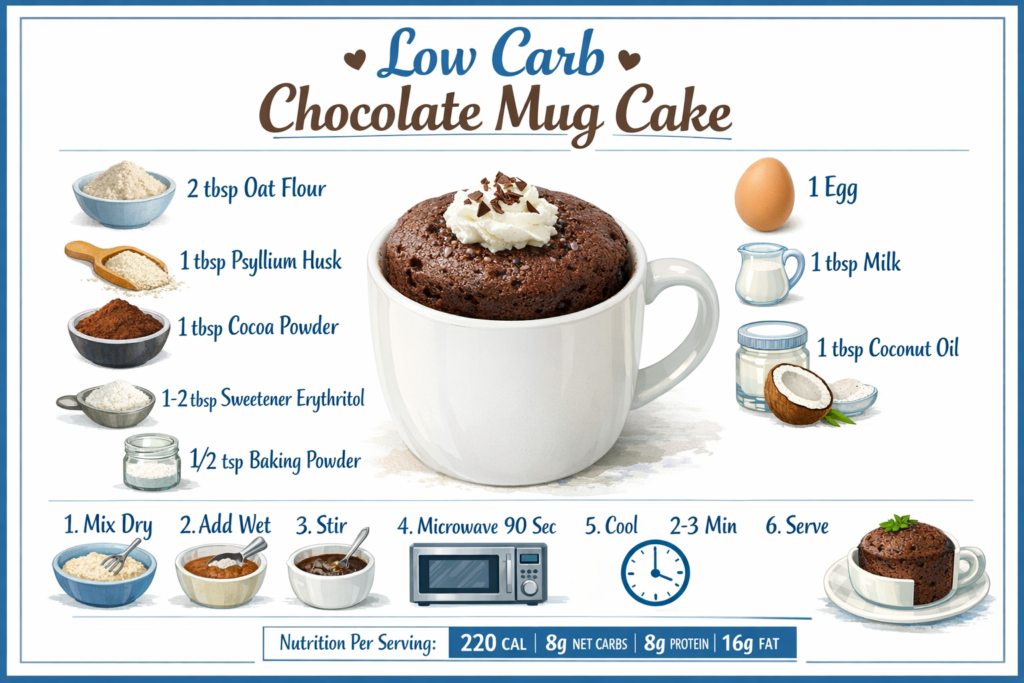
Ingredients (Makes 1 Serving)
Dry ingredients:
- 2 tbsp oat flour (or almond flour, coconut flour)
- 1 tbsp psyllium husk powder
- 1 tbsp unsweetened cocoa powder
- 1-2 tbsp sweetener (erythritol, monk fruit, or stevia)
- 1/2 tsp baking powder
- Pinch of salt
Wet ingredients:
- 1 large egg
- 1 tbsp plant milk or water
- 1 tbsp coconut oil (or other oil)
Optional add-ins:
- 1 tbsp sugar-free chocolate chips
- 1/2 tsp vanilla extract
- Pinch of cinnamon
Step-by-Step Instructions
Preparation (2 minutes):
Step 1: Choose your mug
- Use microwave-safe mug
- 12-16 oz capacity minimum
- Cake will rise significantly
- Too small = overflow mess
- Size matters
Step 2: Mix dry ingredients
- Add oat flour, psyllium, cocoa, sweetener, baking powder, salt to mug
- Stir with fork until well combined
- Break up any lumps
- Thorough mixing critical
Step 3: Add wet ingredients
- Crack egg into mug
- Add milk and oil
- Mix vigorously with fork for 30 seconds
- Scrape sides and bottom
- Ensure no dry pockets
- Consistency should be thick batter
Step 4: Optional additions
- Fold in chocolate chips if using
- Add vanilla extract
- Stir gently
- Don’t overmix at this stage
Cooking (90 seconds):
Step 5: Microwave
- Place mug in center of microwave
- Cook on HIGH for 90 seconds
- Cake will rise dramatically
- Watch to ensure no overflow
Step 6: Check doneness
- Insert toothpick in center
- Should come out clean or with few moist crumbs
- If still wet, add 10-15 seconds
- Don’t overcook (gets rubbery)
Step 7: Cool and serve
- Let cool 2-3 minutes (very hot!)
- Eat directly from mug
- Or flip onto plate
- Top with whipped cream if desired
- Enjoy immediately for best texture
Complete Nutritional Information
Per serving (entire mug cake):
- Calories: 220
- Total Carbohydrates: 12g
- Fiber: 4g
- Net Carbs: 8g
- Protein: 8g
- Fat: 16g
- Saturated: 11g (from coconut oil)
- Unsaturated: 5g
Micronutrient highlights:
- Iron: 2mg (11% DV) from cocoa
- Magnesium: 45mg (11% DV) from cocoa
- Potassium: 180mg (4% DV)
- Antioxidants: Significant from cocoa
For context:
- Keto diet (20-50g net carbs daily): This is 16-40% of daily limit
- Low carb diet (50-100g net carbs daily): This is 8-16% of daily limit
- Fits most low carb approaches
Ingredient Substitutions and Variations
Customizing for dietary needs and preferences.
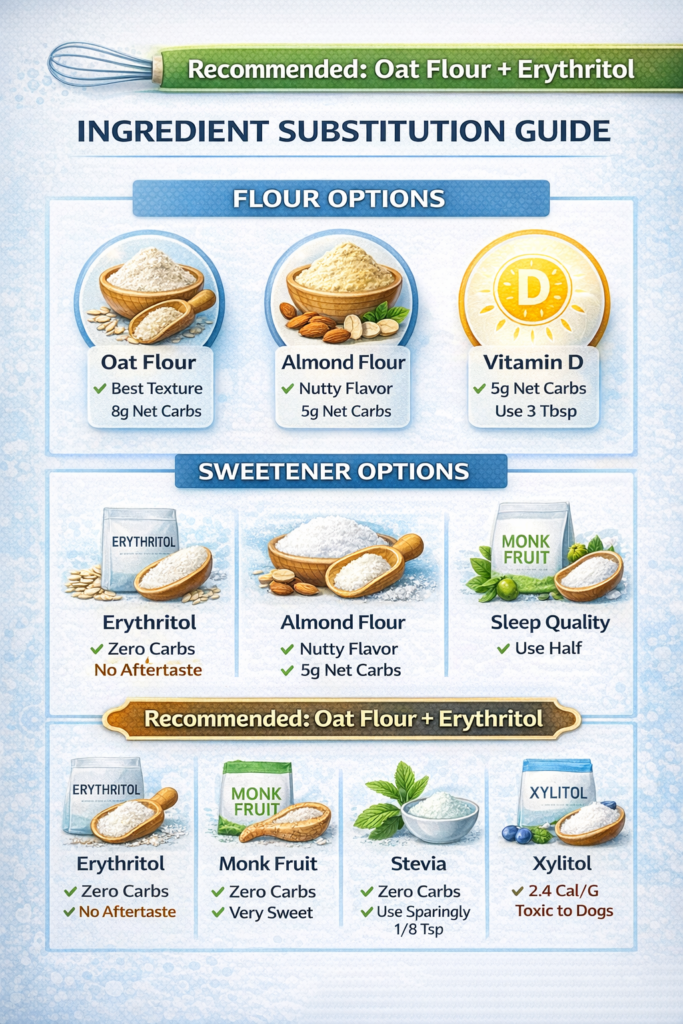
Flour Options
Option 1: Oat flour (used in main recipe)
- Most cake-like texture
- Mild flavor
- 12g carbs per 2 tbsp
- Best overall choice
Option 2: Almond flour
- Nuttier flavor
- Slightly denser texture
- 3g net carbs per 2 tbsp
- Lower carb option
- Use 3 tbsp instead of 2 tbsp (absorbs less liquid)
Option 3: Coconut flour
- Very absorbent
- Slight coconut flavor
- 2g net carbs per 2 tbsp
- Lowest carb option
- Use only 1 tbsp (highly absorbent)
- May need extra liquid
Comparison:
- Oat flour: Best texture, moderate carbs
- Almond flour: Good texture, low carbs
- Coconut flour: Trickier to use, lowest carbs
Sweetener Options
Sugar alcohols:
Erythritol:
- Zero calories
- Zero net carbs
- No bitter aftertaste
- Cooling sensation
- Most popular choice
- Use 1:1 ratio to sugar
Xylitol:
- 2.4 calories per gram
- Lower GI than sugar
- Similar sweetness
- Toxic to dogs (be careful)
- Use 1:1 ratio to sugar
Natural sweeteners:
Monk fruit:
- Zero calories
- Zero carbs
- Very sweet (use less)
- No aftertaste
- Premium option
- Use 1/2 amount of sugar called for
Stevia:
- Zero calories
- Zero carbs
- Very sweet (use much less)
- Can have bitter aftertaste
- Use sparingly
- 1/8 tsp stevia = 1 tbsp sugar
Combination approach:
- Mix erythritol + monk fruit
- Balances sweetness
- Reduces any off-flavors
- Recommended strategy
Fat Source Options
Coconut oil (recipe default):
- Solid at room temp
- Creates tender texture
- Mild coconut flavor
- MCT benefits
- Best choice
Butter:
- Rich flavor
- Creates moist cake
- Not dairy-free
- Similar results to coconut oil
- Classic option
Avocado oil:
- Neutral flavor
- Heart-healthy fats
- Liquid at room temp
- Healthy alternative
MCT oil:
- Pure MCTs
- Ketone production
- Liquid consistency
- May make cake slightly less fluffy
- Keto optimization
Flavor Variations
Variation 1: Double chocolate
- Add 1 tbsp sugar-free chocolate chips
- Or 1 tbsp cacao nibs
- Extra chocolate intensity
- Adds 30-50 calories
- Chocolate lover’s version
Variation 2: Peanut butter chocolate
- Add 1 tbsp peanut butter to batter
- Swirl before cooking
- Rich, indulgent flavor
- Adds 95 calories, 3g protein
- Popular combination
Variation 3: Mint chocolate
- Add 1/4 tsp peppermint extract
- Optional: Sugar-free chocolate chips
- Refreshing twist
- Like thin mint cookies
- Seasonal favorite
Variation 4: Mocha
- Replace milk with strong coffee
- Coffee enhances chocolate
- Caffeine boost
- No extra calories
- Coffee lover’s option
Variation 5: Cinnamon spice
- Add 1/2 tsp cinnamon
- Pinch of nutmeg
- Warm, cozy flavor
- Mexican hot chocolate vibe
- Spiced version
Pro Tips for Perfect Results Every Time
Avoiding common mistakes.
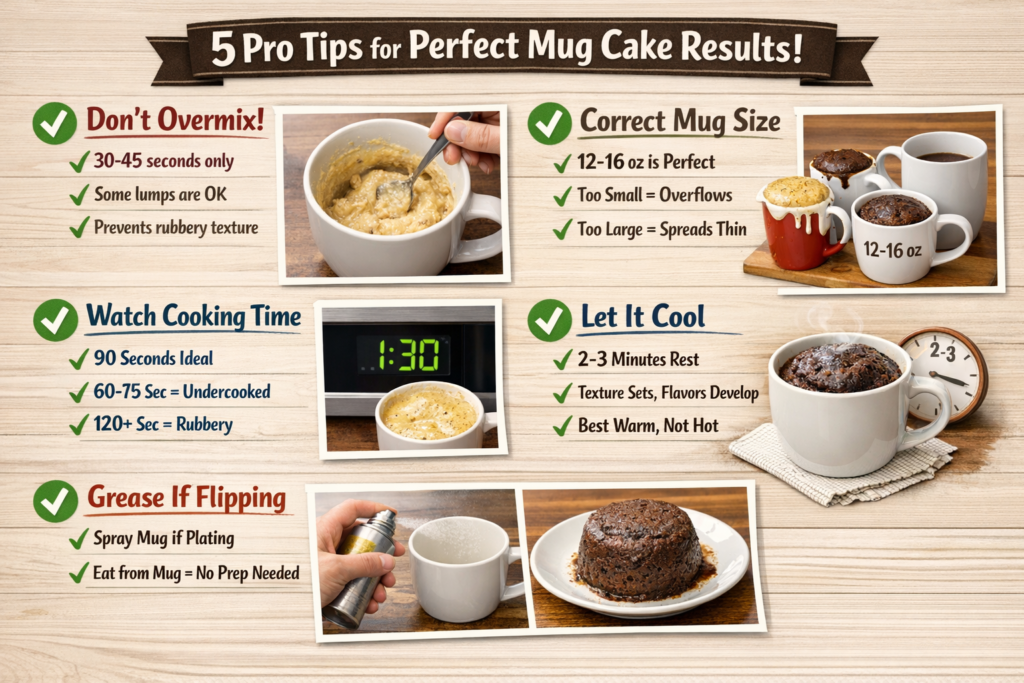
Tip 1: Don’t Overmix
The problem:
- Overmixing develops gluten (if using oat flour)
- Creates tough, rubbery texture
- Cake becomes dense
- Common beginner mistake
The solution:
- Mix just until combined (30-45 seconds)
- Some small lumps okay
- Stop when you don’t see dry flour
- Less mixing = better texture
Tip 2: Use Correct Mug Size
Too small (8-10 oz):
- Batter overflows during cooking
- Makes huge mess
- Uneven cooking
- Disaster
Too large (20+ oz):
- Cake spreads thin
- Doesn’t rise properly
- Dry edges, raw center
- Poor result
Perfect size (12-16 oz):
- Room for rise
- Even cooking
- Good shape
- Optimal choice
Tip 3: Watch Cooking Time Carefully
Undercooked (60-75 seconds):
- Still liquid in center
- Needs more time
- Won’t set properly
- Easy fix: Cook longer
Perfect (90 seconds):
- Moist but cooked through
- Slight jiggle okay
- Sets as it cools
- Target doneness
Overcooked (120+ seconds):
- Dry and rubbery
- Tough texture
- Hard to fix
- Avoid this
Microwave variation:
- All microwaves different
- Start with 90 seconds
- Adjust for your microwave
- Some need 75 seconds, others 105
- Find your microwave’s sweet spot
Tip 4: Let It Cool
Immediate eating:
- Too hot to taste properly
- Can burn mouth
- Texture not set
- Wait 2-3 minutes
After cooling:
- Flavors develop
- Texture firms up
- More cake-like
- Better experience
Don’t wait too long:
- Best eaten warm
- After 10+ minutes, gets dry
- Eat within 5-10 minutes
- Timing matters
Tip 5: Grease Mug If Flipping
Eating from mug:
- No prep needed
- Most convenient
- No cleanup
- Easiest approach
Flipping onto plate:
- Spray mug with cooking spray first
- Or brush with oil
- Cake releases cleanly
- Presentation matters
Troubleshooting Common Problems
Fixing issues when they occur.
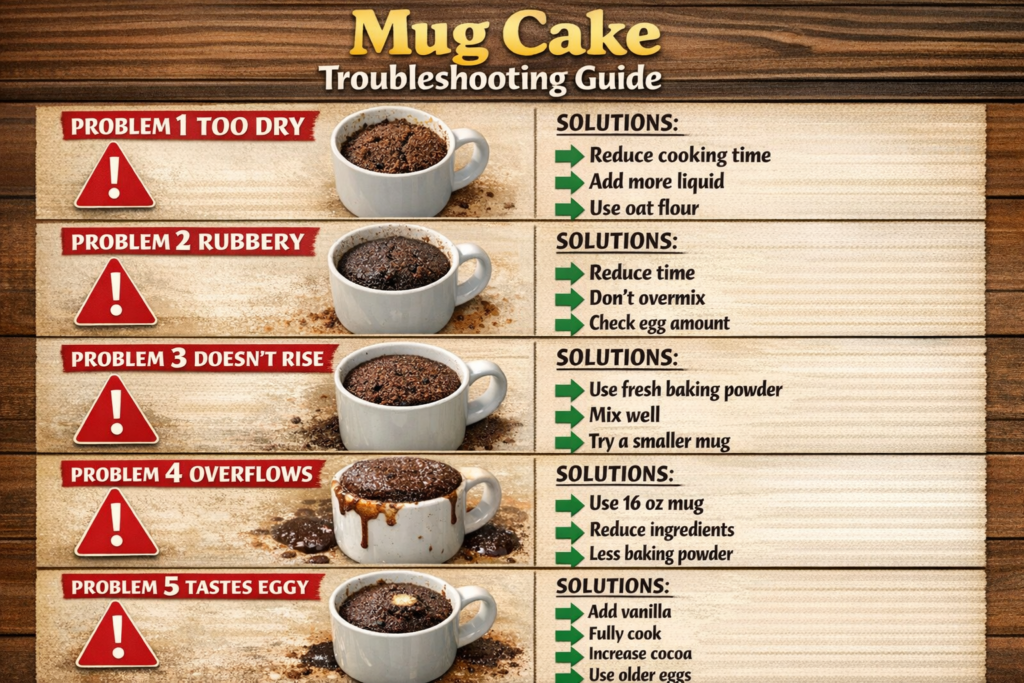
Problem 1: Cake Is Too Dry
Causes:
- Overcooked
- Too much flour
- Not enough liquid
- Coconut flour used without adjustment
Solutions:
- Reduce cooking time by 10-15 seconds
- Add 1 tsp more liquid
- Use oat or almond flour instead
- If using coconut flour, reduce to 1 tbsp
Problem 2: Cake Is Rubbery
Causes:
- Severely overcooked
- Overmixed batter
- Too much egg
Solutions:
- Reduce cooking time
- Mix only until combined
- Ensure using 1 egg, not 2
Problem 3: Cake Doesn’t Rise
Causes:
- Old baking powder
- Not enough baking powder
- Didn’t mix well
- Mug too large
Solutions:
- Use fresh baking powder (check expiration)
- Use full 1/2 tsp baking powder
- Mix more thoroughly
- Use smaller mug (12-14 oz)
Problem 4: Cake Overflows
Causes:
- Mug too small
- Too much batter
- Too much baking powder
Solutions:
- Use 16 oz mug
- Reduce ingredients by 25%
- Reduce baking powder to 1/3 tsp
Problem 5: Cake Tastes Eggy
Causes:
- Fresh eggs sometimes taste stronger
- Undercooked
- Not enough flavoring
Solutions:
- Add 1/2 tsp vanilla extract
- Ensure fully cooked
- Increase cocoa by 1/2 tbsp
- Use older eggs (3-5 days old)
Additional Serving Suggestions
Making it even better.
Topping Ideas
Low carb toppings:
- Sugar-free whipped cream (2g net carbs per 2 tbsp)
- Unsweetened coconut cream
- Sugar-free chocolate sauce
- Fresh berries (3-5 berries, 2-4g carbs)
- Chopped nuts (almonds, pecans)
Protein boost:
- Greek yogurt (adds 5g protein per 2 tbsp)
- Protein frosting (mix protein powder + cream cheese)
Decadent option:
- Sugar-free ice cream
- Adds 5-8g net carbs
- Special occasion treat
Meal Timing
Best times to eat:
Post-workout:
- Sweet craving after training
- Protein version supports recovery
- Satisfies without breaking diet
Dessert:
- After dinner sweet tooth
- Much better than cheating
- Fits macros
Afternoon snack:
- 3-4 PM energy dip
- Satisfying treat
- Keeps diet on track
Late night craving:
- Better than binging on real cake
- Won’t spike blood sugar
- Supports sleep (some find chocolate relaxing)
The Bottom Line: Perfect Low Carb Chocolate Fix
After providing complete recipe and guidance:
The truth about this low carb chocolate mug cake:
✅ Only 8g net carbs per serving (fits keto and low carb diets)
✅ Takes 90 seconds to make (fastest dessert possible)
✅ Tastes like real chocolate cake (not cardboard or weird)
✅ Simple, common ingredients (no exotic items needed)
✅ Highly customizable (many variations possible)
Complete recipe summary:
Ingredients (1 serving):
- 2 tbsp oat flour (or almond/coconut)
- 1 tbsp psyllium husk
- 1 tbsp cocoa powder
- 1-2 tbsp sweetener (erythritol recommended)
- 1/2 tsp baking powder
- 1 egg
- 1 tbsp milk/water
- 1 tbsp coconut oil
Instructions:
- Mix dry ingredients in mug
- Add wet ingredients
- Mix 30-45 seconds
- Microwave 90 seconds
- Cool 2-3 minutes
- Enjoy
Nutrition per serving:
- 220 calories
- 8g net carbs (12g total, 4g fiber)
- 8g protein
- 16g fat
Best practices:
- Use 12-16 oz mug
- Don’t overmix (30-45 seconds)
- Cook exactly 90 seconds (adjust for your microwave)
- Let cool 2-3 minutes
- Eat within 5-10 minutes for best texture
Common variations:
- Double chocolate (add chocolate chips)
- Peanut butter swirl
- Mint chocolate
- Mocha (use coffee instead of milk)
- Cinnamon spice
Flour options:
- Oat flour: Best texture, 8g net carbs
- Almond flour: Good texture, 5g net carbs (use 3 tbsp)
- Coconut flour: Lowest carb, 4g net carbs (use 1 tbsp only)
Sweetener options:
- Erythritol: Best overall
- Monk fruit: Premium choice
- Stevia: Use sparingly
- Combination: Recommended
Troubleshooting:
- Too dry: Reduce cooking time, add liquid
- Rubbery: Don’t overcook or overmix
- Doesn’t rise: Check baking powder freshness
- Overflows: Use larger mug
- Tastes eggy: Add vanilla, increase cocoa
THIS 90-SECOND LOW CARB CHOCOLATE MUG CAKE SATISFIES SWEET CRAVINGS. ONLY 8G NET CARBS. TASTES AMAZING. SUPPORTS DIET ADHERENCE.
Ready to build a complete low carb or keto nutrition plan with delicious recipes, strategic meal timing, macro calculations, and sustainable strategies that deliver results without feeling deprived or craving sweets constantly? This mug cake recipe is just one tool for diet adherence. Get a comprehensive guide to calculating exact macro needs for low carb dieting, building complete meal plans with variety you’ll enjoy, timing nutrition for optimal fat loss and muscle maintenance, and achieving your goals with proven strategies. Stop struggling with cravings. Start following a system that makes low carb easy and sustainable.




Leave a Reply
You must be logged in to post a comment.