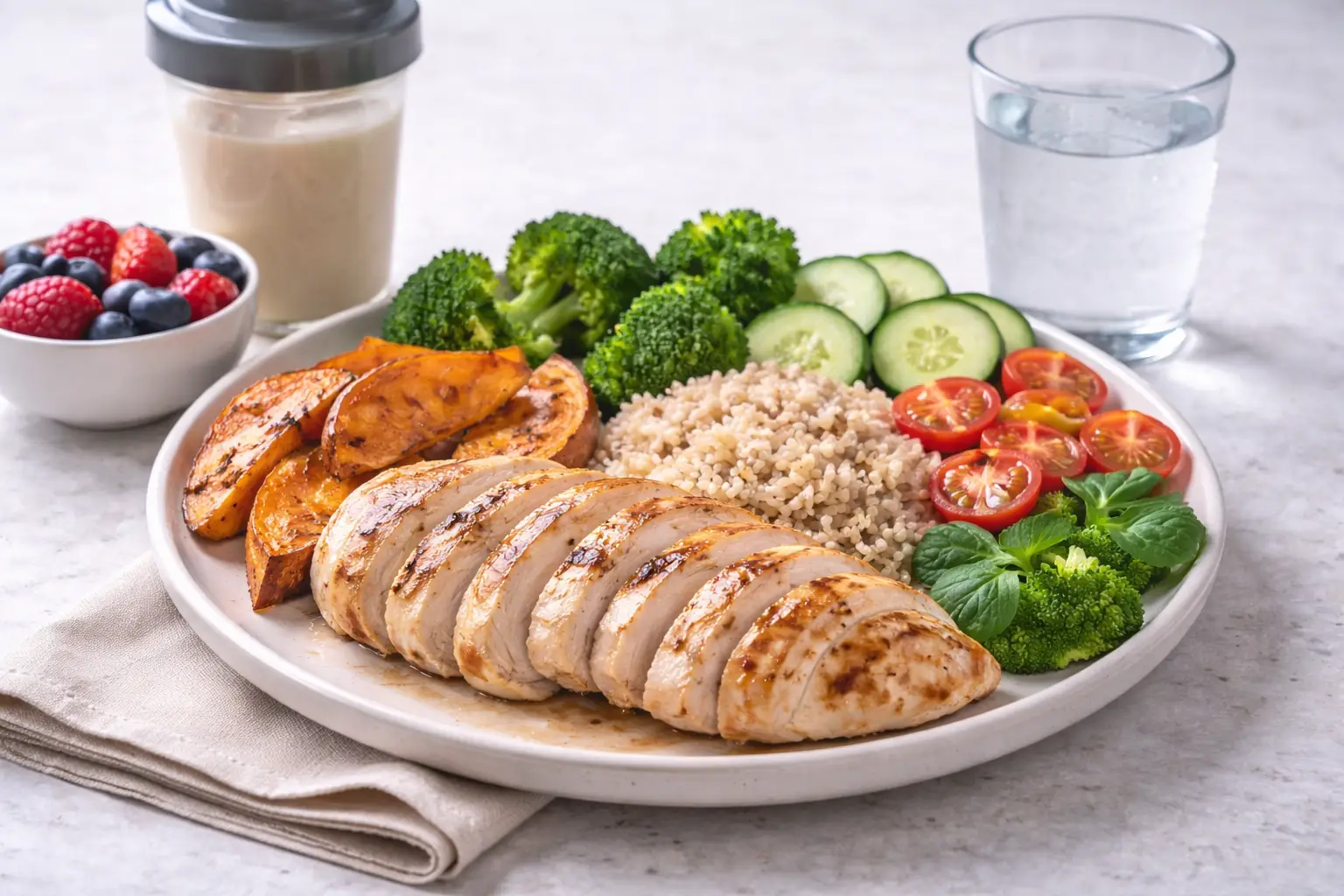
Your workout doesn’t end when you rack the weights. What you eat in the hours after training could be the difference between explosive muscle growth and wasted effort.
Here’s a reality check: most people obsess over their training program but completely botch their post-workout nutrition.
They finish an intense leg workout, then grab whatever’s convenient maybe nothing at all and wonder why their muscles aren’t growing despite crushing it in the gym.
Your body handles nutrients differently depending on its current state. What you eat before, during, and especially after training significantly influences your results.
By consuming the right foods after your workout, you can accelerate progress by providing your body with the raw materials it needs to:
- Replenish depleted glycogen stores (restore energy reserves)
- Minimize muscle protein breakdown (prevent muscle loss)
- Maximize muscle protein synthesis (kickstart recovery and growth)
In this comprehensive guide, I’ll show you exactly what to eat post-workout, when to eat it, and why it matters for building muscle.
Let’s turn your post-workout window into a muscle-building opportunity.
Why Post-Workout Nutrition Is Critical
Here’s something most people don’t understand: your muscles don’t grow during training.
Training is simply the stimulus the signal your body needs to trigger numerous processes that eventually lead to muscle growth.
But immediately after training, your body is actually in a catabolic state, more prone to losing muscle than building it.
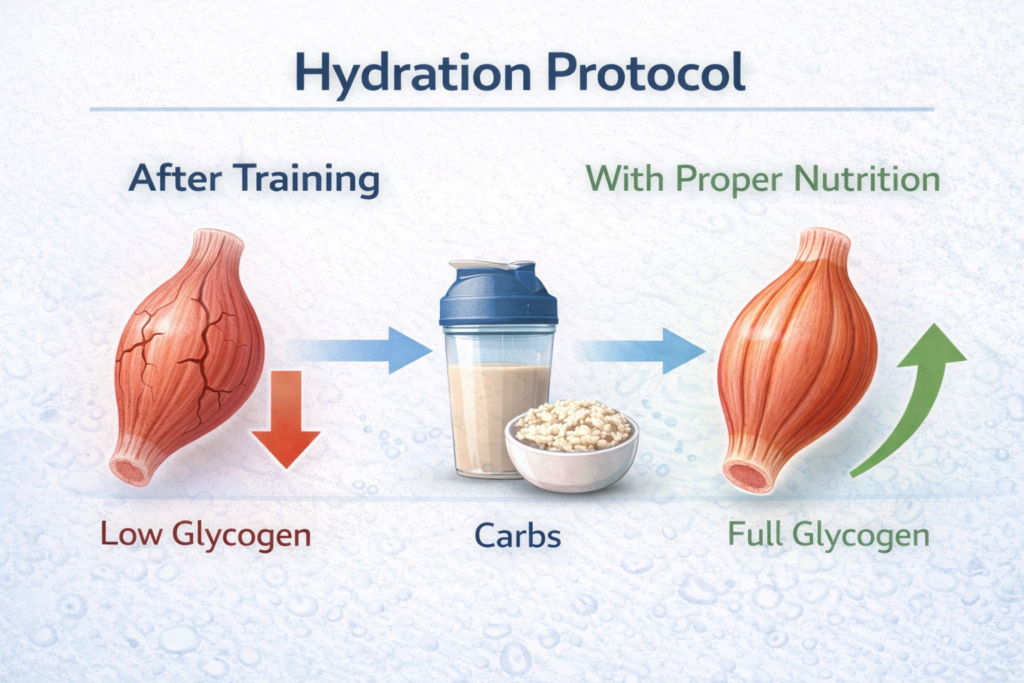
Here’s what happens during intense training:
- Your body burns through stored glycogen (muscle energy) to fuel your workout
- Your muscle fibers experience microscopic damage from the mechanical stress
- Muscle protein breakdown exceeds muscle protein synthesis
- Stress hormones like cortisol remain elevated
- Your body is depleted and in need of recovery
After training, your body attempts to:
- Restore depleted glycogen reserves
- Repair damaged muscle tissue
- Reduce inflammation
- Return to homeostasis (normal functioning)
The critical problem: If you don’t provide the nutrients your body needs for these processes, it will cannibalize your own muscle tissue to complete the recovery work.
Remember this principle: Your body always prioritizes survival and basic functioning over muscle building. Only when all essential systems are properly fueled can your body focus on hypertrophy.
This is why proper post-workout nutrition is absolutely essential.
Which brings us to the question everyone wants answered…
What Should You Eat After Training?
As we’ve established, post-training nutrition needs to accomplish two primary goals: replenish energy and prevent muscle loss while supporting growth.
To achieve this, you need two key macronutrients:
- Protein
- Carbohydrates
Let me break down the specific role each plays in your recovery and growth.
The Muscle-Building Role of Protein
Protein or more specifically, the amino acids that comprise protein serves as the building blocks your body uses to repair damaged muscle tissue and construct new muscle proteins.
Research-backed benefits of post-workout protein:
Stimulates Muscle Protein Synthesis (MPS): Amino acids from protein trigger the cellular machinery responsible for building new muscle proteins. This is the primary mechanism driving muscle growth.
Reduces Muscle Protein Breakdown: Training elevates protein breakdown. Post-workout protein intake shifts your body from a net catabolic state to a net anabolic state.
Provides Essential Amino Acids: Your body cannot produce nine essential amino acids on its own. You must get them from food, especially leucine the primary trigger for MPS.
Supports Recovery: Faster recovery means you can train again sooner and more effectively, leading to better long-term progress.
How Much Protein Do You Need Post-Workout?
Multiple studies examining post-exercise protein intake suggest that 20-40 grams of complete protein is sufficient to maximize muscle protein synthesis.
Why this range?
- Smaller individuals (120-160 lbs): 20-30g is adequate
- Larger individuals (180-220+ lbs): 30-40g is optimal
- More protein than this doesn’t provide additional benefit (your body can only process so much at once)
What is “complete protein”?
Complete proteins contain all nine essential amino acids your body needs but cannot produce. Most animal-based proteins are complete, while most plant proteins are incomplete (with some exceptions).
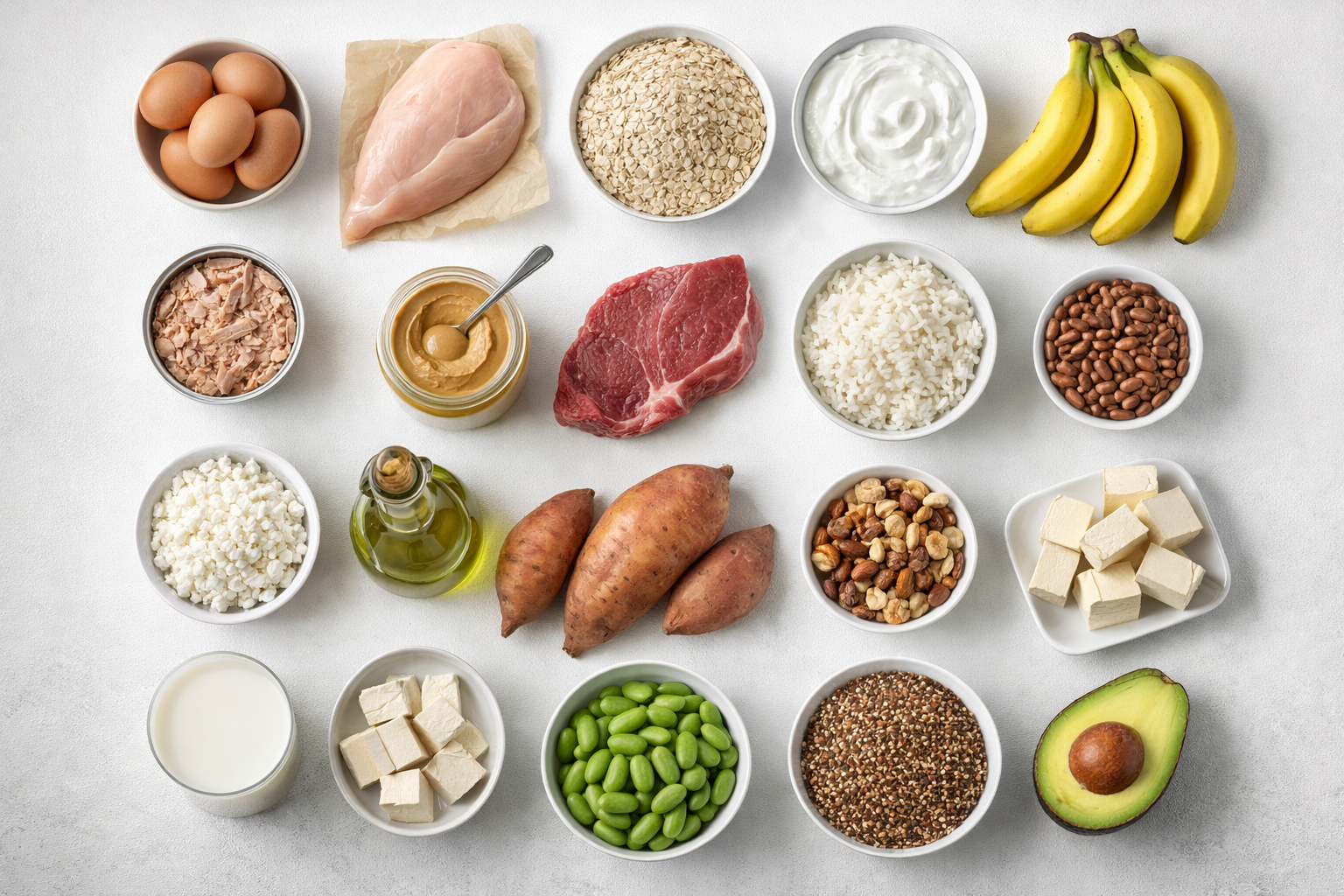
Best Post-Workout Protein Sources
Animal-Based Proteins (Complete):
- Chicken breast
- Lean beef
- Whole eggs (yolks and whites)
- Canned tuna or salmon
- Cottage cheese
- Greek yogurt
- Whey protein powder
- Casein protein powder
- Turkey breast
- Tilapia or other fish
- Milk
Plant-Based Complete Proteins:
- Soy products (tofu, tempeh, edamame)
- Quinoa
- Hemp seeds
- Protein powder (pea, rice, hemp blend)
Incomplete plant proteins can be combined (rice and beans, for example) to create complete protein profiles, but this complicates post-workout nutrition unnecessarily.
The Energy-Restoring Role of Carbohydrates
During intense training, your body depletes a significant portion of its glycogen reserves the stored form of carbohydrates in your muscles and liver.
The best way to replenish these stores quickly is through carbohydrate consumption immediately after training.
Additional benefits of post-workout carbs:
Enhanced Protein Synthesis: The insulin spike caused by carbohydrate intake supports muscle protein synthesis when combined with protein.
Glycogen Supercompensation: Post-workout is when your muscles are most receptive to storing glycogen, even more so than normal.
Reduced Cortisol: Carbohydrates help lower the stress hormone cortisol that remains elevated after training.
Improved Recovery: Restored energy reserves mean better performance in your next workout.
How Many Carbs Do You Need Post-Workout?
Research suggests consuming carbohydrates at a 2:1 or 3:1 ratio to protein for optimal glycogen replenishment.
Practical application:
- If consuming 20g protein: eat 40-60g carbs
- If consuming 30g protein: eat 60-90g carbs
- If consuming 40g protein: eat 80-120g carbs
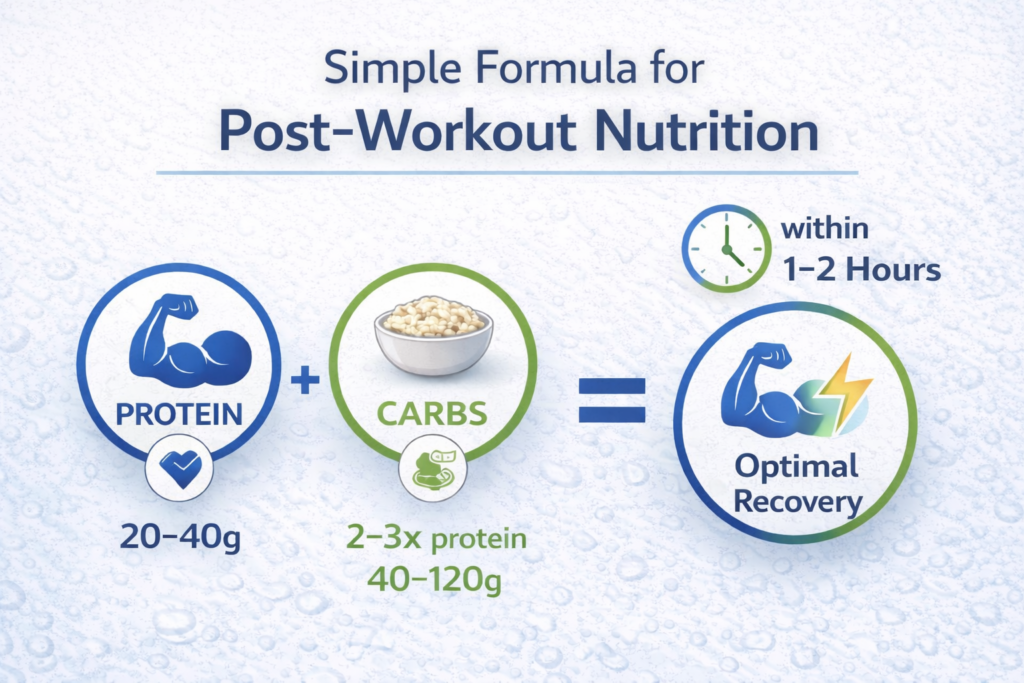
Why this ratio matters: It ensures your body actually uses the carbohydrates for energy restoration rather than converting protein to glucose (an inefficient process that wastes amino acids).
Best Post-Workout Carbohydrate Sources
Fast-Digesting Options (Ideal immediately post-workout):
- White rice
- White potatoes
- White bread or bagels
- Rice cakes
- Bananas
- Honey
- Dextrose (pure glucose)
- Maltodextrin
- Dried fruit
- Fruit juice
Moderate-Digesting Options (Good 1-2 hours post-workout):
- Brown rice
- Sweet potatoes
- Oatmeal
- Whole grain bread or pasta
- Fresh fruits
Why fast-digesting? After training, you want nutrients available quickly. Fast-digesting carbs spike insulin and shuttle nutrients into muscle cells efficiently.
What About Fats Post-Workout?
The short answer: Fats aren’t critical post-workout, but they won’t hurt your gains either.
The common concern: Many people avoid fats after training because fat slows digestion and nutrient absorption.
The reality: While this is true, slowing nutrient delivery slightly doesn’t negate the benefits of post-workout nutrition. Your anabolic window is much wider than once believed (more on this soon).
Practical recommendation: Don’t stress about trace fats in your protein source (like whole eggs or salmon), but prioritize protein and carbs over adding extra fats. Keep post-workout fats minimal under 10-15g is fine.
The Anabolic Window: Separating Myth from Reality
You’ve probably heard about the “anabolic window” or “window of opportunity” the period after training when muscles are supposedly hypersensitive to nutrients.
The traditional belief: This window opens immediately after training and closes rapidly. You must consume protein and carbs within 30-60 minutes or risk losing muscle and missing out on gains.
What the science actually shows: The truth is more nuanced and far less stressful.
The Real Timeline
Your body’s enhanced ability to absorb nutrients and synthesize protein remains elevated for 24-48 hours after training, not just 30 minutes.
However, the sooner you consume nutrients, the faster you can:
- Stop net muscle protein breakdown
- Initiate recovery processes
- Begin glycogen restoration
- Reduce cortisol and inflammation
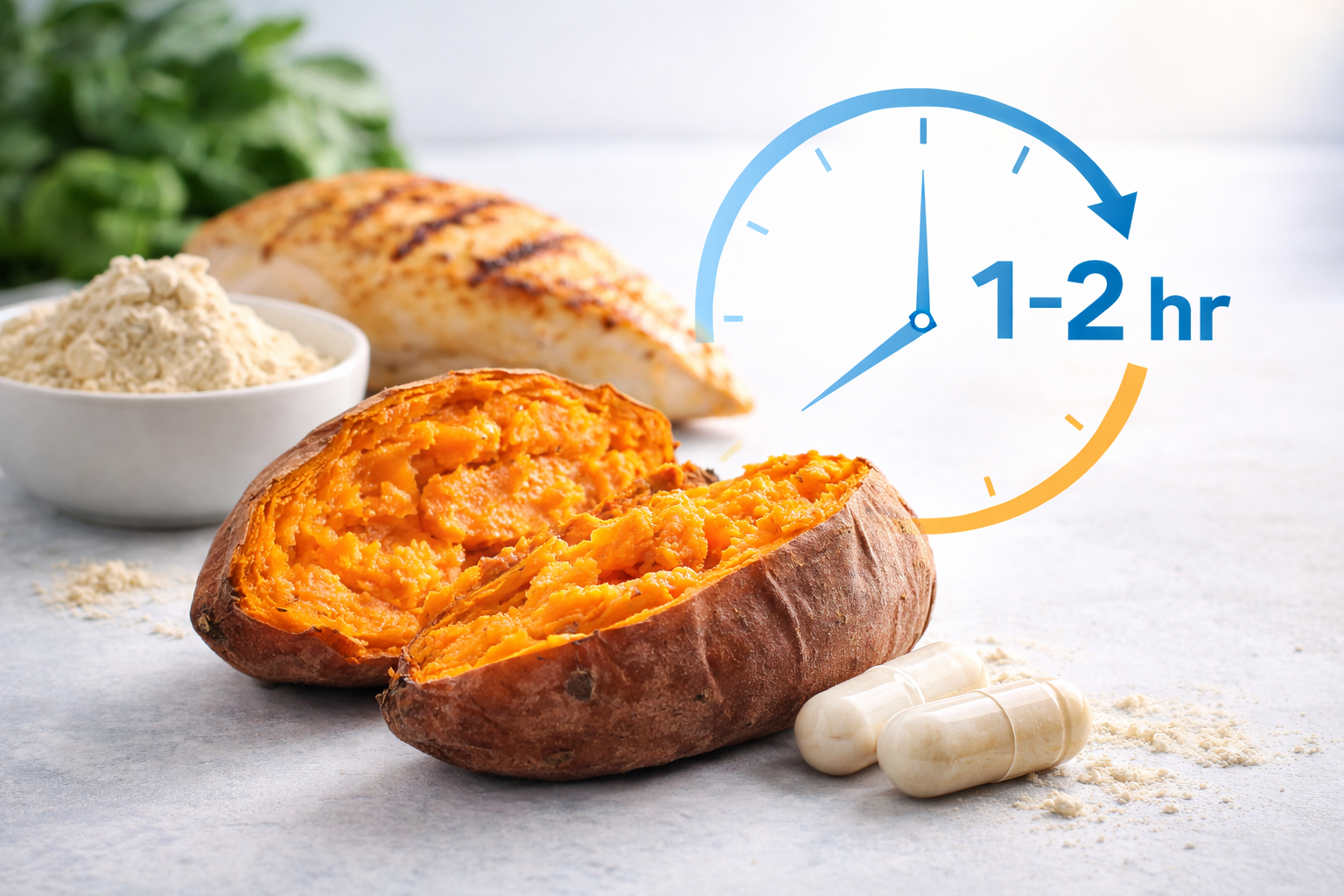
The practical sweet spot: Consume a post-workout meal within 2 hours of finishing training.
The Pre-Workout Factor
Here’s an important consideration most people ignore: what you ate before training significantly affects the urgency of post-workout nutrition.
If you ate a substantial meal 1-2 hours pre-workout:
- Amino acids and glucose are still circulating in your bloodstream
- The “anabolic window” is less critical
- You have more flexibility with post-workout timing (2-3 hours is fine)
If you trained fasted or haven’t eaten in 4+ hours:
- Your body is more depleted
- Post-workout nutrition becomes more urgent
- Try to eat within 30-60 minutes
Bottom line: Don’t stress about rushing to eat the second you finish your last set. Train, shower, drive home, and eat a proper meal within a couple hours. You’re not missing gains.
Post-Workout Shakes: Convenient But Not Mandatory
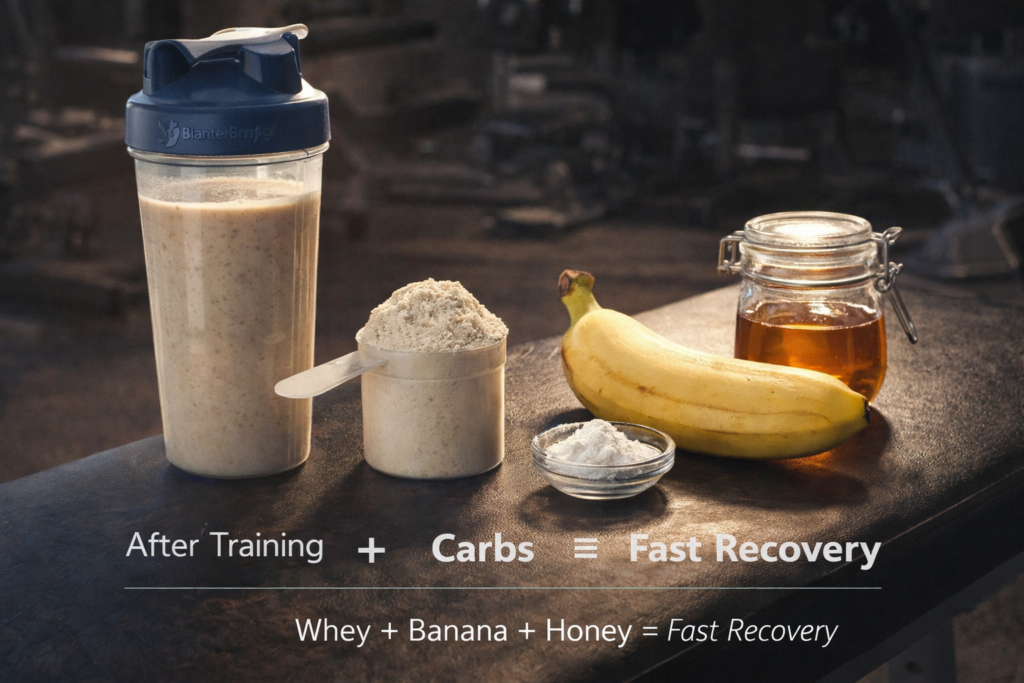
One of the most common post-workout nutrition strategies is consuming a protein shake, often combined with fast-digesting carbs.
Why shakes are popular:
1. Convenience: Mix powder with water, drink, done. Takes 2 minutes.
2. Fast digestion: Liquid nutrition is absorbed more quickly than solid food.
3. Portability: Easy to bring to the gym or keep at work.
4. Consistent macros: You know exactly what you’re getting every time.
5. No appetite required: Many people aren’t hungry immediately post-workout; liquid calories are easier to consume.
The Classic Post-Workout Shake Formula
Basic version:
- 1-2 scoops whey protein (25-50g protein)
- 1-2 bananas or 40-80g fast carbs
- Water or milk
Macros: 25-50g protein, 40-100g carbs
Enhanced version:
- 1-2 scoops whey protein
- 1-2 tablespoons dextrose or maltodextrin
- 1 banana
- 1 tablespoon honey
- Optional: creatine, berries, spinach
The “Whey and Dextrose” Myth
Let’s address a common misconception: “You MUST consume whey protein and simple carbs immediately post-workout or you’ll lose muscle.”
The truth: While a whey and dextrose shake certainly prevents catabolism and supports recovery, you won’t see dramatically different results compared to eating a balanced whole-food meal within an hour or two.
Where this idea came from: The supplement industry heavily promoted the urgent need for immediate post-workout supplementation to sell more products. While the science isn’t entirely wrong, it’s been exaggerated.
The real advantage of whey and fast carbs: Convenience, not magic.
Within minutes, you have a highly nutritious liquid meal that’s easy to consume and digest. For many people, this beats trying to cook chicken and rice in the gym parking lot.
Whole Food Post-Workout Meals
If you can’t or don’t want to use shakes, no problem. Whole food meals work just as well.
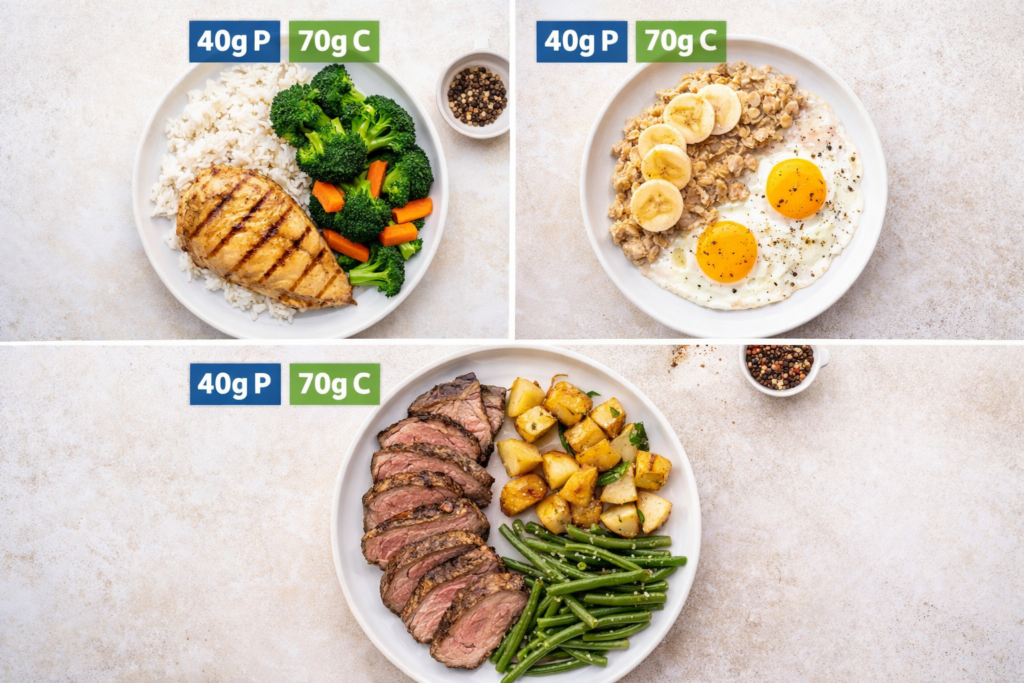
Solid food post-workout meal examples:
Meal 1: Classic Bodybuilder Plate
- 6 oz grilled chicken breast
- 1-1.5 cups white rice
- Steamed vegetables
Macros: ~40g protein, 70g carbs
Meal 2: Quick and Easy
- 2 whole eggs + 4 egg whites (scrambled)
- 2 cups plain oatmeal
- 1 banana
- Drizzle of honey
Macros: ~35g protein, 90g carbs
Meal 3: Sandwich Solution
- 2 slices whole grain bread
- 6 oz turkey or chicken breast
- Lettuce, tomato, mustard
- 1 apple
- 1 cup Greek yogurt
Macros: ~45g protein, 80g carbs
Meal 4: Breakfast Anytime
- 3-egg omelet with vegetables
- 2 pieces of toast with jam
- 1 cup orange juice
Macros: ~25g protein, 70g carbs
Meal 5: Lean Beef Option
- 6 oz lean ground beef (93/7)
- 1.5 cups white rice
- Black beans
- Salsa
Macros: ~40g protein, 85g carbs
Meal 6: Fish and Potatoes
- 8 oz tilapia or cod
- 12 oz white potatoes
- Green beans
Macros: ~45g protein, 60g carbs
Mixed Approach (Best of Both Worlds)
Many people use a hybrid strategy:
Immediately post-workout (in the gym):
- Protein shake with banana (convenient, fast)
1-2 hours later at home:
- Complete whole food meal
This approach provides immediate nutrients while ensuring you get micronutrients and satiety from whole foods later.
Advanced Post-Workout Nutrition Strategies
Once you’ve mastered the basics, consider these evidence-based optimizations:
Add Creatine to Your Post-Workout
Dosage: 5g
While creatine timing isn’t critical, post-workout is an excellent time to take it because:
- Insulin from carbs may enhance creatine uptake
- It’s an easy habit to build into your routine
- Combines multiple supplements into one shake
Consider Fast-Acting Carbs for Specific Goals
For muscle gain (bulking): Use faster carbs like dextrose, maltodextrin, or white rice to maximize insulin response and glycogen replenishment.
For fat loss (cutting): Moderate carbs and focus more on protein. You still need carbs post-workout, just at the lower end of the range (40-60g).
Leucine Optimization
Leucine is the primary amino acid trigger for muscle protein synthesis.
Optimal leucine per meal: 2.5-3g
Most protein sources naturally provide this, but you can also:
- Add 5g BCAAs to your shake (50% is leucine = 2.5g)
- Use a leucine supplement (less common)
- Choose high-leucine proteins (whey, chicken, beef, fish)
Electrolyte Replenishment
If you sweat heavily during training, consider adding electrolytes to your post-workout shake or water:
- Sodium: 300-500mg
- Potassium: 200-400mg
- Magnesium: 100-200mg
This supports hydration, reduces cramping, and improves recovery.
Common Post-Workout Nutrition Mistakes
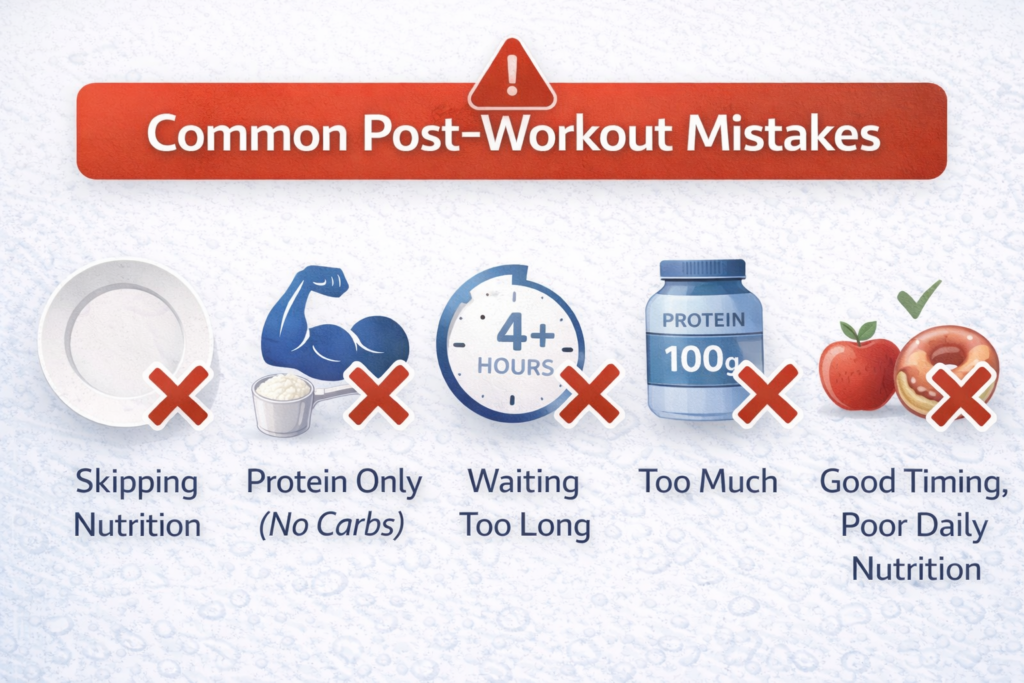
Even with good intentions, people make predictable errors. Here’s what to avoid:
Mistake 1: Skipping Post-Workout Nutrition Entirely
The problem: Some people train hard then don’t eat for 3-4 hours, either because they’re not hungry, too busy, or following misguided fasting protocols.
The consequence: Extended catabolism, slower recovery, reduced muscle growth over time.
The fix: Even if you’re not hungry, consume at least a protein shake. Your appetite isn’t a reliable indicator of your body’s needs post-workout.
Mistake 2: Only Consuming Protein
The problem: “I’ll just drink a protein shake without carbs to stay lean.”
The consequence: Suboptimal glycogen replenishment, your body may convert protein to glucose (wasting amino acids), and reduced insulin response that would otherwise support muscle protein synthesis.
The fix: Always include carbs with your post-workout protein, even when cutting (just use the lower end of the range).
Mistake 3: Waiting Too Long
The problem: “The anabolic window is a myth, so timing doesn’t matter at all.”
The consequence: While you won’t lose muscle by eating 3 hours later instead of 1 hour, you are slowing your recovery unnecessarily.
The fix: Aim for that 1-2 hour window as a reasonable goal. It’s not life or death, but it is optimal.
Mistake 4: Excessive Protein
The problem: “More is better, so I’ll have 100g of protein post-workout.”
The consequence: Your body can only use about 20-40g of protein effectively at once for muscle protein synthesis. The excess is simply oxidized for energy or converted to glucose a waste of expensive protein.
The fix: Stick to 20-40g based on your body size. Save extra protein for other meals throughout the day.
Mistake 5: Neglecting Total Daily Nutrition
This is perhaps the biggest mistake: obsessing over post-workout nutrition while ignoring overall daily intake.
The reality check: Post-workout nutrition is just one piece of the puzzle. If your total daily protein, calories, and macros are wrong, perfect post-workout timing won’t save you.
The hierarchy:
- Total daily calories (surplus for muscle gain, deficit for fat loss)
- Total daily protein (0.7-1g per pound body weight)
- Total daily carbs and fats
- Pre-workout nutrition
- Post-workout nutrition
- Meal timing and frequency
Bottom line: Get your total daily nutrition right first, then optimize the details.
Post-Workout Nutrition for Different Goals
Your post-workout strategy should align with your primary objective:
For Maximum Muscle Growth (Bulking)
Protein: 30-40g Carbs: 80-120g Timing: Within 60-90 minutes
Sample meal:
- 2 scoops whey protein
- 80g dextrose or maltodextrin
- 1 banana
- 5g creatine
Or:
- 8 oz chicken
- 2 cups white rice
- Vegetables
For Fat Loss While Preserving Muscle (Cutting)
Protein: 30-40g (higher to preserve muscle) Carbs: 40-60g (moderate to replenish glycogen without excess) Timing: Within 1-2 hours
Sample meal:
- 1.5 scoops whey protein
- 1 banana
- 5g creatine
Or:
- 6 oz fish
- 1 cup rice
- Large salad
For Maintenance or Recomposition
Protein: 25-35g Carbs: 50-80g Timing: Within 1-2 hours
Sample meal:
- 1 scoop whey
- 1 cup oatmeal
- Berries
Or:
- 3-egg omelet
- 2 pieces toast
- Fruit
The Complete Post-Workout Checklist
To maximize your results, follow this simple checklist after every training session:
✅ Consume 20-40g complete protein (based on body size)
✅ Include 40-120g carbohydrates (2-3× your protein amount)
✅ Eat within 1-2 hours of finishing training
✅ Keep fats minimal (under 15g) to prioritize protein and carbs
✅ Hydrate adequately (16-20 oz water minimum)
✅ Consider creatine (5g) if supplementing
✅ Choose convenience that works for you (shake vs. whole food)
✅ Don’t stress perfection (consistency beats optimization)
The Bottom Line: Recovery Is Where Growth Happens
Post-workout nutrition is crucial for replenishing glycogen, minimizing muscle breakdown, and maximizing muscle protein synthesis.
The key takeaways:
✓ Protein and carbs are both essential post-workout don’t skip either one
✓ 20-40g protein and 40-120g carbs covers most people’s needs
✓ The anabolic window is real but not urgent aim for 1-2 hours, not 30 minutes
✓ Shakes are convenient, not mandatory whole foods work just as well
✓ Total daily nutrition matters more than perfect post-workout timing
✓ Consistency is king eating well after every workout beats perfect nutrition occasionally
Your Action Plan
Starting with your next workout:
- Plan your post-workout meal in advance know what you’ll eat before you train
- Prep if necessary pack a shake or have food ready at home
- Eat within 2 hours set a phone reminder if needed
- Track your recovery notice if you feel better and recover faster
- Adjust based on results if something isn’t working, modify your approach
Remember: you don’t grow during training, you grow during recovery.
Your post-workout meal is the first and most important step in that recovery process. Don’t waste your hard work in the gym by neglecting what happens after you leave.
Ready to maximize your muscle growth? Now you know exactly what to eat, when to eat it, and why it matters. The only question is: will you implement it consistently?
Want a complete nutrition and training system that eliminates all the guesswork around meals, timing, and optimization? Stop piecing together random information and get a proven blueprint that shows you exactly what to eat before training, after training, and throughout the day for maximum muscle growth. Your transformation depends on getting the details right make it simple, effective, and sustainable.

Leave a Reply
You must be logged in to post a comment.