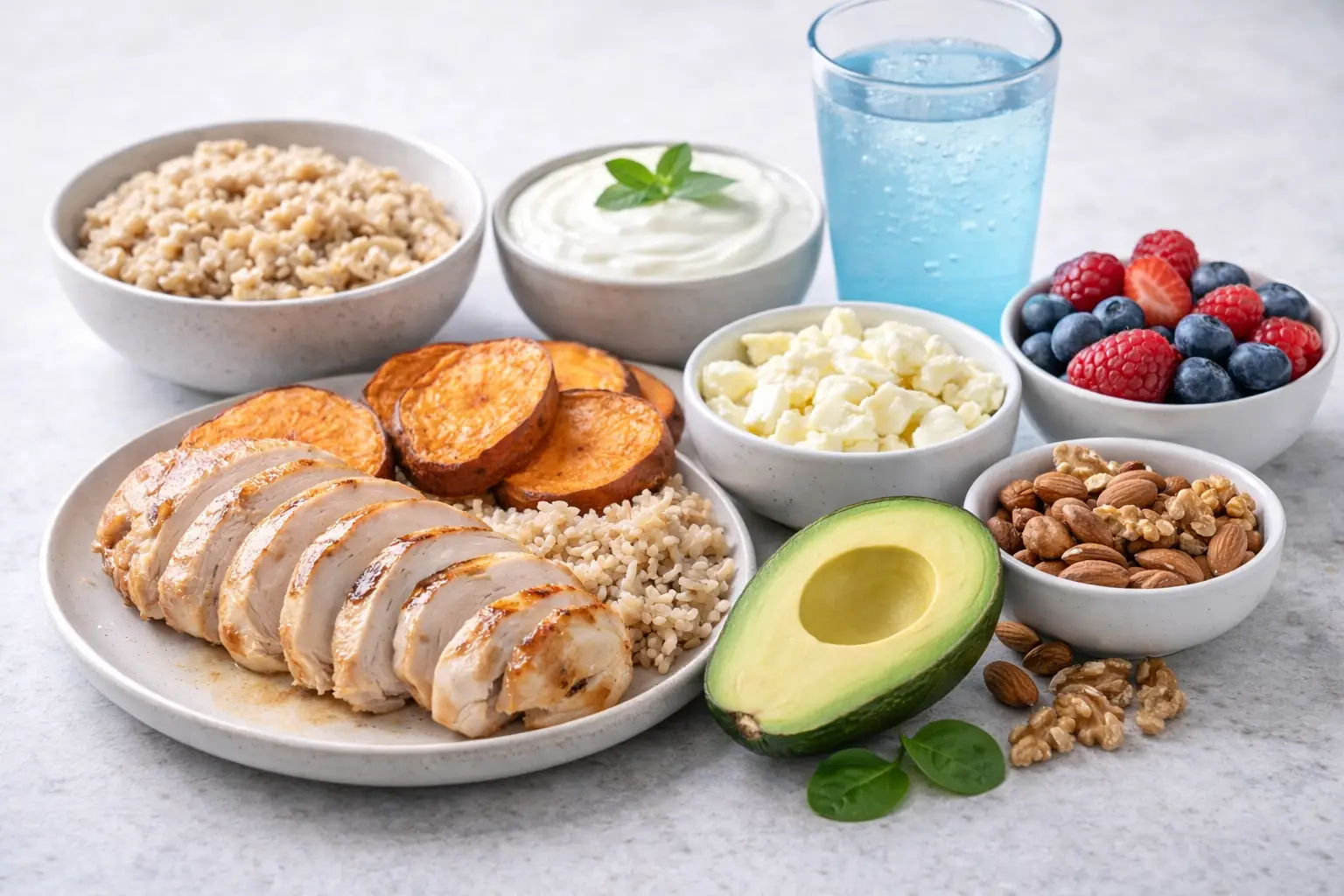
Want to maximize every single rep in the gym? Your pre-workout meal could be the difference between average gains and explosive muscle growth.
Think about it: would you try to drive a sports car across the country on an empty gas tank? Of course not.
Yet countless gym-goers show up to train without properly fueling their bodies, then wonder why their workouts feel sluggish and their gains stall.
Your pre-workout nutrition is like premium fuel for a high-performance engine. Get it right, and you’ll unlock levels of energy, strength, and muscle growth you didn’t know were possible.
In this comprehensive guide, I’ll show you exactly what to eat before training, when to eat it, and how much you need to maximize performance while accelerating muscle growth.
Let’s turn your body into a muscle-building machine.
TABLE OF CONTENTS
What Should You Eat Before Working Out?
To ensure maximum energy output and create an anabolic environment for muscle growth, you need a pre-workout meal containing primarily protein and carbohydrates.
Let me break down why each macronutrient matters and how they work together to fuel your best workouts.
The Critical Role of Carbohydrates Pre-Workout
For high-intensity, short-duration activities like heavy resistance training, your body relies primarily on glycogen as its fuel source.
Glycogen is essentially stored carbohydrates in your muscles and liver. When you lift weights, your body breaks down glycogen to produce ATP (adenosine triphosphate) the energy currency your muscles need to contract.
Here’s the problem: Your body can’t create glycogen instantly. It takes time to convert dietary carbohydrates into stored glycogen.
This is why timing matters. If you show up to the gym with depleted glycogen stores and try to eat carbs 10 minutes before your workout, your body simply won’t have time to process and store that fuel. Your performance will suffer dramatically.
What happens when glycogen is low?
- Reduced training intensity
- Earlier onset of fatigue
- Compromised strength output
- Inability to complete planned volume
- Suboptimal muscle-building stimulus
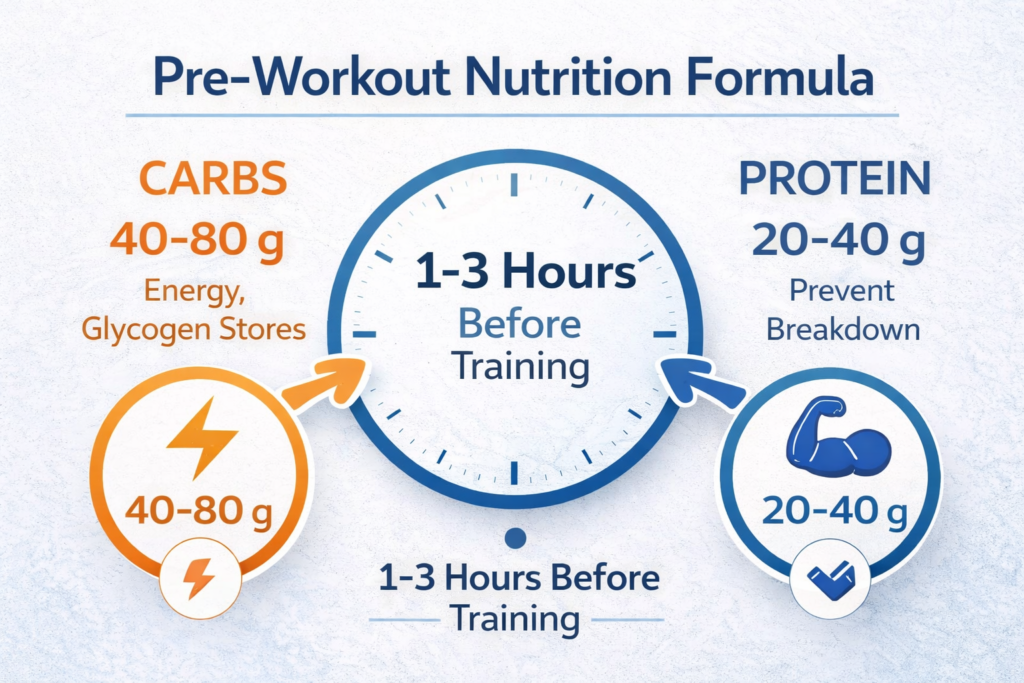
The solution: Consume adequate carbohydrates 1-3 hours before training to ensure your glycogen tanks are full when you walk into the gym.
The Muscle-Building Power of Pre-Workout Protein
Multiple research studies have demonstrated the critical importance of consuming protein before resistance training.
Pre-workout protein provides several key benefits:
1. Elevated Muscle Protein Synthesis (MPS) Protein intake before training significantly increases the rate at which your body builds new muscle proteins. This elevated MPS continues during and after your workout, creating a prolonged anabolic environment.
2. Reduced Muscle Protein Breakdown Training in a fasted state or without adequate amino acids circulating in your bloodstream can lead to muscle tissue breakdown. Pre-workout protein provides amino acids that prevent this catabolic process.
3. Enhanced Recovery Initiation You’re not just preparing for the workout you’re already jumpstarting the recovery process. Amino acids from your pre-workout meal begin repairing muscle damage while you’re still training.
4. Improved Strength and Performance Studies show that protein consumed before training can improve strength output and overall workout performance compared to training fasted.
The combined effect: When you consume protein before training, you create an optimal hormonal and metabolic environment where muscle protein synthesis is elevated, breakdown is minimized, and your body is primed for growth.
What About Fats Before Training?
If you’re following a traditional balanced diet containing all three macronutrients (carbs, protein, and fats), dietary fat is largely unnecessary immediately pre-workout.
Here’s why:
The glycogen from carbohydrates and amino acids from protein are all you need to fuel intense training and maximize the anabolic response.
Fats don’t play a significant role during resistance training because:
- They’re not the primary fuel source for high-intensity exercise
- Your body can’t quickly access fat for immediate energy during heavy lifting
- Fat oxidation is too slow to support the rapid energy demands of resistance training
Additional downsides of high-fat pre-workout meals:
- Slows digestion and nutrient absorption
- Can cause bloating or heaviness
- May lead to digestive discomfort during training
- Delays the availability of carbs and protein when you need them most
Bottom line: Keep pre-workout fats minimal. Save your dietary fats for meals further away from training.
How Much Should You Eat Pre-Workout?
After understanding what and when to eat, the natural question is: how much?
Unfortunately, there’s no universal answer because individual needs vary based on:
- Body weight and composition
- Training intensity and volume
- Metabolic rate
- Personal digestion speed
- Experience level
A 120-pound beginner doesn’t need the same fuel as a 220-pound advanced lifter.
However, here’s a practical starting point that works for most people:
General Pre-Workout Nutrition Guidelines
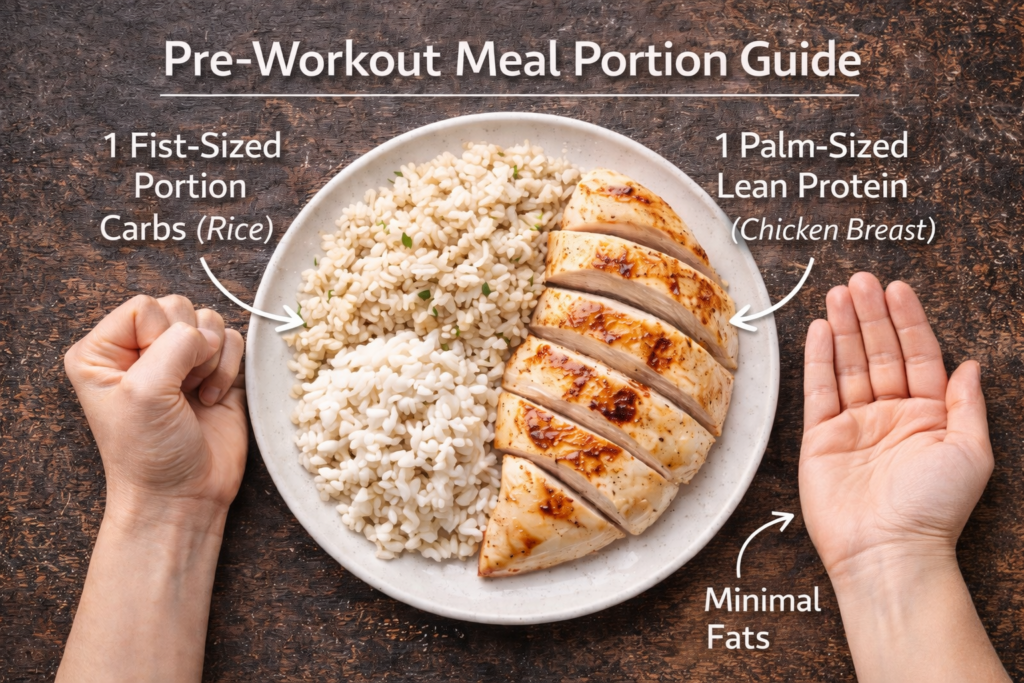
Protein: 20-40 grams
- Smaller individuals or those closer to training: aim for 20-25g
- Larger individuals or those eating further from training: aim for 30-40g
Carbohydrates: 40-80 grams
- Lower end (40-50g) if eating closer to training or cutting calories
- Higher end (60-80g) if eating 2-3 hours pre-workout or bulking
Why these ranges work:
This combination provides enough amino acids to elevate MPS and prevent breakdown, while supplying sufficient glycogen to fuel 60-90 minutes of intense resistance training.
For most natural lifters focused on muscle growth (not elite 240-pound bodybuilders with single-digit body fat), these amounts hit the sweet spot between being adequate and being excessive.
Adjust Based on Timing
2-3 hours before training: Use the higher end of these ranges. Your body has time to digest and absorb everything.
60-90 minutes before training: Use the middle of these ranges. You want adequate fuel without digestive discomfort.
30-45 minutes before training: Use the lower end or switch to easily digestible options (more on this next).
Pre-Workout Meal Timing: When Should You Eat?
The timing of your pre-workout meal is just as important as what you eat.
The golden rule: Eat 1-3 hours before training for optimal results.
This window allows your body to:
- Digest the food properly
- Absorb nutrients into your bloodstream
- Elevate circulating amino acids
- Top off muscle glycogen stores
- Avoid training with a full, uncomfortable stomach
Timing Strategies Based on Your Schedule
Best case scenario (2-3 hours pre-workout): You have time for a complete meal with solid food. This is ideal because:
- Maximum nutrient absorption
- Full glycogen replenishment
- Elevated amino acid availability
- Zero digestive discomfort during training
Moderate timing (1-2 hours pre-workout): You can still eat solid food, but keep portions moderate and avoid foods that sit heavy in your stomach.
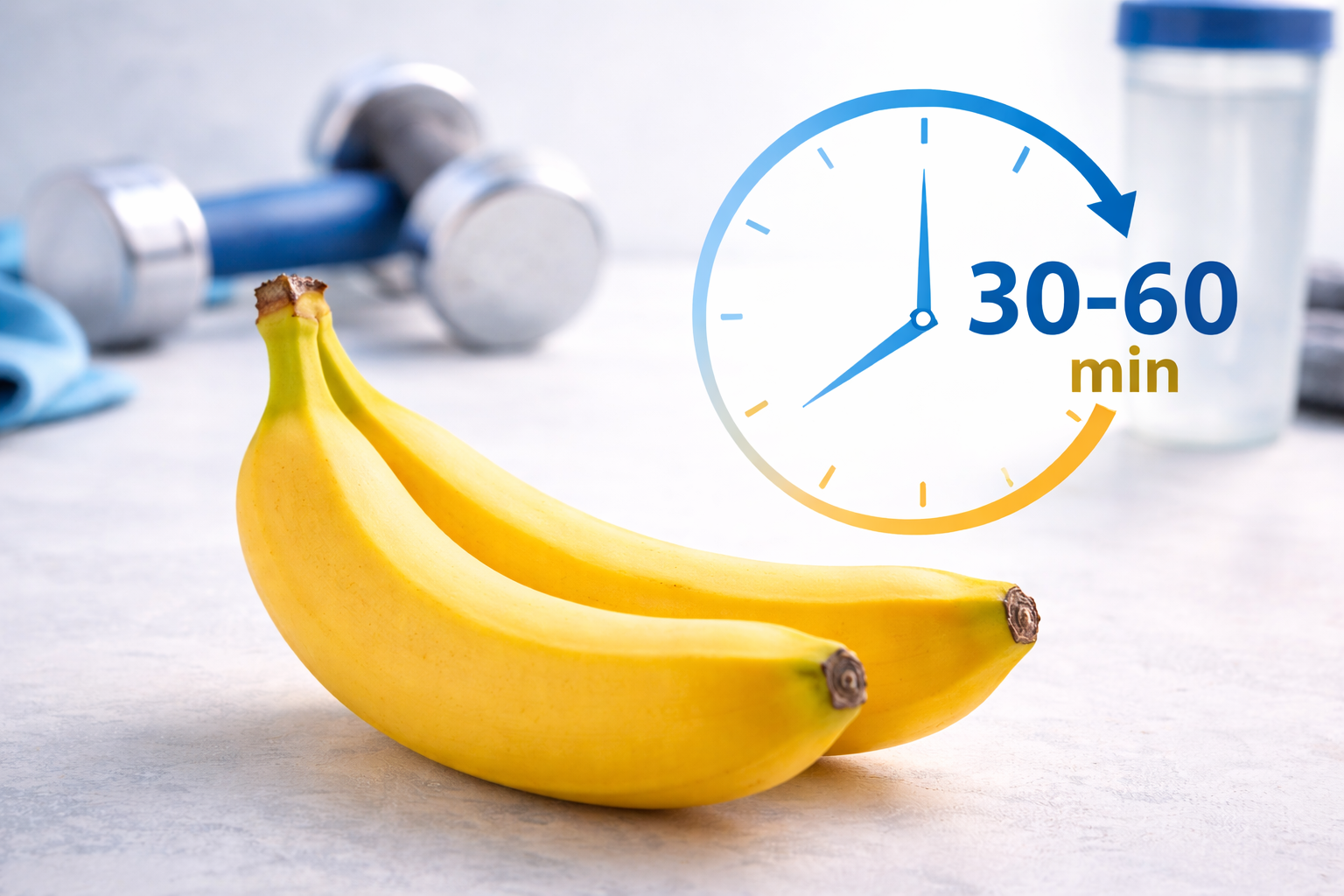
Limited time (30-60 minutes pre-workout): Switch to easily digestible options. The closer to training, the simpler your meal should be.
Early Morning Training Protocol
Training first thing in the morning presents unique challenges. If you only have 30-45 minutes between waking and training, here’s what to do:
Option 1: Quick-digesting fuel
- Protein shake with banana
- White rice with protein powder mixed in
- Rice cakes with honey and whey protein
Option 2: Train fasted with intra-workout nutrition
- Consume BCAAs or EAAs during training
- Have a substantial post-workout meal immediately after
Option 3: Wake up earlier
- Set your alarm 90 minutes before the gym
- Eat a real meal, then go back to rest
- This approach yields the best results for serious muscle building
The “Close to Training” Rule
As training time approaches, simplicity increases:
- 3 hours out: Full meal with solid proteins, complex carbs, vegetables
- 2 hours out: Moderate meal with lean protein and carbs, minimal fat/fiber
- 1 hour out: Smaller meal with easily digestible protein and simple carbs
- 30 minutes out: Liquid nutrition (protein shake with fast carbs)
This ensures you have fuel without the discomfort of undigested food sloshing around during heavy squats or deadlifts.
Practical Pre-Workout Meal Examples
Let’s make this actionable with specific meal ideas you can implement immediately.
For Training in 2-3+ Hours
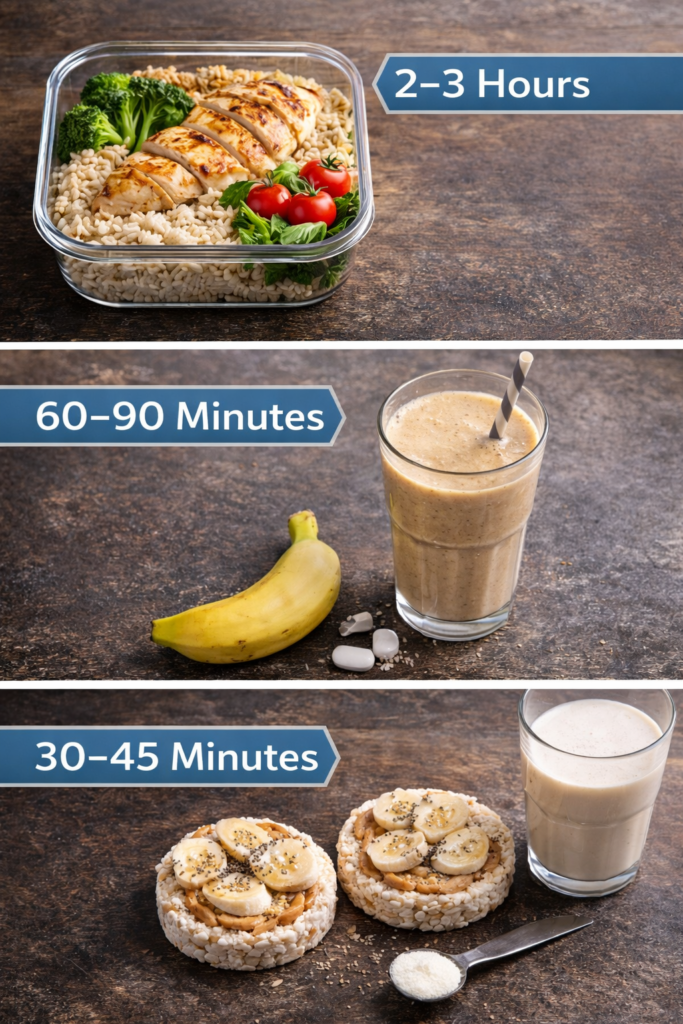
These are complete, satisfying meals that provide sustained energy:
Meal 1: Classic Muscle-Building Plate
- 6 oz grilled chicken breast
- 1 cup white or brown rice
- Steamed broccoli
- Small side salad with minimal dressing
Macros: ~40g protein, 60g carbs, 5g fat
Meal 2: Post-Work Pre-Gym Dinner
- 6 oz lean ground beef (93/7)
- 1.5 cups pasta
- Marinara sauce
- Side of green beans
Macros: ~38g protein, 70g carbs, 10g fat
Meal 3: Quick and Easy Sandwich
- 2 slices whole grain bread
- 5 oz turkey breast
- Lettuce, tomato, mustard
- Apple or banana on the side
Macros: ~35g protein, 55g carbs, 5g fat
Meal 4: Breakfast for Evening Lifters
- 3 whole eggs + 3 egg whites
- 1 cup oatmeal
- Blueberries
- Honey drizzle
Macros: ~35g protein, 65g carbs, 15g fat
For Training in 60-90 Minutes
These meals are lighter and digest faster:
Meal 1: Protein Smoothie
- 1 scoop whey protein
- 1 banana
- 1 cup berries
- 1/2 cup oats
- Water or almond milk
Macros: ~30g protein, 60g carbs, 5g fat
Meal 2: Rice Bowl
- 1 cup white rice
- 4 oz chicken breast or lean beef
- Low-fat teriyaki sauce
Macros: ~30g protein, 50g carbs, 5g fat
Meal 3: Egg White Omelet
- 6 egg whites + 1 whole egg
- 2 slices toast with jam
- Orange juice
Macros: ~25g protein, 55g carbs, 5g fat
For Training in 30-45 Minutes
Quick, easily digestible options:
Option 1: Shake Formula
- 1 scoop whey protein
- 1 banana
- 1 tablespoon honey
- Water
Macros: ~25g protein, 45g carbs, 2g fat
Option 2: Rice Cakes Stack
- 3 rice cakes
- 2 tablespoons peanut butter
- 1 scoop protein powder mixed with water
Macros: ~28g protein, 40g carbs, 8g fat
Option 3: Quick Oats
- 1/2 cup instant oats
- 1 scoop protein powder mixed in
- Berries
Macros: ~30g protein, 45g carbs, 5g fat
Mass Gainer Alternative
For hard-gainers needing extra calories:
- 1.5 scoops whey protein
- 1 cup oats
- 1 banana
- 2 tablespoons peanut butter
- Whole milk
Macros: ~50g protein, 100g carbs, 20g fat, ~800 calories
This homemade mass gainer is cheaper and cleaner than commercial options.
Hydration: The Forgotten Performance Enhancer
Your body is approximately 60% water. Every cellular process including muscle contraction, nutrient transport, and protein synthesis depends on adequate hydration.
What research tells us:
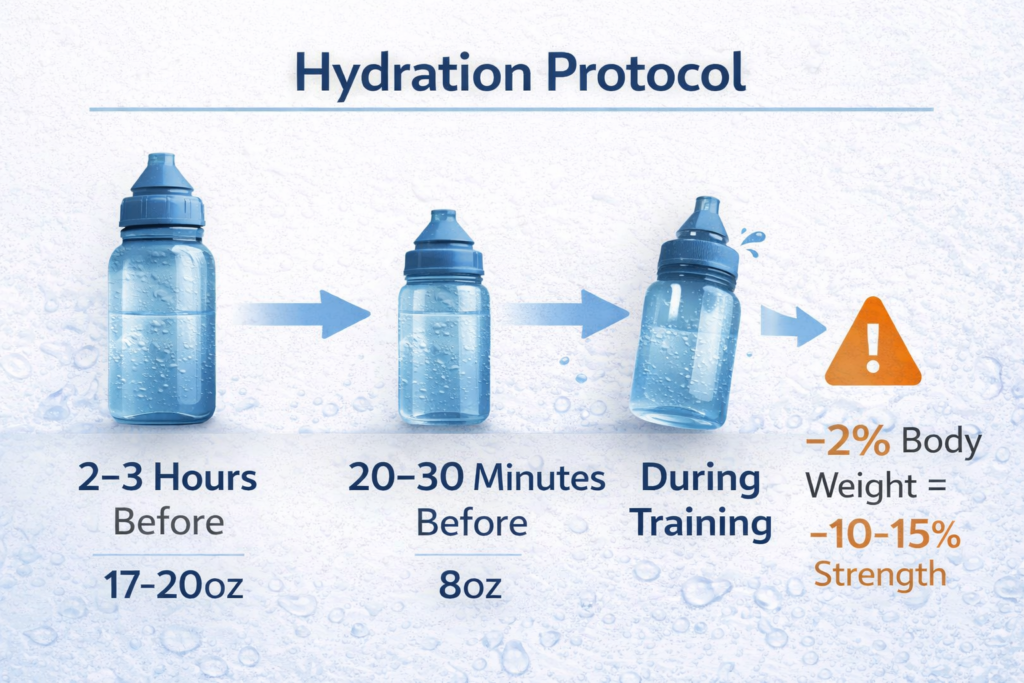
Even mild dehydration (just 2% body weight loss from fluid) can:
- Reduce strength output by 10-15%
- Decrease endurance significantly
- Impair cognitive function and focus
- Increase perceived exertion (workouts feel harder)
- Slow recovery between sets
Optimal Pre-Workout Hydration Protocol
The American College of Sports Medicine recommends:
Consume 17-20 ounces (500-600ml) of water 2-3 hours before exercise, then another 8 ounces (240ml) 20-30 minutes before training.
Practical implementation:
- Drink water consistently throughout the day (not just pre-workout)
- Aim for pale yellow urine as a hydration indicator
- Have a water bottle at the gym and sip between sets
- In hot environments or during high-volume training, consider electrolytes
Pro tip: Stop at the water fountain before starting your first exercise. Seriously, don’t skip this.
Performance-Enhancing Supplements for Pre-Workout
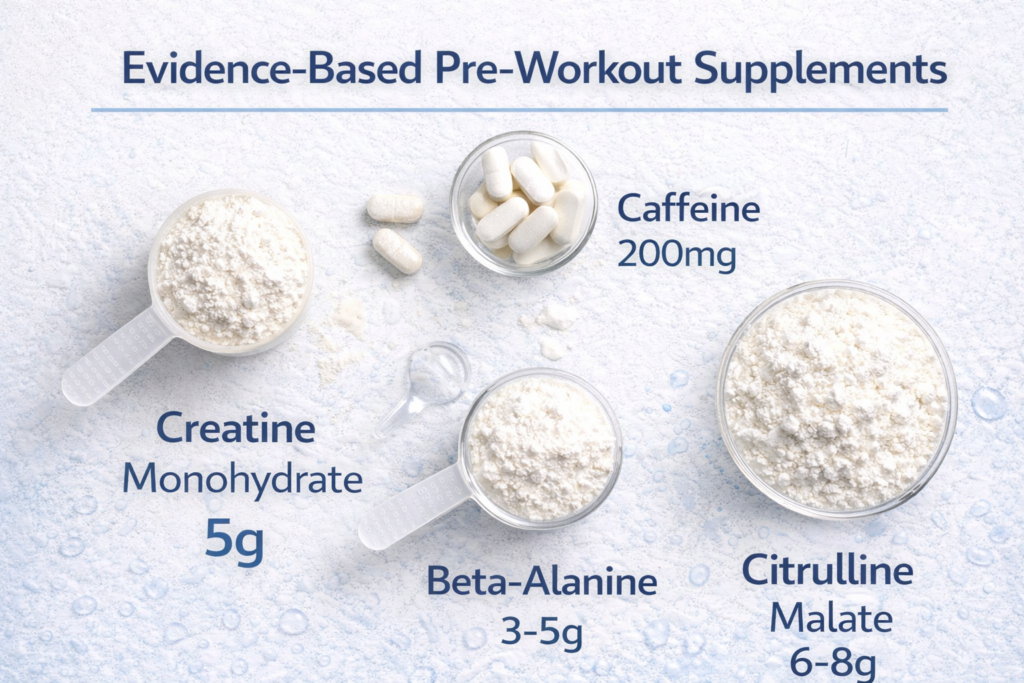
Regardless of your stance on supplementation, certain supplements have robust scientific evidence supporting their ability to enhance training performance.
Here are the ones actually worth considering:
Creatine Monohydrate
Dosage: 3-5 grams daily
Creatine is the most researched and proven supplement for muscle building and performance enhancement.
Evidence-based benefits:
- Increases strength and power output
- Enhances muscle size and fiber growth
- Improves high-intensity exercise capacity
- Reduces fatigue during training
- Supports faster recovery between sets
How it works: Creatine increases your muscles’ phosphocreatine stores, allowing you to produce more ATP (energy) during intense exercise.
Timing note: While often included in pre-workout supplements, creatine timing doesn’t matter significantly. Consistent daily intake is what matters. You can take it pre-workout, post-workout, or any time just take it daily.
Loading phase: You can start with 20g daily (split into 4 doses) for 5-7 days to saturate muscles faster, or simply take 5g daily and reach full saturation in 3-4 weeks.
Caffeine
Dosage: 150-300mg (depending on body weight and tolerance)
Caffeine is a powerful ergogenic aid with extensive research backing.
Performance benefits:
- Increases strength and power
- Enhances endurance and work capacity
- Reduces perceived effort (makes hard sets feel easier)
- Improves mental focus and alertness
- Mobilizes fatty acids for energy
Optimal timing: Caffeine reaches peak blood concentration 60-90 minutes after consumption, but becomes effective within 15-30 minutes.
Sources:
- Coffee: ~95mg per 8 oz cup
- Pre-workout supplements: typically 150-300mg per serving
- Caffeine pills: 200mg tablets
- Energy drinks: 80-300mg per can
Individual considerations:
Start with a lower dose (100-150mg) if you’re caffeine-sensitive. You can always increase if needed, but starting too high can cause jitters, anxiety, or sleep disruption.
Tolerance management: Caffeine tolerance develops quickly. Consider cycling use it for training days only, or take 1-2 weeks off every 8-12 weeks to reset sensitivity.
Beta-Alanine
Dosage: 2-5 grams daily
Beta-alanine is an amino acid that increases muscle carnosine levels, which buffers hydrogen ions that cause muscle fatigue.
Benefits for lifters:
- Delays muscular fatigue during high-rep sets
- Increases training volume capacity
- Particularly effective for sets lasting 60-240 seconds
- Supports endurance during intense training
The tingling effect: Beta-alanine commonly causes a harmless tingling sensation (paresthesia) in the skin. This is normal and not dangerous it’s just a neural response.
Timing: Like creatine, beta-alanine works through chronic elevation of muscle carnosine stores. Daily supplementation matters more than specific timing.
Patience required: Effects become noticeable after 2-4 weeks of consistent use as carnosine levels build up.
Citrulline Malate
Dosage: 6-8 grams
Citrulline increases nitric oxide production, improving blood flow to working muscles.
Benefits:
- Enhanced muscle pump
- Reduced fatigue
- Improved nutrient delivery to muscles
- Better waste product removal
When to take: 30-60 minutes pre-workout for best results.
Complete Pre-Workout Formula (DIY)
Want to create your own evidence-based pre-workout? Here’s what works:
- 5g Creatine Monohydrate
- 4g Beta-Alanine
- 6g Citrulline Malate
- 200mg Caffeine
Mix with water and consume 30 minutes before training. This provides all the proven ergogenic compounds without the fillers, artificial colors, and proprietary blends found in commercial pre-workouts.
Cost-effective: Buying ingredients separately is dramatically cheaper than pre-made supplements.
Common Pre-Workout Nutrition Mistakes to Avoid
Even with the right information, people make predictable errors. Here’s what to avoid:
Mistake 1: Training Completely Fasted
While intermittent fasting has benefits, training in a completely fasted state (especially for muscle building) compromises:
- Training intensity and volume
- Muscle protein synthesis
- Recovery capacity
Exception: If you’re an experienced faster and your goal is fat loss (not muscle gain), fasted training can work but it’s still suboptimal for performance.
Mistake 2: Eating Too Close to Training
Consuming a large, heavy meal 20 minutes before training leads to:
- Digestive discomfort
- Nausea during intense sets
- Reduced performance
- Blood flow diverted to digestion instead of muscles
The fix: Follow the timing guidelines earlier in this article.
Mistake 3: Excessive Fat Pre-Workout
A meal like steak with avocado and nuts might be healthy, but it’s terrible pre-workout timing:
- Slows gastric emptying
- Delays carbohydrate and protein availability
- Causes bloating and sluggishness
Better approach: Save higher-fat meals for post-workout or meals 4+ hours from training.
Mistake 4: Insufficient Carbohydrates
Some people avoid carbs pre-workout due to misguided fears about insulin or fat storage.
The reality: Carbohydrates consumed around training are preferentially stored as muscle glycogen, not body fat. They’re the optimal fuel for intense resistance training.
Don’t sabotage your workouts by under-fueling out of unnecessary carb-phobia.
Mistake 5: Overthinking and Paralysis by Analysis
The perfect pre-workout meal doesn’t exist. The best approach is one you’ll actually follow consistently.
Don’t stress over having the exact optimal food or timing. Focus on the fundamentals:
- Adequate protein (20-40g)
- Sufficient carbs (40-80g)
- Proper timing (1-3 hours out)
- Good hydration
Get these right 80-90% of the time, and you’ll see excellent results.
The Bottom Line: Fuel Your Growth
Pre-workout nutrition plays a crucial role in your training performance, recovery capacity, and muscle-building potential.
Here’s what you need to remember:
✓ Carbohydrates maximize your body’s ability to produce and store glycogen, providing the energy needed for intense training
✓ Protein elevates muscle protein synthesis, prevents catabolism, and kickstarts recovery before your workout even ends
✓ Timing matters: Eat 1-3 hours before training for optimal digestion and fuel availability
✓ Hydration is non-negotiable: Proper fluid intake is essential for maintaining performance and supporting all physiological functions
✓ Strategic supplementation: Creatine, caffeine, and beta-alanine can provide meaningful performance benefits when used appropriately
Your Action Plan
Starting today, implement these changes:
- Plan your pre-workout meal based on your training schedule
- Choose foods you enjoy that meet the protein and carb guidelines
- Experiment with timing to find what feels best for your digestion
- Track your performance and adjust as needed
- Stay consistent for at least 2-3 weeks before making major changes
The difference between average workouts and incredible workouts often comes down to proper fueling. You’re investing time and effort into training don’t undermine that work by showing up unprepared.
Ready to take your training to the next level? Now you know exactly how to fuel for maximum performance and muscle growth. The only question is: will you implement it?
Want a complete nutrition and training system that eliminates all the guesswork? Stop piecing together information from random sources and get a proven blueprint that shows you exactly what to eat, when to train, and how to maximize every workout for serious muscle growth. Your transformation starts with proper preparation make it simple, effective, and sustainable.

Leave a Reply
You must be logged in to post a comment.