
Think cold showers are just torture? Research reveals surprising benefits that might change your mind and transform your health.
Let’s be honest. Most sane people prefer a nice, warm shower.
The thought of voluntarily stepping under freezing water sounds absurd, maybe even masochistic. Why would anyone willingly subject themselves to that discomfort?
Here’s why: emerging research shows that cold showers provide remarkable benefits for your body, mind, and overall performance.
Before you dismiss this as some wellness fad or Wim Hof extremism, understand this: cold water therapy has been used for centuries across cultures, and modern science is finally catching up, revealing the physiological mechanisms behind why it works.
In this comprehensive guide, I’ll break down the six scientifically proven benefits of cold showers, explain exactly how they work, and show you how to incorporate them into your routine without suffering more than necessary.
First, let me make something clear: adopting cold showers doesn’t mean abandoning hot showers. Both serve different purposes and have their place in your routine.
Let’s dive into why adding strategic cold exposure to your life might be one of the best decisions you make for your health and development.
TABLE OF CONTENTS
Benefit 1: Enhanced Focus and Mental Alertness
Taking a cold shower can make you feel significantly more alert and mentally sharp, largely due to its immediate physiological effects on your body.
The Science Behind Cold-Induced Alertness
According to a meta-analysis on cold water immersion research published in the British Journal of Sports Medicine, cold showers trigger numerous physiological responses that increase wakefulness and focus.
These include:
Increased heart rate: Cold water triggers your sympathetic nervous system, elevating your heart rate similar to moderate exercise.
Elevated blood pressure: Not the unhealthy kind from poor lifestyle habits, but the beneficial temporary spike similar to what occurs during physical activity.
Accelerated breathing rate: Your respiratory system kicks into higher gear, increasing oxygen delivery throughout your body and brain.
Metabolic boost: Cold water forces your body to work harder to maintain core temperature, slightly increasing metabolic rate.
Why This Matters for Performance
The heightened state of alertness from cold exposure creates:
Improved cognitive function: Better decision-making, faster reaction times, and enhanced problem-solving ability.
Increased energy levels: The rush of adrenaline and noradrenaline provides a natural, sustainable energy boost without the crash of caffeine.
Greater physical readiness: Your body enters a state of heightened preparedness, making you more inclined to move and be active.
Important Caveat About Weight Loss
While cold showers do slightly increase metabolic rate, don’t depend on this as your primary fat-loss strategy.
The reality: A typical cold shower lasts only 5-10 minutes, which burns minimal calories.
Diet always comes first for body composition changes. Cold showers can be a supplementary tool but aren’t a substitute for proper nutrition and training.
That said, the invigoration and heightened alertness cold showers provide can indirectly support fat loss by making you more inclined to exercise and stay active throughout the day.
Benefit 2: Stronger Immune System
This might be the most compelling benefit for most people: cold showers can genuinely strengthen your immune system.
The Groundbreaking Research
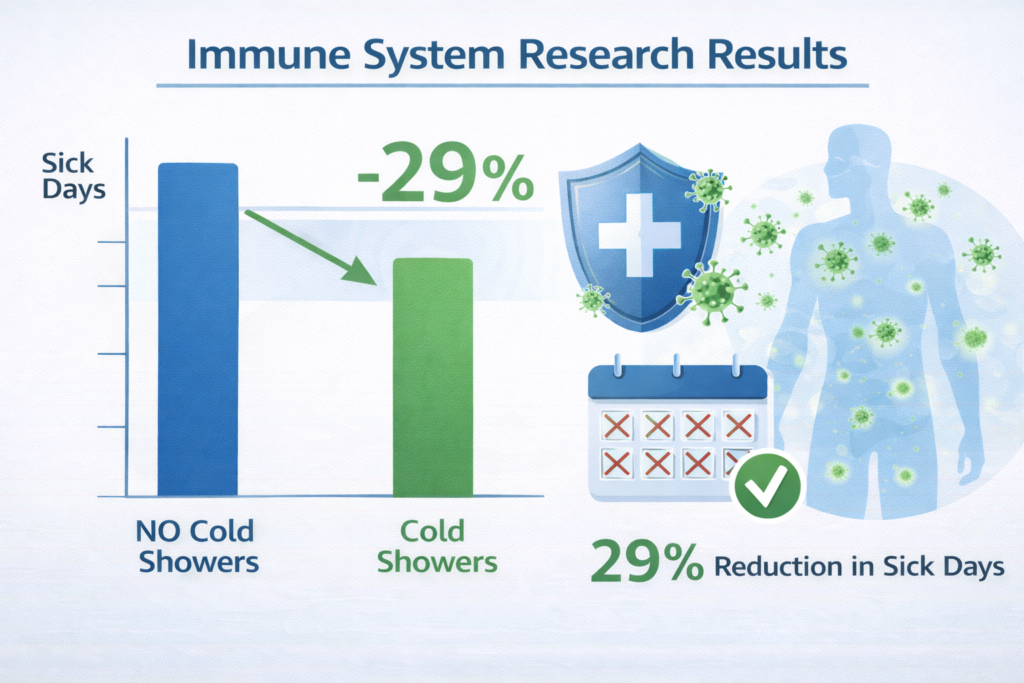
A landmark study published in PLoS One (a peer-reviewed scientific journal) found that people who take cold showers have a 29% lower likelihood of calling in sick to work.
The study details:
Participants: 3,018 individuals tracked over several months
Protocol: Participants took normal hot showers followed by cold water for 30, 60, or 90 seconds
Results: Those who incorporated cold exposure had significantly fewer sick days from work
Critical Distinction
Here’s something important: those taking cold showers didn’t necessarily get sick less often. Rather, when they did get sick, the severity was reduced to the point where it didn’t interfere with their normal routine or force them to stay in bed.
In other words, cold showers didn’t make people immune to illness, but they made illness far less debilitating.
Duration Doesn’t Matter Much
Interestingly, researchers found no significant difference between people who used cold water for 30, 60, or 90 seconds.
The takeaway: Even brief cold exposure (30 seconds) appears sufficient to influence immune function. You don’t need to torture yourself with extended duration to get benefits.
Proposed Mechanisms
How cold water might enhance immunity:
Increased white blood cell count: Cold exposure may stimulate production of immune cells.
Hormetic stress response: Mild stressors (like cold) can strengthen the body’s defensive systems.
Improved circulation: Better blood flow means more efficient immune cell distribution throughout the body.
Reduced inflammation: Cold therapy has anti-inflammatory effects that may support overall immune health.
Benefit 3: Improved Mood and Mental Health
Beyond the immediate alertness, cold showers may have profound effects on mood and emotional well-being.
The Depression Connection
Research published in Medical Hypotheses suggests that cold showers could have antidepressant effects.
The proposed mechanism:
Activates sympathetic nervous system: Cold exposure triggers your “fight or flight” response in a controlled, beneficial way.
Increases neurotransmitter availability: Specifically noradrenaline (norepinephrine) and endorphins, both associated with improved mood and reduced depression.
Stimulates electrical impulses: From peripheral nerve endings to the brain, potentially producing an antidepressant effect.
Important Context
Cold showers can improve how you perceive your day, similar to how a cup of coffee might lift your spirits. However, they’re not a substitute for proper psychological treatment or therapy if you’re dealing with clinical depression.
Think of cold showers as a tool for:
- Improving baseline mood
- Building mental resilience
- Starting your day with a win
- Practicing voluntary discomfort
The Psychological Benefit of Voluntary Challenge
Beyond the neurochemical effects, there’s a powerful psychological component: successfully completing something difficult first thing in the morning sets a positive tone for the entire day.
You prove to yourself that you can do hard things. This builds confidence and momentum that carries into other areas of your life.
Benefit 4: Enhanced Post-Exercise Recovery
Cold water immersion therapy (submerging the body in ice or cold water) is a common practice across many athletic disciplines.
What Sports Therapists Know
Physical therapists specializing in sports medicine have long suggested that low temperatures can:
Rapidly relieve exercise-induced heat stress: Helping athletes cool down faster and more effectively after intense training.
Reduce inflammation: Cold constricts blood vessels, limiting inflammatory response in muscles.
Minimize delayed-onset muscle soreness (DOMS): The muscle pain that peaks 24-48 hours after intense exercise.
The Research
A study published in the Journal of Athletic Training found that cold showers can alleviate exercise-induced hyperthermia (dangerously elevated body temperature) more effectively than simply letting your body cool down naturally.
However, researchers noted a hierarchy of effectiveness:
Most effective: Full ice bath immersion (10-15°C for 10-15 minutes)
Moderately effective: Cold shower (immediate post-exercise)
Least effective: Passive cooling (just sitting and waiting)
Who Benefits Most?
For recreational athletes: Cold showers are probably sufficient. The convenience and accessibility make them a practical recovery tool.
For serious or professional athletes: Training multiple hours daily with high intensity may require more aggressive ice bath protocols for optimal recovery.
For most people reading this: Cold showers post-workout provide meaningful recovery benefits without the inconvenience and expense of ice baths.
Benefit 5: Accelerated Muscle Recovery
Beyond just cooling down, cold water therapy may speed up the actual recovery process at a muscular level.
The Meta-Analysis Evidence
A comprehensive review of 23 studies published in the Journal of Strength and Conditioning Research examined cold water immersion and contrast water therapy (alternating hot and cold).
Key findings:
Improved muscle recovery: Cold water immersion helped muscles recover faster between training sessions.
Reduced perceived fatigue: Athletes reported feeling less tired and more ready for subsequent workouts.
Enhanced performance readiness: The combination of physical recovery and psychological refreshment prepared athletes for their next training bout.
Contrast Water Therapy
An interesting variation: alternating between hot and cold water.
Protocol:
- 3 minutes hot water
- 1 minute cold water
- Repeat 3-5 times
- End with cold
Theory: The alternating temperatures create a “pumping” effect in blood vessels, potentially enhancing circulation and waste product removal from muscles.
Research support: Some studies suggest contrast therapy may be slightly more effective than cold alone for certain recovery markers.
Practical Application
For most people:
- Cold shower immediately post-workout for 2-5 minutes
- Focus water on major muscle groups worked that day
- Gradually decrease temperature rather than shocking your system
For athletes with multiple daily sessions:
- Consider contrast therapy between sessions
- Ice bath for most intense recovery needs
- Cold showers for lighter sessions or maintenance
Benefit 6: Natural Pain Relief
Cold water may act as a natural analgesic (pain reliever), similar to over-the-counter pain medications.
The Mechanisms
According to research published in the North American Journal of Medical Sciences, cold water provides pain relief through multiple pathways:
Vasoconstriction (blood vessel narrowing):
Cold exposure causes blood vessels to constrict, which can help:
- Reduce swelling and edema
- Limit inflammatory response
- Decrease pressure on pain receptors
Reduced nerve conduction velocity:
Cold slows down the speed at which nerves transmit signals, including pain signals.
Result: The rate at which pain signals travel from the injury site to your brain decreases, reducing your perception of pain.
Endorphin release:
The stress of cold exposure triggers endorphin production, your body’s natural painkillers.
Practical Applications
Acute injuries: Cold therapy immediately after injury (the classic RICE protocol: Rest, Ice, Compression, Elevation) reduces pain and swelling.
Chronic pain: Regular cold exposure may help manage ongoing pain conditions, though more research is needed.
Post-workout soreness: Cold showers can dull the acute discomfort of muscle soreness, making daily activities more comfortable.
Important Note
Cold therapy is most effective for acute injuries and inflammation. It’s less useful for chronic conditions or injuries that benefit from heat (like tight, stiff muscles).
Know the difference:
- Fresh injuries, swelling, inflammation: Use cold
- Chronic tightness, stiffness, muscle tension: Use heat
How to Incorporate Cold Showers Into Your Routine
Ready to try it? Here’s how to implement cold showers without unnecessary suffering.
The Gradual Approach (Recommended for Beginners)
You don’t need to go full Wim Hof on day one. Start gradually and build tolerance.
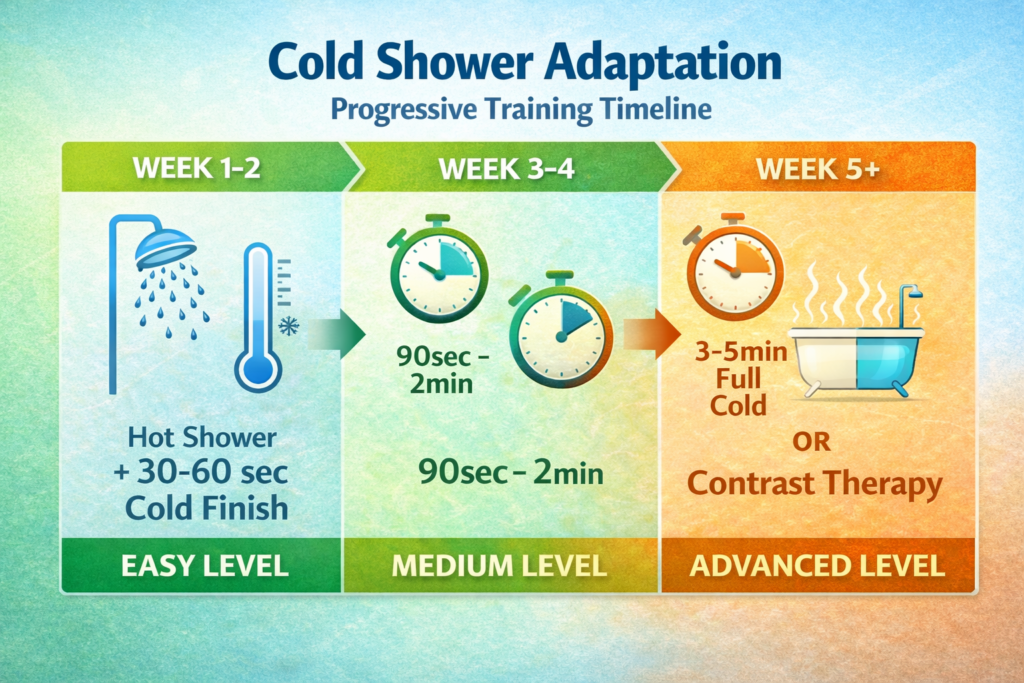
Week 1-2: The Finisher Method
Start with a normal hot shower. Wash your body as usual. In the final 30-60 seconds, switch to cold water.
Focus the cold water on:
- Back of neck
- Upper back
- Chest
Duration: 30 seconds minimum, 60 seconds goal
Mindset: Controlled breathing, stay calm, embrace the discomfort
Week 3-4: Extended Duration
Continue the hot shower with cold finish approach.
Increase cold duration to:
- 90 seconds Week 3
- 2 minutes Week 4
You’ll notice: The initial shock becomes less intense. Your body adapts. What felt unbearable becomes merely uncomfortable.
Week 5+: Full Cold or Contrast Therapy
Option A (Full Cold):
- Go straight to cold water
- Stay under for 3-5 minutes
- This is advanced; only attempt once you’ve built tolerance
Option B (Contrast Therapy):
- 3 minutes hot
- 1 minute cold
- Repeat 2-3 cycles
- End with cold
Critical Guidelines for Effectiveness
“Cold” means actual cold, not lukewarm.
The water should be at its natural cold temperature, allowing it to fall on your neck, upper back, and torso.
If you’re not uncomfortable, you’re not doing it right.
The effectiveness is directly related to the discomfort you experience. Mild coolness won’t produce the physiological responses you’re seeking.
What to Expect
The initial shock:
It’s completely normal to shiver, sometimes violently. You might feel like it’s painful. This is your body’s natural response.
This “shock” is what triggers the beneficial physiological changes you’re after. Without it, it’s just another shower.
Adaptation occurs:
As the cold shower continues, the discomfort typically decreases. Your body adjusts. You’ll notice yourself calming down and acclimating.
The aftermath:
After a cold shower, you’ll often experience a flood of well-being and peace. There’s a genuine sense of accomplishment and reward for completing a difficult task.
It sounds crazy, but try it before judging.
Common Mistakes to Avoid
Mistake 1: Too Brief
Jumping under cold water for 5-10 seconds won’t produce benefits. You’ll just irritate yourself without triggering the adaptive responses.
Minimum effective dose: 30-60 seconds
Optimal: 2-5 minutes
Mistake 2: Not Cold Enough
Slightly cool water isn’t sufficient. You need genuinely cold water to trigger the physiological responses.
Test: If you’re comfortable, it’s not cold enough.
Mistake 3: Inconsistent Practice
Doing it once per month won’t build adaptation or provide cumulative benefits.
Recommended frequency: Daily or at minimum 3-4x per week
Mistake 4: Poor Breathing
Panicked, rapid breathing amplifies the stress response negatively.
Better approach:
- Slow, controlled breathing
- Extend exhales
- Stay calm and present
Mistake 5: Giving Up Too Soon
The first few attempts are the hardest. Most people quit before experiencing the benefits.
Reality: Weeks 1-2 are challenging. Week 3+ it becomes manageable. Week 6+ you might actually look forward to it.
The Science of Hormesis: Why Controlled Stress Makes You Stronger
Understanding why cold showers work requires understanding a fundamental biological principle: hormesis.
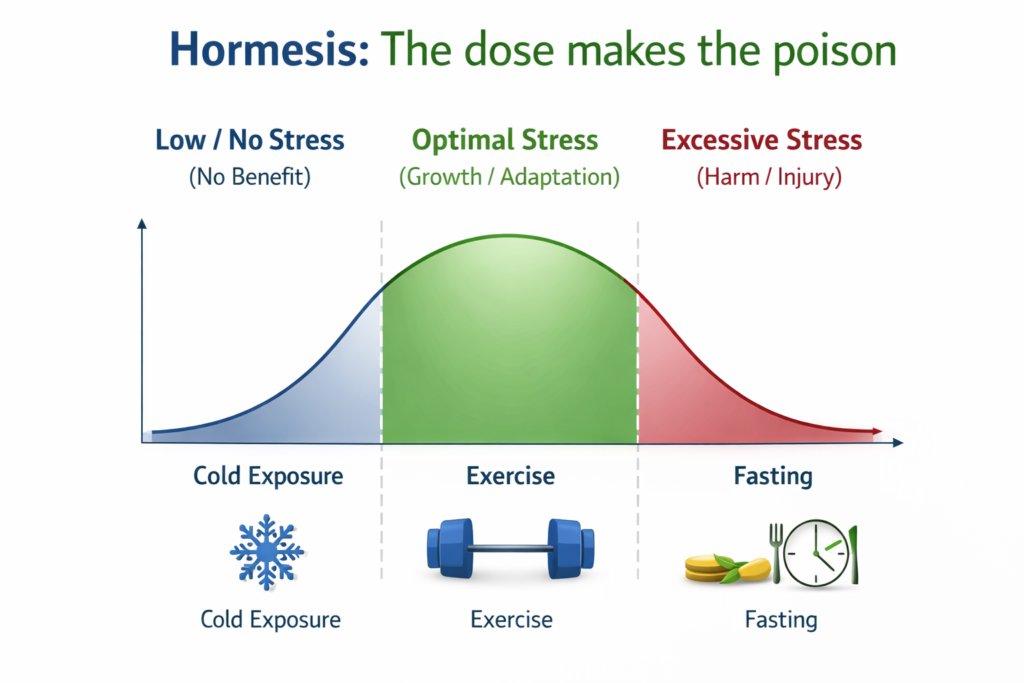
What Is Hormesis?
Hormesis: A beneficial response to low doses of stress that would be harmful in higher doses.
The principle: What doesn’t kill you makes you stronger (within limits).
Examples:
- Exercise: Moderate stress that builds strength; excessive stress causes injury
- Fasting: Short-term stress improves health; prolonged starvation damages health
- Cold exposure: Brief stress strengthens body; prolonged hypothermia kills
- Heat exposure: Sauna beneficial; heat stroke dangerous
How Cold Showers Fit
Cold showers provide a controlled, moderate stressor that triggers adaptive responses:
Immediate stress response:
- Increased heart rate and blood pressure
- Rapid breathing
- Adrenaline and noradrenaline release
- Sympathetic nervous system activation
Adaptive response (with repeated exposure):
- Improved stress resilience
- Enhanced immune function
- Better mood regulation
- Increased brown fat activation (metabolically active fat that burns calories)
The key: The dose makes the poison. Brief cold exposure strengthens; prolonged hypothermia harms.
Contraindications: When to Avoid Cold Showers
While cold showers are generally safe, certain conditions require caution or avoidance:
Avoid cold showers if you have:
Cardiovascular conditions: Heart disease, high blood pressure (uncontrolled), history of heart attack or stroke. The sudden shock can trigger cardiac events in susceptible individuals.
Raynaud’s disease: A condition causing reduced blood flow to extremities in response to cold.
Cold urticaria: Allergic reaction to cold exposure causing hives and potentially severe reactions.
Immunocompromised state: While cold may help healthy immune systems, those with severely compromised immunity should consult doctors.
Pregnancy: Consult your doctor before starting cold exposure practices.
If unsure, talk to your healthcare provider before implementing cold showers.
Advanced Variations
Once you’ve mastered basic cold showers, consider these advanced approaches:
Wim Hof Method
Combines:
- Cold exposure
- Breathing techniques
- Mindset training
Documented benefits:
- Enhanced immune response
- Reduced inflammation
- Improved mental resilience
Cryotherapy
Full-body cryotherapy chambers:
- 2-3 minutes at extremely low temperatures (-200°F to -300°F)
- More intense than cold showers
- Expensive and requires specialized facilities
More accessible than it sounds: Many cities now have cryotherapy studios.
Ice Baths
Traditional athlete recovery:
- Fill tub with cold water and ice
- Submerge for 10-15 minutes
- Temperature: 50-59°F (10-15°C)
More intense than showers: Full body immersion creates stronger stimulus.
The Bottom Line: Small Discomfort, Big Benefits
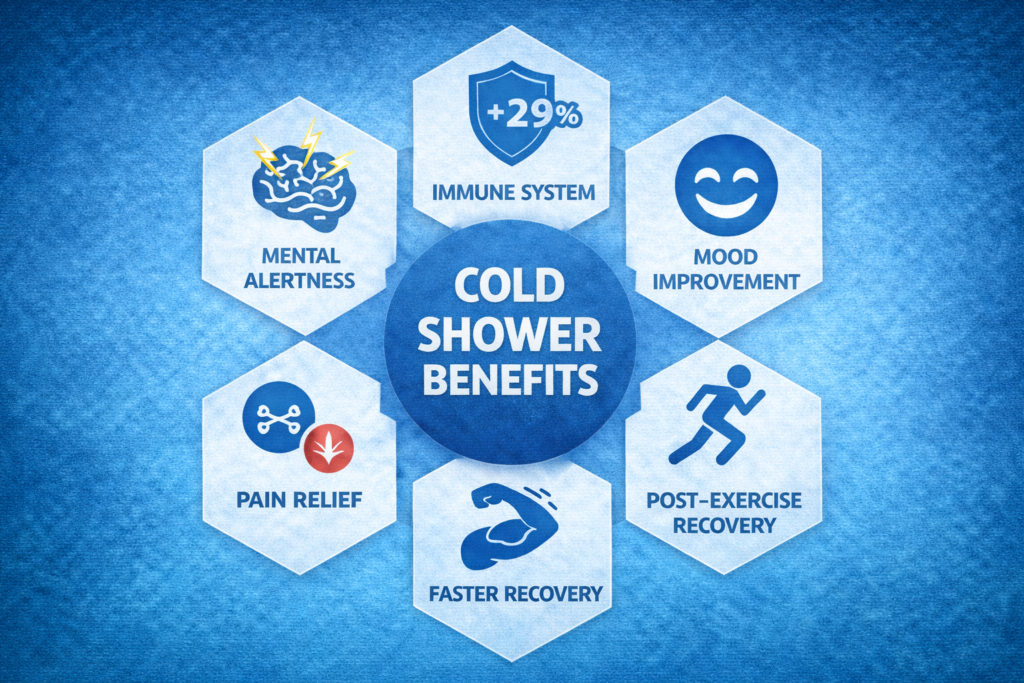
Cold showers provide legitimate, science-backed benefits:
✅ Enhanced mental alertness and focus
✅ Strengthened immune system (29% fewer sick days)
✅ Improved mood and potential antidepressant effects
✅ Better post-exercise recovery
✅ Accelerated muscle recovery and reduced fatigue
✅ Natural pain relief through multiple mechanisms
The cost? A few minutes of daily discomfort.
The investment is minimal. The returns are substantial.
Getting Started
Don’t overthink it. Just start:
Tomorrow morning:
- Take your normal hot shower
- Wash as usual
- Final 30 seconds: switch to cold
- Breathe calmly
- Endure the discomfort
Next week:
- Increase to 60 seconds
- Notice it’s slightly easier
Within a month:
- 2-5 minutes of cold
- Adaptation has occurred
- Benefits are noticeable
The benefits come from forcing your body to confront and adapt to a controlled extreme situation.
Stop waiting for the “right time.” There isn’t one. Start tomorrow.
Your more resilient, focused, and healthier future self will thank you.
EMBRACE THE COLD. BUILD RESILIENCE. TRANSFORM YOUR HEALTH.
Ready to build unshakeable mental toughness and optimize your health with science-backed strategies? Cold showers are just one tool in a complete system for maximizing performance, building discipline, and achieving peak physical and mental condition. Stop avoiding discomfort and start using it strategically to become stronger, sharper, and more resilient than ever before.

Leave a Reply
You must be logged in to post a comment.