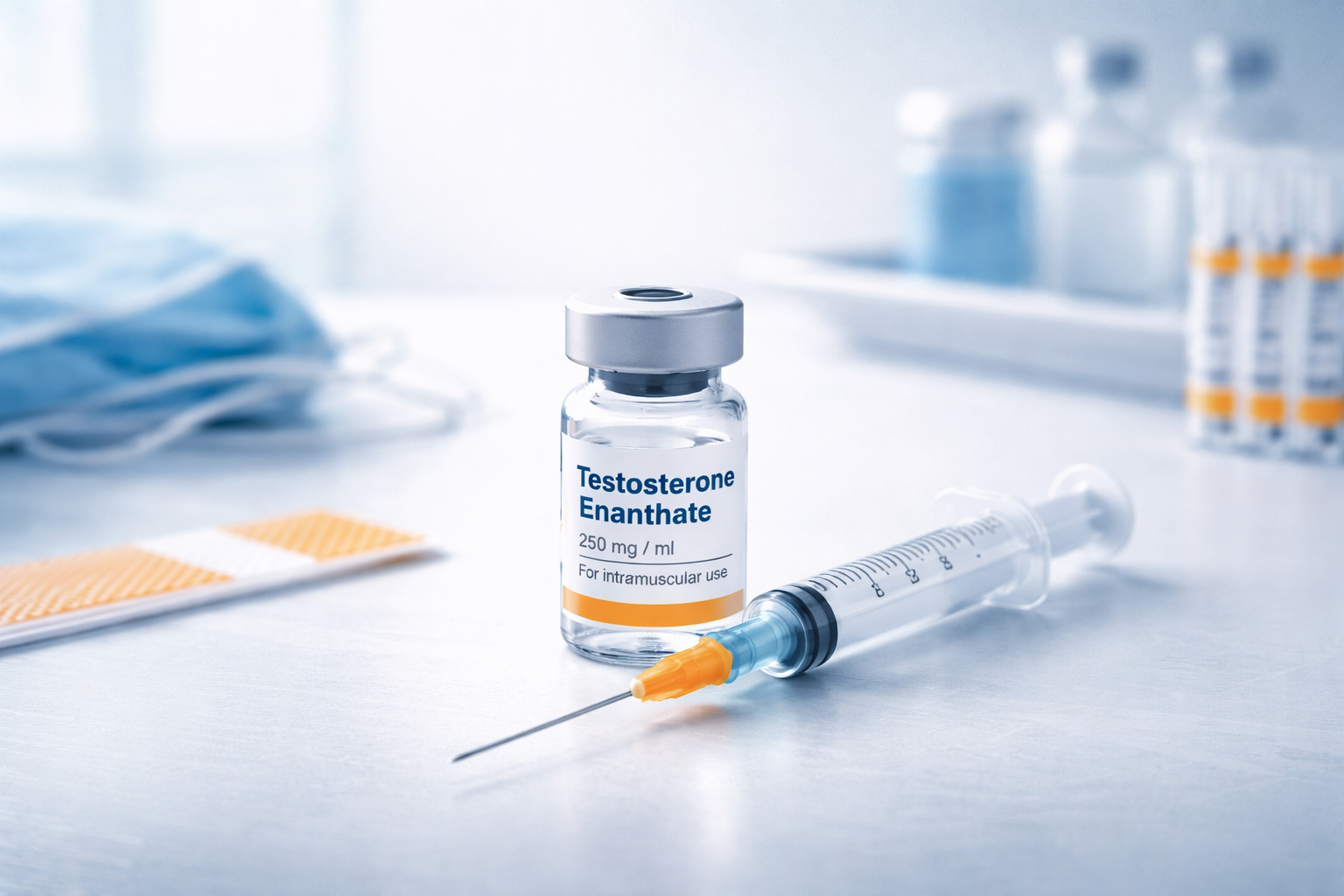
Considering testosterone enanthate? It’s the most popular testosterone ester worldwide. Understanding proper use, dosing, and risks is essential before first injection.
You’ve heard testosterone enanthate is the gold standard. The most commonly used testosterone ester globally.
You’re ready to start but unclear on proper dosing, injection frequency, cycle length, and what side effects to realistically expect.
You’ve been told:
- “Enanthate is the best testosterone ester”
- “Inject once weekly and you’re set”
- “It’s the safest steroid available”
- “Side effects are minimal with test”
Some true, some oversimplified. The truth: Testosterone enanthate has a 7-10 day half-life (long-acting ester), requires 1-2x weekly injections for optimal stability, takes 4-6 weeks to reach steady-state blood levels, and is widely used for both TRT (100-200mg/week) and performance enhancement (200-600mg/week). While testosterone is relatively mild compared to harsher steroids, supraphysiological doses cause predictable side effects: gynecomastia (from aromatization), elevated hematocrit, increased blood pressure, cholesterol disruption, acne, hair loss (if prone), and complete natural testosterone suppression. Proper protocols, monitoring, and PCT minimize but don’t eliminate risks.
In this comprehensive guide, I’ll explain what testosterone enanthate is (the long ester and pharmacokinetics), detail typical cycle protocols (dosing, frequency, duration for TRT and performance), reveal all common side effects (mechanisms, prevention, management), provide injection best practices (technique and frequency), show PCT timing (2-week wait essential), and compare to other esters (enanthate vs. cypionate vs. propionate).
Whether you’re considering TRT or performance enhancement, complete understanding is essential.
Let’s examine testosterone enanthate scientifically and practically.
TABLE OF CONTENTS
What Is Testosterone Enanthate?
The compound explained.

The Basic Definition
What it is:
- Injectable synthetic testosterone
- Testosterone molecule + enanthate ester attached
- Long-acting formulation
- Most widely used testosterone ester globally
- Standard testosterone
What the ester does:
- Enanthate = 7-carbon ester chain
- Moderate-long length (similar to cypionate)
- Determines release speed and duration
- Creates depot effect (gradual release)
- Time-release mechanism
How it works:
- After intramuscular injection, forms depot in muscle
- Esterase enzymes cleave enanthate ester
- Free testosterone gradually released into bloodstream
- Sustained elevation over days
- Controlled release
The half-life:
- Approximately 7-10 days
- Individual variation (some 7 days, others 10 days)
- Similar to cypionate (8-12 days)
- Much longer than propionate (2-3 days)
- Extended duration
The Testosterone Molecule
Universal across all esters:
- Enanthate, cypionate, propionate = identical testosterone
- Only ester differs (delivery mechanism)
- Same anabolic and androgenic effects
- Same active hormone
The function:
- Primary male sex hormone
- Responsible for development and maintenance of male characteristics
- Muscle building, strength, libido, mood, energy
- Fundamental androgen
Medical vs. Performance Use
Medical use (TRT):
- For men with clinically low testosterone (hypogonadism)
- Goal: Restore to normal physiological levels (400-800 ng/dL)
- Typical dose: 100-200mg per week
- Long-term therapy under medical supervision
- Therapeutic replacement
Performance use:
- Supraphysiological doses (above natural levels)
- Goal: Muscle growth, strength gains, physique enhancement
- Typical dose: 200-600mg per week
- 8-12 week cycles
- Athletic enhancement
How Testosterone Enanthate Works
The anabolic mechanisms.
Muscle Growth Mechanisms
1. Androgen receptor activation:
- Testosterone binds to androgen receptors in muscle cells
- Triggers genetic transcription
- Increases protein synthesis
- Direct anabolic signaling
2. Nitrogen retention:
- Positive nitrogen balance essential for growth
- Testosterone increases nitrogen retention in muscle tissue
- More protein building blocks available
- Anabolic environment
3. IGF-1 stimulation:
- Increases insulin-like growth factor 1
- IGF-1 promotes muscle growth independently
- Synergistic muscle-building effect
- Growth factor cascade
4. Anti-catabolic effects:
- Suppresses cortisol (stress hormone)
- Blocks cortisol receptors
- Prevents muscle breakdown
- Preservation mechanism
5. Satellite cell activation:
- Activates muscle stem cells
- Allows muscle growth beyond genetic limits
- New muscle nuclei incorporation
- Muscle expansion potential
Performance Enhancement
Strength increase:
- Enhanced neural drive
- Increased contractile proteins
- Better force production
- Power output
Recovery enhancement:
- Faster muscle protein synthesis
- Accelerated glycogen replenishment
- Reduced inflammation
- Training frequency increase
Erythropoiesis (red blood cell production):
- Stimulates RBC production
- Increased oxygen-carrying capacity
- Better endurance
- Cardiovascular benefit
Typical Testosterone Enanthate Cycles
Dosing protocols.

TRT (Testosterone Replacement Therapy)
The medical context:
- For diagnosed hypogonadism (<300 ng/dL testosterone)
- Medical supervision essential
- Goal: Normal physiological levels
- Therapeutic use
Standard TRT protocol:
- Dose: 100-200mg per week total
- Frequency: 1-2x weekly (twice weekly preferred for stability)
- Example: 100mg Monday, 100mg Thursday
- Duration: Indefinite (long-term therapy)
- Monitoring: Regular bloodwork (testosterone, estradiol, hematocrit, PSA, lipids)
- Replacement dosing
The goal:
- Maintain testosterone in 400-800 ng/dL range
- Symptom relief (energy, libido, mood, muscle maintenance)
- Minimize side effects
- Normal physiology restoration
Beginner Cycle (First Steroid Use)
The foundation:
- Testosterone-only cycle (no other compounds)
- Learn individual response
- Establish baseline
- Simple introduction
Typical beginner protocol:
- Dose: 300-500mg per week
- Frequency: 2x weekly (e.g., 250mg Monday, 250mg Thursday)
- Duration: 10-12 weeks
- Conservative approach
Example (500mg/week):
- 250mg Monday morning
- 250mg Thursday evening
- Total: 500mg weekly
- 12-week cycle
- Standard first cycle
Why this dosing:
- Sufficient for significant gains (expect 15-25 lbs total weight, 10-15 lbs muscle)
- Not excessive (manageable side effects)
- Allows aromatization assessment
- Learning cycle
Intermediate Cycle
The progression:
- Multiple cycles completed
- Understand personal response
- May stack with other compounds or increase dose
- Experience required
Typical intermediate protocol:
Option 1: Higher testosterone dose
- Dose: 500-750mg per week
- Frequency: 2x weekly
- Duration: 10-16 weeks
- Dose escalation
Option 2: Moderate testosterone + stacking
- Dose: 300-500mg testosterone per week (base)
- Plus other compound (e.g., 400mg nandrolone, 50mg anavar daily)
- Duration: 12-16 weeks
- Multi-compound
Example (600mg/week solo):
- 300mg Monday
- 300mg Thursday
- 14-week cycle
- Higher dose solo
Advanced Cycle (Not Recommended)
The extreme:
- Professional bodybuilders
- Years of experience
- Significant health risks
- High-level use
Typical advanced:
- Dose: 750-1500mg+ per week
- Often stacked with multiple compounds
- Duration: 12-20+ weeks
- Dangerous territory
The health cost:
- Severe side effects inevitable
- Long-term organ damage
- Not worth it for recreational users
- Risk escalation
Injection Frequency
The options:
Once weekly:
- Convenient
- Moderate fluctuation (peak day 2-3, trough day 6-7)
- Example: 500mg every Monday
- Acceptable but suboptimal
Twice weekly (recommended):
- More stable blood levels
- Less fluctuation
- Better results, fewer side effects
- Example: 250mg Monday, 250mg Thursday
- Optimal approach
The comparison:
- Once weekly: Testosterone varies 30-40% between peak and trough
- Twice weekly: Variation only 15-20%
- Stability advantage
Bulking vs. Cutting
Bulking (muscle gain):
- Dose: 400-600mg per week
- Caloric surplus (300-500 cal above maintenance)
- Goal: Maximize muscle growth
- Accept some water retention and fat gain
- Mass building
Cutting (fat loss):
- Dose: 200-400mg per week (muscle preservation)
- Caloric deficit (300-500 cal below maintenance)
- Goal: Maintain muscle while losing fat
- May use AI to reduce water retention (aesthetic)
- Preservation
The versatility:
- Testosterone works for both goals
- Dose and diet determine outcome
- Universal applicability
Side Effects of Testosterone Enanthate
What to expect at supraphysiological doses.

Side Effect 1: Gynecomastia
The mechanism:
- Testosterone aromatizes to estradiol (estrogen) via aromatase enzyme
- Elevated estrogen stimulates breast tissue growth in men
- Aromatization pathway
Likelihood:
- Dose-dependent (higher dose = more aromatization)
- Individual variation (aromatase activity differs)
- 300-500mg/week: Moderate risk
- 600mg+/week: High risk without AI
- Common at performance doses
Prevention:
- Aromatase inhibitors (AIs): Anastrozole (Arimidex), exemestane (Aromasin)
- Block testosterone → estrogen conversion
- Typical dose: Anastrozole 0.5mg twice weekly (adjust based on bloodwork)
- Goal: Estradiol 20-30 pg/mL
- AI use essential for most
Early intervention:
- SERMs (Nolvadex, raloxifene) if lumps detected
- Can reverse early-stage gyno (<3 months, small lumps)
- Must act quickly
- Time-sensitive
Reversibility:
- Early stage: Reversible with SERMs
- Established (>3 months, large lumps): Surgery only
- Partially reversible
Side Effect 2: Elevated Hematocrit
The mechanism:
- Testosterone stimulates erythropoietin production
- Increases red blood cell production in bone marrow
- Elevates hematocrit percentage
- Blood becomes thicker/more viscous
- Hematological effect
The numbers:
- Normal hematocrit: 38-50%
- On testosterone: Can reach 52-56%+
- 54% = clinical concern
- Significant elevation common
The risk:
- Thick blood strains heart
- Increased stroke risk
- Increased heart attack risk
- Blood clot formation risk
- Cardiovascular danger
Management:
- Blood donation every 8-12 weeks (reduces RBC count)
- Hydration (dilutes blood)
- Monitor bloodwork regularly
- Reduce dose if persistently >54%
- Proactive management
Reversibility:
- Normalizes within weeks after cessation
- Fully reversible
Side Effect 3: Elevated Blood Pressure
The mechanism:
- Sodium and water retention (kidneys affected)
- Increased blood volume
- Elevated hematocrit contributes (viscous blood)
- Hypertension
The numbers:
- Can increase systolic 10-20+ mmHg
- Can increase diastolic 5-15+ mmHg
- Some users exceed 140/90 (hypertensive)
- Significant elevation possible
Management:
- Monitor blood pressure 2-3x weekly
- Reduce sodium intake (<3000mg daily)
- Cardiovascular exercise (150+ min weekly)
- AI to reduce water retention (if estrogen-related)
- Blood pressure medications if needed (ARBs, ACE inhibitors)
- Multi-faceted control
Reversibility:
- Usually normalizes weeks after cessation
- Chronic hypertension can cause permanent arterial damage
- Mostly reversible if caught early
Side Effect 4: Cholesterol Disruption
The mechanism:
- Supraphysiological androgens alter hepatic lipid metabolism
- Hepatic lipase activity increases
- HDL (good cholesterol) catabolized faster
- LDL (bad cholesterol) accumulates
- Atherogenic profile
The changes:
- HDL drops 20-40% (removes cardiovascular protection)
- LDL increases 10-30% (promotes plaque)
- Total cholesterol ratio worsens
- Triglycerides may increase
- Multiple lipid parameters affected
The cardiovascular risk:
- Atherosclerosis acceleration
- Heart attack and stroke risk elevation
- Long-term damage potential
- Serious health concern
Management:
- High-fiber diet (oats, vegetables, beans)
- Omega-3 fatty acids (fish oil 2-4g daily)
- Minimize saturated fats
- Eliminate trans fats
- Cardiovascular exercise (essential)
- Cannot fully prevent, only mitigate
- Damage control
Reversibility:
- Normalizes 2-6 months after cessation
- Arterial plaque may not fully regress
- Mostly reversible
Side Effect 5: Acne
The mechanism:
- Testosterone and DHT (metabolite) stimulate sebaceous glands
- Increased sebum (oil) production
- Excess oil clogs pores
- Bacterial proliferation and inflammation
- Androgenic skin effect
Likelihood:
- Individual variation (genetic predisposition)
- History of acne = higher risk
- Dose-dependent
- Variable
Common areas:
- Face
- Back (“bacne”)
- Shoulders and chest
- Distribution
Management:
- Good hygiene (shower after training)
- Topical treatments (benzoyl peroxide 5-10%, salicylic acid)
- Oral antibiotics if severe (doxycycline, minocycline)
- Isotretinoin (Accutane) for very severe cases
- Progressive treatment
Reversibility:
- Resolves after cessation
- Scarring possible if severe/untreated
- Temporary but can leave permanent scars
Side Effect 6: Hair Loss
The mechanism:
- Testosterone converts to DHT via 5α-reductase enzyme
- DHT binds to scalp follicle androgen receptors
- Follicle miniaturization (if genetically prone)
- Progressive thinning and loss
- DHT-mediated
Who’s affected:
- Only those with male pattern baldness (MPB) genes
- Family history of baldness = high risk
- No family history = low risk
- Genetic determination
The pattern:
- Temples and crown (typical MPB pattern)
- Accelerated version of genetic destiny
- Hereditary pattern
Prevention attempts:
- Finasteride (Propecia): 1mg daily (blocks 5α-reductase)
- Dutasteride: 0.5mg daily (stronger 5α-reductase inhibition)
- Partially effective (reduces but doesn’t eliminate DHT)
- Side effects possible (reduced libido, erectile issues in some)
- Limited prevention
Reversibility:
- Dead follicles don’t regenerate
- Lost hair = permanent
- Stopping use halts progression
- Irreversible
Side Effect 7: Virilization in Women
The effects:
- Voice deepening (permanent)
- Clitoral enlargement (permanent)
- Facial and body hair growth (permanent)
- Male pattern baldness (permanent)
- Menstrual irregularities or cessation
- Increased muscle mass and strength
- Masculinization
Likelihood:
- Occurs even at low doses (10-25mg/week)
- Rapid onset
- Inevitable with continued use
Reversibility:
- Voice changes: Permanent
- Clitoral enlargement: Permanent
- Hair growth: Permanent (cosmetically manageable)
- Menstrual cycle: May recover
- Mostly irreversible
The recommendation:
- Women should avoid testosterone
- Use anavar, primobolan instead if considering steroids
- Not appropriate for women
Side Effect 8: Natural Testosterone Suppression
The mechanism:
- Brain detects supraphysiological testosterone
- Hypothalamic-pituitary-testicular (HPT) axis shuts down
- GnRH, LH, and FSH production cease
- Testicular testosterone production stops
- Testicular atrophy (shrinkage)
- Complete suppression
The timeline:
- Suppression begins within days
- Complete shutdown within 2-4 weeks
- Testicular atrophy over 2-3 months
- Rapid and total
Likelihood:
- 100% of users experience suppression
- Degree: Near-complete in majority
- Universal effect
Recovery:
- With PCT: 4-8 weeks typically
- Without PCT: 6-12+ months (natural recovery)
- Rare cases: Permanent (require lifetime TRT)
- Usually reversible with proper PCT
Post-Cycle Therapy (PCT)
Essential for recovery.

The Importance
Why PCT is critical:
- Natural testosterone production suppressed during cycle
- After last injection, exogenous testosterone declining
- Natural production still shut down
- The crash
Without PCT:
- 6-12+ months low testosterone
- Severe symptoms (fatigue, depression, muscle loss, fat gain, low libido)
- May not fully recover naturally
- Miserable extended recovery
With PCT:
- 4-8 weeks to recovery
- Faster restoration
- Better muscle preservation
- Accelerated recovery
PCT Timing for Enanthate
The guideline:
- Wait 2 weeks after last enanthate injection
- Then begin PCT
- 14-day clearance period
Why wait 2 weeks:
- 7-10 day half-life
- After 2 weeks (1.5-2 half-lives), levels low enough
- Starting PCT earlier = ineffective (still suppressed)
- Optimal timing
The mistake:
- Starting PCT immediately after last injection
- Testosterone still high, PCT drugs ineffective
- Common error
Standard PCT Protocol
The drugs:
- Clomid (clomiphene): 50mg daily for 4-6 weeks
- Nolvadex (tamoxifen): 20mg daily for 4-6 weeks
- Often both used together
- SERM therapy
Alternative protocols:
Clomid only:
- 50mg daily for 6 weeks
- Mono-therapy option
Nolvadex only:
- 40mg daily weeks 1-2
- 20mg daily weeks 3-4
- Alternative mono-therapy
The mechanism:
- SERMs block estrogen receptors in pituitary
- Brain thinks estrogen is low
- Increases LH and FSH production
- LH stimulates testicular testosterone production
- Natural restart
HCG Option
What HCG is:
- Human chorionic gonadotropin
- Mimics LH (stimulates testes directly)
- Testicular stimulation
When to use:
- During cycle (maintains testicular function)
- Or bridge between cycle end and PCT start
- Preventive or transitional
Typical protocol:
- 250-500 IU 2-3x weekly during cycle
- Or 500 IU EOD for 10 days before PCT
- Testicular maintenance
Monitoring Recovery
Bloodwork timeline:
- 4-6 weeks after PCT completion
- Check: Total testosterone, free testosterone, LH, FSH, estradiol
- Recovery verification
The goals:
- Testosterone: >400 ng/dL (ideally 500-700+)
- LH and FSH: In normal range (not suppressed)
- Successful recovery markers
If not recovered:
- Extended PCT (additional 4-6 weeks)
- HCG protocol
- Medical consultation (possible hypogonadism)
- Further intervention
Enanthate vs. Other Testosterone Esters
The comparison.

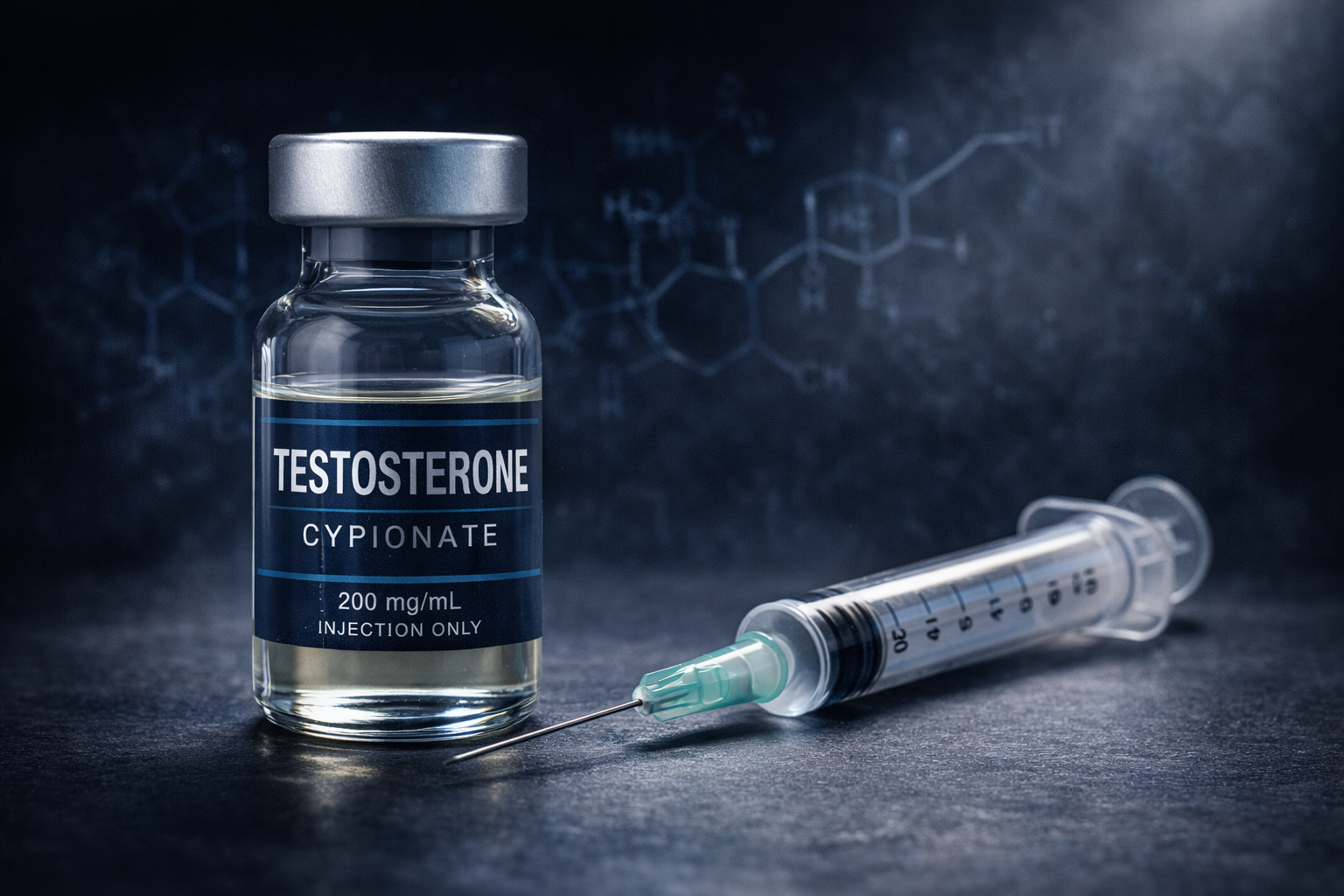
Enanthate vs. Cypionate
Extremely similar:
- Enanthate: 7-carbon ester, 7-10 day half-life
- Cypionate: 8-carbon ester, 8-12 day half-life
- Functionally interchangeable
- Virtually identical
The minor differences:
- Cypionate slightly longer half-life (1-2 days)
- Enanthate more common in Europe
- Cypionate more common in US
- No practical difference in results
- Geographic preference only
The verdict:
- Choose based on availability and price
- No reason to prefer one over the other
- Interchangeable
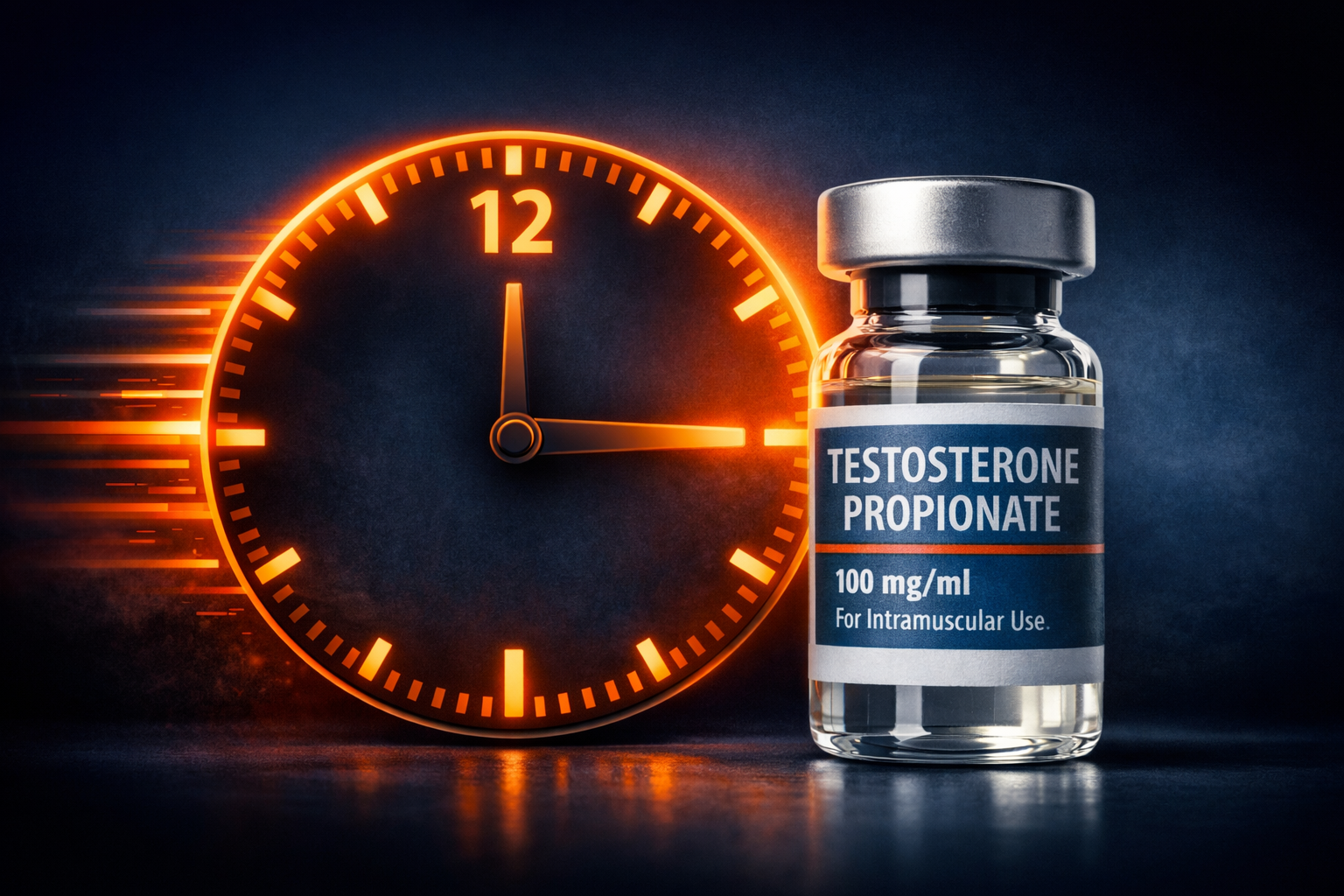
Enanthate vs. Propionate
Significantly different:
- Enanthate: 7-10 day half-life, 1-2x weekly injection
- Propionate: 2-3 day half-life, EOD or daily injection
- Different user experiences
Enanthate advantages:
- Convenient (fewer injections)
- Stable long-term levels
- Simpler protocol
- Ease of use
Propionate advantages:
- Rapid onset (results in days)
- Precise control (adjust quickly)
- Faster PCT (3-4 days vs. 2 weeks)
- Control and speed
The choice:
- Beginners: Enanthate (simplicity)
- Experienced wanting control: Propionate
- Experience-dependent
Enanthate vs. Sustanon
Sustanon (multi-ester blend):
- Contains 4 esters (propionate, phenylpropionate, isocaproate, decanoate)
- Half-life determined by longest ester (decanoate, 15-20 days)
- Marketed as “best of all worlds”
- Complex formulation
The reality:
- No advantage over enanthate
- More expensive
- Longer PCT wait (3-4 weeks vs. 2 weeks)
- Marketing over function
The verdict:
- Enanthate simpler and equally effective
- Enanthate preferred
This article is informational only. We do not condone or recommend steroid use. If considering any hormone therapy, work with qualified medical professionals and understand the serious health risks involved.
REFERENCES
SECTION 1 — Pharmacokinetics: half-life, steady state, and injection frequency
[1] Pastuszak AW et al. — PMC/Andrology, 2022 Comprehensive pharmacokinetics review of testosterone therapy formulations; following IM injection of testosterone enanthate or cypionate, supraphysiological levels occur within the first week, then decline toward sub-therapeutic levels before the next dose — creating a large peak-to-trough ratio; more frequent smaller injections (e.g., twice weekly) achieve more stable blood levels with lower peak-to-trough ratios than once-weekly or biweekly dosing; testosterone enanthate has a terminal elimination half-life of approximately 4.5 days in the blood after enzymatic ester cleavage; steady-state serum testosterone concentration achieved by approximately week 6 with consistent weekly administration; establishes the pharmacokinetic rationale for the article’s injection frequency guidance https://pmc.ncbi.nlm.nih.gov/articles/PMC9293229/
[2] Wikipedia — Pharmacokinetics of Testosterone Encyclopedic compilation of published testosterone ester pharmacokinetic data; testosterone enanthate oil solution by IM injection has an elimination half-life of 4.5 days; testosterone cypionate: approximately 8 days; testosterone propionate: 0.8 days; IM bioavailability approximately 95%; all esters release identical bioactive testosterone after enzymatic cleavage; ester chain length is the sole determinant of release rate and duration; confirms the comparative ester data presented throughout the article https://en.wikipedia.org/wiki/Pharmacokinetics_of_testosterone
SECTION 2 — Anabolic mechanisms and muscle growth
[3] Bhasin S et al. — PubMed/Endocrine Reviews, 2025 Comprehensive mechanistic review of testosterone’s anabolic effects on skeletal muscle; testosterone induces hypertrophy of type I and type II muscle fibers; promotes differentiation of mesenchymal progenitor cells into the myogenic lineage via AR-mediated pathway (AR-β-catenin-TCF4-follistatin); increases myoblast proliferation through polyamine biosynthesis; stimulates GH and IGF-1 secretion; inhibits muscle atrophy genes; both genomic and non-genomic signaling pathways contribute; validates all five muscle-building mechanisms described in the article https://pubmed.ncbi.nlm.nih.gov/41355050/
[4] Bhasin S et al. — PMC/Frontiers in Physiology, 2021 Review of genomic and non-genomic mechanisms of AAS-induced hypertrophy; genomic pathway: AR binding → nuclear translocation → transcription of anabolic genes; non-genomic pathway: membrane receptor activation → mTOR, PI3K/Akt signaling → increased protein synthesis and decreased protein degradation via MuRF-1/MAFbx suppression; satellite cell activation via both AR in myonuclei and satellite cells; AAS with resistance exercise produces greater hypertrophy than either alone; also documents detrimental metabolic and cardiovascular effects of chronic AAS use https://pmc.ncbi.nlm.nih.gov/articles/PMC8087567/
SECTION 3 — Side effects: erythrocytosis and cardiovascular risk
[5] Stojkov NJ et al. — PMC/CMAJ, 2017 Review of testosterone-induced erythrocytosis; testosterone stimulates erythropoiesis via EPO increase, hepcidin suppression, and estradiol-mediated hematopoietic stem cell effects; dose-dependent hematocrit increase begins within one month; short-acting IM testosterone formulations (enanthate/cypionate) associated with highest erythrocytosis rates — approaching 40% — due to supraphysiological peaks; elevated hematocrit increases blood viscosity and thromboembolic risk; FDA warns of venous thromboembolism, heart attack, and stroke risk; management guidelines recommend hematocrit monitoring with therapeutic phlebotomy or dose reduction if >54% https://pmc.ncbi.nlm.nih.gov/articles/PMC5647167/
[6] Saad F et al. — PMC/Steroids, 2015 Review of testosterone, HDL, and cardiovascular risk; supraphysiological androgen doses substantially decrease HDL-C (20–40%), most pronounced in young men using anabolic androgens; testosterone raises hepatic lipase activity, accelerating HDL catabolism; LDL-C may increase 10–30%; the resulting atherogenic lipid profile is dose-dependent; provides the lipid disruption mechanism described in the article’s cholesterol side effect section https://pmc.ncbi.nlm.nih.gov/articles/PMC4527564/
SECTION 4 — HPG axis suppression, PCT, and SERM mechanism
[7] Matsumoto AM et al. — PubMed/Journal of Andrology, 1997 Study of testosterone cypionate-induced HPG axis suppression; basal LH and FSH became undetectable within 2 weeks of starting 250–500mg/week doses; pituitary gonadotropin responses to LHRH disappeared progressively; HPG axis suppression was reversed following cessation; provides precise timeline for suppression onset that directly supports the 2-week PCT wait guideline (equivalent pharmacologically to enanthate doses) https://pubmed.ncbi.nlm.nih.gov/9394096/
[8] Desai A et al. — PMC/Therapeutic Advances in Urology, 2022 Review of HPG axis suppression mechanisms from TRT and AAS; exogenous testosterone and estradiol both exert negative feedback on hypothalamus and pituitary, inhibiting pulsatile GnRH → LH/FSH → intratesticular testosterone; severity proportional to dose and duration; SERMs (clomiphene, tamoxifen) block estrogen receptors at the pituitary, re-stimulating LH and FSH release and restarting endogenous testosterone production; SERM-based PCT mechanism fully documented — validates the article’s PCT section explaining why clomid and nolvadex work https://pmc.ncbi.nlm.nih.gov/articles/PMC9243576/
[9] Rahnema CD et al. — PMC/Fertility and Sterility, 2014 Review of HPG axis recovery after TRT/AAS cessation; spontaneous recovery occurs in most cases with less than 1 year of use within 1 year of cessation; recovery of spermatogenesis took a mean of 10.4 months after AAS cessation (FSH recovery at 19 months); longer duration associated with slower recovery; clomiphene citrate (CC) and hCG accelerate HPG axis restoration; provides evidence base for PCT timing and expected recovery duration, and supports the article’s concern about rare cases of permanent suppression requiring lifetime TRT https://pmc.ncbi.nlm.nih.gov/articles/PMC4854084/





Leave a Reply
You must be logged in to post a comment.