
Think you understand oxytocin? Discover how this remarkable hormone affects every aspect of female health, from fertility and childbirth to mood, relationships, stress resilience, and longevity.
When most people hear “oxytocin,” they immediately think of childbirth and breastfeeding. While these are indeed crucial functions, this perspective dramatically understates the profound impact oxytocin has on women’s lives.
This powerful hormone influences far more than reproduction. It shapes how women form relationships, manage stress, experience pleasure, maintain health, recover from challenges, and navigate the emotional landscape of daily life.
From adolescence through menopause and beyond, oxytocin plays a central role in female physiology and psychology. Understanding how it works and how to optimize it can transform your health, relationships, emotional well-being, and quality of life.
In this comprehensive guide, I’ll explain exactly what oxytocin does in the female body, reveal its surprising effects that extend far beyond motherhood, show you how to naturally increase your levels, and discuss supplements that support optimal production.
Whether you’re navigating fertility challenges, managing stress, seeking better relationships, or simply wanting to optimize your health, understanding oxytocin is essential.
Let’s explore the science.
TABLE OF CONTENTS
- Why Oxytocin Is Especially Important for Women
- Effect 1: Childbirth and Labor
- Effect 2: Breastfeeding and Lactation
- Effect 3: Maternal Bonding and Attachment
- Effect 4: Romantic Relationships and Pair Bonding
- Effect 5: Sexual Response and Pleasure
- Effect 6: Stress Reduction and Anxiety Management
- Effect 7: Social Bonding and Friendship
- Effect 8: Cardiovascular Health
- Effect 9: Pain Management
- Effect 10: Mood Regulation and Mental Health
- Effect 11: Immune Function
- Effect 12: Bone Health
- Method 1: Physical Touch and Affection
- Method 2: Meaningful Social Connection
- Method 3: Mother-Child Bonding Activities
- Method 4: Mindfulness and Relaxation Practices
- Method 5: Acts of Kindness and Helping Others
- Method 6: Animal Interaction
- Method 7: Music, Singing, and Dancing
- Method 8: Warm Environments and Comfort
- Method 9: Gratitude Practice
- The Bottom Line: Oxytocin Is Essential for Female Health and Happiness
What Is Oxytocin?
Oxytocin is a peptide hormone and neuropeptide that functions as both a hormone (traveling through the bloodstream) and a neurotransmitter (acting directly in the brain).
The Basic Biology
Chemical structure: A nonapeptide consisting of nine amino acids arranged in a specific sequence with a disulfide bridge
Production site: Hypothalamus (specifically, the paraventricular and supraoptic nuclei)
Release site: Posterior pituitary gland (neurohypophysis)
Target tissues: Distributed throughout the body and brain, including receptors in the uterus, breasts, heart, blood vessels, brain regions involved in emotion and social behavior
Historical Discovery
Oxytocin was the first polypeptide hormone to be sequenced and synthesized, earning Vincent du Vigneaud the 1955 Nobel Prize in Chemistry.
Initially recognized only for its role in childbirth and lactation, decades of research have revealed its far more extensive functions in behavior, emotion, and physiology.
Why Oxytocin Is Especially Important for Women
While both men and women produce and utilize oxytocin, the hormone plays uniquely significant roles in female physiology due to:
Higher baseline levels: Women generally have higher circulating oxytocin levels than men, particularly during reproductive years.
Estrogen synergy: Estrogen increases oxytocin receptor density and sensitivity, creating a powerful interaction unique to women.
Reproductive functions: Oxytocin is essential for childbirth, breastfeeding, and maternal bonding in ways that don’t apply to men.
Stress response differences: Women’s stress response systems interact with oxytocin differently than men’s, utilizing it as a primary stress-buffering mechanism.
Social bonding patterns: Research suggests women may rely more heavily on oxytocin-mediated social bonding for stress relief and emotional regulation.
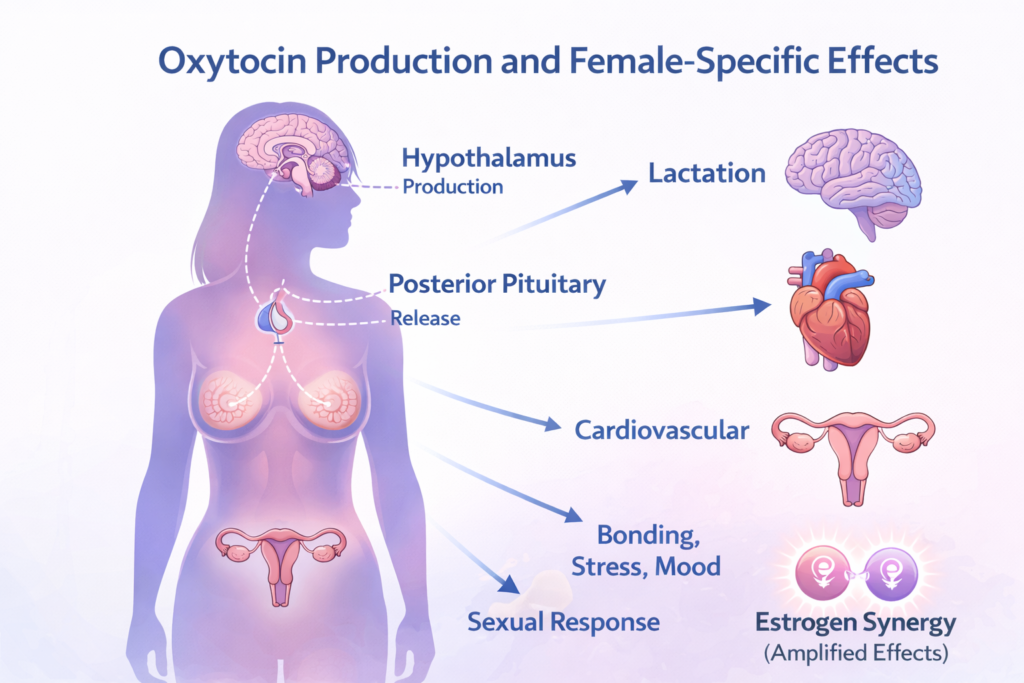
Oxytocin’s Effects on Women: The Complete Picture
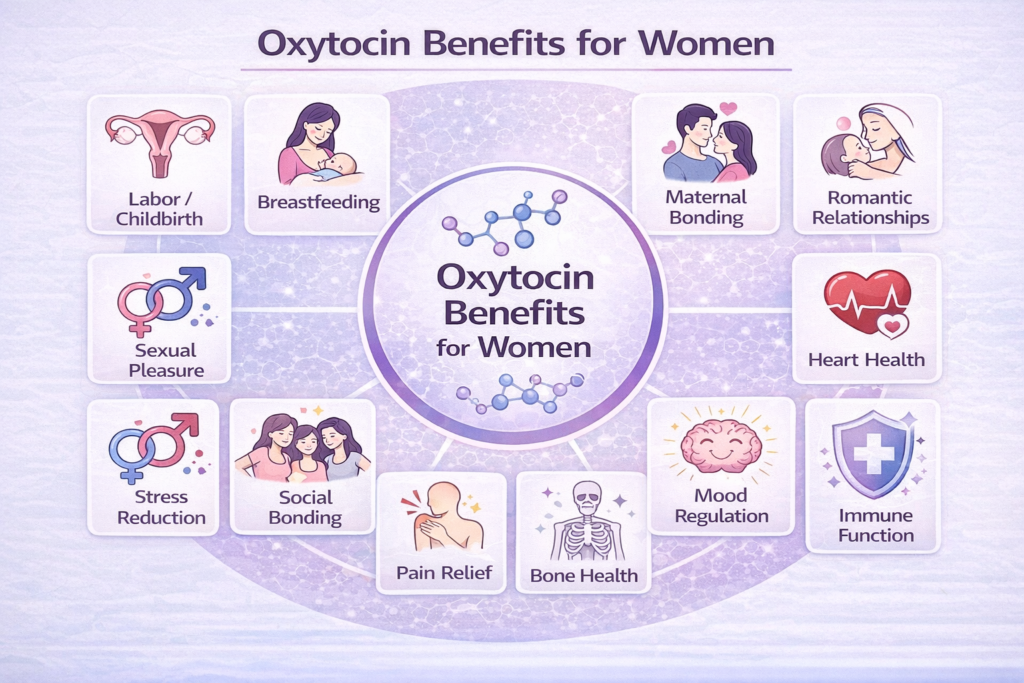
Let’s examine the full spectrum of oxytocin’s influence on female health and well-being.
Effect 1: Childbirth and Labor
This is oxytocin’s most famous function, and for good reason.
During labor, oxytocin:
Initiates and maintains uterine contractions: As labor approaches, oxytocin receptors in the uterus increase dramatically. Oxytocin pulses trigger the rhythmic contractions that dilate the cervix and push the baby through the birth canal.
Creates a positive feedback loop: As contractions progress and the baby moves down the birth canal, pressure on the cervix triggers more oxytocin release, which causes stronger contractions, creating an escalating cycle that culminates in delivery.
Facilitates cervical dilation: Helps soften and open the cervix to allow the baby to pass through.
Reduces bleeding after delivery: Post-delivery oxytocin causes uterine contractions that compress blood vessels and minimize postpartum hemorrhage.
Medical applications:
Synthetic oxytocin (Pitocin) is commonly used to:
- Induce labor when medically necessary
- Augment slow or stalled labor
- Prevent or treat postpartum hemorrhage
Natural oxytocin enhancement during labor:
Research shows that certain interventions can support natural oxytocin production during childbirth:
- Dim, quiet, private environment
- Continuous support from a trusted companion
- Freedom of movement and position changes
- Skin-to-skin contact
- Minimal medical interventions when possible
Effect 2: Breastfeeding and Lactation
Oxytocin is absolutely essential for successful breastfeeding.
The milk ejection reflex (let-down):
When a baby suckles at the breast, nerve signals travel from the nipple to the hypothalamus, triggering oxytocin release. This oxytocin causes myoepithelial cells surrounding the milk-producing alveoli to contract, ejecting milk into the ducts and out through the nipple.
Without oxytocin, milk production may occur, but milk cannot be effectively delivered to the baby.
Factors that enhance oxytocin during breastfeeding:
Skin-to-skin contact: Holding the baby against bare skin maximizes oxytocin release.
Relaxation: Stress and anxiety inhibit oxytocin. Creating a calm, comfortable environment supports let-down.
Breast stimulation: Even thinking about the baby or hearing the baby cry can trigger oxytocin release in breastfeeding mothers.
Warmth: Warm compresses or warm showers before nursing can facilitate let-down.
Factors that inhibit oxytocin during breastfeeding:
Stress and anxiety: Elevated cortisol antagonizes oxytocin.
Pain: Unresolved pain from poor latch or other issues can interfere with the reflex.
Alcohol: Even moderate consumption can suppress oxytocin.
Certain medications: Some drugs interfere with oxytocin pathways.
Effect 3: Maternal Bonding and Attachment
Beyond the mechanics of childbirth and breastfeeding, oxytocin plays a crucial role in the emotional bond between mother and child.
How it creates bonding:
During pregnancy: Oxytocin levels gradually increase throughout pregnancy, priming the brain for maternal behavior.
During childbirth: The massive oxytocin surge during labor and delivery creates an intense bonding window immediately after birth.
During breastfeeding: Each nursing session releases oxytocin, reinforcing the emotional connection.
Through eye contact and touch: Gazing at the baby, holding, cuddling, and caring for the infant all trigger oxytocin release.
The result:
This oxytocin-mediated bonding creates:
- Intense feelings of love and protectiveness
- Heightened sensitivity to the baby’s needs
- Motivation to provide care despite exhaustion
- Ability to read and respond to infant cues
- Deep emotional attachment
Challenges when oxytocin signaling is disrupted:
Postpartum depression and bonding difficulties can occur when oxytocin systems don’t function optimally. Factors that may contribute include:
- Traumatic birth experience
- C-section delivery (which bypasses some natural oxytocin surges)
- Inability to breastfeed
- Severe sleep deprivation
- Lack of social support
- Pre-existing mental health conditions
Support for maternal bonding:
Skin-to-skin contact, rooming-in with the baby, breastfeeding support, and adequate rest all support oxytocin-mediated bonding, even when challenges arise.
Effect 4: Romantic Relationships and Pair Bonding
Oxytocin doesn’t just bond mothers to babies. It’s central to romantic attachment and long-term partnerships.
During romantic relationships, oxytocin:
Facilitates falling in love: The intense feelings of early romance are partly mediated by oxytocin surges during physical contact, eye gazing, and intimate conversation.
Strengthens pair bonding: Oxytocin helps create the deep attachment that sustains long-term relationships beyond initial infatuation.
Enhances trust and intimacy: Facilitates vulnerability and emotional openness necessary for deep connection.
Promotes monogamy: Research suggests oxytocin may reduce interest in alternative partners when in a committed relationship.
The role of physical intimacy:
Kissing: Passionate kissing triggers oxytocin release in both partners.
Cuddling and holding hands: Non-sexual physical affection is a powerful oxytocin stimulator.
Sexual activity: Arousal, orgasm, and post-coital cuddling all involve significant oxytocin release, bonding partners together.
Eye contact: Sustained, loving eye contact with a partner releases oxytocin.
Interesting finding:
Studies show that women in happy, stable relationships have higher baseline oxytocin levels than single women or those in troubled relationships, suggesting oxytocin both creates and reflects relationship quality.
Effect 5: Sexual Response and Pleasure
Oxytocin plays a central role in female sexual function and satisfaction.
During sexual activity:
Arousal phase: Oxytocin levels begin rising during arousal, enhancing sensitivity and pleasure.
Plateau and orgasm: Oxytocin surges dramatically during orgasm, contributing to the intense pleasure and emotional release.
Resolution phase: Post-orgasm oxytocin creates feelings of relaxation, contentment, and bonding with a partner.
Multiple benefits:
Enhanced pleasure: Oxytocin increases sensitivity to pleasurable sensations.
Emotional connection: Links physical pleasure with emotional bonding, making sex more satisfying in the context of a loving relationship.
Stress relief: The oxytocin surge provides powerful stress reduction and mood improvement.
Pain reduction: Oxytocin has analgesic properties that may reduce discomfort during sex.
Improved lubrication and arousal: Proper oxytocin function supports healthy sexual response.
Challenges:
Stress, anxiety, relationship problems, and certain medications can interfere with oxytocin release during sex, potentially impacting satisfaction and pleasure.
Effect 6: Stress Reduction and Anxiety Management
One of oxytocin’s most valuable effects for women is its powerful anti-stress and anti-anxiety properties.
The “tend-and-befriend” response:
While men typically respond to stress with “fight-or-flight,” research suggests women often utilize a “tend-and-befriend” response, mediated largely by oxytocin.
How it works:
Under stress, women tend to:
- Seek social support and connection
- Care for others (tending)
- Build and strengthen social bonds (befriending)
This oxytocin-driven response:
- Reduces cortisol levels
- Lowers blood pressure and heart rate
- Provides emotional comfort
- Creates resilience against future stressors
The cortisol-oxytocin relationship:
Oxytocin and cortisol have an inverse relationship. When oxytocin rises, cortisol typically falls, creating:
- Reduced anxiety and worry
- Improved mood
- Greater emotional stability
- Better stress resilience
- Enhanced ability to cope with challenges
Why this matters:
Women experience anxiety disorders at roughly twice the rate of men. Optimizing oxytocin through social connection, physical affection, and stress-reduction practices can be a powerful tool for managing anxiety naturally.
Effect 7: Social Bonding and Friendship
Beyond romantic relationships and maternal bonds, oxytocin facilitates female friendships and social connections.
How oxytocin supports female friendship:
Trust building: Facilitates the vulnerability and openness necessary for deep friendship.
Empathy enhancement: Increases ability to understand and share friends’ emotional experiences.
Social memory: Helps recognize and remember people, maintaining relationship continuity.
Cooperation: Promotes working together and supporting each other.
The importance of female friendship:
Research consistently shows that strong female friendships provide:
- Powerful stress buffering
- Improved physical health outcomes
- Greater longevity
- Enhanced emotional well-being
- Support during life transitions
Oxytocin mediates many of these benefits, making social connection not just enjoyable but physiologically beneficial.
Effect 8: Cardiovascular Health
Oxytocin provides significant cardiovascular benefits, particularly important as women age.
How oxytocin protects the heart:
Vasodilation: Oxytocin causes blood vessels to relax and dilate, reducing blood pressure.
Reduced inflammation: Has anti-inflammatory effects throughout the cardiovascular system.
Stress buffering: By reducing cortisol, indirectly protects against stress-related cardiovascular damage.
Heart rate regulation: Helps maintain healthy heart rate variability, a marker of cardiovascular health.
Research findings:
Studies show that women with:
- Strong social connections (which boost oxytocin)
- Satisfying romantic relationships
- Regular physical affection
Have significantly lower rates of:
- Hypertension
- Heart disease
- Stroke
- Cardiovascular mortality
The touch prescription:
Regular hugs, cuddling, massage, and other forms of affectionate touch literally support heart health through oxytocin-mediated mechanisms.
Effect 9: Pain Management
Oxytocin has notable analgesic (pain-relieving) properties particularly relevant for women.
Mechanisms of pain relief:
Direct analgesic effect: Oxytocin receptors in pain pathways can modulate pain signal transmission.
Anti-inflammatory action: Reduces inflammation that contributes to many pain conditions.
Stress reduction: Since stress amplifies pain perception, oxytocin’s stress-reducing effects indirectly reduce pain.
Endorphin interaction: Works synergistically with endorphins to enhance pain relief.
Applications for women:
Menstrual cramps: Oxytocin may help reduce dysmenorrhea (period pain).
Labor pain: Natural oxytocin release during labor has pain-modulating effects (though the intensity of contractions can override this).
Chronic pain conditions: Conditions like fibromyalgia, which disproportionately affect women, may benefit from oxytocin optimization.
Headaches and migraines: Some research suggests oxytocin may help with headache relief.
Effect 10: Mood Regulation and Mental Health
Oxytocin plays a significant role in mood regulation and may help protect against depression and anxiety.
Antidepressant effects:
Research suggests oxytocin has antidepressant properties through:
- Increasing serotonin activity
- Reducing cortisol
- Enhancing positive social interactions
- Improving sleep quality
- Promoting emotional resilience
Particularly relevant for women:
Women experience depression at roughly twice the rate of men, particularly:
- During hormonal transitions (postpartum, perimenopause)
- When experiencing social isolation
- Following relationship loss or trauma
Oxytocin optimization through social connection, therapy, and lifestyle changes can be a valuable component of depression treatment and prevention.
Anxiety reduction:
Oxytocin’s anxiolytic (anti-anxiety) effects are well-documented, particularly for social anxiety. It helps women:
- Feel calmer in social situations
- Trust others more readily
- Interpret ambiguous social cues more positively
- Reduce worry and rumination
Effect 11: Immune Function
Emerging research suggests oxytocin supports immune health, potentially contributing to women’s typically stronger immune responses compared to men.
How oxytocin supports immunity:
Anti-inflammatory effects: Reduces chronic inflammation that undermines immune function.
Stress buffering: Since chronic stress suppresses immunity, oxytocin’s stress-reducing properties indirectly support immune health.
Wound healing: May accelerate healing through anti-inflammatory and tissue-repair mechanisms.
Social support connection: The immune benefits of strong social connections may be partly mediated by oxytocin.
Effect 12: Bone Health
Intriguing research suggests oxytocin may play a role in bone metabolism and osteoporosis prevention.
The mechanism:
Oxytocin receptors exist on bone cells (osteoblasts and osteoclasts). Oxytocin appears to:
- Stimulate bone formation
- Inhibit excessive bone breakdown
- Support bone density maintenance
Why this matters for women:
Women face significantly higher osteoporosis risk than men, particularly after menopause when estrogen declines. If oxytocin supports bone health, optimization could be valuable for prevention.
Current research status:
This is an emerging area of study. While promising, more research is needed to fully understand oxytocin’s role in bone health and develop clinical applications.
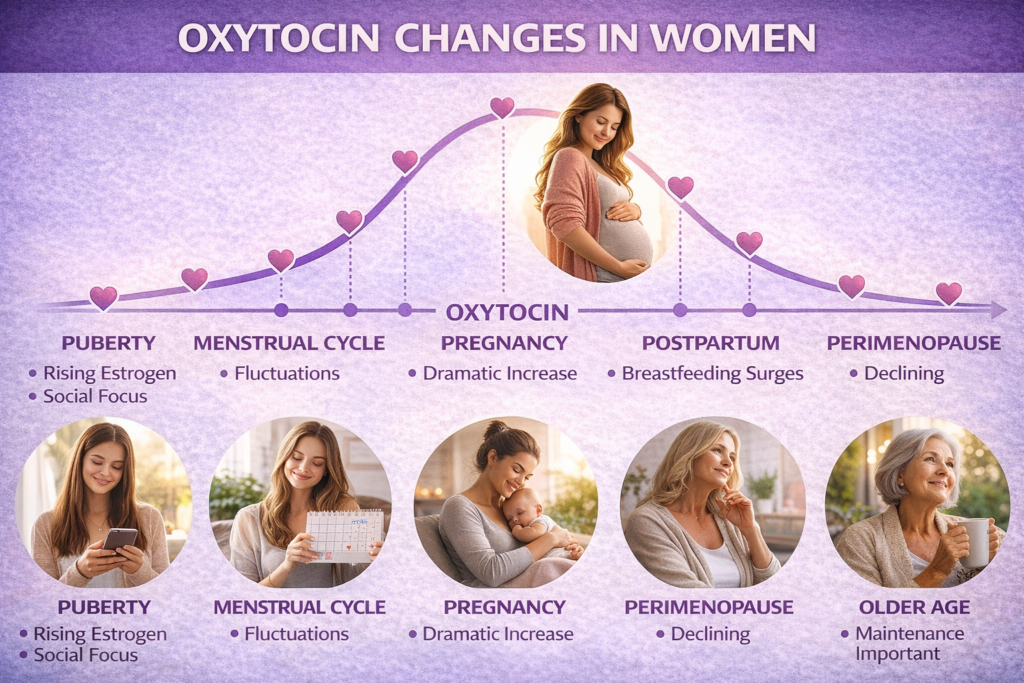
How Women’s Oxytocin Changes Throughout Life
Oxytocin levels and sensitivity fluctuate across the female lifespan due to hormonal changes.
Puberty and Adolescence
Rising estrogen increases oxytocin receptor density, heightening sensitivity to social cues and intensifying desire for peer connection and romantic relationships.
This contributes to the intense focus on friendships and social belonging characteristic of adolescence.
Menstrual Cycle
Oxytocin levels fluctuate throughout the menstrual cycle:
Follicular phase (pre-ovulation): Rising estrogen increases oxytocin sensitivity.
Ovulation: Peak estrogen creates maximum oxytocin receptor density, potentially enhancing bonding with a partner during the most fertile window.
Luteal phase (post-ovulation): Progesterone may modulate oxytocin effects differently than estrogen.
Menstruation: Hormonal withdrawal can affect oxytocin signaling, potentially contributing to premenstrual mood changes.
Pregnancy
Dramatic oxytocin changes during pregnancy:
First trimester: Gradual increase begins.
Second and third trimesters: Steadily rising levels prepare the body for labor and lactation while beginning to prime the brain for maternal behavior.
Oxytocin receptor density increases markedly in the uterus and brain, creating sensitivity for labor and bonding.
Postpartum Period
Immediate postpartum: Massive oxytocin surges during labor and with breastfeeding.
First months: Frequent breastfeeding maintains elevated oxytocin levels.
Challenges: If breastfeeding doesn’t occur or is difficult, oxytocin levels may drop more quickly, potentially contributing to postpartum depression risk.
Perimenopause and Menopause
As estrogen declines, oxytocin signaling changes:
Reduced receptor sensitivity: Lower estrogen means fewer oxytocin receptors and reduced sensitivity.
Potential consequences:
- Changes in stress response patterns
- Mood changes
- Shifts in social behavior and needs
- Possible increased vulnerability to anxiety and depression
Importance of maintaining oxytocin through:
- Strong social connections
- Regular physical affection
- Stress management practices
- Potentially hormone replacement therapy (which may support oxytocin signaling)
Older Age
Maintaining oxytocin function becomes increasingly important:
Social connection, physical affection, and stress management provide oxytocin support that contributes to healthy aging in women.
Research suggests that maintaining strong relationships and social engagement (oxytocin-boosting activities) correlates with better cognitive function and longevity.
How to Naturally Increase Oxytocin Levels in Women
Multiple evidence-based strategies can boost oxytocin naturally.

Method 1: Physical Touch and Affection
Touch is the most powerful oxytocin trigger.
Highly effective forms:
Hugging: 20+ second hugs trigger significant oxytocin release. Make this a daily practice with loved ones.
Cuddling: Extended physical contact (watching TV together, sleeping close, relaxing together) provides sustained oxytocin elevation.
Massage: Both receiving and giving massage increases oxytocin. Consider regular professional massage or partner exchange.
Hand-holding: Simple but effective. Regular hand-holding with a partner or holding hands while walking boosts oxytocin.
Kissing: Passionate kissing creates oxytocin surges.
Sexual intimacy: Foreplay, sexual activity, and particularly orgasm generate powerful oxytocin release.
Skin-to-skin contact: Direct skin contact (particularly for new mothers with babies) maximizes oxytocin.
Important note for women:
Research suggests women may be particularly responsive to oxytocin release through gentle, affectionate touch rather than only sexual contact. Regular non-sexual affection is valuable.
Method 2: Meaningful Social Connection
Quality relationships are oxytocin generators.
What works:
Deep conversations: Authentic, vulnerable discussions with trusted friends trigger oxytocin.
Shared laughter: Laughing together creates bonding and releases oxytocin.
Giving and receiving support: Both sides of emotional support increase the hormone.
Collaborative activities: Working together toward common goals promotes oxytocin.
Girls’ nights and social gatherings: Regular time with female friends provides oxytocin benefits.
Book clubs, hobby groups, volunteer organizations: Shared interests and regular social contact.
Quality over quantity:
One deep, meaningful interaction provides more oxytocin benefit than multiple superficial encounters.
Method 3: Mother-Child Bonding Activities
For mothers, interaction with children is powerfully oxytocin-boosting.
Particularly effective:
Breastfeeding: If nursing, this provides regular oxytocin surges throughout the day.
Skin-to-skin contact: Holding baby against bare chest.
Eye gazing: Looking lovingly into your child’s eyes.
Singing and talking to baby: Vocal interaction enhances bonding.
Gentle caregiving: Bathing, dressing, comforting all release oxytocin.
Reading together: For older children, cuddling while reading combines touch and connection.
Playing together: Engaged, joyful play releases oxytocin in both mother and child.
Method 4: Mindfulness and Relaxation Practices
Stress reduction supports oxytocin production.
Effective practices:
Meditation: 10-20 minutes of mindfulness meditation daily enhances oxytocin while reducing cortisol.
Loving-kindness meditation: Specifically focusing compassion on others is particularly effective for oxytocin.
Yoga: Combines movement, breathing, mindfulness, and often social connection (in classes) for comprehensive oxytocin support.
Deep breathing exercises: Activates parasympathetic nervous system, supporting oxytocin release.
Progressive muscle relaxation: Systematic relaxation reduces stress and supports hormonal balance.
Method 5: Acts of Kindness and Helping Others
Generosity and compassion trigger oxytocin release.
Examples:
Volunteering: Regular volunteer work creates sustained oxytocin increases.
Random acts of kindness: Small, spontaneous generous actions throughout the day.
Charitable giving: Donating money, time, or resources to meaningful causes.
Helping friends and family: Going out of your way to support loved ones.
Mentoring: Sharing wisdom and supporting others’ growth.
The giver’s high:
These acts benefit recipients but also provide profound satisfaction, joy, and oxytocin to the giver. Win-win.
Method 6: Animal Interaction
Pets, particularly dogs, are powerful oxytocin boosters.
What research shows:
Petting a dog, making eye contact with your pet, or playing with animals creates mutual oxytocin release in both human and animal.
Benefits for women:
Unconditional affection: Pets provide non-judgmental love that triggers oxytocin.
Touch and cuddling: Physical contact with pets offers touch benefits.
Stress relief: Immediate calming from animal interaction.
Social facilitation: Walking dogs creates social opportunities with other pet owners.
For women without pets: Volunteer at animal shelters, spend time with friends’ pets, visit pet cafes, or consider pet ownership if circumstances allow.
Method 7: Music, Singing, and Dancing
Musical activities can increase oxytocin significantly.
Particularly effective:
Group singing: Choirs, singing circles, or informal singing with friends creates powerful bonding and oxytocin release.
Playing music collaboratively: Bands, orchestras, or casual jam sessions.
Dancing: Especially partner dancing or group dancing involving coordination, touch, and synchrony.
Listening to meaningful music: Emotionally resonant music can trigger oxytocin, particularly songs associated with positive memories.
Method 8: Warm Environments and Comfort
Warmth appears to facilitate oxytocin release.
Practical applications:
Warm baths: Soaking in a warm bath promotes relaxation and oxytocin.
Sauna or steam room: Regular heat exposure may support oxytocin while providing other health benefits.
Warm beverages: The ritual and warmth of tea or cocoa can trigger mild oxytocin responses.
Cozy environments: Creating warm, comfortable spaces for relaxation and connection.
Method 9: Gratitude Practice
Focusing on gratitude and appreciation may support oxytocin.
How to practice:
Gratitude journaling: Writing down things you’re grateful for daily.
Expressing appreciation: Telling people specifically what you appreciate about them.
Savoring positive moments: Consciously dwelling on and appreciating good experiences.
Gratitude meditation: Focused practice on feeling grateful.
Supplements That Support Oxytocin Production in Women
While oxytocin itself isn’t available as an oral supplement, several nutrients support its natural production.
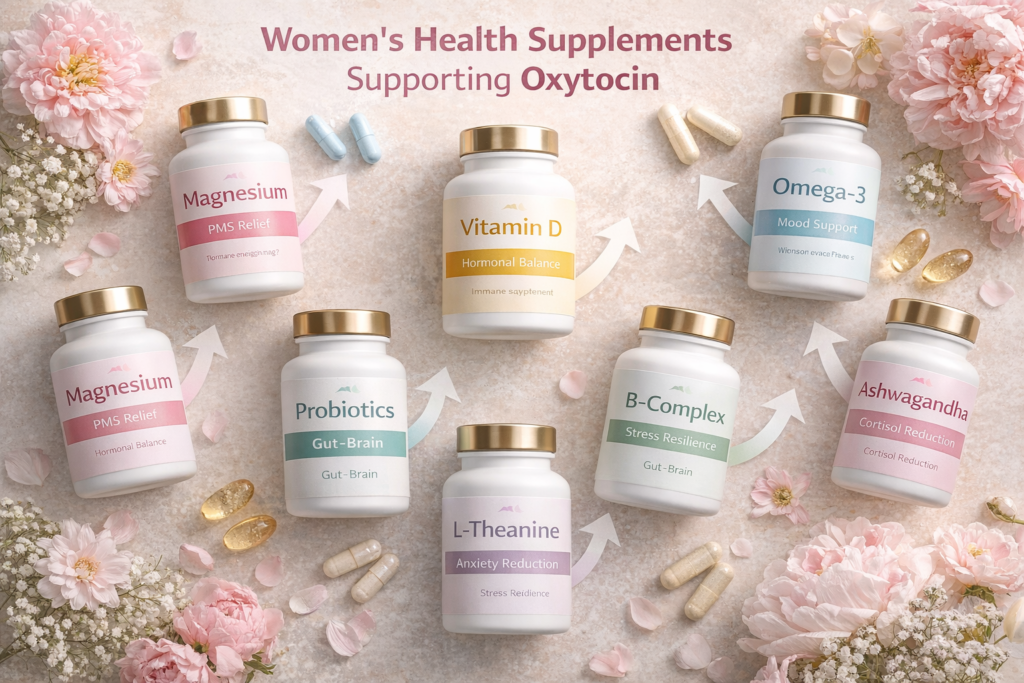
Supplement 1: Magnesium
Why it’s important:
Magnesium is involved in over 300 biochemical reactions and plays a crucial role in neurological function and hormonal regulation.
How it supports oxytocin:
Research suggests magnesium helps promote oxytocin release, particularly during relaxation and physical contact.
Dosage for women: 300-400mg daily. Choose magnesium glycinate, citrate, or threonate for better absorption.
Additional benefits:
- Reduced PMS symptoms
- Better sleep quality
- Reduced muscle tension and cramps
- Improved stress resilience
- Stronger bones
When it’s particularly helpful:
- Premenstrual phase (reduces cramping and mood issues)
- Perimenopause (supports hormonal transitions)
- High-stress periods
Supplement 2: Vitamin D
Why it’s important:
Vitamin D functions more like a hormone than a vitamin and is crucial for hormonal balance.
How it supports oxytocin:
Adequate vitamin D levels are fundamental for optimal hormonal function, including oxytocin production and receptor sensitivity.
How to optimize:
Sun exposure: 15-30 minutes of midday sun on significant skin area (arms, legs, back) is ideal.
Supplementation: 2,000-5,000 IU daily if sun exposure is insufficient.
Testing: Get blood levels checked. Target range: 40-60 ng/mL.
Additional benefits:
- Improved mood
- Stronger immune function
- Better bone health
- Reduced autoimmune disease risk
- Enhanced fertility
Supplement 3: Omega-3 Fatty Acids (EPA and DHA)
Why they’re important:
Essential fatty acids crucial for brain health, inflammation control, and hormonal balance.
How they support oxytocin:
Omega-3s help regulate neurotransmitters and promote neurological well-being, creating optimal conditions for oxytocin production and function.
Dosage: 1,000-2,000mg combined EPA+DHA daily from high-quality, tested fish oil.
Additional benefits:
- Reduced inflammation
- Improved mood (particularly helpful for postpartum depression)
- Better cardiovascular health
- Enhanced cognitive function
- Reduced menstrual cramping
- Healthier skin
Food sources: Fatty fish (salmon, sardines, mackerel), though supplementation ensures consistent therapeutic doses.
Supplement 4: Vitamin C
Why it’s important:
Powerful antioxidant involved in hormone and neurotransmitter synthesis.
How it supports oxytocin:
Vitamin C is necessary for the synthesis of various hormones and supports overall hormonal health, including oxytocin production.
Dosage: 500-2,000mg daily, divided into multiple doses for better absorption.
Additional benefits:
- Immune support
- Collagen production (skin, joints, bones)
- Iron absorption (important for women)
- Antioxidant protection
- Adrenal support during stress
Supplement 5: B-Complex Vitamins
Why they’re important:
B vitamins are essential for neurological function, mood regulation, and energy production.
Particular attention to:
Folate (B9): Crucial for neurotransmitter synthesis. Use methylfolate (5-MTHF) for better absorption.
B6: Important for neurotransmitter production and hormonal balance.
B12: Essential for neurological health and mood regulation.
How they support oxytocin:
B vitamins support the neurological infrastructure necessary for optimal oxytocin signaling.
Dosage: A quality B-complex providing therapeutic doses of all B vitamins.
Additional benefits:
- Improved energy
- Better mood
- Reduced PMS symptoms
- Enhanced stress resilience
- Supported methylation (crucial for hormone metabolism)
Supplement 6: Probiotics (Especially Lactobacillus reuteri)
Why they’re important:
The gut-brain axis significantly influences hormone production, including oxytocin.
How they support oxytocin:
Emerging research suggests specific probiotic strains, particularly Lactobacillus reuteri, may increase oxytocin production through the gut-brain connection.
Dosage: Multi-strain probiotic with at least 10-50 billion CFUs, ideally including L. reuteri.
Additional benefits:
- Improved digestion
- Enhanced immune function
- Better mood (gut-brain connection)
- Reduced inflammation
- Potential improvement in skin conditions
Supplement 7: L-Theanine
Why it’s important:
An amino acid found in green tea with remarkable calming properties.
How it supports oxytocin:
By reducing stress and promoting relaxed alertness, L-theanine creates optimal conditions for oxytocin production. Reduced cortisol facilitates oxytocin release.
Dosage: 100-200mg, 1-3 times daily.
Additional benefits:
- Reduced anxiety without drowsiness
- Improved focus and attention
- Better sleep quality
- Enhanced immune function
- Reduced PMS-related anxiety
Particularly helpful for:
- Stressful periods
- Anxiety management
- Improving sleep without sedation
Supplement 8: Ashwagandha
Why it’s important:
An adaptogenic herb that helps balance stress hormones.
How it supports oxytocin:
By reducing cortisol (which antagonizes oxytocin), ashwagandha indirectly supports oxytocin function. Lower stress creates better conditions for oxytocin release.
Dosage: 300-600mg of standardized extract daily.
Additional benefits:
- Reduced cortisol and stress
- Improved thyroid function
- Better sleep quality
- Enhanced libido
- Reduced anxiety
Important note: Consult a healthcare provider before use during pregnancy or breastfeeding.
Factors That Can Suppress Oxytocin in Women
Understanding what reduces oxytocin helps you avoid these pitfalls.
Chronic Stress
High cortisol antagonizes oxytocin. Chronic stress creates a hormonal environment hostile to oxytocin production and function.
Solution: Prioritize stress management through meditation, social connection, adequate sleep, and self-care.
Social Isolation
Lack of meaningful social connection reduces oxytocin and creates a vicious cycle where low oxytocin makes social connection feel less rewarding, leading to further isolation.
Solution: Actively maintain friendships and social connections even when it feels difficult.
Poor Sleep Quality
Inadequate sleep disrupts hormonal balance, including oxytocin production.
Solution: Prioritize 7-9 hours of quality sleep nightly. Create consistent sleep schedule, dark bedroom environment, and pre-bed relaxation routine.
Certain Medications
Some medications can interfere with oxytocin:
- Some antidepressants (though others may support it)
- Certain pain medications
- Some hormonal contraceptives (effects vary by individual and type)
Solution: If you suspect medication is affecting your oxytocin and overall well-being, discuss with your healthcare provider. Never stop medications without medical guidance.
Excessive Alcohol Consumption
Alcohol interferes with oxytocin production and receptor sensitivity.
Solution: Moderate alcohol intake or consider eliminating it, particularly if struggling with mood, anxiety, or relationship issues.
Traumatic Experiences
Trauma, especially interpersonal trauma, can disrupt oxytocin signaling and make trust and bonding difficult.
Solution: Trauma-informed therapy (EMDR, somatic experiencing, etc.) can help restore healthy oxytocin function. This is professional work, not just lifestyle change.
Lack of Physical Touch
Without regular affectionate touch, oxytocin production decreases.
Solution: Prioritize physical affection with partners, children, friends (where appropriate), and consider professional massage.
The Bottom Line: Oxytocin Is Essential for Female Health and Happiness
Oxytocin’s influence on women extends far beyond childbirth and breastfeeding, affecting virtually every aspect of health and well-being:
✅ Reproductive health (childbirth, breastfeeding, fertility)
✅ Relationships (maternal bonding, romantic attachment, friendships)
✅ Emotional well-being (stress relief, anxiety reduction, mood regulation)
✅ Physical health (cardiovascular function, pain management, immune support)
✅ Sexual satisfaction and pleasure
✅ Social connection and empathy
✅ Overall quality of life and longevity
The remarkable news: You have significant control over your oxytocin levels through simple, accessible lifestyle practices.
The comprehensive approach:
Prioritize meaningful relationships: Invest time and energy in deep connections with partners, children, family, and friends.
Embrace physical affection: Regular hugs, cuddling, hand-holding, and intimate touch.
Manage stress effectively: Meditation, yoga, adequate sleep, and stress-reduction practices.
Help others: Acts of kindness, volunteering, and generosity.
Stay physically active: Exercise supports overall hormonal balance.
Consider strategic supplementation: Magnesium, vitamin D, omega-3s, and others as needed based on your individual situation.
Maintain strong female friendships: The “tend-and-befriend” response is powerfully protective for women.
Seek support when needed: Therapy, medical care, and community support when facing challenges.
Optimizing oxytocin isn’t just about feeling good, though that’s certainly valuable. It’s about supporting every system in your body, from your heart to your immune system, from your stress response to your ability to form and maintain the relationships that make life meaningful.
In our increasingly isolated, high-stress modern world, oxytocin optimization may be more crucial than ever for women’s health and happiness.
Take action today. Hug someone you love. Call a friend for a real conversation. Schedule regular self-care time. Consider the supplements that might support your individual needs.
Your body, your relationships, and your overall well-being are counting on it.
EMBRACE CONNECTION. OPTIMIZE OXYTOCIN. THRIVE IN EVERY ASPECT OF LIFE.
Ready to optimize every aspect of your hormonal health for peak well-being, vibrant relationships, and resilient health throughout your life? Oxytocin is just one crucial piece. Get a complete, science-based approach to naturally supporting estrogen, progesterone, thyroid function, cortisol management, and overall endocrine balance. Build the health, vitality, and life you deserve at every stage.




Leave a Reply
You must be logged in to post a comment.