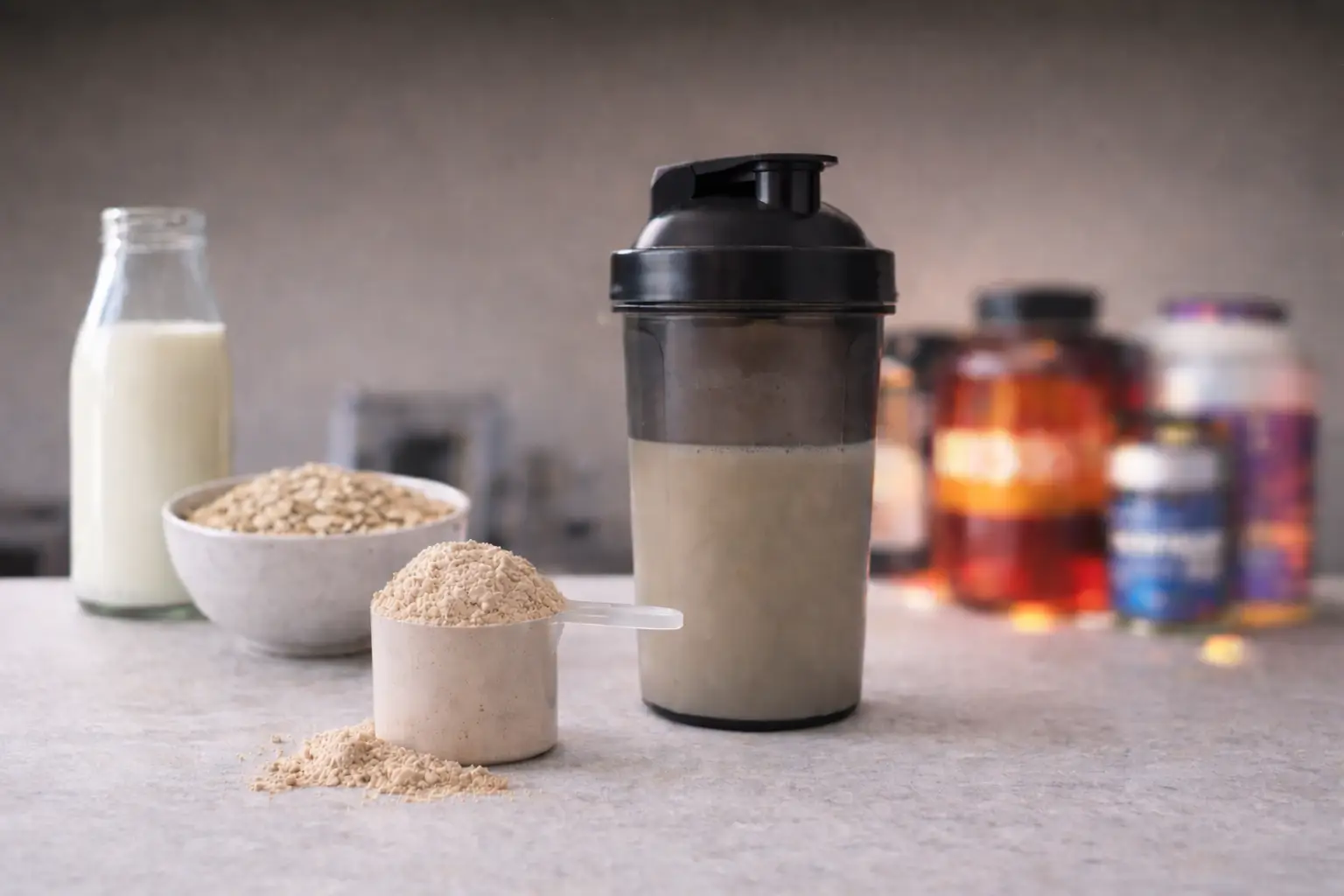
Is whey protein a miracle muscle builder or just overpriced powder? Here’s everything you need to know to make an informed decision.
Walk into any gym and you’ll see shaker bottles everywhere. Open any fitness influencer’s cabinet and you’ll find rows of protein powder tubs. Browse any bodybuilding forum and you’ll see endless debates about which brand is “best.”
Whey protein has become synonymous with muscle building. For many people, it’s the first supplement they ever buy. For others, it’s a daily staple they can’t imagine living without.
But here’s what most people don’t understand: whey protein is surrounded by more myths, misconceptions, and marketing BS than almost any other supplement on the market.
Some people treat it like a magic muscle-building potion. Others avoid it completely, convinced it’s dangerous or unnecessary. Both extremes are wrong.
In this comprehensive guide, I’m going to cut through the noise and give you the scientific truth about whey protein. You’ll learn what it actually is, how it works, what it can and cannot do, and whether you actually need it.
No marketing hype. No bro science. Just facts.
Let’s separate the myths from reality.
TABLE OF CONTENTS
- Myth 1: Whey Protein Is a Steroid or "Unnatural"
- Myth 2: You Can Only Absorb 30 Grams of Protein Per Meal
- Myth 3: Whey Protein Damages Your Kidneys
- Myth 4: Whey Protein Makes You Fat
- Myth 5: You Need Whey Protein to Build Muscle
- Myth 6: More Expensive Whey Is Better Quality
- Myth 7: Whey Protein Causes Acne
- Myth 8: Women Shouldn't Use Whey Protein
- The Bottom Line: Is Whey Protein Worth It?
What Exactly Is Whey Protein?
Before we can discuss whether whey protein is worth your money, you need to understand what it actually is.
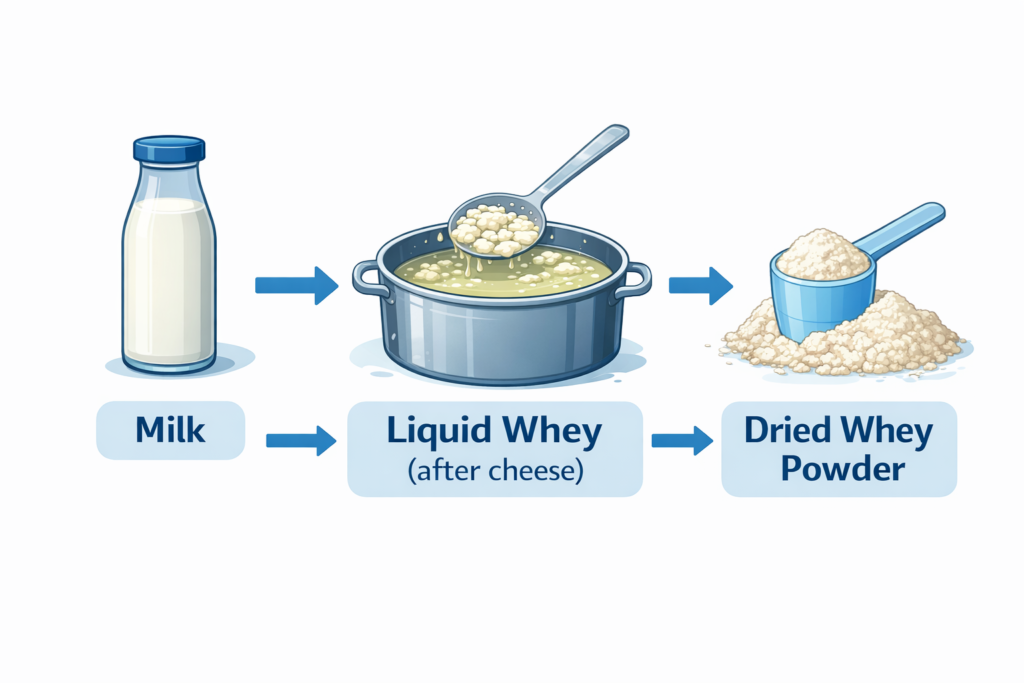
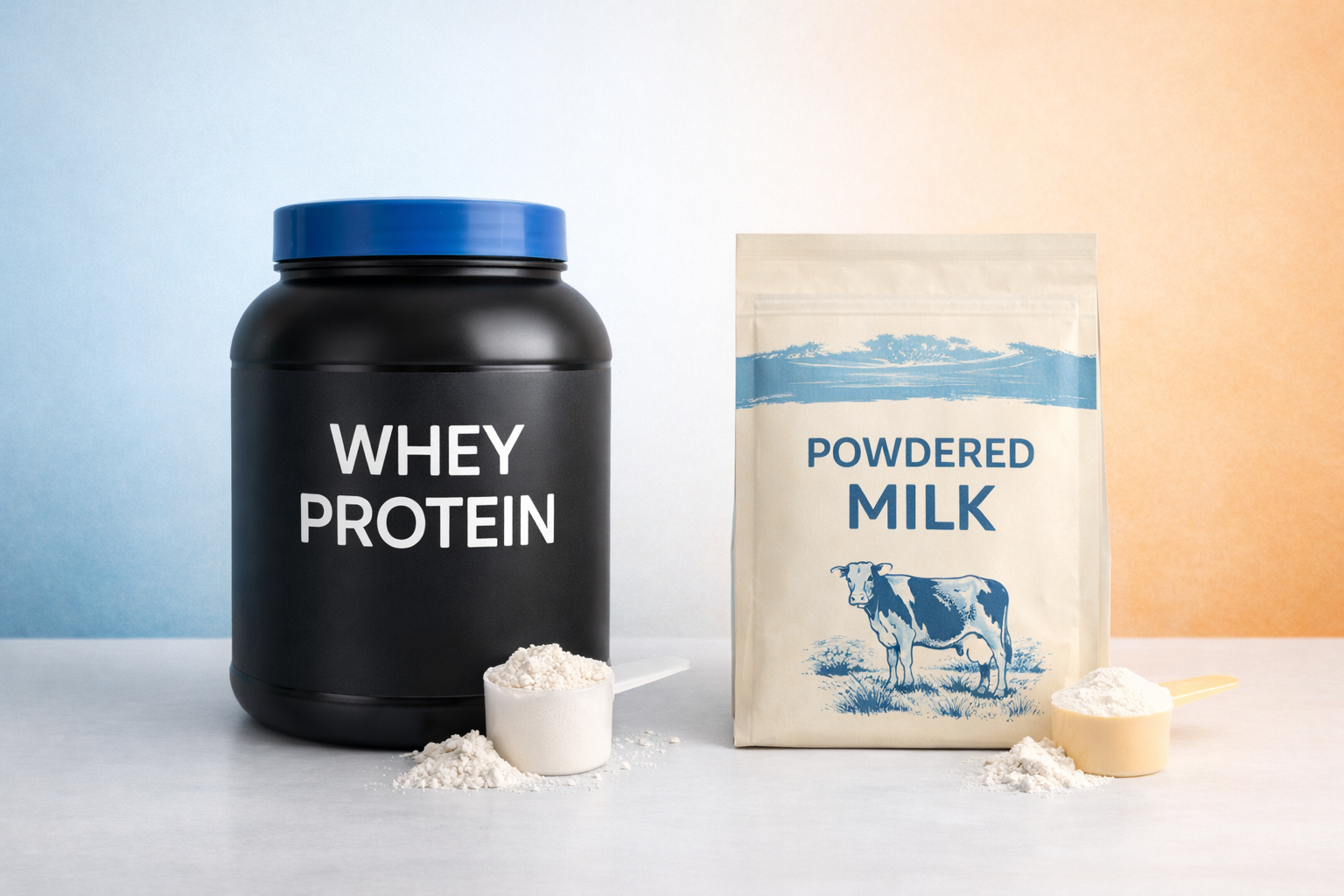
The simple answer: Whey protein is one of the two proteins found in milk (the other being casein).
How it’s made:
When cheese is produced, milk is separated into two components:
- Curds (the solid parts that become cheese, containing mostly casein)
- Liquid whey (the watery part left over)
That liquid whey is then processed to remove water, lactose, and fats, concentrating the protein content. What remains is dried into powder form.
That’s it. Whey protein is simply milk protein that’s been isolated and concentrated. It’s not a synthetic chemical created in a lab. It’s not a steroid. It’s just protein from milk.
The Three Main Types of Whey Protein
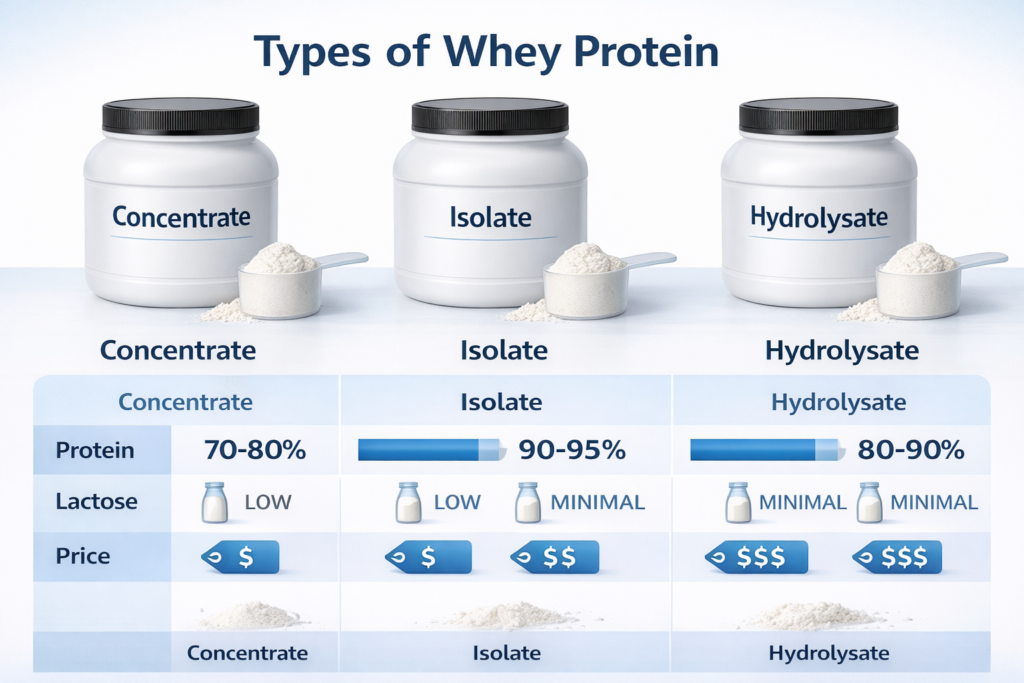
Not all whey protein is created equal. There are three primary forms, each with different protein concentrations and processing methods:
1. Whey Protein Concentrate (WPC)
Protein content: 70-80% protein by weight
What it contains:
- Moderate protein concentration
- Some lactose (milk sugar)
- Some fat
- Immunoglobulins and beneficial compounds
Pros:
- Cheapest option
- Retains more beneficial compounds
- Better taste (due to fat and lactose)
- Good value for most people
Cons:
- Lower protein percentage
- May cause digestive issues for lactose-intolerant individuals
- Slightly more calories from carbs and fats
Best for: Most people who tolerate dairy well and want the best value.
2. Whey Protein Isolate (WPI)
Protein content: 90-95% protein by weight
What it contains:
- Very high protein concentration
- Minimal lactose (usually <1%)
- Minimal fat
- Some beneficial compounds removed during processing
Pros:
- Higher protein per serving
- Lower calories, carbs, and fats
- Better for lactose-intolerant people
- Absorbs slightly faster
Cons:
- More expensive (often 30-50% more)
- May have blander taste
- Some beneficial compounds lost in processing
Best for: People cutting calories, those with lactose sensitivity, or those who need the absolute highest protein concentration.
3. Whey Protein Hydrolysate (WPH)
Protein content: 80-90% protein by weight
What it contains:
- Pre-digested (broken down) protein
- Very fast absorption
- Minimal lactose and fat
Pros:
- Fastest absorption rate
- Easiest on digestion
- May cause fewer allergic reactions
Cons:
- Most expensive option
- Often tastes bitter
- No significant advantage for muscle building over other forms
Best for: People with severe digestive issues or very specific athletic timing needs (rare). Most people don’t need this.
The Amino Acid Profile: Why Whey Is Special
What makes whey protein particularly valuable for muscle building is its amino acid composition.
Whey is a complete protein, meaning it contains all nine essential amino acids your body cannot produce on its own.
More importantly, whey is exceptionally high in leucine, the primary amino acid responsible for triggering muscle protein synthesis (the process of building new muscle tissue).
Leucine content comparison (per 25g protein):
- Whey protein: ~2.5-3g leucine
- Chicken breast: ~2g leucine
- Beef: ~2g leucine
- Eggs: ~2g leucine
- Plant proteins: ~1-1.5g leucine
This high leucine content is why whey is particularly effective at stimulating muscle growth when consumed around training.
The Science-Backed Benefits of Whey Protein
Let’s examine what research actually shows about whey protein’s effects.
Benefit 1: Convenient High-Quality Protein Source
The reality: This is whey’s primary, most important benefit.
Whey protein provides 20-30 grams of high-quality protein in a convenient form that requires no preparation or refrigeration.
Why this matters:
Most people struggle to consistently eat enough protein daily. The target for muscle building or fat loss while preserving muscle is 0.7-1.0 grams of protein per pound of body weight.
For a 180-pound person, that’s 126-180 grams of protein daily.
In whole food terms, that requires:
- 6-7 chicken breasts, OR
- 25-30 whole eggs, OR
- 2+ pounds of lean beef
Every. Single. Day.
For many people with busy schedules, eating this much whole food protein is challenging. Whey provides a quick, portable solution.
Mix powder with water, shake, drink. 25 grams of protein in 2 minutes.
This convenience alone justifies whey protein for most people.
Benefit 2: Fast Absorption for Post-Workout Nutrition
The claim: Whey is rapidly digested and absorbed, making it ideal immediately post-workout.
The science: True, with caveats.
Whey protein is absorbed faster than casein, beef, or chicken (approximately 90 minutes vs. 3-7 hours for whole food proteins).
Does this matter? Somewhat, but it’s overblown.
The old belief: You have a 30-minute “anabolic window” post-workout where you must consume fast-digesting protein or you’ll lose muscle.
The reality: The anabolic window is much wider than previously thought (24-48 hours). As long as you consume adequate protein within a few hours of training, you’re fine.
When fast absorption helps:
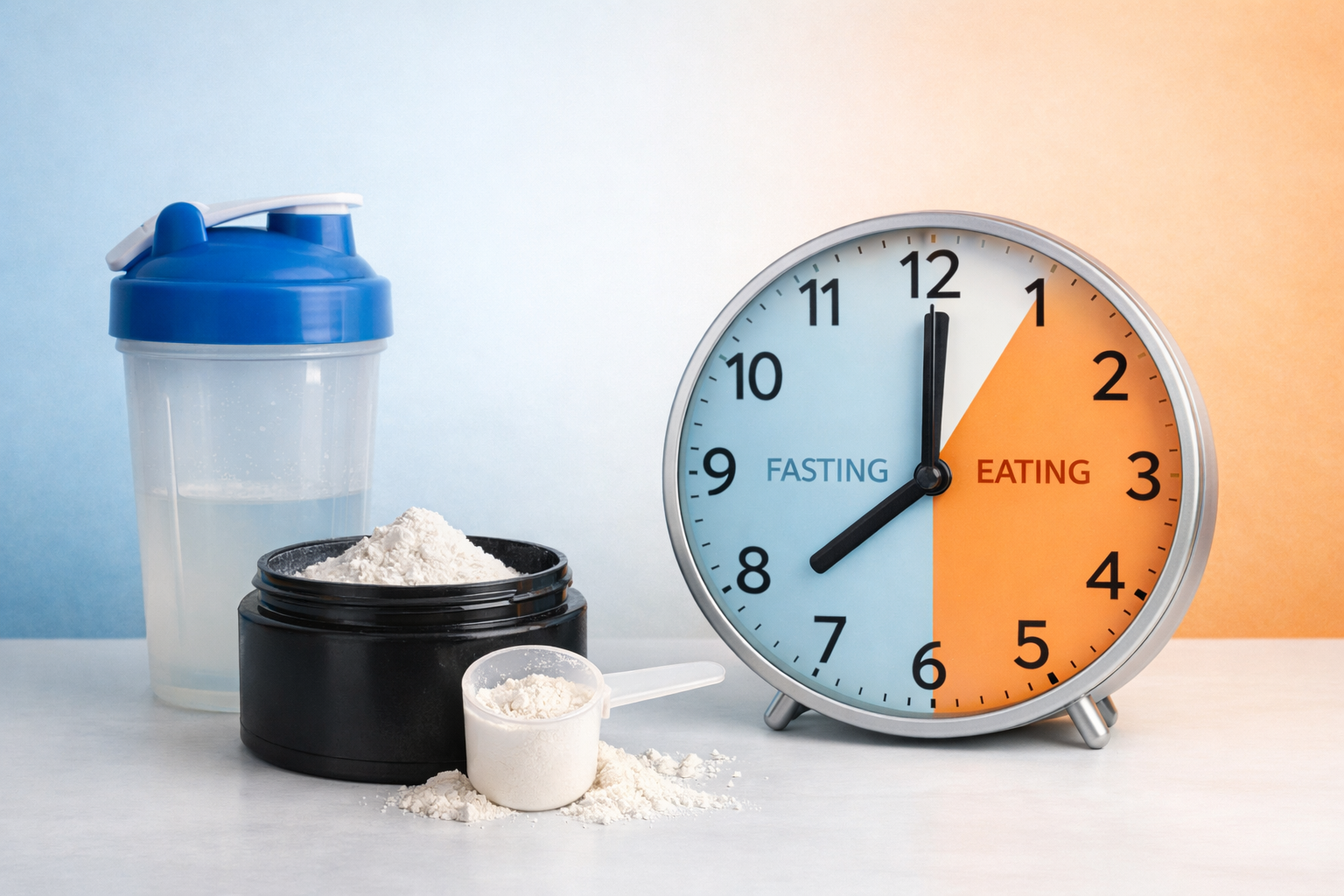
- Training fasted or haven’t eaten in 4+ hours
- Multiple training sessions in one day
- Immediate post-workout when you can’t eat solid food
When it doesn’t matter as much:
- You ate a protein-rich meal 2-3 hours pre-workout
- You can eat a whole food meal within 1-2 hours post-workout
Bottom line: Fast absorption is a nice bonus, not a requirement for results.
Benefit 3: Supports Muscle Protein Synthesis
The claim: Whey protein directly builds muscle.
The science: Partially true, but requires context.
Whey protein (like all protein) provides amino acids that your body uses to build and repair muscle tissue. The high leucine content in whey is particularly effective at triggering muscle protein synthesis.
However:
Muscle growth requires:
- Progressive resistance training (the primary stimulus)
- Caloric surplus (eating more than you burn)
- Adequate total daily protein intake
- Proper recovery and sleep
Whey protein helps with #3, but cannot compensate for failures in #1, #2, or #4.
You cannot drink protein shakes, skip the gym, eat in a deficit, sleep 4 hours nightly, and expect to build muscle. The protein powder alone does nothing.
The truth: Whey supports muscle growth as part of a complete program. It’s a tool, not a solution.
Benefit 4: Helps Preserve Muscle During Fat Loss
The claim: High protein intake, including whey, helps maintain muscle mass while dieting.
The science: Strongly supported by research.
When you’re in a caloric deficit (eating less than you burn), your body will break down tissue for energy. Without adequate protein and resistance training, significant muscle loss occurs alongside fat loss.
Multiple studies show:
- Higher protein intake (1.0-1.2g per pound body weight) significantly reduces muscle loss during caloric deficits
- Whey protein is equally effective as other protein sources for this purpose
- The convenience of whey makes it easier to consistently hit high protein targets
Practical benefit: For people cutting weight, whey makes it much easier to eat 150-200+ grams of protein daily without consuming excessive calories.
Example:
- 8 oz chicken breast: 250 calories, 50g protein
- 2 scoops whey: 240 calories, 48g protein
Similar protein, similar calories, but whey requires zero cooking or preparation.
Benefit 5: High Satiety (Keeps You Full)
The claim: Protein is the most satiating macronutrient, and whey helps control hunger.
The science: True, but nuanced.
Protein generally provides greater satiety than carbohydrates or fats. However, liquid protein (like whey shakes) is less satiating than solid protein (like chicken or beef).
Research shows:
- Whey protein is more filling than carb or fat-based drinks
- Whey protein is less filling than equivalent protein from whole foods
- Thicker shakes (made with milk, ice, fruit) are more satiating than thin shakes (just powder and water)
Practical takeaway: Whey can help control hunger, especially between meals, but whole food proteins are better for satiety during main meals.
Benefit 6: Supports Immune Function
The claim: Whey protein contains immunoglobulins and compounds that boost immune health.
The science: Some truth, especially for whey concentrate.
Whey protein (particularly concentrate) contains:
- Immunoglobulins (antibodies)
- Lactoferrin (antimicrobial properties)
- Beta-lactoglobulin
- Alpha-lactalbumin
These compounds have demonstrated immune-supporting properties in research.
However:
- Effects are modest
- Whey isolate has many of these compounds removed during processing
- Eating a balanced diet with adequate protein, vegetables, and sleep has far greater impact on immune function
Bottom line: A potential bonus benefit, but not a primary reason to use whey.
The Biggest Myths About Whey Protein (Debunked)
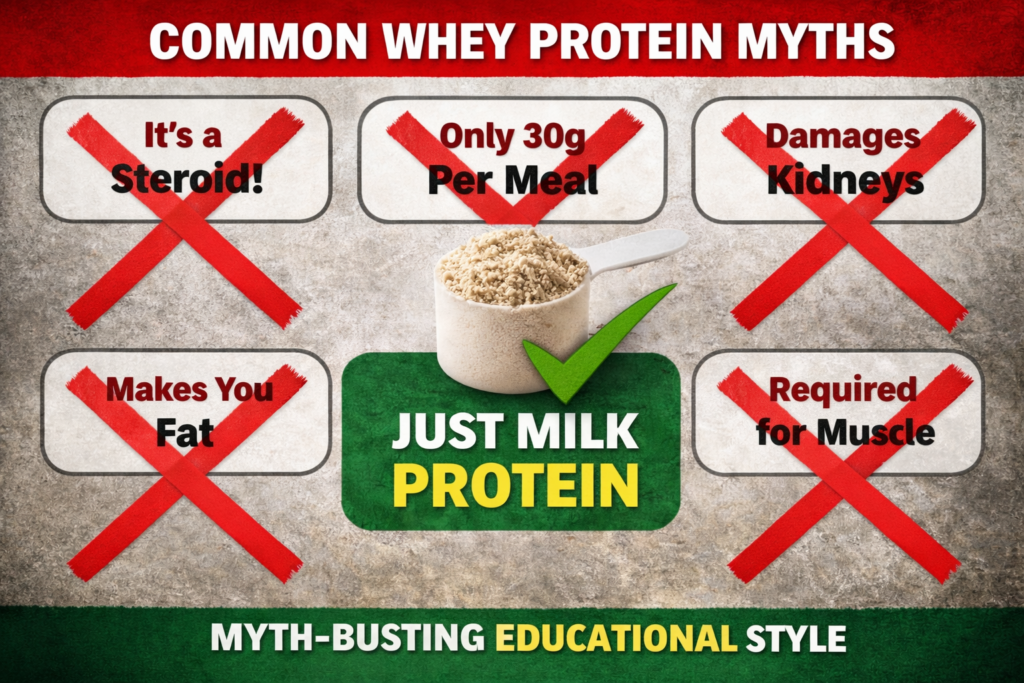
Now let’s destroy the most common misconceptions.
Myth 1: Whey Protein Is a Steroid or “Unnatural”
The myth: Whey protein is a synthetic chemical or steroid that’s dangerous and unnatural.
The truth: Whey is simply milk protein.
If you’ve ever eaten cheese, yogurt, or drunk milk, you’ve consumed whey protein. The only difference is that protein powder isolates and concentrates it.
It’s not:
- A steroid (completely different substance)
- Synthetic (it comes from milk)
- Dangerous (it’s food)
- Unnatural (unless you consider milk unnatural)
Why this myth persists: Lack of education. People see muscular individuals drinking protein shakes and assume the powder caused the muscle, not years of hard training.
Myth 2: You Can Only Absorb 30 Grams of Protein Per Meal
The myth: Your body can only use 30 grams of protein at once. Anything beyond that is wasted.
The truth: Complete nonsense.
Your body can absorb and utilize far more than 30 grams of protein in a single meal. The “30 gram limit” is a gross misinterpretation of research on muscle protein synthesis.
What research actually shows:
- Muscle protein synthesis plateaus around 30-40 grams of protein per meal
- But protein serves many other functions beyond muscle building
- Your body will digest and absorb essentially all protein you eat, even 100+ grams in one sitting
The confusion:
When studies show that muscle protein synthesis doesn’t increase much beyond 30-40g protein per meal, people incorrectly concluded that anything beyond this is “wasted.”
The reality: That extra protein is still used for:
- Tissue repair throughout the body
- Enzyme and hormone production
- Energy production
- Other metabolic functions
Nothing is wasted.
Bottom line: Don’t stress about the exact amount per meal. Focus on total daily protein intake.
Myth 3: Whey Protein Damages Your Kidneys
The myth: High protein intake, especially from whey, destroys your kidneys and causes kidney disease.
The truth: In healthy individuals with normal kidney function, high protein intake does NOT cause kidney damage.
The science:
Decades of research examining high protein diets (including whey) in healthy individuals shows no kidney damage or dysfunction.
Studies on athletes consuming 1.5-2.0+ grams of protein per pound of body weight for years show:
- No kidney damage
- No decline in kidney function
- No increase in kidney disease markers
Where this myth comes from:
People with EXISTING kidney disease need to limit protein intake because damaged kidneys struggle to process protein waste products.
This led to the incorrect assumption: “Protein restriction helps diseased kidneys, therefore protein must cause kidney disease.”
The analogy: Telling people with healthy kidneys to avoid protein is like telling people with healthy legs to avoid walking because people with broken legs shouldn’t walk.
Important caveat: If you have diagnosed kidney disease, you should limit protein and consult your doctor. For everyone else, high protein intake is safe.
Myth 4: Whey Protein Makes You Fat
The myth: Drinking protein shakes will make you gain fat.
The truth: Calories make you fat, not protein specifically.
How weight gain actually works:
Fat gain occurs when you consume more calories than you burn, regardless of whether those calories come from protein, carbs, or fats.
Whey protein contains calories:
- 1 scoop (30g): approximately 120 calories
- If you add whey to your diet WITHOUT reducing calories elsewhere, you’re eating more total calories
- If this puts you in a caloric surplus, you’ll gain weight
The solution: Account for whey protein in your total daily calorie budget.
Example of doing it wrong:
- Maintenance calories: 2,500
- Currently eating: 2,500
- Add 2 whey shakes daily: +480 calories
- New total: 2,980 calories (surplus, will gain weight)
Example of doing it right:
- Maintenance calories: 2,500
- Currently eating: 2,500
- Add 2 whey shakes: +480 calories
- Reduce calories from other foods: -480 calories
- New total: 2,500 calories (maintenance, weight stays same)
Bottom line: Whey doesn’t make you fat. Eating more calories than you burn makes you fat.
Myth 5: You Need Whey Protein to Build Muscle
The myth: Building muscle requires whey protein powder. Without it, you can’t make gains.
The truth: Whey is convenient, but absolutely not necessary.
What you actually need to build muscle:
- Progressive resistance training
- Caloric surplus
- Adequate total daily protein (0.7-1g per pound body weight)
- Proper recovery
Where that protein comes from doesn’t matter for muscle growth.
Research comparing whey protein to whole food proteins (chicken, beef, eggs, etc.) shows no significant difference in muscle growth when total daily protein is matched.
You can build just as much muscle eating:
- Chicken, beef, fish, eggs, dairy
- Plant proteins (if you eat enough to match total protein and leucine)
- Any combination of protein sources
Whey’s advantage is convenience, not magical muscle-building properties.
Myth 6: More Expensive Whey Is Better Quality
The myth: Premium, expensive whey proteins are higher quality and more effective than cheap ones.
The truth: Price has almost nothing to do with effectiveness.
What you’re actually paying for with expensive whey:
- Fancy packaging
- Celebrity endorsements
- Marketing and advertising costs
- Brand name recognition
- Exotic flavors
- Proprietary blends (usually a bad thing)
What actually matters:
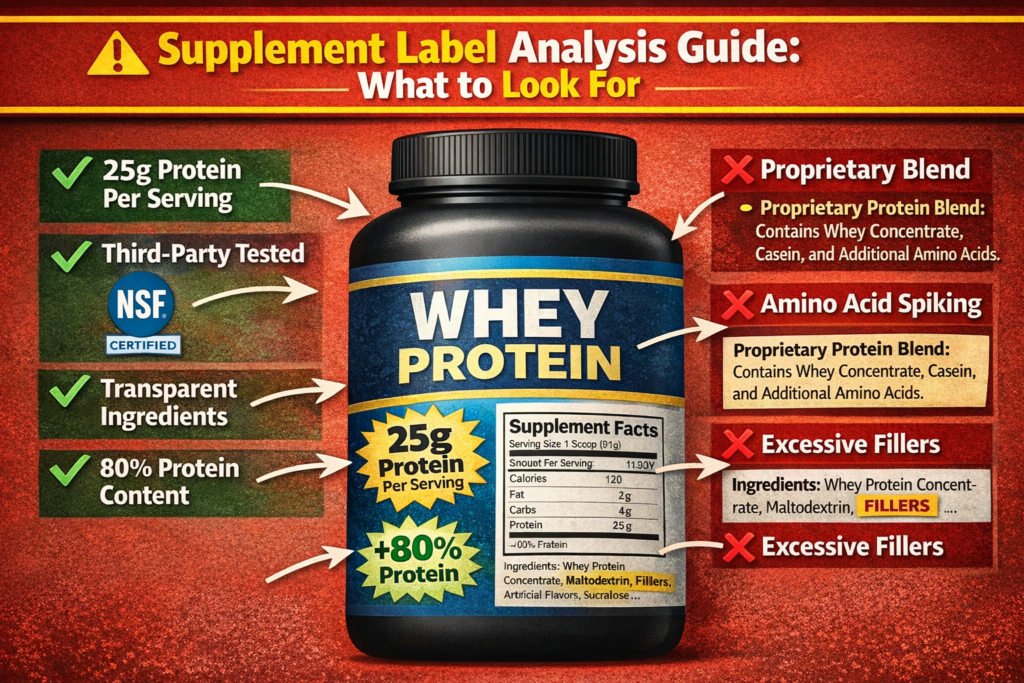
1. Protein content per serving Check the label. How many grams of protein per scoop?
2. Protein source and type Is it whey concentrate, isolate, or blend? This affects price legitimately.
3. Third-party testing Does it have certification from NSF, Informed-Choice, or similar organizations verifying purity and protein content?
4. Ingredient list Shorter is usually better. Avoid proprietary blends.
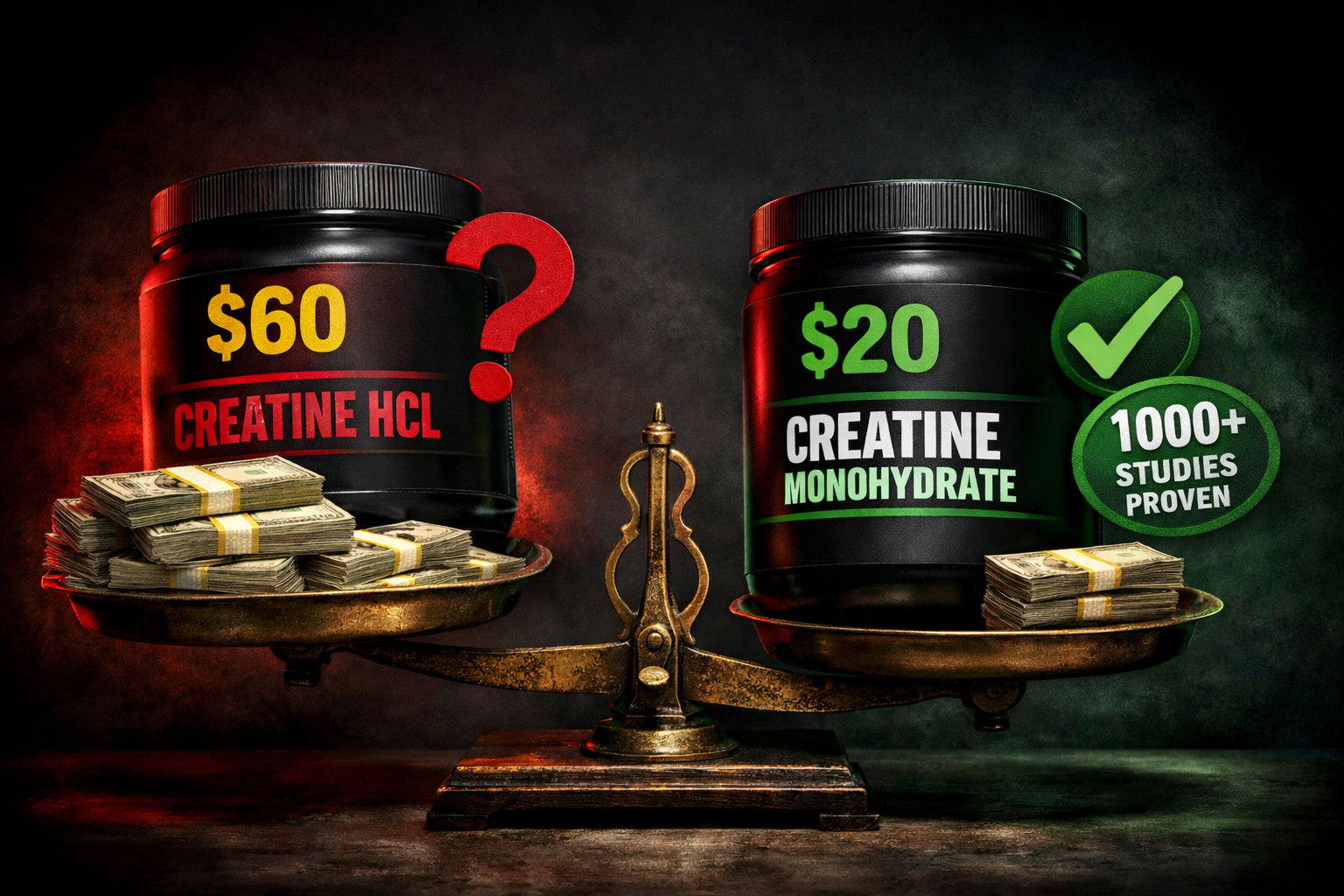
Example comparison:
Expensive brand ($60 for 2 lbs):
- 24g protein per 30g scoop
- Whey concentrate
- Proprietary blend
- Celebrity endorsed
- $1.36 per 24g protein
Budget brand ($25 for 2 lbs):
- 24g protein per 30g scoop
- Whey concentrate
- Transparent ingredients
- No marketing hype
- $0.57 per 24g protein
Both provide identical protein. You’re paying over double for marketing.
Bottom line: Buy based on protein content, ingredient transparency, and third-party testing, not brand prestige.
Myth 7: Whey Protein Causes Acne
The myth: Drinking whey protein shakes causes or worsens acne.
The truth: Possible for some individuals, but not universal.
The science:
Some research suggests that dairy products, including whey, may worsen acne in susceptible individuals through several mechanisms:
- Insulin-like growth factor 1 (IGF-1) stimulation
- Increased sebum production
- Hormonal effects
However:
- Not everyone experiences this
- Individual response varies widely
- The effect is generally modest
- Whey isolate (lower lactose) may cause fewer issues than concentrate
If you’re acne-prone:
Test this yourself:
- Track your acne severity for 2 weeks while using whey
- Stop whey for 3-4 weeks
- Observe if acne improves
- Reintroduce whey and see if acne worsens
If whey clearly worsens your acne:
- Try whey isolate instead of concentrate
- Switch to plant-based protein powder
- Get protein from whole foods instead
Bottom line: Whey may aggravate acne in some people. If it affects you, alternatives exist.
Myth 8: Women Shouldn’t Use Whey Protein
The myth: Whey protein is for men. Women who use it will get bulky or masculine.
The truth: Absurd. Whey is protein, not testosterone.
Why this myth is ridiculous:
Protein is protein. Your body doesn’t process it differently based on your gender. Women need adequate protein just like men, especially if training.
The facts:
- Women have 10-20x less testosterone than men
- Building significant muscle requires years of hard training for women
- Consuming protein doesn’t change your hormone profile
- Women need 0.7-1g protein per pound body weight, same as men
What actually happens when women use whey:
- They hit protein targets more easily
- They recover better from training
- They maintain/build lean muscle
- They look MORE toned and defined (if that’s the goal)
They do NOT:
- Get bulky (requires years of specific training + caloric surplus)
- Become masculine
- Grow excessive muscle accidentally
Bottom line: Whey protein is equally appropriate and beneficial for women and men.
Who Actually Needs Whey Protein?
Let’s determine if you’re someone who would benefit from using whey.
You Probably Benefit From Whey If:
1. You struggle to eat enough protein from whole foods
If you’re supposed to eat 150+ grams of protein daily and you find this difficult with regular meals, whey makes it drastically easier.
2. You need convenient, portable protein
Busy schedule, frequent travel, long work shifts, or limited meal prep time all make whey extremely valuable.
3. You train early morning or late evening
When you can’t or don’t want to eat solid food immediately before or after training, whey provides easy-to-digest protein.
4. You’re vegetarian (but not vegan)
If you don’t eat meat but consume dairy, whey is one of the best high-quality protein sources available.
5. You’re in a caloric deficit
During fat loss phases, whey helps you consume high protein without excessive calories, supporting muscle retention.
6. You want cost-effective protein
Quality whey is often cheaper per gram of protein than meat, especially when purchased in bulk.
7. You’re elderly or have reduced appetite
Older individuals often struggle to eat enough protein. Whey provides a concentrated, easy-to-consume source.
You Probably DON’T Need Whey If:
1. You easily meet protein targets with whole foods
If you consistently eat 0.7-1g protein per pound body weight through regular meals without effort, whey is unnecessary.
2. You’re lactose intolerant and react to whey isolate
Even the low-lactose isolate causes digestive issues for some people. Use plant-based alternatives.
3. You have diagnosed kidney disease
High protein intake may stress damaged kidneys. Consult your doctor before using any protein supplements.
4. You prefer whole food protein sources
Some people simply don’t like powder or prefer eating real food. That’s completely fine. You can build muscle without whey.
5. Budget is extremely tight
If money is very limited, prioritize whole food proteins (eggs, chicken thighs, ground beef) which provide additional nutrients beyond just protein.
How to Choose Quality Whey Protein
If you’ve decided whey fits your needs, here’s how to select a quality product.
Step 1: Determine Concentrate vs. Isolate
Choose whey concentrate if:
- You tolerate dairy well
- You want best value for money
- You’re not severely restricting calories
- You prefer slightly better taste
Choose whey isolate if:
- You’re lactose sensitive
- You need maximum protein, minimum calories
- You’re willing to pay 30-50% more
- You want fastest absorption
For most people, concentrate is the better choice.
Step 2: Check the Nutrition Label
Look for:
Protein per serving: At least 20-25g per scoop
Protein percentage: Divide protein grams by total powder grams per serving
- Good: 70-80% (concentrate)
- Better: 85-90% (isolate)
- Suspicious: Under 70% (lots of fillers)
Example:
- 30g scoop provides 24g protein
- 24 ÷ 30 = 80% protein (good for concentrate)
Calories per serving: Should be approximately 100-130 calories per 25g protein
Carbs and fats: Lower is generally better, but some amount is normal, especially in concentrates
Added sugars: Should be minimal (under 5g) or zero
Step 3: Read the Ingredient List
What you want to see:
First ingredient: Whey protein concentrate or whey protein isolate
Short ingredient list: Fewer ingredients generally means less processing and fewer fillers
Transparent labeling: Exact amounts of each ingredient listed
What to avoid:
Proprietary blends: When exact amounts aren’t disclosed
“Protein blend” without breakdown: Could be mostly cheap proteins with minimal whey
Excessive artificial ingredients: Long chemical names you don’t recognize
Amino acid spiking ingredients: Glycine, taurine, creatine added to inflate protein numbers
Example of good ingredients:
- Whey protein isolate
- Natural flavors
- Sunflower lecithin
- Stevia
- Salt
Example of suspicious ingredients:
- Protein blend (proprietary)
- Maltodextrin
- Artificial flavors
- Multiple thickening agents
- Amino acids (separate from whey)
Step 4: Check for Third-Party Testing
Look for certifications from:
- NSF Certified for Sport
- Informed-Choice
- Banned Substances Control Group (BSCG)
Why this matters:
Third-party testing verifies:
- Protein content matches label claims
- No banned substances
- No heavy metal contamination
- Product purity
Without third-party testing, you’re trusting the manufacturer’s word.
Studies testing popular protein powders found:
- Many contain less protein than claimed
- Some have heavy metal contamination
- Few match their label exactly
If you’re serious about quality, only buy third-party tested products.
Step 5: Consider Taste and Mixability
This matters for long-term adherence.
Taste:
- Read reviews about specific flavors
- Chocolate and vanilla are usually safe bets
- Start with small container before buying bulk
Mixability:
- Should dissolve easily in water or milk
- Minimal clumping or grittiness
- Doesn’t require a blender (should mix in shaker)
Texture:
- Shouldn’t be chalky or gritty
- Smooth consistency preferred
Pro tip: Unflavored whey is versatile but tastes bad alone. Use in recipes or smoothies with other ingredients.
Step 6: Calculate Cost Per Serving
Don’t just look at total price. Calculate cost per gram of protein.
Formula: (Price ÷ Number of servings) ÷ Protein grams per serving = Cost per gram of protein
Example:
Product A: $50 for 2 lbs (30 servings, 25g protein each) ($50 ÷ 30) ÷ 25g = $0.067 per gram protein
Product B: $35 for 2 lbs (28 servings, 20g protein each) ($35 ÷ 28) ÷ 20g = $0.063 per gram protein
Product B is actually better value despite providing less protein per serving.
Target cost: $0.04-0.08 per gram protein is reasonable for quality whey
How to Use Whey Protein Effectively
You’ve bought quality whey. Now let’s ensure you use it correctly.
Daily Protein Distribution Strategy
Don’t overthink timing. What matters most is total daily protein intake.
Smart approach:
Calculate daily protein target: Body weight × 0.7-1.0 = grams of protein daily
Example: 170-pound person 170 × 0.8 = 136 grams protein daily
Distribute across meals:
Meal 1 (Breakfast): 30g protein
- 3 whole eggs (18g)
- 1 scoop whey in oatmeal (25g)
- Total: 43g
Meal 2 (Lunch): 40g protein
- 6 oz chicken breast (42g)
Meal 3 (Pre-workout): 25g protein
- Protein shake with banana
Meal 4 (Dinner): 45g protein
- 8 oz salmon (50g)
Total daily: 160g protein
The whey protein is just filling convenient gaps, not replacing whole food meals.
Best Times to Use Whey (If Timing Matters to You)
Timing is overrated, but here are reasonable strategies:
Post-workout (most common use):
- Fast absorption provides amino acids quickly
- Convenient when you can’t eat immediately
- Mix with simple carbs for better recovery
First thing in the morning:
- Breaks overnight fast quickly
- Easy to consume if you’re not hungry
- Can be added to breakfast (oatmeal, smoothies)
Between meals:
- Prevents excessive hunger
- Maintains steady amino acid supply
- Convenient protein boost
Before bed:
- Provides amino acids during sleep
- Consider casein protein or blend instead (slower digestion)
- Or just eat cottage cheese
Reality check: The difference between “optimal” timing and just hitting daily totals is minimal. Don’t stress about it.
How Much Whey Per Day?
There’s no magic amount.
Guidelines:
Use whey to fill protein gaps, not as primary protein source.
Maximum useful amount: 2-3 shakes daily (50-75g protein from whey)
Get at least 50% of protein from whole foods when possible:
- Provides additional nutrients
- Better satiety
- More enjoyable
- Teaches proper eating habits
Example distribution:
For 150g daily protein target:
- 75-100g from whole foods (chicken, beef, eggs, fish, dairy)
- 50-75g from whey protein (2-3 shakes)
Don’t replace all whole food meals with shakes. Whey is a supplement, not a meal replacement (unless using a true meal replacement product).
Common Whey Protein Mistakes to Avoid
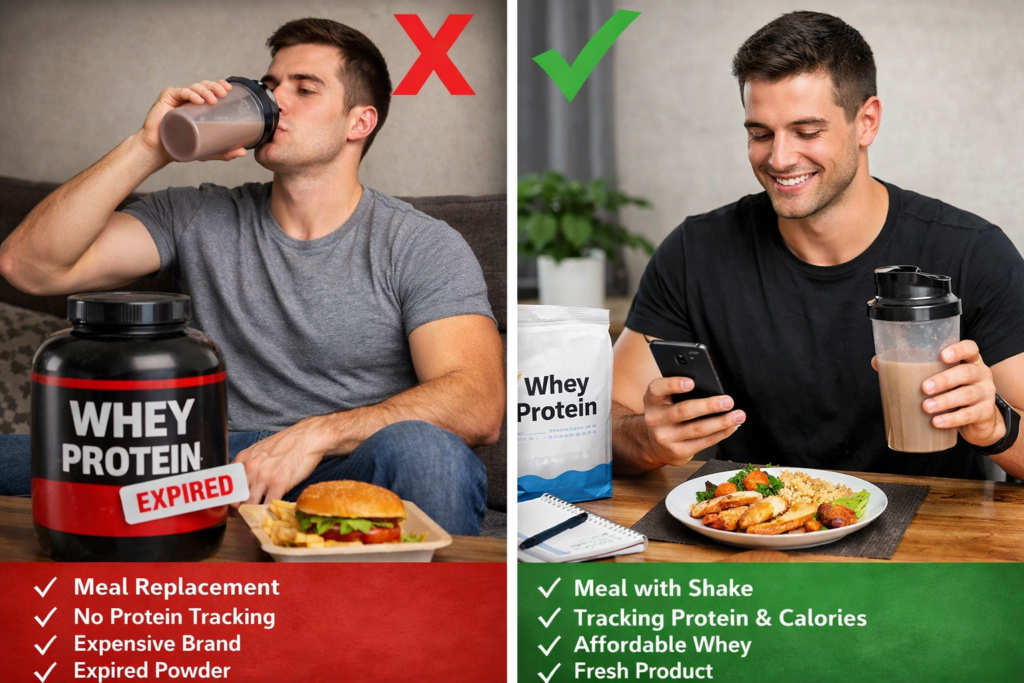
Mistake 1: Using Whey as Meal Replacement
The problem: Drinking protein shakes instead of eating balanced meals.
Why it’s bad:
- Missing out on vitamins, minerals, fiber
- Poor satiety (you’ll be hungry)
- Not learning proper nutrition habits
- Lacks the micronutrients whole foods provide
The fix: Use whey to supplement meals, not replace them. Eat real food for most meals.
Mistake 2: Ignoring Total Daily Protein
The problem: Obsessing over post-workout shake timing while total daily protein is inadequate.
Why it’s bad: Total daily protein matters infinitely more than timing. Getting 100g total with perfect timing beats 150g with random timing every single time.
The fix: Calculate and hit your daily protein target first. Timing is a minor detail.
Mistake 3: Mixing With Too Many Calories
The problem: Making 800-calorie “muscle building” shakes with protein, milk, peanut butter, banana, oats, honey, etc.
Why it’s bad:
- Defeats the purpose of convenient protein
- Easy to overconsume calories
- Terrible for satiety (liquid calories)
When it’s okay: Hard-gainers who need extra calories and struggle to eat enough.
For most people: Keep shakes simple. Protein powder + water or milk. Save calories for real food.
Mistake 4: Not Tracking It in Calorie Budget
The problem: Drinking protein shakes “on top” of regular diet without accounting for calories.
Why it’s bad: Each shake adds 120-250 calories. Two daily = 240-500 extra calories. Over time, this causes unwanted fat gain.
The fix: Log whey protein in your food tracking app. Adjust other meals to fit your calorie target.
Mistake 5: Buying Based on Marketing, Not Label
The problem: Choosing products based on fancy packaging, celebrity endorsements, or marketing claims instead of actual ingredients and protein content.
Why it’s bad: You’re paying for marketing, not quality. The $60 tub often contains the same whey as the $25 tub.
The fix: Ignore branding. Check protein content, ingredients, third-party testing, and cost per gram of protein.
Mistake 6: Consuming Expired or Improperly Stored Protein
The problem: Using protein powder months or years past expiration, or storing in hot, humid environments.
Why it’s bad:
- Protein degrades over time
- Taste becomes rancid
- May cause digestive issues
- Potential bacterial growth in humid conditions
The fix:
- Check expiration dates
- Store in cool, dry place
- Use within 1-2 years of purchase
- Seal container tightly after each use
- If it smells rancid, throw it away
The Bottom Line: Is Whey Protein Worth It?
After cutting through all the myths and marketing, here’s the truth:
Whey protein is a convenient, high-quality protein source that makes it easier to meet daily protein requirements. Nothing more, nothing less.
It’s NOT:
- A steroid or dangerous chemical
- Required for building muscle
- A magic solution for gains
- Superior to whole food proteins
- Worth premium prices for fancy branding
It IS:
- Convenient and portable protein
- Fast-digesting (minor benefit)
- Complete amino acid profile
- Cost-effective when chosen wisely
- Helpful for hitting protein targets
- Safe for healthy individuals
Who benefits most:
- People who struggle to eat enough protein from whole foods
- Those with busy schedules needing convenient options
- Athletes training multiple times daily
- People in caloric deficits preserving muscle
- Anyone wanting cost-effective, quality protein
Who doesn’t need it:
- People who easily meet protein targets with regular meals
- Those severely lactose intolerant (even to isolate)
- Individuals preferring whole food only
- Anyone with diagnosed kidney disease (consult doctor)
The smart approach:
✅ Calculate your daily protein needs (0.7-1g per pound body weight)
✅ Build your diet around whole food proteins first
✅ Use whey to fill convenient gaps (post-workout, between meals, busy mornings)
✅ Choose quality based on ingredients and testing, not marketing
✅ Buy concentrate unless you need isolate for specific reasons
✅ Track whey in your total daily calorie and protein budget
✅ Don’t overthink timing (total daily intake matters most)
✅ Remember whey is a tool, not a solution
Final thoughts:
The supplement industry wants you to believe whey protein is essential, almost magical in its muscle-building properties. The truth is far more mundane.
Whey is just food. It’s protein from milk, dried into powder form for convenience. It won’t transform your physique on its own. It won’t replace hard training. It won’t compensate for a poor diet.
But for most people who train consistently and eat adequately, whey protein is a valuable, convenient tool that makes hitting daily protein targets significantly easier.
Is it worth buying? For most people, yes. Just choose wisely, use it appropriately, and remember that it’s supplementing a solid foundation of training and nutrition, not replacing it.
STAY INFORMED. MAKE SMART CHOICES. BUILD REAL MUSCLE.
Ready to build serious muscle with a complete, evidence-based approach? Stop relying on supplements alone and get a proven training and nutrition system that shows you exactly how much protein to eat, when to use whey strategically, and how to train for maximum results. Whey protein is a useful tool, but it’s just one piece of the puzzle. Get the complete picture and start making real progress.

Leave a Reply
You must be logged in to post a comment.