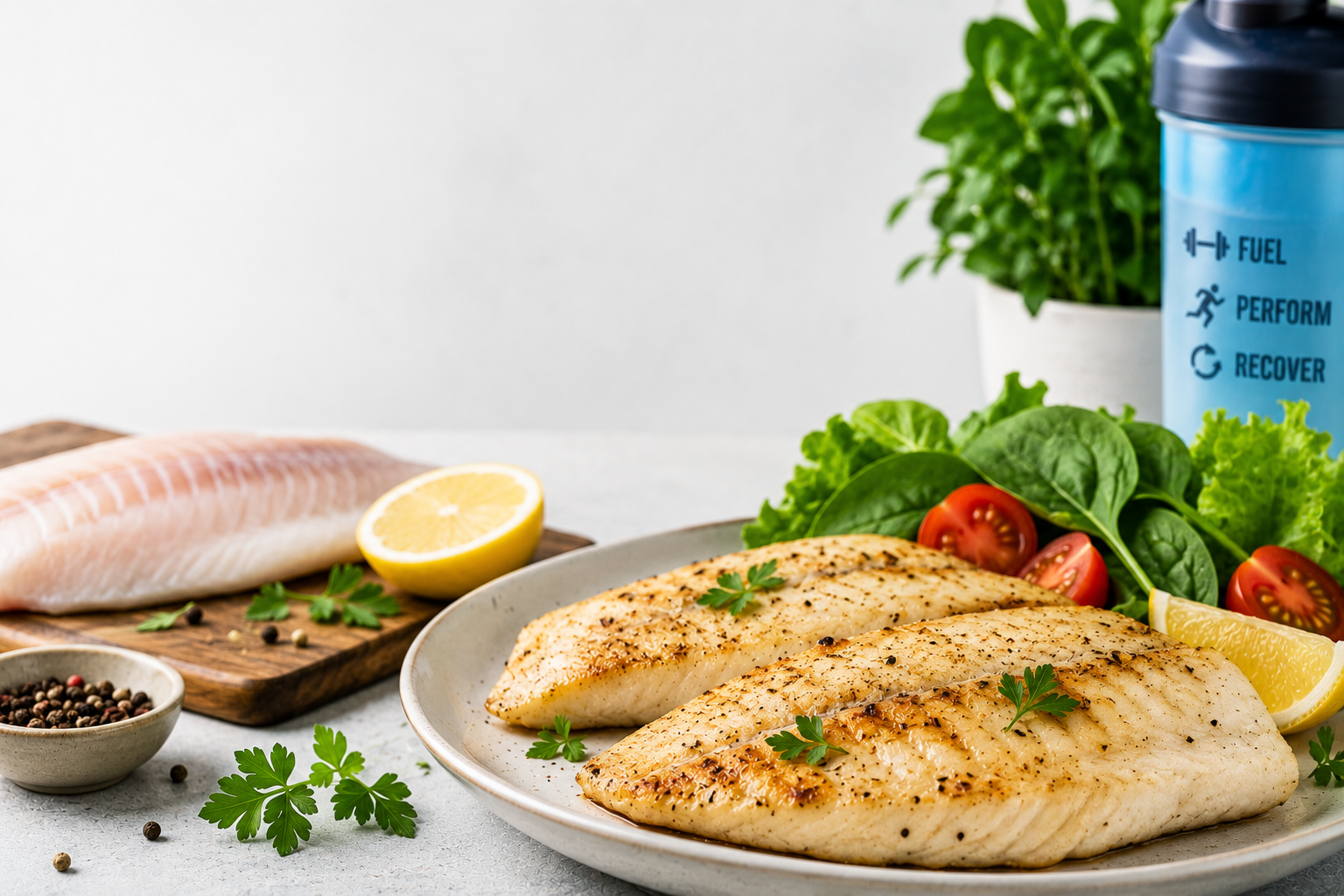
You’re looking for a lean protein source that fits your cutting macros perfectly, but you’re tired of eating chicken breast every single meal. You’ve heard tilapia is a good option, but you’re not sure if it’s worth adding to your rotation or if the concerns about omega fatty acids and farm raised fish should keep you away.
Although there are several protein rich foods to use in your diet, tilapia is one of the best. In this guide, we’ll explore the main benefits of tilapia for bodybuilding, along with one (possible) disadvantage.
For people trying to maximize protein intake while keeping calories low, find affordable lean protein alternatives to chicken, optimize their cutting diet without sacrificing meal variety, or simply want a protein source that’s easy to prepare and pleasant to eat, understanding where tilapia fits in your nutrition plan can open up new meal options that support your physique goals.
In this comprehensive guide, I’ll explain the complete nutritional breakdown of tilapia per serving, five specific benefits that make tilapia excellent for bodybuilders, the one potential disadvantage (and why it’s less concerning than you think), optimal timing for eating tilapia around workouts, the best preparation methods for cutting versus bulking, and a simple oven baked tilapia recipe that works for any goal.
Whether you’re deep in a cut needing ultra lean protein, bulking and wanting more meal variety, or just looking for a convenient protein source that doesn’t require chewing through tendons and connective tissue, tilapia deserves a spot in your weekly meal rotation.
Let’s examine everything you need to know.
TABLE OF CONTENTS
What You Need to Understand About Tilapia
Before diving into the specific benefits, let’s establish the fundamental facts about tilapia that make it relevant for bodybuilders.
The Quick Overview
Tilapia is a great lean protein option for people who train. A fillet of approximately 100g has only 111 calories, 23 grams of protein, and a mere 2 grams of fat. This makes tilapia ideal for increasing protein intake while controlling fats and calories, especially if you’re in a cutting phase.
Tilapia has less mercury (a heavy metal that can lead to health problems) than other seafood. This means you can consume it more frequently as one of the main protein sources in your diet.
You can combine tilapia with complex carbohydrates, like sweet potatoes and rice, for balanced and anabolic meals.
Complete Nutritional Profile
Per 100g (3.5 oz) raw tilapia fillet:
Macronutrients:
- Calories: 111
- Protein: 23g
- Fat: 2g
- Carbohydrates: 0g
- Fiber: 0g
Key micronutrients:
- Selenium: 78% daily value
- Vitamin B12: 31% daily value
- Niacin (B3): 24% daily value
- Phosphorus: 20% daily value
- Pantothenic acid (B5): 14% daily value
- Potassium: 9% daily value
Comparing tilapia to other protein sources (per 100g cooked):
Tilapia:
- Calories: 111
- Protein: 23g
- Fat: 2g
- Protein per calorie: 0.21g per calorie
Chicken breast:
- Calories: 165
- Protein: 31g
- Fat: 3.6g
- Protein per calorie: 0.19g per calorie
Ground beef (93/7):
- Calories: 170
- Protein: 26g
- Fat: 7g
- Protein per calorie: 0.15g per calorie
Salmon:
- Calories: 208
- Protein: 20g
- Fat: 13g
- Protein per calorie: 0.10g per calorie
Egg whites (equivalent weight):
- Calories: 52
- Protein: 11g
- Fat: 0.2g
- Protein per calorie: 0.21g per calorie
Tilapia has one of the best protein to calorie ratios of any whole food. Only egg whites and some shellfish match or beat it.
5 Benefits of Tilapia for Bodybuilding
Benefit 1: Rich in Protein
Proteins are the building blocks of tissues throughout the body (including your muscle mass) and are useful for countless functions even if your goal isn’t to become muscular.
Therefore, one of the main reasons to add tilapia to your diet is its high amount of protein per serving (about 23g per 100g of raw tilapia).
Why tilapia’s protein profile matters for bodybuilding:
High protein density:
- 23g protein in just 100g of fish
- A typical tilapia fillet weighs 150 to 200g
- One fillet provides 35 to 46g protein
- That’s 20 to 27% of a 170g daily protein target from a single piece of fish
Complete amino acid profile:
- Tilapia provides all nine essential amino acids
- High in leucine (the primary muscle building trigger)
- Approximately 1.8g leucine per 100g
- One fillet (200g) provides 3.6g leucine (above the 2 to 3g threshold for maximum muscle protein synthesis)
High bioavailability:
- Fish protein is highly digestible
- Very efficiently absorbed by the body
- Minimal waste during digestion
- Excellent utilization for muscle repair and growth
Practical protein contribution:
Single fillet meal example (200g tilapia):
- 46g protein from tilapia alone
- Add rice and vegetables: 5 to 8g more protein
- Total meal: 51 to 54g protein
- One meal provides 30% of daily protein for 170 lb male
If eating tilapia twice daily (common for bodybuilders):
- 2 fillets = 70 to 92g protein
- That’s 41 to 54% of daily protein from one food source
- Extremely efficient protein intake
- Leaves plenty of room for variety from other foods
Comparison to chicken breast (the bodybuilding standard):
- Chicken breast: 31g protein per 100g
- Tilapia: 23g protein per 100g
- Chicken has more protein per weight
- But tilapia has fewer calories per gram of protein
- Both are excellent choices
- Rotating between them prevents diet monotony
Benefit 2: Low in Calories
With only 110 calories per 100g fillet, tilapia is a great food to include during cutting, when we need to control caloric intake more closely.
Additionally, being a protein rich food, tilapia will have a satiating effect on hunger, helping even more during periods of dietary restriction.
Why low calorie matters for cutting:
The cutting math:
Example: 170 lb male cutting at 1,800 calories, 170g protein target:
Tilapia meal (200g fillet + 150g rice + vegetables):
- Tilapia: 222 calories, 46g protein
- Rice (150g cooked): 195 calories, 4g protein
- Mixed vegetables (1 cup): 50 calories, 3g protein
- Total meal: 467 calories, 53g protein
Same meal with chicken breast:
- Chicken breast (200g): 330 calories, 62g protein
- Rice (150g cooked): 195 calories, 4g protein
- Mixed vegetables (1 cup): 50 calories, 3g protein
- Total meal: 575 calories, 69g protein
Same meal with salmon:
- Salmon (200g): 416 calories, 40g protein
- Rice (150g cooked): 195 calories, 4g protein
- Mixed vegetables (1 cup): 50 calories, 3g protein
- Total meal: 661 calories, 47g protein
Tilapia saves 108 calories vs chicken and 194 calories vs salmon, while still providing excellent protein. Over a full day with multiple meals, this calorie savings is significant.
What you can do with saved calories:
Compared to salmon, tilapia saves 194 calories per meal. Those 194 calories could be:
- An extra snack (protein bar, fruit, yogurt)
- Larger portions at other meals
- A tablespoon of peanut butter (95 calories) and a banana (100 calories)
- More flexibility in your daily eating
Or simply a larger deficit for faster fat loss.
Satiety advantage:
Why tilapia keeps you full despite low calories:
- Protein is most satiating macronutrient
- Fish protein digests slower than liquid protein (shakes)
- Solid food triggers more satiety hormones than liquid
- The act of chewing increases fullness perception
- Combined with rice and vegetables, makes a satisfying complete meal
For aggressive cutting:
- Tilapia is one of the best protein sources available
- Maximum protein per calorie
- Doesn’t use up fat budget (only 2g fat per 100g)
- Leaves room for essential fats from other sources
- Can eat large portions without calorie concern
Benefit 3: Low Mercury
One of the biggest concerns when talking about fish is mercury intake.
Mercury is a highly toxic heavy metal commonly found in fish.
Tilapia is considered a fish with low mercury. It’s near the end of an extensive list of foods that can contain mercury, having levels similar to sardines, oysters, and anchovies.
Why mercury matters:
The mercury problem with fish:
- Mercury accumulates in fish through water and food chain
- Larger, predatory fish accumulate more (bioaccumulation)
- High mercury intake can cause neurological problems
- Can affect kidney function
- Potential cardiovascular effects
- Limits how frequently you can safely eat certain fish
Fish mercury levels (from highest to lowest):
High mercury (limit consumption):
- Swordfish
- Shark
- King mackerel
- Tilefish
- Bigeye tuna
Moderate mercury (eat in moderation):
- Albacore tuna
- Yellowfin tuna
- Grouper
- Sea bass
- Halibut
Low mercury (can eat frequently):
- Tilapia
- Sardines
- Salmon (farmed)
- Shrimp
- Anchovies
- Oysters
- Catfish
- Cod
Since it’s generally a farm raised fish, tilapia is not as exposed to mercury as other marine animals.
Why this matters for bodybuilders:
Frequency of consumption:
- Bodybuilders eat protein at every meal (4 to 6 times daily)
- If relying on fish, mercury exposure can accumulate
- High mercury fish (tuna, swordfish) should be limited to 2 to 3 servings weekly
- Tilapia can be consumed daily without mercury concerns
- This makes it practical as a staple protein source
Long term safety:
- Eating tilapia 5 to 7 times per week is safe
- Mercury levels are negligible
- No need to rotate out for safety reasons
- Can be a permanent diet staple
Practical implication:
- You can eat tilapia as your primary fish protein source
- No need to worry about mercury accumulation
- Safe for long term, consistent consumption
- Particularly important for contest prep (months of daily fish consumption)
Benefit 4: Easy to Eat
Have you ever prepared a piece of chicken or red meat that was difficult to eat because there was connective tissue (the famous “sinew” or “gristle”) and you couldn’t chew properly?
Well, tilapia has less connective tissue compared to red meat and chicken.
A tilapia fillet is practically made of just meat, and you won’t find anything hard or difficult to chew in it.
Why this matters more than you think:
The texture advantage:
Tilapia fillet:
- Soft, flaky texture
- No tendons or sinew
- No fat pockets to cut around
- No bone (fillets are boneless)
- Melts in your mouth when properly cooked
- Pleasant eating experience
Chicken breast (by comparison):
- Can be dry and tough if overcooked
- Sometimes has white tendons that need removing
- Texture varies by preparation method
- Can be stringy or rubbery
- Requires more effort to chew
Red meat (by comparison):
- Often has connective tissue
- Fat needs trimming
- Can be chewy depending on cut
- Requires more chewing effort
- Variable quality
Why easy to eat matters for bodybuilders:
Eating becomes a job during bulking:
- Consuming 3,000 to 4,000+ calories requires constant eating
- Difficult to chew foods slow you down
- Meal fatigue is real
- Easy to eat proteins reduce meal time stress
Eating when tired after training:
- Post workout you may not feel like chewing tough meat
- Tilapia requires minimal effort
- Goes down easily
- Doesn’t discourage eating when fatigued
Meal prep and reheating:
- Some proteins get tough when reheated (chicken can become rubbery)
- Tilapia remains tender when reheated properly
- Better meal prep experience
- More enjoyable leftover meals
For people with dental issues or jaw fatigue:
- Soft texture doesn’t strain jaw
- No need to fight through tough bites
- Accessible protein source for everyone
Benefit 5: Nutritionally Rich
Tilapia is rich in pantothenic acid, selenium, and phosphorus, which can be useful for bodybuilders.
Key micronutrients in tilapia:
Pantothenic Acid (Vitamin B5):
- Part of the B vitamin complex, pantothenic acid helps break down carbohydrates, fats, and proteins into usable energy in the body and for tissue repair
- Essential for energy metabolism
- Converts macronutrients to ATP
- Supports recovery from training
- Important when eating high calorie diets (more food to process)
Selenium:
- Selenium is a potent antioxidant that helps reduce inflammation in the body. It also plays an essential part in immune function. Lower inflammation can support muscle recovery and limit soreness
- 78% daily value per 100g tilapia
- Fights exercise induced oxidative stress
- Supports thyroid function (metabolism regulation)
- May support testosterone production
- Reduces muscle damage from intense training
Phosphorus:
- Phosphorus is part of adenosine triphosphate (ATP), the main energy currency for all cells in your body. This means it plays an essential role in energy formation, which is necessary for good performance during training. Additionally, phosphorus is necessary for bone formation
- 20% daily value per 100g tilapia
- Direct component of ATP (energy molecule)
- Every muscle contraction requires ATP
- More phosphorus = better energy production capacity
- Supports bone density (important for heavy lifting)
Additional micronutrients:
Vitamin B12:
- 31% daily value per 100g
- Nerve function
- Red blood cell production
- Energy metabolism
- Brain health
Niacin (B3):
- 24% daily value per 100g
- Energy production
- DNA repair
- Cellular signaling
- Supports metabolic health
Potassium:
- 9% daily value per 100g
- Electrolyte balance
- Muscle contraction
- Fluid regulation
- Prevents cramps
The micronutrient advantage over supplements:
- These nutrients come in bioavailable form
- Absorbed better from food than pills
- Synergistic effects between nutrients
- No need for separate selenium or B vitamin supplement if eating tilapia regularly
1 Possible Disadvantage of Tilapia
Disadvantage 1: Omega-6 vs Omega-3 Ratio
One of the main concerns with tilapia is its ratio of omega-6 to omega-3.
Omega-6 fatty acids tend to have an inflammatory effect, while omega-3 fatty acids tend to be anti-inflammatory.
Although you need more omega-6 in your diet than omega-3, the amount of omega-6 fatty acids is very high in a Western diet (a ratio of 15:1 of omega-6 to omega-3 is common today).
This may not be good, as a high intake of omega-6 and low omega-3 is linked to inflammation, which, in some cases and for some people, can cause health problems.
Why This Concern Is Overblown
However, it’s worth noting that this disadvantage is not exclusive to tilapia.
Several other fish and any cut of red meat has a ratio of omega-6 to omega-3 very similar to tilapia’s.
Let’s put this in perspective:
Tilapia’s omega fatty acid content (per 100g):
- Omega-6: approximately 200 to 250mg
- Omega-3: approximately 130 to 150mg
- Ratio: approximately 1.5:1 to 2:1 (omega-6 to omega-3)
Context matters:
- Total fat in tilapia is only 2g per 100g
- The absolute amount of omega-6 is very small (200mg)
- Compared to vegetable oils (which provide 7,000 to 10,000mg omega-6 per tablespoon)
- Tilapia’s contribution to omega-6 intake is negligible
The real sources of excessive omega-6:
- Vegetable oils (soybean, corn, sunflower): 7,000+ mg per tablespoon
- Processed foods fried in vegetable oils
- Nuts and seeds (while healthy, high in omega-6)
- Snack foods and baked goods
Tilapia is not meaningfully contributing to your omega-6 problem. The concern is technically valid but practically insignificant.
The comparison to other proteins:
Chicken breast omega-6 to omega-3 ratio: approximately 10:1 to 15:1
- Much worse than tilapia
- Nobody warns against chicken for omega ratios
- Shows the concern with tilapia is inconsistent
Beef omega-6 to omega-3 ratio: approximately 6:1 to 10:1
- Also worse than tilapia
- Grain fed beef is particularly high in omega-6
Salmon omega-6 to omega-3 ratio: approximately 1:7
- Salmon wins for omega-3 content
- But has 13g fat vs tilapia’s 2g
- Much more caloric (208 vs 111 per 100g)
- Different purpose in diet
The practical solution:
If concerned about omega-3 intake (which you should be regardless of tilapia):
- Eat fatty fish (salmon, sardines, mackerel) 2 to 3 times per week for omega-3s
- Consider fish oil supplement (1 to 2g EPA/DHA daily)
- Eat tilapia for lean protein on other days
- Both serve different roles: salmon for omega-3s, tilapia for lean protein
Don’t avoid tilapia because of omega ratios. The concern is real in the context of the overall Western diet, but tilapia itself is not a significant contributor.
When Is the Best Time to Eat Tilapia?
Tilapia can be consumed at any time of day where protein would be welcome, including before and/or after training.
Pre Workout Timing
However, if you choose to eat tilapia before your workout, since it’s a solid food, it’s recommended to consume it 1 to 2 hours before training together with a carbohydrate rich food like rice or sweet potatoes.
Why 1 to 2 hours before:
Digestion time:
- Solid protein takes 2 to 3 hours to fully digest
- Need enough time for stomach to process
- Training on a full stomach causes discomfort
- 1 to 2 hours allows partial digestion
- Energy from carbs available when training starts
Optimal pre workout tilapia meal:
90 minutes before training:
- 150g tilapia fillet (grilled or baked): 167 calories, 35g protein
- 1 cup white rice: 205 calories, 4g protein
- Light seasoning
- Total: 372 calories, 39g protein, 45g carbs
- Provides protein for anti-catabolic effect
- Carbs for training energy
- Low fat for fast digestion
60 minutes before (lighter option):
- 100g tilapia: 111 calories, 23g protein
- Small sweet potato: 100 calories, 2g protein
- Total: 211 calories, 25g protein, 24g carbs
- Lighter on stomach
- Still provides energy and protein
Post Workout Timing
If you choose to eat tilapia after your workout, you can do so immediately after training or about 1 hour after your post workout shake, along with a carbohydrate source.
Post workout tilapia meals:
Option 1: Tilapia as post workout meal (no shake):
- 200g tilapia fillet: 222 calories, 46g protein
- 1.5 cups white rice: 308 calories, 6g protein
- Vegetables: 50 calories
- Total: 580 calories, 52g protein, 65g carbs
- Complete post workout nutrition
- Fast carbs (white rice) for glycogen replenishment
- High protein for muscle repair
Option 2: Tilapia 60 to 90 minutes after post workout shake:
- Post workout shake: 25g whey + banana + water
- Wait 60 to 90 minutes
- Then: 150g tilapia + rice + vegetables
- Provides second wave of amino acids
- Extends the anabolic response
- More total protein in post workout window
Other Meal Timing
Tilapia for lunch (bodybuilder’s classic):
- 200g tilapia + rice + vegetables
- Standard bodybuilding meal
- Easy to meal prep
- Satisfying and macro friendly
Tilapia for dinner:
- 150 to 200g tilapia + sweet potato + salad
- Lower carb option if desired (skip the starch)
- Light enough to eat before bed without discomfort
- Protein supports overnight muscle repair
Tilapia as snack/small meal:
- 100g tilapia cold (from meal prep)
- Quick protein hit
- No reheating needed if prepared well
- Portable
What Is the Best Way to Prepare Tilapia?
The best way to prepare tilapia depends primarily on your goal.
Cutting Preparation
If you’re in cutting (wanting to burn fat), it’s better not to cook tilapia with fat (in a frying pan for example), because it’s extremely difficult to “dose” the fat used during cooking and you can add too many calories to the meal.
Best cutting preparation methods:
Oven baked (best overall):
- Minimal to no added fat
- Consistent results
- Easy to batch cook
- Predictable calories
Steamed:
- Zero added fat
- Very healthy preparation
- Quick cooking time
- Preserves nutrients
Air fried:
- Minimal oil needed (light spray)
- Creates slightly crispy exterior
- Quick cooking (8 to 10 minutes)
- Feels more indulgent despite low calories
Grilled:
- Minimal added fat
- Great flavor from char
- Quick cooking
- Summer friendly
Poached:
- Zero added fat
- Very gentle cooking
- Moist result
- Good for meal prep
Bulking Preparation
On the other hand, if you’re in bulking (wanting to gain weight and muscle mass), you don’t need to worry as much about calorie consumption and can use more varied forms of preparation, which can include fats.
Bulking preparation methods (all the above plus):
Pan fried with butter or olive oil:
- Adds 100 to 200 calories from fat
- Creates golden, crispy exterior
- Richer flavor
- More satisfying eating experience
Breaded and baked:
- Adds carbs and calories from coating
- More filling
- Kid friendly option
- Can use protein powder in coating for extra protein
In creamy sauce:
- Adds significant calories
- Rich, satisfying flavor
- Good for people struggling to eat enough
- Pairs well with pasta for calorie dense meal
Deep fried (occasional):
- Highest calorie option
- Not optimal but acceptable during bulk
- Satisfies cravings
- Keep occasional, not daily
The Universal Best Method: Oven Baked
If you just want to know an efficient way to make tilapia that will work regardless of your goal, the best way is using the oven.
Oven Baked Tilapia Recipe:
Ingredients:
- 5 tilapia fillets
- 1 tablespoon extra virgin olive oil
- 2 cloves garlic, minced
- 1 lemon, cut into slices
- Salt and pepper to taste
How to prepare:
- Preheat the oven to 180 to 200 degrees Celsius (356 to 392°F) for a few minutes
- Season the tilapia fillets with salt and pepper
- Grease a baking dish with the extra virgin olive oil and place the fillets
- Place the minced garlic and lemon slices on top of the fillets
- Finally, place the tilapia in the oven for about 10 minutes or until the meat can be easily pierced with a fork. Remember that oven baked tilapia will not become golden like when made in a frying pan, so don’t use that as a reference during preparation
Macros per fillet (using this recipe):
- Calories: 130 (including small amount of olive oil per fillet)
- Protein: 23g
- Fat: 3.5g (2g from fish + 1.5g from shared olive oil)
- Carbs: 0g
Tips for perfect oven baked tilapia:
Don’t overcook:
- 10 minutes is usually enough
- Overcooked tilapia becomes dry and tough
- Check at 8 minutes
- Should flake easily with fork
Season well:
- Tilapia has mild flavor
- Benefits from bold seasoning
- Try: Cajun seasoning, lemon pepper, garlic herb
- Paprika adds color and flavor
- Don’t be afraid of seasoning (zero calories)
Batch cooking:
- Cook 10 fillets at once on Sunday
- Store in refrigerator for 3 to 4 days
- Reheat in microwave (90 seconds) or eat cold
- Ready to go meals all week
Additional Tilapia Recipe Ideas
Tilapia taco bowl:
- 200g baked tilapia, broken into chunks
- 1 cup cilantro lime rice
- Black beans (1/2 cup)
- Salsa, lettuce, lime
- Macros: 520 calories, 52g protein
Tilapia stir fry:
- 200g tilapia cut into pieces
- Mixed vegetables (bell pepper, broccoli, snap peas)
- Soy sauce, ginger, garlic
- Serve over rice
- Macros: 480 calories, 50g protein
Tilapia and sweet potato plate:
- 200g baked tilapia
- 1 large sweet potato
- Steamed broccoli
- Macros: 450 calories, 50g protein
- Classic bodybuilding meal
How Tilapia Fits Different Diet Phases
During Cutting (1,600 to 2,200 calories)
Tilapia is arguably the BEST protein source for cutting:
Why:
- Lowest calorie to protein ratio of common proteins
- 111 calories per 100g (vs 165 for chicken, 208 for salmon)
- Only 2g fat (saves fat budget for essential fats elsewhere)
- Very satiating (solid food, high protein)
- Can eat large portions without calorie concern
Example cutting day with tilapia (1,800 calories):
Breakfast (400 cal):
- 4 egg whites + 1 whole egg
- 1 slice whole grain toast
- Fruit
Lunch (450 cal):
- 200g baked tilapia: 222 cal, 46g protein
- 1 cup brown rice: 215 cal
- Large salad: 30 cal
Snack (200 cal):
- Protein shake
- Apple
Dinner (500 cal):
- 200g baked tilapia: 222 cal, 46g protein
- Sweet potato: 180 cal
- Steamed vegetables: 50 cal
Snack (250 cal):
- Greek yogurt with berries
Daily totals: 1,800 calories, 175g protein
- Tilapia provided 92g protein (53% of target) in only 444 calories (25% of budget)
- Incredible efficiency
During Bulking (2,800 to 3,600 calories)
Tilapia during bulking:
Still useful but for different reasons:
- Provides lean protein without excessive fat
- Allows you to get fats from preferred sources
- Easy to eat (soft texture, no chewing struggle)
- Can prepare in calorie dense ways when needed
- Budget friendly for high protein needs
Can supplement with fattier fish (salmon) for omega-3s while using tilapia for pure protein efficiency.
During Maintenance (2,200 to 2,800 calories)
Ideal maintenance approach:
- Tilapia 3 to 4 times per week for lean protein
- Salmon 2 times per week for omega-3s
- Chicken, beef, eggs on other meals for variety
- Balanced, sustainable, affordable
THE BOTTOM LINE: TILAPIA FOR BODYBUILDING
✅ 23g Protein Per 100g (One Of The Highest Protein Densities Available)
✅ Only 111 Calories Per 100g (Among The Leanest Protein Sources)
✅ Only 2g Fat Per 100g (Saves Fat Budget For Essential Fats Elsewhere)
✅ Low Mercury (Safe To Eat Daily Unlike Many Fish)
✅ Easy To Eat And Prepare (No Connective Tissue, Tender Texture)
✅ Rich In Selenium, B Vitamins, Phosphorus (Supports Recovery And Energy)
5 Benefits: • High Quality Complete Protein (23g Per 100g, All Essential Amino Acids) • Extremely Low Calorie (111 Per 100g, Perfect For Cutting) • Low Mercury Content (Safe For Daily Consumption) • Easy To Eat (Soft Texture, No Gristle Or Sinew) • Micronutrient Rich (Selenium, B5, B12, Phosphorus)
1 Possible Disadvantage: • Omega-6 to Omega-3 Ratio Is Not Ideal • However, Total Fat Is Only 2g (Absolute Amounts Are Negligible) • Chicken And Beef Have Worse Ratios • Supplement With Salmon Or Fish Oil For Omega-3s • Not A Significant Concern In Practice
Key Micronutrients:
Selenium (78% DV Per 100g): • Powerful antioxidant • Reduces inflammation and soreness • Supports immune function • May support testosterone production
Phosphorus (20% DV Per 100g): • Component of ATP (energy molecule) • Essential for every muscle contraction • Supports bone formation • Critical for training performance
Pantothenic Acid/B5 (14% DV Per 100g): • Converts food into usable energy • Supports tissue repair • Essential for metabolizing macronutrients
When To Eat Tilapia:
Pre Workout (1 to 2 Hours Before): • Pair with carb source (rice, sweet potato) • Allow time for digestion • Provides protein and energy for training
Post Workout: • Pair with fast carbs (white rice) • High protein supports recovery • Can eat immediately or after shake
Any Meal: • Lunch, dinner, or even as snack • Works at any time of day • Combine with carbs and vegetables
Best Preparation Methods:
For Cutting: • Oven baked (minimal added fat) • Steamed, air fried, or grilled • Avoid pan frying in oil (hard to control calories)
For Bulking: • Any method works • Can pan fry with butter or oil • Breaded and baked for extra calories • More flexibility in preparation
Universal Method: • Oven baked at 180 to 200°C for 10 minutes • Season with salt, pepper, garlic, lemon • Batch cook 5 to 10 fillets for the week • Don’t overcook (becomes dry)
TILAPIA IS ONE OF THE BEST LEAN PROTEIN SOURCES FOR BODYBUILDING. USE IT AS A STAPLE DURING CUTTING FOR MAXIMUM PROTEIN WITH MINIMUM CALORIES. ROTATE WITH CHICKEN AND OTHER PROTEINS FOR VARIETY. SUPPLEMENT WITH SALMON OR FISH OIL FOR OMEGA-3S. BATCH COOK ON SUNDAY FOR EASY MEALS ALL WEEK. STOP EATING ONLY CHICKEN BREAST. START ADDING TILAPIA TO YOUR ROTATION.
Ready To Build A Complete Protein Strategy That Optimizes Every Meal For Your Physique Goals? Understanding tilapia’s role is one piece of building an effective bodybuilding diet. Get a comprehensive nutrition system covering all the best protein sources ranked by quality, cost, and convenience, macro calculations for cutting, bulking, and maintenance, meal prep systems that save time and money, micronutrient strategies to prevent deficiencies, and complete meal plans with grocery lists. Stop eating the same two protein sources on repeat. Start building a varied, cost effective diet that supports maximum muscle growth, optimal recovery, and long term health.
REFERENCES
SECTION 1 — Tilapia nutritional composition and protein quality
[1] USDA National Nutrient Database for Standard Reference — Food Data Central The USDA FoodData Central database provides the primary verified nutritional composition data for raw and cooked tilapia; per 100g raw tilapia (species Oreochromis niloticus): 111 calories, 23.0g protein, 2.0g fat, 0g carbohydrate; micronutrient analysis confirms tilapia provides 78% of the selenium daily value, 31% of the vitamin B12 daily value, 24% of niacin, 20% of phosphorus, and 14% of pantothenic acid per 100g serving; tilapia’s protein digestibility-corrected amino acid score (PDCAAS) approaches 1.0, indicating all nine essential amino acids are present in amounts meeting or exceeding human requirements; provides the primary nutritional reference data underlying the article’s macronutrient and micronutrient claims throughout https://fdc.nal.usda.gov/fdc-app.html#/food-details/175177/nutrients
SECTION 2 — Mercury content in tilapia compared to other seafood
[2] Sunderland EM et al. — PMC/Environmental Health Perspectives, 2018 Comprehensive review of mercury bioaccumulation in seafood; mercury bioaccumulates through aquatic food chains (biomagnification), with top predatory fish (swordfish, shark, king mackerel) accumulating the highest concentrations; herbivorous or low-trophic-level fish accumulate minimal mercury; tilapia is primarily herbivorous (feeds on algae and plant matter), placing it among the lowest-mercury species available, with mean mercury concentrations of 0.010 ppm versus 0.995 ppm in swordfish; farmed tilapia exposed to controlled feed shows even lower concentrations; the FDA and EPA classify tilapia as a “best choice” fish for frequent consumption (including during pregnancy); validates the article’s claim that tilapia can be consumed daily as a protein staple without mercury accumulation concerns https://pmc.ncbi.nlm.nih.gov/articles/PMC6307934/
SECTION 3 — Omega-6 to omega-3 ratio in tilapia and comparative fish species
[3] Weaver KL et al. — PubMed/Journal of the American Dietetic Association, 2008 Analysis of omega-6 to omega-3 fatty acid ratios in commonly consumed fish and other protein sources; tilapia was found to have an omega-6 to omega-3 ratio of approximately 1.8:1, with absolute omega-6 content of approximately 210 mg per 100g; while the relative ratio was less favorable than salmon, the total fat content of tilapia (2g per 100g) means the absolute quantity of omega-6 is far lower than in any cooking oil, nut, or seed; chicken and grain-fed beef were found to have substantially worse omega-6 to omega-3 ratios (6:1 to 15:1) than tilapia; the authors conclude that tilapia should not be avoided for omega ratio reasons, particularly given its very low total fat content; directly supports the article’s argument that tilapia’s omega disadvantage is practically insignificant https://pubmed.ncbi.nlm.nih.gov/18497264/
SECTION 4 — Selenium: antioxidant, immune, and testosterone-supporting functions
[4] Rayman MP — PubMed/The Lancet, 2012 Comprehensive review of selenium’s role in human health; selenium is an essential component of glutathione peroxidase and other selenoprotein enzymes that neutralize reactive oxygen species produced during high-intensity exercise; selenium deficiency is associated with impaired immune function, increased inflammatory markers, and reduced thyroid hormone metabolism; adequate selenium intake is also associated with preservation of testosterone synthesis through its role in protecting Leydig cells from oxidative damage; tilapia is one of the richest selenium food sources (78% of the daily value per 100g), making it particularly beneficial for athletes whose training creates elevated oxidative stress; provides the biochemical basis for the article’s description of selenium’s role in reducing inflammation, supporting immune function, and potentially supporting testosterone production https://pubmed.ncbi.nlm.nih.gov/22381456/

Leave a Reply
You must be logged in to post a comment.