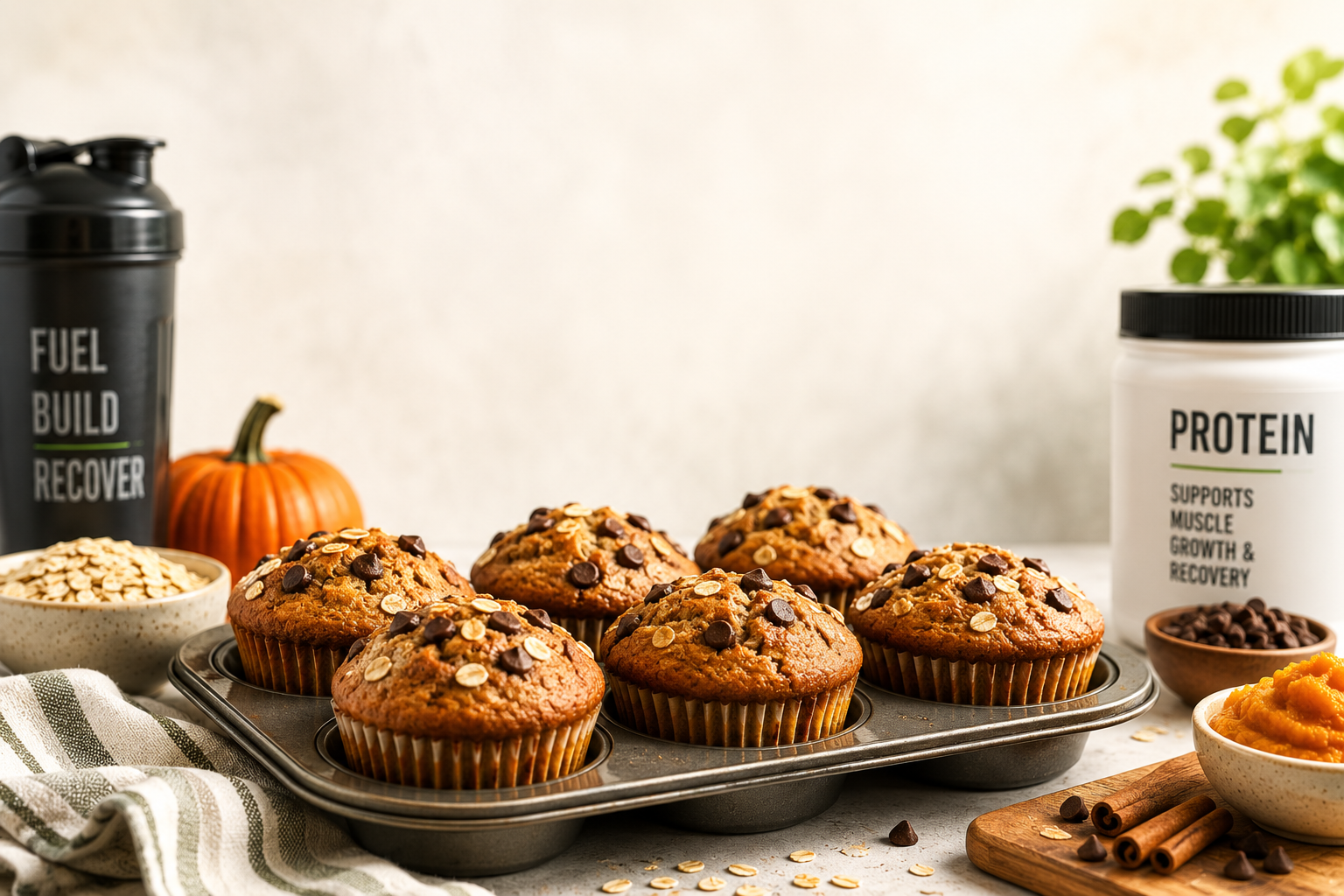
Want bakery-style muffins that actually fit your macros? These protein muffins are moist, fluffy, and won’t wreck your diet.
You’re craving muffins. Real, tender, coffee shop-style muffins. Not dry protein pucks disguised as muffins.
But regular muffins are 400-500 calories each, basically cupcakes without frosting. One muffin = half your breakfast calories gone.
You think your only options are:
- Never eat muffins while cutting
- Waste half your daily calories on one bakery muffin
- Choke down dry protein muffins that crumble into dust
- Accept that muffins are off-limits during prep
Wrong. You can have moist, fluffy muffins that support your goals. These anabolic protein muffins are genuinely good (your coworkers will ask for the recipe). Each muffin: 90 calories, 10g protein, 10g carbs, 2g fat. The secret: Pureed pumpkin for moisture and natural sweetness, cottage cheese blended smooth for protein and texture, Greek yogurt for tang and tenderness, and proper mixing technique that creates actual muffin texture. Not dense. Not dry. Actually moist and fluffy.
In this comprehensive recipe guide, I’ll provide the complete ingredient list (with exact measurements and swaps), show you the step-by-step process (critical techniques for fluffiness), reveal the nutritional breakdown (per muffin and full batch), explain what makes these actually moist (the moisture science), provide 7 flavor variations (blueberry to chocolate chip), and give you storage and freezing instructions (make 24 at once, freeze for weeks).
Whether you’re bulking, cutting, or maintaining, these muffins deliver real flavor and texture.
Let’s bake muffins that taste like muffins and fit your diet.
TABLE OF CONTENTS
Why These Muffins Actually Work
The problems with both regular and most protein muffins.
What Makes Regular Muffins “Unfitable”
The typical bakery muffin (large, coffee shop style):
- Calories: 450-550
- Protein: 6-8g
- Carbs: 60-70g (mostly sugar)
- Fat: 18-25g (mostly butter and oil)
- Complete macro disaster
The problems:
Problem 1: Sugar bomb
- 30-40g sugar per muffin
- Basically a cupcake without frosting
- Blood sugar rollercoaster
- Metabolic chaos
Problem 2: Fat overload
- 18-25g fat per muffin
- Oil and butter create moisture (but destroy macros)
- One muffin = entire fat allowance
- Fat budget annihilated
Problem 3: Massive portion
- Coffee shop muffins are huge (4-6oz each)
- Double or triple normal serving
- Marketed as “breakfast”
- Portion deception
Problem 4: Zero protein
- 6-8g protein negligible
- No satiety
- Hungry again in hour
- No anabolic value
The ingredient breakdown (why so bad):
- 1/2 cup oil: 960 calories
- 1.5 cups sugar: 1,200 calories
- Butter, eggs, flour: 800 calories
- Total: 3,000+ calories for 12 muffins (250+ cal each)
The result:
- Can’t fit cutting diet
- Even bulking, poor nutrient profile
- Purely indulgent food
- Off-limits for serious training
What Makes Most “Protein Muffins” Bad
The typical problems:
Problem 1: Dry as sawdust
- Too much protein powder (absorbs all moisture)
- Not enough wet ingredients
- Like eating flavored sand
- Texture catastrophe
Problem 2: Dense and heavy
- Sit like rocks in stomach
- No fluffiness
- More like protein bars shaped as muffins
- Weight not volume
Problem 3: Artificial protein taste
- Protein powder flavor dominates
- Chemical sweetener aftertaste
- Doesn’t taste like baked goods
- Flavor failure
Problem 4: Rubbery texture
- Overbaked from fear of undercooking
- Wrong ingredient ratios
- Bounce when dropped
- Texture wrong
Problem 5: Still too high calorie
- Use almond flour (calorie dense)
- Use full chocolate chips
- End up 180-220 calories anyway
- Marginal improvement
The result:
- Technically fit macros
- But no one wants to eat them
- Eventually give up and buy real muffins
- Unsustainable
What Makes These Muffins Different
The solutions:
Solution 1: Pumpkin puree base
- Provides moisture without fat
- Natural sweetness reduces need for sweetener
- Creates tender crumb
- Only 20 calories per cup
- Moisture hero
Solution 2: Cottage cheese (blended smooth)
- High protein, low fat
- Blends completely smooth (no curds)
- Creates fluffy texture
- Adds moisture
- Protein and texture foundation
Solution 3: Greek yogurt addition
- Contributes protein
- Adds moisture and tang
- Creates tender crumb
- Multi-functional ingredient
Solution 4: Minimal flour, balanced leavening
- Just enough flour for structure
- Right ratio of baking powder/soda
- Creates actual rise and fluff
- Proper muffin texture
Solution 5: Strategic mixing technique
- Don’t overmix (creates gluten, tough muffins)
- Fold wet into dry gently
- Lumpy batter is okay
- Technique critical
The result:
- 90 calories per muffin
- 10g protein per muffin
- Actually moist and fluffy
- Real muffin flavor and texture
- Optimal muffins
The Complete Recipe
Ingredients and instructions.
Ingredients (Makes 24 Muffins)
Wet ingredients:
- 1 cup (245g) pumpkin puree (not pumpkin pie filling)
- 1 cup (225g) low-fat cottage cheese
- 1 cup (227g) nonfat Greek yogurt
- 3 large eggs
- 1/3 cup (80ml) unsweetened almond milk
- 2 tsp vanilla extract
- Moisture base
Dry ingredients:
- 1.5 cups (180g) vanilla whey protein powder
- 1.5 cups (180g) all-purpose flour
- 3/4 cup (150g) granulated erythritol (or sweetener of choice)
- 2 tsp baking powder
- 1 tsp baking soda
- 1 tsp cinnamon
- 1/2 tsp nutmeg (optional, adds warmth)
- 1/2 tsp salt
- Dry base
Mix-ins (choose one or combine):
- 1 cup (150g) fresh or frozen blueberries
- 2/3 cup (120g) sugar-free chocolate chips
- 1/2 cup (60g) chopped walnuts or pecans
- 1/2 cup (75g) diced apples
- Flavor additions
Equipment needed:
- 2 standard 12-cup muffin tins
- Paper muffin liners or cooking spray
- High-powered blender or food processor
- Large mixing bowls (2)
- Whisk or hand mixer
- Spatula
- Ice cream scoop or 1/4 cup measure
- Essential tools
Step-by-Step Instructions
Step 1: Prep (5 minutes)
Preheat oven:
- Set to 350°F (177°C)
- Standard muffin temperature
- Correct temp
Prepare muffin tins:
- Line with paper liners (recommended, easy removal)
- OR spray cups with cooking spray
- Pan prep
Step 2: Blend cottage cheese (2 minutes)
Blend until smooth:
- Add cottage cheese to blender
- Blend on high for 60-90 seconds
- Should be completely smooth, like heavy cream
- Zero visible curds
- Critical for texture
Why this matters:
- Cottage cheese has curds
- Must break down completely
- Otherwise muffins have lumps
- Smoothness essential
Step 3: Mix wet ingredients (3 minutes)
Combine in large bowl:
- Blended cottage cheese
- Pumpkin puree
- Greek yogurt
- Eggs
- Almond milk
- Vanilla extract
- Whisk together until smooth
The consistency:
- Should be smooth mixture
- Orange color from pumpkin
- Completely homogeneous
- Wet base ready
Step 4: Mix dry ingredients (2 minutes)
Combine in separate large bowl:
- Protein powder
- Flour
- Erythritol
- Baking powder
- Baking soda
- Cinnamon
- Nutmeg (if using)
- Salt
- Whisk together thoroughly
Important:
- Break up protein powder clumps
- Mix very well (prevents pockets in muffins)
- Uniform dry mix
Step 5: Combine wet and dry (2 minutes)
The critical technique:
- Pour wet ingredients into dry (not vice versa)
- Fold gently with spatula
- Mix until JUST combined
- Batter will be lumpy (this is correct)
- Do NOT overmix
What you’ll see:
- Thick batter
- Lumpy (streaks of dry ingredients visible)
- Like thick cake batter
- Proper consistency
Why lumpy is good:
- Overmixing develops gluten
- Gluten makes tough, dense muffins
- Lumpy batter = tender muffins
- Lumps disappear during baking
- Counterintuitive but critical
Step 6: Add mix-ins (1 minute)
If using:
- Fold in blueberries, chocolate chips, nuts, or apples
- Gentle folding (don’t overmix)
- Distribute throughout batter
- Optional additions
For blueberries:
- Toss in 1 tbsp flour first (prevents sinking)
- Then fold into batter
- Anti-sinking trick
Step 7: Fill muffin cups (5 minutes)
Portion batter:
- Use ice cream scoop or 1/4 cup measure
- Fill each cup 2/3 to 3/4 full
- Should make 24 muffins total
- Even portioning
Why 2/3 full:
- Muffins need room to rise
- Will dome nicely
- Too full = overflow and flat tops
- Proper fill level
Optional topping:
- Sprinkle extra mix-ins on top (looks nice)
- Light dusting of cinnamon
- Visual appeal
Step 8: Bake (18-22 minutes)
Baking:
- Bake at 350°F for 18-22 minutes
- Rotate pans halfway through (even baking)
- Done when toothpick inserted comes out clean or with few moist crumbs
- Doneness test
Visual cues:
- Tops golden brown
- Muffins spring back when touched lightly
- Edges pulling slightly from cups
- Appearance check
Important:
- Don’t overbake (dry muffins)
- Don’t underbake (gummy centers)
- 20 minutes usually perfect
- Time precision
Step 9: Cool (10 minutes)
Immediate cooling:
- Remove from oven
- Let sit in tins for 5 minutes
- Transfer to wire rack
- Cool completely (10 minutes)
- Proper cooling
Why cooling in tin matters:
- Structure sets
- Easier to remove
- Prevents breakage
- Setting time
Step 10: Store
Once completely cool:
- Store in airtight container
- Room temperature, refrigerator, or freezer
- Storage options
Nutritional Information
Per muffin (1/24 of batch, no mix-ins):
- Calories: 90
- Protein: 10g
- Carbohydrates: 10g
- Fat: 2g
- Fiber: 1g
- Sugar: 2g (from pumpkin)
- Base recipe macros
Per muffin (with 1 cup blueberries distributed):
- Calories: 95
- Protein: 10g
- Carbohydrates: 12g
- Fat: 2g
- With blueberries
Per muffin (with 2/3 cup chocolate chips distributed):
- Calories: 110
- Protein: 10g
- Carbohydrates: 13g
- Fat: 4g
- With chocolate chips
Full batch (24 muffins, no mix-ins):
- Calories: 2,160
- Protein: 240g
- Carbohydrates: 240g
- Fat: 48g
- Total batch macros
Comparison to regular muffin:
- Regular: 450 cal, 7g protein, 65g carbs, 20g fat
- These: 90 cal, 10g protein, 10g carbs, 2g fat
- Savings: 360 calories, +3g protein, -55g carbs, -18g fat
Macro breakdown:
- 44% protein
- 44% carbohydrates
- 12% fat
- Balanced macros
The Science of Moist Texture
Why these actually work.
The Role of Each Ingredient
Pumpkin puree (moisture + natural sweetness):
- 90% water content (massive moisture)
- Only 20 calories per cup
- Natural sweetness reduces need for sweetener
- Beta-carotene (orange color, antioxidants)
- Creates tender crumb
- Moisture foundation
Cottage cheese (protein + moisture):
- High protein (14g per cup)
- High moisture content
- Blends smooth (no curds when processed)
- Creates fluffy texture
- Protein and texture base
Greek yogurt (protein + tang + tenderness):
- Adds protein (17g per cup)
- Slight acidity tenderizes
- Moisture contribution
- Balances sweetness
- Multi-functional
Eggs (binding + structure + rise):
- Bind ingredients together
- Protein coagulates for structure
- Fat in yolks adds richness
- Leavening (trap air)
- Structural support
Almond milk (moisture adjustment):
- Thins batter to right consistency
- Minimal calories
- Consistency control
Protein powder (protein boost):
- Adds 9g protein per muffin
- Vanilla flavor enhances taste
- Absorbs some moisture (ratio critical)
- Protein delivery
Flour (structure):
- Moderate amount (1.5 cups for 24 muffins)
- Provides gluten structure
- Not so much they become dense
- Structural balance
Baking powder and soda (rise):
- Chemical leavening creates rise
- Baking soda reacts with acidic ingredients (yogurt)
- Baking powder provides additional lift
- Creates fluffy texture
- Leavening team
Erythritol (sweetness):
- Zero calorie sweetener
- No blood sugar impact
- Bulk similar to sugar
- Clean sweetness
Spices (flavor depth):
- Cinnamon and nutmeg complement pumpkin
- Enhance overall flavor
- Make muffins taste richer
- Flavor enhancement
Why Pumpkin Works So Well
The moisture magic:
- Pumpkin is 90% water
- Massive moisture without fat
- Unlike oil/butter (pure fat)
- Water-based moisture
The calorie efficiency:
- 1 cup oil: 1,920 calories
- 1 cup pumpkin: 80 calories
- Same moisture, 2,300% fewer calories
- Calorie savings
The natural sweetness:
- Slight sweetness from pumpkin
- Reduces sweetener needed
- Clean flavor (not artificial)
- Natural sugar source
The nutritional bonus:
- Vitamin A (beta-carotene)
- Fiber
- Antioxidants
- Micronutrient boost
Year-round availability:
- Canned pumpkin always available
- Shelf-stable
- Convenient
- Practical ingredient
The Cottage Cheese Blending Technique
Why blend smooth:
- Cottage cheese has visible curds
- Curds create lumps in muffins
- Blending breaks down curds completely
- Smooth texture essential
The process:
- Blend cottage cheese ALONE first
- 60-90 seconds on high
- Check smoothness (should look like heavy cream)
- Solo blending critical
What happens if you skip:
- Visible curds in baked muffins
- Uneven texture
- Not smooth
- Texture failure
The test:
- After blending, look closely
- Should be silky smooth
- Zero visible curds
- Quality check
The Don’t Overmix Rule
Why overmixing is bad:
- Mixing develops gluten strands
- Gluten makes baked goods tough and dense
- Muffins should be tender, not chewy
- Gluten development issue
The correct technique:
- Fold wet into dry until JUST combined
- Lumpy batter is correct
- Streaks of flour okay
- Stops mixing when dry ingredients mostly disappear
- Minimal mixing
What happens during baking:
- Lumps disappear
- Batter evens out
- Perfect texture results
- Baking fixes lumps
The visual:
- Before baking: Lumpy, streaky batter
- After baking: Smooth, even muffins
- Transformation
7 Flavor Variations
Make it your own.
Variation 1: Blueberry Muffins (Classic)
Mix-in:
- 1 cup (150g) fresh or frozen blueberries
- Toss in 1 tbsp flour before adding (prevents sinking)
- Berry classic
Macros per muffin:
- Calories: 95
- Protein: 10g
- Carbs: 12g
- Fat: 2g
- Minimal increase
Pro tip:
- If using frozen, don’t thaw (prevents purple batter)
- Fold in frozen
- Color preservation
Variation 2: Chocolate Chip
Mix-in:
- 2/3 cup (120g) sugar-free chocolate chips (Lily’s or ChocZero)
- Chocolate version
Macros per muffin:
- Calories: 110
- Protein: 10g
- Carbs: 13g
- Fat: 4g
- Chocolate addition
Pro tip:
- Reserve some chips to press on tops before baking
- Looks more bakery-style
- Visual appeal
Variation 3: Apple Cinnamon
Mix-in:
- 1.5 cups (225g) diced apples (small cubes)
- Increase cinnamon to 2 tsp
- Add pinch of allspice
- Fall flavors
Macros per muffin:
- Calories: 98
- Protein: 10g
- Carbs: 13g
- Fat: 2g
- Apple addition
Pro tip:
- Use firm apples (Granny Smith, Honeycrisp)
- Don’t use mushy apples
- Texture maintenance
Variation 4: Banana Nut
Modify wet ingredients:
- Replace pumpkin with 2 mashed ripe bananas (240g)
- Banana base
Mix-in:
- 1/2 cup (60g) chopped walnuts
- Classic combo
Macros per muffin:
- Calories: 105
- Protein: 10g
- Carbs: 11g
- Fat: 4g
- Nut addition
Variation 5: Lemon Poppy Seed
Modify wet ingredients:
- Add 3 tbsp lemon juice
- Add 2 tbsp lemon zest
- Lemon base
Mix-in:
- 2 tbsp poppy seeds
- Classic addition
Macros per muffin:
- Calories: 92
- Protein: 10g
- Carbs: 10g
- Fat: 2g
- Nearly identical
Optional glaze:
- Mix 2 tbsp erythritol + 1 tbsp lemon juice
- Drizzle on cooled muffins
- Lemon glaze
Variation 6: Double Chocolate
Modify dry ingredients:
- Replace vanilla protein with chocolate protein
- Add 1/3 cup (40g) unsweetened cocoa powder
- Add extra 3 tbsp erythritol (cocoa is bitter)
- Chocolate base
Mix-in:
- 2/3 cup (120g) sugar-free chocolate chips
- Extra chocolate
Macros per muffin:
- Calories: 115
- Protein: 10g
- Carbs: 14g
- Fat: 4g
- Chocolate lovers
Variation 7: Pumpkin Spice (Enhanced)
Modify dry ingredients:
- Increase cinnamon to 2 tsp
- Increase nutmeg to 1 tsp
- Add 1/2 tsp ginger
- Add 1/4 tsp cloves
- Pumpkin spice blend
Mix-in (optional):
- 1/3 cup (40g) chopped pecans
- Nutty addition
Macros per muffin:
- Calories: 95 (without nuts)
- Protein: 10g
- Carbs: 10g
- Fat: 2g
- Spiced version
Troubleshooting
Common problems and solutions.
Problem 1: Dry or Crumbly Muffins
Causes:
- Overbaked (most common)
- Too much protein powder
- Not enough pumpkin/yogurt
- Oven temperature too high
- Moisture deficiency
Solutions:
- Reduce baking time by 2 minutes
- Use oven thermometer (ovens often run hot)
- Don’t pack protein powder when measuring
- Measure pumpkin and yogurt accurately
- Prevent overbaking
If already baked:
- Store in airtight container with slice of bread
- Moisture transfers to muffins
- Softening trick
Problem 2: Dense, Heavy Texture
Causes:
- Overmixed batter (gluten overdevelopment)
- Too much flour
- Not enough leavening
- Baking powder/soda expired
- Structure issue
Solutions:
- Mix batter only until just combined (lumpy is okay)
- Measure flour accurately (don’t pack)
- Check leavening freshness (baking powder loses potency after 6 months)
- Gentle mixing
Prevention:
- Fold, don’t stir vigorously
- Stop mixing when streaks barely visible
- Minimal mixing
Problem 3: Cottage Cheese Curds Visible
Causes:
- Didn’t blend cottage cheese long enough
- Low-powered blender (can’t break down curds)
- Skipped blending step
- Blending inadequate
Solutions:
- Blend cottage cheese alone for full 90 seconds
- Use high-powered blender (Vitamix, Blendtec, Ninja)
- Check smoothness before proceeding
- Thorough blending
The test:
- Cottage cheese should look like heavy cream
- Zero visible curds
- Smooth texture
Problem 4: Sunk Centers or Flat Tops
Causes:
- Oven temperature too low
- Overfilled muffin cups
- Opened oven door during baking
- Old leavening agents
- Rise failure
Solutions:
- Use oven thermometer (ensure 350°F)
- Fill cups only 2/3 to 3/4 full
- Don’t open oven until 18 minutes
- Replace baking powder if old
- Proper rise conditions
Problem 5: Stuck to Liners or Pans
Causes:
- Didn’t use liners or spray
- Removed from tins too soon
- Low-quality liners
- Release failure
Solutions:
- Always use paper liners (best option)
- If using spray, spray generously
- Let cool in tins 5 minutes before removing
- Use quality liners (cheap ones stick)
- Proper release
Problem 6: Rubbery Texture
Causes:
- Overbaked
- Too many eggs
- Overmixed batter
- Protein overdevelopment
Solutions:
- Reduce baking time
- Use exact egg amount (3 for batch)
- Mix gently, just until combined
- Prevent toughness
Storage and Meal Prep
Make ahead friendly.
Storage Methods
Room temperature:
- Store in airtight container
- Lasts 2-3 days
- Best texture
- Short-term storage
Refrigerator:
- Store in airtight container
- Lasts 5-7 days
- Texture stays good
- Bring to room temp or warm before eating
- Medium-term storage
Freezer (best for meal prep):
- Wrap individual muffins in plastic wrap
- Place in freezer bag
- Lasts 2-3 months
- Thaw overnight in fridge or microwave 30-45 seconds
- Long-term storage
Reheating Instructions
Microwave (single muffin):
- 20-30 seconds
- Makes warm and soft
- Don’t overheat (gets rubbery)
- Quick method
Oven (multiple muffins):
- 300°F for 5-8 minutes
- Warm throughout
- Original texture restored
- Batch reheating
Toaster oven:
- 300°F for 5 minutes
- Slightly crispy tops
- Alternative method
Best served:
- Slightly warm or room temperature
- Texture optimal
- Temperature preference
Meal Prep Strategy
Batch baking:
- Make full batch (24 muffins)
- Bake Sunday
- Store for entire week plus
- Weekly meal prep
Breakfast solution:
- 2 muffins + protein shake = complete breakfast
- 180 cal, 30g protein (with shake)
- Portable and convenient
- Meal prep breakfast
Pre-workout snack:
- 1 muffin 60 minutes before training
- Quick carbs and protein
- Easy digestion
- Training fuel
Post-workout:
- 2 muffins immediately after training
- Fast carbs for glycogen
- Protein for recovery
- Recovery food
Freezer rotation:
- Keep 12 in freezer
- 12 in fridge for week
- Bake new batch every 2 weeks
- Continuous supply
Individual wrapping:
- Wrap each muffin separately
- Grab-and-go convenience
- Portion control automatic
- Single serving
Substitutions Guide
Adapt to your needs.
Pumpkin Substitutions
Pumpkin puree (recommended):
- Best moisture and flavor
- Year-round available
- Optimal choice
Sweet potato puree:
- Same moisture
- Slightly sweeter
- Different color
- Sweet alternative
Banana (mashed):
- 2 large ripe bananas (240g)
- Different flavor
- Similar moisture
- Banana version
Applesauce:
- Unsweetened, 1 cup (240g)
- Less flavor
- Good moisture
- Neutral option
Greek yogurt only:
- Increase Greek yogurt to 2 cups total
- Omit pumpkin
- Different texture (more dense)
- Yogurt-heavy version
Cottage Cheese Substitutions
Low-fat cottage cheese (recommended):
- Best protein-to-fat ratio
- Optimal
Full-fat cottage cheese:
- Richer flavor
- Higher fat (+1g per muffin)
- Indulgent version
Ricotta cheese:
- Similar texture when blended
- Slightly different flavor
- Italian alternative
Extra Greek yogurt:
- Omit cottage cheese
- Use 2 cups Greek yogurt total
- Protein slightly lower
- Simplified version
Silken tofu (vegan):
- Blend until smooth
- Add extra 2 tbsp sweetener
- Different flavor
- Vegan option
Protein Powder Substitutions
Vanilla whey (recommended):
- Best flavor for muffins
- Optimal
Chocolate whey:
- Creates chocolate muffins
- Works great
- Chocolate version
Casein protein:
- Thicker batter
- May need extra 3 tbsp liquid
- Dense option
Vegan protein:
- Works but grittier texture
- Add extra 3-4 tbsp liquid
- Plant-based
Omit protein powder:
- Replace with 1.5 cups (180g) flour
- Protein drops to ~4g per muffin
- Still lower calorie than regular
- Low-protein version
Sweetener Substitutions
Erythritol (recommended):
- Zero calorie
- No aftertaste (quality brands)
- Best zero-calorie
Monk fruit sweetener:
- Zero calorie
- Use same amount
- Alternative zero-calorie
Stevia:
- Zero calorie
- More concentrated (use 1/3 cup not 3/4)
- Possible aftertaste
- Concentrated option
Coconut sugar:
- Natural sweetener
- Use same amount
- Adds ~50 calories per muffin
- Natural alternative
Regular sugar:
- Use 3/4 cup (150g)
- Adds ~50 calories per muffin
- Best texture but not “anabolic”
- Traditional sweetener
Honey or maple syrup:
- Use 1/2 cup
- Adds ~55 calories per muffin
- Liquid sweetener (reduce almond milk by 1/4 cup)
- Liquid option
Flour Substitutions
All-purpose flour (recommended):
- Best texture
- Standard
Whole wheat flour:
- More fiber
- Denser texture
- Nuttier flavor
- Whole grain
Oat flour:
- Gluten-free option
- Similar texture
- GF alternative
Almond flour:
- Low carb
- Higher fat
- Very different texture (more crumbly)
- Use 2 cups (not 1.5)
- Adds ~40 calories per muffin
- Low-carb option
Coconut flour:
- Highly absorbent (use 3/4 cup only)
- Add extra 1/2 cup liquid
- Very different texture
- Specialized flour
Tips for Best Results
Optimization strategies.
Ingredient Quality
Pumpkin puree:
- 100% pure pumpkin (check label)
- NOT pumpkin pie filling (has added sugar/spices)
- Libby’s brand reliable
- Pure pumpkin
Cottage cheese:
- Quality brand (Daisy, Good Culture, Friendship)
- Low-fat (best macro ratio)
- Fresh (check date)
- Quality base
Greek yogurt:
- Nonfat
- Plain unsweetened
- Quality brand (Fage, Chobani)
- Thick yogurt
Protein powder:
- Fresh (not expired or stale)
- Quality brand (Optimum Nutrition, Dymatize, MyProtein)
- Vanilla flavor
- Clean protein
Erythritol:
- Quality brand (Swerve, Lakanto)
- Granulated
- No aftertaste
Technique Tips
Blending cottage cheese:
- MUST blend smooth (non-negotiable)
- 90 seconds minimum
- Check before proceeding
- Critical step
Mixing batter:
- Don’t overmix (creates tough muffins)
- Fold gently with spatula
- Lumpy batter is correct
- Gentle handling
Filling cups:
- 2/3 to 3/4 full (not more)
- Room to rise
- Consistent portions
- Proper filling
Baking:
- Don’t open oven before 18 minutes
- Use oven thermometer
- Rotate pans halfway
- Temperature control
Cooling:
- Let cool in tins 5 minutes
- Prevents breakage
- Structure sets
- Patience rewarded
Customization Strategy
Start with base:
- Make once as written
- Understand texture and flavor
- Baseline
Then experiment:
- One change at a time
- Track modifications
- Note results
- Systematic testing
Find your perfect muffin:
- Adjust sweetness
- Modify mix-ins
- Dial in ideal version
- Personalization
The Bottom Line: Muffins That Actually Fit
After explaining everything:
The truth about anabolic protein muffins:
✅ 90 calories and 10g protein per muffin (80% fewer calories than regular)
✅ Actually moist and fluffy, not dry or dense (proper ingredients and technique)
✅ Real muffin flavor and texture (pumpkin moisture, not protein powder taste)
✅ Makes 24 muffins (2-week supply with freezer)
✅ Meal prep champion (freeze for months, thaw as needed)
Key takeaways:
The macros per muffin:
- Calories: 90 (vs. 450 regular)
- Protein: 10g (vs. 7g regular)
- Carbs: 10g (vs. 65g regular)
- Fat: 2g (vs. 20g regular)
- 360 calorie savings per muffin
Critical ingredients:
- Pumpkin puree (moisture without fat, only 20 cal per cup)
- Cottage cheese (blended smooth, high protein)
- Greek yogurt (protein + moisture + tang)
- Minimal flour (structure without density)
- Protein powder (protein boost)
- Strategic selection
Technique essentials:
- Blend cottage cheese alone 90 seconds (smooth texture critical)
- Don’t overmix batter (lumpy is correct, prevents tough muffins)
- Fill cups 2/3 to 3/4 full (room to rise)
- Bake at 350°F for 18-22 minutes (don’t overbake)
- Cool in tins 5 minutes before removing (structure sets)
- Execution critical
Texture science:
- Pumpkin provides moisture without fat (90% water)
- Cottage cheese blended smooth creates fluffiness
- Minimal mixing prevents gluten overdevelopment
- Proper leavening creates rise
- Multiple factors create moistness
Variations (7 flavors):
- Blueberry (classic, +5 cal)
- Chocolate chip (+20 cal)
- Apple cinnamon (+8 cal)
- Banana nut (+15 cal)
- Lemon poppy seed (+2 cal)
- Double chocolate (+25 cal)
- Pumpkin spice enhanced (+5 cal)
- Highly customizable
Storage:
- Room temp: 2-3 days
- Refrigerator: 5-7 days
- Freezer: 2-3 months (wrap individually, perfect for meal prep)
- Flexible storage
Meal prep uses:
- Breakfast: 2 muffins (180 cal, 20g protein)
- Pre-workout: 1 muffin (90 cal, quick carbs)
- Post-workout: 2 muffins (recovery fuel)
- Snack: 1 muffin anytime
- Versatile timing
Troubleshooting:
- Dry/crumbly: Overbaked, reduce time 2 min
- Dense/heavy: Overmixed, fold gently
- Cottage cheese curds visible: Blend longer
- Sunk centers: Fill cups only 2/3 full, don’t open oven early
- Stuck to liners: Use quality liners, cool 5 min first
- Rubbery: Overbaked or overmixed
- Common fixes
Substitutions:
- Pumpkin: Sweet potato, banana, applesauce
- Cottage cheese: Ricotta, extra Greek yogurt, silken tofu
- Protein powder: Any flavor or omit (lower protein)
- Sweetener: Any zero-calorie or regular sugar
- Flour: Whole wheat, oat, almond, coconut
- Flexible recipe
Batch size:
- Makes 24 muffins (intentionally large batch)
- Perfect for 2-week meal prep
- Freeze half, refrigerate half
- Efficient batch
Priority actions:
- Buy ingredients (pumpkin, cottage cheese, Greek yogurt, vanilla protein, erythritol)
- Blend cottage cheese smooth (90 seconds, critical step)
- Mix wet and dry separately (prevents lumps)
- Fold together gently (lumpy batter is correct, don’t overmix)
- Fill cups 2/3 full, bake 18-22 min at 350°F
- Cool 5 min in tins, store or freeze
- Success checklist
STOP AVOIDING MUFFINS WHILE DIETING. START MAKING ANABOLIC VERSIONS. 90 CALORIES, 10G PROTEIN, ACTUALLY MOIST. MEAL PREP 24 AT ONCE.
Ready to build a complete high-protein meal prep system with anabolic recipes for breakfasts, snacks, and desserts that support your goals while tasting incredible? These muffins are just the beginning. Get comprehensive anabolic recipe guides. Stop choosing between convenience and macros. Start having both.

Leave a Reply
You must be logged in to post a comment.