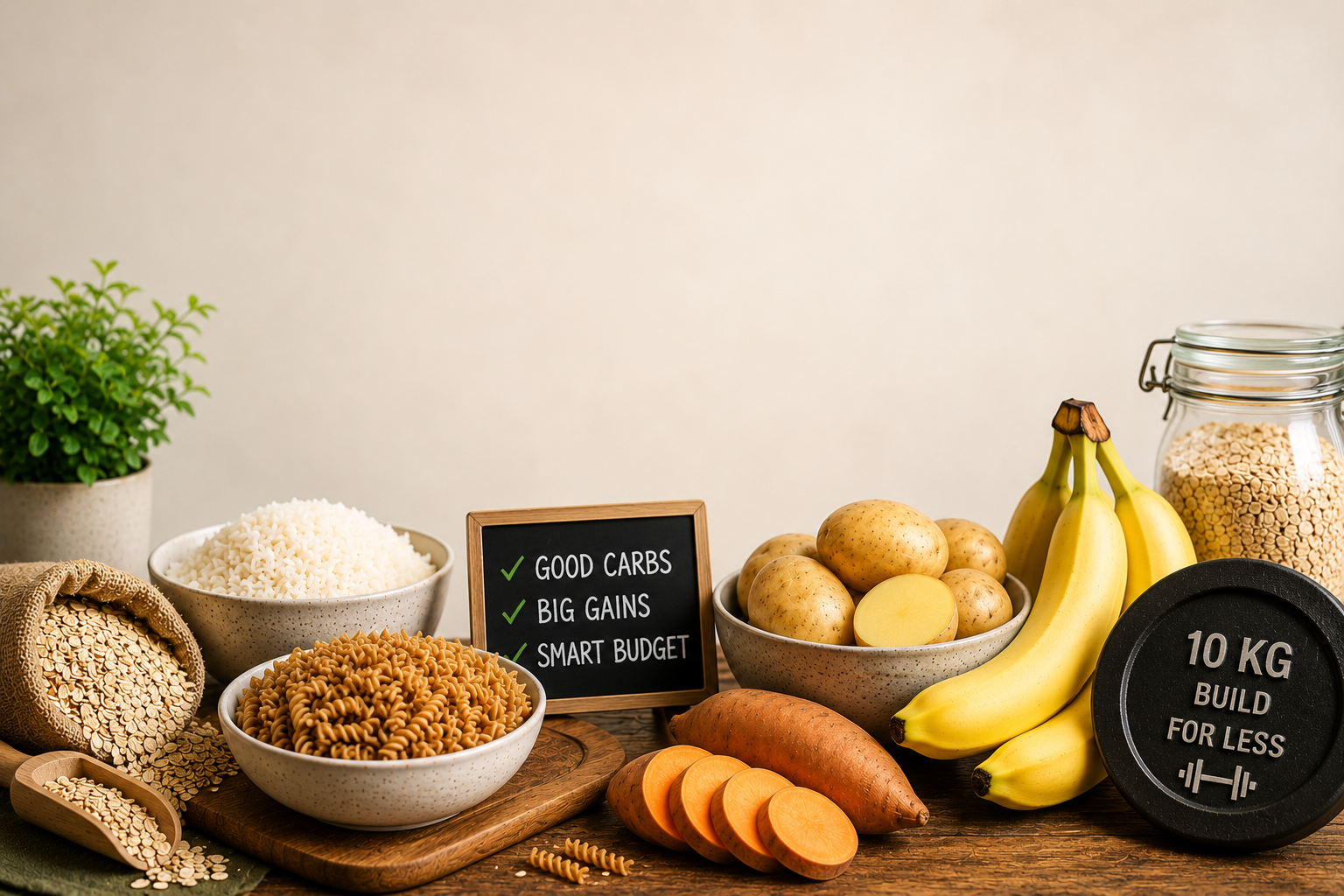
When you’re bulking, you’re going to consume a much larger amount of carbohydrates compared to your normal intake or when cutting. With all those extra carbs, the grocery bill automatically increases. It makes sense to find carbohydrate sources for bulking that are effective and affordable.
So, which carbohydrate sources for bulking get the job done without destroying your bank account? In this guide, we’ll examine the best options that deliver the energy, glycogen replenishment, and calorie density you need during a bulking phase without costing a fortune.
For people struggling to hit their calorie surplus because whole foods are too filling, trying to bulk on a tight budget without resorting to junk food, wanting to understand which carb sources are most practical for high calorie diets, or simply looking for affordable ways to fuel intense training and muscle growth, knowing the best budget friendly carbohydrate sources will make your bulk easier, cheaper, and more sustainable.
In this comprehensive guide, I’ll explain why carbohydrate selection matters during bulking, a complete comparison table of the 8 best carb sources ranked by cost and carb content, detailed breakdowns of each carbohydrate source with specific advantages for bulking, how to incorporate each carb into practical meals with protein, when to use fast digesting versus slow digesting carbs around training, and strategies for keeping your grocery bill manageable while eating 3,000 to 4,000+ calories daily.
Whether you’re a hardgainer struggling to eat enough calories, someone bulking on a student budget, or an experienced lifter looking to optimize your carb sources for both performance and cost, this guide provides everything you need to fuel your muscle building phase affordably.
Let’s examine the best carbohydrates for bulking.
TABLE OF CONTENTS
- Quick Comparison Table
- 1. White Potatoes (The Budget King)
- 2. Sweet Potatoes (The Nutritional Powerhouse)
- 3. Bananas (The Convenience Champion)
- 4. Beans (The Protein Bonus Carb)
- 5. White Rice (The Bodybuilding Staple)
- 6. Pasta (The Calorie Bomb)
- 7. Oats (The Breakfast Powerhouse)
- 8. Whole Wheat Bread (The Convenient Option)
- THE BOTTOM LINE: BEST CARBS FOR BULKING ON A BUDGET
Why Carbohydrate Selection Matters During Bulking
Before diving into the specific foods, let’s understand why choosing the right carb sources can make or break your bulk.
The Caloric Demands of Bulking
What bulking requires nutritionally:
The calorie surplus equation:
- Building muscle requires a calorie surplus (eating more than you burn)
- Typical surplus: 300 to 500 calories above maintenance
- For a 180 lb male with 2,800 TDEE: Eating 3,100 to 3,300 daily
- For hardgainers or highly active individuals: May need 3,500 to 4,000+
Where carbohydrates fit:
Typical bulking macro split:
- Protein: 1g per lb body weight (180g for 180 lb male)
- Fat: 0.4g per lb body weight (72g)
- Remaining calories: All from carbohydrates
- At 3,200 calories: Approximately 370g carbs daily
- At 3,600 calories: Approximately 470g carbs daily
370 to 470 grams of carbohydrates per day is a LOT of food. Choosing the wrong sources makes this impossible to sustain. Choosing the right sources makes it manageable, affordable, and even enjoyable.
What Makes a Good Bulking Carbohydrate
The ideal bulking carb source has:
High caloric density:
- More calories per gram or serving
- Helps hit surplus without excessive food volume
- Prevents the “too full to eat” problem
- Critical for hardgainers with low appetite
Affordability:
- Cheap per calorie
- Available everywhere
- Can be bought in bulk
- Doesn’t strain monthly food budget
Easy digestion:
- Doesn’t cause excessive bloating
- Can be consumed in large quantities without GI distress
- Doesn’t fill you up so much that you skip the next meal
- Important when eating 5 to 6 meals daily
Versatility:
- Can be prepared multiple ways
- Pairs well with protein sources
- Works for different meals throughout the day
- Doesn’t get boring after weeks of eating it
Some nutritional value:
- Provides vitamins, minerals, or fiber
- Supports training performance
- Contributes to overall health
- Better than “empty” calories from junk food
The 8 Best Carbohydrates for Bulking
Quick Comparison Table
All values per 100g cooked/prepared:
1. White Potatoes: 19g carbs per 100g, very low cost 2. Sweet Potatoes: 20g carbs per 100g, low cost 3. Bananas: 26g carbs per 100g, low cost 4. Beans: 23g carbs per 100g, low to moderate cost 5. White Rice: 28g carbs per 100g, moderate cost 6. Pasta: 24g carbs per 100g, moderate cost 7. Oats: 17g carbs per 100g (cooked), moderate to higher cost (buy in bulk to save) 8. Whole Wheat Bread: 46g carbs per 100g, moderate to higher cost
Now let’s examine each one in detail.
1. White Potatoes (The Budget King)
White potatoes are an excellent carbohydrate for bulking due to their high carbohydrate content, which helps provide the energy needed for intense training and muscle recovery.
Nutritional profile per medium potato (213g baked):
- Calories: 161
- Carbohydrates: 37g
- Protein: 4.3g
- Fat: 0.2g
- Fiber: 3.8g
- Potassium: 926mg (26% daily value)
- Vitamin C: 28% daily value
- Vitamin B6: 27% daily value
Why potatoes are excellent for bulking:
Calorie dense for a whole food:
- Potatoes have plenty of calories and carbohydrates per serving (calorically dense), which can be beneficial for those who have difficulty consuming enough calories to create a caloric surplus, a vital requirement in bulking
- 161 calories per medium potato
- Easy to eat 2 to 3 potatoes per meal (320 to 480 calories from carbs alone)
- Add butter, cheese, or sour cream during bulking for even more calories
Extremely affordable:
- Among the cheapest foods per calorie available
- Can be bought in large bags for bulk savings
- Available in every grocery store, every season
- Price per serving is pennies
Versatile and easy to prepare:
- White potatoes are also versatile and economical, which is great for anyone bulking who needs to save money. They can be prepared in various ways: baked, boiled, or mashed, and can be easily incorporated into various meals with protein throughout the day
- Baked: Minimal effort (wash, poke holes, oven for 45 minutes or microwave for 8 minutes)
- Mashed: Comfort food, easy to eat large quantities
- Roasted: Cut into cubes, season, oven 25 minutes
- Air fried: Cut into wedges, air fry 15 minutes
- Hash browns: Quick morning option with eggs
Easy to eat in large amounts:
- Soft texture (easy to chew and swallow)
- Mild flavor (doesn’t overwhelm when eating multiple servings)
- Mashed potatoes in particular are extremely easy to eat in bulk
- Less filling than many other carb sources per calorie
Practical bulking meals with potatoes:
Meal 1: Steak and potatoes
- 6 oz steak: 42g protein, 16g fat
- 2 large baked potatoes with butter: 75g carbs, 10g fat
- Vegetables
- Total: 700+ calories, excellent bulking meal
Meal 2: Loaded mashed potatoes
- 3 medium potatoes mashed with milk and butter: 110g carbs
- 6 oz chicken breast mixed in: 45g protein
- Cheese and sour cream on top
- Total: 800+ calories, easy to eat, calorie dense
Meal 3: Breakfast hash
- Diced potatoes pan fried: 40g carbs
- 4 eggs: 24g protein
- Cheese, salsa
- Total: 600+ calories, great morning meal
2. Sweet Potatoes (The Nutritional Powerhouse)
Sweet potatoes are a highly nutritious complex carbohydrate that serves as a “wild card” in any situation. Sweet potatoes are not only a good carbohydrate for bulking but for cutting or any other occasion.
Nutritional profile per medium sweet potato (130g baked):
- Calories: 103
- Carbohydrates: 24g
- Protein: 2.3g
- Fat: 0.1g
- Fiber: 3.8g
- Vitamin A: 1,400% daily value (massive)
- Vitamin C: 37% daily value
- Manganese: 28% daily value
- Potassium: 15% daily value
Why sweet potatoes are excellent for bulking:
Sustained energy:
- They provide sustained energy due to their slow digestion, which is essential for maintaining energy levels during intense training and throughout the day
- Lower glycemic index than white potatoes (GI 50 to 60 vs 85)
- More stable blood sugar response
- No energy crashes between meals
- Great for meals away from training
Incredible vitamin A content:
- 1,400% daily value of vitamin A per potato
- Vitamin A supports protein synthesis
- Supports immune function (sick days = missed training)
- Most other foods provide a tiny fraction of this
Flexible fiber content:
- Besides nutritional benefits, sweet potatoes are an affordable carb option, which is advantageous for anyone bulking who doesn’t want to spend a lot
- With skin: Higher fiber, slower digestion (good for sustained energy)
- Without skin: Lower fiber, faster digestion (good pre and post workout)
- Can adjust based on timing needs
Practical bulking meals with sweet potatoes:
Meal 1: Classic bodybuilder plate
- 2 medium sweet potatoes baked: 48g carbs
- 6 oz chicken breast: 45g protein
- Steamed broccoli
- Total: 550+ calories, clean bulking staple
Meal 2: Sweet potato and beef bowl
- 2 sweet potatoes cubed and roasted: 48g carbs
- 6 oz ground beef (85/15): 40g protein, 17g fat
- Seasoned with cumin, garlic, paprika
- Total: 700+ calories, very satisfying
Meal 3: Sweet potato “dessert”
- Baked sweet potato mashed with cinnamon
- Topped with peanut butter and honey
- Total: 400+ calories, tastes like dessert, healthy carbs
Meal prep advantage:
- Potatoes can be prepared in various ways: baked, boiled, or even turned into mash, making them an easy and delicious addition to the diet
- Bake 6 to 8 sweet potatoes on Sunday
- Store in refrigerator for the week
- Reheat in microwave 2 to 3 minutes
- Zero daily prep time
3. Bananas (The Convenience Champion)
Bananas are an excellent option for anyone in a bulking phase, being one of the fruits with the most carbohydrates per serving. Additionally, they are a relatively inexpensive and versatile carb option, able to be incorporated into various meals and snacks.
Nutritional profile per medium banana (118g):
- Calories: 105
- Carbohydrates: 27g
- Protein: 1.3g
- Fat: 0.4g
- Fiber: 3.1g
- Potassium: 12% daily value
- Vitamin B6: 25% daily value
- Vitamin C: 17% daily value
- Magnesium: 8% daily value
Why bananas are excellent for bulking:
Post workout glycogen replenishment:
- The natural sugar content of bananas can also help quickly replenish glycogen levels after exercise, an important aspect for recovery and muscle growth
- Natural sugars (fructose and glucose) digest quickly
- Ideal post workout carb source
- Pair with protein shake for complete post workout nutrition
- Convenient (no preparation needed)
Potassium for muscle function:
- Besides carbohydrates, bananas are rich in essential micronutrients like potassium, which plays a vital role in muscle function and regulation of fluid balance in the body. Potassium can help prevent muscle cramps and fatigue, which is especially beneficial during heavy training
- 12% daily value per banana
- Critical electrolyte for muscle contraction
- Prevents cramps during intense sessions
- Supports proper hydration
Zero preparation required:
- No cooking, no washing, no cutting
- Peel and eat
- Comes in its own natural packaging
- Perfect on the go snack
- Grab 2 to 3 between meals for easy 300 calories
Extremely versatile:
- Eat plain as snack
- Add to protein shakes (creaminess and carbs)
- Slice on oatmeal or cereal
- Mash into pancake batter
- Freeze for ice cream base (blend frozen banana for “nice cream”)
- Spread with peanut butter for calorie dense snack
Practical bulking applications:
High calorie shake:
- 2 bananas: 54g carbs, 210 calories
- 2 scoops whey protein: 50g protein
- 2 tbsp peanut butter: 8g protein, 16g fat
- 1 cup whole milk: 8g protein, 12g carbs
- Ice, blend
- Total: 750+ calories, 66g protein, 66g carbs, liquid form (easy to consume)
- This single shake can add 750 calories to your daily intake with minimal effort
Pre workout snack (30 minutes before):
- 1 banana + protein bar
- Quick carbs + protein
- Easy on stomach
- No preparation
Post workout (immediately after):
- 2 bananas + protein shake
- Fast carbs for glycogen + fast protein for muscle repair
- Takes 30 seconds to consume
- Perfect recovery nutrition
4. Beans (The Protein Bonus Carb)
Contrary to what many people (still) think, beans can be an ally in bulking. Besides being a source of carbohydrates, beans provide some protein and fiber.
Nutritional profile per cup cooked black beans (172g):
- Calories: 227
- Carbohydrates: 41g
- Protein: 15g
- Fat: 0.9g
- Fiber: 15g
- Folate: 64% daily value
- Iron: 20% daily value
- Magnesium: 30% daily value
- Zinc: 13% daily value
- Potassium: 17% daily value
Why beans are excellent for bulking:
Dual macro source (carbs AND protein):
- 41g carbs per cup
- 15g protein per cup (substantial for a plant food)
- Getting both macros from one food simplifies meal planning
- Protein content reduces the pressure on your primary protein sources
Budget friendly nutrition:
- Beans are an economical source of nutrition, which is a bonus for those bulking who are controlling spending
- Dried beans are among the cheapest foods available
- Canned beans are very affordable and require zero cooking
- Enormous nutrition per dollar
- Can buy in bulk for even more savings
Micronutrient powerhouse:
- They are also packed with essential vitamins and minerals like iron, zinc, and folic acid, which are vital for overall health
- Iron: Oxygen transport to muscles
- Zinc: Testosterone production support
- Folate: Cell growth and repair
- Magnesium: Muscle function and recovery
The fiber consideration:
- Some people may avoid beans in bulking, not because the food is “bad,” but because their fiber content can decrease hunger in some people and interfere with the high food consumption demanded by bulking. Additionally, some people have gastrointestinal effects, like gas, when consuming beans and therefore opt for other sources
- 15g fiber per cup is very high
- May keep you full longer than desired during bulking
- Can cause bloating and gas in some people
- Solution: Start with small portions, increase gradually
- Or use canned beans (slightly less fiber than dried)
Practical bulking meals with beans:
Meal 1: Rice and beans (classic combination)
- 2 cups white rice: 90g carbs
- 1 cup black beans: 41g carbs, 15g protein
- 6 oz ground beef or chicken: 40g protein
- Total: 800+ calories, complete amino acid profile (rice + beans = complete protein)
Meal 2: Bean burrito bowl
- 1.5 cups rice: 67g carbs
- 1 cup pinto beans: 45g carbs, 15g protein
- 4 oz ground beef: 28g protein
- Cheese, salsa, sour cream
- Total: 900+ calories, very easy to eat
Meal 3: Bean chili
- 2 types of beans (kidney + black): 80g carbs, 30g protein
- Ground turkey: 40g protein
- Tomato base, onion, peppers
- Serve over rice: 45g carbs
- Total: 1,000+ calories, batch cook for the week
5. White Rice (The Bodybuilding Staple)
White rice is an affordable carbohydrate for bulking and very useful due to its rapid digestion and ability to provide energy quickly without risk of gastrointestinal problems.
Nutritional profile per cup cooked white rice (186g):
- Calories: 206
- Carbohydrates: 45g
- Protein: 4.3g
- Fat: 0.4g
- Fiber: 0.6g
- Manganese: 37% daily value
- Selenium: 12% daily value
- Niacin: 12% daily value
Why white rice is the ultimate bulking carb:
Easy digestion (the key advantage):
- It’s important to note that for individuals who may have digestive sensitivities, white rice can be a gentler option compared to brown rice or other complex carbohydrate sources, which contain more fiber
- Extremely low fiber (0.6g per cup)
- Doesn’t cause bloating or gas
- Can eat large quantities without GI distress
- Perfect for high calorie meals
- This easy digestibility can help minimize gastrointestinal discomfort, which can be beneficial during periods of elevated caloric intake, typical in bulking
Calorie dense and easy to eat:
- 206 calories per cup cooked
- Soft texture (minimal chewing effort)
- Mild flavor (pairs with literally everything)
- Can eat 2 to 3 cups per meal without feeling overly stuffed
- 3 cups = 618 calories, 135g carbs (massive carb intake, minimal effort)
Affordable and bulk purchasable:
- It’s also an economical and versatile option, which can be beneficial for those bulking on a tighter budget, allowing greater caloric intake without excessive cost
- Large bags (10 to 25 lbs) are very cheap per serving
- Keeps for months (no spoilage)
- Available everywhere
- Cost per calorie is extremely low
Versatile preparation:
- Rice cooker (set and forget, perfect every time)
- Stovetop (15 to 20 minutes)
- Instant rice (5 minutes)
- Batch cook on Sunday (reheat all week)
Still, it’s prudent to balance white rice consumption with complex carbohydrates or add vegetables to meals with white rice to ensure adequate nutrition.
Practical bulking meals with white rice:
Meal 1: The bodybuilder classic
- 2 cups white rice: 90g carbs
- 8 oz chicken breast: 62g protein
- Steamed broccoli and soy sauce
- Total: 650+ calories, clean and simple
Meal 2: Beef fried rice
- 2.5 cups white rice: 112g carbs
- 6 oz ground beef: 40g protein
- Eggs, vegetables, soy sauce, sesame oil
- Total: 900+ calories, tastes incredible, easy to eat
Meal 3: Tuna and rice bowl
- 2 cups white rice: 90g carbs
- 2 cans tuna: 40g protein
- Soy sauce, sriracha, sesame seeds
- Total: 600+ calories, 5 minutes to prepare, very affordable
Why rice cookers are the best bulking investment:
- Cost: $20 to $40 (one time purchase)
- Set it and forget it (perfect rice every time)
- Cook 6 to 8 cups at once (lasts 2 to 3 days)
- Many have “keep warm” function
- Eliminates the one barrier to rice consumption (cooking effort)
6. Pasta (The Calorie Bomb)
Pasta is another carbohydrate for bulking that is calorically dense, cheap, and versatile, and can be easily incorporated into various meals, which is beneficial for those who have a tighter budget or have little time to cook (it’s possible to make pasta in about 10 minutes).
Nutritional profile per cup cooked pasta (140g):
- Calories: 220
- Carbohydrates: 43g
- Protein: 8g
- Fat: 1.3g
- Fiber: 2.5g
- Manganese: 20% daily value
- Selenium: 37% daily value
- Thiamine: 15% daily value
Why pasta is excellent for bulking:
Extremely calorie dense:
- 220 calories per cup cooked
- Very easy to eat 2 to 3 cups (440 to 660 calories from pasta alone)
- Add sauce, meat, cheese, olive oil: 800 to 1,200+ calories per meal
- One pasta meal can provide 25 to 35% of daily calorie target
Quick preparation:
- Boil water, cook 8 to 12 minutes, drain
- Total prep time: 10 to 15 minutes
- Can cook while preparing protein
- Many shapes and varieties (prevents boredom)
Pairs with everything:
- Ground beef bolognese
- Chicken alfredo
- Tuna pasta (ultra budget option)
- Shrimp scampi
- Meatballs
- Simple olive oil and garlic (aglio e olio)
- The sauce/protein variety prevents meal fatigue
Higher protein than most carb sources:
- 8g protein per cup (more than rice, potatoes, or bananas)
- 3 cups pasta alone provides 24g protein
- Plus protein from meat/sauce
- Helps hit protein targets
Although regular pasta doesn’t provide as many vitamins and nutrients compared to other whole grain carbohydrate sources, it remains a viable carbohydrate option for bulking, when the main variable is cost.
Practical bulking meals with pasta:
Meal 1: Spaghetti bolognese (classic bulking meal)
- 3 cups cooked spaghetti: 129g carbs, 24g protein
- 8 oz ground beef (85/15): 40g protein, 17g fat
- Tomato sauce, garlic, onion
- Parmesan cheese on top: 7g protein
- Total: 1,100+ calories, 71g protein, extremely satisfying
Meal 2: Chicken pasta alfredo
- 2.5 cups penne: 107g carbs, 20g protein
- 6 oz grilled chicken: 45g protein
- Alfredo sauce (cream based): 20g fat
- Total: 900+ calories, quick to prepare
Meal 3: Budget tuna pasta
- 2 cups pasta: 86g carbs, 16g protein
- 2 cans tuna in water: 40g protein
- Olive oil, garlic, lemon juice
- Total: 650+ calories, costs almost nothing, ready in 12 minutes
7. Oats (The Breakfast Powerhouse)
Oats are an exceptional choice for anyone in a bulking phase due to their complete nutritional profile. They are a rich source of complex carbohydrates that provide gradual energy.
Nutritional profile per cup cooked oatmeal (234g):
- Calories: 166
- Carbohydrates: 28g
- Protein: 6g
- Fat: 3.6g
- Fiber: 4g (including beta-glucan)
- Manganese: 68% daily value
- Phosphorus: 18% daily value
- Magnesium: 14% daily value
- Iron: 12% daily value
- Zinc: 12% daily value
Why oats are excellent for bulking:
Complete nutritional profile:
- Oats possess a good amount of protein and fiber, which aid in satiety and digestion
- 6g protein per cup (notable for a carbohydrate)
- 4g fiber (supports digestive health during high calorie eating)
- Rich in B vitamins and minerals
- Beta-glucan fiber (unique to oats, supports heart health)
Blood sugar management:
- Their fiber content, particularly beta-glucan, can also help modulate blood sugar levels, avoiding sharp spikes and drops
- Sustained energy release
- No energy crashes between meals
- Stable blood sugar supports consistent energy for training
Extreme versatility:
- Finally, the versatility of oats is perhaps their main benefit, as they can be easily incorporated into various meals, from porridge to pancakes and smoothies, making the addition of extra calories to your diet a simpler task
- Oatmeal (classic)
- Overnight oats (prep night before, zero morning effort)
- Protein pancakes (blend oats + eggs + protein powder)
- Smoothies (blend into shakes for calories and creaminess)
- Baked oats (like a cake, tastes like dessert)
- Energy balls (oats + peanut butter + honey + protein powder)
Budget tip:
- Oats are also a relatively accessible and cheap option, but this is only valid for oats sold in bulk, which will be much cheaper than the versions sold in branded boxes at the supermarket
- Buy from bulk bins or large containers
- Avoid individual packets (overpriced and loaded with sugar)
- Large canister of plain oats: Cheapest per serving
- One canister lasts weeks
Practical bulking meals with oats:
Meal 1: High calorie oatmeal bowl
- 1.5 cups oats cooked: 42g carbs, 9g protein
- 1 scoop protein powder mixed in: 25g protein
- 1 banana sliced: 27g carbs
- 2 tbsp peanut butter: 8g fat, 8g protein
- Honey drizzle: 15g carbs
- Total: 700+ calories, 42g protein, tastes amazing
Meal 2: Overnight protein oats
- 1 cup oats + 1 cup milk + 1 scoop protein powder + 2 tbsp chia seeds
- Mix in jar night before
- Refrigerate overnight
- Eat cold in morning (zero prep time)
- Total: 600+ calories, 40g protein
Meal 3: Oat protein shake (for hardgainers)
- 1 cup oats (blend dry into powder first)
- 2 scoops protein powder
- 2 tbsp peanut butter
- 1 banana
- 1.5 cups whole milk
- Blend until smooth
- Total: 950+ calories, 65g protein, drinkable
- Perfect for people who can’t eat enough solid food
8. Whole Wheat Bread (The Convenient Option)
Whole wheat bread can be a valuable ally during the bulking phase due to its superior nutritional profile compared to white bread. It is rich in complex carbohydrates that provide slow release energy.
Nutritional profile per 2 slices whole wheat bread (approximately 60g):
- Calories: 160
- Carbohydrates: 28g
- Protein: 8g
- Fat: 2g
- Fiber: 4g
- Manganese: 34% daily value
- Selenium: 22% daily value
- Folate: 12% daily value
Why whole wheat bread is excellent for bulking:
Highest carb density on this list:
- 46g carbs per 100g (nearly double most other options)
- 2 slices = quick 28g carbs, 160 calories
- 4 slices = 56g carbs, 320 calories
- Very calorie efficient per volume
Fiber and digestive support:
- Whole wheat bread contains more fiber, which aids digestion and contributes to the overall health of the digestive system, which is important when consuming more food than usual (during bulking)
- 4g fiber per 2 slices
- Supports gut health under caloric stress
- Prevents constipation (common when eating large amounts)
Ultimate convenience:
- The versatility of whole wheat bread is also an advantage, as it can be included in various meals, making bulking more varied and palatable. For example, you can make sandwiches that are easily stored and consumed at any time and place
- No cooking required
- Pre sliced and ready to use
- Make sandwiches in 2 to 3 minutes
- Portable (take to work, school, gym)
- Shelf stable for days
- Available at every store
Higher protein than white bread:
- 8g protein per 2 slices (significant for a carb source)
- A sandwich with chicken provides 40+ grams protein
- Bread itself contributing meaningful protein
Practical bulking meals with whole wheat bread:
Meal 1: Classic high protein sandwich
- 4 slices whole wheat bread: 56g carbs, 16g protein
- 6 oz turkey or chicken breast: 45g protein
- Cheese slice: 7g protein
- Lettuce, tomato, mustard
- Total: 600+ calories, 68g protein, takes 3 minutes to make
Meal 2: Peanut butter and banana sandwich
- 4 slices whole wheat bread: 56g carbs
- 4 tbsp peanut butter: 16g protein, 32g fat
- 1 banana sliced: 27g carbs
- Honey drizzle
- Total: 800+ calories, extremely calorie dense, takes 2 minutes
Meal 3: Egg sandwich breakfast
- 2 slices whole wheat bread: 28g carbs
- 3 eggs scrambled: 18g protein
- 2 slices cheese: 14g protein
- Butter on bread
- Total: 550+ calories, quick morning meal
Meal 4: Triple decker sandwich
- 6 slices whole wheat bread: 84g carbs, 24g protein
- 4 oz tuna salad: 25g protein
- 4 oz chicken breast: 35g protein
- Cheese, lettuce, mayo
- Total: 1,000+ calories, portable, easy to eat at work
How to Choose the Right Carb for Each Meal
Not all carbs serve the same purpose at every meal. Strategic selection maximizes performance and recovery.
Pre Workout Carbs (60 to 90 Minutes Before Training)
Best options:
- White rice (fast digesting, no GI issues)
- White potatoes (moderate GI, steady energy)
- Bananas (natural sugars, quick energy)
- White bread (fast carbs when time is short)
Why these:
- Lower fiber = faster digestion
- Energy available when training starts
- Less risk of stomach discomfort during training
- Higher glycemic index is an advantage here (fast energy needed)
Example pre workout meal:
- 1.5 cups white rice + 6 oz chicken breast + banana
- 67g carbs from rice + 27g carbs from banana = 94g carbs
- 45g protein from chicken
- Easy to digest, energy available for training
Post Workout Carbs (Within 60 Minutes After Training)
Best options:
- White rice (fast glycogen replenishment)
- Bananas (immediate natural sugars)
- Potatoes (high glycemic when baked)
- Pasta (easy to eat large portions)
Why these:
- Fast digesting carbs replenish muscle glycogen
- Insulin spike from carbs helps shuttle amino acids into muscles
- Post training is when your muscles are most receptive to nutrients
- Volume eating is easier after training (appetite often increases)
Example post workout meal:
- 2 cups white rice + 8 oz steak + vegetables
- 90g carbs + 50g protein + micronutrients
- Massive recovery meal that supports growth
Meals Away From Training
Best options:
- Sweet potatoes (slow digesting, sustained energy)
- Oats (complex carbs, gradual release)
- Beans (fiber and protein combo)
- Whole wheat bread (convenient, fiber rich)
Why these:
- Complex carbs provide sustained energy
- Higher fiber keeps you satisfied longer
- Better micronutrient profile
- No need for fast digestion away from training
Example mid day meal:
- Sweet potato + beans + chicken + vegetables
- Complex carbs + fiber + protein
- Sustained energy for hours
For Hardgainers (People Who Can’t Eat Enough)
Prioritize in this order:
- White rice (lowest fiber, easiest to eat in volume)
- Pasta (calorie dense, easy to consume)
- Bananas (can blend into shakes, no chewing)
- White potatoes (mashed potatoes are easy to eat in large amounts)
- Oats (blend into shakes for drinkable calories)
Avoid during meals when struggling to eat enough:
- Beans (too filling from fiber)
- Sweet potatoes (more filling than white potatoes)
- Too many vegetables (volume fills stomach)
The hardgainer hack:
- Make calories drinkable whenever possible
- Blend oats + banana + protein + peanut butter + milk
- 800 to 1,000 calories in a shake
- Much easier to drink calories than eat them
- Can consume between meals without affecting appetite for next meal
Budget Bulking: Keeping Costs Down
The Weekly Bulking Grocery List (Budget Focused)
For a 3,200 calorie bulking diet:
Carbohydrate sources (weekly):
- 5 lbs white potatoes: $3 to $5
- 3 lbs sweet potatoes: $3 to $5
- 10 lbs white rice (buy monthly): $8 to $12 (prorated weekly: $2 to $3)
- 2 lbs pasta: $2 to $3
- 2 lbs oats (buy monthly in bulk): $4 to $6 (prorated weekly: $1 to $1.50)
- Bunch of bananas (7 to 10): $1.50 to $2.50
- 2 cans beans: $1.50 to $2
- 1 loaf whole wheat bread: $2.50 to $4
Total weekly carb cost: $17 to $28
Protein sources (weekly):
- 4 lbs chicken breast: $8 to $14
- 2 lbs ground beef (80/20): $8 to $12
- 2 dozen eggs: $4 to $8
- Canned tuna (6 cans): $5 to $8
- Greek yogurt (32 oz): $4 to $6
Total weekly protein cost: $29 to $48
Total weekly food budget: $46 to $76
Monthly: $184 to $304
This covers a complete 3,200 calorie bulking diet with 180g+ protein daily. Not glamorous, not Instagram worthy, but effective and affordable.
Cost Saving Strategies
Buy in bulk:
- Rice in 20 to 25 lb bags (cheapest per serving)
- Oats in large containers (avoid individual packets)
- Frozen vegetables (cheaper than fresh, same nutrition)
- Chicken breast in family packs (freeze extras)
Buy seasonal and on sale:
- Potatoes go on sale frequently
- Bananas are cheapest when slightly ripe (stores discount them)
- Buy discounted meat and freeze immediately
- Check weekly store flyers
Cook in bulk:
- Sunday meal prep saves money (fewer impulse purchases)
- Cook entire week’s carbs at once (rice, potatoes, pasta)
- Batch cooking protein saves time and money
- Reduces food waste (everything gets eaten according to plan)
Avoid:
- Pre made meals (massive markup for convenience)
- Pre cut vegetables (pay for convenience, not nutrition)
- Branded individual portion sizes (always more expensive per gram)
- Eating out (restaurant meals cost 3 to 5x homemade)
THE BOTTOM LINE: BEST CARBS FOR BULKING ON A BUDGET
✅ White Potatoes (Cheapest, Calorie Dense, Versatile)
✅ Sweet Potatoes (Nutritional Powerhouse, 1400% Vitamin A, Sustained Energy)
✅ Bananas (Zero Prep, Perfect Post Workout, Easy To Blend Into Shakes)
✅ Beans (Dual Carb And Protein Source, Micronutrient Rich, Budget Friendly)
✅ White Rice (Bodybuilding Staple, Easy To Digest, Easy To Eat In Volume)
✅ Pasta (Most Calorie Dense, Quick To Cook, Pairs With Everything)
✅ Oats (Complete Nutrition, Versatile, Great For Shakes And Breakfast)
✅ Whole Wheat Bread (Most Convenient, Highest Carb Density, No Cooking)
Quick Reference By Situation:
Pre Workout (60 to 90 Min Before): • White Rice (fast digesting) • Bananas (quick natural sugars) • White Potatoes (steady energy) • White Bread (when time is short)
Post Workout (Within 60 Min After): • White Rice (fast glycogen replenishment) • Bananas (immediate sugars) • Pasta (easy to eat large portions) • Potatoes (high glycemic when baked)
Meals Away From Training: • Sweet Potatoes (sustained energy) • Oats (complex carbs, gradual release) • Beans (fiber and protein) • Whole Wheat Bread (convenient, fiber rich)
For Hardgainers: • White Rice (easiest to eat in volume) • Pasta (calorie dense) • Bananas (blend into shakes) • Oats (blend into shakes for drinkable calories)
Budget Priorities:
Cheapest Per Calorie: • White Potatoes (pennies per serving) • White Rice (bulk bags) • Bananas (always affordable) • Dried Beans (incredible value) • Pasta (very cheap)
Best Nutritional Value: • Sweet Potatoes (vitamin A, fiber) • Oats (protein, beta-glucan, minerals) • Beans (protein, iron, zinc, fiber) • Whole Wheat Bread (fiber, minerals)
Most Convenient: • Bananas (zero prep) • Whole Wheat Bread (sandwiches in minutes) • Pasta (10 minutes from start to plate) • White Rice with rice cooker (set and forget)
Key Principles:
Total Calories Matter Most: • All 8 carb sources can build muscle effectively • The best carb is the one you’ll eat consistently • Variety prevents food fatigue • Don’t overthink carb selection
Strategic Timing Adds Benefit: • Fast carbs around training (rice, bananas, bread) • Slow carbs away from training (sweet potatoes, oats, beans) • Both approaches work, timing is secondary to total intake
Budget Is Manageable: • Complete bulking diet possible for $46 to $76 weekly • Buy in bulk, cook in bulk, eat in bulk • Don’t use cost as an excuse to eat junk • Clean bulking doesn’t require expensive foods
Digestive Comfort Matters: • Eat what your stomach tolerates • White rice is gentlest on digestion • Beans may cause gas (start small, increase gradually) • High fiber is good but can be too filling when bulking
STOP OVERCOMPLICATING YOUR CARB SOURCES DURING BULKING. BUY POTATOES, RICE, PASTA, OATS, BANANAS, BEANS, SWEET POTATOES, AND BREAD. COOK IN BULK ON SUNDAYS. PAIR WITH PROTEIN AT EVERY MEAL. USE FAST CARBS AROUND TRAINING AND COMPLEX CARBS AT OTHER MEALS. HIT YOUR CALORIE SURPLUS DAILY. THE BEST CARB IS THE ONE YOU EAT CONSISTENTLY. STOP SEARCHING FOR EXOTIC SUPERFOODS. THE BASICS ARE CHEAP, EFFECTIVE, AND PROVEN.
Ready To Build A Complete Bulking Nutrition System That Maximizes Muscle Growth Without Breaking The Bank? Understanding the best carb sources is one piece of an effective bulking diet. Get a comprehensive system covering optimal calorie and macro calculations for your specific body weight and activity level, complete meal plans using affordable ingredients, protein source rankings by quality and cost, meal prep guides that save time and money, supplement recommendations that are actually worth buying during a bulk, and training programs designed to capitalize on the extra calories you’re consuming. Stop wasting money on overpriced foods. Start building muscle with proven, affordable nutrition strategies.
REFERENCES
SECTION 1 — Energy density and energy balance: why calorie-dense carbs help achieve a surplus
[1] Rolls BJ — PubMed/Journal of Nutrition, 2000 Review of how the energy density of foods (calories per gram) influences total energy intake; energy density exerts a robust, independent effect on both satiation (amount eaten in a meal) and satiety (suppression of subsequent intake), separate from palatability and macronutrient content; lower-energy-density, high-water, high-fiber foods promote fullness and reduce intake, while higher-energy-density foods facilitate greater energy consumption before satiation occurs; this is the precise mechanism the article relies on in reverse: during bulking, when the goal is a calorie surplus, more energy-dense and less filling carbohydrate sources (white rice, pasta, potatoes) allow consumption of more total calories before reaching fullness, solving the hardgainer’s “too full to eat” problem; provides the scientific basis for the article’s central premise that carbohydrate selection by energy density and satiety determines how easily a surplus is achieved https://pubmed.ncbi.nlm.nih.gov/10721885/
SECTION 2 — Post-exercise glycogen resynthesis and the role of fast carbohydrates and timing
[2] Burke LM, van Loon LJC & Hawley JA — PubMed/Journal of Applied Physiology, 2017 Authoritative review of muscle glycogen resynthesis after exercise; in the early post-exercise window (0 to 4 hours), glycogen depletion provides a strong drive for resynthesis, and carbohydrate intake of approximately 1 g/kg body mass per hour optimizes the rate of glycogen storage; higher-glycemic, rapidly digested carbohydrates accelerate early resynthesis; importantly, during the later recovery phase (4 to 24 hours), the type, form, and timing of carbohydrate become far less important than meeting total carbohydrate needs; co-ingestion of protein with carbohydrate can enhance glycogen storage when carbohydrate intake is suboptimal; provides the scientific basis for the article’s recommendation to use fast-digesting carbohydrates (white rice, bananas, white bread) around training while emphasizing that total daily carbohydrate intake matters most for meals away from training https://pubmed.ncbi.nlm.nih.gov/27789774/
SECTION 3 — Dietary fiber, gut health, and digestive function during high food intake
[3] Slavin J — PubMed/Nutrients, 2013 Comprehensive review of dietary fiber mechanisms and health benefits; fiber plays a central role in gut health and normal laxation, with many effective laxatives being isolated fiber sources; soluble and insoluble fibers regulate intestinal transit, prevent constipation, and serve as fermentable substrate for the colonic microbiota, producing short-chain fatty acids that support intestinal barrier function and overall gut health; the review also notes that some fibers, when consumed in large quantities, can cause gastrointestinal intolerance (gas, bloating); both points directly support the article’s discussion of fiber-rich carb sources (beans, oats, sweet potatoes, whole wheat) supporting digestive health during the high food volumes of bulking, while also explaining why very high-fiber beans may be too filling or cause GI discomfort for some during a surplus https://pubmed.ncbi.nlm.nih.gov/23609775/
SECTION 4 — Potassium-rich carbohydrate foods and the preservation of muscle mass
[4] Dawson-Hughes B, Harris SS & Ceglia L — PubMed/American Journal of Clinical Nutrition, 2008 Study of 384 men and women aged 65 and older examining the association between dietary potassium (measured via 24-hour urinary potassium) and a fruit-and-vegetable dietary index with percentage lean body mass; higher potassium intake and higher intake of net-alkali-producing potassium-rich foods were significantly associated with greater preservation of lean body mass; the proposed mechanism is that potassium-rich foods buffer the mild metabolic acidosis produced by acid-generating diets, and metabolic acidosis promotes muscle protein breakdown; provides the evidence base for the article’s claims that potassium-rich carbohydrate sources such as potatoes (926 mg per medium potato), sweet potatoes, beans, and bananas support muscle function and preservation, beyond their role as energy sources https://pubmed.ncbi.nlm.nih.gov/18326605/



Leave a Reply
You must be logged in to post a comment.