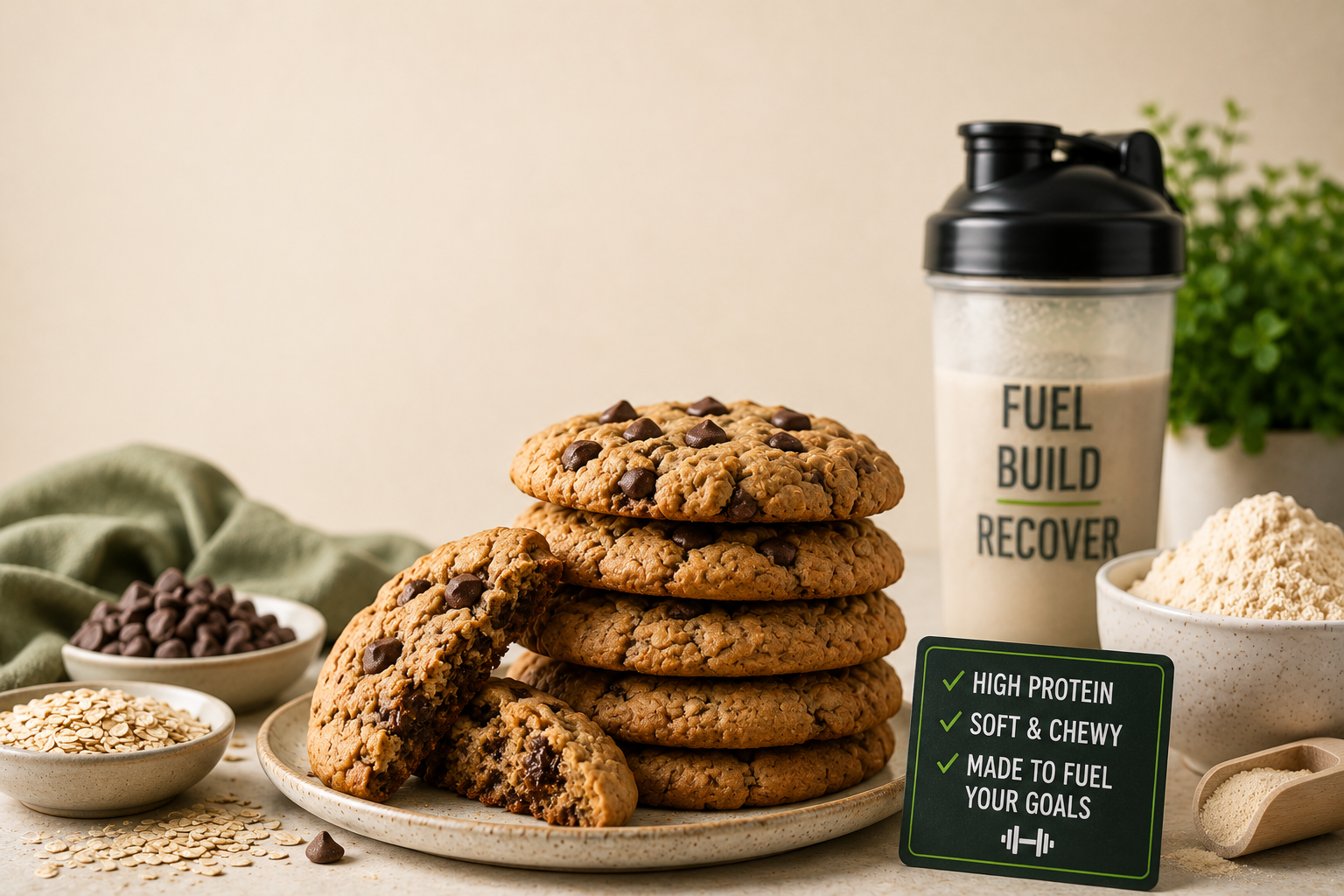
Want soft, chewy cookies that actually fit your macros? These protein cookies taste real and won’t destroy your diet.
You’re craving cookies. Real, soft, bakery-style cookies. Not hockey pucks disguised as protein cookies.
But regular cookies are 200-300 calories each, pure sugar and butter. Completely wreck your cutting diet in two bites.
You think your only options are:
- Never eat cookies while dieting
- Waste calories on regular cookies
- Eat dry protein bars shaped like cookies
- Accept that cookies are off-limits forever
Wrong. You can have soft, chewy cookies that support your goals. These anabolic protein cookies are genuinely good (people won’t believe they’re high-protein). Each cookie: 80 calories, 9g protein, 8g carbs, 2g fat. The secret: Pureed banana for moisture and natural sweetness, egg whites for protein and binding, minimal flour for soft texture, and proper baking time that keeps them soft instead of dry. Not hard. Not cakey. Actually soft and chewy.
In this comprehensive recipe guide, I’ll provide the complete ingredient list (with exact measurements and alternatives), show you the step-by-step process (critical timing for texture), reveal the nutritional breakdown (per cookie and full batch), explain what makes these actually soft (the moisture science), provide 6 flavor variations (chocolate chip to snickerdoodle), and give you storage instructions (they stay soft for days).
Whether you’re cutting hard or just want high-protein snacks, these cookies deliver.
Let’s bake cookies that taste real and fit your diet.
TABLE OF CONTENTS
Why These Cookies Actually Work
The problems with both regular and most protein cookies.
What Makes Regular Cookies “Unfitable”
The typical chocolate chip cookie (medium, 3-inch):
- Calories: 220-280
- Protein: 2-3g
- Carbs: 30-35g (mostly sugar)
- Fat: 12-15g (mostly butter)
- Macro disaster
The problems:
Problem 1: Butter bomb
- 8-12g fat per cookie
- Mostly saturated fat from butter
- One cookie = 1/4 of daily fat allowance
- Fat budget destroyed
Problem 2: Sugar overload
- 15-20g sugar per cookie
- Blood sugar spike and crash
- Triggers more cravings
- Metabolic nightmare
Problem 3: Zero protein
- 2-3g protein negligible
- No muscle support
- Empty calories
- No anabolic value
Problem 4: Calorie dense
- 3 cookies = 700+ calories
- Half your daily intake
- Can’t fit cutting diet
- Unsustainable
The ingredient breakdown (why so bad):
- 1 cup butter: 1,600 calories
- 1.5 cups sugar: 1,200 calories
- 1 cup chocolate chips: 800 calories
- Flour and eggs: 600 calories
- Total: 4,200+ calories for 24 cookies (175 cal each)
The result:
- Can’t eat while cutting
- Even bulking, poor macro distribution
- Purely recreational food
- Off-limits for serious training
What Makes Most “Protein Cookies” Bad
The typical problems:
Problem 1: Rock hard texture
- Overbaked from fear of undercooking
- Too much protein powder (absorbs all moisture)
- Like eating flavored stones
- Texture failure
Problem 2: Dry and crumbly
- Not enough moisture
- Wrong fat ratios
- Fall apart when eating
- Moisture failure
Problem 3: Protein powder taste dominates
- Artificial sweetener aftertaste
- Chemical protein flavor
- Doesn’t taste like cookies
- Flavor failure
Problem 4: Cakey texture
- Wrong leavening ratio
- Too much flour
- More like cake than cookies
- Texture mismatch
Problem 5: Still high calorie
- Use nut butters (calorie dense)
- Use full chocolate chips
- End up 150-200 calories anyway
- Marginal improvement
The result:
- Technically fit macros
- But taste terrible
- People choke them down or give up
- Unsustainable
What Makes These Cookies Different
The solutions:
Solution 1: Banana base
- Pureed banana provides moisture without fat
- Natural sweetness reduces need for sweetener
- Keeps cookies soft
- Moisture hero
Solution 2: Egg white protein
- High protein, zero fat
- Helps bind ingredients
- Creates structure
- Protein and structure
Solution 3: Minimal flour
- Just enough for structure
- Not so much they become cakey
- Soft, chewy texture
- Texture optimization
Solution 4: Strategic protein powder ratio
- Not too much (doesn’t dominate)
- Balanced with wet ingredients
- Flavor enhancement, not replacement
- Balanced approach
Solution 5: Proper baking technique
- Underbake slightly (stay soft)
- Cool on pan (continue cooking residually)
- Right temperature (prevents drying)
- Execution critical
The result:
- 80 calories per cookie
- 9g protein
- Actually soft and chewy
- Real cookie flavor
- Optimal cookies
The Complete Recipe
Ingredients and instructions.
Ingredients (Makes 20 Cookies)
Wet ingredients:
- 1 large ripe banana (120g), mashed until smooth
- 1/2 cup (120g) nonfat Greek yogurt
- 1/2 cup (120ml) liquid egg whites (or 4 large egg whites)
- 1/4 cup (60ml) unsweetened almond milk
- 2 tsp vanilla extract
- Moisture base
Dry ingredients:
- 1 cup (120g) vanilla whey protein powder
- 3/4 cup (90g) all-purpose flour
- 1/2 cup (100g) granulated erythritol (or sweetener of choice)
- 1 tsp baking powder
- 1/2 tsp baking soda
- 1/2 tsp cinnamon (optional, adds depth)
- 1/4 tsp salt
- Dry base
Mix-ins (choose one or combine):
- 1/3 cup (60g) sugar-free chocolate chips
- 1/4 cup (40g) dried cranberries or raisins
- 2 tbsp (20g) chopped walnuts or pecans
- Texture additions
Equipment needed:
- Large mixing bowl (2)
- Whisk or hand mixer
- Cookie scoop (1.5 tbsp size) or spoon
- Baking sheets (2)
- Parchment paper or silicone mats
- Wire cooling rack
- Basic tools
Step-by-Step Instructions
Step 1: Prep (5 minutes)
Preheat oven:
- Set to 325°F (163°C)
- Lower temp keeps cookies soft
- Critical temperature
Prepare baking sheets:
- Line with parchment paper or silicone mats
- Don’t skip this (cookies stick otherwise)
- Pan prep
Mash banana:
- Very ripe banana works best (sweet, easy to mash)
- Mash until completely smooth (no lumps)
- Should be puree consistency
- Smooth base
Step 2: Mix wet ingredients (3 minutes)
Combine in large bowl:
- Mashed banana
- Greek yogurt
- Egg whites
- Almond milk
- Vanilla extract
- Whisk until smooth and combined
The consistency:
- Should be smooth mixture
- No yogurt lumps
- Completely homogeneous
- Wet base ready
Step 3: Mix dry ingredients (2 minutes)
Combine in separate bowl:
- Protein powder
- Flour
- Erythritol
- Baking powder
- Baking soda
- Cinnamon (if using)
- Salt
- Whisk together thoroughly
Important:
- Break up any protein powder clumps
- Mix very well (prevents lumps in dough)
- Smooth dry mix
Step 4: Combine wet and dry (2 minutes)
The method:
- Add dry ingredients to wet (not vice versa)
- Fold gently with spatula or whisk
- Mix until just combined
- Do NOT overmix
What you’ll see:
- Thick cookie dough
- Consistency like thick pancake batter (not stiff)
- Scoopable but not pourable
- Proper consistency
Critical:
- Overmixing develops gluten
- Creates tough cookies
- Mix only until dry ingredients disappear
- Gentle folding
Step 5: Add mix-ins (1 minute)
If using:
- Fold in chocolate chips, nuts, or dried fruit
- Distribute evenly throughout dough
- Don’t overmix
- Optional additions
Step 6: Scoop and shape (5 minutes)
Scoop dough:
- Use 1.5 tbsp cookie scoop (or spoon)
- Level portions (consistent size = even baking)
- Place on prepared baking sheets
- Portion control
Spacing:
- 2 inches apart (don’t spread much)
- 10 cookies per sheet (2 sheets total)
- Adequate space
Shape (optional):
- Gently press down slightly (1/2 inch thick)
- Creates more even cookies
- Not necessary but helps appearance
- Shaping optional
Step 7: Bake (10-12 minutes)
Baking:
- Bake at 325°F for 10-12 minutes
- Edges should be set
- Centers should look slightly underbaked (will firm as cool)
- Underbake for soft texture
Visual cues:
- Edges light golden
- Centers still look wet/shiny
- Cookies puffed up
- Appearance check
Critical baking notes:
- Overbaking = hard, dry cookies
- These cookies MUST be slightly underbaked
- They continue cooking on hot pan after removing from oven
- Time precision matters
The toothpick test doesn’t work:
- These should NOT be done when toothpick comes out clean
- Toothpick should have moist crumbs
- Different from cakes
Step 8: Cool properly (10-15 minutes)
Immediate cooling:
- Remove from oven
- Let sit on baking sheet for 5 minutes
- Cookies very soft when hot (normal)
- On-pan cooling
Transfer:
- After 5 minutes, transfer to wire rack
- Cool completely (10 minutes)
- Texture sets as cools
- Final cooling
Why cooling on pan matters:
- Residual heat continues cooking
- Firms up texture
- Moving too soon = cookies fall apart
- Patience required
Step 9: Store
Once completely cool:
- Store in airtight container
- Layer parchment between if stacking
- Room temperature or refrigerator
- Proper storage
Nutritional Information
Per cookie (1/20 of batch, no mix-ins):
- Calories: 80
- Protein: 9g
- Carbohydrates: 8g
- Fat: 2g
- Fiber: 0.5g
- Sugar: 2g (from banana)
- Base recipe macros
Per cookie (with 1/3 cup chocolate chips distributed):
- Calories: 95
- Protein: 9g
- Carbohydrates: 10g
- Fat: 3g
- With chocolate chips
Full batch (20 cookies, no mix-ins):
- Calories: 1,600
- Protein: 180g
- Carbohydrates: 160g
- Fat: 40g
- Total batch macros
Comparison to regular cookie:
- Regular: 250 cal, 3g protein, 32g carbs, 13g fat
- These: 80 cal, 9g protein, 8g carbs, 2g fat
- Savings: 170 calories, +6g protein, -24g carbs, -11g fat
Macro breakdown:
- 45% protein
- 40% carbohydrates
- 15% fat
- Protein-dominant
The Science of Soft Texture
Why these actually work.
The Role of Each Ingredient
Banana (moisture + natural sweetness):
- Provides moisture without added fat
- Natural sugars add sweetness
- Pectin creates soft texture
- Keeps cookies moist for days
- Moisture foundation
Greek yogurt (moisture + protein):
- Adds moisture and slight tang
- Contributes protein
- Creates tender crumb
- Balances banana sweetness
- Texture enhancement
Egg whites (protein + binding):
- High protein, zero fat
- Bind ingredients together
- Provide structure
- Contribute to soft texture
- Structural protein
Almond milk (moisture adjustment):
- Thins dough to right consistency
- Minimal calories
- Consistency control
Protein powder (protein boost):
- Adds 8g protein per cookie
- Vanilla flavor enhances cookie taste
- Absorbs moisture (ratio critical)
- Protein delivery
Flour (structure):
- Minimal amount (only 3/4 cup)
- Just enough structure
- Not so much they become cakey
- Structural balance
Baking powder and soda (lift):
- Small amount of lift (not too much)
- Creates slight puffiness
- Soft texture
- Gentle leavening
Erythritol (sweetness):
- Zero calorie sweetener
- Balances banana’s natural sweetness
- No blood sugar impact
- Clean sweetness
Cinnamon (flavor depth):
- Enhances overall flavor
- Makes cookies taste richer
- Complements banana
- Flavor enhancement
Why Banana Works So Well
The moisture factor:
- Banana is 75% water
- Provides moisture without fat (unlike butter)
- Keeps cookies soft for days
- Natural hydration
The sweetness factor:
- Ripe banana has natural sugars
- Reduces need for added sweetener
- Clean sweetness (no artificial taste)
- Natural sugar source
The binding factor:
- Banana pectin acts as binder
- Helps hold cookies together
- Creates cohesive texture
- Natural binder
The science:
- As banana ripens, starches convert to sugars
- Very ripe (brown spots) = sweeter + easier to mash
- Perfect for baking
- Ripeness matters
The Underbaking Technique
Why underbake:
- Cookies continue cooking on hot pan after removal
- Overbaking = dry, hard cookies
- Underbaking = soft, chewy cookies
- Residual cooking
The visual test:
- Edges set and light golden
- Centers still look wet/shiny
- Surface looks done but soft when touched
- Appearance indicators
What happens as they cool:
- Texture firms up significantly
- What looks underbaked becomes perfect
- Trust the process
- Cooling transformation
The time precision:
- 10 minutes = very soft (almost too soft)
- 12 minutes = perfect soft and chewy
- 14 minutes = starting to get hard
- 16 minutes = too hard
- 2-minute window
Why Lower Temperature Matters
The 325°F vs. 350°F difference:
At 350°F (standard cookie temp):
- Cookies dry out too fast
- Edges brown too quickly
- Centers don’t cook evenly
- Too aggressive
At 325°F (recommended):
- Gentle, even baking
- Moisture retained
- Edges and centers finish together
- Soft texture achieved
- Optimal temperature
The science:
- Lower temp allows gradual moisture evaporation
- Proteins coagulate more gently
- Starches gelatinize without drying
- Better texture control
6 Flavor Variations
Make it your own.
Variation 1: Chocolate Chip (Classic)
Mix-in:
- 1/3 cup (60g) sugar-free chocolate chips (Lily’s or ChocZero)
- Classic addition
Macros per cookie:
- Calories: 95
- Protein: 9g
- Carbs: 10g
- Fat: 3g
- Slight increase
Pro tip:
- Add chips after mixing dough (don’t overmix)
- Press a few chips on top before baking (looks better)
- Visual appeal
Variation 2: Peanut Butter
Add to wet ingredients:
- 1/4 cup (64g) powdered peanut butter (PB2)
- OR 2 tbsp (32g) regular peanut butter (higher fat)
- Reduce almond milk by 2 tbsp if using regular PB
- Peanut butter flavor
Macros per cookie (with PB2):
- Calories: 85
- Protein: 10g
- Carbs: 9g
- Fat: 2g
- Minimal change
Macros per cookie (with regular PB):
- Calories: 95
- Protein: 9g
- Carbs: 8g
- Fat: 4g
- Higher fat version
Optional:
- Swirl extra PB on top before baking
- Adds visual appeal
- Decorative touch
Variation 3: Snickerdoodle
Modify recipe:
- Increase cinnamon to 2 tsp
- Add 1/4 tsp cream of tartar to dry ingredients
- Snickerdoodle base
Coating:
- Mix 2 tbsp erythritol + 1 tsp cinnamon
- Roll dough balls in mixture before baking
- Cinnamon sugar coating
Macros per cookie:
- Calories: 82
- Protein: 9g
- Carbs: 8g
- Fat: 2g
- Nearly identical
Variation 4: Double Chocolate
Modify dry ingredients:
- Replace vanilla protein with chocolate protein
- Add 2 tbsp (12g) unsweetened cocoa powder
- Add extra 1 tbsp erythritol (cocoa is bitter)
- Chocolate base
Mix-in:
- 1/3 cup (60g) sugar-free chocolate chips
- Extra chocolate
Macros per cookie:
- Calories: 98
- Protein: 9g
- Carbs: 11g
- Fat: 3g
- Chocolate version
Variation 5: Oatmeal Raisin
Modify dry ingredients:
- Replace 1/4 cup flour with 1/4 cup (20g) quick oats
- Oat addition
Mix-in:
- 1/4 cup (40g) raisins
- Increase cinnamon to 1 tsp
- Add pinch of nutmeg
- Classic combo
Macros per cookie:
- Calories: 88
- Protein: 8g
- Carbs: 11g
- Fat: 2g
- Oatmeal version
Variation 6: White Chocolate Cranberry
Mix-in:
- 1/4 cup (45g) sugar-free white chocolate chips
- 1/4 cup (30g) dried cranberries
- Festive combo
Macros per cookie:
- Calories: 95
- Protein: 9g
- Carbs: 11g
- Fat: 3g
- Holiday version
Troubleshooting
Common problems and solutions.
Problem 1: Cookies Too Hard
Causes:
- Overbaked (most common)
- Too much protein powder
- Not enough wet ingredients
- Oven temperature too high
- Multiple causes
Solutions:
- Reduce baking time by 1-2 minutes
- Use oven thermometer (ovens run hot)
- Remove when centers still look underbaked
- Measure protein powder accurately (don’t pack down)
- Prevent overbaking
If already baked:
- Place cookies in airtight container with slice of bread overnight
- Bread moisture transfers to cookies
- Softening trick
Problem 2: Cookies Too Soft/Fall Apart
Causes:
- Underbaked (rare but possible)
- Too much banana
- Not enough flour
- Didn’t cool on pan long enough
- Structure issue
Solutions:
- Bake 1-2 minutes longer
- Measure banana accurately (120g, no more)
- Let cool on pan full 5 minutes before transferring
- Increase structure
Problem 3: Cookies Spread Too Much
Causes:
- Dough too thin
- Oven temperature too low
- Baking sheet too hot
- Spreading issue
Solutions:
- Chill dough 15 minutes before baking
- Check oven temperature (should be 325°F)
- Use cool baking sheets (not hot from previous batch)
- Control spreading
Prevention:
- Don’t skip chilling if dough seems thin
- Room temperature baking sheets
- Consistent results
Problem 4: Dry or Crumbly Texture
Causes:
- Overbaked
- Too much flour
- Not enough banana or yogurt
- Moisture deficiency
Solutions:
- Reduce baking time
- Measure flour accurately (don’t pack)
- Use very ripe banana (more moisture)
- Add extra 1-2 tbsp almond milk if dough seems dry
- Increase moisture
Problem 5: Protein Powder Taste Too Strong
Causes:
- Low-quality protein powder
- Protein powder expired or stale
- Personal sensitivity to protein flavor
- Flavor issue
Solutions:
- Use quality vanilla protein (Optimum Nutrition, Dymatize)
- Increase vanilla extract to 1 tbsp
- Add extra cinnamon (1 tsp total)
- Use chocolate protein instead (different flavor profile)
- Mask protein flavor
Problem 6: Cookies Stick to Pan
Causes:
- No parchment paper or silicone mat
- Moved cookies too soon
- Release failure
Solutions:
- Always use parchment paper or silicone mat
- Let cool on pan 5 minutes before moving
- Use thin metal spatula for transferring
- Proper release
Storage and Meal Prep
Make ahead friendly.
Storage Methods
Room temperature (best for texture):
- Store in airtight container
- Layer parchment between if stacking
- Lasts 3-4 days
- Stay soft
- Primary storage
Refrigerator:
- Store in airtight container
- Lasts 5-7 days
- Texture firms up slightly (still good)
- Bring to room temp before eating or warm briefly
- Extended storage
Freezer (long-term):
- Freeze individual cookies on baking sheet first
- Transfer to freezer bag once frozen
- Lasts 2-3 months
- Thaw at room temp or microwave 15-20 seconds
- Long-term option
Keeping Cookies Soft
The bread trick:
- Place slice of bread in container with cookies
- Bread moisture transfers to cookies
- Replace bread every 2 days
- Moisture maintenance
The apple slice method:
- Similar to bread
- Apple slice in container
- Change daily
- Alternative method
The immediate storage:
- Store cookies while still slightly warm
- Traps moisture in container
- Keeps soft longer
- Timing trick
Reheating Instructions
Microwave (best for single cookie):
- 10-15 seconds
- Makes warm and soft
- Don’t overheat (gets hard)
- Quick method
Oven (for multiple):
- 300°F for 3-5 minutes
- Warm throughout
- Original texture restored
- Batch reheating
Best served:
- Room temperature or slightly warm
- Texture optimal
- Temperature preference
Meal Prep Strategy
Weekly prep:
- Bake full batch Sunday (20 cookies)
- Store in container
- Grab 1-2 daily as snack
- Perfect pre or post-workout
- Weekly snack sorted
Portion control:
- Pre-counted (20 cookies)
- Easy macro tracking
- No temptation to eat more
- Accountability
Freezer stash:
- Keep frozen batch
- Thaw 2-3 at a time
- Always have protein snack
- Emergency snack
Dough freezing:
- Can freeze unbaked dough balls
- Bake from frozen (add 2-3 minutes)
- Fresh cookies anytime
- Ultimate convenience
Substitutions Guide
Adapt to your needs.
Banana Substitutions
Ripe banana (recommended):
- Natural sweetness and moisture
- Best texture
- Optimal choice
Pumpkin puree:
- Use 1/2 cup (120g)
- Less sweet (add 2 tbsp erythritol)
- Similar moisture
- Different flavor
- Fall alternative
Applesauce:
- Use 1/2 cup (120g) unsweetened
- Less sweet (add 2 tbsp erythritol)
- Similar moisture
- Common substitute
Sweet potato puree:
- Use 1/2 cup (120g)
- Similar sweetness
- Unique flavor
- Interesting alternative
Omit banana:
- Increase Greek yogurt to 1 cup
- Add extra 2 tbsp erythritol
- Texture different (more cakey)
- Banana-free version
Protein Powder Substitutions
Vanilla whey (recommended):
- Best flavor for cookies
- Optimal
Chocolate whey:
- Works great
- Creates chocolate cookies
- Chocolate version
Casein protein:
- Thicker texture
- May need extra 2 tbsp liquid
- Dense option
Vegan protein:
- Works but grittier texture
- Add extra 2-3 tbsp liquid
- Plant-based
Omit protein powder:
- Replace with 1 cup (120g) flour
- Protein drops to ~3g per cookie
- Still lower calorie than regular
- Low-protein version
Greek Yogurt Substitutions
Nonfat Greek yogurt (recommended):
- High protein, low fat
- Best choice
Regular yogurt:
- Thinner (reduce by 2 tbsp)
- Lower protein
- Thinner option
Cottage cheese:
- Blend until smooth first
- Same protein
- Slightly different flavor
- Protein alternative
Sour cream:
- Tangier flavor
- Higher fat
- Adds ~15 calories per cookie
- Richer version
Mashed avocado:
- Healthy fats
- Different flavor
- Adds ~25 calories per cookie
- Fat source alternative
Sweetener Substitutions
Erythritol (recommended):
- Zero calorie
- No aftertaste
- Best option
Monk fruit sweetener:
- Zero calorie
- Use same amount
- Alternative zero-calorie
Stevia:
- Zero calorie
- More concentrated (use 1/4 cup not 1/2)
- Possible aftertaste
- Concentrated option
Coconut sugar:
- Natural sweetener
- Use same amount
- Adds ~40 calories per cookie
- Natural alternative
Regular sugar:
- Use 1/2 cup (100g)
- Adds ~40 calories per cookie
- Best texture but not “anabolic”
- Traditional sweetener
Flour Substitutions
All-purpose flour (recommended):
- Best texture
- Standard
Whole wheat flour:
- More fiber
- Slightly denser
- Nuttier flavor
- Whole grain
Oat flour:
- Gluten-free option
- Slightly denser
- Good texture
- GF alternative
Almond flour:
- Low carb
- Higher fat
- Different texture (more crumbly)
- Use 1 cup (not 3/4)
- Adds ~30 calories per cookie
- Low-carb option
Coconut flour:
- Highly absorbent (use 1/3 cup only)
- Add extra 3 tbsp liquid
- Very different texture
- Alternative flour
Tips for Best Results
Optimization strategies.
Ingredient Quality
Banana:
- Very ripe (brown spots ideal)
- Sweeter and easier to mash
- More moisture
- Ripeness critical
Greek yogurt:
- Quality brand (Fage, Chobani)
- Nonfat
- Plain unsweetened
- Thick yogurt
Protein powder:
- Fresh (not expired or stale)
- Quality brand (Optimum Nutrition, Dymatize, MyProtein)
- Vanilla flavor
- Quality protein
Erythritol:
- Quality brand (Swerve, Lakanto)
- Granulated
- No aftertaste
Technique Tips
Mashing banana:
- Use fork or potato masher
- Should be completely smooth
- No chunks
- Smooth puree
Mixing dough:
- Don’t overmix (creates gluten, tough cookies)
- Fold gently
- Mix only until combined
- Gentle handling
Scooping:
- Use cookie scoop for uniform size
- Level each scoop
- Consistent size = even baking
- Portion consistency
Baking:
- Don’t open oven door during baking
- Use oven thermometer
- Watch closely last 2 minutes
- Temperature control
Cooling:
- Don’t skip cooling on pan
- Texture sets during cooling
- Patience rewarded
- Critical step
Customization Strategy
Start with base recipe:
- Make once as written
- Understand texture and flavor
- Baseline
Then experiment:
- One change at a time
- Track modifications
- Note results
- Systematic testing
Find your version:
- Adjust sweetness preference
- Modify mix-ins
- Dial in perfect cookie
- Personalization
The Bottom Line: Cookies That Actually Fit
After explaining everything:
The truth about anabolic protein cookies:
✅ 80 calories and 9g protein per cookie (65% fewer calories than regular)
✅ Actually soft and chewy, not hard or dry (proper technique and moisture)
✅ Real cookie flavor (banana sweetness, not protein powder taste)
✅ Easy to make (simple ingredients, one-bowl mixing)
✅ Stay soft for days (proper storage maintains texture)
Key takeaways:
The macros per cookie:
- Calories: 80 (vs. 250 regular)
- Protein: 9g (vs. 3g regular)
- Carbs: 8g (vs. 32g regular)
- Fat: 2g (vs. 13g regular)
- 170 calorie savings per cookie
Critical ingredients:
- Banana (moisture + natural sweetness without fat)
- Greek yogurt (protein + moisture + tang)
- Egg whites (protein + structure, zero fat)
- Minimal flour (structure without cakiness)
- Protein powder (protein boost)
- Strategic ingredient selection
Technique essentials:
- Bake at 325°F (NOT 350°F, prevents drying)
- Underbake slightly (centers look wet, edges set)
- Cool on pan 5 minutes (residual cooking)
- Don’t overmix dough (prevents tough texture)
- Execution critical
Texture science:
- Banana provides moisture without butter
- Lower temperature prevents drying
- Underbaking keeps soft center
- Cooling on pan allows proper setting
- Multiple factors create softness
Variations (6 flavors):
- Chocolate chip (classic, +15 cal)
- Peanut butter (with PB2, +5 cal)
- Snickerdoodle (cinnamon coating, +2 cal)
- Double chocolate (chocolate base, +18 cal)
- Oatmeal raisin (with oats, +8 cal)
- White chocolate cranberry (festive, +15 cal)
- Highly customizable
Storage:
- Room temp: 3-4 days (best texture, airtight container)
- Refrigerator: 5-7 days (firms up slightly)
- Freezer: 2-3 months (individual wrap)
- Meal prep friendly
Keeping soft:
- Store with slice of bread (moisture transfer)
- Store while slightly warm (traps moisture)
- Reheat 10-15 seconds microwave
- Softness maintenance
Troubleshooting:
- Too hard: Overbaked, reduce time 1-2 min
- Too soft: Underbaked, add 1-2 min
- Spread too much: Chill dough 15 min
- Dry/crumbly: Overbaked, use riper banana
- Protein taste strong: Better protein, more vanilla
- Stick to pan: Use parchment, cool 5 min first
- Common fixes
Substitutions:
- Banana: Pumpkin, applesauce, sweet potato, or omit
- Protein powder: Any flavor or omit (lower protein)
- Greek yogurt: Regular yogurt, cottage cheese, sour cream
- Sweetener: Any zero-calorie or regular sugar
- Flour: Whole wheat, oat, almond, coconut
- Flexible recipe
Meal prep strategy:
- Bake full batch (20 cookies)
- Store in container
- 1-2 cookies daily as snack
- Perfect pre/post workout
- Or freeze dough balls, bake fresh anytime
- Weekly snack sorted
Makes 20 cookies:
- Perfect for weekly meal prep
- 2-3 per day fits most diets
- Easy portion control
- Manageable batch
Priority actions:
- Buy ingredients (ripe banana, Greek yogurt, egg whites, vanilla protein, erythritol)
- Preheat oven to 325°F (lower temp critical)
- Mix wet and dry separately (prevents lumps)
- Bake 10-12 min until centers look underbaked
- Cool on pan 5 minutes before transferring (texture sets)
- Store in airtight container with bread slice (stay soft)
- Success checklist
STOP AVOIDING COOKIES WHILE CUTTING. START MAKING ANABOLIC VERSIONS. 80 CALORIES, 9G PROTEIN, ACTUALLY SOFT. COOKIES THAT FIT YOUR DIET.
Ready to build a complete high-protein snack collection with anabolic recipes for muffins, granola bars, protein balls, and more that deliver real taste and texture while supporting your fitness goals? These cookies are just the beginning. Get comprehensive anabolic recipe guides. Stop choosing between snacks and progress. Start having both.

Leave a Reply
You must be logged in to post a comment.