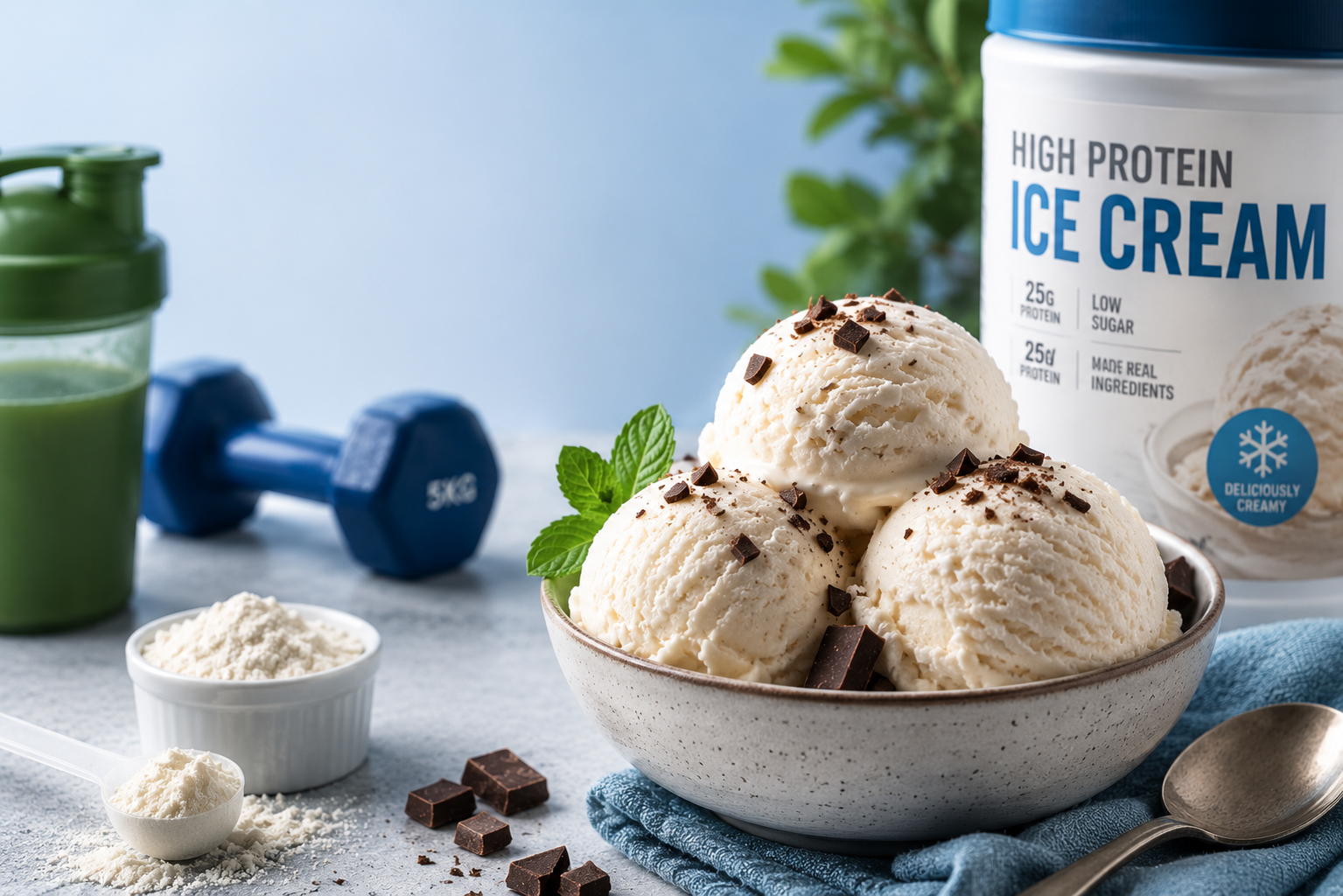
Want real ice cream that actually fits your macros? This protein ice cream is creamy, scoopable, and won’t destroy your diet.
You’re craving ice cream. Real, creamy, gelato-style ice cream. Not icy protein shakes frozen into blocks.
But regular ice cream is 300+ calories per serving, pure sugar and fat. One pint = your entire day’s calories gone.
You think your only options are:
- Never eat ice cream while cutting
- Waste 500 calories on a small bowl of Ben and Jerry’s
- Eat frozen protein shakes that taste like ice with chemical aftertaste
- Accept that ice cream is a cheat food only
Wrong. You can have creamy, scoopable ice cream that supports your goals. This anabolic protein ice cream is genuinely good (tastes like premium ice cream, not diet food). Per serving (1/2 cup): 120 calories, 15g protein, 12g carbs, 2g fat. The secret: Cottage cheese blended smooth for creaminess and protein, Greek yogurt for texture and tang, xanthan gum for scoopability (prevents ice crystals), and proper freezing technique that creates actual ice cream texture. Not ice. Not protein slush. Actual creamy ice cream.
In this comprehensive recipe guide, I’ll provide the complete ingredient list (with exact ratios and alternatives), show you the step-by-step process (critical blending and freezing techniques), reveal the nutritional breakdown (per serving and full batch), explain what makes this actually creamy (the ice cream science), provide 8 flavor variations (vanilla to cookie dough), and give you storage and serving instructions (stays scoopable for weeks).
Whether you’re cutting hard or just want high-protein desserts that taste real, this ice cream delivers.
Let’s make ice cream that actually tastes like ice cream and fits your diet.
TABLE OF CONTENTS
Why This Ice Cream Actually Works
The problems with both regular and most protein ice cream.
What Makes Regular Ice Cream “Unfitable”
The typical premium ice cream (1/2 cup serving):
- Calories: 250-350
- Protein: 3-5g
- Carbs: 25-35g (mostly sugar)
- Fat: 15-22g (mostly saturated)
- Macro catastrophe
The problems:
Problem 1: Fat bomb
- 15-22g fat per serving
- Heavy cream and egg yolks
- One serving = half your daily fat allowance
- Fat budget destroyed
Problem 2: Sugar overload
- 20-30g sugar per serving
- Blood sugar spike
- Insulin response triggers more cravings
- Metabolic disaster
Problem 3: Portion deception
- Listed serving is 1/2 cup
- Reality: most eat 1-2 cups (pint)
- Actual intake: 500-700 calories
- Serving size lies
Problem 4: Zero protein
- 3-5g protein negligible
- No satiety
- Pure indulgence
- No anabolic value
The ingredient breakdown (why so bad):
- Heavy cream: 800 calories per cup (pure fat)
- Sugar: 775 calories per cup
- Egg yolks: 55 calories each
- Total: 1,600+ calories per pint
The result:
- Can’t fit cutting diet
- Even bulking, terrible macro distribution
- Purely recreational food
- Off-limits for serious training
What Makes Most “Protein Ice Cream” Bad
The typical problems:
Problem 1: Icy texture
- Freezes into solid ice block
- Not scoopable
- Have to wait 20 minutes to soften
- Texture failure
Problem 2: Protein powder grit
- Grainy mouthfeel
- Doesn’t blend smooth
- Chalky aftertaste
- Gritty disaster
Problem 3: Chemical taste
- Artificial sweetener dominates
- Protein powder flavor too strong
- Tastes like frozen protein shake
- Flavor failure
Problem 4: Melts instantly
- No structure or body
- Becomes liquid within minutes
- Can’t eat slowly
- Stability failure
Problem 5: Rock hard when frozen
- Impossible to scoop
- Need ice pick to serve
- Frustrating
- Convenience failure
The result:
- Technically fits macros
- But tastes terrible and has wrong texture
- People give up and buy real ice cream
- Unsustainable
What Makes This Ice Cream Different
The solutions:
Solution 1: Cottage cheese base (blended ultra-smooth)
- High protein, low fat
- Blends completely smooth (no curds)
- Creates creamy base
- Protein and creaminess foundation
Solution 2: Greek yogurt addition
- Adds protein and tang
- Contributes to creamy texture
- Slight acidity balances sweetness
- Texture enhancement
Solution 3: Xanthan gum (the secret weapon)
- Prevents ice crystal formation
- Creates smooth, scoopable texture
- Keeps ice cream soft in freezer
- Professional ice cream ingredient
- Texture game-changer
Solution 4: Proper sweetener ratio
- Erythritol + monk fruit blend (no aftertaste)
- Right amount (not oversweetened)
- Prevents icy texture (sweeteners lower freezing point)
- Perfect sweetness
Solution 5: High-speed blending technique
- Blend until completely smooth and airy
- Incorporates air (like churning)
- Creates volume and lightness
- Professional technique
The result:
- 120 calories per serving
- 15g protein per serving
- Actually creamy and scoopable
- Real ice cream flavor and texture
- Optimal ice cream
The Complete Recipe
Ingredients and instructions.
Ingredients (Makes 8 Servings, 4 Cups Total)
Base ingredients:
- 2 cups (450g) low-fat cottage cheese
- 1 cup (227g) nonfat Greek yogurt
- 1/2 cup (120ml) unsweetened almond milk
- 1/2 cup (120g) vanilla whey protein powder
- 1/2 cup (100g) granulated erythritol
- 2 tbsp monk fruit sweetener (liquid or granulated)
- 2 tsp vanilla extract
- 1/2 tsp xanthan gum (critical ingredient)
- Pinch of salt
- Creamy base
Optional mix-ins (add after blending):
- 1/3 cup (60g) sugar-free chocolate chips
- 1/4 cup (30g) crushed sugar-free cookies
- 2 tbsp (20g) chopped nuts
- 2 tbsp (20g) cocoa nibs
- Texture additions
Equipment needed:
- High-powered blender (Vitamix, Blendtec, or Ninja)
- Freezer-safe container with lid (loaf pan or Tupperware)
- Ice cream scoop
- Spatula
- Essential tools
Step-by-Step Instructions
Step 1: Blend cottage cheese alone (2 minutes)
Blend until ultra-smooth:
- Add cottage cheese to blender
- Blend on high for 90-120 seconds
- Should be completely smooth, like heavy cream
- Zero visible curds
- Critical first step
Why this matters:
- Cottage cheese has curds
- Must break down completely
- Otherwise ice cream has lumps
- Smoothness essential
The test:
- Should look like thick cream
- No texture when rubbed between fingers
- Quality check
Step 2: Add remaining ingredients (1 minute)
Add to blender:
- Blended cottage cheese (already in blender)
- Greek yogurt
- Almond milk
- Protein powder
- Erythritol
- Monk fruit sweetener
- Vanilla extract
- Xanthan gum
- Salt
- All ingredients combined
Step 3: Blend until smooth and airy (3-4 minutes)
High-speed blending:
- Blend on highest speed for 3-4 minutes
- Mixture should increase in volume (air incorporation)
- Should be completely smooth
- No grittiness when tasted
- Extended blending critical
What happens:
- Blending incorporates air (like ice cream churning)
- Creates lighter, fluffier texture
- Xanthan gum activates (thickens mixture)
- Texture development
The consistency:
- Thick, creamy liquid
- Like thick milkshake
- Pourable but substantial
- Proper texture
Step 4: Taste and adjust (1 minute)
Taste test:
- Taste mixture (safe, all ingredients edible)
- Too sweet? Add pinch salt
- Not sweet enough? Add 1 tbsp sweetener
- Vanilla weak? Add 1/2 tsp vanilla
- Flavor adjustment
Remember:
- Flavors dull when frozen
- Should taste slightly sweeter than desired final product
- Freezing consideration
Step 5: Add mix-ins (optional, 1 minute)
If using:
- Fold in chocolate chips, cookies, nuts, etc.
- Gentle folding with spatula
- Distribute evenly
- Mix-in incorporation
Step 6: Pour and freeze (6-8 hours)
Pour into container:
- Pour mixture into freezer-safe container
- Smooth top with spatula
- Cover tightly with lid or plastic wrap
- Container prep
Freeze:
- Place in freezer
- Freeze for minimum 6 hours (overnight best)
- Initial freezing
Optional stirring technique (for extra creaminess):
- After 2 hours, remove and stir vigorously
- After 4 hours, stir again
- Breaks up ice crystals
- Creates smoother texture
- Professional technique
Step 7: Serve
Scooping:
- Remove from freezer
- Let sit 2-3 minutes at room temp (slight softening)
- Scoop with ice cream scoop
- Ready to serve
The texture:
- Scoopable (not rock hard)
- Creamy (not icy)
- Holds shape
- Perfect consistency
Nutritional Information
Per serving (1/2 cup, 1/8 of batch, no mix-ins):
- Calories: 120
- Protein: 15g
- Carbohydrates: 12g
- Fat: 2g
- Fiber: 0g
- Sugar: 3g (from dairy)
- Base recipe macros
Per serving (with 1/3 cup chocolate chips distributed):
- Calories: 145
- Protein: 15g
- Carbohydrates: 15g
- Fat: 4g
- With chocolate chips
Full batch (8 servings, 4 cups, no mix-ins):
- Calories: 960
- Protein: 120g
- Carbohydrates: 96g
- Fat: 16g
- Total batch macros
Comparison to regular ice cream:
- Regular (1/2 cup): 280 cal, 4g protein, 28g carbs, 18g fat
- This (1/2 cup): 120 cal, 15g protein, 12g carbs, 2g fat
- Savings: 160 calories, +11g protein, -16g carbs, -16g fat
Macro breakdown:
- 50% protein
- 40% carbohydrates
- 10% fat
- Protein-dominant dessert
The Science of Creamy Texture
Why this actually works.
The Role of Each Ingredient
Cottage cheese (protein + creaminess base):
- High protein (14g per cup)
- Low fat (when using low-fat)
- Blends ultra-smooth (no curds when blended properly)
- Creates thick, creamy base
- Slight tang (like crème fraîche in gelato)
- Foundation ingredient
Greek yogurt (protein + tang + body):
- Adds protein (17g per cup)
- Contributes to creamy texture
- Slight acidity brightens flavor
- Prevents excessive sweetness
- Multi-functional
Protein powder (protein boost + body):
- Adds protein without liquid
- Helps absorb moisture
- Vanilla flavor enhancement
- Creates structure
- Protein delivery
Xanthan gum (THE secret weapon):
- Prevents ice crystal formation
- Creates smooth, scoopable texture
- Keeps ice cream soft even frozen
- Used in commercial ice cream
- Only need 1/2 tsp (tiny amount, huge impact)
- Texture miracle worker
Erythritol + monk fruit (sweetness + texture):
- Zero calorie sweeteners
- Lower freezing point (prevents rock-hard texture)
- Combination reduces aftertaste
- Bulk and sweetness
- Sweet and functional
Almond milk (consistency adjustment):
- Thins mixture to right consistency
- Minimal calories
- Texture control
Vanilla extract (flavor depth):
- Classic ice cream flavor
- Masks any protein taste
- Rounds out sweetness
- Flavor foundation
Salt (flavor enhancement):
- Enhances sweetness perception
- Balances flavors
- Tiny amount, big impact
- Flavor amplifier
Why Xanthan Gum Is Critical
What it does:
- Binds water molecules
- Prevents formation of large ice crystals
- Creates smooth, creamy texture
- Keeps ice cream scoopable even frozen solid
- Texture transformation
The science:
- Water freezes into ice crystals
- Large crystals = icy texture
- Xanthan gum prevents large crystals from forming
- Small crystals = smooth texture
- Crystal control
The amount:
- Only 1/2 tsp needed (for 4 cups)
- More isn’t better (becomes gummy)
- Tiny amount, massive effect
- Precision matters
Where to buy:
- Grocery store baking aisle
- Health food stores
- Amazon
- Cheap (one bag lasts months)
- Readily available
Can you omit it?
- Technically yes
- But texture will be icy, not creamy
- Won’t be scoopable
- Highly recommended to include
- Critical for quality
The Cottage Cheese Blending Technique
Why blend cottage cheese alone first:
- Cottage cheese has visible curds
- Must break down completely
- Creates silky smooth base
- Smooth foundation
The process:
- Blend cottage cheese solo for 90-120 seconds
- Check smoothness (should be like cream)
- Then add other ingredients
- Sequential blending
What happens if you skip:
- Visible curds in frozen ice cream
- Grainy texture
- Not smooth
- Texture failure
High-powered blender essential:
- Cheap blenders can’t break down curds fully
- Need Vitamix, Blendtec, Ninja, or equivalent
- Equipment matters
The Extended Blending For Air Incorporation
Why blend 3-4 minutes:
- Traditional ice cream is churned (incorporates air)
- Blending replicates churning
- Air creates lighter, fluffier texture
- Volume increase
What you’ll see:
- Mixture increases in volume (by 20-30%)
- Becomes lighter in color
- More airy consistency
- Visual changes
The result:
- Lighter texture (not dense)
- More scoopable
- Better mouthfeel
- Professional quality
8 Flavor Variations
Make it your own.
Variation 1: Classic Vanilla (Base Recipe)
As written above
- Simple, clean vanilla flavor
- Most versatile
- Foundation flavor
Macros per serving:
- Calories: 120
- Protein: 15g
- Carbs: 12g
- Fat: 2g
- Base macros
Variation 2: Chocolate
Modify base:
- Replace vanilla protein with chocolate protein
- Add 1/4 cup (30g) unsweetened cocoa powder
- Add extra 2 tbsp erythritol (cocoa is bitter)
- Chocolate version
Macros per serving:
- Calories: 130
- Protein: 15g
- Carbs: 14g
- Fat: 2g
- Chocolate macros
Variation 3: Cookies and Cream
Use vanilla base Mix-in:
- 6 reduced-fat Oreos, crushed (or sugar-free cookies)
- Reserve some for topping
- Cookie pieces
Macros per serving:
- Calories: 155
- Protein: 15g
- Carbs: 18g
- Fat: 3g
- Cookie addition
Variation 4: Mint Chocolate Chip
Modify base:
- Add 1 tsp peppermint extract
- Optional: 2-3 drops green food coloring
- Mint base
Mix-in:
- 1/3 cup (60g) sugar-free chocolate chips
- Chocolate chips
Macros per serving:
- Calories: 145
- Protein: 15g
- Carbs: 15g
- Fat: 4g
- Mint chip macros
Variation 5: Strawberry
Modify base:
- Add 1 cup (150g) frozen strawberries
- Blend with other ingredients (purees strawberries)
- Reduce almond milk to 1/4 cup (strawberries add liquid)
- Berry version
Macros per serving:
- Calories: 130
- Protein: 14g
- Carbs: 15g
- Fat: 2g
- Strawberry macros
Variation 6: Peanut Butter
Modify base:
- Add 1/4 cup (64g) powdered peanut butter (PB2)
- OR 2 tbsp (32g) regular peanut butter (higher fat)
- PB flavor
Macros per serving (with PB2):
- Calories: 135
- Protein: 17g
- Carbs: 13g
- Fat: 2g
- PB2 version
Macros per serving (with regular PB):
- Calories: 145
- Protein: 15g
- Carbs: 12g
- Fat: 5g
- Regular PB version
Variation 7: Cookie Dough
Use vanilla base Mix-in:
- 1/4 cup (30g) crushed protein cookies (or make edible cookie dough)
- 1/4 cup (45g) sugar-free chocolate chips
- Cookie dough pieces
Edible cookie dough recipe:
- 1/4 cup (30g) flour (heat-treated: microwave 30 sec)
- 2 tbsp (32g) PB2
- 2 tbsp erythritol
- 2 tbsp almond milk
- Mix into small dough balls, freeze briefly, fold into ice cream
- Homemade cookie dough
Macros per serving:
- Calories: 160
- Protein: 16g
- Carbs: 17g
- Fat: 4g
- Cookie dough macros
Variation 8: Coffee
Modify base:
- Add 2 tbsp instant espresso powder
- OR 1/4 cup strong brewed coffee (reduce almond milk to 1/4 cup)
- Coffee version
Optional:
- Add 1/4 cup (45g) sugar-free chocolate chips (mocha)
- Mocha variation
Macros per serving (coffee only):
- Calories: 122
- Protein: 15g
- Carbs: 12g
- Fat: 2g
- Coffee macros
Troubleshooting
Common problems and solutions.
Problem 1: Icy Texture, Not Creamy
Causes:
- Didn’t use xanthan gum (most common)
- Didn’t blend long enough (no air incorporation)
- Cottage cheese not smooth enough
- Too much liquid
- Texture failure
Solutions:
- MUST use xanthan gum (1/2 tsp critical)
- Blend for full 3-4 minutes on high
- Ensure cottage cheese blended smooth first
- Don’t add extra liquid
- Prevent iciness
If already frozen:
- Let soften 5 minutes, reblend in food processor
- Add 1/4 tsp more xanthan gum
- Refreeze
- Salvage attempt
Problem 2: Rock Hard, Impossible to Scoop
Causes:
- Not enough sweetener (sweeteners lower freezing point)
- Freezer too cold
- No xanthan gum used
- Hardness issue
Solutions:
- Ensure using 1/2 cup erythritol + 2 tbsp monk fruit
- Freezer temp should be 0°F (not colder)
- Must use xanthan gum
- Softness factors
Serving fix:
- Let sit at room temp 3-5 minutes before scooping
- Dip scoop in hot water between scoops
- Microwave container 10 seconds (careful, don’t melt)
- Softening techniques
Problem 3: Grainy or Gritty Texture
Causes:
- Cottage cheese not blended smooth
- Protein powder not fully incorporated
- Low-quality protein powder (doesn’t dissolve)
- Grittiness
Solutions:
- Blend cottage cheese alone for full 90 seconds first
- Use high-powered blender
- Use quality protein powder (Optimum Nutrition, Dymatize)
- Blend total mixture for full 3-4 minutes
- Smooth blending
Problem 4: Tastes Too Much Like Protein Powder
Causes:
- Too much protein powder
- Low-quality protein with strong flavor
- Not enough vanilla or sweetener
- Protein taste dominant
Solutions:
- Use exact amount (1/2 cup for batch)
- Use quality vanilla protein
- Increase vanilla extract to 1 tbsp
- Ensure adequate sweetener
- Balance flavors
Problem 5: Melts Too Quickly
Causes:
- Not enough xanthan gum
- Too much liquid
- Not frozen long enough
- Stability issue
Solutions:
- Use full 1/2 tsp xanthan gum
- Don’t add extra liquid
- Freeze minimum 6 hours (overnight better)
- Proper structure
Problem 6: Cottage Cheese Curds Visible
Causes:
- Didn’t blend cottage cheese long enough
- Blender not powerful enough
- Skipped solo blending step
- Blending inadequate
Solutions:
- Blend cottage cheese alone for 90-120 seconds minimum
- Use high-powered blender (Vitamix, Blendtec, Ninja)
- Check smoothness before adding other ingredients
- Thorough blending
Storage and Serving
Maximize freshness and texture.
Storage Methods
Freezer (primary storage):
- Store in airtight container
- Lasts 2-3 weeks (best texture first week)
- Press plastic wrap directly on surface (prevents ice crystals on top)
- Long-term storage
Serving temperature:
- Remove from freezer
- Let sit 2-3 minutes at room temp
- Should be scoopable (not rock hard, not melted)
- Optimal serving temp
Maintaining Texture
Prevent ice crystals:
- Always cover tightly (no air exposure)
- Press plastic wrap on surface
- Don’t repeatedly remove and return to freezer
- Crystal prevention
Restoring texture if icy:
- Let soften slightly
- Blend briefly in food processor
- Refreeze
- Texture refresh
The no-churn advantage:
- Traditional ice cream needs churning during freezing
- This method doesn’t (all done in blender)
- More convenient
- Simplified process
Portion Control
Pre-portioning:
- Scoop into individual containers after making
- Freeze separately
- Grab one serving at a time
- Single servings
Visual cues:
- 1/2 cup = size of tennis ball
- Use measuring cup first few times
- Portion awareness
The temptation:
- Easy to eat whole batch
- Pre-portion to prevent
- Accountability
Tips for Best Results
Optimization strategies.
Equipment Quality
High-powered blender essential:
- Vitamix, Blendtec, Ninja required
- Cheap blenders won’t work
- Can’t break down cottage cheese fully
- Critical tool
Freezer-safe container:
- Loaf pan works great (easy scooping)
- Tupperware with lid
- Wide container better than tall (easier scooping)
- Proper vessel
Ice cream scoop:
- Makes serving easier
- Creates proper portions
- Serving tool
Ingredient Quality
Cottage cheese:
- Good quality brand (Daisy, Good Culture, Friendship)
- Low-fat (best macro ratio)
- Fresh (check date)
- Quality base
Greek yogurt:
- Nonfat
- Plain unsweetened
- Quality brand (Fage, Chobani)
- Thick yogurt
Protein powder:
- Fresh (not expired or stale)
- Quality brand (Optimum Nutrition, Dymatize, MyProtein)
- Vanilla flavor (not artificial tasting)
- Clean protein
Xanthan gum:
- Food-grade
- Bob’s Red Mill or similar
- Quality thickener
Sweeteners:
- Quality erythritol (Swerve, Lakanto)
- Monk fruit sweetener (Lakanto or equivalent)
- Combination reduces aftertaste
- Clean sweetness
Technique Mastery
Blending:
- Cottage cheese alone first (90 sec minimum)
- Then blend all ingredients for 3-4 minutes
- Don’t rush this step
- Time investment pays off
Freezing:
- Overnight freezing best
- Optional stirring at 2 and 4 hours (extra creaminess)
- Proper container coverage
- Patience rewarded
Serving:
- Let sit 2-3 minutes before scooping
- Dip scoop in hot water
- Clean scoops
- Professional serving
The Bottom Line: Ice Cream That Fits Your Macros
After explaining everything:
The truth about anabolic protein ice cream:
✅ 120 calories and 15g protein per serving (57% fewer calories than regular)
✅ Actually creamy and scoopable, not icy (xanthan gum is the secret)
✅ Real ice cream flavor and texture (cottage cheese blended smooth creates creaminess)
✅ No ice cream maker needed (all done in blender)
✅ Stays soft in freezer (proper ingredients keep it scoopable)
Key takeaways:
The macros per serving (1/2 cup):
- Calories: 120 (vs. 280 regular)
- Protein: 15g (vs. 4g regular)
- Carbs: 12g (vs. 28g regular)
- Fat: 2g (vs. 18g regular)
- 160 calorie savings per serving
Critical ingredients:
- Cottage cheese (blended ultra-smooth, high protein, creates creaminess)
- Greek yogurt (protein + tang + body)
- Xanthan gum (THE secret weapon, prevents ice crystals)
- Erythritol + monk fruit (sweetness + keeps soft)
- Protein powder (protein boost)
- Strategic ingredient selection
Technique essentials:
- Blend cottage cheese alone 90-120 seconds (ultra-smooth critical)
- Blend all ingredients 3-4 minutes (air incorporation like churning)
- Use xanthan gum (1/2 tsp non-negotiable for texture)
- Freeze minimum 6 hours (overnight best)
- Optional stirring at 2 and 4 hours (extra creaminess)
- Execution critical
Texture science:
- Cottage cheese blended smooth = creamy base
- Xanthan gum prevents large ice crystals = smooth texture
- Extended blending incorporates air = light and fluffy
- Sweeteners lower freezing point = scoopable not rock-hard
- Multiple factors create creaminess
Variations (8 flavors):
- Classic vanilla (base recipe)
- Chocolate (+10 cal)
- Cookies and cream (+35 cal)
- Mint chocolate chip (+25 cal)
- Strawberry (+10 cal)
- Peanut butter (+15 cal with PB2)
- Cookie dough (+40 cal)
- Coffee (+2 cal)
- Highly customizable
Storage:
- Freezer: 2-3 weeks (best first week)
- Cover tightly, plastic wrap on surface
- Let sit 2-3 minutes before scooping
- Proper storage maintains texture
No ice cream maker needed:
- All done in blender
- Simpler than traditional ice cream
- Same (or better) results
- Convenience
Troubleshooting:
- Icy texture: Must use xanthan gum, blend 3-4 min
- Rock hard: Let sit 3-5 min before scooping
- Grainy: Blend cottage cheese longer, use quality protein
- Protein taste strong: More vanilla, quality protein
- Melts quickly: Use full xanthan gum amount
- Curds visible: Blend cottage cheese 90 sec alone first
- Common fixes
Serving size reality:
- Listed serving: 1/2 cup (120 cal)
- Full batch: 4 cups (8 servings)
- 1 cup serving: 240 cal, 30g protein (still reasonable)
- Flexible portioning
Makes 8 servings:
- 4 cups total (1 quart)
- Generous batch
- Lasts 2-3 weeks in freezer
- Good yield
Priority actions:
- Buy ingredients (cottage cheese, Greek yogurt, xanthan gum critical, vanilla protein, erythritol + monk fruit)
- Use high-powered blender (Vitamix, Blendtec, Ninja essential)
- Blend cottage cheese alone 90-120 sec first (ultra-smooth critical)
- Blend all ingredients 3-4 min (air incorporation)
- Add 1/2 tsp xanthan gum (non-negotiable for texture)
- Freeze overnight (minimum 6 hours)
- Success checklist
STOP AVOIDING ICE CREAM WHILE CUTTING. START MAKING ANABOLIC VERSIONS. 120 CALORIES, 15G PROTEIN, ACTUALLY CREAMY. REAL ICE CREAM THAT FITS YOUR DIET.
Ready to build a complete high-protein dessert system with anabolic recipes for every craving that deliver authentic taste and texture while supporting your fitness goals? This ice cream is just the beginning. Get comprehensive anabolic recipe guides. Stop choosing between dessert and progress. Start having both.

Leave a Reply
You must be logged in to post a comment.