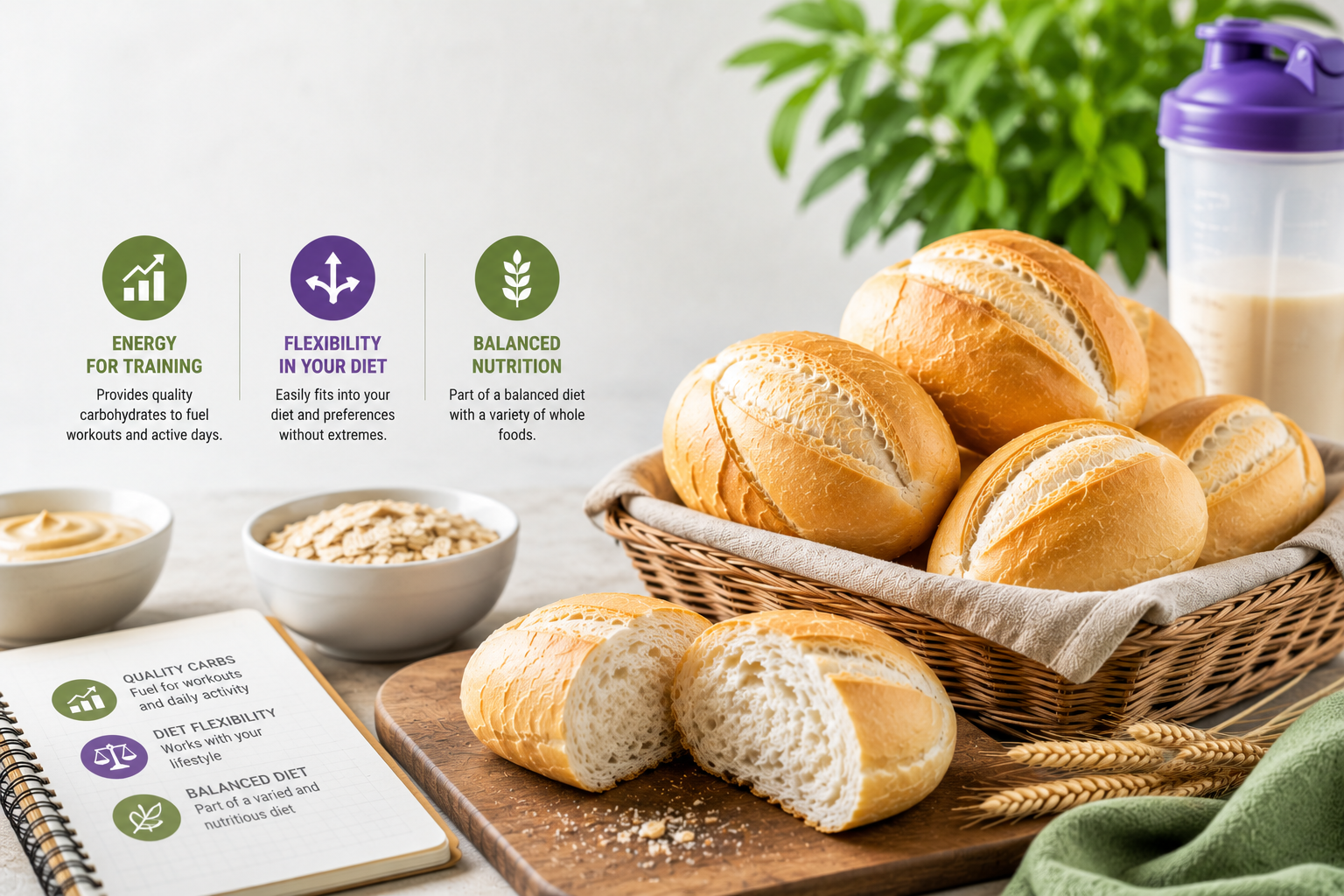
You’re dieting, making progress, and then you crave a simple sandwich on white bread. But you’ve been told white bread is terrible for fat loss, spikes insulin, causes fat storage, and will ruin your results. So you eat chicken and rice again, dream about that sandwich, and wonder if you’re being too restrictive.
When you’re dieting, whether cutting or bulking, it’s normal to have doubts about which foods to include in your nutrition, which includes white bread.
So, can you eat white bread on a diet? Yes, you can eat white bread on a diet, regardless of whether you’re cutting or bulking. In fact, you can include a variety of foods in moderation, as long as you control your total calorie intake and, at the end of the day, it aligns with your goal.
For people trying to lose fat without feeling deprived, build muscle while enjoying familiar foods, or simply understand if white bread actually sabotages progress, knowing the truth about white bread and dieting can transform your relationship with food and make adherence dramatically easier.
In this comprehensive guide, I’ll explain why white bread has a bad reputation in fitness circles, the scientific truth about white bread and body composition, complete nutritional breakdown of white bread, how white bread fits into cutting and bulking diets, optimal timing for white bread consumption, practical sandwich recipes combining white bread with protein, and answers to common questions about white bread and fat loss.
Whether you’re cutting and worried white bread will stall progress, bulking and wondering if white bread can help hit calorie targets, or just tired of demonizing foods unnecessarily, understanding how white bread actually affects your physique will help you diet more flexibly without sacrificing results.
Let’s explore the complete truth about white bread and dieting.
TABLE OF CONTENTS
Why White Bread Is Considered a “Bad” Food for Dieting
Before discussing whether white bread fits your diet, let’s understand why it has such a negative reputation in fitness culture.
What Is White Bread?
White bread is bread made from wheat flour from which the bran and germ have been removed through processing.
Characteristics of white bread:
Made from refined wheat flour:
- Wheat kernel has three parts: bran (outer layer), germ (nutrient rich core), endosperm (starchy middle)
- White flour uses only endosperm
- Bran and germ removed during milling
- Creates lighter color and softer texture
Typical ingredients:
- Refined wheat flour (primary ingredient)
- Water
- Yeast (for rising)
- Salt
- Sugar (small amount for yeast activation)
- Sometimes vegetable oil or butter
- Preservatives (in commercial bread)
Common forms:
- Sliced sandwich bread
- Dinner rolls
- Hot dog and hamburger buns
- French baguettes
- Italian bread
- Ciabatta
- Most commercially produced bread
The distinctive characteristic of white bread is definitely its soft, fluffy texture and mild flavor, obtained through refined flour and specific baking processes.
The Reputation Problem
Many people consider white bread a bad food to use in diets because refined wheat is its main ingredient, which is rich in carbohydrates, low in fiber, and has fewer vitamins and minerals compared to whole grain breads, which can negatively affect satiety and the nutritional profile of the diet.
Why white bread is criticized:
Low fiber content:
- White bread: 1 to 2 grams fiber per slice
- Whole wheat bread: 3 to 4 grams fiber per slice
- Fiber increases satiety (helps you feel full)
- Fiber slows digestion (more stable energy)
- White bread lacks this benefit
Fewer micronutrients:
- Bran and germ contain B vitamins, iron, magnesium, zinc
- These are removed in refining process
- Some white bread is “enriched” (nutrients added back)
- But still inferior to whole grain nutritionally
Higher glycemic index:
- White bread: GI of 70 to 75
- Whole wheat bread: GI of 50 to 55
- Higher GI = faster blood sugar spike
- Faster spike = faster crash
- May increase hunger sooner
Less satiating:
- Digests quickly
- Doesn’t keep you full as long
- May lead to consuming more calories overall
- Problematic when trying to maintain calorie deficit
Perceived as “empty calories”:
- Provides energy (carbs) but limited nutrition
- Doesn’t support health as well as whole grains
- “Wasting” calorie budget on less nutritious food
This negative perception is amplified in diets that prioritize carbohydrate reduction as a strategy, leading to the belief that white bread can be an obstacle to getting good results with your diet.
The low carb movement’s influence:
Low carb and keto diets:
- Demonize all high carb foods
- White bread becomes symbol of “bad carbs”
- Creates fear around bread consumption
- Ignores role of total calories
The insulin fear mongering:
- “Carbs spike insulin”
- “Insulin causes fat storage”
- “White bread makes you fat”
- Oversimplified and mostly incorrect
Social media amplification:
- Fitness influencers cutting all bread
- Before and after photos “quitting bread”
- Ignores they also cut 500 calories and increased protein
- Bread gets blamed, not calorie deficit
The actual science:
- White bread is not inherently fattening
- Calories determine fat gain or loss
- White bread is just a carb source
- Context and total diet matter
The Grain of Truth in the Criticism
To be fair, there are legitimate reasons to prefer whole grain bread:
Better satiety:
- Fiber keeps you fuller longer
- Important when calories are restricted
- Makes dieting more comfortable
- Reduces likelihood of overeating
Superior micronutrient profile:
- More vitamins and minerals per calorie
- Supports overall health better
- Prevents micronutrient deficiencies
- Particularly important in long term diets
More stable energy:
- Lower glycemic index
- Steadier blood sugar levels
- Prevents energy crashes
- Better for sustained performance
Digestive health:
- Fiber feeds beneficial gut bacteria
- Supports regular bowel movements
- Improves overall gut health
- Long term health benefits
However, this doesn’t mean white bread is “bad” or will prevent results.
Can You Use White Bread in Your Diet and Still Get Results?
Yes, it is possible to include white bread in cutting diets (reducing body fat) or bulking diets (gaining muscle mass) and still achieve excellent results.
White Bread During Cutting (Fat Loss)
In cutting, maintaining a calorie deficit is essential to lose fat. A calorie deficit is a situation where calorie intake is less than the body’s total caloric expenditure, thus the body needs to use its own fat stores as an energy source, thereby “burning” fat.
Therefore, white bread can be used in cutting as long as the total calorie intake for the day does not “break” the calorie deficit. In this way, even eating white bread in your diet you will still be burning fat due to the energy deficit.
How white bread fits into cutting:
Calories are what matters:
The fundamental equation:
- Fat loss requires calorie deficit
- 3,500 calorie deficit = approximately 1 lb fat lost
- Deficit can come from eating less, moving more, or both
- Food choice is secondary to total calories
White bread example during cut:
Scenario A: Cutting with white bread:
- TDEE: 2,500 calories
- Target intake: 2,000 calories (500 deficit)
- Breakfast: 2 slices white bread (160 cal) + eggs and turkey bacon
- Lunch: Chicken breast sandwich on white bread roll (80 cal for bread)
- Dinner: Grilled fish with rice and vegetables
- Snacks: Protein shake, fruit
- Total: 2,000 calories including 240 calories from white bread
- Result: 500 calorie deficit maintained, fat loss occurs
Scenario B: Cutting without white bread:
- TDEE: 2,500 calories
- Target intake: 2,000 calories (500 deficit)
- Breakfast: Oatmeal with protein powder
- Lunch: Chicken breast with sweet potato
- Dinner: Grilled fish with rice and vegetables
- Snacks: Protein shake, fruit
- Total: 2,000 calories, no white bread
- Result: Same 500 calorie deficit, same fat loss
The outcomes are identical. White bread did not prevent fat loss in Scenario A because total calories were controlled.
The potential downside during cutting:
Satiety concerns:
- White bread less filling than whole grain
- 240 calories from white bread may leave you hungrier
- Same 240 calories from whole grain bread + vegetables might be more satisfying
- Harder to stick to deficit if constantly hungry
Micronutrient density:
- When calories are limited, nutrient density matters more
- Every calorie should contribute to nutrition
- White bread provides mainly just carbs
- Could spend those calories on more nutritious carbs
The practical approach:
- White bread CAN work during cutting
- But whole grain bread or other carbs might work BETTER
- Depends on individual satiety response
- If white bread fits your calories and keeps you satisfied, use it
White Bread During Bulking (Muscle Gain)
In bulking, the goal is to create a calorie surplus to promote muscle mass gain, and white bread can be an ally to increase calorie intake in a more practical way. Rich in carbohydrates, white bread can serve as a quick energy source, especially useful around workouts.
How white bread helps during bulking:
Easy calories:
The bulking challenge:
- Need to eat 300 to 500 calories above TDEE
- Clean whole foods are very filling
- Hard to consistently eat surplus
- Appetite can be limiting factor
White bread as solution:
- Calorie dense (70 to 80 calories per slice)
- Not very filling (can eat more)
- Quick to consume
- Easily added to meals
Example bulking day with white bread:
Scenario: 180 lb male, TDEE 2,800 calories, bulking at 3,200 calories:
Breakfast:
- 3 eggs scrambled
- 3 slices white bread with butter: 300 calories
- Orange juice
- White bread contributes easy 300 calories
Lunch:
- Large chicken breast sandwich on white bread roll: 100 calories from bread
- Chips
- Fruit
Pre workout snack:
- 2 slices white bread: 160 calories
- Peanut butter
- Banana
Dinner:
- Steak with potatoes and vegetables
Post workout:
- Protein shake with milk
Total white bread calories: 560 calories (17.5% of daily intake)
Result: Helped hit 3,200 calorie target without excessive fullness, provided quick energy around training.
Carbohydrates for training fuel:
- White bread is primarily carbs (13 to 15g per slice)
- Carbs fuel high intensity training
- Eating white bread pre workout provides energy
- Post workout helps replenish glycogen
- Supports training performance and recovery
However, it’s important that white bread is just one food that composes a more complete and varied diet. Additionally, don’t forget that you can also exceed calorie intake during bulking and accumulate fat unnecessarily, which makes it necessary to consider the calories from white bread and control how much you eat.
The bulking caution:
Can still get too fat:
- Bulking requires surplus, but moderate surplus (300 to 500 cal)
- Easy to overconsume white bread (tastes good, not filling)
- 5 slices white bread = 400 calories
- Could eat that almost without noticing
- Track intake to prevent excessive fat gain
Better bulking approach:
- Use white bread strategically (around workouts)
- Don’t make it majority of carb intake
- Include variety of carb sources
- Monitor weekly weight gain (0.5 to 1 lb per week is good)
- If gaining more, reduce calories slightly
Therefore, in both cutting and bulking diets, white bread can be used without major problems, as long as you pay attention to total daily calorie consumption to not exceed your needs according to your main goal.
Nutritional Breakdown of White Bread
If you want to include white bread in your diet, then you need to know the nutritional information of the food, mainly the amount of calories provided.
Standard White Bread Nutrition Facts
One slice of white bread (approximately 25 to 30 grams) contains:
Calories: 70 to 80
- Primarily from carbohydrates
- Small amount from protein
- Minimal from fat
Protein: 2 to 3 grams
- Not a significant protein source
- Need to pair with protein rich foods
- Incomplete amino acid profile
Carbohydrates: 13 to 15 grams
- Almost entirely starch
- 1 to 2 grams sugar
- 1 gram fiber (very low)
- Net carbs: 12 to 14 grams
Fat: 1 gram
- Very low fat content
- Mostly from added oils
- Sometimes butter
Fiber: 0.5 to 1 gram
- Extremely low
- Compare to whole wheat: 2 to 3 grams per slice
- This is main nutritional weakness
Common white bread products and their calories:
Standard sandwich bread (1 slice, 28g):
- Calories: 75
- Protein: 2.5g
- Carbs: 14g
- Fat: 1g
Hamburger bun (1 bun, 50g):
- Calories: 140
- Protein: 4g
- Carbs: 26g
- Fat: 2g
Hot dog bun (1 bun, 40g):
- Calories: 110
- Protein: 3g
- Carbs: 20g
- Fat: 2g
French baguette (2 oz / 56g):
- Calories: 150
- Protein: 5g
- Carbs: 30g
- Fat: 1g
Dinner roll (1 roll, 35g):
- Calories: 90
- Protein: 3g
- Carbs: 17g
- Fat: 1.5g
It’s worth remembering that the recipe for making white bread is not universal and each location can use different amounts of ingredients, which, in turn, can change the nutritional information. In other words, this nutritional information serves only as an estimate.
Micronutrient Content
What white bread typically contains:
B vitamins (often enriched):
- Thiamin (B1): Small amounts
- Riboflavin (B2): Small amounts
- Niacin (B3): Small amounts
- Folic acid: Often added (enrichment)
- Not as high as whole grain
Minerals:
- Iron: Often added (enrichment)
- Calcium: Small amounts
- Magnesium: Very low (removed with bran)
- Zinc: Very low
- Selenium: Small amounts
The enrichment process:
- Many white breads are “enriched”
- Means vitamins/minerals added back after refining
- Attempts to replace what was lost
- Still not equivalent to whole grain
- Better than completely unenriched
Comparison to Whole Wheat Bread
Side by side nutritional comparison (per slice):
White bread:
- Calories: 75
- Protein: 2.5g
- Carbs: 14g
- Fiber: 0.7g
- Fat: 1g
- Glycemic index: 70 to 75
- Micronutrients: Lower (even when enriched)
Whole wheat bread:
- Calories: 80
- Protein: 4g
- Carbs: 14g
- Fiber: 2.5g
- Fat: 1g
- Glycemic index: 50 to 55
- Micronutrients: Higher (naturally present)
The differences that matter:
Fiber (biggest difference):
- 0.7g vs 2.5g per slice (3.5x more in whole wheat)
- Significantly impacts satiety
- Important for digestive health
- Helps control blood sugar
Protein (moderate difference):
- 2.5g vs 4g per slice
- Not huge but adds up
- 2 slices = 3g extra protein with whole wheat
- Matters when trying to hit protein targets
Micronutrients (moderate difference):
- Whole wheat naturally richer
- White bread partly compensated by enrichment
- Still advantage to whole wheat
- More significant over long term
Practical implications:
- Whole wheat is nutritionally superior
- But white bread is not “poison”
- Both can fit flexible diet
- Choose based on goals and preferences
When to Eat White Bread in Your Diet
As a carbohydrate source with low fat content, bread is a great choice to use pre workout and post workout. White bread is the best choice in these moments because it has less fiber and will be purposely absorbed more quickly.
Pre Workout Timing
Why white bread works well pre workout:
Fast digesting carbohydrates:
- Low fiber = faster gastric emptying
- Glucose available quickly
- Provides energy for training
- No stomach discomfort
Timing recommendations:
30 to 60 minutes pre workout:
- 1 to 2 slices white bread (15 to 30g carbs)
- Allows time for digestion
- Blood glucose elevated for training
- No GI issues during workout
Example pre workout meals with white bread:
60 minutes before:
- 2 slices white bread
- 3 oz turkey breast
- Light mayo
- Banana
- Macros: 350 calories, 30g protein, 50g carbs, 5g fat
45 minutes before:
- 1 slice white bread
- 2 tbsp peanut butter
- Honey
- Macros: 280 calories, 10g protein, 35g carbs, 12g fat
30 minutes before:
- 2 slices white bread
- 1 tbsp jam
- Quick energy without protein/fat slowing digestion
- Macros: 200 calories, 5g protein, 40g carbs, 2g fat
The advantage over whole grain pre workout:
- Less fiber means less chance of GI distress
- Faster availability of energy
- More comfortable during training
- Particularly important for intense sessions
Post Workout Timing
Why white bread works well post workout:
Rapid glycogen replenishment:
- Muscles depleted of glycogen after training
- Fast carbs replenish quickly
- Supports recovery
- Prepares for next session
Insulin spike beneficial post workout:
- Carbs spike insulin
- Insulin is anabolic (promotes growth)
- Shuttles nutrients into muscle cells
- Reduces protein breakdown
Since bread is practically made of carbohydrates, you need to combine it with a lean protein source (we’ll show you how to do this soon). Away from training time, it’s recommended to choose whole grain breads with higher fiber content and more fat and protein.
Example post workout meals with white bread:
Immediately post workout (within 30 minutes):
- Protein shake (25g protein)
- 2 slices white bread with jam
- Banana
- Macros: 450 calories, 30g protein, 75g carbs, 5g fat
- Fast carbs + fast protein for optimal recovery
60 minutes post workout (full meal):
- 6 oz grilled chicken breast
- Large sandwich on 2 slices white bread
- Vegetables
- Fruit
- Macros: 500 calories, 45g protein, 55g carbs, 8g fat
Non Workout Timing
Away from workouts, whole grain is usually better choice:
Breakfast (not before training):
- Whole grain bread preferred
- Higher fiber keeps you full until lunch
- More stable energy
- Better micronutrient start to day
Lunch (not near workout):
- Whole grain bread preferred
- Satiety important for afternoon
- Prevents snacking and overeating
Dinner:
- Either white or whole grain fine
- Less critical timing
- Personal preference
The strategic approach:
Use white bread:
- 30 to 60 minutes pre workout
- Post workout meal
- When need quick carbs
- When prefer taste/texture
Use whole grain bread:
- Breakfast (if not training after)
- Lunch away from training
- Dinner
- Snacks between meals
- When want maximum satiety
This doesn’t mean white bread is “banned” at other times. If you prefer white bread and it fits your macros, eat it. But whole grain offers more benefits away from training.
What to Eat with White Bread in Your Diet (Recipes)
Since white bread is a carbohydrate source, the best way to use this food in your diet is combining it with protein rich food. In practice, this means making sandwiches using protein sources as filling.
Why Combining White Bread with Protein Matters
The macronutrient balance:
White bread alone:
- 75 calories per slice (2 slices = 150)
- 5g protein (inadequate)
- 28g carbs (high relative to protein)
- Unbalanced meal
- Won’t support muscle building/preservation
White bread + protein source:
- 150 calories from bread
- 150 to 200 calories from protein (chicken, turkey, tuna, etc.)
- 30 to 40g protein total
- 28g carbs
- Balanced macro ratio
- Supports muscle and satiety
Satiety improvement:
- Protein most satiating macronutrient
- Combining protein with carbs increases fullness
- Prevents hunger 1 to 2 hours later
- Critical when cutting
The sandwich advantage:
- Convenient and portable
- Familiar and satisfying
- Easy to track macros
- Endless variety possible
Three Simple High Protein Sandwich Recipes with White Bread
Here are three simple sandwich recipes using white bread and protein rich foods:
Recipe 1: Grilled Chicken Sandwich with White Bread
Ingredients:
- 2 slices white bread (or 1 roll)
- 100g (3.5 oz) grilled chicken breast (seasoned to taste)
- Lettuce leaves
- 2 slices tomato
- 1 tablespoon light mayo or plain yogurt for healthier version
- Salt and pepper to taste
- Optional: 1 slice reduced fat cheese (30 calories)
Preparation:
- Cut white bread and spread thin layer of mayo or yogurt
- Place lettuce leaves and tomato slices on one slice
- Add grilled chicken breast, sliced or shredded, on top of vegetables
- Add cheese if using
- Season with salt and pepper to taste
- Close sandwich with other slice and serve
Macros per sandwich:
- Calories: 320
- Protein: 35g
- Carbs: 30g
- Fat: 6g
Why this works:
- High protein from chicken
- Low fat (grilled, not fried)
- Satisfying and filling
- Perfect post workout or lunch
Recipe 2: Tuna Sandwich with White Bread
Ingredients:
- 2 slices white bread
- 1 can tuna in water, drained (about 110g / 4 oz)
- 1 tablespoon light mayo or plain yogurt
- Spinach or arugula leaves
- 2 thin slices red onion
- Salt and pepper to taste
- Optional: 1 tsp mustard for extra flavor
Preparation:
- In small bowl, mix drained tuna with mayo or yogurt until smooth paste. Season with salt, pepper, and mustard if using
- Cut white bread and spread tuna mixture on one slice
- Add spinach or arugula leaves and red onion slices on top of tuna
- Cover with other slice and serve
Macros per sandwich:
- Calories: 300
- Protein: 32g
- Carbs: 28g
- Fat: 6g
Why this works:
- Very high protein from tuna
- Omega-3 fatty acids from tuna
- Extremely convenient (canned tuna)
- Budget friendly
Recipe 3: White Bread Sandwich with Cottage Cheese and Vegetables
Ingredients:
- 2 slices white bread
- 3 tablespoons cottage cheese (about 80g / 2.8 oz)
- Lettuce or spinach leaves
- 2 slices tomato
- 1/4 cucumber, thinly sliced
- 1/4 avocado, sliced (optional, adds healthy fats)
- Salt and pepper to taste
- Dried herbs or oregano for seasoning
Preparation:
- Cut white bread lengthwise
- Spread cottage cheese evenly over bottom of bread. Cottage cheese is excellent protein source and provides creaminess
- On cheese, arrange lettuce or spinach leaves, tomato slices, cucumber, and avocado if using. These vegetables add flavor and texture, plus fiber, vitamins, and minerals
- Season filling with salt, pepper, and dried herbs or oregano to taste. These seasonings enhance flavors without adding extra calories
- Cover with other bread half and press lightly so filling is well accommodated
Macros per sandwich:
- Calories: 280 (without avocado) or 350 (with avocado)
- Protein: 18g
- Carbs: 32g
- Fat: 7g (without avocado) or 14g (with avocado)
Why this works:
- Cottage cheese high protein, low calorie
- Very filling due to protein and vegetables
- Fresh and light option
- Good for cutting
Additional Protein Sandwich Ideas
Turkey and cheese:
- 2 slices white bread
- 4 oz (110g) sliced turkey breast: 30g protein
- 1 slice reduced fat cheese: 5g protein
- Mustard, lettuce, tomato
- Macros: 310 calories, 35g protein
Egg white sandwich:
- 2 slices white bread
- 4 egg whites scrambled: 16g protein
- 2 egg whites with 1 whole egg: 18g protein
- Salsa, spinach
- Macros: 250 calories, 20g protein
Roast beef:
- 2 slices white bread
- 4 oz lean roast beef: 28g protein
- Horseradish sauce, lettuce, tomato
- Macros: 320 calories, 32g protein
Protein requirements met: Each sandwich provides 18 to 35g protein, making them complete meals that support muscle building and preservation.
Frequently Asked Questions
Can People Trying to Lose Belly Fat Eat White Bread?
Yes, you can eat white bread if you want to lose abdominal fat. To lose fat (anywhere on the body), all that matters is total calorie intake, not the specific type of food.
The spot reduction myth:
You cannot target belly fat specifically:
- Fat loss occurs systemically (whole body)
- Genetics determine where fat comes off first/last
- Abs are “revealed” through total fat loss
- No food specifically burns belly fat
- No food specifically stores as belly fat
White bread and belly fat:
- White bread doesn’t cause belly fat
- Calorie surplus causes overall fat gain
- Which may show up as belly fat depending on genetics
- White bread in calorie deficit will not prevent belly fat loss
- Focus on total calories, not demonizing specific foods
Example:
Person A eats white bread daily but maintains calorie deficit:
- TDEE: 2,200 calories
- Intake: 1,700 calories (including 2 slices white bread daily)
- Result: Loses belly fat over time
Person B avoids white bread but overeats other foods:
- TDEE: 2,200 calories
- Intake: 2,500 calories (no white bread, but overeating rice, sweet potatoes, etc.)
- Result: Gains belly fat over time
The bread didn’t matter. The calorie balance did.
That said:
- Higher fiber foods may help with satiety during deficit
- If white bread makes you hungrier, it might indirectly make deficit harder
- But it’s not the white bread causing fat gain, it’s the excess calories
How Many Slices of White Bread Can I Eat Per Day and Still Get Results?
As long as you’re tracking the calories from the bread you eat and your total calorie intake for the day aligns with your goal, you can eat as much bread as you can.
Remembering that white bread should be just a small part of a more complete diet and should be used alongside other sources of carbohydrates, proteins, and fats.
In general and roughly speaking, it’s not recommended to eat more than 4 slices of white bread per day.
The calculation:
If cutting (1,800 calorie diet example):
- 1 slice white bread: 75 calories
- 4 slices: 300 calories (16.7% of daily intake)
- Leaves 1,500 calories for protein, fats, vegetables, other carbs
- Acceptable but takes up significant portion
If bulking (3,200 calorie diet example):
- 4 slices white bread: 300 calories (9.4% of daily intake)
- Leaves 2,900 calories for everything else
- Very manageable
Why limit to 4 slices:
Nutrient density:
- 300 calories from white bread provides mainly just carbs
- Could get those carbs plus fiber, vitamins, minerals from other sources
- Better to vary carb sources
Satiety:
- 4 slices not very filling
- Could leave you hungry
- Other carb sources might satisfy better
Diet quality:
- Want variety for health
- Different foods provide different micronutrients
- Over reliance on one food is suboptimal
Practical approach:
- 2 slices pre workout
- 2 slices post workout
- Rest of carbs from rice, oats, potatoes, fruit, vegetables
- Balanced and sustainable
What Is the Best Bread for Someone on a Diet?
Whole grain bread will always be a superior option due to its higher fiber content and vitamins and minerals.
Why whole grain is objectively better:
Fiber content:
- 2 to 3 grams per slice vs 0.7 grams
- Significantly more filling
- Better for digestive health
- Helps with calorie control
Micronutrients:
- Naturally higher in B vitamins
- More iron, magnesium, zinc
- Not reliant on enrichment
- Better supports overall health
Lower glycemic index:
- More stable blood sugar
- Less hunger spikes
- Better energy levels
- May improve insulin sensitivity
Satiety per calorie:
- Keeps you fuller longer
- Critical during calorie deficit
- Makes dieting more comfortable
However, this doesn’t mean white bread is “banned”:
When white bread makes sense:
- Pre and post workout (fast carbs beneficial)
- When you strongly prefer the taste
- When fitting your macros and you’re satisfied
- As part of varied diet, not exclusive carb source
The hierarchy of bread choices for dieting:
Tier 1 (best):
- 100% whole wheat bread
- Sprouted grain bread (Ezekiel)
- Whole grain sourdough
- Seeded whole grain bread
Tier 2 (good):
- Whole wheat with some white flour
- Multigrain bread (check fiber content)
- Rye bread
Tier 3 (acceptable):
- White bread (around workouts or if preferred)
- Bagels (watch portions, 250 to 300 calories)
- Wraps and tortillas (count calories)
The practical advice:
- Aim for whole grain 70 to 80% of the time
- Use white bread strategically 20 to 30%
- Focus on total calories and protein first
- Bread choice is minor factor in grand scheme
Does White Bread Spike Insulin and Prevent Fat Loss?
This is a common concern rooted in misunderstanding of how insulin works.
The insulin fear:
The myth:
- Carbs spike insulin
- Insulin stops fat burning
- Therefore, eating carbs prevents fat loss
- White bread particularly bad because high glycemic
The reality:
- Insulin does spike after eating carbs (true)
- Insulin does temporarily inhibit fat burning (true)
- But this doesn’t prevent fat loss over 24 hours (critical point)
How insulin actually works:
Fed state (after eating carbs):
- Blood glucose rises
- Insulin released to manage glucose
- Glucose stored as glycogen (muscles and liver)
- Fat burning temporarily paused
- Body using dietary glucose for energy
Fasted state (hours after eating):
- Blood glucose normalizes
- Insulin drops
- Body switches to burning stored fat
- Glycogen used for energy as needed
Over 24 hours in calorie deficit:
- Fed state: Less fat burning (using dietary carbs)
- Fasted state: More fat burning (using stored fat)
- Net result: Fat loss if deficit maintained
- Insulin spikes are temporary, not permanent
Research evidence:
Study: High carb vs low carb in matched calorie deficit:
- Group A: High carb diet (white bread, rice, pasta)
- Group B: Low carb diet (minimal bread, more fats)
- Both groups: Same calories, same protein, same deficit
- Duration: 12 weeks
- Result: Identical fat loss in both groups
The conclusion:
- White bread’s insulin spike doesn’t prevent fat loss
- Total calories and protein matter
- Carb type and insulin response are minor factors
- Focus on calorie deficit, not insulin manipulation
When insulin concerns might matter:
For diabetics or insulin resistant individuals:
- Blood sugar management more critical
- Lower glycemic foods may help
- Consult doctor or dietitian
- More individualized approach needed
For general population:
- Insulin response is normal and healthy
- Not something to fear or manipulate
- Total calories drive fat loss
- Eat white bread if it fits your diet
THE BOTTOM LINE: WHITE BREAD ON A DIET
✅ You Can Eat White Bread While Cutting (Calories Matter, Not Specific Foods)
✅ You Can Eat White Bread While Bulking (Easy Calories, Quick Energy)
✅ Best Used Around Workouts (Fast Digesting, Pre and Post Training)
✅ Pair With Protein Sources (Create Balanced Meals)
✅ Whole Grain Nutritionally Superior (Higher Fiber, More Micronutrients)
✅ Not Inherently Fattening (Calorie Surplus Causes Fat Gain, Not White Bread)
White Bread Nutrition (Per Slice): • Calories: 75 • Protein: 2.5g • Carbs: 14g • Fiber: 0.7g • Fat: 1g
When White Bread Works Well: • 30 to 60 Minutes Pre Workout (Fast Energy) • Post Workout Meal (Quick Glycogen Replenishment) • Bulking Phase (Easy Calories) • When You Prefer The Taste
When Whole Grain Is Better: • Cutting Phase (More Filling Per Calorie) • Meals Away From Training (Satiety And Nutrients) • Breakfast And Lunch (Stable Energy) • Long Term Health Optimization
Key Principles:
Total Calories Determine Results: • White bread doesn’t cause fat gain • Calorie surplus causes fat gain • White bread in deficit will not prevent fat loss • Focus on total daily calories
Pair With Protein: • White bread alone is unbalanced • Combine with chicken, turkey, tuna, eggs, cottage cheese • Creates satisfying, complete meals • Supports muscle building and preservation
Strategic Timing: • Best pre and post workout (fast digestion beneficial) • Whole grain better away from training (satiety) • Neither is “banned” at any time • Flexibility improves adherence
Portion Control: • 2 to 4 slices per day generally appropriate • Track calories from bread • Leaves room for other carb sources • Variety is important
Not About Good vs Bad Foods: • White bread is not “bad” • Whole grain is nutritionally “better” • Both can fit flexible diet • Context and moderation matter
DON’T DEMONIZE WHITE BREAD UNNECESSARILY. DO CONTROL TOTAL CALORIES REGARDLESS OF FOODS CHOSEN. DO PAIR WHITE BREAD WITH PROTEIN SOURCES. DON’T EXPECT WHITE BREAD TO PREVENT FAT LOSS IF CALORIES ARE CONTROLLED. DO CONSIDER WHOLE GRAIN FOR BETTER SATIETY AND NUTRITION. FLEXIBLE DIETING ALLOWS ALL FOODS IN MODERATION.
Ready To Build A Complete Flexible Diet That Includes All Your Favorite Foods While Still Getting Results? Understanding that white bread fits your diet is just one piece of sustainable nutrition. Get a comprehensive flexible dieting system including calorie and macro calculations for your specific goals, food tracking strategies that don’t require perfection, how to fit any food into your macros while hitting protein targets, meal planning templates for cutting and bulking, and psychological strategies for long term diet adherence. Stop restricting foods unnecessarily. Start using flexible nutrition approaches that deliver results while improving your relationship with food.
REFERENCES
SECTION 1 — Energy balance, not food type, determines fat loss: isocaloric comparison studies
[1] Hall KD et al. — PMC/Cell Metabolism, 2021 Controlled inpatient feeding trial in 20 adults comparing ultra-processed diet versus unprocessed diet for two consecutive 2-week periods; both diets were matched for total calories, sugar, fat, fiber, and macronutrients and offered ad libitum; when consuming the ultra-processed diet participants ate approximately 500 calories more per day and gained body weight; the key finding was that when total caloric intake is controlled, food processing level does not independently determine fat storage; the study also confirmed that unprocessed foods produced greater satiety per calorie; directly supports the article’s core argument that white bread does not inherently cause fat gain — what matters is total calorie intake — while also acknowledging that less processed, higher-fiber foods help control intake https://pmc.ncbi.nlm.nih.gov/articles/PMC7946062/
SECTION 2 — Glycemic index, satiety, and fiber: why whole grain keeps you fuller
[2] Holt SH et al. — PubMed/European Journal of Clinical Nutrition, 1995 Satiety index study measuring subjective fullness responses to 240-calorie portions of 38 common foods over 2 hours; white bread was assigned a satiety index of 100 (reference food) and whole grain breads scored 157 to 167% relative to white bread; the satiety index was positively correlated with fiber content and inversely correlated with glycemic index; foods high in fiber produced greater and more prolonged fullness signals; provides the empirical foundation for the article’s explanation of why white bread is less satiating per calorie than whole grain bread and why whole grain is nutritionally preferable, particularly during caloric restriction when satiety is critical for adherence https://pubmed.ncbi.nlm.nih.gov/7498104/
SECTION 3 — Insulin does not prevent fat loss: carbohydrate-insulin model limitations
[3] Hall KD & Guo J — PMC/Cell Metabolism, 2017 Mathematical modeling analysis and meta-analysis testing the carbohydrate-insulin model of obesity, which predicts that high-glycemic foods raise insulin and thereby inhibit fat oxidation and promote fat storage; analysis of controlled studies found that switching from high-fat to high-carbohydrate isocaloric diets caused small increases in body fat (mean 16 to 24g over 2 to 4 weeks) despite substantial increases in insulin secretion; the magnitude of fat retention was far smaller than the carbohydrate-insulin model would predict; the authors conclude that dietary carbohydrates and insulin response have minimal influence on fat balance when total caloric intake is equated; directly refutes the article’s “insulin fear” concern and validates the claim that white bread’s higher glycemic index does not prevent fat loss during a calorie deficit https://pmc.ncbi.nlm.nih.gov/articles/PMC5568065/
SECTION 4 — Pre-exercise carbohydrate availability: fast-digesting carbs improve performance
[4] Burke LM et al. — PubMed/Journal of Sports Science, 2011 Review of carbohydrate type, timing, and exercise performance; rapidly digested carbohydrates consumed 30 to 60 minutes before exercise elevate blood glucose and provide immediate fuel for training; lower-fiber, higher-glycemic carbohydrates (such as white bread) empty from the stomach more quickly than high-fiber options, reducing the risk of gastrointestinal discomfort during intense training; post-exercise, rapid carbohydrate ingestion accelerates muscle glycogen resynthesis compared to delayed or lower-glycemic carbohydrate feeding; provides the scientific basis for the article’s recommendation to use white bread specifically around workouts, where its faster digestion is an advantage rather than a drawback https://pubmed.ncbi.nlm.nih.gov/21660839/


Leave a Reply
You must be logged in to post a comment.