You’re tracking your protein intake religiously, hitting your daily target, but wondering: does the source actually matter? You’ve heard people talk about “complete” and “incomplete” proteins, amino acid profiles, and combining foods, but you’re not sure if this is important science or just nutritional noise that doesn’t affect your gains.
When it comes to including protein in your diet for hypertrophy, fat loss, or general health maintenance, it’s not just a question of quantity, but whether you’re including complete or incomplete proteins.
If you want to obtain the benefits of protein, it’s worth exploring the differences between complete and incomplete proteins. When you know the difference between these two types of protein, you can make more informed decisions about which protein rich foods to include in your diet.
For people trying to build muscle efficiently, optimize recovery, follow vegetarian or vegan diets, or simply understand if their protein sources are adequate, knowing the distinction between complete and incomplete proteins can transform how you structure your nutrition and may explain why some people make better progress despite similar total protein intake.
In this comprehensive guide, I’ll explain what protein actually is and why amino acid composition matters, the complete breakdown of essential amino acids your body cannot produce, what makes a protein “complete” with extensive food examples, what makes a protein “incomplete” and why that’s not necessarily problematic, how to strategically combine incomplete proteins to create complete profiles, protein requirements for muscle building and body composition, and practical meal planning strategies for different dietary approaches.
Whether you’re an omnivore wondering if you need to think about protein quality, a vegetarian or vegan concerned about meeting amino acid needs, or just someone who wants to optimize muscle building nutrition, understanding complete versus incomplete proteins will help you make smarter food choices.
Let’s explore everything you need to know.
TABLE OF CONTENTS
What Is Protein? (Understanding the Fundamentals)
It’s likely you already have some knowledge about protein. But a deeper understanding of this nutrient will help you understand how and why including more of it in your diet helps you in your body transformation journey.
Protein’s Role in the Human Body
Protein is a macronutrient found almost everywhere in the human body. There are about 10,000 types of proteins that allow your body to function, with protein playing an important role in numerous bodily processes.
Critical functions of protein:
Tissue repair and maintenance:
- Repairs damaged muscle fibers after training
- Maintains skin, hair, nails
- Rebuilds connective tissue
- Replaces dead cells continuously
- Essential for wound healing
Muscle growth:
- Provides amino acids for muscle protein synthesis
- Allows hypertrophy (muscle size increase)
- Prevents muscle breakdown (anti-catabolic)
- Supports strength adaptations
- Primary reason bodybuilders prioritize protein
Enzyme production:
- Enzymes are proteins that catalyze chemical reactions
- Digestive enzymes break down food
- Metabolic enzymes regulate energy production
- Without enzymes, bodily processes stop
Hormone production:
- Many hormones are protein based
- Insulin (regulates blood sugar)
- Growth hormone (muscle growth, fat loss)
- Thyroid hormones (metabolism)
- Glucagon (mobilizes stored energy)
Antibody production:
- Immune system antibodies are proteins
- Fight infections and foreign invaders
- Support immune response
- Prevent illness that interrupts training
Molecule transport:
- Hemoglobin transports oxygen in blood
- Albumin transports hormones and nutrients
- Carrier proteins move vitamins and minerals
- Critical for nutrient delivery to muscles
Fluid balance regulation:
- Proteins help maintain proper hydration
- Prevent edema (fluid accumulation)
- Support blood pressure regulation
Energy provision (in specific cases):
- Not primary fuel source (carbs and fats are)
- Can be converted to glucose when needed (gluconeogenesis)
- Used when carbs depleted or in starvation
- Inefficient energy source (better preserved for other functions)
The scope is massive: Protein isn’t just for muscles. It’s involved in virtually every bodily function.
The Building Blocks: Amino Acids
All 10,000 types of protein are made from amino acids, which are molecules that form the base for all types of biological material. Amino acids are particularly important in creating proteins.
What amino acids are:
The structure:
- Small organic molecules
- Contain amino group (nitrogen based)
- Contain carboxyl group (acid)
- Contain unique side chain (determines properties)
- Link together to form protein chains
How they form proteins:
- Amino acids connect via peptide bonds
- Form chains called polypeptides
- Chains fold into specific 3D shapes
- Shape determines protein function
- Sequence of amino acids determines final protein
There are about 20 different amino acids that combine in various ways to create the vast amount of proteins that make up the human body. Seeing how these amino acids are critical precursors for creating proteins, it’s important that we have a constant supply of them.
The 20 standard amino acids:
Essential amino acids (9 total):
- Cannot be produced by the body
- Must come from diet
- Missing even one limits protein synthesis
- The focus of complete vs incomplete discussion
Non-essential amino acids (11 total):
- Body can produce these
- Still important for function
- Don’t need to worry about getting from diet
- Body synthesizes from other compounds
The body has two ways to obtain the amino acids it needs to build proteins: produce them on its own or obtain them from the foods we eat.
The Nine Essential Amino Acids
There are nine amino acids that the body cannot produce on its own. These are called essential amino acids, as they are “essential” to our diet. The nine essential amino acids are leucine, isoleucine, histidine, lysine, phenylalanine, valine, tryptofano, methionine, and threonine.
Let’s examine each one:
Leucine:
- Most important for muscle protein synthesis
- Activates mTOR pathway (muscle growth signal)
- Branched chain amino acid (BCAA)
- Found abundantly in animal proteins
- Key trigger for anabolic response
Isoleucine:
- Branched chain amino acid (BCAA)
- Involved in energy regulation
- Supports immune function
- Aids hemoglobin formation
- Important for muscle metabolism
Valine:
- Third branched chain amino acid (BCAA)
- Supports muscle growth and repair
- Involved in energy production
- Helps maintain nitrogen balance
- Prevents muscle breakdown
Lysine:
- Important for calcium absorption
- Collagen formation
- Immune function support
- Carnitine production (fat metabolism)
- Often limiting amino acid in plant proteins
Methionine:
- Contains sulfur (important for metabolism)
- Supports detoxification
- Aids tissue repair
- Involved in creatine production
- Can be converted to cysteine (non-essential amino acid)
Phenylalanine:
- Precursor to tyrosine (another amino acid)
- Involved in neurotransmitter production
- Dopamine, norepinephrine, epinephrine production
- Supports brain function and mood
Threonine:
- Important for collagen and elastin formation
- Supports immune function
- Fat metabolism
- Prevents fat buildup in liver
- Important for digestive health
Tryptophan:
- Precursor to serotonin (mood regulation)
- Involved in melatonin production (sleep)
- Supports healthy sleep patterns
- Mood and appetite regulation
- Often lowest essential amino acid in proteins
Histidine:
- Precursor to histamine
- Supports immune response
- Important for tissue repair
- Aids in hemoglobin production
- Protects nerve cells
The combinations of these amino acids create the proteins that are so critical to our body.
Why essential amino acids matter for muscle building:
Muscle protein synthesis requires all nine:
- Missing even one essential amino acid limits synthesis
- Like building a wall: need all brick types, not just most
- If leucine is 100% available but lysine only 50%, synthesis limited to 50%
- This is why protein quality matters, not just quantity
The leucine threshold:
- Research shows 2 to 3 grams leucine per meal triggers maximum protein synthesis
- Complete proteins easily provide this
- Incomplete proteins may fall short
- Important for optimizing muscle growth
What Are Complete Proteins?
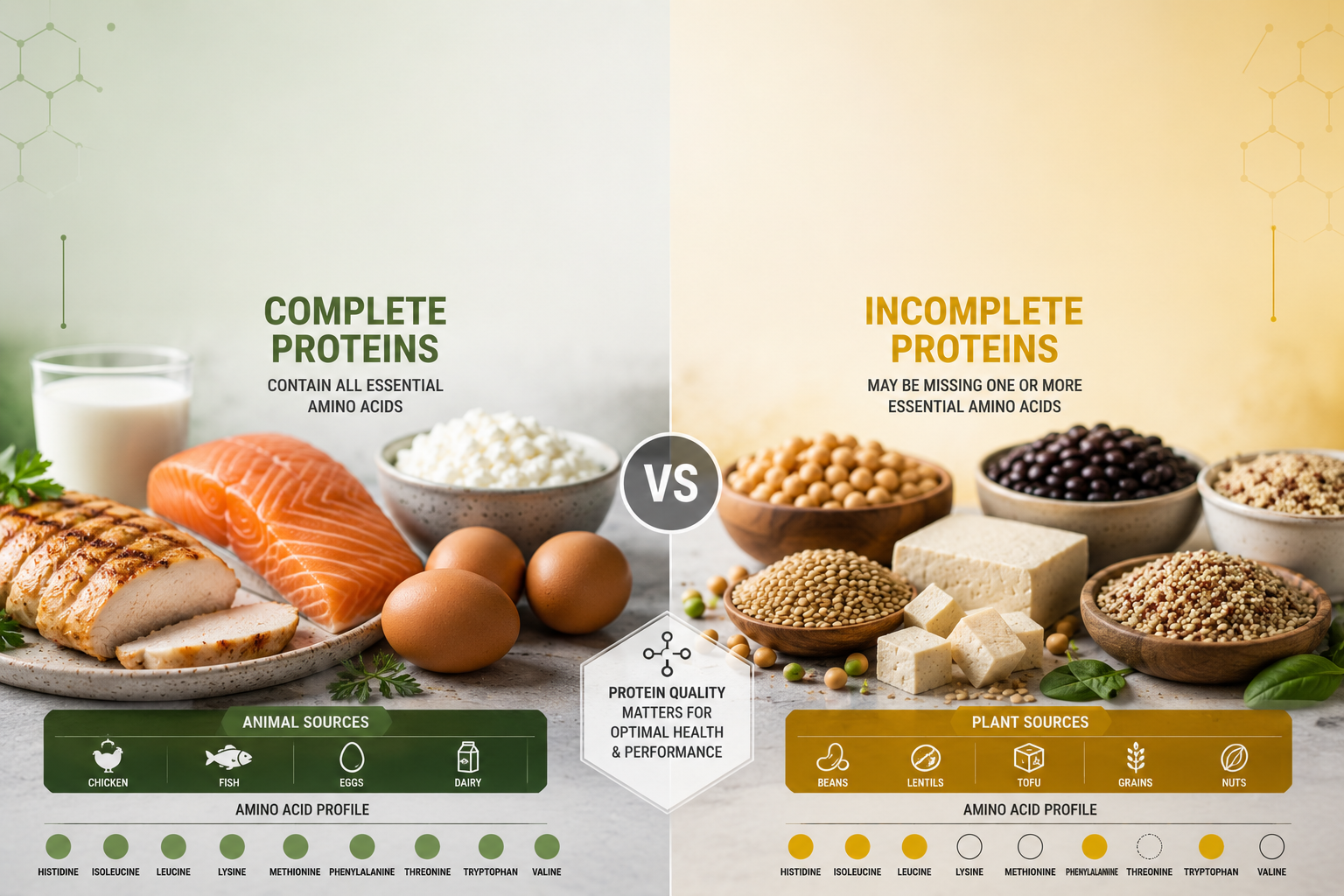
Complete proteins are those that provide all nine essential amino acids that the human body cannot manufacture on its own and, therefore, must be consumed in the diet. These amino acids are crucial for various bodily functions, including building and repairing tissues, producing enzymes and hormones, and supporting the immune system.
Why Complete Proteins Are Optimal
Complete protein sources tend to provide a wide range of essential nutrients (beyond proteins), making them centerpieces of a healthy diet or for body transformation.
The advantages of complete proteins:
Optimal amino acid profile:
- All nine essential amino acids present
- In adequate amounts
- Proper ratios for human use
- No need to combine with other foods
- Simplifies meal planning
High bioavailability:
- Body absorbs and utilizes efficiently
- Digestibility typically very high
- Minimal waste
- More usable protein per gram consumed
Nutrient density:
- Often come with other important nutrients
- Animal sources: B12, iron, zinc, omega-3s
- Plant sources: fiber, antioxidants, minerals
- Support overall health beyond just protein
Convenience:
- One food provides complete amino acid profile
- Don’t need to strategically combine foods
- Easier to track and plan meals
- Particularly important for high protein needs (bodybuilding)
Complete Proteins from Animal Sources
Animal foods are typical sources of complete proteins, but some plant sources also offer complete proteins, making it possible for vegetarians and vegans to meet their protein needs without consuming animal products.
Examples of complete animal proteins:
Eggs:
- 6g protein per large egg
- Extremely high bioavailability (considered gold standard)
- Contains all essential amino acids in ideal ratios
- Affordable and versatile
- One of the best protein sources available
Beef:
- 25g protein per 100g (3.5 oz)
- High in leucine (muscle building)
- Rich in iron, B12, zinc
- Provides creatine (performance)
- Different cuts vary in fat content
Chicken breast:
- 31g protein per 100g
- Very lean (low fat)
- High protein density
- Affordable and widely available
- Most popular protein source for bodybuilders
Turkey:
- 29g protein per 100g
- Very lean
- Similar profile to chicken
- Slightly higher in some minerals
- Good alternative to chicken
Fish (such as salmon, tuna, trout):
- 20 to 25g protein per 100g
- High in omega-3 fatty acids (salmon especially)
- Very digestible
- Supports cardiovascular health
- Variety of options for different tastes
Dairy products (milk, cheese, yogurt):
- Milk: 8g protein per cup
- Greek yogurt: 10 to 20g protein per cup
- Cheese: 7g protein per ounce (varies by type)
- Contains casein and whey proteins
- Provides calcium and probiotics (yogurt)
Shrimp:
- 24g protein per 100g
- Extremely lean (almost no fat)
- High in selenium
- Low calorie
- Cooks quickly
Pork (such as loin):
- 26g protein per 100g (lean cuts)
- Varies widely by cut
- Tenderloin is leanest option
- Good source of thiamine
- More affordable than beef often
Lamb:
- 25g protein per 100g
- Rich flavor
- High in B vitamins
- Good source of iron and zinc
- Less common but complete
Shellfish (such as oysters, mussels):
- High protein content
- Very nutrient dense
- Rich in minerals (zinc, iron, selenium)
- Supports testosterone production
- Unique flavor profile
Animal protein advantages:
All animal proteins are complete:
- Never need to worry about amino acid combinations
- Simplifies diet planning
- Ensures adequate essential amino acid intake
- Particularly important for high protein diets (1g+ per lb)
High protein density:
- Lots of protein per calorie
- Important when cutting (calorie deficit)
- Allows hitting protein targets without excessive calories
- Keeps you full longer
Established research:
- Decades of bodybuilding tradition
- Well understood effects on muscle building
- Predictable results
- Easy to find information and meal ideas
Complete Proteins from Plant Sources
Examples of complete plant proteins:
Quinoa:
- 8g protein per cup cooked
- Only grain that’s a complete protein
- High in fiber (5g per cup)
- Contains iron and magnesium
- Gluten free
Tofu (soy derivative):
- 10g protein per 100g (firm tofu)
- Made from soybeans
- Very versatile (absorbs flavors)
- Contains all essential amino acids
- Good source of calcium (if fortified)
Edamame (green soybeans):
- 18g protein per cup
- High in fiber
- Rich in vitamins and minerals
- Popular snack or side dish
- Easy to prepare
Tempeh (fermented soy product):
- 31g protein per cup
- Fermentation increases digestibility
- Probiotic benefits
- Firmer texture than tofu
- Higher protein than tofu
Amaranth:
- 9g protein per cup cooked
- Ancient grain
- High in lysine (often low in grains)
- Good source of iron and calcium
- Gluten free
Buckwheat:
- 6g protein per cup cooked
- Despite name, not actually wheat
- Gluten free
- High in antioxidants
- Good source of magnesium
Spirulina (type of algae):
- 8g protein per 2 tablespoons
- Extremely nutrient dense
- High in iron and B vitamins
- Strong flavor (not for everyone)
- Typically used as supplement
Chia seeds:
- 5g protein per 2 tablespoons
- High in omega-3 fatty acids
- Excellent fiber source (10g per 2 tbsp)
- Absorbs liquid (creates gel)
- Good for puddings and smoothies
Hemp seeds:
- 10g protein per 3 tablespoons
- Contains omega-3 and omega-6
- Easy to digest
- Mild, nutty flavor
- Can sprinkle on anything
Nutritional yeast:
- 8g protein per 2 tablespoons
- Fortified with B12 (important for vegans)
- Cheesy flavor
- Popular vegan ingredient
- Excellent seasoning
The significance for vegetarians and vegans:
Plant based diets are viable:
- Multiple complete plant protein sources exist
- No need for animal products to get essential amino acids
- Can build muscle on plant based diet
- Requires more attention to planning
Soy is particularly valuable:
- Tofu, tempeh, and edamame all complete
- High protein content
- Versatile in cooking
- Well studied for safety and efficacy
The challenge:
- Most plant proteins have lower protein density than animal
- Need to eat larger volumes
- Can be harder when cutting (calorie restricted)
- Requires more meal planning
What Are Incomplete Proteins?
Incomplete proteins are those that do not contain all nine essential amino acids in sufficient amounts that the human body needs to build and repair tissues.
Characteristics of Incomplete Proteins
Generally found in plant sources, such as grains, legumes, nuts, and seeds, incomplete proteins are crucial for the diet, especially for vegetarians and vegans, but need to be combined with other protein sources throughout the day to provide all essential amino acids.
What makes proteins “incomplete”:
Missing one or more essential amino acids:
- Not absent entirely usually
- But present in inadequate amounts
- Limits protein synthesis potential
- Requires strategic combination
The limiting amino acid concept:
How limiting amino acids work:
- Protein synthesis limited by scarcest essential amino acid
- Like building a house: if short on screws, can’t finish despite excess nails
- Determines how much of protein can be utilized
- Rest may be oxidized for energy or other uses
Common limiting amino acids in plant foods:
- Lysine: Often low in grains (wheat, rice, oats)
- Methionine: Often low in legumes (beans, lentils)
- Tryptophan: Often low in corn
- This is why combining is effective (strengths complement weaknesses)
The fascinating thing about incomplete proteins is that, although they don’t contain the complete package of amino acids that complete proteins have, the right combination of certain incomplete proteins can provide all the amino acids you need.
For example, rice and beans or peanut butter and whole grain bread together create a complete protein, although each on its own is an incomplete protein.
Examples of Incomplete Proteins
Common incomplete protein sources:
Beans:
- Black beans: 15g protein per cup cooked
- Kidney beans: 15g protein per cup
- Pinto beans: 15g protein per cup
- Navy beans: 15g protein per cup
- Low in methionine (limiting amino acid)
- High in lysine
Lentils:
- 18g protein per cup cooked
- Very high protein for plant source
- Low in methionine
- High in lysine and fiber
- Quick cooking legume
Chickpeas (garbanzo beans):
- 15g protein per cup cooked
- Versatile (hummus, roasted, curries)
- Low in methionine
- Good source of fiber and iron
Peas:
- Green peas: 8g protein per cup
- Split peas: 16g protein per cup cooked
- Pea protein powder becoming popular
- Low in methionine
- High in lysine
Peanuts:
- 7g protein per ounce (about 28 peanuts)
- Technically a legume, not a nut
- Low in methionine
- High in leucine actually
- Calorie dense
Nuts (almonds, cashews, walnuts):
- 6g protein per ounce (varies by type)
- Low in lysine typically
- High in healthy fats
- Calorie dense
- Good for bulking, harder when cutting
Sunflower seeds:
- 6g protein per ounce
- Low in lysine
- High in vitamin E
- Good source of healthy fats
Chia seeds:
- (Listed in complete section, but actually incomplete by strict definition)
- Low in lysine and methionine
- Very high in fiber and omega-3s
Brown rice:
- 5g protein per cup cooked
- Low in lysine (limiting amino acid)
- High in methionine
- Pairs perfectly with beans (which have opposite profile)
Quinoa:
- (Actually complete, but often discussed in plant protein context)
Corn:
- 5g protein per cup
- Very low in lysine and tryptophan
- Common staple but poor protein source alone
Oats:
- 6g protein per cup cooked
- Low in lysine
- High in fiber (soluble beta glucan)
- Popular breakfast choice
Leafy green vegetables:
- Spinach: 5g protein per cup cooked
- Kale: 3g protein per cup cooked
- Very low protein density
- Not significant protein sources
- But contribute to total intake
Potatoes:
- 4g protein per medium potato
- Low protein density
- Incomplete amino acid profile
- Primarily carbohydrate source
Mushrooms:
- 3g protein per cup
- Very low protein content
- Incomplete profile
- More valuable for other nutrients
Why Incomplete Proteins Are Still Valuable
Despite being “incomplete,” these foods have important roles:
Nutrient density:
- High in fiber (animal proteins have zero)
- Rich in vitamins and minerals
- Contain antioxidants and phytonutrients
- Support overall health
Variety and taste:
- Add diversity to meals
- Different flavors and textures
- Prevent diet monotony
- Make eating enjoyable
Cost effectiveness:
- Often cheaper than animal proteins
- Beans and lentils very affordable
- Accessible to all income levels
- Can reduce food costs significantly
Environmental considerations:
- Lower environmental impact than animal agriculture
- More sustainable protein sources
- Important for some people’s values
- Growing concern globally
The key: Understanding they’re incomplete allows strategic use rather than dismissing them entirely.
What Is the Difference Between Complete and Incomplete Proteins?
The main difference between complete and incomplete proteins lies in the composition of essential amino acids that each type of protein contains.
The Core Distinction
Complete proteins provide all nine essential amino acids that the human body cannot produce on its own and, therefore, must be obtained through the diet. These essential amino acids are crucial for various bodily functions, including muscle repair and growth, hormone and enzyme production, and immune system maintenance.
On the other hand, incomplete proteins lack one or more of the essential amino acids. Although each of these sources may be rich in certain amino acids, the absence of one or more makes it necessary to combine different plant foods to obtain a complete amino acid profile.
Visualizing the difference:
Complete protein example (chicken breast):
- Leucine: ✓ High amount
- Isoleucine: ✓ High amount
- Valine: ✓ High amount
- Lysine: ✓ High amount
- Methionine: ✓ High amount
- Phenylalanine: ✓ High amount
- Threonine: ✓ High amount
- Tryptophan: ✓ Adequate amount
- Histidine: ✓ High amount
- Result: All nine present in good amounts = complete
Incomplete protein example (brown rice):
- Leucine: ✓ Adequate
- Isoleucine: ✓ Adequate
- Valine: ✓ Adequate
- Lysine: ✗ Low (limiting amino acid)
- Methionine: ✓ Good amount
- Phenylalanine: ✓ Adequate
- Threonine: ✓ Adequate
- Tryptophan: ✓ Adequate
- Histidine: ✓ Adequate
- Result: Lysine too low = incomplete
Incomplete protein example (black beans):
- Leucine: ✓ Good amount
- Isoleucine: ✓ Adequate
- Valine: ✓ Adequate
- Lysine: ✓ High amount
- Methionine: ✗ Low (limiting amino acid)
- Phenylalanine: ✓ Adequate
- Threonine: ✓ Adequate
- Tryptophan: ✓ Adequate
- Histidine: ✓ Adequate
- Result: Methionine too low = incomplete
Rice + Beans together:
- Rice provides methionine (low in beans)
- Beans provide lysine (low in rice)
- Together they create complete protein
- This is why this combination exists in many cultures
Practical Implications of the Difference
For omnivores (eat both animal and plant foods):
Little concern needed:
- Regularly consume complete proteins (meat, eggs, dairy)
- Incomplete plant proteins supplement total intake
- Amino acid needs easily met
- Can eat intuitively without much planning
For vegetarians (eat dairy and eggs but no meat):
Relatively easy:
- Eggs and dairy are complete proteins
- Can rely on these as protein staples
- Plant proteins supplement
- Still quite straightforward
For vegans (no animal products):
Requires more attention:
- Must rely entirely on plant proteins
- Need to consume complete plant proteins (soy, quinoa) regularly
- Or combine incomplete proteins strategically
- More meal planning necessary
For bodybuilders and athletes:
Protein quality matters more:
- High protein needs (1 to 1.2g per lb body weight)
- Incomplete proteins make hitting targets harder
- May need larger food volumes
- Complete proteins simplify diet adherence
Does Timing of Amino Acid Intake Matter?
The old belief:
- Must combine incomplete proteins in same meal
- “Rice and beans must be eaten together”
- Amino acids only available for 1 to 2 hours
- Stressful and restrictive
The current understanding:
- Body maintains amino acid pool throughout day
- Eating rice at lunch and beans at dinner works fine
- Amino acids from both available over 24 hour period
- No need to combine in single meal
The practical guideline:
- Aim for variety of protein sources throughout day
- Naturally creates complete amino acid profile
- Don’t stress about every single meal
- Focus on overall daily intake
Example day for vegan:
Breakfast:
- Oatmeal (incomplete) with chia seeds (incomplete)
- May not be perfectly complete this meal
- That’s fine
Lunch:
- Tofu stir fry with brown rice (tofu is complete)
- Complete protein achieved
Snack:
- Hummus (chickpeas, incomplete) with whole grain pita (incomplete)
- Together closer to complete
Dinner:
- Lentil soup (incomplete) with quinoa (complete)
- Complete protein achieved
Result: Over the full day, all essential amino acids obtained in adequate amounts, even though not every meal was perfectly complete.
Strategic Protein Combining for Incomplete Sources
Understanding how to combine incomplete proteins allows vegetarians and vegans to meet all amino acid needs without animal products.
Classic Protein Combinations That Work
The science of complementary proteins:
Grains + legumes:
- Grains low in lysine, high in methionine
- Legumes high in lysine, low in methionine
- Perfectly complementary
- Creates complete protein when combined
Examples:
- Rice and beans (any variety)
- Corn tortillas and pinto beans
- Whole wheat bread and peanut butter
- Pasta and chickpeas
- Barley and lentil soup
- Pita bread and hummus
Legumes + nuts/seeds:
- Provides complementary amino acids
- Adds healthy fats
- Increases satiety
Examples:
- Hummus (chickpeas) with tahini (sesame seeds)
- Trail mix with peanuts and sunflower seeds
- Lentil salad with almond slivers
- Bean salad with pumpkin seeds
Grains + dairy (for vegetarians):
- Both often complete already (dairy is complete)
- But combination enhances nutrition
- Familiar comfort foods
Examples:
- Cereal with milk
- Cheese sandwich on whole grain bread
- Yogurt with granola
- Mac and cheese (whole grain pasta)
Modern Approach: Don’t Overthink It
The relaxed strategy that works:
Eat variety throughout the day:
- Include different protein sources at different meals
- Don’t stress about perfect combinations
- Body pools amino acids over 24 hours
- Variety naturally provides all amino acids
Prioritize higher protein plant foods:
- Legumes (beans, lentils, chickpeas, peas)
- Soy products (tofu, tempeh, edamame)
- Seitan (wheat gluten, very high protein)
- Quinoa and other complete grains
- These foods contribute most to meeting needs
Supplement with complete plant proteins:
- Have tofu or tempeh several times weekly
- Use quinoa as grain of choice sometimes
- Add hemp or chia seeds to meals
- Consider pea protein powder if needed
Example week for vegan bodybuilder:
Monday:
- Breakfast: Oatmeal with pea protein powder, berries, chia seeds
- Lunch: Tofu scramble with whole grain toast
- Dinner: Black bean and sweet potato burrito bowl with quinoa
- Analysis: Multiple complete sources (pea protein, tofu, quinoa), variety ensures all amino acids
Tuesday:
- Breakfast: Smoothie with soy milk, banana, peanut butter, spinach
- Lunch: Lentil and vegetable soup with whole grain bread
- Dinner: Tempeh stir fry with brown rice and vegetables
- Analysis: Soy milk and tempeh are complete, lentils + bread complement
Wednesday:
- Breakfast: Whole grain toast with almond butter, banana
- Lunch: Chickpea salad sandwich on whole wheat
- Dinner: Seitan fajitas with beans and corn tortillas
- Analysis: Chickpeas + wheat, beans + corn both create complete proteins
Over the week: All amino acids abundantly met despite no animal products. The variety and strategic inclusion of complete plant proteins makes it straightforward.
How Much Protein Do You Need Per Day?
The amount of protein needed per day for individuals who practice bodybuilding and aim for body changes can vary mainly according to body weight, considering that you have a healthy weight. Basically, the heavier you are, the more protein you need.
General Protein Recommendations
As a general rule, it’s recommended to consume 1.2 to 2 grams of protein per kilogram of body weight per day for those who do bodybuilding.
Let me convert this to pounds for clarity:
- 1.2 to 2g per kg = approximately 0.55 to 0.9g per pound
- Most research supports 0.7 to 1g per pound for active individuals
- Upper end (1g per lb) provides safety margin and optimal results
Practical recommendations by goal:
Muscle building (bulking):
- 0.8 to 1g protein per pound body weight
- Example: 180 lb person = 144 to 180g protein daily
- Higher end ensures maximum muscle protein synthesis
- Especially important in calorie surplus
Fat loss (cutting):
- 1 to 1.2g protein per pound body weight
- Example: 180 lb person = 180 to 216g protein daily
- Higher protein preserves muscle in deficit
- Increases satiety (helps with hunger)
- Higher thermic effect (burns more calories digesting)
Maintenance:
- 0.7 to 0.9g protein per pound body weight
- Example: 180 lb person = 126 to 162g protein daily
- Adequate for maintaining muscle mass
- More forgiving range
It’s also recommended that the majority of this protein come from complete sources, which contain the nine essential amino acids.
Adjusting for Protein Quality
Since most people consume a combination of incomplete and complete proteins, it’s best to “err” on the side of consuming an amount that’s at the upper end of the range of 1.2 to 2 grams of protein per kg of body weight.
Why protein source affects requirements:
If eating mostly complete proteins (animal products):
- High bioavailability (90 to 99% absorbed)
- All essential amino acids present
- Can hit lower end of range (0.7 to 0.8g per lb)
- More efficient protein utilization
If eating mixed complete and incomplete:
- Moderate bioavailability (80 to 90% typically)
- Most essential amino acids met through variety
- Aim for middle range (0.8 to 1g per lb)
- Standard approach for most people
If eating mostly incomplete proteins (vegan):
- Lower bioavailability for some sources (70 to 90%)
- Need to ensure all essential amino acids through combinations
- Aim for upper range (1 to 1.2g per lb)
- Provides safety margin for suboptimal amino acid profiles
Example comparison:
Person A (omnivore eating chicken, eggs, whey):
- Target: 0.8g per lb
- 180 lb body weight
- 144g protein daily
- Easily met with complete, high quality proteins
Person B (vegan eating beans, nuts, grains):
- Target: 1.1g per lb (higher for safety)
- 180 lb body weight
- 198g protein daily
- Compensates for incomplete proteins and lower bioavailability
The difference: Person B needs about 37% more total protein to achieve same amino acid delivery to muscles.
The Upper Limit: Can You Have Too Much?
However, it’s important to note that consuming protein in excess, far beyond your needs, will not necessarily result in more muscle mass gains and may, instead, lead to problems and unnecessary spending on food.
What happens with excess protein:
Converted to other uses:
- Amino acids used for energy (converted to glucose or fat)
- Not stored as “extra muscle”
- Essentially expensive calories at that point
Practical concerns:
- More expensive than carbs or fats
- Harder to digest large amounts
- May displace other important nutrients
- Uncomfortable digestive issues possible
The research on upper limits:
- Benefits plateau around 1 to 1.2g per lb
- Going to 1.5g per lb shows no additional muscle building
- Very high intakes (2g+ per lb) wasteful
- Better to invest those calories in carbs for energy
Kidney concerns (for healthy individuals):
- No evidence high protein harms healthy kidneys
- Concern is overblown for people without kidney disease
- However, if you have kidney disease, high protein can worsen it
- Check with doctor if kidney issues present
The sweet spot for most people:
- 0.8 to 1g per lb body weight
- Focus on complete proteins or strategic combinations
- Don’t go crazy exceeding 1.2g per lb
- Use extra calories for carbs and healthy fats instead
Practical Applications: Meal Planning Strategies
Let’s translate this knowledge into actual meal planning for different dietary approaches.
For Omnivores: The Easy Mode
Advantages:
- Access to all complete animal proteins
- Don’t need to think about combining
- High protein density foods readily available
- Established bodybuilding tradition to follow
Sample day (180 lb male, target 180g protein):
Breakfast (40g protein):
- 4 eggs scrambled: 24g protein
- 2 slices whole grain toast: 8g protein
- 1 cup milk: 8g protein
- Total: 40g protein (complete from eggs and milk)
Lunch (45g protein):
- 6 oz grilled chicken breast: 45g protein
- Large salad with olive oil dressing
- 1 cup brown rice: 5g protein
- Total: 50g protein (complete from chicken)
Snack (25g protein):
- 1 cup Greek yogurt: 20g protein
- 1 oz almonds: 6g protein
- Total: 26g protein (complete from yogurt)
Dinner (50g protein):
- 6 oz salmon: 40g protein
- Roasted vegetables
- Quinoa: 8g protein per cup
- Total: 48g protein (complete from salmon)
Pre bed snack (20g protein):
- 1 scoop casein protein shake: 25g protein
Daily total: 189g protein, all from complete sources, very easy to achieve
For Vegetarians: Still Quite Straightforward
Advantages:
- Eggs and dairy provide complete proteins
- Slightly more planning than omnivore
- Can still hit high protein targets easily
- More variety than strict vegans need
Sample day (180 lb male, target 180g protein):
Breakfast (35g protein):
- 3 egg omelet with cheese: 25g protein
- 2 slices whole grain toast: 8g protein
- Total: 33g protein (complete from eggs and cheese)
Lunch (40g protein):
- Greek yogurt parfait: 20g protein
- 1/2 cup granola: 5g protein
- 2 tbsp nut butter: 8g protein
- Fruit
- Total: 33g protein (complete from yogurt)
Snack (25g protein):
- Protein shake with milk: 30g protein
- Total: 30g protein (complete from whey and milk)
Dinner (50g protein):
- Lentil and quinoa bowl: 25g protein
- 2 oz cheese on top: 14g protein
- Vegetables
- Total: 39g protein (quinoa complete, cheese complete, lentils incomplete but complemented)
Snack (20g protein):
- Cottage cheese: 25g protein
- Berries
Daily total: 160g protein (slightly short, would add more cheese or another egg), mostly from complete sources
For Vegans: Requires More Strategy
Challenges:
- No animal proteins available
- Need to combine or use complete plant proteins
- Lower protein density requires larger volumes
- More planning necessary
Sample day (180 lb male, target 200g protein to account for lower bioavailability):
Breakfast (45g protein):
- 2 scoops pea protein powder in smoothie: 50g protein
- 2 tbsp peanut butter: 8g protein
- 1 tbsp chia seeds: 2g protein
- Soy milk, banana, spinach
- Total: 60g protein (pea protein complete)
Lunch (50g protein):
- Tofu stir fry (8 oz firm tofu): 40g protein
- Brown rice (2 cups): 10g protein
- Vegetables
- Total: 50g protein (tofu complete, rice incomplete but supplemental)
Snack (25g protein):
- Hummus (1 cup): 15g protein
- Whole grain pita: 8g protein
- Vegetables
- Total: 23g protein (chickpeas + wheat create complete)
Dinner (55g protein):
- Tempeh tacos (8 oz tempeh): 44g protein
- Black beans (1 cup): 15g protein
- Corn tortillas: 5g protein
- Total: 64g protein (tempeh complete, beans + corn complement)
Snack (15g protein):
- 1/4 cup hemp seeds: 13g protein
- 2 tbsp nutritional yeast: 8g protein
- On salad
- Total: 21g protein (hemp complete)
Daily total: 218g protein, achievable but requires larger volumes and more intentional planning
Key strategies for vegans:
- Use protein powder (pea, rice + pea blend, soy)
- Rely on tofu and tempeh regularly
- Eat larger portions to compensate for lower protein density
- Track intake more carefully
- Consider protein fortified foods
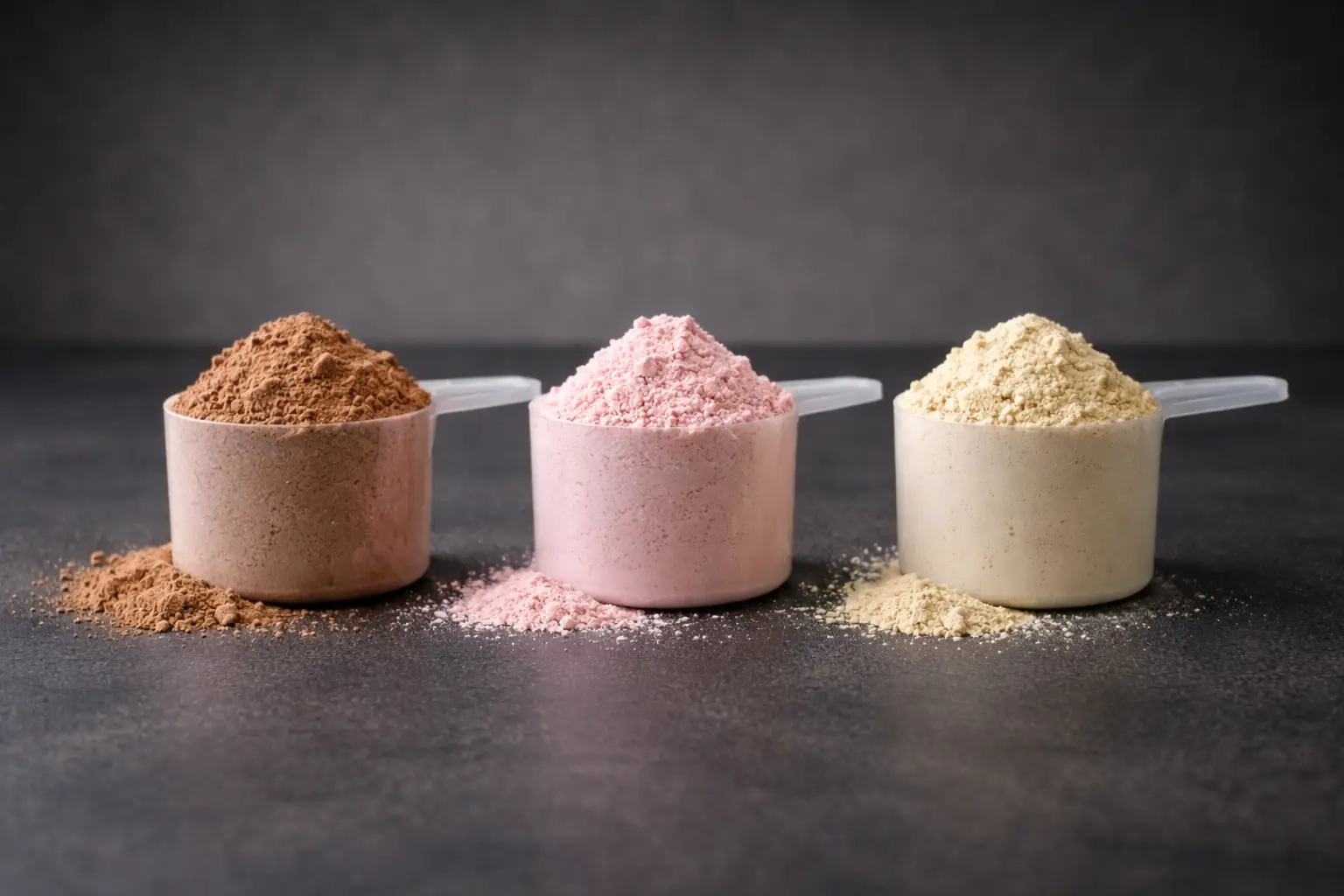
Protein Powder: The Convenience Factor
When protein powder makes sense:
For anyone:
- Convenient post workout nutrition
- Easy way to hit daily target
- Portable and shelf stable
- Cost effective per gram protein
Especially for vegans:
- Dramatically simplifies hitting high targets
- Concentrated protein without huge volumes
- Often fortified with B12 and other nutrients
- Pea and rice protein blends are complete
Types to consider:
Whey protein (vegetarian, not vegan):
- Complete protein
- High in leucine
- Very fast absorbing
- Gold standard for post workout
Casein protein (vegetarian, not vegan):
- Complete protein
- Slow digesting
- Good before bed
- Sustained amino acid release
Soy protein (vegan):
- Complete protein
- Similar to whey in quality
- Some avoid due to phytoestrogens (effects minimal in reality)
Pea protein (vegan):
- Nearly complete (low in methionine)
- Combine with rice protein for complete profile
- Hypoallergenic
- Good choice for vegans
Rice protein (vegan):
- Incomplete (low in lysine)
- Combine with pea protein
- Hypoallergenic
Rice + pea blend (vegan):
- Complete when combined
- Complementary amino acid profiles
- Best vegan protein powder option
- Similar to whey in effectiveness
THE BOTTOM LINE: COMPLETE VS INCOMPLETE PROTEINS
✅ Complete Proteins Contain All Nine Essential Amino Acids (Optimal for Muscle Building)
✅ Incomplete Proteins Lack One Or More Essential Amino Acids (Still Valuable But Require Combining)
✅ All Animal Proteins Are Complete (Simplifies Meal Planning)
✅ Some Plant Proteins Are Complete (Soy, Quinoa, Hemp, Chia, Buckwheat)
✅ Strategic Combining Creates Complete Profiles (Rice + Beans, Hummus + Pita)
✅ Timing Doesn’t Matter (Combine Over 24 Hours, Not Per Meal)
Complete Protein Sources: • Animal: Eggs, Chicken, Beef, Fish, Dairy, Turkey, Pork • Plant: Tofu, Tempeh, Edamame, Quinoa, Buckwheat, Hemp Seeds, Spirulina
Incomplete Protein Sources: • Grains: Rice, Oats, Wheat, Corn, Barley (Low in Lysine) • Legumes: Beans, Lentils, Chickpeas, Peas (Low in Methionine) • Nuts and Seeds: Almonds, Walnuts, Sunflower Seeds (Varies)
Key Principles:
Essential Amino Acids: • Nine amino acids body cannot produce • Must come from diet • All nine needed for protein synthesis • Missing even one limits muscle building
Complete vs Incomplete: • Complete = all nine present in adequate amounts • Incomplete = lacking one or more • Doesn’t mean incomplete proteins are bad • Just need strategic use
Combining Strategy: • Grains + legumes = complete (rice + beans) • Legumes + nuts/seeds = complete (hummus + tahini) • Don’t need to combine in same meal • Variety over 24 hours creates complete profile
Protein Requirements: • Bulking: 0.8 to 1g per pound body weight • Cutting: 1 to 1.2g per pound (higher preserves muscle) • Vegan: Aim for upper range (compensate for incomplete sources) • Majority should come from complete proteins if possible
Practical Applications: • Omnivores: Easy, all animal proteins complete • Vegetarians: Still easy, eggs and dairy complete • Vegans: More planning, use soy products and combinations • Everyone: Protein powder simplifies hitting targets
DON’T OVERTHINK PROTEIN QUALITY IF YOU EAT VARIED DIET. DO PRIORITIZE COMPLETE PROTEINS FOR SIMPLICITY. DO COMBINE INCOMPLETE PROTEINS IF PLANT BASED. DON’T STRESS ABOUT PERFECT COMBINATIONS EVERY MEAL. DO AIM FOR VARIETY THROUGHOUT THE DAY. TRACK TOTAL INTAKE AND ENSURE ADEQUATE COMPLETE SOURCES.
Ready To Optimize Your Entire Nutrition Strategy Beyond Just Protein Quality? Understanding complete versus incomplete proteins is one piece of building an effective muscle building diet. Get a comprehensive nutrition system covering optimal macronutrient ratios for different goals, meal timing strategies backed by research, micronutrient optimization for performance and recovery, supplement protocols that actually work, and complete meal plans for bulking, cutting, and maintenance. Stop guessing about nutrition. Start using evidence based strategies that support your training and deliver real results.
REFERENCES
SECTION 1 — Essential amino acids and the leucine threshold for muscle protein synthesis
[1] Norton LE & Layman DK — PubMed/Journal of Nutrition, 2006 Review of leucine as the primary regulatory signal for muscle protein synthesis (MPS); among the nine essential amino acids, leucine specifically activates the mTOR signaling cascade at the ribosome, serving as the molecular trigger that initiates translation of muscle protein; a leucine threshold of approximately 2 to 3 grams per meal is required to maximally stimulate mTOR and MPS in humans; animal proteins contain more leucine per gram of total protein than most plant proteins; incomplete proteins that are low in leucine will not trigger maximal MPS even when consumed in large quantities unless the leucine threshold is met; provides the mechanistic basis for the article’s explanation of why all nine essential amino acids must be present and why the leucine content of protein sources is particularly critical for muscle building outcomes https://pubmed.ncbi.nlm.nih.gov/16365087/
SECTION 2 — Protein digestibility and bioavailability: plant vs. animal sources
[2] Gorissen SHM et al. — PMC/Amino Acids, 2018 Comprehensive analysis comparing protein content and amino acid composition of 33 commercially available plant-based protein sources; all single plant proteins were found to be deficient in at least one essential amino acid relative to a reference protein (whey); protein digestibility-corrected amino acid score (PDCAAS) and digestible indispensable amino acid score (DIAAS) values were consistently lower for plant proteins than for whey, egg, or casein; animal proteins have DIAAS values of 1.0 or above, while most plant proteins fall between 0.4 and 0.9; directly supports the article’s recommendation that vegans target higher total protein intake (upper range of 1.0 to 1.2 g per pound) to compensate for lower bioavailability and incomplete amino acid profiles https://pmc.ncbi.nlm.nih.gov/articles/PMC5903386/
SECTION 3 — Complementary proteins: combining incomplete sources creates complete amino acid profiles
[3] Young VR & Pellett PL — PubMed/American Journal of Clinical Nutrition, 1994 Classic review and synthesis establishing the scientific basis for protein complementarity in human nutrition; individual plant foods are typically limiting in one or more essential amino acids (grains low in lysine, legumes low in methionine), but consuming a variety of plant foods whose amino acid profiles are complementary provides all essential amino acids at adequate levels; critically, the authors update the timing requirement, demonstrating that complementary proteins do not need to be consumed at the same meal — consuming them over the course of the day (within approximately 24 hours) is sufficient to meet amino acid needs; directly validates the article’s relaxed combining approach and the rice-plus-beans example as creating a complete amino acid profile https://pubmed.ncbi.nlm.nih.gov/8172117/
SECTION 4 — Protein requirements for physically active individuals and muscle building
[4] Phillips SM & Van Loon LJC — PubMed/Journal of Sports Science, 2011 Review of dietary protein requirements for strength and endurance athletes; protein requirements for resistance-trained individuals are higher than the population RDA (0.8 g/kg/day) due to the elevated demands of muscle protein synthesis and repair; a range of 1.3 to 1.8 g/kg/day (approximately 0.6 to 0.82 g per pound) is proposed for most strength athletes under normal conditions, with the upper end during caloric restriction where protein must spare lean tissue; the authors note that consuming protein primarily from complete, high-quality sources simplifies meeting requirements, while those relying on incomplete plant proteins may need to consume toward or above the upper end of the range; provides the scientific basis for the article’s protein requirement recommendations across bulking, cutting, and maintenance phases https://pubmed.ncbi.nlm.nih.gov/22150425/

Leave a Reply
You must be logged in to post a comment.