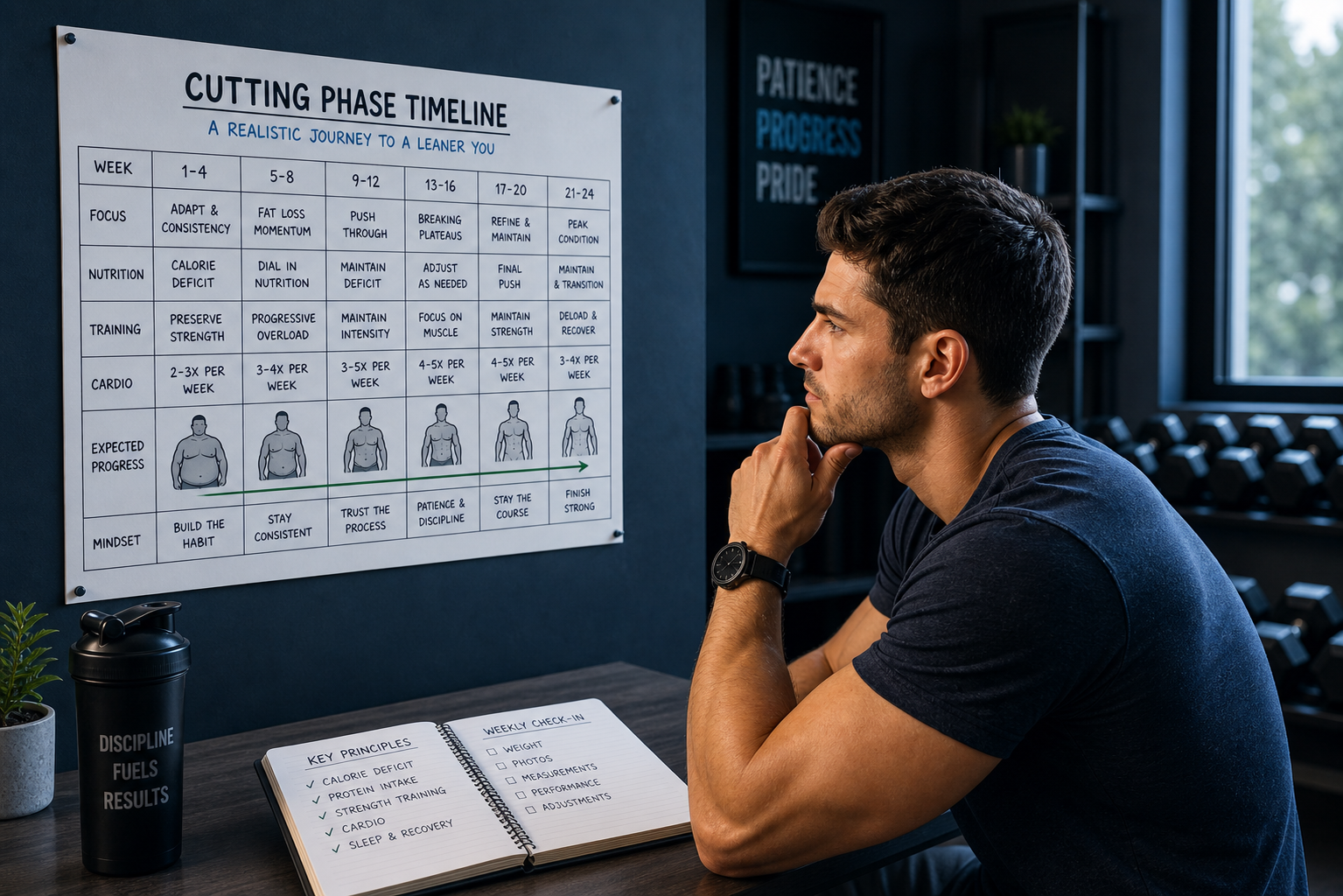
You’ve decided it’s time to get lean. You’re ready to commit to a cutting phase and finally see those abs you’ve been working so hard to build. But here’s the question burning in your mind: how long is this actually going to take?
Factors like age, gender, the size of your calorie deficit, and your starting point all affect how long it takes to lose fat while cutting. However, a realistic target is to lose about 1-2 pounds of body weight per week during a cut, and part of that will be fat. Keep in mind that fat loss isn’t a linear process. You might lose fat faster initially, but the speed changes over the weeks.
For some people, this might seem painfully slow. But in this comprehensive guide, you’ll understand why things work this way and why it’s crucial to adopt a gradual plan for losing fat. You’ll learn the science behind fat loss, what factors speed it up or slow it down, and why rushing the process almost always backfires.
Whether you’re preparing for your first cut or you’ve been frustrated by slow progress in the past, understanding the realistic timeline for fat loss will help you set proper expectations and actually achieve the lean physique you’re after.
Let’s dive into the truth about cutting and fat loss.
TABLE OF CONTENTS
- Factor 1: Genetics (The Unfair Truth)
- Factor 2: The Size of Your Calorie Deficit (Speed vs. Sustainability)
- Factor 3: Exercise and Physical Activity (The Deficit Amplifier)
- Factor 4: Age (The Metabolic Slowdown)
- Factor 5: Hormones (The Invisible Controllers)
- Factor 6: Lifestyle Factors (Sleep and Stress)
- Reason 1: Muscle Preservation (The Most Critical Factor)
- Reason 2: Sustainability and Adherence (Actually Finishing the Cut)
- Reason 3: Metabolic Adaptation Management (Keeping Your Metabolism Healthy)
- Reason 4: Behavioral Change and Habit Formation (Long-Term Success)
- Reason 5: Health and Well-Being (Not Just Physique)
- The Realistic Perspective
- THE BOTTOM LINE: THE REALISTIC CUTTING TIMELINE
How Fat Loss Actually Occurs During Cutting
The cutting process in bodybuilding and fitness refers to the phase where you’re trying to reduce body fat while simultaneously attempting to maintain as much muscle mass as possible. This isn’t just about losing weight, it’s about losing the right kind of weight (fat) while keeping the good stuff (muscle).
The Fundamental Principle: Calorie Deficit
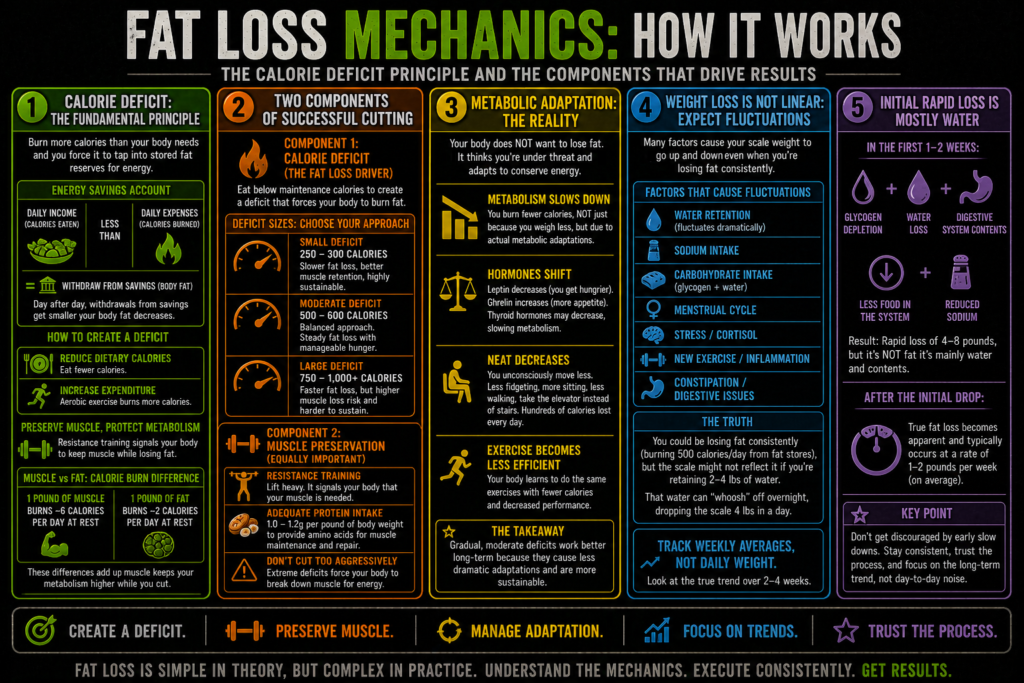
At its core, cutting requires adopting a calorie deficit, burning more calories than your body needs. The idea is to force your body to tap into stored fat reserves for energy, resulting in fat loss.
Think of your body fat as a savings account. When your daily “income” (calories eaten) is less than your daily “expenses” (calories burned), you have to withdraw from savings (body fat) to cover the difference. Day after day of these withdrawals, and your savings account (body fat) gets smaller.
The deficit is created primarily through reducing dietary calories, but including aerobic exercise helps maximize caloric expenditure, while resistance training (weight lifting) is maintained to preserve muscle mass.
This combination helps keep your metabolism active and your muscle mass intact, which is crucial because muscle burns more calories than fat, even at rest. A pound of muscle might burn 6 calories daily at rest, while a pound of fat burns only 2 calories. Over time, these differences add up significantly.
The Two Components of Successful Cutting
Component 1: The calorie deficit (fat loss driver)
Your body needs a certain number of calories daily to maintain its current weight (maintenance calories). When you eat below this number consistently, you create the deficit that forces fat burning.
The size of this deficit determines how quickly you lose fat:
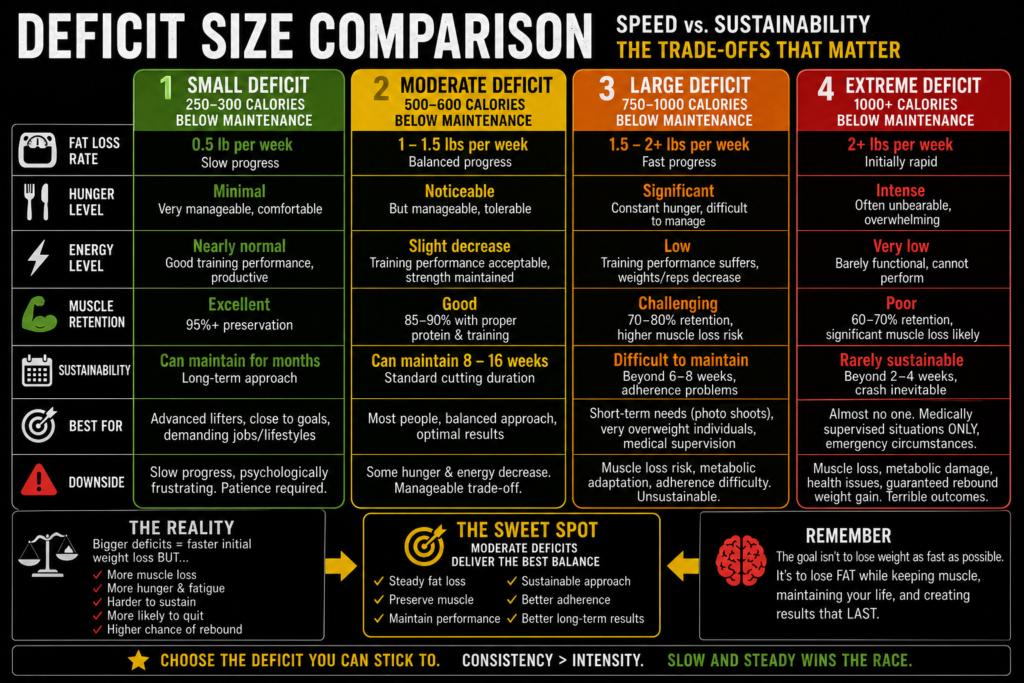
- Small deficit (250-300 calories below maintenance): Slower fat loss, better muscle retention, more sustainable
- Moderate deficit (500-600 calories below maintenance): Standard cutting approach, balanced results
- Large deficit (750-1000+ calories below maintenance): Faster fat loss, higher muscle loss risk, harder to sustain
Component 2: Muscle preservation (the equally important part)
While creating a deficit to lose fat, you’re simultaneously fighting to keep your muscle. This is achieved through:
Resistance training: Continuing to lift heavy weights signals your body that the muscle is still needed. Without this signal, your body has no reason to keep metabolically expensive muscle tissue during a deficit.
Adequate protein intake: Typically 1-1.2g per pound of body weight. Protein provides the amino acids needed to maintain and repair muscle tissue, and it has the highest thermic effect of all macronutrients (meaning you burn more calories digesting it).
Not cutting calories too aggressively: As mentioned, too large a deficit forces your body to break down muscle for energy alongside fat.
The Metabolic Adaptation Reality
Here’s something crucial that many people don’t understand: your body doesn’t want you to lose fat.
From an evolutionary perspective, body fat is survival insurance against starvation. When you create a calorie deficit, your body recognizes this as a potential threat and initiates metabolic adaptations to conserve energy:
Your metabolism slows down. Not just because you weigh less (smaller bodies require fewer calories), but through actual metabolic adaptation where your body becomes more efficient, burning fewer calories for the same activities.
Hormones shift. Leptin (the satiety hormone) decreases, making you hungrier. Ghrelin (the hunger hormone) increases. Thyroid hormones may decrease, slowing metabolism further.
Non-exercise activity decreases. You unconsciously move less throughout the day, fewer fidgeting movements, choosing to sit instead of stand, taking the elevator instead of stairs. This is called NEAT (non-exercise activity thermogenesis), and it can account for hundreds of calories daily.
Exercise becomes less efficient. Your body learns to perform the same exercises using fewer calories, and you may experience decreased performance in the gym.
This is why a gradual, moderate deficit works better long-term than an aggressive crash diet. The slower you lose fat, the less dramatic these metabolic adaptations become, making the process more sustainable and the results easier to maintain.
Why Weight Loss Isn’t Linear
One of the most frustrating aspects of cutting is that fat loss isn’t a straight line downward on the scale.
You might lose 3 pounds week one, nothing week two, 1 pound week three, then 2 pounds week four. Here’s why this happens:
Water retention fluctuates dramatically:
- Sodium intake affects water retention (high sodium = more water held)
- Carbohydrate intake affects glycogen storage (each gram of glycogen holds 3-4 grams of water)
- Menstrual cycles in women cause significant water fluctuations
- Stress and cortisol increase water retention
- New or intense exercise causes temporary inflammation and water retention
- Constipation or digestive issues affect scale weight
What this means practically: You could be losing fat consistently (burning 500 calories daily from fat stores), but the scale might not reflect this because you’re simultaneously retaining an extra 2-4 pounds of water. Then suddenly, that water “whooshes” off overnight, and the scale drops 4 pounds in a day.
This is why tracking weekly averages is crucial rather than reacting to daily scale fluctuations. Your true fat loss trend only becomes clear when you look at the bigger picture over 2-4 weeks.
The Initial Rapid Loss (Mostly Water)
Almost everyone experiences rapid weight loss in the first 1-2 weeks of cutting (often 4-8 pounds), and then things slow down significantly. This isn’t fat, it’s primarily:
Glycogen and water depletion: When you reduce calories (especially carbs), your body depletes muscle glycogen stores. Since glycogen binds to water, this causes significant water loss.
Digestive system contents: Less food volume in your system means less weight from food moving through your digestive tract.
Initial water loss from reduced sodium: Many people eat less processed food when cutting, inadvertently reducing sodium intake and losing water weight.
After this initial drop, true fat loss becomes apparent, typically settling into the 1-2 pounds per week range (though remember, weekly fluctuations will still occur due to water).
Factors That Influence the Speed of Fat Loss
As we’ve established, when cutting correctly, you can expect to lose approximately 1-2 pounds per week. However, this estimate can vary significantly depending on several factors that differ from person to person.
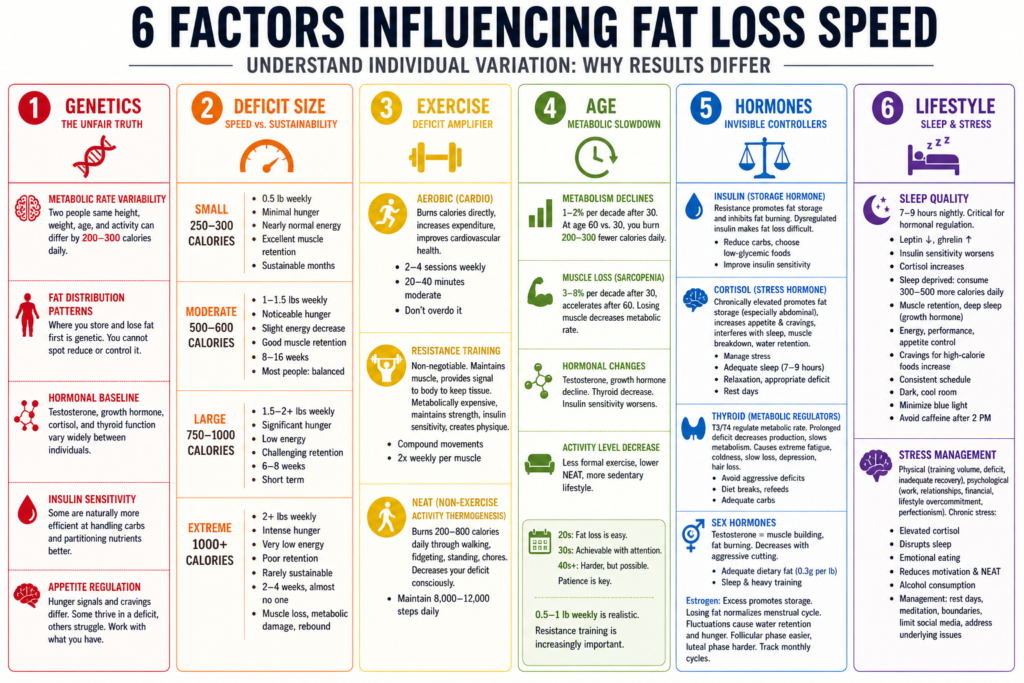
Here are the main factors that affect the speed of fat loss during a cut:
Factor 1: Genetics (The Unfair Truth)
Genetics plays a crucial role in how your body stores fat and loses weight. Some individuals can lose fat more easily due to their genetic predisposition to burn calories more efficiently.
How genetics affects fat loss:
Metabolic rate variability: Two people of the same height, weight, age, and activity level can have metabolisms that differ by 200-300 calories daily. Some people are just genetically programmed to burn more calories at rest.
Fat distribution patterns: Where you store fat (and where you lose it from first) is largely genetic. You can’t spot-reduce fat, and you can’t control which areas lean out first. Some people lose face and arm fat first, others lose lower body fat first. This is frustrating but unchangeable.
Hormonal baseline: Natural testosterone, growth hormone, cortisol, and thyroid hormone levels vary based on genetics. Higher testosterone and growth hormone generally support better fat loss and muscle retention. Lower thyroid or higher cortisol can make fat loss harder.
Insulin sensitivity: Some people are naturally more insulin sensitive, meaning their bodies handle carbohydrates efficiently and partition nutrients better (more to muscle, less to fat storage). Others are more insulin resistant, making fat loss more difficult.
Appetite regulation: The strength of hunger signals differs between individuals. Some people can comfortably maintain a deficit with minimal hunger, while others battle intense cravings constantly, making adherence much harder.
The bottom line: You can’t change your genetics, but you can work with what you have. Understanding that your fat loss journey might look different from someone else’s helps manage expectations and prevents frustration.
Factor 2: The Size of Your Calorie Deficit (Speed vs. Sustainability)
The larger your calorie deficit, the bigger the cut in calories, the more fat will be used to supply the energy shortfall. However, the more difficult the process becomes, with more hunger, feeling weak, and higher likelihood of giving up.
Deficit size comparison:
Small deficit (250-300 calories below maintenance):
- Fat loss rate: 0.5 pounds per week
- Hunger level: Minimal, very manageable
- Energy level: Nearly normal, good training performance
- Muscle retention: Excellent
- Sustainability: Can maintain for months
- Best for: Advanced lifters close to goals, those with demanding jobs/lifestyles
- Downside: Slow progress can be psychologically frustrating
Moderate deficit (500-600 calories below maintenance):
- Fat loss rate: 1-1.5 pounds per week
- Hunger level: Noticeable but manageable
- Energy level: Slight decrease, training performance acceptable
- Muscle retention: Good with proper protein and training
- Sustainability: Can maintain for 8-16 weeks
- Best for: Most people, balanced approach
- Downside: Some hunger and energy decrease
Large deficit (750-1000 calories below maintenance):
- Fat loss rate: 1.5-2+ pounds per week
- Hunger level: Significant, constant hunger
- Energy level: Low, training performance suffers
- Muscle retention: Challenging, higher loss risk
- Sustainability: Difficult to maintain beyond 6-8 weeks
- Best for: Short-term needs, photo shoots, or very overweight individuals with lots to lose
- Downside: Muscle loss risk, metabolic adaptation, adherence difficulty
Extreme deficit (1000+ calories below maintenance):
- Fat loss rate: 2+ pounds per week initially
- Hunger level: Intense, often unbearable
- Energy level: Very low, barely functional
- Muscle retention: Poor, significant muscle loss likely
- Sustainability: Rarely sustainable beyond 2-4 weeks
- Best for: Almost no one; medically supervised situations only
- Downside: Muscle loss, metabolic damage, potential health issues, almost guaranteed rebound weight gain
The practical implication: Bigger deficits mean faster initial weight loss, but that weight includes more muscle, the process is miserable, and you’re far more likely to quit or rebound. Moderate deficits provide the best balance of results and sustainability for most people.
Factor 3: Exercise and Physical Activity (The Deficit Amplifier)
Regular physical activity is essential to complement the calorie deficit created by your hypocaloric diet. But not all exercise is created equal for cutting purposes.
Aerobic exercise (cardio):
Activities like running, swimming, cycling, rowing, or using cardio machines are effective for burning calories directly during the activity.
The benefits:
- Increases total daily energy expenditure (burns more calories)
- Improves cardiovascular health and endurance
- Can help create or enlarge your calorie deficit
- Provides psychological benefits (stress relief, mood improvement)
The considerations:
- Too much cardio can interfere with strength training recovery
- Excessive cardio can increase hunger significantly
- Your body adapts to cardio, becoming more efficient and burning fewer calories for the same workout over time
- Cardio alone doesn’t preserve muscle effectively
Recommendation: 2-4 cardio sessions weekly, 20-40 minutes each, at moderate intensity. Don’t overdo it, more isn’t always better, especially when cutting.
Resistance training (weight lifting):
This is the non-negotiable component of successful cutting. Strength training helps build (or at minimum maintain) muscle mass, which in turn increases your basal metabolic rate.
Why it’s essential during cutting:
- Provides the signal your body needs to keep muscle tissue
- Muscle is metabolically expensive; your body will shed it during a deficit unless given a reason to keep it
- Each pound of muscle burns approximately 6 calories daily at rest (doesn’t sound like much, but 10 pounds of muscle = 60 calories daily, or 21,900 calories annually)
- Maintains strength and performance as much as possible
- Improves insulin sensitivity and nutrient partitioning
- Creates the physique you actually want (lean and muscular, not just skinny)
The approach during cutting:
- Maintain training volume and intensity as much as possible
- Don’t drastically change your program just because you’re cutting
- Focus on compound movements (squats, deadlifts, bench press, rows, overhead press)
- Train each muscle group 2x weekly minimum
- Keep rep ranges in the 5-15 range for best muscle retention
NEAT (Non-Exercise Activity Thermogenesis):
This is the calories you burn through all daily activities that aren’t formal exercise: walking, fidgeting, standing, doing chores, taking stairs, etc.
Why it matters: NEAT can account for 200-800 calories daily, varying significantly between individuals. Someone with a physically active job (construction worker, nurse, retail) might burn 500-800 calories through NEAT. Someone with a desk job who drives everywhere might burn only 200-300 calories.
The cutting problem: When you’re in a calorie deficit, NEAT naturally decreases as your body conserves energy. You unconsciously move less, choose sedentary options, and reduce fidgeting.
The solution: Consciously maintain activity levels:
- Track daily steps (aim for 8,000-12,000)
- Take walking breaks throughout the day
- Stand instead of sit when possible
- Take stairs instead of elevators
- Park farther away from entrances
- Do household chores and yardwork
- These small activities add up to hundreds of calories over weeks and months
Factor 4: Age (The Metabolic Slowdown)
With aging, for a variety of reasons, metabolism tends to slow down, which can make fat loss more difficult. Additionally, hormonal changes with age also affect how the body stores and burns fat.
Why age affects fat loss:
Metabolic rate decline: Starting around age 30, basal metabolic rate decreases by approximately 1-2% per decade. By age 60, you might burn 200-300 fewer calories daily than you did at age 30, even at the same body weight.
Muscle loss (sarcopenia): Without resistance training, adults lose approximately 3-8% of muscle mass per decade after age 30, accelerating after age 60. Since muscle is metabolically active, losing it further decreases metabolic rate.
Hormonal changes:
- Testosterone decreases in both men and women (more dramatically in men)
- Growth hormone production declines
- Thyroid function may decrease
- Insulin sensitivity often worsens
- Cortisol may remain elevated more frequently
Activity level decrease: Older adults are often less active, both intentionally (less formal exercise) and unintentionally (lower NEAT from sedentary jobs, less spontaneous movement).
The practical implications:
In your 20s: Fat loss is relatively easy. Metabolism is high, hormones are optimal, recovery is quick. You can often create a moderate deficit and lose 1.5-2 pounds weekly with ease.
In your 30s: Fat loss is still very achievable but requires more attention. Metabolism has slowed slightly, stress and lifestyle factors (career, family) may interfere. Expect 1-1.5 pounds weekly loss with a moderate deficit.
In your 40s and beyond: Fat loss is harder but absolutely possible. Requires more patience, closer attention to diet and training, and potentially more aggressive approaches to maintain muscle (higher protein, more resistance training). Expect 0.5-1 pound weekly loss with a moderate deficit.
The solution: Regardless of age, resistance training becomes increasingly important to preserve muscle and maintain metabolic rate. Higher protein intake (1.2g per pound of body weight) helps counteract age-related muscle loss. And patience is essential, accept that fat loss may be slower than when you were younger.
Factor 5: Hormones (The Invisible Controllers)
Hormones like insulin, cortisol, and sex hormones have significant influences on weight regulation and body fat distribution. Hormonal imbalances can hinder fat loss and even promote weight gain.
Insulin (the storage hormone):
Insulin’s primary job is to shuttle nutrients from your bloodstream into cells. When functioning properly, it supports muscle building and energy storage. When dysregulated, it promotes fat storage and makes fat loss difficult.
Insulin resistance problem: When cells become resistant to insulin’s signal (often from chronic overconsumption of calories, especially refined carbs, combined with sedentary lifestyle and excess body fat), your pancreas must produce more insulin to achieve the same effect. High insulin levels promote fat storage and inhibit fat burning.
The cutting impact: People with insulin resistance find fat loss harder because their bodies are constantly in “storage mode” rather than “burning mode.” They may need to reduce carbohydrate intake more aggressively or focus on low-glycemic carbs to improve insulin sensitivity.
Cortisol (the stress hormone):
Cortisol is released in response to stress, both physical (training, lack of sleep) and psychological (work stress, relationship issues, financial pressure).
The fat loss problem:
- Chronically elevated cortisol promotes fat storage, especially abdominal fat
- Increases appetite and cravings, particularly for high-calorie, sugary foods
- Interferes with sleep quality, which further disrupts other hormones
- Can increase muscle breakdown
- Promotes water retention, masking fat loss on the scale
Common cutting cortisol issues: The calorie deficit itself is a stressor. Add intense training, inadequate sleep, work stress, and aggressive dieting, and cortisol levels can become chronically elevated, actually slowing fat loss despite being in a deficit.
The solution: Manage stress through adequate sleep (7-9 hours), meditation or relaxation practices, appropriate deficit size (not too aggressive), sufficient rest days from training, and addressing life stressors where possible.
Thyroid hormones (the metabolic regulators):
Thyroid hormones (T3 and T4) regulate your metabolic rate. Higher levels = faster metabolism; lower levels = slower metabolism.
The cutting problem: When you’re in a prolonged calorie deficit, thyroid hormone production often decreases as a metabolic adaptation. Your body is trying to conserve energy by slowing metabolism.
Symptoms of low thyroid during cutting:
- Extreme fatigue beyond normal diet tiredness
- Constant coldness (always wearing sweaters when others are comfortable)
- Very slow fat loss despite adherence to deficit
- Depression or brain fog
- Hair loss
- Constipation
The solution: Avoid excessively aggressive deficits, include diet breaks or refeeds periodically (brief periods at maintenance calories to normalize hormones), ensure adequate carbohydrate intake (very low-carb diets can suppress thyroid), and if symptoms are severe, consult a doctor for thyroid testing.
Sex hormones (testosterone and estrogen):
Testosterone (muscle building, fat burning):
- Higher testosterone supports muscle retention and fat loss
- Men naturally have much higher testosterone than women, which is one reason they generally lose fat more easily
- Testosterone decreases during aggressive cutting, especially with inadequate fat and calorie intake
- Maintaining testosterone requires adequate dietary fat (at least 0.3g per pound of body weight), sufficient calories (not extreme deficits), quality sleep, and heavy resistance training
Estrogen (varies between sexes):
- In women, normal estrogen levels are necessary for health, but excess can promote fat storage in hips and thighs
- In men, excess estrogen (often from high body fat, which increases aromatization of testosterone to estrogen) can promote fat storage and make fat loss harder
- Losing body fat actually helps normalize estrogen levels (less aromatization in men, better balance in women)
Menstrual cycle effects in women:
- The menstrual cycle causes significant fluctuations in water retention, hunger, and energy levels
- The follicular phase (days 1-14): Often easier to maintain deficit, less water retention
- The luteal phase (days 15-28): Increased hunger, water retention (can gain 2-5 pounds of water), cravings
- Women should track progress across full monthly cycles, not week-to-week, to account for these fluctuations
Factor 6: Lifestyle Factors (Sleep and Stress)
Factors like sleep and stress also have significant impacts on fat loss. Lack of sleep can affect the hormones that control hunger, while high stress levels can increase cortisol production, which is associated with increased abdominal fat.
Sleep (the underrated fat loss tool):
Quality sleep is one of the most powerful but most neglected tools for fat loss.
Why sleep matters for fat loss:
Hormonal regulation: Sleep deprivation disrupts hormones that control hunger and fullness:
- Leptin (satiety hormone) decreases: You feel less satisfied after eating
- Ghrelin (hunger hormone) increases: You feel hungrier throughout the day
- Insulin sensitivity worsens: Your body handles carbs less efficiently
- Cortisol increases: More stress hormone and fat storage
The real-world impact: Studies show that people who sleep only 5-6 hours nightly consume 300-500 more calories daily than when they sleep 7-9 hours. That’s enough to completely erase a calorie deficit.
Muscle retention: Deep sleep is when growth hormone is released and muscle repair happens. Without adequate sleep, you lose more muscle during cutting.
Energy and performance: Poor sleep reduces training performance, decreases NEAT (you move less when tired), and makes adherence to your diet harder (more likely to make impulsive food choices when exhausted).
Appetite and cravings: Sleep deprivation increases cravings specifically for high-calorie, high-carb foods. Your brain seeks quick energy when sleep-deprived.
How much sleep you need: Most adults require 7-9 hours nightly. During cutting, aim for 8+ hours if possible since you’re already under stress from the calorie deficit.
Sleep quality tips:
- Consistent sleep schedule (same bedtime and wake time daily)
- Dark, cool room (65-68°F optimal)
- Minimize blue light exposure 1-2 hours before bed
- Avoid caffeine after 2 PM
- Avoid large meals within 2-3 hours of bedtime
- Manage stress and anxiety (meditation, journaling, reading)
Stress (the hidden fat loss saboteur):
We already discussed cortisol, but stress deserves its own spotlight because it’s such a common problem in modern life.
Types of stress affecting fat loss:
Physical stress:
- Training volume and intensity
- Calorie deficit itself
- Inadequate recovery between workouts
- Illness or injury
Psychological stress:
- Work pressure and deadlines
- Relationship conflicts
- Financial concerns
- Information overload and constant connectivity
Lifestyle stress:
- Sleep deprivation
- Overcommitment and lack of downtime
- Perfectionism and unrealistic expectations
- Comparing yourself to others (especially on social media)
How chronic stress sabotages fat loss:
- Elevated cortisol promotes fat storage and muscle loss
- Disrupts sleep quality, creating a vicious cycle
- Increases emotional eating and cravings
- Reduces motivation and willpower
- Decreases NEAT (you move less when stressed)
- May increase alcohol consumption (empty calories plus impaired decision-making)
Stress management strategies:
- Build rest days into your training week
- Practice stress-reduction techniques (meditation, deep breathing, yoga, walking in nature)
- Set boundaries with work and social obligations
- Limit social media and news consumption
- Address underlying issues causing chronic stress (therapy, lifestyle changes)
- Remember that cutting itself is temporary, don’t let the stress of dieting create more problems than it solves
These were just some (the most important) factors that can influence fat loss. Therefore, even though 1-2 pounds per week is considered a healthy rate of fat loss, this can still vary significantly based on your individual circumstances.
Why It’s Important to Lose Fat “Slowly” During Cutting
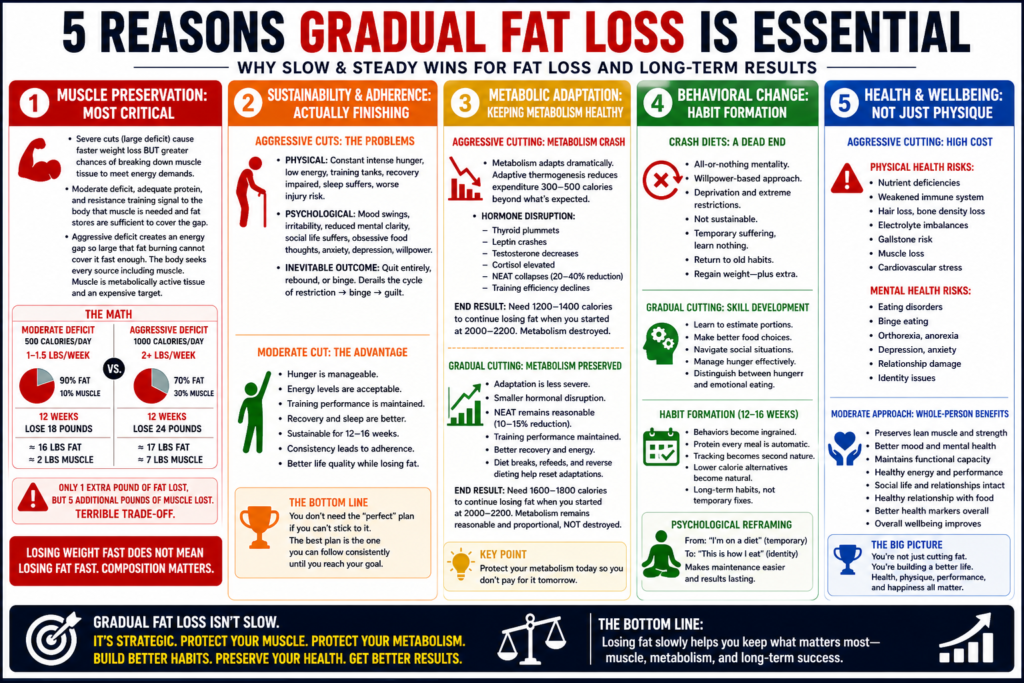
When seeing the estimate of how much fat you can lose per week, some people might get discouraged by how slow the process seems. While fat burning is naturally slow, this is extremely important for both short-term and long-term results.
Reason 1: Muscle Preservation (The Most Critical Factor)
Right off the bat, and most importantly, losing fat slowly during the cutting phase is crucial for preserving muscle mass.
The more severe your cut, the larger your calorie deficit, the faster your weight loss will be, but the greater the chances that your body will need to break down muscle tissue to meet energy demands.
Why this happens:
When you’re in a calorie deficit, your body needs to find energy somewhere. It has two main options:
- Body fat (what you want it to use)
- Muscle tissue (what you desperately want to avoid)
Your body doesn’t want to burn fat. From an evolutionary perspective, fat is precious survival insurance. Muscle, on the other hand, is metabolically expensive to maintain (requires energy even at rest) and doesn’t provide as many calories per pound when broken down.
In a moderate deficit with adequate protein and resistance training, your body primarily burns fat because:
- The deficit isn’t so large that it needs to desperately seek all possible energy sources
- High protein intake provides amino acids to maintain muscle
- Resistance training signals that the muscle is actively needed
- Fat stores are sufficient to cover the moderate energy gap
In an extreme deficit, things break down:
- The energy gap is so large that fat burning alone can’t cover it fast enough
- Your body seeks every possible energy source, including muscle
- Metabolically active tissue (muscle) becomes a target because it’s “expensive” to keep
- Despite high protein intake and training, some muscle loss becomes inevitable
The math that reveals the problem:
Moderate cut: 500 calorie daily deficit, 1-1.5 lbs weekly loss, composition: 90% fat, 10% muscle Aggressive cut: 1000 calorie daily deficit, 2+ lbs weekly loss, composition: 70% fat, 30% muscle
Over 12 weeks:
- Moderate cut: Lose 18 lbs total (16 lbs fat, 2 lbs muscle)
- Aggressive cut: Lose 24 lbs total (17 lbs fat, 7 lbs muscle)
You only lost 1 extra pound of fat with the aggressive approach, but you lost 5 additional pounds of muscle. That’s a terrible trade-off, especially considering the muscle took months or years to build.
Remember: Losing weight fast doesn’t mean losing fat fast. Weight is just a number that includes fat, muscle, water, glycogen, and digestive contents. What matters is the composition of that weight loss.
A gradual approach allows your body to adapt to changes in diet and exercise without resorting to muscle as an energy source, thereby maximizing fat loss while minimizing muscle loss.
Reason 2: Sustainability and Adherence (Actually Finishing the Cut)
Slow fat loss contributes to the sustainability of your plan and the ability to maintain results long-term.
The adherence problem with aggressive cuts:
Physical difficulty:
- Constant intense hunger that dominates your thoughts
- Low energy makes daily activities feel exhausting
- Training performance tanks (weaker, can’t complete usual volume)
- Recovery is impaired
- Sleep quality often worsens despite being tired
- Increased injury risk from reduced recovery capacity
Psychological difficulty:
- Mood swings and irritability (the “hangry” state becomes constant)
- Reduced mental clarity and focus
- Social life suffers (can’t enjoy meals with friends, constantly thinking about food)
- Obsessive thoughts about food
- Increased anxiety and depression risk
- Decreased willpower to resist cravings
The inevitable outcome: Most people can’t maintain aggressive cuts for more than 2-4 weeks before one of two things happens:
- They quit entirely: Throw in the towel, return to normal eating, often rebound and gain back the weight plus extra
- They binge and derail progress: Have a massive refeed that erases a week’s progress, creating a cycle of restriction and binge eating
The moderate cut advantage:
Manageable hunger: You’re hungry sometimes, especially before meals, but it’s not overwhelming or constant. You can function normally in daily life.
Acceptable energy levels: Training performance decreases slightly but remains productive. You can still work, socialize, and handle daily responsibilities without feeling like a zombie.
Sustainable timeline: You can maintain a moderate deficit for 12-16 weeks (the typical timeframe needed for meaningful body composition changes) without psychological breakdown.
Adherence during the cut: When the process is manageable, you can stick to it consistently. Consistency over time beats perfection for short periods followed by failure.
Better life quality: You can still have a social life, enjoy meals (just smaller portions or less frequently), and not feel like dieting is ruining your life.
Reason 3: Metabolic Adaptation Management (Keeping Your Metabolism Healthy)
Losing fat gradually helps minimize metabolic adaptation and makes it easier to maintain your results after the cut ends.
What happens with aggressive cutting:
Your metabolism adapts dramatically when you cut calories hard:
Adaptive thermogenesis: Your body reduces energy expenditure beyond what’s expected from weight loss alone. This means your metabolism might slow by 300-500 calories, even though losing 20 pounds should only account for a 200 calorie decrease.
Hormone disruption:
- Thyroid hormones plummet (metabolism regulation)
- Leptin crashes (satiety signal, metabolic rate)
- Testosterone decreases (muscle retention, fat burning)
- Cortisol remains elevated (stress response)
NEAT collapse: You unconsciously reduce movement by 20-40%, burning hundreds of fewer calories daily through reduced fidgeting, choosing sedentary options, and decreased spontaneous activity.
Training efficiency: Your body becomes more efficient at exercise, burning fewer calories for the same workout.
The end result: You might need to eat 1200-1400 calories to continue losing fat at the end of an aggressive cut, even though you started at 2000-2200 calories. Your metabolism has adapted so dramatically that maintenance calories have dropped far below what’s normal for your body weight.
What happens with gradual cutting:
Metabolic adaptation still occurs, but it’s much less severe:
Smaller hormonal disruption: Thyroid, leptin, and testosterone decrease modestly rather than crashing. This means less metabolic slowdown.
NEAT remains reasonable: You might reduce daily movement by 10-15% rather than 30-40%, preserving more calorie burn.
Training performance maintained: You can continue productive training, which itself keeps metabolism elevated.
Better recovery: You can implement diet breaks and refeeds periodically (brief periods at maintenance calories) to temporarily reverse metabolic adaptations before they become severe.
The end result: You might still need to drop to 1600-1800 calories by the end of your cut (down from 2200), but this is a reasonable decrease that’s proportional to your weight loss. Your metabolism hasn’t been destroyed.
Reason 4: Behavioral Change and Habit Formation (Long-Term Success)
Losing fat gradually and consistently helps establish healthy eating habits and promotes lasting behavioral adjustments that are essential for maintaining your desired weight and body composition after the cutting period ends.
The problem with crash diets:
Aggressive cuts are typically characterized by:
- All-or-nothing mentality (“I’m either on a diet or off a diet”)
- Reliance on willpower and deprivation
- Extreme restrictions that aren’t sustainable
- No learning or skill development around nutrition
- Viewing the diet as temporary suffering to endure
What happens after: You reach your goal weight, immediately return to old eating habits, and regain all the lost weight (plus extra) within months. You’ve learned nothing about sustainable nutrition.
The advantage of gradual cutting:
Skill development: You learn to:
- Estimate portion sizes accurately
- Make better food choices that satisfy you while staying in a deficit
- Navigate social situations and restaurants while cutting
- Manage hunger appropriately
- Balance flexibility with structure
- Distinguish between true hunger and emotional eating
Habit formation: Over 12-16 weeks of gradual cutting, new behaviors become ingrained:
- Eating protein at every meal becomes automatic
- Tracking food intake becomes a quick, easy habit
- Choosing lower-calorie alternatives feels natural
- Drinking water instead of calorie-containing beverages is second nature
Psychological reframing: You shift from “I’m on a diet” (temporary) to “This is how I eat” (identity change).
Easier maintenance: When you finish cutting, transitioning to maintenance is simple, you just add 300-500 calories back to what you were eating, rather than completely overhauling your diet again.
Life skills: The nutritional awareness and habits you develop during a proper cut serve you for life, making future cuts easier and helping you avoid getting excessively fat in the first place.
Reason 5: Health and Well-Being (Not Just Physique)
Gradual fat loss is healthier for your overall well-being, both physically and mentally.
Physical health concerns with aggressive cutting:
Nutrient deficiencies: Extremely low-calorie diets make it nearly impossible to get adequate vitamins, minerals, and essential fatty acids. Over time, this can cause:
- Weakened immune system (getting sick more often)
- Hair loss and brittle nails
- Bone density loss (especially concerning for women)
- Electrolyte imbalances
- Hormonal disruptions
- Digestive issues
Gallstone risk: Rapid weight loss increases the risk of developing gallstones, which can require surgery.
Muscle loss (already discussed): Beyond aesthetics, muscle loss means reduced strength, functional capacity, and metabolic rate.
Cardiovascular stress: Extreme dieting combined with high training volume creates significant stress on the cardiovascular system.
Mental health concerns with aggressive cutting:
Increased risk of eating disorders: Aggressive dieting can trigger or worsen disordered eating patterns:
- Binge eating disorder (restriction-binge cycles)
- Orthorexia (obsession with “clean” eating)
- Anorexia tendencies (fear of food, excessive restriction)
Depression and anxiety: The hormonal disruptions and constant stress of severe dieting can trigger or worsen mental health conditions.
Relationship damage: When you’re irritable, obsessed with food, can’t socialize normally, and have low energy, relationships suffer.
Identity issues: Defining yourself entirely by your diet and physique creates psychological fragility and poor self-worth.
The moderate approach preserves:
- Better mood and mental health
- Functional capacity in daily life
- Social relationships and quality of life
- A healthy relationship with food
- Overall physical health markers
The Realistic Perspective
Yes, slow fat loss requires patience. It’s not as exciting as “lose 20 pounds in 4 weeks!” promises. But those promises almost always result in:
- Muscle loss alongside fat loss
- Metabolic damage requiring months to recover
- Weight regain (often exceeding starting weight)
- Psychological damage and disordered eating patterns
- Time wasted on an unsustainable approach
Gradual fat loss (1-2 lbs weekly):
- Preserves muscle you worked hard to build
- Maintains metabolic health
- Actually achievable for 12-16 weeks straight
- Teaches sustainable habits
- Results you can maintain long-term
- Better overall health and well-being
The question isn’t “Can I lose fat faster?” The question is “Can I lose fat while preserving muscle, maintaining health, and achieving results I can sustain?” And the answer to that is a gradual, moderate approach.
THE BOTTOM LINE: THE REALISTIC CUTTING TIMELINE
After examining all aspects of fat loss during cutting, here’s what you need to understand:
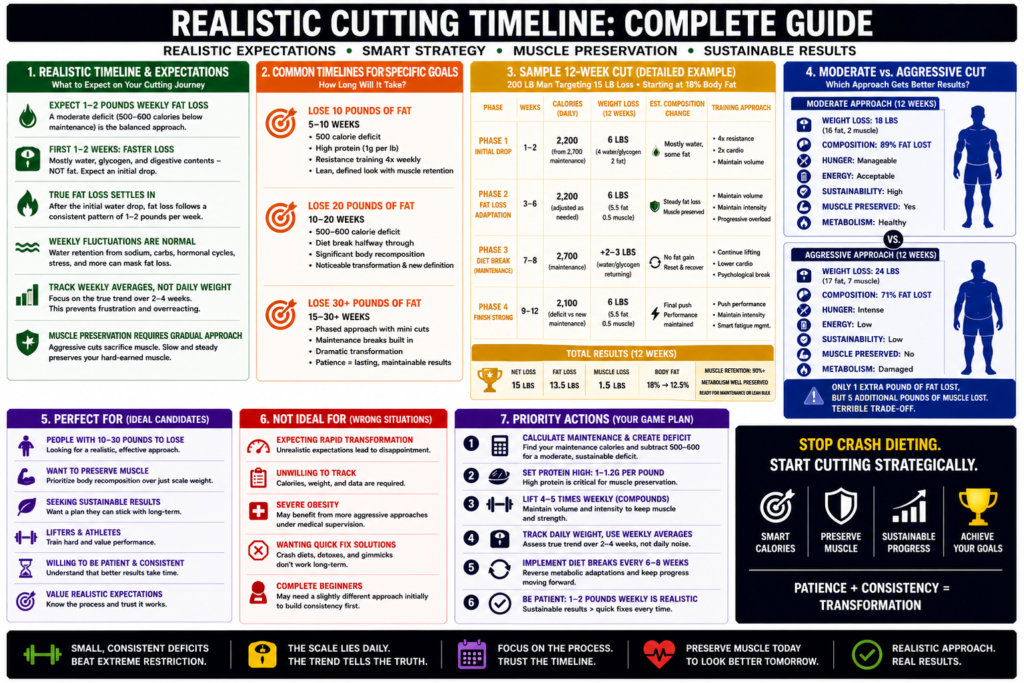
✅ Expect 1-2 Pounds Weekly Fat Loss With Moderate Deficit (500-600 Calories Below Maintenance)
✅ First 1-2 Weeks Show Faster Loss (Mostly Water, Glycogen, Digestive Contents)
✅ True Fat Loss Settles Into Consistent Pattern (After Initial Water Drop)
✅ Weekly Fluctuations Are Normal (Water Retention Masks Fat Loss)
✅ Track Weekly Averages, Not Daily Weight (True Trend Over 2-4 Weeks)
✅ Muscle Preservation Requires Gradual Approach (Aggressive Cuts Sacrifice Muscle)
Perfect For:
- People With 10-30 Pounds To Lose
- Those Wanting To Preserve Muscle Mass
- Anyone Seeking Sustainable, Maintainable Results
- Lifters Who Train Hard And Value Performance
- People Willing To Be Patient For Better Outcomes
Not Ideal For:
- Those Expecting Rapid Transformation (Unrealistic)
- People Unwilling To Track Food And Weight (Data Required)
- Anyone With Severe Obesity (May Benefit From More Aggressive Initial Approach Under Medical Supervision)
- Those Wanting “Quick Fix” Solutions (They Don’t Work Long-Term)
The Realistic Timeline For Common Goals:
Lose 10 pounds of fat:
- Timeline: 5-10 weeks at 1-2 lbs weekly
- Approach: 500 calorie deficit, high protein (1g/lb), resistance training 4x weekly
- Outcome: Lean, defined physique with muscle retention
Lose 20 pounds of fat:
- Timeline: 10-20 weeks at 1-2 lbs weekly
- Approach: 500-600 calorie deficit, include diet break at halfway point
- Outcome: Significant body transformation, new muscle definition visible
Lose 30+ pounds of fat:
- Timeline: 15-30+ weeks at 1-2 lbs weekly
- Approach: Phased approach with mini-cuts and maintenance breaks
- Outcome: Dramatic transformation, requires patience but achieves lasting results
Sample 12-Week Cut For 200-Pound Man Targeting 15-Pound Loss:
Weeks 1-2:
- Calories: 2,200 (500 deficit from 2,700 maintenance)
- Weight loss: 6 pounds (4 water/glycogen, 2 fat)
- Training: 4x weekly resistance + 2x cardio
Weeks 3-6:
- Calories: 2,200 (adjusted for metabolic adaptation)
- Weight loss: 6 pounds (5.5 fat, 0.5 muscle)
- Training: Maintain volume and intensity
Weeks 7-8 (Diet Break):
- Calories: 2,700 (maintenance)
- Weight gain: 2-3 pounds (mostly water/glycogen returning)
- Purpose: Reverse metabolic adaptations, psychological break
Weeks 9-12:
- Calories: 2,100 (deficit relative to new maintenance)
- Weight loss: 6 pounds (5.5 fat, 0.5 muscle)
- Training: Push performance despite deficit
Total Results:
- Net loss: 15 pounds (13.5 fat, 1.5 muscle)
- Body fat: 18% → 12.5%
- Muscle retention: 90%+
- Metabolism: Well-preserved, ready for maintenance or lean bulk
STOP CRASH DIETING. START CUTTING STRATEGICALLY. USE MODERATE DEFICITS. TRACK WEEKLY AVERAGES. PRESERVE YOUR MUSCLE. ACHIEVE RESULTS YOU CAN MAINTAIN.
Ready To Build A Complete, Customized Cutting Plan That Maximizes Fat Loss While Preserving Every Ounce Of Hard-Earned Muscle, Without Extreme Hunger Or Metabolic Damage? Understanding realistic fat loss timelines is just the foundation. Get a comprehensive cutting system that includes precise calorie and macro calculations for your specific body and goals, periodized deficit strategies that prevent metabolic adaptation, training protocols optimized for muscle retention during cuts, hunger management techniques that make adherence effortless, and science-based refeed and diet break schedules that keep your metabolism healthy. Stop wasting time with crash diets that destroy muscle and wreck your metabolism. Start cutting intelligently with a proven approach that delivers the lean, muscular physique you actually want.
REFERENCES
SECTION 1 — Metabolic adaptation: adaptive thermogenesis, NEAT suppression, and hormonal disruption during cutting
[1] Trexler ET, Smith-Ryan AE & Norton LE — PMC/Journal of the International Society of Sports Nutrition, 2014 Comprehensive review of metabolic adaptations accompanying caloric restriction in athletes; total daily energy expenditure consistently decreases beyond the magnitude predicted by weight loss alone, a phenomenon termed adaptive thermogenesis; NEAT decreases with energy deficit and spontaneous physical activity may remain suppressed even after returning to ad libitum feeding, contributing to weight regain; key hormonal adaptations include reductions in leptin, thyroid hormones, and testosterone, and elevations in ghrelin and cortisol, all of which resist further fat loss and promote regain; recommends against excessive calorie restriction and supports moderate deficits with periodic refeeds as strategies to minimize adaptation; provides the primary mechanistic framework for the article’s Metabolic Adaptation Reality section and the case for gradual fat loss https://pmc.ncbi.nlm.nih.gov/articles/PMC3943438/
SECTION 2 — High protein intake preserves lean mass during caloric restriction
[2] Mettler S, Mitchell N & Tipton KD — PubMed/Medicine and Science in Sports and Exercise, 2010 RCT in 20 lean, resistance-trained male athletes undergoing a 2-week caloric restriction (60% of energy requirements); athletes consuming approximately 2.3 g protein per kg per day lost only 0.3 kg of lean body mass compared to 1.6 kg in the group consuming approximately 1.0 g per kg per day, despite similar fat mass losses of roughly 1.4 kg in both groups; the higher protein intake provided a five-fold greater lean mass preservation with no difference in fat loss; established the quantitative evidence that protein intake approximately double the RDA dramatically protects muscle during aggressive caloric restriction, directly supporting the article’s recommendations for protein intake of 1 to 1.2 g per pound during cutting https://pubmed.ncbi.nlm.nih.gov/19927027/
[3] Longland TM et al. — PMC/American Journal of Clinical Nutrition, 2016 RCT in 40 overweight young men completing a 4-week protocol with a 40% caloric deficit and 6 days per week of intensive training; the high protein group (2.4 g/kg/day) gained 1.2 kg of lean mass while losing 4.8 kg of fat; the control protein group (1.2 g/kg/day) maintained lean mass while losing 3.5 kg of fat; the high protein group achieved simultaneous fat loss and muscle gain despite a 40% energy deficit; the most striking demonstration that high protein intake combined with resistance training can fully prevent muscle loss and even produce muscle gain during aggressive cutting, providing the evidence base for the article’s muscle preservation recommendations https://pmc.ncbi.nlm.nih.gov/articles/PMC4807704/
SECTION 3 — Sleep deprivation increases hunger, ghrelin, and caloric intake
[4] Schmid SM et al. — PubMed/Journal of Sleep Research, 2008 Crossover experiment in 9 healthy normal-weight men comparing 7 hours of sleep, 4.5 hours of sleep, and total sleep deprivation; plasma ghrelin levels were 22% higher after total sleep deprivation compared to 7 hours of sleep; self-reported hunger was significantly greater after total deprivation than after 7 hours or 4.5 hours of sleep; leptin levels were not significantly different across conditions; a single night of sleep restriction is sufficient to elevate the hunger-stimulating hormone ghrelin and subjective hunger, providing the hormonal mechanism supporting the article’s claims that sleep deprivation disrupts appetite regulation and undermines dietary adherence during cutting https://pubmed.ncbi.nlm.nih.gov/18564298/
SECTION 4 — Glycogen and water account for initial rapid weight loss during caloric restriction
[5] Kreitzman SN, Coxon AY & Szaz KF — PubMed/American Journal of Clinical Nutrition, 1992 Controlled study examining the composition of early weight loss during caloric restriction; a large proportion of early weight loss is attributed to glycogen depletion and associated water loss; each gram of glycogen is stored with approximately 3 to 4 grams of water, so a decrease in carbohydrate intake rapidly depletes glycogen stores and produces disproportionately large early weight loss that does not reflect fat tissue loss; over time, fat oxidation becomes the primary driver of weight loss; provides the mechanistic basis for the article’s explanation of why 4 to 8 pounds are often lost in the first 1 to 2 weeks of cutting and why this rapid initial drop is not fat but glycogen-bound water https://pubmed.ncbi.nlm.nih.gov/1386186/



Leave a Reply
You must be logged in to post a comment.