Wondering if you should eat fruit before lifting? The answer depends on which fruit you choose.
You want natural, healthy fuel for your workout. Fruit seems like the obvious choice.
But you’ve heard conflicting advice. “Fruit before training is great!” vs. “Fruit will make you sluggish!” Which is it?
The confusion comes from:
- Not all fruits are equal for training
- Timing matters significantly
- Individual digestion varies
- Marketing hype around “superfoods”
The truth is simpler: Some fruits provide excellent pre-workout fuel (high carbs, moderate fiber, quick digestion). Others are too low in carbs or too high in fiber, leaving you underfueled or bloated. The difference between eating a banana vs. an avocado before training dramatically affects your performance.
In this comprehensive guide, I’ll explain whether you should eat fruit before training (and why), reveal the best fruits for pre-workout fuel (ranked by effectiveness), show you which fruits to avoid (and why they sabotage performance), provide the optimal timing window (30-60 minutes explained), and address whether fruit juice works (whole fruit vs. juice debate).
Whether you’re trying to maximize performance, fuel properly, or just understand pre-workout nutrition better, understanding fruit timing is valuable.
Let’s optimize your pre-workout fruit strategy.
TABLE OF CONTENTS
- 1. Banana (The Classic Choice)
- 2. Apple (The Sustained Energy Choice)
- 3. Papaya (The Digestive-Friendly Choice)
- 4. Orange (The Vitamin C Powerhouse)
- 5. Grapes (The Quick Sugar Hit)
- 6. Mango (The Tropical Energy Bomb)
- 7. Kiwi (The Vitamin C Champion)
- 8. Pineapple (The Anti-Inflammatory Option)
- Quick Comparison Table
- The Bottom Line: Fruit Works If You Choose Wisely
Should You Eat Fruit Before Training?
The short answer: Yes, but it’s not mandatory.
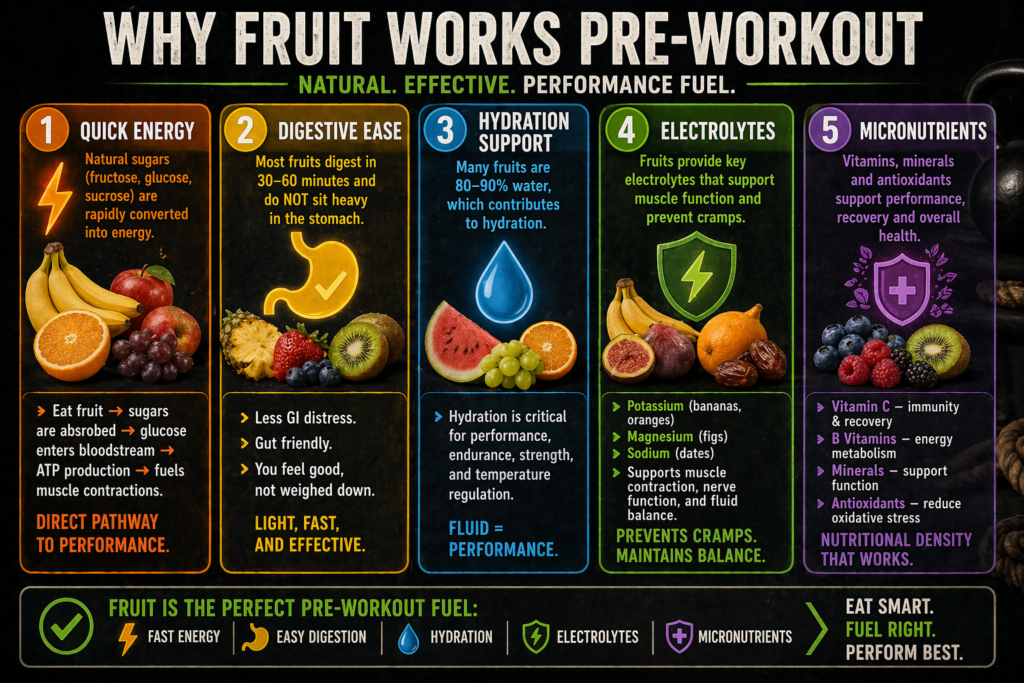
Why Fruit Works Pre-Workout
Reason 1: Quick energy source
- Fruits contain natural sugars (fructose, glucose, sucrose)
- Rapidly converted to energy
- Available during training
- Fast-acting fuel
The mechanism:
- Eat fruit → Sugars absorbed → Glucose in bloodstream
- Glucose enters muscle cells
- ATP production (cellular energy)
- Fuels muscle contractions
- Direct energy pathway
Reason 2: Digestive ease
- Most fruits digest quickly (30-60 minutes)
- Don’t sit heavy in stomach
- Less likely to cause GI distress than complex meals
- Gut-friendly
Reason 3: Hydration support
- Many fruits 80-90% water content
- Contributes to hydration
- Important for performance
- Fluid provision
Reason 4: Electrolyte content
- Potassium (bananas, oranges)
- Magnesium (bananas, figs)
- Sodium (dates)
- Supports muscle function and prevents cramps
- Electrolyte balance
Reason 5: Micronutrient boost
- Vitamins (C, B vitamins)
- Minerals
- Antioxidants
- Support overall performance and recovery
- Nutritional density
When Fruit Isn’t Necessary
You don’t need fruit if:
Your training is <60 minutes:
- Glycogen stores sufficient
- Fasted training works fine for some
- Not essential
You’ve eaten a meal 2-3 hours prior:
- Already have adequate fuel
- Fruit would be extra
- Not needed
You train better fasted:
- Individual variation exists
- Some perform better without food
- Personal preference
You’re in a cut and saving calories:
- Pre-workout carbs not mandatory
- Can train effectively in deficit
- Optional fuel
The principle:
- Fruit helps performance (especially >60 min sessions)
- But not strictly required
- Individual experimentation
- Test what works for you
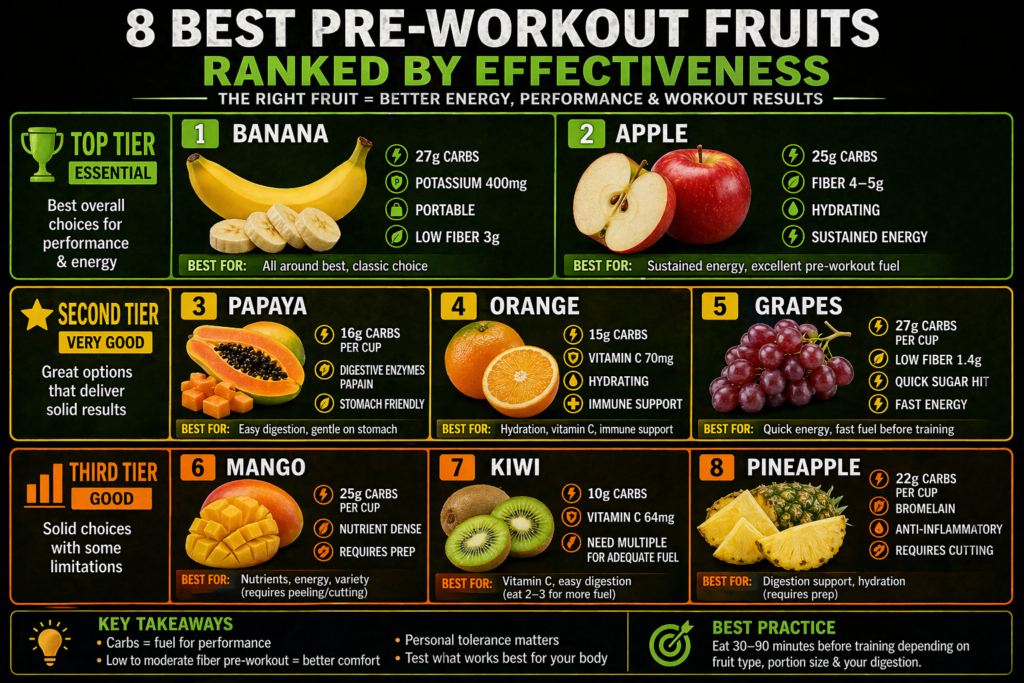
The 8 Best Fruits for Pre-Workout
Ranked by effectiveness.
1. Banana (The Classic Choice)
Why it’s #1:
Carbohydrate content:
- Medium banana: ~27g carbs
- Primarily glucose and fructose
- Quick energy
- High fuel density
Potassium:
- ~400mg per banana
- Prevents muscle cramps
- Supports muscle contraction
- Electrolyte provision
Digestibility:
- Low fiber for a fruit (3g)
- Easy digestion
- Minimal GI distress
- Stomach-friendly
Practicality:
- Portable (natural wrapper)
- No prep needed
- Available everywhere
- Affordable
- Ultimate convenience
Timing:
- 30-45 minutes before training
- Riper = faster digestion (more simple sugars)
- Less ripe = slower release (more resistant starch)
- Flexible timing
The verdict: Best all-around pre-workout fruit. Hard to beat.
2. Apple (The Sustained Energy Choice)
Why it works:
Carbohydrate content:
- Medium apple: ~25g carbs
- Primarily fructose
- Steady energy release
- Moderate fuel
Fiber balance:
- 4-5g fiber
- Not too much, not too little
- Soluble and insoluble blend
- Gradual energy release without GI issues
- Optimal fiber level
Hydration:
- 85% water
- Contributes to fluid intake
- Hydrating
Practicality:
- Very portable
- No refrigeration needed
- Easy to eat
- Widely available
- Highly convenient
Timing:
- 45-60 minutes before training
- Slightly more fiber than banana (needs more digestion time)
- Standard window
The verdict: Excellent choice for sustained energy without blood sugar spike/crash.
3. Papaya (The Digestive-Friendly Choice)
Why it works:
Carbohydrate content:
- 1 cup papaya: ~16g carbs
- Natural sugars
- Quick energy
- Moderate carbs
Digestive enzymes:
- Contains papain
- Aids protein digestion
- Reduces bloating
- Gut support
Low fiber relative to carbs:
- 3g fiber per cup
- Easy digestion
- Gentle on stomach
Potassium:
- ~360mg per cup
- Electrolyte support
- Mineral provision
Timing:
- 30-45 minutes before training
- Fast digestion
- Quick absorption
The verdict: Excellent for those with sensitive stomachs or digestive issues.
4. Orange (The Vitamin C Powerhouse)
Why it works:
Carbohydrate content:
- Medium orange: ~15g carbs
- Natural sugars
- Quick energy
- Moderate fuel
Vitamin C:
- 70mg per orange (100%+ DV)
- Antioxidant protection
- Supports immune function
- Immune support
Hydration:
- 85% water content
- Juicy and refreshing
- Hydrating
Fiber:
- 3g fiber
- Manageable amount
- Digestible
Practicality:
- Portable (though messier than banana/apple)
- No equipment needed
- Relatively convenient
Timing:
- 45-60 minutes before training
- Standard window
The verdict: Great all-rounder with immune-boosting benefits.
5. Grapes (The Quick Sugar Hit)
Why they work:
Carbohydrate content:
- 1 cup grapes: ~27g carbs
- High glucose content
- Very fast energy
- Rapid fuel
Low fiber:
- Only 1.4g fiber per cup
- Minimal digestion time
- Quick absorption
Hydration:
- 80% water
- Hydrating
Practicality:
- Pre-portioned (natural snack size)
- Portable in container
- No prep
- Convenient
The downside:
- Takes longer to eat than banana (unless you’re fast)
- Can be messy
- Less practical than top choices
Timing:
- 30-45 minutes before training
- Fast digestion
- Quick window
The verdict: Excellent for quick energy if you don’t mind the eating time.
6. Mango (The Tropical Energy Bomb)
Why it works:
Carbohydrate content:
- 1 cup mango: ~25g carbs
- Natural sugars
- Quick energy
- High fuel
Vitamins:
- Vitamin C, A, folate
- Antioxidants
- Nutrient-dense
Taste:
- Very palatable
- Easy to consume
- Enjoyable
The downside:
- Less practical (requires cutting)
- Seasonal availability
- Can be messy
- Inconvenience factor
Timing:
- 45-60 minutes before training
- Standard window
The verdict: Excellent if prep time isn’t an issue and you enjoy the taste.
7. Kiwi (The Vitamin C Champion)
Why it works:
Carbohydrate content:
- 1 medium kiwi: ~10g carbs
- Natural sugars
- Moderate fuel
Vitamin C:
- 64mg per kiwi
- Even higher density than oranges
- Immune powerhouse
Digestive enzymes:
- Contains actinidin
- Aids protein digestion
- Gut support
The downside:
- Need to eat multiple for adequate carbs
- Less practical (fuzzy skin or need to cut)
- Moderate convenience
Timing:
- 30-45 minutes before training
- Standard window
The verdict: Good choice but need 2-3 for adequate pre-workout carbs.
8. Pineapple (The Anti-Inflammatory Option)
Why it works:
Carbohydrate content:
- 1 cup pineapple: ~22g carbs
- Natural sugars
- Quick energy
- Good fuel
Bromelain:
- Anti-inflammatory enzyme
- May reduce muscle soreness
- Aids digestion
- Recovery support
Hydration:
- 86% water
- Hydrating
The downside:
- Requires prep (cutting)
- Can cause mouth irritation if eaten in large amounts
- Moderate convenience
Timing:
- 45-60 minutes before training
- Standard window
The verdict: Great if you have pre-cut pineapple or don’t mind prep.
Quick Comparison Table
| Fruit | Carbs (per serving) | Fiber | Practicality | Best For |
|---|---|---|---|---|
| Banana | 27g | 3g | ⭐⭐⭐⭐⭐ | All-around best |
| Apple | 25g | 4-5g | ⭐⭐⭐⭐⭐ | Sustained energy |
| Papaya | 16g/cup | 3g | ⭐⭐⭐ | Sensitive stomachs |
| Orange | 15g | 3g | ⭐⭐⭐⭐ | Vitamin C boost |
| Grapes | 27g/cup | 1.4g | ⭐⭐⭐⭐ | Quick energy |
| Mango | 25g/cup | 3g | ⭐⭐ | Taste preference |
| Kiwi | 10g each | 2g | ⭐⭐⭐ | High vitamin C |
| Pineapple | 22g/cup | 2g | ⭐⭐ | Anti-inflammatory |
Fruits to Avoid Before Training
Not all fruits are ideal pre-workout.
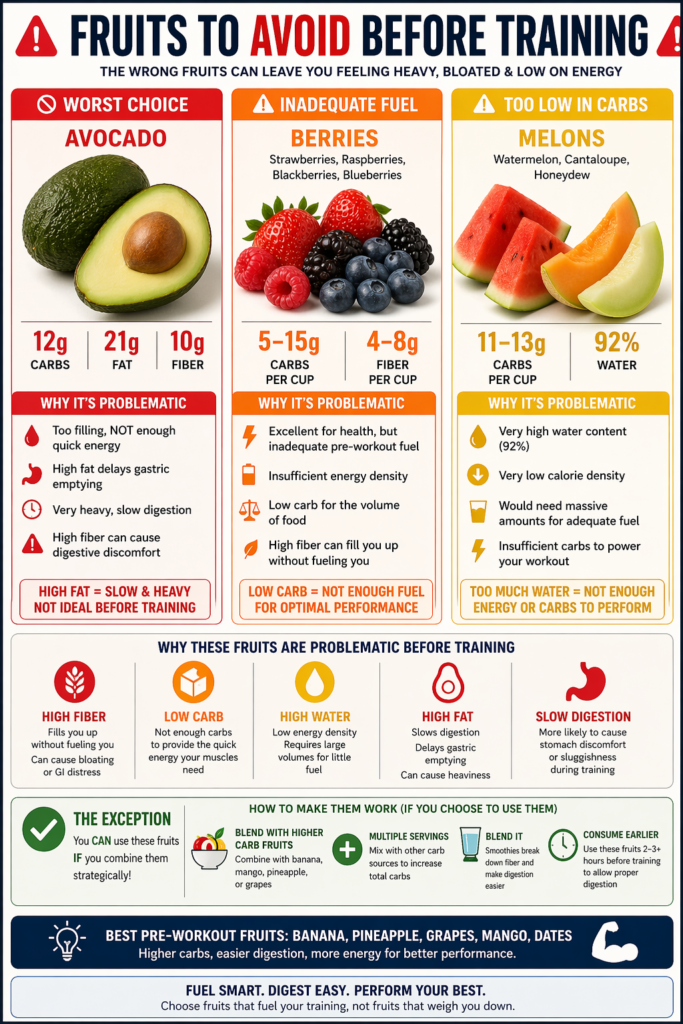
The Problem Fruits
Category 1: High-fiber, low-carb fruits
- Make you feel full without providing adequate fuel
- Slow digestion
- Potential GI distress
- Energy insufficient
Category 2: High-fat fruits
- Slow gastric emptying
- Heavy feeling
- Not ideal pre-workout
- Digestive burden
Fruits to Minimize or Avoid
1. Avocado
- 12g carbs per avocado
- 21g fat
- 10g fiber
- Very heavy, slow digestion
- Too filling, not enough quick energy
2. Berries (strawberries, raspberries, blackberries, blueberries)
- Low carb (5-15g per cup)
- High fiber (4-8g per cup)
- Excellent for health but inadequate pre-workout fuel
- Insufficient energy density
3. Watermelon
- Only 11g carbs per cup
- 92% water
- Very low calorie density
- Would need to eat massive amounts for adequate fuel
- Too low in carbs
4. Cantaloupe/Honeydew
- Similar to watermelon
- ~13g carbs per cup
- Too low for adequate pre-workout fuel
- Insufficient carbs
5. Peach
- ~15g carbs per peach
- Would need multiple for adequate fuel
- Not as practical as banana/apple
- Borderline insufficient
6. Lemon/Lime
- Almost no carbs
- Used for flavoring, not fuel
- Not a fuel source
The Exception
You can still use these fruits IF:
- Blend them with higher-carb fruits (banana, mango)
- Add to oatmeal or yogurt
- Combine multiple servings
- Mixed consumption
Example smoothie:
- 1 banana (27g carbs)
- 1 cup berries (10g carbs)
- 1 cup milk (12g carbs)
- Total: 49g carbs (adequate for training)
- Combined approach
Optimal Timing: When to Eat Fruit Before Training
Timing significantly affects performance.
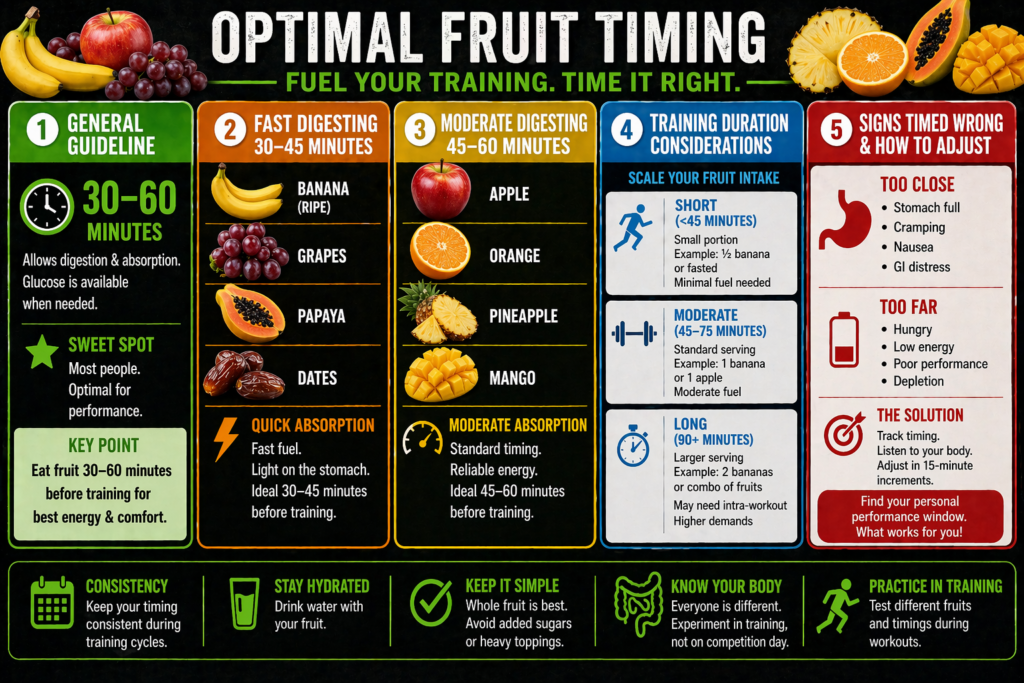
The 30-60 Minute Window
General recommendation:
- Eat fruit 30-60 minutes before training
- Allows digestion and absorption
- Glucose available when needed
- Standard protocol
Why this window:
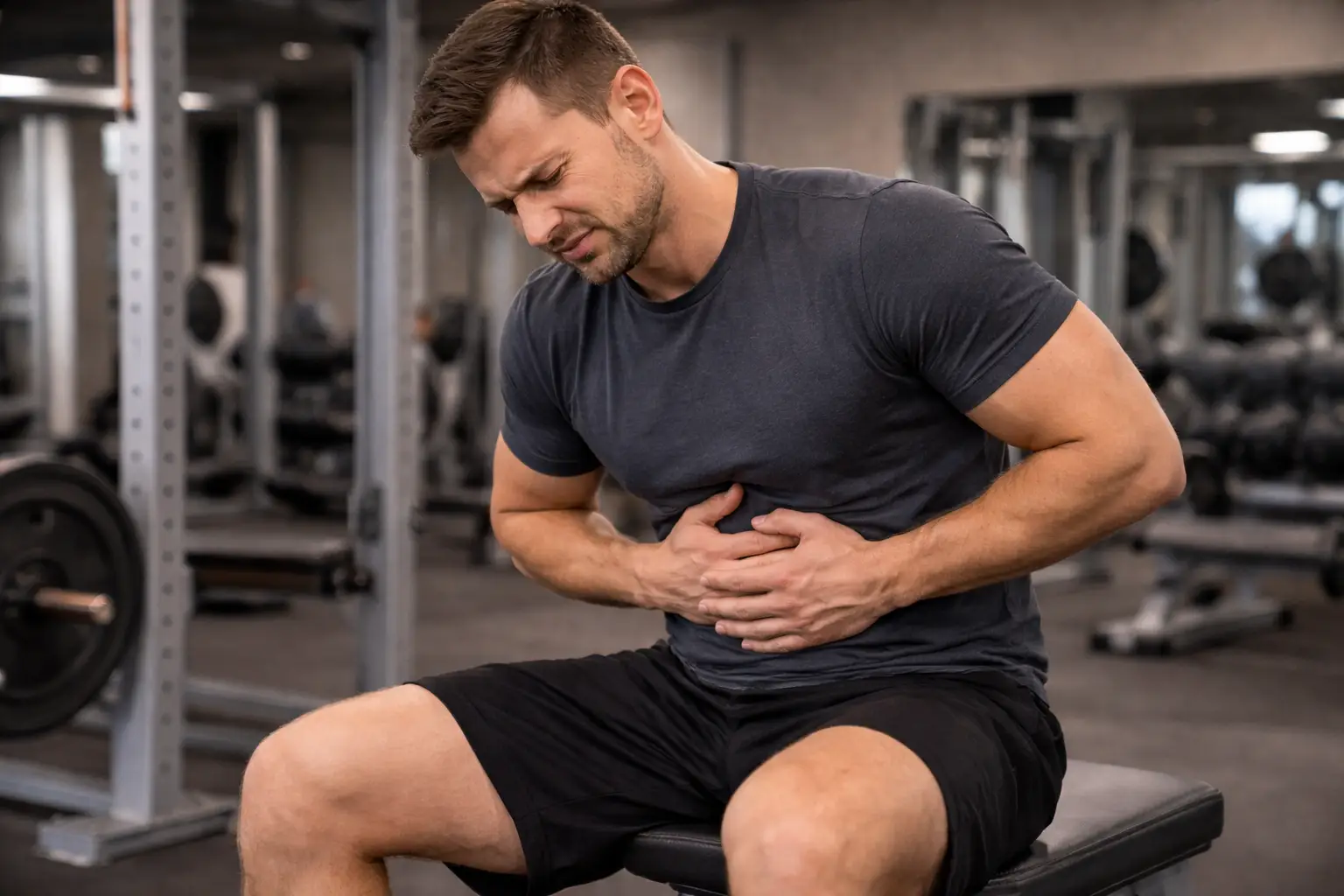
- Too close (<30 min): May cause GI distress
- Too far (>90 min): Energy may be partially depleted
- 30-60 min: Sweet spot for most people
- Optimal timing
Timing by Fruit Type
Fast-digesting fruits (30-45 minutes):
- Banana (ripe)
- Grapes
- Papaya
- Dates
- Quick absorption
Moderate-digesting fruits (45-60 minutes):
- Apple
- Orange
- Pineapple
- Mango
- Standard timing
The individual factor:
- Some digest faster than others
- Experiment with timing
- Adjust based on how you feel
- Personal variation
Training Duration Considerations
Short sessions (<45 minutes):
- Smaller portion (1/2 banana, small apple)
- Or can even train fasted
- Minimal fuel needed
Moderate sessions (45-75 minutes):
- Standard fruit serving (1 banana, 1 apple)
- Moderate fuel
Long sessions (90+ minutes):
- Larger serving (2 bananas, large apple + orange)
- May need additional intra-workout carbs
- Higher fuel demands
Signs You Timed It Wrong
Too close (ate too soon before training):
- Stomach feels full/heavy
- Cramping
- Nausea
- GI distress
Too far (ate too long before):
- Hungry during training
- Low energy
- Poor performance
- Energy depletion
The solution:
- Track timing and how you feel
- Adjust by 15-minute increments
- Find personal optimal window
- Individualized timing
Whole Fruit vs. Fruit Juice: Which Is Better?
The debate settled.
Why Whole Fruit Wins
Reason 1: Fiber content
- Whole fruit contains all fiber
- Slows sugar absorption
- Prevents blood sugar spike/crash
- More sustained energy
- Glycemic control
Reason 2: Satiety
- Fiber creates fullness
- Prevents overeating
- Reduces appetite during training
- Appetite regulation
Reason 3: Nutrient density
- Whole fruit has all nutrients (peel, pulp)
- Juice removes many
- Complete nutrition
Reason 4: Calorie control
- Easy to over-consume juice (drink 3 oranges worth in seconds)
- Hard to eat 3 whole oranges quickly
- Portion control
Reason 5: Dental health
- Juice bathes teeth in sugar
- Whole fruit less concentrated sugar exposure
- Tooth protection
When Juice Can Work
Acceptable scenarios:
Very close to training (15-20 minutes):
- Need quick sugar, no fiber bulk
- Juice absorbs faster
- Emergency fuel
During long training (90+ minutes):
- Intra-workout carbs
- Juice easier to consume while training
- Mid-workout fuel
Post-workout immediately:
- Fast-absorbing carbs beneficial
- Replenish glycogen quickly
- Recovery fuel
Digestive issues with whole fruit:
- Some people struggle with fiber pre-workout
- Juice eliminates this
- Individual tolerance
The Juice Problem
Commercial juices:
- Often no fiber removed
- Added sugars common
- Pasteurization destroys some nutrients
- Essentially sugar water
- Nutrient-poor
“Not from concentrate” still:
- Lacks fiber
- Concentrated calories
- Easy overconsumption
- Still problematic
Fresh-squeezed is better but:
- Still lacks fiber
- Still concentrated
- Still not as good as whole fruit
- Improved but not ideal
The Verdict
General recommendation:
- Whole fruit > Fresh juice > Commercial juice
- Juice only in specific situations (listed above)
- Default to whole fruit
- Whole fruit preferred
The exception:
- If you genuinely prefer juice and perform well with it
- Personal preference matters
- Monitor blood sugar and energy
- Individual variation allowed
Sample Pre-Workout Fruit Protocols
Put it into practice.
Protocol 1: The Classic (30-60 min before)
What to eat:
- 1 medium banana
- Simple and effective
Why it works:
- 27g carbs
- Easy digestion
- Portable
- Proven effectiveness
- Standard protocol
Who it’s for:
- Everyone
- Default choice
- Universal
Protocol 2: The Sustained Energy (45-60 min before)
What to eat:
- 1 medium apple
- Steady fuel
Why it works:
- 25g carbs
- Fiber for sustained release
- Hydrating
- Stable energy
Who it’s for:
- Those who prefer slower energy release
- Longer training sessions
- Endurance focus
Protocol 3: The Combo (45-60 min before)
What to eat:
- 1/2 banana
- 1/2 apple
- Best of both
Why it works:
- ~26g carbs total
- Mix of quick and sustained
- Variety
- Balanced approach
Who it’s for:
- Those who want variety
- Optimal energy profile
- Advanced strategy
Protocol 4: The High-Fuel (60 min before)
What to eat:
- 2 bananas
- OR 1 banana + 1 cup grapes
- Maximum carbs
Why it works:
- 50+ g carbs
- High energy provision
- Intense training fuel
Who it’s for:
- Long training sessions (90+ min)
- High-intensity work
- Larger athletes
- High demand training
Protocol 5: The Smoothie (60-90 min before)
What to blend:
- 1 banana
- 1/2 cup berries
- 1 cup milk (dairy or plant)
- 1 scoop whey protein (optional)
- Liquid meal
Why it works:
- 50-70g carbs
- 20-30g protein if added
- Easy to consume
- Complete pre-workout meal
- All-in-one
Who it’s for:
- Those who prefer liquid
- Need protein too
- Longer time before training
- Comprehensive approach
Protocol 6: The Minimalist (30 min before)
What to eat:
- 1 cup grapes
- Quick and light
Why it works:
- 27g carbs
- Very fast digestion
- Minimal stomach load
- Speed option
Who it’s for:
- Sensitive stomachs
- Very close to training time
- Quick energy needs
- Fast approach
The Bottom Line: Fruit Works If You Choose Wisely
After explaining everything:
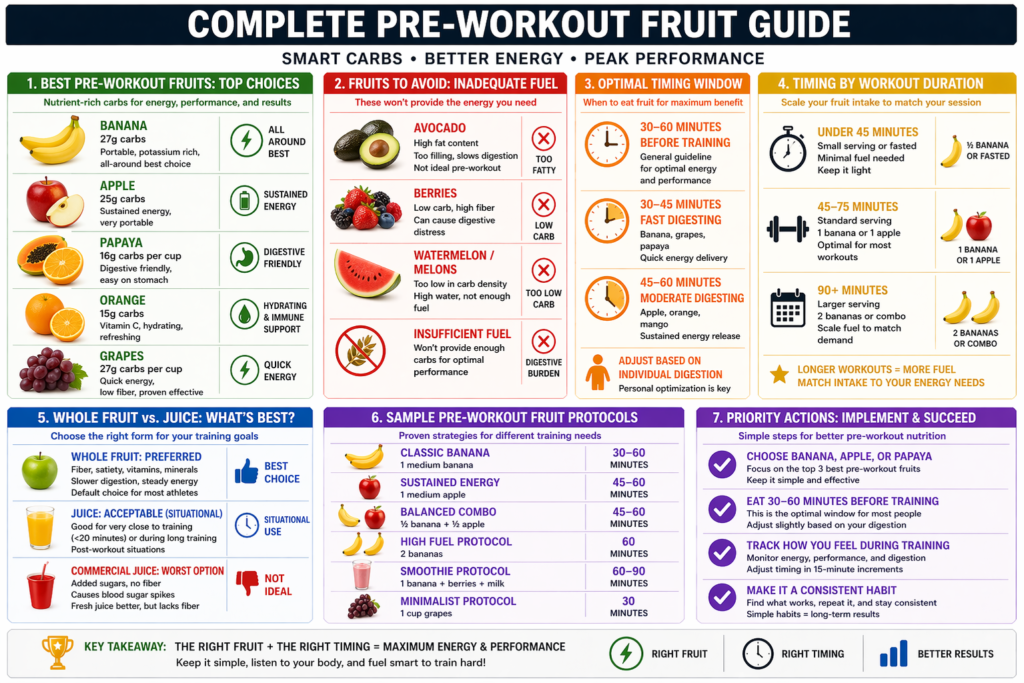
The truth about pre-workout fruit:
✅ Fruit is excellent pre-workout fuel IF you choose the right ones (high carb, moderate fiber)
✅ Best fruits: banana, apple, papaya, orange, grapes (proven effectiveness)
✅ Avoid: berries, avocado, watermelon, melons (too low carb or too high fat/fiber)
✅ Timing matters: 30-60 minutes before training (optimal absorption window)
✅ Whole fruit beats juice (fiber, nutrients, satiety)
Key takeaways:
Should you eat fruit pre-workout:
- Yes, but not mandatory
- Provides quick energy (natural sugars)
- Hydration support (high water content)
- Electrolytes (potassium, magnesium)
- Easy digestion (most fruits)
- Beneficial but optional
The 8 best pre-workout fruits:
- Banana (27g carbs, portable, potassium-rich)
- Apple (25g carbs, sustained energy, very portable)
- Papaya (16g/cup carbs, digestive-friendly, papain enzyme)
- Orange (15g carbs, vitamin C powerhouse, hydrating)
- Grapes (27g/cup carbs, quick energy, low fiber)
- Mango (25g/cup carbs, nutrient-dense, taste)
- Kiwi (10g/each carbs, vitamin C champion, actinidin)
- Pineapple (22g/cup carbs, bromelain, anti-inflammatory)
- Top choices
Fruits to avoid pre-workout:
- Avocado (high fat, too filling)
- Berries (low carb, high fiber)
- Watermelon (too low carb density)
- Melons (insufficient carbs)
- Peach (borderline insufficient)
- Inadequate fuel
Optimal timing:
- 30-60 minutes before training (general guideline)
- Fast-digesting: 30-45 min (banana, grapes, papaya)
- Moderate: 45-60 min (apple, orange, mango)
- Adjust for individual digestion
- Personal optimization
Timing by training duration:
- <45 min: Small serving or fasted (minimal fuel needed)
- 45-75 min: Standard serving (1 banana, 1 apple)
- 90+ min: Larger serving (2 bananas or combo)
- Scaled to demand
Whole fruit vs. juice:
- Whole fruit preferred (fiber, satiety, nutrients)
- Juice acceptable: Very close to training (<20 min), during long training, post-workout
- Commercial juice worst (added sugars, no fiber)
- Fresh juice better but still lacks fiber
- Whole fruit default
Sample protocols:
- Classic: 1 banana 30-60 min before
- Sustained: 1 apple 45-60 min before
- Combo: 1/2 banana + 1/2 apple 45-60 min before
- High-fuel: 2 bananas 60 min before
- Smoothie: Banana + berries + milk 60-90 min before
- Minimalist: 1 cup grapes 30 min before
- Multiple approaches
Priority actions:
- Choose one fruit from top 3 (banana, apple, papaya)
- Eat 30-60 minutes before training
- Track how you feel during training
- Adjust timing if needed (15-min increments)
- Make it consistent habit
- Implementation plan
STOP OVERTHINKING PRE-WORKOUT NUTRITION. EAT A BANANA 45 MINUTES BEFORE TRAINING. TRACK PERFORMANCE. ADJUST AS NEEDED. SIMPLE AND EFFECTIVE.
Ready to build a complete pre-workout nutrition system with carbohydrate timing strategies, meal planning protocols, performance optimization techniques, and individualized approaches based on training duration, intensity, and personal digestion? Understanding pre-workout fruit is just the beginning. Get comprehensive nutrition guidance for maximizing training performance. Stop guessing about pre-workout nutrition. Start fueling strategically.
REFERENCES
SECTION 1 — Carbohydrate availability from fruit sugars: fructose and glucose kinetics during exercise
[1] Gonzalez JT & Betts JA — PMC/Nutrients, 2019 Review of fructose co-ingestion to increase carbohydrate availability during exercise; in the fasted state the main fuels during exercise are muscle glycogen and plasma glucose, which can be depleted by 40 to 60% within 90 minutes of moderate to high-intensity work; because glucose and fructose are absorbed via different intestinal transport proteins (SGLT1 and GLUT5 respectively), combining them increases total carbohydrate absorption capacity; fructose is rapidly converted in the intestine and liver to glucose and lactate before entering systemic circulation; fruits that contain both glucose and fructose (bananas, apples, grapes, mangoes) therefore utilize dual absorption pathways for faster delivery of energy to working muscles; provides the biochemical foundation for the article’s recommendation of glucose-and-fructose-containing fruits as superior pre-workout fuel https://pmc.ncbi.nlm.nih.gov/articles/PMC6852172/
[2] Levine L et al. — PubMed/Journal of Applied Physiology, 1983 Controlled exercise study comparing pre-workout ingestion of fructose, glucose, and water 45 minutes before 30 minutes of running at 75% VO2max; fructose ingestion produced significantly less muscle glycogen depletion than glucose or placebo, and maintained stable blood glucose and insulin concentrations throughout exercise, avoiding the reactive hypoglycemia observed with glucose at the onset of exercise; the authors attributed the glycogen-sparing effect of fructose to its more stable glycemic and insulinemic profile; provides direct experimental evidence that the fructose naturally present in pre-workout fruits (apples, grapes, bananas) offers a stable blood glucose response without the mid-exercise crash associated with pure glucose https://pubmed.ncbi.nlm.nih.gov/6662766/
SECTION 2 — Glycogen stores and exercise capacity: why carbohydrate fuel matters
[3] Podlogar T & Wallis GA — PMC/Nutrients, 2022 Review of the role of muscle and liver glycogen as rate-limiting fuels for moderate to high-intensity exercise; muscle and liver glycogen together account for only approximately 4% of the body’s total energy reserves but are the primary substrate for high-intensity exercise ATP production; glycogen depletion below 100 mmol/kg dry weight causes a 20 to 50% reduction in performance at 80% peak power intensity; exogenous carbohydrate ingestion before and during exercise spares endogenous glycogen stores and sustains exercise capacity; glucose and glucose-derived carbohydrates are the most effective sources for replenishing muscle glycogen; establishes why eating carbohydrate-rich fruits before training meaningfully impacts performance for sessions lasting more than 45 to 60 minutes https://pmc.ncbi.nlm.nih.gov/articles/PMC5409683/
SECTION 3 — Banana as pre-workout fuel: carbohydrate delivery and the potassium-cramp claim
[4] Miller KC — PMC/Journal of Athletic Training, 2012 Controlled crossover study of 9 euhydrated men examining whether eating bananas after exercise in the heat increases plasma potassium or prevents exercise-associated muscle cramps (EAMCs); consuming 1 or 2 bananas post-exercise produced only marginal and delayed increases in plasma potassium concentration, occurring 30 to 60 minutes after ingestion; plasma glucose, however, increased significantly within 15 minutes of consuming 2 servings, suggesting the primary acute benefit of bananas is carbohydrate delivery rather than potassium replacement; the authors concluded that eating bananas is unlikely to be an effective treatment for exercise-associated muscle cramping; this study nuances the article’s claims about bananas and cramp prevention, showing the carbohydrate content is the primary mechanistic driver of performance benefit, not the potassium-cramp pathway https://pmc.ncbi.nlm.nih.gov/articles/PMC3499889/
SECTION 4 — Pre-exercise carbohydrate timing for performance
[5] Schabort EJ et al. — PubMed/Medicine and Science in Sports and Exercise, 2000 RCT comparing exercise performance 3 hours versus 6 hours after a moderate-to-high carbohydrate meal; performance was significantly better in the 3-hour condition, with higher carbohydrate availability, greater glycogen utilization, and longer time to exhaustion; the 6-hour condition produced lower insulin levels and reliance on fat, reducing performance capacity; establishes that pre-exercise carbohydrate timing within a 2 to 3 hour window meaningfully enhances exercise capacity compared to eating too early; contextualizes the article’s 30 to 60 minute fruit timing recommendation by showing that carbohydrate availability at the time of training directly determines performance outcome https://pubmed.ncbi.nlm.nih.gov/10861332/


Leave a Reply
You must be logged in to post a comment.