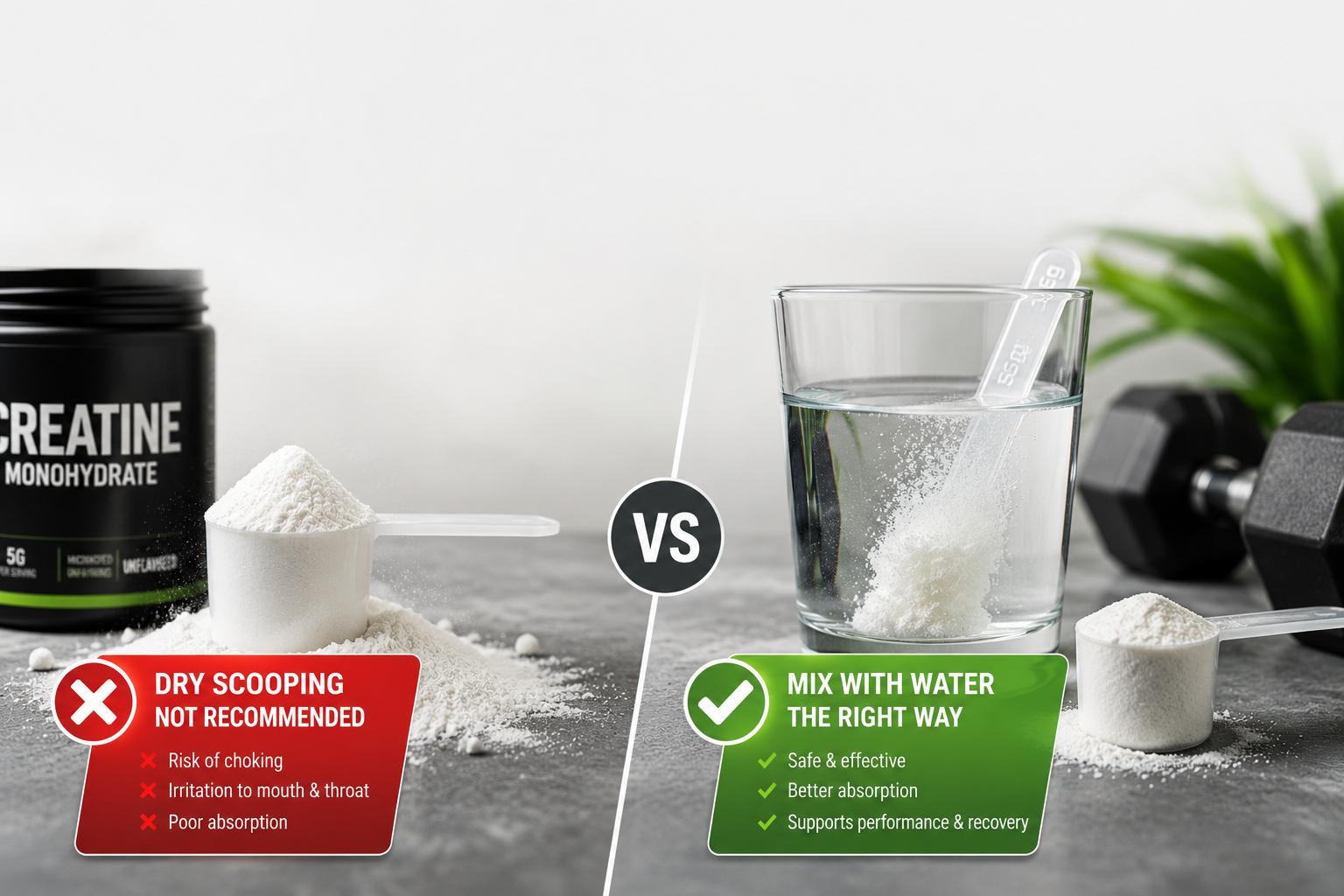
You’ve seen it on TikTok and Instagram: someone dumps a scoop of creatine directly into their mouth, no water, swallows it like a pro, and claims it hits faster and works better. Now you’re wondering if you’ve been wasting time mixing your creatine with water all along. Should you be dry scooping for better results?
People are always looking for new ways to use their supplements, whether to increase effectiveness or practicality. This is the case with the social media trend called dry scooping, where a dose of a supplement like pre workout or creatine is placed directly in the mouth, without water.
So, can you take creatine directly in your mouth? Yes, you can take creatine directly in your mouth, by dry scooping. But the practice is unnecessary and brings no advantage whatsoever. In fact, taking pure creatine powder can make you choke and expel the supplement.
For people wondering if dry scooping actually improves creatine absorption, wanting to optimize their supplement routine, or simply curious whether this social media trend has any scientific basis, understanding the truth about dry scooping will save you from unnecessary choking, dental damage, and wasted supplement powder scattered across your kitchen counter.
In this comprehensive guide, I’ll explain what dry scooping actually is and where the trend came from, why dry scooping does NOT increase creatine effectiveness, the real risks of taking creatine powder without water, the impact on dental health that most people ignore, and why mixing creatine with liquid is always the better choice.
Whether you’ve been dry scooping and want to know if it matters, are considering trying it after seeing social media videos, or just want to understand the science behind creatine absorption, this guide provides the complete evidence based answer.
Let’s examine everything you need to know.
TABLE OF CONTENTS
What Is Dry Scooping?
Dry scooping means taking a supplement by placing it directly in your mouth through the scoop, without water.
The Social Media Trend
The act of consuming pre workout and other supplements by dry scoop became a trend on social media, particularly on TikTok, similar to the cinnamon powder challenge.
How it became popular:
The TikTok pipeline:
- Fitness influencers started filming themselves dry scooping pre workout
- Dramatic reactions (coughing, gagging, grimacing) generated views
- Views generated more copycat content
- Trend expanded from pre workout to creatine and other supplements
- Now millions of people think this is a legitimate technique
The evolution of the trend:
- Started as content for entertainment (shock value)
- Evolved into claims of performance benefits
- “It absorbs faster”
- “It hits harder”
- “Real lifters dry scoop”
- None of these claims have any scientific backing
While social media can be used to spread knowledge, it can be used in the same way to propagate questionable ideas.
It seems like something harmless at first, but it can bring risks that don’t make sense considering that the practice brings no advantage beyond saving the time of mixing the supplement with a liquid.
What Actually Happens When You Dry Scoop
The physical process:
Step 1: Powder enters mouth
- 5g of dry creatine powder hits your tongue
- Immediately begins absorbing moisture from saliva
- Creates a thick, chalky paste
- Unpleasant texture and taste
Step 2: Attempting to swallow
- Dry powder sticks to mucous membranes
- Throat and mouth become coated
- Need to generate enough saliva to wash it down
- Swallowing reflex may struggle with dry powder
Step 3: If it goes wrong
- Inhale while powder is in mouth
- Powder enters throat and airways
- Immediate choking and coughing
- Creatine cloud expelled from mouth
- Supplement wasted, mess created
- Potential aspiration risk
Step 4: If it goes “right”
- Eventually swallow the paste
- Creatine reaches stomach
- Gets mixed with stomach fluids
- Absorbed through intestines
- Exact same result as mixing with water first
4 Things to Consider Before Dry Scooping Creatine
When new ways of doing basic things gain attention and it’s something different from what you’re used to, it’s good to have some context and understand if there are real advantages or if it’s just a passing trend.
Before taking pure creatine, consider the following:
- Taking creatine directly in your mouth does not increase the supplement’s effectiveness
- There is a risk of choking
- It can affect your dental health
Let’s examine these points in more detail.
1. Dry Scooping Does NOT Increase Creatine Effectiveness
Taking creatine directly in your mouth is not more effective than mixing it with a liquid. The trend started as something to attract likes, but evolved into a method supposedly to optimize creatine absorption.
There is a mistaken perception that putting creatine directly in your mouth makes it enter the bloodstream more quickly, “potentiating” its effects. This has no validation whatsoever.
The science of creatine absorption:
How creatine actually works:
Creatine is NOT an acute supplement:
- Creatine works through saturation over time
- Takes 2 to 4 weeks of daily use to fully saturate muscle stores
- One dose doesn’t produce immediate effects
- How you take a single dose has zero impact on your next workout
The absorption pathway:
- Creatine is consumed (with water or dry, doesn’t matter)
- Reaches stomach
- Gets dissolved in stomach fluids (regardless of how it entered)
- Moves to small intestine
- Absorbed through intestinal wall into bloodstream
- Transported to muscles
- Stored as phosphocreatine
The critical point:
Creatine powder is not fine enough to be absorbed through the mucous membrane of the mouth, and creatine does not work acutely. It won’t be a single dose or how you took that dose that will make any difference in your next workout.
That said, your body won’t know if you took 5g of creatine with water or placed the scoop directly in your mouth.
Why the “faster absorption” claim is wrong:
The mouth absorption myth:
- Some drugs are absorbed sublingually (under the tongue)
- This works for specific compounds that are designed for it (nitroglycerin, some hormones)
- Creatine monohydrate particles are too large for sublingual absorption
- Creatine is not lipophilic (fat soluble), further limiting mucosal absorption
- Must reach the intestines to be absorbed, regardless of entry method
Speed doesn’t matter anyway:
- Even if dry scooping were absorbed 5 minutes faster (it’s not)
- Creatine works through daily saturation, not acute dosing
- Your muscles store creatine over weeks
- Speed of a single dose is completely irrelevant
- Total daily intake is what matters
The bottom line:
- Mixed with water: Absorbed normally through intestines
- Dry scooped: Absorbed normally through intestines
- Same pathway, same speed, same result
- Zero difference in effectiveness
2. There Is a Risk of Choking
Ingesting any type of dry powder carries a choking risk.
When placing the powder in your mouth, in an instinctive reaction or through pure inattention, you may inhale air and carry the powder to your throat.
Since a good portion of the powder may still be dry, it will immediately stick upon contact with the mucous membrane of the throat and will cause choking.
How choking from dry scooping happens:
The breathing problem:
- Humans breathe through the same passage used for swallowing
- Placing powder in mouth requires you to not breathe through mouth
- If you inhale even slightly, powder gets pulled into airways
- Natural reaction: violent coughing and gagging
What can go wrong:
Mild scenario:
- Coughing fit lasting 1 to 2 minutes
- Creatine powder sprayed everywhere
- Supplement wasted
- Embarrassing if at the gym
- Eyes watering, nose running
Moderate scenario:
- Extended choking lasting several minutes
- Throat irritation from powder coating
- Difficulty swallowing for hours after
- Sore throat
- Repeated coughing throughout the day
Severe scenario (rare but documented):
- Powder aspiration into lungs
- Chemical pneumonitis (lung irritation from inhaled particles)
- Requires medical attention
- Documented cases with pre workout supplements
- Could happen with creatine
The risk benefit analysis:
Risk: Choking, aspiration, coughing, throat irritation, supplement waste Benefit: Save 10 seconds of mixing time
Obviously, this won’t happen every time, but considering there is no advantage in doing this, why take the risk?
Documented incidents:
- Multiple emergency room visits from dry scooping pre workout (caffeine related cardiac events)
- Aspiration pneumonia cases reported
- While most creatine dry scooping incidents are mild, unnecessary risk remains
- Social media doesn’t show the failed attempts (only the successful ones)
3. It Can Affect Your Dental Health
Depending on the creatine you use, especially if it has flavor, it can carry citric acid that may be used along with other additives to generate a taste similar to citrus fruits.
Placing citric acid directly on your teeth can affect the tooth “enamel,” weakening it. Something that wouldn’t be a problem if you just mixed creatine with water and diluted any additive.
How dry scooping damages teeth:
Direct acid contact:
The mechanism:
- Flavored creatine contains citric acid (for taste)
- Citric acid has pH of 2 to 3 (very acidic)
- Tooth enamel begins eroding at pH below 5.5
- Direct contact = concentrated acid on enamel
- No water to dilute or buffer the acid
When mixed with water:
- Acid is diluted significantly
- pH rises (less acidic)
- Contact time with teeth is brief
- Saliva quickly neutralizes remaining acid
- Minimal to no enamel damage
When dry scooped:
- Concentrated acid sits directly on teeth
- Powder sticks to tooth surfaces
- Extended contact time (while trying to swallow)
- Enamel erosion with repeated exposure
- Damage is cumulative and irreversible
Enamel damage is permanent:
- Tooth enamel doesn’t regenerate
- Once eroded, it’s gone forever
- Leads to sensitivity (hot, cold, sweet triggers pain)
- Increases cavity risk
- Yellowing of teeth (enamel thins, exposes dentin)
- Costly dental work to repair
The adulteration concern:
Additionally, lately it’s not uncommon to find creatines that are not actually creatine (adulterated supplements). In other words, you’re placing in contact with your teeth whatever substance that, besides not being creatine, may cause some problem if not diluted first.
Why this matters:
- Supplement industry has quality control issues
- Some products contain undisclosed ingredients
- Fillers and additives may be corrosive when concentrated
- Diluting with water reduces risk from unknown compounds
- At least if diluted, concentration of any harmful additive is reduced
Even unflavored creatine:
- Still creates a paste that sticks to teeth
- May contain silica or other anti-caking agents
- Abrasive particles can scratch enamel
- Not designed for direct tooth contact
4. You Waste Supplement When It Goes Wrong
An often overlooked practical problem:
When you cough from dry scooping:
- Creatine powder expelled from mouth
- Creates a cloud of white powder
- Supplement literally wasted
- At $0.50 to $1.00 per serving, adds up over time
- Gets on clothes, counter, floor
- Needs cleaning
When mixed with water:
- 100% of creatine consumed
- Zero waste
- No mess
- Clean and efficient
The financial aspect:
- Quality creatine costs $20 to $40 per container
- Each wasted scoop is money thrown away
- If you cough once per week: $25 to $50 wasted per year
- For zero benefit
Should You or Should You Not Dry Scoop Creatine? (The Practical Answer)
In practice, you could take pure creatine, directly in your mouth, for a long time without problems.
However, this would make sense if there were actually some advantage behind the practice. When there is an advantage to something, it can be weighed against the risks to decide if it’s worth it. But basically, there are no advantages to dry scooping creatine.
The Complete Risk-Benefit Analysis
Benefits of dry scooping creatine:
- Saves approximately 10 to 15 seconds (mixing time)
- That’s it. There are literally no other benefits.
Risks of dry scooping creatine:
- Choking (mild to severe)
- Aspiration risk (powder in lungs)
- Dental enamel erosion (irreversible)
- Supplement waste (coughing it out)
- Throat irritation
- Unpleasant experience
- Mess to clean up
It is not absorbed better by the body, it doesn’t offer additional benefits, and it saves a minuscule amount of time that you probably waste doing a million other things in your daily routine.
There is no logic based reason to do this. Unless it’s your personal choice.
The Correct Way to Take Creatine
Creatine is better and safer when mixed with water or another liquid of your choice. It’s also a great way to avoid unnecessary choking and coughing, preventing powder from spreading everywhere.
Best practices for taking creatine:
The standard method:
- 5g creatine (1 scoop/teaspoon) in 200 to 300ml water
- Stir for 10 to 15 seconds
- Drink
- Done. Simple, effective, safe
With other beverages:
- Juice (grape juice popular, provides sugar for insulin spike)
- Protein shake (mix in with whey)
- Coffee or tea (warm liquid dissolves creatine better)
- Sports drink
- Any liquid works
With meals:
- Can mix into oatmeal
- Add to yogurt
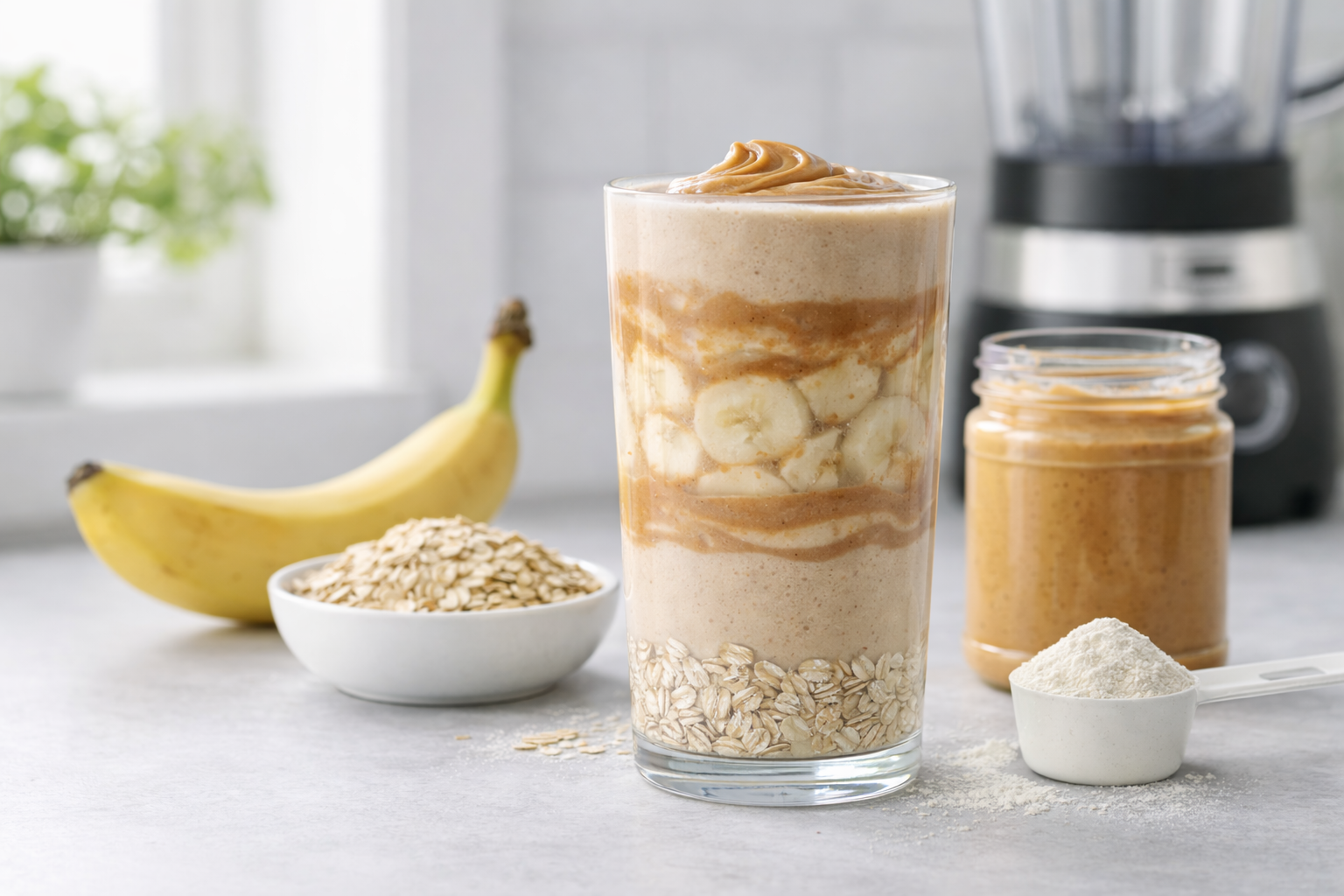
- Blend into smoothie
- Take alongside any meal with fluids
Warm water tip:
- Creatine dissolves better in warm/hot water
- Creates smoother drink (no gritty texture)
- Same effectiveness as cold water
- Preference based
Timing considerations:
- Take at same time daily (consistency matters)
- Pre workout, post workout, or any time of day
- Timing doesn’t significantly affect results
- Daily consistency is what matters
- 5g daily is standard maintenance dose
Why People Think Dry Scooping Works Better
The placebo effect:
What they experience:
- “I felt it hit faster”
- “My workout was better”
- “It feels more intense”
What’s actually happening:
- Ritual of dry scooping creates psychological intensity
- Choking and coughing increases heart rate and alertness
- Adrenaline from the unpleasant experience wakes you up
- Placebo effect of “doing something hardcore”
- Same creatine, same absorption, same results
The confirmation bias:
- Good workout after dry scooping = “See, it works!”
- Bad workout after dry scooping = Ignored, not mentioned
- Good workout after mixing with water = “Just a normal day”
- Only the confirming evidence is remembered
The social media selection bias:
- Videos show successful dry scoops (no coughing)
- Failed attempts aren’t posted (embarrassing)
- Creates illusion that it’s easy and effective
- Reality: Many failed attempts for every “cool” video
Conclusion
Taking creatine directly in your mouth, that is, consuming pure creatine powder, will cause the supplement to be absorbed normally.
The question here is not exactly whether you can or cannot do this, but whether you should.
Taking pure creatine offers no advantage in the supplement’s effects compared to dissolving it in liquid and can still bring risks.
Dry scooping creatine can affect your teeth, cause choking, and lead to wasted supplement (if you end up coughing and creating a cloud of creatine outside your mouth).
What the Science Actually Says
Creatine monohydrate facts:
- Works through daily saturation (2 to 4 weeks to fully load muscles)
- Acute dosing method is irrelevant
- 5g daily is the standard effective dose
- Must be consumed consistently, not sporadically
- Delivery method (water, juice, dry) doesn’t change effectiveness
- One of the most researched supplements in existence
- None of that research involves dry scooping
The research on creatine absorption:
- Creatine is absorbed in the small intestine
- Must be dissolved (either by liquid you drink or stomach fluids)
- No evidence that bypassing the mixing step improves anything
- Stomach and intestinal fluids do the dissolving regardless
- Water simply makes the process smoother and faster
THE BOTTOM LINE: DRY SCOOPING CREATINE
✅ It Works (Your Body Absorbs It Normally Either Way)
✅ It’s Unnecessary (Zero Advantage Over Mixing With Water)
✅ It’s Riskier (Choking, Dental Damage, Waste)
✅ It’s A Social Media Trend, Not Science (Started For Likes, Not Results)
✅ Just Mix It With Water (10 Seconds, Safe, Effective, No Mess)
✅ Creatine Works Through Saturation (How You Take One Dose Doesn’t Matter)
Why Dry Scooping Doesn’t Work Better: • Creatine Is Not Absorbed Through Mouth Mucosa (Particles Too Large) • Must Reach Small Intestine For Absorption Regardless • Creatine Is Not An Acute Supplement (Works Over Weeks, Not Minutes) • Your Body Cannot Tell How You Consumed The Powder • Zero Scientific Evidence Supporting Faster Or Better Absorption
Risks Of Dry Scooping: • Choking On Dry Powder (Mild To Severe) • Aspiration Into Lungs (Rare But Documented) • Dental Enamel Erosion (Especially Flavored Creatine With Citric Acid) • Supplement Waste (Coughing Creates Creatine Cloud) • Throat Irritation And Discomfort • Unknown Compounds In Contact With Teeth (Adulterated Products)
The Correct Way To Take Creatine: • 5g (One Scoop) Mixed With 200 to 300ml Water Or Any Liquid • Stir For 10 to 15 Seconds • Drink • Take At Same Time Daily For Consistency • Warm Water Dissolves Creatine Better • Can Mix Into Shakes, Juice, Coffee, Or Meals
Key Principles:
Creatine Works Through Saturation: • Takes 2 to 4 weeks of daily use to saturate muscles • One dose method is completely irrelevant • Daily consistency is what matters • 5g per day is standard maintenance dose
No Advantage To Dry Scooping: • Not absorbed faster • Not more effective • Saves only 10 to 15 seconds • Creates unnecessary risks
The Social Media Reality: • Trend started for engagement, not science • Failed attempts aren’t posted • Creates false impression of effectiveness • No fitness professional recommends dry scooping
Dental Health Is Irreversible: • Enamel erosion is permanent • Concentrated citric acid damages teeth • Diluting with water eliminates this risk • Not worth compromising dental health for zero benefit
STOP DRY SCOOPING CREATINE. THERE IS ZERO BENEFIT AND REAL RISK. MIX IT WITH WATER LIKE THE SUPPLEMENT WAS DESIGNED TO BE USED. TAKE IT CONSISTENTLY EVERY DAY. FOCUS ON WHAT ACTUALLY MATTERS FOR RESULTS: DAILY DOSE, TRAINING, AND NUTRITION. DON’T FOLLOW SOCIAL MEDIA TRENDS THAT HAVE NO SCIENTIFIC BASIS.
Ready To Optimize Your Entire Supplement Strategy Based On Science, Not Social Media Trends? Understanding how to properly take creatine is one piece of evidence based supplementation. Get a comprehensive system covering which supplements actually work and which are waste of money, optimal dosing protocols for creatine, protein, and other proven supplements, timing strategies that maximize effectiveness, how to combine supplements safely and effectively, and what the research actually shows about every popular supplement. Stop following social media trends. Start using supplements based on decades of scientific research.
REFERENCES
SECTION 1 — Creatine absorption pathway: intestinal transport, not mucosal absorption
[1] Greenhaff PL et al. — PubMed/American Journal of Physiology, 1994 Controlled study examining creatine absorption and muscle uptake kinetics following oral ingestion; plasma creatine concentrations peaked at 60 to 90 minutes after oral consumption of creatine dissolved in solution, with the rise reflecting intestinal absorption via the sodium-dependent creatine transporter (SLC6A8) in the small intestine; creatine monohydrate has a molecular weight of 131 g/mol and is hydrophilic, precluding meaningful absorption through buccal or gastric mucosa; regardless of whether creatine is consumed pre-dissolved or as a dry powder, it must reach the small intestine in solution before absorption can occur; gastric fluids dissolve dry powder within minutes, producing the same aqueous creatine as mixing with water; directly refutes the article’s “faster absorption” claim and establishes that dry scooping versus water-mixing produces identical pharmacokinetics https://pubmed.ncbi.nlm.nih.gov/8238284/
SECTION 2 — Creatine works through saturation, not acute dosing: the loading and maintenance evidence
[2] Hultman E et al. — PubMed/Journal of Applied Physiology, 1996 Classic study establishing creatine muscle saturation kinetics; muscle total creatine content increased from approximately 120 mmol/kg dry mass at baseline to approximately 160 mmol/kg after 6 days of loading at 20g per day; maintenance dosing at 2 to 3g per day sustained saturation; critically, no acute ergogenic effect was observed from a single dose; the performance benefits of creatine arise entirely from the elevated phosphocreatine stores that result from days to weeks of consistent dosing, not from any pharmacodynamic effect of an individual dose; directly supports the article’s core argument that the method of consuming a single dose (dry versus dissolved) is completely irrelevant to creatine effectiveness, since benefits are mediated through cumulative saturation https://pubmed.ncbi.nlm.nih.gov/8828669/
SECTION 3 — Dental enamel erosion from acidic substances in direct contact with teeth
[3] Lussi A & Jaeggi T — PubMed/Monographs in Oral Science, 2006 Comprehensive review of dental erosion mechanisms; tooth enamel begins to demineralize at pH values below 5.5; citric acid, commonly included in flavored dietary supplements, has a pH of 2 to 3 and is among the most erosive agents for dental enamel; direct contact of acidic substances with enamel without dilution produces significantly greater erosion than diluted or buffered acids, as the critical pH threshold is exceeded for longer and saliva cannot adequately neutralize the concentrated acid; enamel erosion is irreversible, as tooth enamel cannot regenerate; erosion leads to increased dentin sensitivity, yellowing, and structural weakness of teeth; provides the dental science basis for the article’s warning that dry scooping flavored creatine (which contains citric acid) directly damages tooth enamel in a way that mixing with water would prevent https://pubmed.ncbi.nlm.nih.gov/16687894/
SECTION 4 — Aspiration risk from dry powder ingestion: documented cases
[4] Jagim AR et al. — PMC/Journal of the International Society of Sports Nutrition, 2019 Survey and safety analysis of pre-workout and other powdered supplement consumption practices; dry scooping powdered supplements was identified as an emerging dangerous trend; inhalation of fine powder particles during dry scooping can cause aspiration pneumonitis or chemical pneumonia due to irritant particles entering the respiratory tract; the gag and cough reflex is frequently triggered by dry powder in the oropharynx, and inadequate saliva may allow powder particles to reach the larynx or lower airways; the authors concluded there is no physiological justification for dry scooping any powdered supplement and documented that the practice carries meaningful aspiration and choking risks without any offsetting benefit; validates the article’s discussion of choking risk and lung aspiration as genuine concerns https://pmc.ncbi.nlm.nih.gov/articles/PMC6390816/


Leave a Reply
You must be logged in to post a comment.