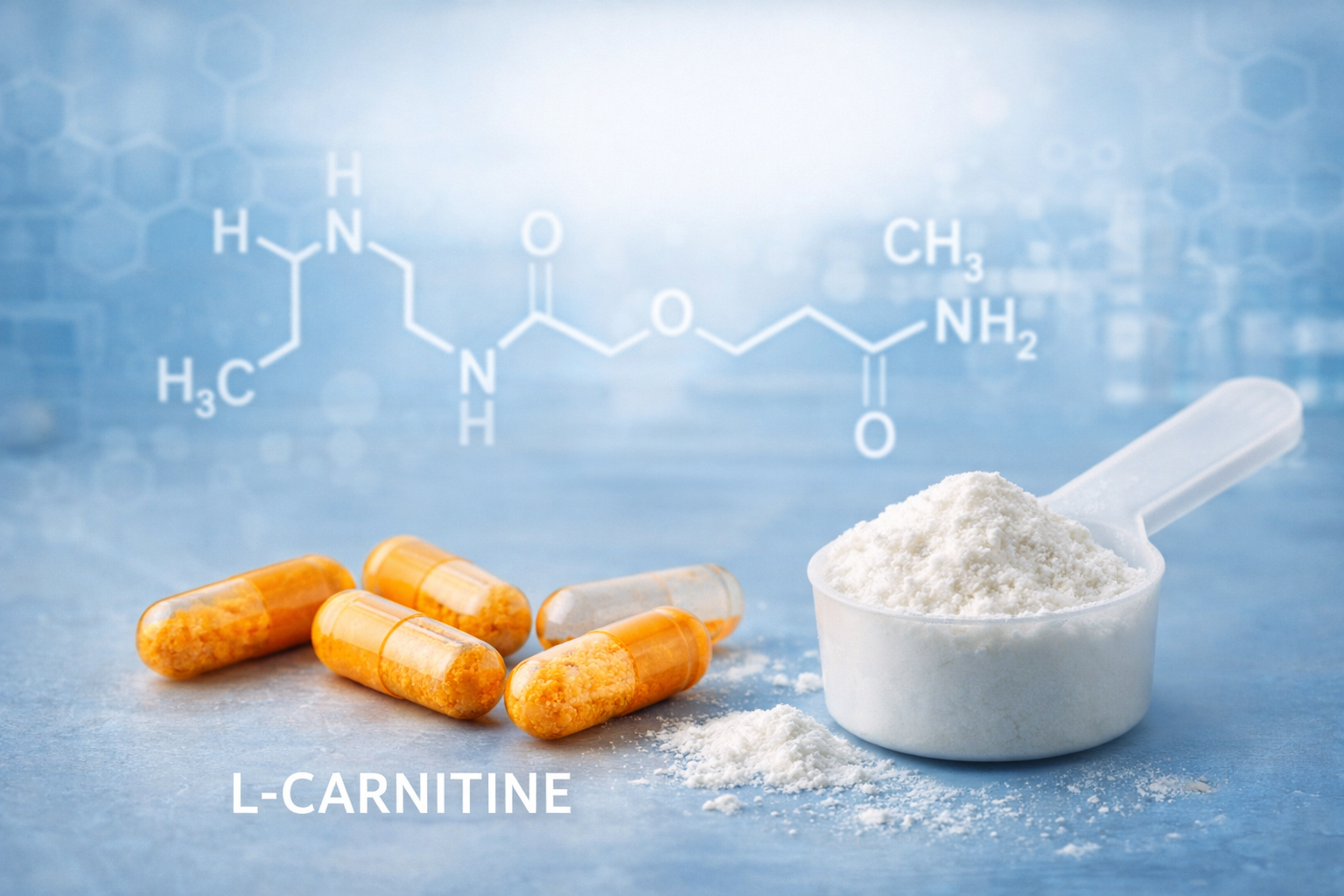
You’ve heard L-carnitine mentioned in supplement stores and seen it in fat burners. Maybe you’ve wondered if it’s just another overhyped supplement or if there’s actually something to it. The marketing promises are everywhere – burn more fat, improve performance, recover faster. But what does the science actually say?
L-carnitine is an amino acid produced by your body that’s also found in foods and supplements. In this comprehensive guide, we’ll examine the real benefits of L-carnitine for bodybuilding and strength training, how to take it properly for maximum effectiveness, correct dosage protocols, whether it actually helps burn fat, potential side effects, and who should (and shouldn’t) consider supplementing with it.
For people serious about optimizing their physique and performance, L-carnitine represents one of the more interesting supplements available. Unlike many overhyped products, L-carnitine actually has legitimate research supporting several performance and body composition benefits. But like all supplements, it only works when used correctly, and the devil is in the details.
In this guide, I’ll cut through the marketing hype and give you the honest, evidence-based truth about L-carnitine. You’ll learn exactly what it does in your body, which benefits are real (and which are exaggerated), how to use it for maximum effectiveness, and whether it’s worth adding to your supplement stack.
Whether you’re trying to get leaner while preserving muscle, improve your training performance, or recover faster between sessions, understanding L-carnitine’s actual effects will help you make an informed decision about whether this supplement deserves a place in your regimen.
Let’s examine the science behind L-carnitine and bodybuilding.
TABLE OF CONTENTS
What Is L-Carnitine and What Does It Do?
L-carnitine is an amino acid-like compound used by the human body to facilitate the transport of fatty acids into the mitochondria – the powerhouses of your cells. Once inside the mitochondria, these fatty acids are converted into usable energy through a process called beta-oxidation.

The Basic Biology
How your body produces L-carnitine:
Your body can synthesize L-carnitine on its own using two other amino acids: lysine and methionine. This endogenous (internal) production happens primarily in your liver and kidneys, then the L-carnitine is distributed throughout your body.
The synthesis requires several cofactors:
- Vitamin C (essential for the process)
- Vitamin B6 (pyridoxine)
- Vitamin B3 (niacin)
- Iron
- Without adequate amounts of these nutrients, L-carnitine production can be impaired
Where L-carnitine is stored in your body:
More than 95% of your body’s L-carnitine reserves are contained in your skeletal muscles (the muscles you use for movement and training). The remaining ~5% is found in small amounts in your blood, liver, heart, and kidneys.
Why this distribution matters: Since most L-carnitine is stored in muscle tissue, this is where it performs its primary functions during exercise. Having adequate muscle L-carnitine levels is crucial for optimal fat metabolism and performance during training.
The Primary Function: Fat Transport and Metabolism
L-carnitine’s main job is to shuttle long-chain fatty acids across the mitochondrial membrane.
The process in detail:
Step 1: Fat mobilization
- When your body needs energy, it breaks down stored triglycerides (body fat) into free fatty acids
- These fatty acids are released into the bloodstream
- They travel to cells that need energy (including muscle cells during exercise)
Step 2: The transport problem
- Mitochondria (where fat is burned for energy) have a double membrane
- Long-chain fatty acids cannot cross this membrane on their own
- They’re too large and the membrane is impermeable to them
- Without a transport system, they can’t be burned for energy
Step 3: L-carnitine to the rescue
- L-carnitine binds to these long-chain fatty acids
- This creates a compound called acyl-carnitine
- The acyl-carnitine complex CAN cross the mitochondrial membrane
- A specialized enzyme system (carnitine palmitoyltransferase, or CPT) facilitates this transport
Step 4: Energy production
- Once inside the mitochondria, the fatty acids are released from L-carnitine
- They undergo beta-oxidation (breakdown) to produce ATP (energy)
- L-carnitine returns to bind more fatty acids
- The cycle continues as long as energy is needed
The practical implication: L-carnitine is absolutely essential for your body to burn fat for energy. Without adequate L-carnitine, fatty acids accumulate outside the mitochondria and cannot be efficiently used for fuel.
Dietary Sources of L-Carnitine
While your body produces L-carnitine, you also obtain it from food, particularly animal products.
High L-carnitine food sources:
Red meat (particularly beef):
- 4 oz beef steak: 56-162 mg L-carnitine
- Highest natural dietary source
- Why beef is so high: Cattle muscle has very high L-carnitine concentrations
Other animal products:
- Pork: 4 oz contains 24-30 mg
- Fish (cod): 4 oz contains 4-7 mg
- Chicken breast: 4 oz contains 3-5 mg
- Dairy (whole milk): 1 cup contains 8 mg
Plant sources:
- Extremely low or negligible amounts
- Avocado: 2 mg per fruit (one of the highest plant sources)
- Whole wheat bread: 0.2 mg per slice
The vegetarian/vegan problem: Since plant foods contain minimal L-carnitine, vegetarians and especially vegans have significantly lower L-carnitine levels compared to meat-eaters. Studies show vegetarians can have 50% lower muscle L-carnitine concentrations. This makes supplementation potentially more beneficial for this population.
Why Supplementation Is Popular in Bodybuilding
L-carnitine’s ability to support fat metabolism makes extra supplementation popular among individuals who train and seek to improve body composition.
The theoretical benefits for bodybuilders:
Enhanced fat burning:
- More L-carnitine available = more fatty acid transport capacity
- Potentially more fat burned during training and rest
- Particularly appealing during cutting phases
Preserved glycogen:
- If more fat is burned for energy, less muscle glycogen is used
- Glycogen preservation may improve endurance and performance
- More glycogen available for high-intensity work
Recovery support:
- L-carnitine may help clear metabolic waste products
- Potential reduction in muscle damage markers
- Faster recovery between training sessions
Improved blood flow:
- Some research suggests L-carnitine increases nitric oxide production
- Better blood flow = more nutrients and oxygen to muscles
- Enhanced “pump” during training
But here’s the critical question: Does supplementing with extra L-carnitine actually increase muscle L-carnitine levels enough to produce these benefits?
The absorption challenge:
Early L-carnitine research showed disappointing results because oral L-carnitine supplementation doesn’t easily increase muscle L-carnitine concentrations. Your body tightly regulates L-carnitine levels, and simply taking more doesn’t automatically mean more gets into your muscles.
The breakthrough:
More recent research discovered that insulin is the key. When insulin levels are elevated (from consuming carbohydrates), muscle cells become much more receptive to taking up L-carnitine from the bloodstream. This discovery completely changed how L-carnitine should be supplemented for maximum effectiveness.
We’ll cover the precise supplementation protocol later, but this insulin-dependent uptake is crucial to understand: L-carnitine won’t work optimally if you just take it with water on an empty stomach. It needs to be consumed with carbohydrates to spike insulin and drive muscle uptake.
The 4 Science-Backed Benefits of L-Carnitine for Bodybuilding
Now let’s examine the actual research-supported benefits of L-carnitine supplementation for people who train with weights. These aren’t theoretical benefits – they’re outcomes demonstrated in human studies.

Benefit 1: Enhanced Fat Burning (Including During Bulking)
L-carnitine’s role as a fat-burning supplement is well-established in the research literature. But the applications go beyond just cutting phases.
During cutting (calorie deficit):
The most obvious application is during fat loss phases when you’re intentionally creating a calorie deficit to lose body fat.
How L-carnitine helps during cuts:
Increases fat oxidation rates:
- Studies show L-carnitine supplementation increases the rate at which your body burns fat for energy
- One study found a 55% increase in fat oxidation during moderate-intensity exercise with L-carnitine supplementation
- More fat burned = potentially faster fat loss (assuming diet is in check)
Transports mobilized fat:
- When you’re in a calorie deficit, your body releases stored fat into the bloodstream
- L-carnitine ensures this fat can actually be transported into mitochondria and burned
- Without adequate L-carnitine, some mobilized fat might not be efficiently utilized
Spares muscle glycogen:
- By burning more fat, you use less glycogen during training
- Preserved glycogen = better training performance despite being in a deficit
- More productive training = better muscle retention during the cut
The research evidence:
A study published in the Journal of Physiology found that L-carnitine supplementation (2g daily for 6 months) combined with carbohydrates increased muscle L-carnitine content by 21% and resulted in:
- 55% increase in fat burning during low-intensity exercise
- 44% decrease in muscle glycogen use
- Significant reduction in lactate accumulation
During bulking (calorie surplus):
This is where L-carnitine becomes particularly interesting and less obvious.
The bulking problem: When you’re eating in a calorie surplus to build muscle, you inevitably gain some body fat along with muscle. The goal is to maximize the muscle-to-fat ratio – building as much muscle as possible while minimizing fat gain.
How L-carnitine helps during bulks:
Limits fat accumulation:
- Even in a surplus, enhanced fat oxidation means you’re burning more of the excess calories as energy rather than storing them all as fat
- The result: “cleaner” bulks with better muscle-to-fat gain ratios
Improves nutrient partitioning:
- Some research suggests L-carnitine improves insulin sensitivity
- Better insulin sensitivity means more nutrients (glucose, amino acids) driven into muscle cells rather than fat cells
- More anabolic nutrients to muscle = more muscle growth
Supports continued high-intensity training:
- Bulking phases involve heavy, glycogen-demanding training
- L-carnitine’s glycogen-sparing effect means you maintain better performance
- Better performance = more muscle-building stimulus
The practical outcome:
You’re unlikely to stay shredded while bulking (that’s not realistic without drugs), but L-carnitine may help you stay leaner than you would otherwise, meaning:
- Shorter cutting phases required after bulking
- Less muscle loss during subsequent cuts
- Better year-round physique
Important reality check: L-carnitine is not magic. If you’re eating 1000+ calories above maintenance and training poorly, L-carnitine won’t prevent fat gain. But when used intelligently with proper training and nutrition, it can optimize your body composition trajectory.
Benefit 2: Improved Performance and Reduced Fatigue
This is one of the most consistently demonstrated benefits of L-carnitine in research: the ability to enhance exercise performance and delay fatigue.
The landmark study from Nottingham:
Researchers measured participants’ ability to resist fatigue during a cycling test. They found that individuals supplementing with L-carnitine were able to cycle 25% longer before exhaustion compared to placebo.
Why this happened (multiple mechanisms):
Increased fat utilization:
- As discussed, L-carnitine increases fat burning during exercise
- Fat is a virtually unlimited fuel source (even lean individuals have thousands of calories stored as body fat)
- Glycogen is limited (maybe 300-500g total in muscles and liver)
- By burning more fat, glycogen is preserved for when you really need it (high-intensity efforts)
Reduced lactate accumulation:
- Lactate buildup is one of the primary causes of muscular fatigue during intense exercise
- The Nottingham study found significantly lower lactate levels with L-carnitine supplementation
- Less lactate = less acidosis in muscles = delayed fatigue
Enhanced ATP regeneration:
- Studies show higher levels of phosphocreatine (PCr) with L-carnitine supplementation
- Phosphocreatine is used to rapidly regenerate ATP (your cells’ energy currency)
- More PCr = faster energy replenishment between sets = better sustained performance
Improved oxygen utilization:
- Some research suggests L-carnitine improves mitochondrial efficiency
- Better oxygen utilization means more ATP produced from the same amount of oxygen
- Enhanced aerobic capacity
What this means for your training:
For endurance/conditioning:
- Longer time to exhaustion on cardio
- More rounds completed in metabolic conditioning
- Better sustained output in CrossFit-style workouts or sports
For strength training:
- More total reps completed across multiple sets
- Better maintenance of power output throughout your workout
- Ability to complete higher-volume training sessions
Example practical application:
Let’s say your typical leg workout has you doing:
- Squats: 4 sets × 8 reps with 315 lbs
- Leg Press: 4 sets × 12 reps
- Lunges: 3 sets × 10 reps per leg
- Leg Extensions: 3 sets × 15 reps
Without L-carnitine, by your third exercise (lunges), you’re already fatigued. You have to reduce weight or reps to complete the workout.
With L-carnitine, you maintain better energy throughout. You complete all planned sets and reps with the intended weights. Over weeks and months, this adds up to significantly more training volume, which translates to more muscle growth.
The research beyond the Nottingham study:
Multiple other studies have confirmed performance benefits:
- 2g L-carnitine daily for 9 weeks increased total work output by 11% in resistance-trained men
- 3g L-carnitine daily improved power output in repeated sprint efforts
- Various studies show reduced ratings of perceived exertion (RPE) – the work feels easier
Benefit 3: Accelerated Muscle Recovery
This might be the most valuable benefit for hard-training individuals, as recovery is often the limiting factor in how frequently and intensely you can train.
The research evidence is particularly strong:
Study 1 – Resistance training recovery:
- Participants took 2g L-carnitine daily or placebo
- Performed eccentric arm exercises (emphasized muscle damage)
- L-carnitine group showed:
- Significantly reduced muscle soreness
- Faster restoration of muscle function
- Lower markers of muscle damage (creatine kinase, myoglobin)
- Reduced oxidative stress markers
Study 2 – Delayed-onset muscle soreness (DOMS):
- 2g L-carnitine taken before and after exercise
- Reduced peak muscle soreness by up to 44%
- Faster recovery of force production
- Participants able to return to training sooner
Study 3 – Markers of muscle damage:
- 1-2g L-carnitine daily significantly reduced:
- Creatine kinase (CK) – enzyme indicating muscle damage
- Lactate dehydrogenase (LDH) – another damage marker
- Myoglobin – protein released from damaged muscle
- C-reactive protein (CRP) – inflammatory marker
The critical point about these studies: They weren’t conducted on sedentary, untrained individuals. These were healthy, resistance-trained men and women with training experience. This means the results actually apply to the population that would consider supplementing with L-carnitine – people who lift weights regularly.
How L-carnitine accelerates recovery (proposed mechanisms):
Reduced oxidative stress:
- Intense training creates reactive oxygen species (ROS) and free radicals
- These cause oxidative damage to muscle cells, contributing to soreness and impaired recovery
- L-carnitine has antioxidant properties, helping neutralize ROS
- Less oxidative damage = faster recovery
Improved blood flow and nutrient delivery:
- L-carnitine increases nitric oxide production (discussed in Benefit #4)
- Enhanced blood flow means better delivery of:
- Oxygen to recovering muscles
- Nutrients (amino acids, glucose) for repair
- Removal of metabolic waste products
- Better nutrient delivery = faster repair
Enhanced cellular energy:
- Recovery is an energy-intensive process
- Repairing damaged muscle fibers requires ATP
- L-carnitine’s support of mitochondrial function ensures adequate ATP for recovery processes
Reduced inflammatory response:
- Some research suggests L-carnitine modulates the inflammatory response to training
- Inflammation is necessary for adaptation, but excessive inflammation delays recovery
- L-carnitine may help maintain the “sweet spot” of inflammation
The practical benefits for your training:
Train more frequently:
- If you recover faster, you can train the same muscle groups more often
- More frequent training = more total volume over time = more growth
Maintain performance across the week:
- Less accumulated fatigue from previous sessions
- Your Thursday training session isn’t compromised by lingering soreness from Monday
- More high-quality training sessions
Higher training volume tolerance:
- Faster recovery allows you to handle more total training volume
- Volume is one of the primary drivers of hypertrophy
- More volume you can recover from = more muscle growth
Less downtime:
- Reduced severe DOMS means you can perform daily activities more comfortably
- Better quality of life during heavy training phases
- Less temptation to skip workouts due to extreme soreness
Example scenario:
Standard leg day recovery without L-carnitine:
- Day 1: Train legs intensely
- Day 2-3: Severe DOMS, difficulty walking
- Day 4-5: Still sore, significantly weakened
- Day 6-7: Finally feeling normal
- Day 8: Can train legs again with good performance
Leg day recovery with L-carnitine supplementation:
- Day 1: Train legs intensely
- Day 2-3: Moderate soreness, manageable
- Day 4-5: Minor soreness, near-normal strength
- Day 6: Fully recovered
- Day 7: Can train legs again at full capacity
Over a year, this means approximately 52 leg workouts without L-carnitine vs. 70+ workouts with L-carnitine. That’s 35% more training frequency, which could translate to substantially more muscle growth.
Benefit 4: Enhanced Blood Flow and Muscle Pump
The performance benefits of L-carnitine don’t come solely from its ability to increase fat burning and decrease glycogen use. It also significantly affects blood flow to working muscles.
Enhanced blood flow matters because:
More blood to muscles during training means:
- More nutrients delivered (glucose for energy, amino acids for recovery)
- More oxygen supplied (aerobic energy production, performance)
- More hormones delivered to target tissues
- Better removal of metabolic waste (lactate, metabolites)
- Enhanced “pump” sensation (cell swelling, which may directly trigger muscle growth)
How L-carnitine improves blood flow:
Mechanism 1: Protects nitric oxide (NO)
Nitric oxide is the primary signaling molecule for vasodilation (widening of blood vessels). More NO = more blood flow.
The problem: NO is susceptible to oxidative damage from reactive oxygen species (ROS). When NO is damaged, it can’t effectively trigger vasodilation.
L-carnitine’s role: Acts as an antioxidant, protecting NO from oxidative damage. More NO survives = better blood flow.
Mechanism 2: Increases NO production
L-carnitine doesn’t just protect existing NO – it actually increases the production of new NO.
How: L-carnitine increases the activity of eNOS (endothelial nitric oxide synthase), the key enzyme involved in NO production in blood vessels.
The result: More NO produced + more NO protected = significantly enhanced vasodilation and blood flow.
The research evidence:
Multiple studies show L-carnitine supplementation increases:
- Plasma NO levels (measurable increase in nitric oxide in the blood)
- Flow-mediated dilation (a measure of blood vessel function and NO activity)
- Muscle tissue oxygenation during exercise
The practical benefits during training:
Enhanced muscle pump:
- The “pump” is primarily increased blood volume in muscle tissue
- More blood flow = more pronounced pump
- Beyond just aesthetics, the pump may stimulate muscle growth through cell swelling (mechanotransduction pathways)
Better nutrient delivery mid-workout:
- During training, muscles need constant glucose delivery for energy
- Enhanced blood flow ensures optimal fuel delivery
- Sustained performance throughout your workout
Improved mind-muscle connection:
- Better blood flow can enhance proprioception (sense of muscle position and contraction)
- Stronger mind-muscle connection = more effective training
Faster intra-workout recovery:
- Between sets, blood flow delivers oxygen and removes metabolites
- Better recovery between sets = more total reps completed
- More work completed = greater training stimulus
Accelerated post-workout recovery:
- The blood flow benefits don’t stop when training ends
- Enhanced circulation after training means:
- Faster delivery of nutrients for recovery
- More efficient removal of damage markers and waste products
- Quicker initiation of the recovery process
Synergistic effects with other supplements:
L-carnitine’s blood flow effects work synergistically with other popular supplements:
L-carnitine + Citrulline/Arginine:
- Both increase NO production through different pathways
- Combined effect greater than either alone
- Many pre-workouts include both for this reason
L-carnitine + Beetroot/Nitrate:
- Dietary nitrates convert to NO through a different pathway than eNOS
- L-carnitine protects and enhances eNOS pathway
- Multiple NO production routes = maximum blood flow
The honest assessment:
The pump and blood flow benefits are real and measurable, but they’re probably the least important of L-carnitine’s four main benefits. Enhanced fat burning, improved performance, and faster recovery likely contribute more to long-term muscle building and body composition than the pump alone.
However, the combination of all four benefits makes L-carnitine a legitimately useful supplement for serious trainees, not just another overhyped product.
How to Take L-Carnitine for Maximum Effectiveness
Understanding what L-carnitine does is one thing; knowing how to actually use it for best results is another. The research is clear: L-carnitine must be taken correctly or you’ll waste your money with minimal results.

The Short Answer (For Those Who Want the Protocol Now)
Dosage: 2-3 grams of L-carnitine
Timing: With the meal or shake that precedes your training
Critical requirement: This meal/shake MUST contain carbohydrates (30-40g minimum)
Also include: 20-30g protein for optimal muscle recovery and insulin response
This can be achieved with:
- A solid food meal (chicken, rice, vegetables)
- OR a shake with protein powder + carbohydrate powder (maltodextrin, dextrose, or highly branched cyclic dextrin)
The Detailed Explanation (Why This Protocol Works)
The early research failure:
Initial L-carnitine studies showed little to no benefit because they failed to adequately increase muscle L-carnitine levels. This happened primarily because the supplement wasn’t taken at the right time with the right foods to maximize absorption.
The insulin discovery:
More recent research revealed that insulin levels must be elevated for adequate amounts of L-carnitine to enter muscle cells, where it performs most of its work.
Why insulin is crucial:
Insulin is the “gatekeeper” for muscle cells:
- Acts like a key that unlocks channels in muscle cell membranes
- Without elevated insulin, muscle cells are relatively impermeable to L-carnitine
- With elevated insulin, L-carnitine uptake increases dramatically
How to elevate insulin:
- Consume carbohydrates (they spike insulin more than any other macronutrient)
- Protein also increases insulin, though less than carbs
- Fat has minimal effect on insulin
The synergistic effect:
Interestingly, the relationship works both ways:
Insulin helps L-carnitine: Elevated insulin drives L-carnitine into muscle cells
L-carnitine helps insulin: L-carnitine supplementation improves insulin’s actions in muscle cells, helping deliver more glucose into muscles alongside more L-carnitine
The result: A positive feedback loop where insulin and L-carnitine enhance each other’s effectiveness.
The Optimal Dosing Protocol
Dosage range:
Minimum effective dose: 1 gram (1000mg)
- Studies show even 1g can provide benefits
- Better than nothing if budget-constrained
Optimal dose: 2-3 grams (2000-3000mg)
- This is the “sweet spot” dose used in most successful research
- Provides maximum benefit without excessive cost or side effect risk
- Recommended for most people
Higher doses: Some research has used up to 4-6 grams daily
- Marginal additional benefits at these higher doses
- Increased cost
- Higher risk of gastrointestinal side effects
- Not recommended unless under professional guidance
Timing and food combination:
Carbohydrates required: 30-40 grams minimum
- Raises insulin sufficiently to drive L-carnitine uptake
- Can be from any carb source (rice, oats, fruit, dextrose, maltodextrin, etc.)
- Faster-digesting carbs (high glycemic) spike insulin more rapidly
Protein recommended: 20-30 grams
- Contributes to insulin spike
- Provides amino acids for muscle recovery and growth
- Makes the meal/shake more balanced
Fat: Minimal or moderate
- Fat doesn’t impair L-carnitine absorption
- But it slows digestion (delays insulin spike)
- Keep fats moderate (10-15g) or minimal in this meal
Timing relative to training:
30-90 minutes pre-workout:
- Meal digesting, insulin elevated
- L-carnitine being absorbed
- Peak L-carnitine and insulin levels align with training
- Optimal timing
Immediately pre-workout (liquid meal):
- If using a shake with fast-digesting carbs (dextrose, maltodextrin)
- Rapid absorption, can consume 15-30 minutes before training
- Convenient option
With post-workout meal:
- Also elevates insulin (from post-workout carbs and protein)
- Can drive L-carnitine uptake
- May support recovery benefits
- Alternative timing if you train fasted or early morning
Sample meal combinations:
Option 1 – Solid food pre-workout meal:
- 6 oz chicken breast (40g protein)
- 1 cup white rice (45g carbs)
- Vegetables
- 2-3g L-carnitine supplement
Option 2 – Liquid pre-workout shake:
- 1 scoop whey protein (25g protein)
- 40g dextrose or maltodextrin (40g carbs)
- 2-3g L-carnitine supplement
- Mix with water
Option 3 – Post-workout meal:
- 8 oz lean beef (50g protein)
- Large sweet potato (50g carbs)
- 2-3g L-carnitine supplement
Forms of L-Carnitine
Not all L-carnitine supplements are created equal. Different forms have different absorption rates and properties.
L-Carnitine L-Tartrate (LCLT):
- Most common form in sports supplements
- Good bioavailability
- Rapid absorption
- Well-researched for performance and recovery
- Recommended form for most people
Acetyl-L-Carnitine (ALCAR):
- Crosses blood-brain barrier more easily
- Potential cognitive benefits
- May support fat burning
- Some users prefer for mental focus
- Slightly more expensive
- Alternative option
L-Carnitine (free form):
- Basic, unbound form
- Good absorption
- Least expensive option
- Works fine for fat burning and performance
- Budget-friendly choice
Propionyl-L-Carnitine:
- May have specific cardiovascular benefits
- Less commonly used in bodybuilding supplements
- Not necessary for most people
Avoid:
- D-Carnitine (biologically inactive, can interfere with L-carnitine)
- Any form with “D-L” or “DL” (mixture of active and inactive forms)
Recommendation: L-Carnitine L-Tartrate is the best choice for bodybuilding purposes. It’s well-researched, effective, reasonably priced, and widely available.
Do You Need to Cycle L-Carnitine?
The short answer: No.
Based on current research, there doesn’t appear to be any need to cycle on and off L-carnitine.
Why cycling isn’t necessary:
No receptor downregulation:
- Unlike stimulants (which cause receptor desensitization), L-carnitine doesn’t appear to lose effectiveness over time
- Your body doesn’t “get used to it” and require more for the same effect
Sustained muscle L-carnitine elevation:
- Studies show that when taken regularly with insulin-spiking meals, muscle L-carnitine levels remain elevated
- Stopping supplementation causes levels to gradually return to baseline
Long-term safety:
- Research shows L-carnitine supplementation at 2-3g daily is safe for extended periods (studies lasting 6+ months show no safety concerns)
The recommendation: Take L-carnitine consistently for as long as you’re using it. When you stop (if you choose to), taper off or simply discontinue – there’s no need for a specific cycling protocol.
Cost consideration:
L-carnitine is relatively expensive compared to some other supplements. If budget is a concern, consider using it primarily during:
- Cutting phases (when fat burning is most important)
- High-volume training phases (when recovery is crucial)
- Competition preparation (when every advantage matters)
And taking breaks during:
- Maintenance phases
- Deload weeks
- Time off from training
This makes it more affordable while still getting benefits during periods where they matter most.
Side Effects and Safety of L-Carnitine
Like any supplement, L-carnitine can cause side effects in some people. The good news is that for most users, it’s well-tolerated with only minor issues.

Common Side Effects (Generally Harmless but Annoying)
1. Fishy body odor (breath and sweat)
Why it happens:
- This is the most frequently reported side effect
- L-carnitine is metabolized in the gut by certain bacteria
- These bacteria produce trimethylamine (TMA)
- TMA is converted to trimethylamine-N-oxide (TMAO) in the liver
- Some TMA escapes this conversion and is released through breath and sweat
- TMA has a fishy odor
Who’s affected:
- Not everyone experiences this
- Depends on your gut microbiome composition
- Some people’s gut bacteria produce more TMA than others
How to minimize:
- Start with lower doses (1g instead of 3g)
- Gradually increase to assess tolerance
- Take chlorophyll supplements (natural deodorizer)
- Ensure adequate hydration
- Some people find Acetyl-L-Carnitine causes less odor than other forms
2. Dry mouth
Why it happens:
- Mechanism not entirely clear
- May be related to changes in fluid balance or mild diuretic effect
How to manage:
- Increase water intake throughout the day
- Chew sugar-free gum to stimulate saliva production
- Usually resolves after a few days as body adapts
3. Gastrointestinal discomfort
Potential issues:
- Nausea
- Stomach discomfort or cramping
- Diarrhea (especially at higher doses)
- Gas or bloating
Why it happens:
- Some forms of L-carnitine (particularly L-carnitine fumarate) are more likely to cause GI distress
- High doses (3+ grams) taken at once can overwhelm absorption capacity
- Unabsorbed L-carnitine in the intestines can draw water, causing diarrhea
How to minimize:
- Start with lower doses (1g) and gradually increase
- Split daily dose (1.5g twice daily instead of 3g once)
- Take with food (helps buffer stomach)
- Choose L-Carnitine L-Tartrate (better tolerated than some other forms)
- Avoid taking on empty stomach
4. Headaches
Why it happens:
- Relatively uncommon
- May be related to changes in blood flow or hydration status
- Some people experience when first starting supplementation
How to manage:
- Ensure adequate hydration
- Start with lower doses
- Usually resolves within a few days
- If persistent, discontinue use
Safety Profile and Long-Term Use
The overall safety verdict: L-carnitine is generally safe and well-tolerated.
Several meta-analyses (reviews of multiple studies) conclude that:
- L-carnitine and its derivatives are safe for human consumption
- Side effects are mostly minor symptoms that can be bothersome but are harmless
- Serious adverse effects are very rare in healthy individuals
Dosage safety guidelines:
Generally recognized as safe: Up to 2000mg (2g) daily
- Extensively studied at this dose
- Considered safe for most healthy adults
- Used in the majority of research studies
Higher doses: Some human studies have used up to 6000mg (6g) daily
- No serious adverse effects observed in most studies
- Increased GI side effect risk
- More research needed for complete long-term safety assessment at these doses
- Not recommended without professional supervision
Who should avoid or use caution with L-carnitine:
Pregnant or breastfeeding women:
- Insufficient safety data in this population
- Avoid supplementation unless specifically recommended by healthcare provider
- Food sources are fine
People with seizure disorders:
- Some case reports suggest L-carnitine may increase seizure risk in susceptible individuals
- If you have epilepsy or seizure history, consult neurologist before using
Those with underactive thyroid (hypothyroidism):
- L-carnitine may interfere with thyroid hormone action
- If you take thyroid medication, consult your doctor
- May need monitoring of thyroid function
People with kidney disease:
- L-carnitine is primarily excreted by kidneys
- Impaired kidney function could lead to accumulation
- Consult nephrologist before supplementing
Those taking specific medications:
- Anticoagulants (warfarin): L-carnitine may enhance effects
- AZT (HIV medication): May interact
- Valproic acid (seizure medication): May interact
- Consult doctor or pharmacist about potential interactions
The TMAO Controversy
This deserves special attention because it’s often mentioned as a concern with L-carnitine supplementation.
What is TMAO:
- Trimethylamine-N-oxide
- Produced when gut bacteria metabolize L-carnitine (and choline from other foods)
- Some research has associated elevated TMAO levels with increased cardiovascular disease risk
The concern:
- Could L-carnitine supplementation increase TMAO?
- Could this theoretically increase cardiovascular risk?
What the research actually shows:
Yes, L-carnitine can increase TMAO: Supplementation does raise TMAO levels in some individuals, particularly those who regularly consume meat (they have gut bacteria adapted to metabolizing L-carnitine).
But context matters:
- The cardiovascular risk association with TMAO comes primarily from observational studies (correlation, not causation established)
- Mechanism by which TMAO might cause heart disease is unclear and debated
- Vegetarians/vegans produce much less TMAO from L-carnitine (different gut bacteria)
- Red meat (high in L-carnitine naturally) has been consumed by humans for millennia without universal cardiovascular disease
The nuanced view:
- TMAO may be a marker of other dietary or lifestyle factors rather than a direct cause of disease
- For healthy individuals using L-carnitine short-term (weeks to months) during cutting phases or intense training, cardiovascular risk appears minimal
- For people with existing cardiovascular disease or significant risk factors, discuss with cardiologist
The practical recommendation:
- Healthy individuals: TMAO concern is likely overstated; benefits of L-carnitine for training and body composition probably outweigh theoretical risks
- High cardiovascular risk individuals: Consult physician before using
- Everyone: Don’t use L-carnitine as an excuse to avoid cardiovascular exercise, eating vegetables, or managing other heart disease risk factors
Does L-Carnitine Actually Help You Lose Weight and Burn Fat?
This is the million-dollar question. L-carnitine is often marketed as a weight loss supplement and fat burner, mainly due to its role in fat metabolism. Let’s examine what the research actually shows.
The Theoretical Mechanism for Fat Loss
As we’ve established, L-carnitine helps transport fatty acids into mitochondria where they’re burned for energy. This action could theoretically promote fat burning and, consequently, weight loss, especially when combined with physical exercise.
The logical chain:
- More L-carnitine = more fatty acid transport capacity
- More fatty acids transported = more fat burned
- More fat burned = more weight loss
But does this theory hold up in real-world studies?
What the Research Actually Shows
Meta-analysis 1: 37 studies reviewed
A comprehensive review of 37 studies on L-carnitine supplementation found:
Positive findings:
- L-carnitine supplementation significantly reduced fat mass
- Average reduction: approximately 1.33 kg (2.9 lbs) more than placebo
- Effect was consistent across different study populations
Important limitations:
- Did NOT significantly affect abdominal fat specifically
- Did NOT significantly change body fat percentage in most studies
- Effect size was modest (not dramatic fat loss)
Meta-analysis 2: 9 studies (obese and elderly populations)
Another analysis focusing on nine studies, primarily in individuals with obesity or elderly participants, found:
Average weight loss: 1.3 kg (2.86 lbs) more than placebo groups
Effect magnitude:
- Modest but statistically significant
- More pronounced in populations with initially low L-carnitine levels (elderly, obese)
- Less dramatic in younger, healthier, more active individuals
Meta-analysis 3: 6 studies on PCOS (Polycystic Ovary Syndrome)
A review of six studies showed L-carnitine could:
- Reduce body weight
- Lower BMI (body mass index)
- Reduce abdominal fat
- Particularly in women with PCOS (who often have metabolic dysfunction)
The Honest Interpretation
L-carnitine does support fat loss, but with important caveats:
1. The effect is modest, not dramatic
- Expect 2-3 pounds additional fat loss over several months
- Not the 10-20 pound transformations that marketing claims suggest
- Helpful but not game-changing
2. It works best in combination with diet and exercise
- L-carnitine enhances fat burning during activity
- If you’re sedentary, there’s no fat being mobilized to transport
- If you’re not in a calorie deficit, fat burned is replaced by fat stored from food
- Think of it as an optimizer, not a miracle worker
3. Some populations benefit more than others
Likely to see more benefit:
- Elderly individuals (naturally lower L-carnitine levels)
- Vegetarians/vegans (low dietary L-carnitine intake)
- People with obesity or metabolic dysfunction
- Those with low baseline L-carnitine levels
Likely to see less benefit:
- Young, healthy individuals with normal L-carnitine levels
- Regular meat-eaters (already consuming dietary L-carnitine)
- Those who don’t exercise regularly
4. It’s not a substitute for fundamentals
L-carnitine cannot overcome:
- Poor diet (eating too many calories)
- Lack of exercise (sedentary lifestyle)
- Inadequate sleep (disrupts hormones and metabolism)
- High stress (elevates cortisol, promotes fat storage)
The practical reality check:
If you’re eating in a 500-calorie daily deficit and training regularly, you might lose 1-2 pounds per week. L-carnitine might help you lose an extra 0.5 pounds over that same timeframe.
Over 12 weeks:
- Without L-carnitine: Lose 12-24 pounds
- With L-carnitine: Lose 14-26 pounds
Is an extra 2-6 pounds over 12 weeks worth it? For serious trainees preparing for competition or photo shoots, absolutely. For casual dieters, maybe not worth the cost.
Where L-Carnitine DOES Add Value for Fat Loss
Even if the direct fat loss effect is modest, L-carnitine provides indirect benefits that support fat loss:
1. Improved training performance while dieting
- Cutting (calorie deficit) typically reduces training performance
- L-carnitine helps maintain energy and endurance despite the deficit
- Better training = more calories burned + more muscle preserved
- More muscle preserved = higher metabolic rate during and after the diet
2. Enhanced recovery during calorie restriction
- Recovery is impaired when dieting (fewer calories for repair processes)
- L-carnitine’s recovery benefits become even more valuable
- Better recovery = ability to maintain training volume and intensity
- Maintained training = better body composition results
3. Glycogen preservation
- Low-calorie diets often mean lower carb intake
- Limited glycogen can make training feel terrible
- L-carnitine’s glycogen-sparing effect helps you train productively with less dietary carbohydrate
4. Psychological benefits
- The modest additional fat loss provides psychological motivation
- Feeling more energetic during training boosts adherence
- Better pump and performance makes dieting more tolerable
The Bottom Line on L-Carnitine for Fat Loss
L-carnitine is not a magic fat loss pill. The direct fat-burning effect is real but modest (2-6 pounds additional loss over several months).

However, for serious athletes and bodybuilders, the combination of:
- Modest direct fat loss
- Improved training performance
- Enhanced recovery
- Better energy during cuts
- Preserved muscle mass
…makes L-carnitine a worthwhile addition to a cutting phase, especially when every pound of fat loss matters and every ounce of muscle preservation counts.
For the average person just trying to lose some weight, focusing on diet and exercise fundamentals will produce far better results than adding supplements. L-carnitine might help, but fixing your diet and training will help 10-20 times more.
The cost-benefit calculation:
L-carnitine costs approximately $15-30 per month. If that investment:
- Helps you lose an extra 2-3 pounds over 3 months
- Improves your training quality
- Accelerates your recovery
- Makes your cut more tolerable
Is it worth it? For dedicated trainees, probably yes. For casual dieters, maybe spend that money on better quality food instead.
Who Should (And Shouldn’t) Use L-Carnitine
Not everyone needs L-carnitine supplementation. Let’s identify who’s most likely to benefit and who should skip it.
Who Will Benefit Most from L-Carnitine
1. Vegetarians and vegans
Why: Plant-based diets contain virtually no L-carnitine (animal products are the primary sources). Vegetarians and vegans often have 50% lower muscle L-carnitine concentrations than meat-eaters.
Expected benefits:
- More significant performance improvements (filling a deficiency)
- Enhanced fat burning capacity
- Better recovery from training
- Potentially more dramatic results than omnivores experience
Recommendation: Strong consideration for supplementation, especially if training intensely.
2. Athletes during cutting/contest prep
Why: During severe calorie restriction for bodybuilding shows, physique competitions, or weight-class sports, every advantage matters.
Expected benefits:
- Enhanced fat loss (even if modest)
- Maintained training performance despite deficit
- Better muscle preservation
- Improved recovery on restricted calories
Recommendation: Highly beneficial during cutting phases; can discontinue during maintenance or bulking if budget-limited.
3. High-volume trainers
Why: People training 5-6+ days weekly with high volume need maximum recovery capacity.
Expected benefits:
- Reduced muscle soreness
- Faster recovery between sessions
- Ability to maintain high training frequency
- Less accumulated fatigue
Recommendation: Useful tool for managing recovery during intense training blocks.
4. Older adults (40+)
Why: L-carnitine levels naturally decline with age. Older adults often have lower baseline levels and may benefit more from supplementation.
Expected benefits:
- Restored L-carnitine levels to more youthful ranges
- Improved energy and training capacity
- Better fat metabolism (which often declines with age)
- Enhanced recovery (increasingly important as age increases recovery time)
Recommendation: Worth trying, especially if you notice declining energy or recovery capacity.
5. People who train fasted
Why: Fasted training relies heavily on fat oxidation for fuel. L-carnitine maximizes your body’s ability to burn fat during these sessions.
Expected benefits:
- Enhanced fat burning during fasted training
- Better performance despite lack of pre-workout food
- Improved energy throughout fasted workout
Recommendation: Good synergy with fasted training protocols.
Who Probably Won’t Benefit Much
1. Complete beginners
Why: Beginners respond so robustly to training (newbie gains) that supplements provide minimal additional benefit. Your body is adapting dramatically to the novel stimulus of training itself.
Better investment:
- Learn proper training technique
- Establish consistent training habits
- Master basic nutrition fundamentals
- Save money for quality food
Recommendation: Skip L-carnitine for the first 6-12 months of training. Focus on fundamentals.
2. People who don’t train consistently
Why: L-carnitine’s benefits manifest during and after training. If you only train 1-2x weekly inconsistently, you’re not creating enough training stimulus to benefit from enhanced recovery or performance.
Better approach:
- Establish consistent training routine first
- Fix adherence issues
- Then consider supplements
Recommendation: Don’t waste money on supplements until your training consistency is solid.
3. Those with very low training intensity
Why: If you’re doing light cardio or low-intensity training that doesn’t challenge you, L-carnitine’s performance and recovery benefits aren’t necessary.
Who this includes:
- Casual gym-goers doing light cardio
- People who lift but never approach failure
- Recreational exercisers (not serious athletes)
Recommendation: Not worth the cost unless you increase training intensity.
4. People looking for a quick fix
Why: L-carnitine is a tool for optimization, not transformation. If you’re hoping to take a supplement and magically lose 20 pounds without changing diet or training, you’ll be disappointed.
Reality check needed:
- Fix diet first (most important)
- Establish training routine second
- Then consider supplements as minor enhancers
Recommendation: Skip all supplements until fundamentals are in place.
Special Populations to Consult Doctor First
People with medical conditions:
- Cardiovascular disease (due to TMAO concerns)
- Kidney disease (excretion issues)
- Thyroid disorders (potential interaction)
- Seizure disorders (possible increased risk)
Those on medications:
- Blood thinners
- Thyroid medications
- Seizure medications
- HIV medications
Pregnant or breastfeeding women:
- Insufficient safety data
- Avoid unless specifically recommended by healthcare provider
THE BOTTOM LINE: L-CARNITINE FOR BODYBUILDING
After examining all research and evidence on L-carnitine supplementation, here’s what you need to understand:
✅ Transports Fat Into Mitochondria For Energy (Essential For Fat Metabolism)
✅ Enhances Fat Burning During Exercise (55% Increase In Some Studies)
✅ Improves Performance And Reduces Fatigue (25% Longer Training Capacity)
✅ Accelerates Muscle Recovery (Reduces Soreness, Damage Markers, Inflammation)
✅ Increases Blood Flow And Muscle Pump (Protects And Produces Nitric Oxide)
✅ Must Be Taken With Carbohydrates (Insulin Required For Muscle Uptake)
Perfect For:
- Vegetarians And Vegans (Low Dietary L-Carnitine)
- Athletes During Cutting Phases (Every Advantage Matters)
- High-Volume Trainers (Recovery Support Critical)
- Older Athletes (40+ Years With Declining Levels)
- Those Training Fasted (Maximize Fat Burning)
Not Ideal For:
- Complete Beginners (Focus On Training Fundamentals First)
- Inconsistent Trainers (Wasting Money Without Regular Training)
- Those Seeking Magic Pills (Requires Diet And Training Foundation)
- People With Cardiovascular Disease (TMAO Concerns, Consult Doctor)
Optimal Supplementation Protocol:
Dosage: 2-3 grams L-carnitine L-tartrate daily
Timing: With pre-workout meal 30-90 minutes before training
Required: 30-40g carbohydrates + 20-30g protein in same meal
Duration: Can be taken continuously without cycling
Realistic Results With L-Carnitine:
Fat Loss Benefits:
- Additional 2-6 pounds fat loss over 3-month cutting phase
- Enhanced fat burning during training sessions
- Better muscle preservation during calorie deficit
- Modest but meaningful effect when every pound counts
Performance Benefits:
- 10-25% improvement in training capacity
- Reduced lactate accumulation and fatigue
- Better sustained power output throughout workout
- More total volume completed per training session
Recovery Benefits:
- 30-45% reduction in muscle soreness
- Faster restoration of muscle function
- Lower damage markers (creatine kinase, myoglobin)
- Ability to train same muscles more frequently
Sample 12-Week Cutting Protocol With L-Carnitine:
Pre-Workout Meal (Daily, 60 Minutes Before Training):
- 6 oz chicken breast (40g protein)
- 1 cup white rice (45g carbs)
- 3g L-carnitine L-tartrate supplement
- Vegetables as desired
Expected Results Over 12 Weeks:
- Fat loss: 14-18 pounds (vs 12-15 pounds without L-carnitine)
- Muscle retention: 95%+ lean mass preserved
- Training performance: Maintained despite deficit
- Recovery: Able to train 4-5x weekly without excessive fatigue
Cost Analysis:
- L-carnitine: $20-30 monthly
- Total 3-month cost: $60-90
- Additional fat loss: 2-4 pounds
- Cost per pound of extra fat loss: $15-45
Common Mistakes To Avoid:
Taking Without Carbohydrates:
- Won’t increase muscle L-carnitine levels adequately
- Minimal benefits observed
- Solution: Always take with 30-40g carbs minimum
Expecting Dramatic Fat Loss:
- L-carnitine isn’t a miracle fat burner
- Provides 2-6 pounds additional loss over months
- Solution: View as optimizer, not primary fat loss tool
Using While Training Inconsistently:
- Benefits require regular intense training
- Wasted money if only training 1-2x weekly
- Solution: Establish training consistency first
Taking Wrong Form:
- D-carnitine is inactive and interferes with L-carnitine
- Solution: Use L-carnitine L-tartrate or acetyl-L-carnitine
STOP WASTING MONEY ON INEFFECTIVE FAT BURNERS. START USING EVIDENCE-BASED L-CARNITINE. TAKE WITH CARBOHYDRATES FOR INSULIN SPIKE. TRAIN CONSISTENTLY FOR MAXIMUM BENEFITS. OPTIMIZE PERFORMANCE, RECOVERY, AND FAT LOSS WITH PROVEN SUPPLEMENTATION.
Ready To Build A Complete Supplement And Nutrition Protocol That Maximizes Your Training Performance, Accelerates Recovery, And Optimizes Fat Loss, Without Wasting Money On Ineffective Products? Understanding L-carnitine’s benefits is just the beginning. Get a comprehensive supplementation system that includes personalized supplement recommendations based on your training goals and budget, precise timing protocols for maximum absorption and effectiveness, diet strategies that synergize with supplementation for better results, training program design that maximizes supplement benefits, and evidence-based guidance on which supplements work (and which are marketing hype). Stop guessing about supplements and wasting money on products that don’t deliver. Start using science-backed strategies that actually improve your physique and performance.
REFERENCES
SECTION 1 — Muscle carnitine uptake: the insulin requirement
[1] Wall BT et al. — PMC/Journal of Physiology, 2011 Landmark 24-week randomized, double-blind trial in 14 healthy men; 2g L-carnitine L-tartrate twice daily consumed with 80g carbohydrate increased muscle total carnitine content by 21% vs. no change in the carbohydrate-only control; at low exercise intensity (50% VO2max), the carnitine group used 55% less muscle glycogen; at high intensity (80% VO2max), muscle lactate was 44% lower and phosphocreatine/ATP ratio was better maintained; total work output in a 30-minute performance trial improved 11% from baseline; the first study to demonstrate that muscle carnitine content can be increased by oral supplementation in humans, and only when insulin is elevated through concurrent carbohydrate intake; foundational evidence for every aspect of the article’s protocol recommendations https://pmc.ncbi.nlm.nih.gov/articles/PMC3060373/
[2] Stephens FB et al. — PubMed/Journal of Physiology, 2013 Follow-on study examining 12 weeks of L-carnitine plus carbohydrate feeding on energy expenditure and body fat accumulation; carnitine-fed group showed upregulation of insulin signaling gene networks in skeletal muscle and significantly prevented body mass accrual observed in the carbohydrate-only control; increased fat oxidation during submaximal exercise was confirmed by lower respiratory exchange ratio; modulation of fuel metabolism gene networks was demonstrated for the first time; supports the article’s claim that carnitine loading during bulking phases can limit fat accumulation via enhanced fatty acid oxidation and nutrient partitioning https://pubmed.ncbi.nlm.nih.gov/23818692/
SECTION 2 — Muscle recovery and reduction of exercise-induced damage
[3] Volek JS et al. — PubMed/American Journal of Physiology, 2002 Balanced crossover trial in 10 resistance-trained men; 2g L-carnitine L-tartrate daily for 3 weeks significantly attenuated exercise-induced increases in markers of purine catabolism (hypoxanthine, xanthine oxidase), circulating cytosolic proteins (myoglobin, creatine kinase, fatty acid-binding protein), and lipid peroxidation (malondialdehyde) following high-repetition squat exercise; MRI scans confirmed that muscle tissue disruption at the midthigh was 41-45% of that in the placebo group; provides direct imaging and biochemical evidence that LCLT supplementation reduces structural muscle damage following resistance training https://pubmed.ncbi.nlm.nih.gov/11788381/
[4] Fielding R et al. — PubMed/Nutrients, 2021 Randomized, double-blind, placebo-controlled trial in 80 participants aged 21-65 years; 5 weeks of L-carnitine tartrate significantly improved perceived recovery and soreness (p=0.021) and lowered serum creatine kinase (p=0.016) following a high-volume exercise challenge; L-carnitine blunted declines in strength and power vs. placebo; superoxide dismutase levels increased significantly in the carnitine group, indicating enhanced antioxidant defense; results were independent of gender and age subgroups; demonstrates recovery benefits extend beyond the athlete population to the general training-age adult population the article targets https://pubmed.ncbi.nlm.nih.gov/34684429/
SECTION 3 — Fat loss: meta-analytic evidence
[5] Talenezhad N et al. — PubMed/Clinical Nutrition ESPEN, 2020 Most comprehensive meta-analysis of L-carnitine and body composition to date; 37 RCTs with 2,292 participants; L-carnitine supplementation significantly reduced body weight (WMD −1.21 kg), BMI (WMD −0.24 kg/m2), and fat mass (WMD −2.08 kg) vs. placebo; no significant effect on waist circumference or body fat percentage; dose-response analysis identified 2,000 mg/day as the dose associated with maximum effect on body weight; effects were most pronounced in overweight and obese adults; directly validates the article’s characterization of L-carnitine as producing a modest but real fat loss effect, concentrated in specific populations https://pubmed.ncbi.nlm.nih.gov/32359762/
[6] Askarpour M et al. — PubMed/Pharmacological Research, 2020 Updated meta-analysis of 43 RCTs focusing specifically on overweight and obese adults; L-carnitine significantly decreased weight (WMD −1.13 kg), BMI (WMD −0.36 kg/m2), and fat mass (WMD −1.16 kg); anti-obesity effects were only observed in overweight and obese subjects and only when combined with lifestyle modifications; no effects were observed in hemodialysis patients; dose-response modeling confirmed non-linear relationship between carnitine dose, BMI, and weight change; corroborates the article’s caveat that population context and diet/exercise adherence determine how much benefit is realistically seen https://pubmed.ncbi.nlm.nih.gov/31743774/

Leave a Reply
You must be logged in to post a comment.