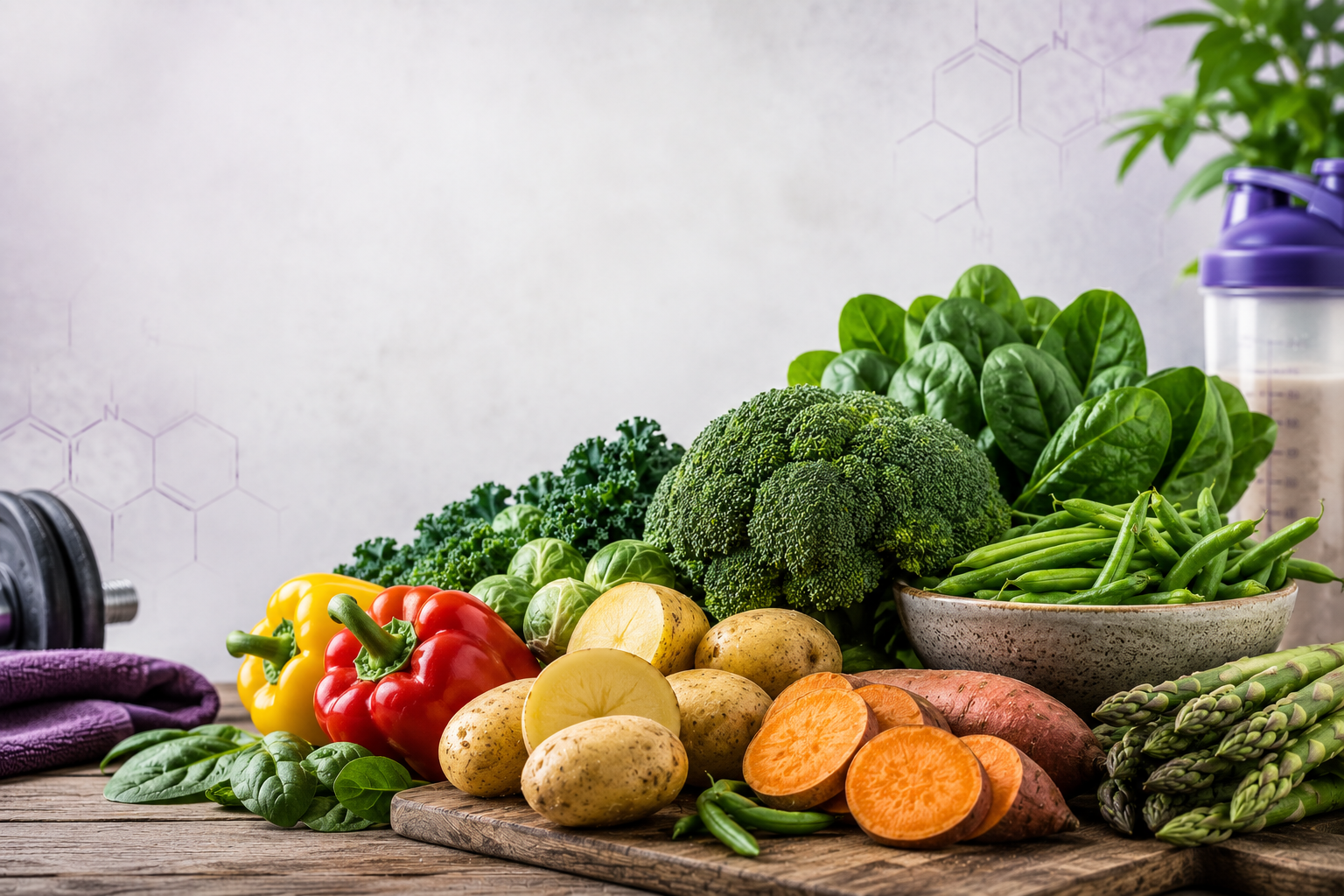
You’re eating chicken, rice, and protein shakes religiously, tracking macros, hitting your protein targets, but completely ignoring vegetables beyond the occasional side of steamed broccoli. Or worse, you’re skipping them entirely because “vegetables don’t have protein” and you think they’re irrelevant for muscle building.
Including vegetables is fundamental in a diet for anyone who wants to build muscle mass, and this goes far beyond just eating broccoli. Vegetables are all foods derived from plants, which includes an enormous range of options. In this guide, we’ll explore which are the best vegetables for anyone who wants to build muscle mass.
For people trying to maximize muscle growth, optimize recovery, improve training performance, or simply build a more complete diet that supports long term physique goals, understanding which vegetables matter most and why they contribute to hypertrophy can transform your nutrition from adequate to optimized.
In this comprehensive guide, I’ll explain exactly how vegetables support the muscle building process (three specific mechanisms), the nine best vegetables ranked for muscle building with complete nutritional breakdowns, how each vegetable contributes to training performance and recovery, practical ways to incorporate these vegetables into a bodybuilding diet, calorie dense vegetables that help achieve calorie surplus during bulking, and micronutrient and fiber contributions that most lifters underestimate.
Whether you’re bulking and need calorie dense vegetable options, cutting and want nutrient dense low calorie choices, or just trying to build a healthier and more effective muscle building diet, knowing which vegetables to prioritize will give you a meaningful edge.
Let’s examine the complete list.
TABLE OF CONTENTS
How Vegetables Help Build Muscle Mass
Before diving into the best vegetables, let’s understand the three specific mechanisms through which vegetables support the muscle building process.
Mechanism 1: Some Vegetables Facilitate Calorie Surplus
A calorie surplus—eating more calories than your body needs—is fundamental for muscle hypertrophy, because it provides the body with the additional energy necessary to support the processes of recovery and muscle growth.
Why calorie surplus matters for muscle:
The energy cost of building muscle:
- Building new muscle tissue requires energy (ATP)
- Estimated 2,000 to 2,500 total calories to build 1 lb muscle
- Body needs “extra” energy beyond maintenance
- Without surplus, body lacks raw materials for growth
How vegetables help achieve surplus:
Some vegetables are richer in calories, making them allies for reaching a calorie surplus. Vegetables like potatoes, sweet potatoes, and corn have more calories per serving than many other vegetables, making them your allies during a bulking phase.
Calorie comparison (per cup cooked):
Higher calorie vegetables:
- Potatoes: 240 calories
- Sweet potatoes: 180 calories
- Corn: 155 calories
- Peas: 134 calories
- Beans: 225 calories
Lower calorie vegetables:
- Broccoli: 55 calories
- Spinach: 41 calories
- Carrots: 55 calories
- Cauliflower: 28 calories
- Zucchini: 17 calories
Strategic vegetable selection:
During bulking:
- Prioritize higher calorie vegetables
- Potatoes, sweet potatoes, corn, peas, beans
- Help hit calorie targets without excessive food volume
- Provide sustained energy for training
During cutting:
- Prioritize lower calorie, high volume vegetables
- Broccoli, spinach, peppers, cauliflower, leafy greens
- Fill stomach with minimal calories
- Support satiety while maintaining deficit
During maintenance:
- Mix of both categories
- Balanced approach
- Variety for health and enjoyment
Mechanism 2: Source of Micronutrients
The vast majority of vegetables are dense in micronutrients, which means they are rich in vitamins and essential minerals for healthy body function, which will inevitably influence muscle mass gain.
Why micronutrients matter for muscle building:
Direct muscle building support:
- Vitamin A: Supports protein synthesis
- Vitamin C: Collagen formation, tissue repair
- Vitamin K: Bone health (supports strong muscles)
- Iron: Oxygen transport to muscles
- Magnesium: Muscle contraction, recovery, sleep
- Potassium: Electrolyte balance, muscle function
- Zinc: Testosterone production, protein synthesis
Recovery support:
- Antioxidants fight training induced oxidative stress
- Reduce excessive inflammation
- Support immune function (sick days = missed training)
- Promote tissue repair between sessions
Performance support:
- Nitrates improve blood flow and oxygen delivery
- B vitamins support energy metabolism
- Iron prevents fatigue and performance decline
- Magnesium prevents cramping
Although you can try to meet your micronutrient needs through a multivitamin, it’s not the same as getting micronutrients “directly from the source.” Vegetables not only have vitamins and minerals, but other nutrients that can sometimes facilitate the absorption of the micronutrients contained in them.
Why whole food sources are superior to supplements:
Bioavailability:
- Nutrients in whole foods absorb better
- Synergistic effects between nutrients in same food
- Fiber matrix affects absorption rate positively
- Co-factors present in food enhance utilization
Phytonutrients:
- Plant compounds not found in supplements
- Flavonoids, carotenoids, polyphenols
- Anti-inflammatory and antioxidant effects
- May support recovery and health independently
The bottom line: Multivitamins are insurance, not replacement. Vegetables provide nutrients in their most usable form.
Mechanism 3: Source of Fiber
Vegetables typically provide a good amount of fiber per serving. During the muscle building phase, fiber plays a crucial, though often underestimated, role in the diet.
Why fiber matters during bulking:
Digestive health:
- Fiber aids digestive health, promoting regular intestinal transit and preventing constipation, a common problem when calorie consumption increases significantly
- Bulking means eating 3,000 to 4,000+ calories daily
- Large food volumes stress digestive system
- Fiber keeps things moving properly
- Prevents uncomfortable bloating
Nutrient absorption:
- Fiber helps optimize nutrient absorption and maintain intestinal health, creating a favorable environment for beneficial gut flora
- This is vital because a healthy digestive system is crucial for the effectiveness of nutrient absorption necessary for muscle growth, like proteins, vitamins, and minerals
- Poor gut health = poor nutrient absorption
- Poor absorption = wasted protein and calories
- Fiber supports the entire process
Fiber recommendations:
- General health: 25 to 30g daily
- Bodybuilders bulking: 30 to 40g daily (higher food intake needs more fiber)
- Sources: vegetables, fruits, whole grains, legumes
Fiber from vegetables specifically:
Per cup cooked:
- Beans: 15g fiber
- Peas: 9g fiber
- Sweet potatoes: 6g fiber
- Broccoli: 5g fiber
- Corn: 4g fiber
- Spinach: 4g fiber
- Potatoes: 3g fiber
- Carrots: 4g fiber
- Beets: 4g fiber
Most bodybuilders are chronically low in fiber. They eat chicken, rice, and protein shakes, which have zero to minimal fiber. Adding vegetables solves this problem.
The 9 Best Vegetables for Building Muscle Mass
Now let’s examine each vegetable in detail, covering nutritional profile, specific benefits for muscle building, and practical usage tips.
1. Potatoes
Potatoes are an excellent vegetable for building muscle mass because they have more calories than most other vegetables and are composed primarily of carbohydrates, providing more energy for your workouts.
Nutritional profile (1 medium potato, approximately 213g baked):
- Calories: 161
- Protein: 4.3g
- Carbohydrates: 37g
- Fiber: 3.8g
- Fat: 0.2g
- Potassium: 926mg (26% daily value)
- Vitamin C: 28% daily value
- Vitamin B6: 27% daily value
- Magnesium: 12% daily value
- Iron: 10% daily value
Why potatoes are excellent for muscle building:
Calorie dense carbohydrate source:
- 161 calories per medium potato
- Primarily starch (complex carbohydrate)
- Easy to eat in large quantities
- Can add butter, cheese, sour cream for bulking (more calories)
- Very affordable
Potassium powerhouse:
- Potatoes are also very rich in potassium, an electrolyte that can help reduce muscle cramps and muscle weakness
- A medium potato contains 926 mg of potassium, or about 26% of your recommended daily intake
- Potassium crucial for muscle contraction
- Prevents cramps during intense training
- Supports hydration and fluid balance
Versatility:
- Can be prepared dozens of ways
- Baked, boiled, mashed, roasted, air fried
- Works as side dish with any protein
- Can be meal prepped easily
Glycemic considerations:
- Higher glycemic index (baked: GI 85)
- Makes them excellent post workout (fast glycogen replenishment)
- Boiling reduces GI to 65 to 70
- Cooling and reheating creates resistant starch (lower GI)
How to use potatoes for muscle building:
Pre workout (90 minutes before):
- 1 medium baked potato with salt
- Easy to digest
- Provides sustained energy
- No stomach discomfort
Post workout:
- 1 to 2 medium potatoes with protein source
- Fast glycogen replenishment
- Supports recovery
- Satisfying meal
During bulking:
- Add 2 to 3 potatoes daily (300 to 500 extra calories)
- Easy way to increase carb and calorie intake
- Don’t fill you up as much as rice or pasta per calorie
- Budget friendly
2. Sweet Potatoes
Sweet potatoes are an excellent source of carbohydrates that can be used at any time of day to provide energy and more calories in a hypertrophy diet.
Nutritional profile (1 medium sweet potato, approximately 130g baked):
- Calories: 103
- Protein: 2.3g
- Carbohydrates: 24g
- Fiber: 3.8g
- Fat: 0.1g
- Vitamin A: 1,400 mcg (1,400% daily value!)
- Vitamin C: 37% daily value
- Manganese: 28% daily value
- Potassium: 15% daily value
- Vitamin B6: 16% daily value
Why sweet potatoes are exceptional for muscle building:
Incredible vitamin A content:
- Sweet potatoes are also very rich in vitamin A, an essential vitamin that helps your body synthesize proteins
- A sweet potato contains about 1,400% of your recommended daily intake, with approximately 1,400 mcg per potato
- Vitamin A directly supports protein synthesis
- Critical for muscle repair and growth
- Most other foods provide a fraction of this amount
- One sweet potato covers vitamin A needs for days
Flexible fiber content:
- While sweet potatoes can provide about 24% of your recommended daily fiber intake, you can reduce this by removing the skin, making them a faster digesting food for pre/post workout nutrition
- Skin on: Higher fiber, slower digestion (better for sustained energy)
- Skin off: Lower fiber, faster digestion (better around workouts)
- Versatility based on timing needs
Complex carbohydrate source:
- Lower glycemic index than white potatoes (GI 50 to 60)
- More sustained energy release
- Less blood sugar spike and crash
- Better for meals away from training
How to use sweet potatoes for muscle building:
As primary carb source:
- 1 to 2 sweet potatoes with each main meal
- Provides steady energy throughout day
- Rich color indicates antioxidant content
Pre workout (skin removed):
- Faster digestion without skin
- Provides quick energy
- Light on stomach
Post workout (either way):
- Replenishes glycogen
- Pairs perfectly with chicken, fish, or steak
- Easy to meal prep in bulk
Meal prep tips:
- Bake 6 to 8 sweet potatoes on Sunday
- Store in refrigerator for the week
- Reheat in microwave (2 to 3 minutes)
- Season with cinnamon (sweet) or salt and pepper (savory)
3. Corn
Corn offers several benefits for anyone wanting to build muscle mass, primarily because it’s a rich source of carbohydrates, which are essential for providing the energy needed for intense workouts, muscle recovery, and achieving a calorie surplus.
Nutritional profile (1 cup corn kernels, approximately 164g cooked):
- Calories: 155
- Protein: 5g
- Carbohydrates: 36g
- Fiber: 4g
- Fat: 2g
- Vitamin B3 (Niacin): 12% daily value
- Vitamin B5: 10% daily value
- Magnesium: 11% daily value
- Phosphorus: 14% daily value
- Manganese: 12% daily value
Why corn is valuable for muscle building:
Surprisingly high protein for a vegetable:
- Corn possesses a significant amount of protein for a vegetable, almost 5 grams per cup, contributing to the process of muscle repair and growth
- 5g protein per cup adds up throughout day
- Combined with other protein sources, helps hit daily target
- Extra protein from carb source is a bonus
Calorie dense:
- 155 calories per cup
- Higher than most vegetables
- Good for hitting surplus
- Doesn’t fill you up excessively
Antioxidant and mineral content:
- Corn is also a good source of antioxidants and minerals, like magnesium, which are important for muscle health and recovery, making it a useful food in the diet
- Magnesium supports muscle contraction and relaxation
- Antioxidants help manage training induced inflammation
How to use corn for muscle building:
Easy additions:
- Add to rice dishes (Mexican rice bowls)
- Mix into salads for extra calories
- Corn tortillas as bread alternative
- Frozen corn is affordable and convenient
Preparation methods:
- Boiled (simple, quick)
- Grilled (adds smoky flavor)
- Added to soups and stews
- Corn on the cob (satisfying to eat)
4. Spinach
Spinach is an ally in building muscle mass due to its nutritional density that supports various aspects of health.
Nutritional profile (1 cup cooked spinach, approximately 180g):
- Calories: 41
- Protein: 5.3g
- Carbohydrates: 7g
- Fiber: 4g
- Fat: 0.5g
- Vitamin K: 987% daily value
- Vitamin A: 105% daily value
- Manganese: 84% daily value
- Folate: 66% daily value
- Magnesium: 39% daily value
- Iron: 36% daily value
- Vitamin C: 29% daily value
- Potassium: 24% daily value
- Calcium: 24% daily value
Why spinach is a muscle building powerhouse:
Protein content:
- First, spinach is a source of plant proteins, which helps with the overall protein tally at the end of the day
- 5.3g protein per cup cooked is significant for a vegetable
- Adds to daily protein total
- Every gram counts when targeting 180g+ daily
Natural nitrates (performance enhancer):
- Additionally, it contains natural nitrates, which can improve muscle efficiency during exercises, increasing blood flow and oxygen delivery to the muscles
- Nitrates convert to nitric oxide in the body
- Nitric oxide dilates blood vessels
- More blood flow = more oxygen to working muscles
- Better endurance and performance
- Studies show 2 to 5% performance improvement from nitrate rich foods
Iron content:
- Spinach is also rich in iron, a mineral crucial for oxygen transport in the blood
- Iron essential for hemoglobin production
- Hemoglobin carries oxygen to muscles
- Low iron = fatigue, weakness, poor performance
- Especially important for women (higher iron needs)
Magnesium content:
- And in magnesium, which plays a role in muscle function and contraction
- 39% daily value per cup
- Supports over 300 enzymatic reactions
- Critical for muscle contraction and relaxation
- Helps with sleep quality (important for recovery)
Antioxidant profile:
- Its high concentration of antioxidants, like vitamins C and E, plus flavonoids, helps combat oxidative stress and inflammation, which can promote muscle recovery
- Training creates oxidative stress
- Excessive oxidative stress impairs recovery
- Antioxidants from spinach help manage this
How to use spinach for muscle building:
Easy incorporation:
- Add 2 cups raw to protein smoothies (barely affects taste)
- Sauté as side dish with garlic and olive oil
- Add to omelets and egg dishes
- Use as salad base instead of lettuce
- Mix into pasta dishes and casseroles
Volume trick:
- Raw spinach is very bulky (fills plate)
- Cooked spinach reduces dramatically (1 cup cooked = 6 to 8 cups raw)
- Use raw for salads (filling, low calorie) when cutting
- Use cooked for nutrient density when bulking
5. Carrots
Carrots are an excellent food for anyone looking to build muscle mass because they’re a good source of carbohydrates, which provide the calories needed to sustain muscle growth.
Nutritional profile (1 cup chopped carrots, approximately 128g raw):
- Calories: 52
- Protein: 1.2g
- Carbohydrates: 12g
- Fiber: 3.6g
- Fat: 0.3g
- Vitamin A: 428% daily value (as beta-carotene)
- Vitamin K: 21% daily value
- Potassium: 10% daily value
- Vitamin C: 12% daily value
- Biotin: 20% daily value
Why carrots support muscle building:
Potassium for muscle function:
- Carrots contain high levels of potassium, which helps with fluid regulation and muscle function, reducing the risk of cramps
- Electrolyte balance crucial during intense training
- Prevents performance decreasing cramps
- Supports proper muscle contraction
Vitamin A and antioxidants:
- This vegetable is also rich in vitamin A and antioxidants, like beta-carotene, which promote skin health and vision, but also play a role in protein synthesis and reducing oxidative stress
- Beta-carotene converts to vitamin A as needed
- Supports protein synthesis (muscle building)
- Powerful antioxidant properties
- Reduces exercise induced inflammation
Convenient and affordable:
- Require zero preparation (can eat raw)
- Baby carrots are perfect snack
- Very long shelf life in refrigerator
- Extremely budget friendly
- Available year round
How to use carrots for muscle building:
As snack:
- Baby carrots with hummus (adds protein)
- Raw carrots between meals
- Portable, no preparation needed
In meals:
- Roasted with dinner proteins
- Added to stir fries
- In soups and stews
- Shredded in salads
6. Beets
Beets offer several benefits for anyone wanting to build muscle mass, primarily due to their high nitrate content, which is converted to nitric oxide in the body.
Nutritional profile (1 cup cooked beets, approximately 170g):
- Calories: 75
- Protein: 2.9g
- Carbohydrates: 17g
- Fiber: 3.4g
- Fat: 0.3g
- Folate: 34% daily value
- Manganese: 28% daily value
- Potassium: 13% daily value
- Vitamin C: 11% daily value
- Iron: 7% daily value
- Magnesium: 8% daily value
Why beets are powerful for muscle building:
Nitric oxide production:
- This compound functions to increase blood flow and improve oxygen and nutrient delivery to the muscles during exercises, which can increase vascularity
- Natural nitrates convert to nitric oxide
- Blood vessels dilate (more blood flow)
- More oxygen reaches working muscles
- More nutrients delivered during training
- Improved endurance and power output
Performance enhancement:
- Research shows beet juice can improve exercise performance by 1 to 3%
- Delays fatigue during high intensity training
- Improves time to exhaustion
- More reps, more sets, more volume = more growth stimulus
Recovery support:
- Beets are also rich in antioxidants that help with muscle recovery, reducing inflammation and muscle damage after intense exercises
- This combination of effects contributes to a more favorable environment for muscle growth and repair
- Betalains (unique antioxidant to beets)
- Reduce muscle soreness post training
- Speed recovery between sessions
- Allow higher training frequency
How to use beets for muscle building:
Pre workout strategy:
- Beetroot juice 60 to 90 minutes before training
- 1 to 2 medium beets worth of juice
- Nitric oxide peaks at about 2 to 3 hours after consumption
- Noticeable pump and endurance improvement
In meals:
- Roasted beets as side dish
- Beet salad with goat cheese and walnuts
- Added to smoothies (pairs well with berries)
- Pickled beets as condiment
Beet powder supplement:
- Convenient alternative to whole beets
- Mix with water pre workout
- Concentrated nitrate source
- Good option if you dislike beet taste
7. Broccoli
Broccoli is a useful vegetable in the diet for being an excellent source of fiber, vitamins C and K, and minerals like iron and calcium, which are essential for bone health and muscle function.
Nutritional profile (1 cup cooked broccoli, approximately 156g):
- Calories: 55
- Protein: 3.7g
- Carbohydrates: 11g
- Fiber: 5g
- Fat: 0.6g
- Vitamin C: 135% daily value
- Vitamin K: 245% daily value
- Folate: 42% daily value
- Vitamin A: 24% daily value
- Potassium: 14% daily value
- Manganese: 14% daily value
- Phosphorus: 10% daily value
Why broccoli is a bodybuilding staple:
Vitamin C and tissue repair:
- Vitamin C helps with collagen synthesis, vital for the strength and recovery of tissues
- 135% daily value per cup
- Collagen essential for tendon and ligament health
- Supports connective tissue repair from heavy training
- Prevents injury through stronger connective tissue
Vitamin K and bone health:
- Vitamin K supports bone health, a crucial factor for supporting strong and healthy muscles
- 245% daily value per cup (massive amount)
- Strong bones provide framework for strong muscles
- Reduces injury risk
- Supports calcium metabolism
Sulforaphane (unique compound):
- Broccoli contains antioxidant compounds, like sulforaphane, that can help reduce oxidative stress and inflammation in the body, facilitating muscle recovery after intense exercises and, consequently, aiding in muscle growth
- Sulforaphane is a potent anti-inflammatory
- Found primarily in cruciferous vegetables
- May support testosterone levels (some evidence)
- Helps manage estrogen metabolism
High fiber content:
- 5g fiber per cup
- Promotes digestive health
- Helps with satiety (critical during cutting)
- Feeds beneficial gut bacteria
Low calorie but nutrient dense:
- Only 55 calories per cup
- Incredibly nutrient dense per calorie
- Perfect for cutting (can eat large volumes)
- High volume, low calorie = feeling full on fewer calories
How to use broccoli for muscle building:
The classic bodybuilding approach:
- Steam broccoli as side with every dinner
- 1 to 2 cups per meal
- Simple seasoning (salt, pepper, garlic powder)
- Quick microwave method (3 to 4 minutes)
More interesting preparations:
- Roasted at 425°F with olive oil and garlic (caramelizes, tastes much better)
- Stir fried with sesame oil and soy sauce
- Added to pasta dishes
- Blended into soups (broccoli cheddar with protein)
- Raw with hummus as snack
8. Peas
Peas are an excellent vegetable for anyone wanting to build muscle mass due to their high content of high quality protein (for a vegetable).
Nutritional profile (1 cup cooked green peas, approximately 160g):
- Calories: 134
- Protein: 8.6g
- Carbohydrates: 25g
- Fiber: 8.8g
- Fat: 0.4g
- Vitamin K: 48% daily value
- Vitamin C: 38% daily value
- Thiamine (B1): 35% daily value
- Folate: 24% daily value
- Manganese: 37% daily value
- Iron: 14% daily value
- Phosphorus: 16% daily value
Why peas are exceptional for muscle building:
Highest protein content among common vegetables:
- 8.6g protein per cup
- Higher than most vegetables by 3 to 5x
- Significant contribution to daily protein target
- Pea protein powder has become major supplement
Rich in B vitamins:
- Peas are rich in fiber and B complex vitamins, which help with energy metabolism and the efficiency of transforming nutrients into energy needed for workouts
- Thiamine (B1): 35% daily value
- B vitamins convert food into usable energy
- Support metabolic processes
- Important for training performance
Exceptional fiber content:
- 8.8g fiber per cup (one of highest)
- Supports digestive health
- Promotes satiety (helpful when cutting)
- Feeds beneficial gut bacteria
How to use peas for muscle building:
Easy additions:
- Frozen peas are extremely convenient
- Microwave in 3 minutes
- Add to rice dishes
- Mix into pasta
- Include in stir fries
- Blend into soups
Pea protein powder:
- Derived from yellow split peas
- Nearly complete amino acid profile
- 20 to 25g protein per scoop
- Hypoallergenic (good for sensitive stomachs)
- Popular vegan protein option
9. Beans
Beans are a good vegetable for anyone wanting hypertrophy because they are, first and foremost, a source of plant protein.
Nutritional profile (1 cup cooked black beans, approximately 172g):
- Calories: 227
- Protein: 15.2g
- Carbohydrates: 41g
- Fiber: 15g
- Fat: 0.9g
- Folate: 64% daily value
- Manganese: 38% daily value
- Thiamine (B1): 28% daily value
- Magnesium: 30% daily value
- Iron: 20% daily value
- Phosphorus: 24% daily value
- Potassium: 17% daily value
Why beans are powerful for muscle building:
Dual protein and carbohydrate source:
- 15g protein per cup (highest on this list)
- 41g carbs per cup (calorie dense)
- 227 calories per cup
- Provides both macros needed for muscle growth
Exceptional fiber content:
- Beyond proteins, beans are rich in fiber, which helps with digestion and maintenance of gastrointestinal health, essential for the efficient absorption of nutrients for someone who is eating more than usual (like a person wanting to build muscle mass)
- 15g fiber per cup (highest on this list)
- Half the daily recommended fiber in one cup
- Critical for handling high calorie diets
Iron for oxygen transport:
- Beans also provide a good amount of iron, a mineral vital for oxygen transport in muscles
- 20% daily value per cup
- Iron deficiency causes fatigue and weakness
- Adequate iron = better training performance
- Especially important for vegetarians/vegans
Budget friendly protein:
- Dried beans are among cheapest protein sources
- Canned beans are very affordable
- Can buy in bulk
- Long shelf life
Variety of types:
- Black beans (227 cal, 15g protein per cup)
- Kidney beans (225 cal, 15g protein)
- Pinto beans (245 cal, 15g protein)
- Navy beans (255 cal, 15g protein)
- Chickpeas (269 cal, 14.5g protein)
- Lentils (230 cal, 18g protein)
How to use beans for muscle building:
Classic combinations:
- Rice and beans (complete protein when combined)
- Bean burritos and tacos
- Chili with lean ground meat
- Bean soups and stews
- Hummus (from chickpeas)
Meal prep approach:
- Cook large batch of dried beans (much cheaper than canned)
- Store in portions in refrigerator
- Add to meals throughout week
- Freeze extra portions for later use
For hardgainers (people struggling to eat enough):
- Beans add 225+ calories per cup to any meal
- High calorie density for a “vegetable”
- Help hit surplus without excessive food volume
- Affordable way to increase calories
Practical Guide: Incorporating Vegetables Into a Bodybuilding Diet
Understanding why these vegetables matter is one thing. Actually eating them consistently is another.
The Bodybuilder’s Vegetable Problem
Why most bodybuilders under-eat vegetables:
Perception issues:
- “Vegetables don’t have protein, so they don’t matter”
- “I need chicken and rice, not salads”
- “Vegetables take up stomach space I need for real food”
- “I’ll just take a multivitamin instead”
Practical issues:
- Don’t know how to cook vegetables well
- Take time to prepare
- Go bad quickly if not used
- Perceived as boring and tasteless
The reality:
- Every reason above is solvable
- Vegetables provide benefits no supplement can replace
- The best bodybuilders eat plenty of vegetables
- Ignoring them leaves performance and recovery on the table
Daily Vegetable Targets for Bodybuilders
Recommended daily vegetable intake by goal:
Cutting (1,600 to 2,200 calories):
- 4 to 6 cups vegetables daily
- Focus on low calorie, high volume options
- Broccoli, spinach, peppers, cauliflower, leafy greens
- Helps fill stomach while maintaining deficit
- Maximum micronutrient density per calorie
Maintenance (2,200 to 2,800 calories):
- 3 to 5 cups vegetables daily
- Mix of calorie dense and low calorie options
- All nine vegetables on this list
- Balanced approach
Bulking (2,800 to 3,600+ calories):
- 3 to 4 cups vegetables daily (minimum)
- Focus on calorie dense options (potatoes, sweet potatoes, corn, beans, peas)
- Still include some leafy greens for micronutrients
- Don’t let vegetables fill you up too much (need room for calories)
Sample Day: Vegetables Integrated Into Bodybuilding Diet
Example: 180 lb male, 2,800 calorie bulking diet
Breakfast:
- 4 eggs scrambled with 1 cup spinach (sautéed)
- 2 slices whole grain toast
- Fruit
- Vegetables: 1 cup spinach (41 cal, 5g protein, incredible micronutrients)
Lunch:
- 6 oz chicken breast
- 1 large sweet potato (baked)
- 1 cup broccoli (steamed)
- Vegetables: Sweet potato (180 cal) + broccoli (55 cal) = 235 cal
Pre workout snack:
- Protein shake
- 1 medium banana
- Rice cakes
Post workout:
- 6 oz steak
- 2 medium potatoes (baked)
- 1 cup peas
- Vegetables: Potatoes (320 cal) + peas (134 cal) = 454 cal
Dinner:
- 6 oz salmon
- 1 cup brown rice
- 1 cup mixed vegetables (carrots, corn, beans)
- Vegetables: Mixed (approximately 200 cal)
Daily vegetable totals:
- Spinach: 1 cup (41 cal)
- Sweet potato: 1 large (180 cal)
- Broccoli: 1 cup (55 cal)
- Potatoes: 2 medium (320 cal)
- Peas: 1 cup (134 cal)
- Mixed vegetables: 1 cup (200 cal)
- Total: 930 calories from vegetables, significant micronutrients, fiber, and plant protein
Quick Vegetable Preparation Methods
For people who hate cooking vegetables:
Frozen vegetables (game changer):
- Pre washed, pre cut, flash frozen
- Microwave in 3 to 5 minutes
- No prep, no waste, no going bad
- Nutritionally equal (sometimes superior) to fresh
- Much cheaper than fresh
- Always available
Sheet pan roasting (best flavor):
- Cut vegetables, toss with olive oil, salt, pepper
- Spread on baking sheet
- Roast at 425°F for 20 to 25 minutes
- Caramelization makes vegetables taste amazing
- Can roast while protein cooks
- Works for: broccoli, sweet potatoes, carrots, beets, cauliflower
Steaming (simplest):
- Add vegetables to microwave safe bowl
- Add 2 tablespoons water
- Cover with plate or plastic wrap
- Microwave 3 to 5 minutes
- Season and serve
- Works for: broccoli, peas, corn, spinach, carrots
Raw (zero effort):
- Baby carrots: eat from bag
- Spinach: add to smoothie or eat as salad
- Cherry tomatoes: pop like snacks
- Bell peppers: slice and eat
- Cucumber: slice, add salt
Meal prep strategy:
- Roast 3 to 4 types of vegetables on Sunday
- Store in containers in refrigerator
- Reheat with meals throughout week
- Takes 30 minutes of active prep for entire week
THE BOTTOM LINE: BEST VEGETABLES FOR MUSCLE BUILDING
✅ Potatoes (Calorie Dense, 26% Daily Potassium, Training Fuel)
✅ Sweet Potatoes (1,400% Daily Vitamin A, Flexible Fiber, Complex Carbs)
✅ Corn (5g Protein Per Cup, Calorie Dense, Antioxidants)
✅ Spinach (Natural Nitrates, Iron, Magnesium, 5g Protein Per Cup)
✅ Carrots (Vitamin A, Potassium, Beta-Carotene, Zero Prep Required)
✅ Beets (Nitric Oxide Production, Performance Enhancement, Recovery)
✅ Broccoli (Sulforaphane, 135% Vitamin C, 245% Vitamin K Per Cup)
✅ Peas (8.6g Protein Per Cup, B Vitamins, High Fiber)
✅ Beans (15g Protein Per Cup, 15g Fiber, Iron, Budget Friendly)
How Vegetables Support Muscle Building: • Calorie Dense Options Help Achieve Surplus (Potatoes, Sweet Potatoes, Corn, Beans) • Micronutrients Support Growth and Recovery (Vitamins A, C, K, Iron, Magnesium) • Fiber Supports Digestive Health (Critical When Eating 3,000+ Calories Daily)
For Bulking: • Prioritize Potatoes, Sweet Potatoes, Corn, Peas, Beans • Higher Calorie Options Help Hit Surplus • Don’t Neglect Leafy Greens (Micronutrients Still Matter)
For Cutting: • Prioritize Spinach, Broccoli, Carrots • High Volume, Low Calorie Options • Fill Stomach While Maintaining Deficit • Maximum Nutrients Per Calorie
Key Nutrients From These Vegetables:
Vitamin A (Protein Synthesis): • Sweet potatoes: 1,400% daily value per potato • Carrots: 428% daily value per cup • Spinach: 105% daily value per cup
Potassium (Muscle Function): • Potatoes: 926mg per medium potato (26% DV) • Beans: 17% DV per cup • Spinach: 24% DV per cup
Iron (Oxygen Transport): • Spinach: 36% DV per cup cooked • Beans: 20% DV per cup • Peas: 14% DV per cup
Nitrates (Performance): • Beets: Highest natural source • Spinach: Very high • Carrots: Moderate
Fiber (Digestive Health): • Beans: 15g per cup • Peas: 8.8g per cup • Sweet potatoes: 3.8g per medium • Broccoli: 5g per cup
Practical Tips: • Frozen vegetables are just as nutritious as fresh • Roasting at high heat dramatically improves flavor • 3 to 6 cups vegetables daily depending on goal • Include variety, not just one or two types • Meal prep vegetables on Sunday for entire week
STOP IGNORING VEGETABLES IN YOUR BODYBUILDING DIET. START INCLUDING AT LEAST 3 TO 4 SERVINGS DAILY. PRIORITIZE CALORIE DENSE OPTIONS WHEN BULKING. CHOOSE HIGH VOLUME LOW CALORIE OPTIONS WHEN CUTTING. USE FROZEN IF FRESH IS INCONVENIENT. ROAST FOR BETTER FLAVOR. YOUR RECOVERY, PERFORMANCE, AND LONG TERM HEALTH WILL IMPROVE.
Ready To Build A Complete Muscle Building Nutrition System That Goes Beyond Just Protein And Calories? Understanding the best vegetables is one piece of optimized nutrition. Get a comprehensive system covering optimal macronutrient ratios for every diet phase, micronutrient targets for peak performance and recovery, meal planning templates that incorporate all food groups, supplement strategies that complement whole food nutrition, and complete grocery lists and meal prep guides. Stop eating the same three foods on repeat. Start building a varied, nutrient dense diet that supports maximum muscle growth, optimal recovery, and long term health.
REFERENCES
SECTION 1 — Dietary nitrates from vegetables improve exercise performance via nitric oxide
[1] Lundberg JO et al. — PMC/Free Radical Biology and Medicine, 2011 Review of the dietary nitrate-nitrite-nitric oxide pathway; nitrate is abundant in vegetables such as beets, spinach, and carrots; after ingestion, nitrate is converted to nitrite by oral bacteria and further reduced to nitric oxide (NO) in tissue; NO dilates blood vessels, reducing the oxygen cost of exercise, improving mitochondrial efficiency, and delaying fatigue; controlled trials of beetroot juice (400 to 500 mg nitrate) demonstrate improved time to exhaustion of 16%, lower submaximal oxygen consumption, and improved high-intensity interval performance; the review establishes vegetable nitrates as a meaningful ergogenic tool, providing the mechanistic basis for the article’s description of beets and spinach as performance-enhancing vegetables through nitric oxide production https://pmc.ncbi.nlm.nih.gov/articles/PMC3103135/
SECTION 2 — Sulforaphane from cruciferous vegetables (broccoli) reduces exercise-induced inflammation
[2] Dinkova-Kostova AT & Abramov AY — PMC/Free Radical Biology and Medicine, 2015 Review of sulforaphane’s mechanisms of action; sulforaphane, derived from glucoraphanin in cruciferous vegetables (particularly broccoli), is a potent activator of the Nrf2 transcription factor; Nrf2 activation upregulates endogenous antioxidant and anti-inflammatory enzyme systems including glutathione peroxidase, catalase, and heme oxygenase; the resulting protection from oxidative stress and inflammatory cytokine production is relevant to exercise recovery, where intense training produces reactive oxygen species and inflammatory mediators that impair muscle repair; provides the biochemical basis for the article’s description of broccoli’s sulforaphane as supporting muscle recovery after intense training https://pmc.ncbi.nlm.nih.gov/articles/PMC4687066/
SECTION 3 — Dietary fiber and gut microbiome health: implications for nutrient absorption
[3] Koh A et al. — PMC/Cell, 2016 Review of gut microbiota metabolism of dietary fiber and production of short-chain fatty acids (SCFAs); fermentation of dietary fiber by colonic bacteria produces butyrate, propionate, and acetate; butyrate serves as the primary fuel for colonocytes, maintaining intestinal barrier integrity and supporting epithelial health; SCFAs regulate intestinal pH, immune function, and can influence systemic inflammation; a healthy intestinal epithelium maximizes absorption of amino acids, vitamins, and minerals; disrupted epithelial integrity from low fiber intake reduces nutrient bioavailability; provides the mechanistic basis for the article’s claim that vegetable fiber is essential for optimizing nutrient absorption during the high-calorie intake of a muscle-building diet https://pmc.ncbi.nlm.nih.gov/articles/PMC4837298/
SECTION 4 — Dietary potassium from vegetables supports muscle function and prevents cramping
[4] Weiss DJ et al. — PubMed/Journal of the American Dietetic Association, 2005 Observational and mechanistic review of potassium’s role in skeletal muscle function; potassium is the primary intracellular cation in muscle tissue; potassium gradients across muscle cell membranes drive membrane repolarization after each action potential, enabling repeated muscle contractions; during exercise, potassium efflux from contracting muscle cells causes local extracellular potassium accumulation, which can inhibit repeated firing and contribute to fatigue; adequate dietary potassium from foods such as potatoes (926 mg per medium potato) and spinach maintains intracellular stores and supports sustained muscle contractile capacity; provides the physiological basis for the article’s description of potassium-rich vegetables as reducing cramping and supporting muscle function during training https://pubmed.ncbi.nlm.nih.gov/15883552/


Leave a Reply
You must be logged in to post a comment.