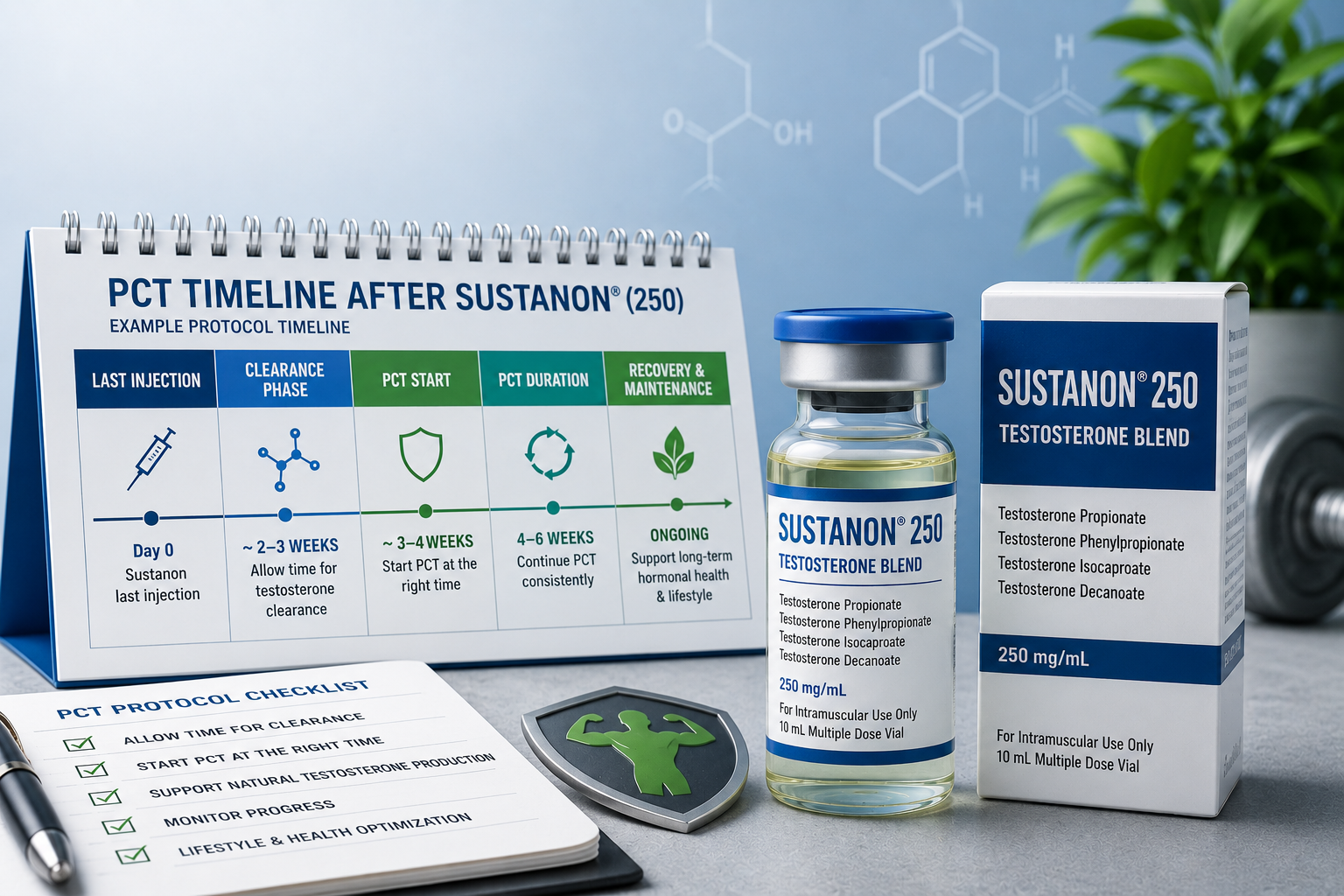
You just finished your Sustanon cycle, you’re feeling great, lifts are still up, and now you’re wondering: when exactly do I start PCT? Too early and you waste your drugs. Too late and you spend weeks in hormonal limbo losing muscle. The timing window is specific, and getting it wrong can undermine your entire post cycle recovery.
Knowing when to start PCT (post cycle therapy) after using Sustanon is crucial to ensure adequate recovery of hormonal levels and minimize side effects after a steroid cycle.
This content is for informational and educational purposes only and should not be considered medical guidance or encouragement for anabolic steroid use. Steroid use can present significant health risks, and it is essential that any decision be made based on guidance from a qualified physician or healthcare professional.
For people who have completed a Sustanon cycle and need to recover natural testosterone production, understanding the exact PCT timing, correct drug protocols, and what happens if PCT is skipped can mean the difference between keeping your gains and losing months of progress while feeling terrible.
In this comprehensive guide, I’ll explain what Sustanon actually is and how its four esters work, why PCT is necessary and what it does physiologically, the exact timing for starting PCT after Sustanon (and the science behind it), complete PCT drug protocols with dosing schedules, what happens if you skip PCT entirely, and how to monitor recovery through blood work.
Whether you’ve just finished your first Sustanon cycle, are planning ahead before starting, or want to understand PCT timing for harm reduction purposes, this guide provides the complete evidence based framework.
Let’s examine everything you need to know.
TABLE OF CONTENTS
What Is Sustanon (Durateston)?
Before discussing PCT timing, understanding what Sustanon is and how it works in the body is essential for grasping why the timing window matters so much.
Sustanon’s Unique Composition
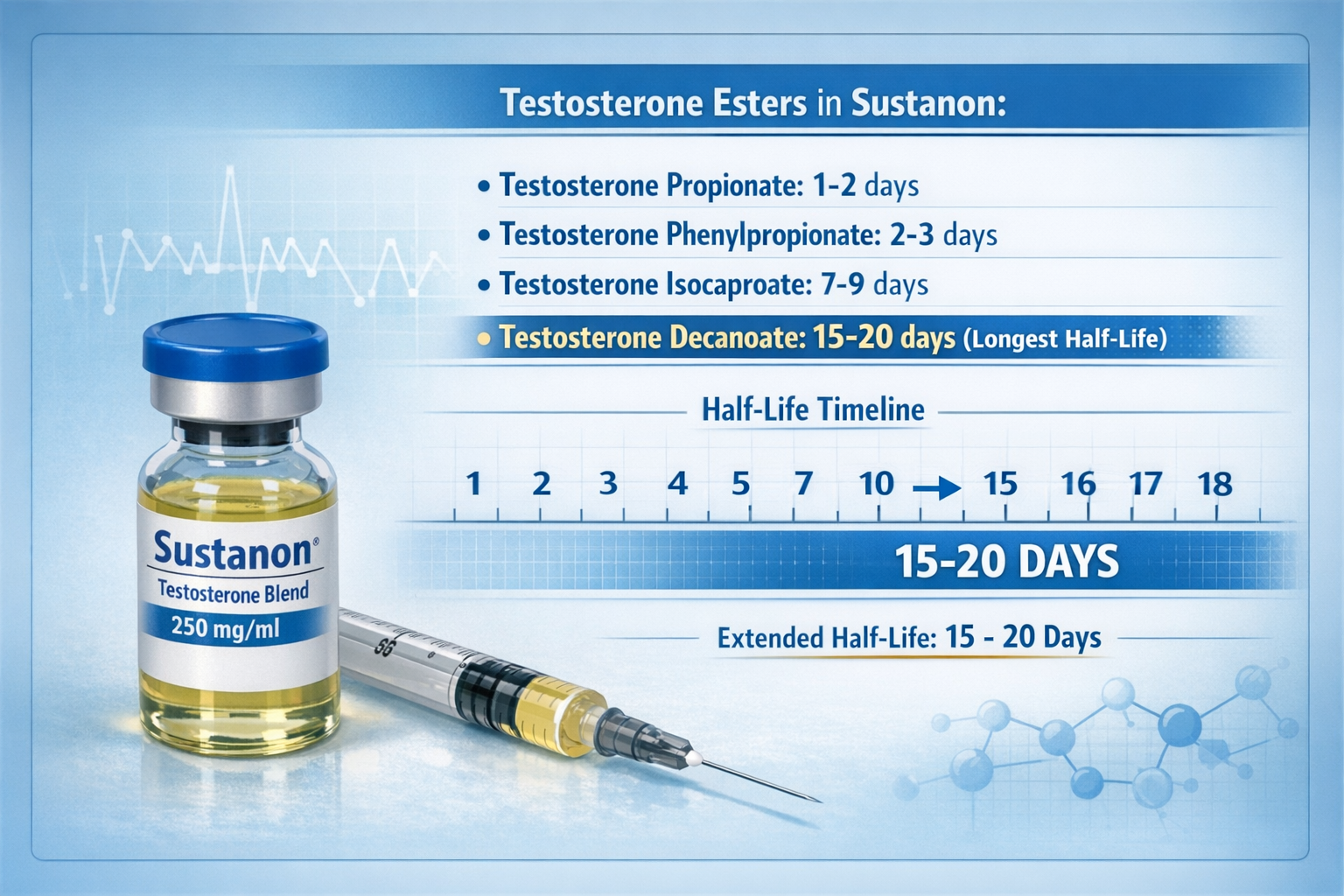
Sustanon is a medication that consists of a blend of four different types of testosterone esters: testosterone propionate, testosterone phenylpropionate, testosterone isocaproate, and testosterone decanoate.
The four testosterone esters in Sustanon:
Testosterone Propionate (30mg per ml):
- Shortest ester in the blend
- Half life: 0.8 to 1 day
- Kicks in within 24 to 48 hours
- Provides immediate testosterone elevation
- Clears the body quickly
Testosterone Phenylpropionate (60mg per ml):
- Medium short ester
- Half life: 1.5 to 3 days
- Begins working within 1 to 2 days
- Bridges gap between propionate and longer esters
- Maintains levels as propionate clears
Testosterone Isocaproate (60mg per ml):
- Medium long ester
- Half life: 4 to 5 days
- Provides sustained release
- Keeps levels elevated mid way
- Important for stability
Testosterone Decanoate (100mg per ml):
- Longest ester in the blend (and largest dose)
- Half life: 7 to 10 days
- Slowest release
- Keeps levels elevated longest
- This ester determines PCT timing
Total testosterone per ml: 250mg
- Combined from all four esters
- Standard injection: 1ml (250mg) every 1 to 3 weeks
- Typical cycle dose: 500mg per week (2ml)
- Cycle length: 8 to 16 weeks (commonly 12)
How the Multi-Ester Blend Works
The main characteristic of Sustanon is precisely its unique composition with different testosterone esters, each with a distinct release rate.
The release timeline after injection:
Hours 0 to 24:
- Propionate begins releasing immediately
- Blood testosterone starts rising
- Fastest acting component
- User may feel effects quickly
Days 1 to 3:
- Propionate at peak release, then declining
- Phenylpropionate beginning its release
- Testosterone levels climbing steadily
- Smooth elevation without sharp peak
Days 3 to 7:
- Propionate mostly cleared
- Phenylpropionate declining
- Isocaproate at peak release
- Levels maintained at elevated range
Days 7 to 14:
- Shorter esters mostly cleared
- Isocaproate declining
- Decanoate still releasing
- Levels gradually declining but still above baseline
Days 14 to 21+:
- Only decanoate still active
- Slow, gradual decline
- Levels eventually returning toward baseline
- This is why PCT timing requires patience
With different release times, Sustanon ensures that testosterone levels rise early (due to the short ester) and remain elevated for a longer period (due to the longer esters), which is especially useful for both hormone replacement therapy and recreational cycles.
Additionally, this combination of esters can minimize sudden peaks and drops in testosterone levels, which helps reduce some of the side effects associated with sudden testosterone increases and decreases.
The stability advantage:
Single ester testosterone (like Enanthate):
- One release rate
- Can have peaks and valleys
- More hormonal fluctuation
- Some users feel the ups and downs
Sustanon (multi-ester):
- Staggered release rates
- Smoother overall levels
- Less pronounced peaks and valleys
- Potentially fewer mood and energy fluctuations
However, the multi-ester design also complicates PCT timing because the longest ester (decanoate) takes weeks to clear.
What Is PCT (Post Cycle Therapy) and Why Is It Necessary?
The Purpose of PCT
PCT (post cycle therapy) is a protocol used to help the body restore natural hormone production, especially testosterone, after the use of anabolic steroids. During a steroid cycle, the body’s natural testosterone production is shut down, which can lead to a series of problems after the end of the cycle.
Why natural testosterone shuts down during a cycle:
The HPT axis (Hypothalamus-Pituitary-Testes):
Normal function:
- Hypothalamus releases GnRH (gonadotropin releasing hormone)
- GnRH signals pituitary gland
- Pituitary releases LH (luteinizing hormone) and FSH (follicle stimulating hormone)
- LH and FSH travel to testes
- Testes produce testosterone
- Testosterone feeds back to hypothalamus (negative feedback)
- System stays in balance
During steroid cycle:
- External testosterone (Sustanon) floods the body
- Blood testosterone levels far above normal (3 to 10x higher)
- Hypothalamus detects excessive testosterone
- Hypothalamus stops releasing GnRH
- Pituitary stops releasing LH and FSH
- Testes stop producing testosterone (no signal to produce)
- Natural production completely shut down
Testosterone is suppressed during a steroid cycle because the external administration of anabolic steroids, like Sustanon itself, increases the levels of androgenic hormones in the body.
This increase signals the body that there is too much testosterone circulating, leading to the interruption of natural production of luteinizing hormone (LH) and follicle stimulating hormone (FSH), which are responsible for stimulating the testes to produce testosterone. This process results in the suppression of endogenous testosterone production during the steroid cycle.
In other words, PCT serves to recover natural testosterone production, minimizing the time needed for the body to return to producing endogenous testosterone adequately.
What Happens When You Stop Steroids Without PCT
The hormonal crash:
Week 1 after last injection:
- External testosterone still present (especially decanoate ester)
- Levels declining but still elevated
- Body still suppressed
- No natural production occurring
Weeks 2 to 4 after last injection:
- External testosterone clearing from body
- Levels dropping significantly
- Still no natural production (HPT axis still suppressed)
- Beginning to feel effects of low testosterone
Weeks 4 to 8 (without PCT):
- External testosterone mostly gone
- Natural production still not recovered
- HPT axis extremely slow to restart
- Severe low testosterone symptoms
- This is the danger zone
Weeks 8 to 16+ (without PCT):
- Body slowly trying to restart production
- Recovery extremely slow without intervention
- May take 3 to 6+ months for full recovery
- Some individuals never fully recover without help
- Significant muscle loss during this period
What PCT Does Physiologically
Beyond restoring hormonal production, PCT also helps prevent negative side effects associated with the end of a steroid cycle, such as muscle mass loss, fat gain, depression, libido problems, and other symptoms of low testosterone.
How PCT drugs work:
SERMs (Selective Estrogen Receptor Modulators):
Mechanism:
- Block estrogen receptors in hypothalamus and pituitary
- Hypothalamus no longer detects estrogen
- Thinks hormone levels are low
- Releases GnRH (restart signal)
- Pituitary releases LH and FSH
- LH and FSH signal testes to produce testosterone
- Natural production restarts
Common SERMs used:
- Clomiphene (Clomid): Stimulates LH/FSH release
- Tamoxifen (Nolvadex): Blocks estrogen at receptors
- Both used together in many protocols
Aromatase Inhibitors (AIs):
Mechanism:
- Block conversion of testosterone to estrogen
- Prevent estrogen from rising during recovery
- Used as support alongside SERMs
- Not the primary recovery driver
Common AIs:
- Anastrozole (Arimidex): Most common
- Exemestane (Aromasin): Suicidal inhibitor (permanent binding)
By performing an adequate PCT, the user can maintain more gains during the cycle and protect long term health, avoiding hormonal imbalances and other complications.
What PCT preserves:
Muscle mass:
- Faster testosterone recovery = less catabolism
- Maintains muscle built during cycle
- Prevents wasting during recovery period
Strength:
- Testosterone crucial for strength maintenance
- Faster recovery means less strength loss
- Can maintain training intensity
Body composition:
- Prevents fat gain from low testosterone
- Maintains metabolic rate
- Preserves lean appearance
Psychological health:
- Prevents depression from hormonal crash
- Maintains libido and sexual function
- Supports energy and motivation
- Reduces anxiety and mood swings
Physical well being:
- Energy levels maintained
- Sleep quality preserved
- Joint health supported
- Overall quality of life maintained
When to Start PCT After Sustanon (The Exact Timing)
This is the most critical question, and getting it wrong renders your entire PCT less effective or completely useless.
The Short Answer
In summary, PCT after using Sustanon should begin approximately 4 weeks after the last injection.
The Detailed Explanation
In greater detail, knowing when to start PCT after Sustanon is critical, because if PCT is started too early, while there are still active traces of steroids in the body, they will continue suppressing natural hormone production, negating the effects of the PCT.
Why starting too early is wasteful:
The problem:
- SERMs (Clomid, Nolvadex) try to restart HPT axis
- But active testosterone still circulating
- Active testosterone continues to suppress HPT axis
- SERM effects cancelled out by suppression
- Essentially wasting your PCT drugs
- No recovery occurs despite taking medication
Example of starting too early (2 weeks after last Sustanon injection):
- Decanoate ester still active (half life 7 to 10 days)
- Significant testosterone still circulating
- Clomid and Nolvadex taken but ineffective
- Body still reads “high testosterone” and stays suppressed
- 4 weeks of PCT drugs wasted
- Must restart PCT once steroids clear
This means that the hormonal axis will not be adequately restored, which can lead to incomplete recovery and prolongation of unwanted side effects, such as low libido, erectile dysfunction, and loss of muscle mass.
The Half-Life Calculation
To ensure that the steroid has “left” the body and to start PCT safely, the standard practice is to calculate 3 times the half life of the slowest acting steroid in the cycle. The half life is the time required for the concentration of the substance in the body to be reduced by half after administration.
In other words, by waiting 3 times the half life, the levels of the substance will be very low or negligible in the body.
The mathematics of clearance:
Understanding half life decay:
After 1 half life:
- 50% of substance remains
- Still highly active
- Still very suppressive
After 2 half lives:
- 25% remains (half of the remaining 50%)
- Still significantly active
- Still suppressive
After 3 half lives:
- 12.5% remains
- Levels very low
- Minimal suppressive effect
- Safe to begin PCT
After 4 half lives:
- 6.25% remains
- Negligible levels
- Essentially cleared
After 5 half lives:
- 3.125% remains
- Considered fully eliminated
- Used in pharmacology as “clearance” standard
Why 3 half lives is the standard for PCT:
- 12.5% remaining is low enough for SERMs to overcome
- Balances clearance with not waiting too long
- Waiting 5 half lives unnecessary (too long without recovery)
- 3 half lives is practical sweet spot
Sustanon Specific Calculation
In the case of Sustanon, this time generally translates to approximately 4 weeks because of its longest ester, testosterone decanoate, which has a half life of 7 to 10 days.
The calculation:
Decanoate half life: 7 to 10 days (average 8.5 days)
3x half life calculation:
- 3 x 7 days = 21 days (minimum)
- 3 x 10 days = 30 days (maximum)
- 3 x 8.5 days = 25.5 days (average)
- Practical recommendation: 4 weeks (28 days)
Week by week breakdown after last Sustanon injection:
Week 1 (Days 1 to 7):
- All esters still active
- Propionate clearing but others strong
- Testosterone levels still very elevated
- Do NOT start PCT
Week 2 (Days 8 to 14):
- Propionate cleared
- Phenylpropionate mostly cleared
- Isocaproate declining
- Decanoate still very active (50% still present after one half life)
- Testosterone levels declining but still elevated
- Do NOT start PCT
Week 3 (Days 15 to 21):
- Only decanoate still significantly active
- Approximately 25% of decanoate remaining (2 half lives)
- Testosterone levels approaching normal range
- Do NOT start PCT yet (still too much active)
Week 4 (Days 22 to 28):
- Decanoate approximately 12.5% remaining (3 half lives)
- Testosterone levels low, suppressive effect minimal
- BEGIN PCT
- SERMs can now effectively stimulate recovery
- HPT axis can respond to SERM stimulation
The practical recommendation:
Last Sustanon injection: Day 0
Wait period: Days 1 to 28 (4 weeks of patience)
PCT start: Day 28 to 30
This means:
- If last injection was January 1st, start PCT January 29th
- If last injection was March 15th, start PCT April 12th
- Set a calendar reminder on the day of your last injection
- Count 4 weeks forward
What to Do During the 4-Week Wait
The waiting period between last injection and PCT start is critical:
Training:
- Continue training normally
- Don’t reduce intensity yet
- Strength may start declining toward end of wait
- Maintain training stimulus to preserve muscle
Nutrition:
- Maintain calorie intake (don’t start cutting)
- Keep protein very high (1 to 1.2g per lb body weight)
- This is not the time to diet
- Preserve muscle mass during transition
Sleep:
- Prioritize 7 to 9 hours nightly
- Sleep quality may decline as testosterone drops
- May need sleep hygiene adjustments
- Consider magnesium supplementation
Cardiovascular exercise:
- Continue moderate cardio
- Supports cardiovascular health
- Don’t overdo it (recovery is compromised)
- 3 to 4 sessions per week, 20 to 30 minutes
Mental preparation:
- Understand you will feel worse during this period
- Testosterone declining but natural production not yet restarting
- Mood, libido, energy may drop
- This is temporary and expected
- PCT will address this
What NOT to do during the wait:
- Don’t start PCT early (wastes drugs)
- Don’t start a cut (will lose muscle)
- Don’t dramatically increase training volume (recovery impaired)
- Don’t panic if feeling low (expected during transition)
- Don’t take additional steroids to “bridge” (extends suppression)
PCT Timing for Other Testosterone Esters (Comparison)
If you used different testosterone esters, the wait time changes:
Testosterone Propionate only:
- Half life: 0.8 to 1 day
- 3x half life: 2.5 to 3 days
- Start PCT: 3 to 5 days after last injection
Testosterone Enanthate:
- Half life: 4.5 to 5 days
- 3x half life: 13.5 to 15 days
- Start PCT: 2 weeks after last injection
Testosterone Cypionate:
- Half life: 5 to 8 days
- 3x half life: 15 to 24 days
- Start PCT: 2 to 3 weeks after last injection
Sustanon (Durateston):
- Longest ester half life: 7 to 10 days (decanoate)
- 3x half life: 21 to 30 days
- Start PCT: 4 weeks after last injection
Testosterone Undecanoate (Nebido):
- Half life: 20 to 21 days
- 3x half life: 60 to 63 days
- Start PCT: 8 to 9 weeks after last injection
Critical rule: Always calculate based on the LONGEST acting compound in your cycle. If you combined Sustanon with Nandrolone Decanoate (Deca Durabolin, half life 6 to 12 days), calculate from whichever has the longer clearance time.
What to Use for PCT After Sustanon
The following is a typical PCT protocol that can be used after a Sustanon cycle, which involves using SERMs (selective estrogen receptor modulators), such as Clomid and Tamoxifen.
The SERM PCT Protocol
These medications help stimulate the production of LH (luteinizing hormone) and FSH (follicle stimulating hormone), which are essential for natural testosterone production. However, it’s worth mentioning that they have their own side effects and can affect people differently. Always read the package insert and use medications under medical supervision.
A SERM PCT protocol with Clomid and Tamoxifen is typically performed this way:
Standard Sustanon PCT Protocol
Days 1 to 14 (First Two Weeks):
Clomid: 100 mg per day
- Higher initial dose
- Aggressive LH/FSH stimulation
- Kickstarts recovery
- May cause temporary vision disturbances (common side effect)
Tamoxifen: 40 mg per day
- Blocks estrogen at receptor level
- Prevents estrogen rebound
- Supports LH/FSH release
- Complements Clomid mechanism
Why both drugs together:
- Different mechanisms of action
- Clomid directly stimulates LH/FSH release
- Tamoxifen blocks estrogen feedback
- Synergistic effect on HPT axis recovery
- More effective than either alone
Days 15 to 30 (Second Two Weeks):
Clomid: 50 mg per day
- Reduced dose (tapered down)
- Maintenance of LH/FSH stimulation
- Lower side effect profile
- Recovery should be progressing
Tamoxifen: 20 mg per day
- Reduced dose
- Continued estrogen blockade
- Gradually allowing body to regulate
- Lower side effect profile
Day 30 onward:
Get blood work done (testosterone total, LH, and FSH) and check if they’re within reference ranges, to decide whether PCT should be continued.
Blood work assessment:
Good recovery signs:
- Total testosterone: Above 300 ng/dL (ideally above 400)
- LH: Within normal range (1.8 to 8.6 mIU/mL)
- FSH: Within normal range (1.5 to 12.4 mIU/mL)
- PCT can be discontinued if values are normal
Incomplete recovery signs:
- Total testosterone: Below 300 ng/dL
- LH/FSH: Still low or below normal
- Symptoms of low testosterone persist
- Continue low dose PCT for 2 to 4 more weeks, then retest
The Role of Aromatase Inhibitors in PCT
The use of other medications, like anastrozole (0.25 mg every 3 days), can be included in PCT alongside SERMs to control estrogen levels, helping to prevent related side effects like gynecomastia, water retention, and libido problems. Its use should be decided based on blood work (estradiol), since inhibiting estrogen when it’s already low causes other problems.
When to include an AI in PCT:
Include AI when:
- Estradiol (E2) blood work shows elevated levels
- Experiencing gynecomastia symptoms (breast tenderness, lump)
- Significant water retention despite PCT
- Nipple sensitivity or puffiness
Do NOT include AI when:
- Estradiol levels are normal or low
- No estrogen related symptoms
- Feeling joint pain or dryness (signs of low estrogen)
- Without blood work to confirm estrogen levels
Why crashing estrogen is dangerous:
- Joint pain and dryness
- Mood depression
- Loss of libido (paradoxically)
- Bone density concerns
- Fatigue and lethargy
- Cholesterol impact
The balance:
- Some estrogen is essential for male health
- AI should only be used based on blood work
- Not every PCT needs an AI
- Err on the side of less AI, not more
Alternative PCT Protocols
Protocol 1: Nolvadex only (simpler approach)
For users who prefer simplicity or experience Clomid side effects:
Days 1 to 14:
- Tamoxifen (Nolvadex): 40 mg per day
Days 15 to 28:
- Tamoxifen (Nolvadex): 20 mg per day
Days 29 to 42 (optional):
- Tamoxifen (Nolvadex): 10 mg per day
Pros:
- Fewer side effects than Clomid (no vision issues)
- Simpler protocol (one drug)
- Well studied and effective
- More affordable
Cons:
- May be slightly less aggressive than combined protocol
- Some individuals respond better to Clomid
- Longer duration may be needed
Protocol 2: Clomid only
Days 1 to 14:
- Clomid: 100 mg per day
Days 15 to 28:
- Clomid: 50 mg per day
Days 29 to 42 (optional):
- Clomid: 25 mg per day
Pros:
- Very effective at stimulating LH/FSH
- Single drug protocol
- Well researched
Cons:
- More side effects than Nolvadex (vision, mood)
- Some people sensitive to Clomid
- Can cause emotional sensitivity
Protocol 3: Extended recovery (for long or heavy cycles)
For cycles over 16 weeks or with multiple compounds:
Days 1 to 14:
- Clomid: 100 mg per day
- Tamoxifen: 40 mg per day
- HCG: 1,000 IU every other day (first week only, some protocols use before PCT)
Days 15 to 30:
- Clomid: 50 mg per day
- Tamoxifen: 20 mg per day
Days 31 to 45:
- Clomid: 25 mg per day
- Tamoxifen: 10 mg per day
Day 45 onward:
- Blood work
- Continue if recovery incomplete
Note on HCG timing:
- Some protocols use HCG during the 4 week wait (between last injection and PCT start)
- HCG stimulates testes directly
- Can help “wake up” testes before SERMs take over
- Must be discontinued before starting SERMs (HCG is suppressive)
- Typically 500 to 1,000 IU every other day for 2 weeks, ending 3 to 5 days before PCT start
PCT Side Effects to Expect
SERMs are not side effect free:
Clomid common side effects:
- Visual disturbances (blurry vision, floaters, light sensitivity)
- Mood swings and emotional sensitivity
- Headaches
- Nausea
- Hot flashes
- Usually resolve after discontinuation
Tamoxifen common side effects:
- Hot flashes
- Nausea
- Fatigue
- Headaches
- Joint stiffness
- Generally milder than Clomid
When to discontinue and seek medical help:
- Severe vision changes (stop Clomid immediately)
- Chest pain or difficulty breathing
- Severe depression or suicidal thoughts
- Allergic reactions
- Persistent severe symptoms
Most side effects are temporary and resolve after PCT ends.
What Happens If You Don’t Do PCT After Sustanon?
If you don’t do PCT after a cycle with Sustanon, while it is possible to recover natural testosterone production, this process may take much longer and prolong numerous unwanted effects.
The No-PCT Recovery Timeline
In other words, as a result, you may experience symptoms of hypogonadism, such as low libido, erectile dysfunction, fatigue, and loss of muscle mass. These symptoms not only affect quality of life but can also harm the muscular gains obtained during the cycle, causing you to lose strength and muscle size rapidly.
Week by week breakdown without PCT:
Weeks 1 to 4 (after last injection):
- External testosterone clearing from system
- Natural production still completely shut down
- Beginning to feel declining testosterone effects
- Energy, mood, and libido dropping
Weeks 5 to 8:
- External testosterone mostly cleared
- Natural production barely starting to restart
- Full low testosterone symptoms present
- Muscle loss accelerating
- Fat gain beginning
- Mood deterioration significant
Weeks 8 to 12:
- Body slowly trying to restart HPT axis
- Recovery is very slow without SERM stimulation
- Continued muscle loss
- Continued fat gain
- Depression and anxiety common
- Sexual dysfunction persistent
Weeks 12 to 24+:
- Gradual, inconsistent recovery
- Some individuals recovering faster than others
- Genetics play large role
- May take 6+ months for full recovery
- Some never fully recover to baseline
Compare to PCT recovery:
With proper PCT:
- Natural testosterone detectable by week 2 to 3 of PCT
- Significant recovery by week 4 to 6
- Near baseline by week 8 to 12
- Most individuals fully recovered by 3 months
- Minimal muscle loss during recovery
- Quality of life maintained
Specific Consequences of Skipping PCT
Additionally, the lack of PCT can increase the risk of estrogenic side effects, such as gynecomastia and fluid retention, because estrogen levels can remain elevated compared to the low testosterone levels.
Physical consequences:
Muscle loss:
- Without testosterone, muscle protein synthesis drops dramatically
- Cortisol rises (catabolic hormone)
- Muscle breakdown exceeds building
- Can lose 50 to 70% of cycle gains
- Months of work wasted
Fat gain:
- Testosterone crucial for fat metabolism
- Low testosterone promotes fat storage
- Particularly abdominal fat
- Metabolic rate decreases
- Body composition deteriorates rapidly
Gynecomastia risk:
- Estrogen to testosterone ratio unfavorable
- Without testosterone to balance, estrogen dominates
- Breast tissue development possible
- May require surgery if severe
- Preventable with proper PCT
Water retention:
- Estrogen promotes fluid retention
- Without testosterone balance, water retained
- Puffy, bloated appearance
- Masks physique
Sexual dysfunction:
- Low libido (sometimes complete loss)
- Erectile dysfunction
- Reduced fertility (low sperm count)
- Can persist for months without PCT
Psychological consequences:
The absence of PCT can also lead to a prolonged state of hormonal imbalance, making recovery of the HPT (Hypothalamus-Pituitary-Testes) axis even more difficult and prolonging negative side effects. In the long term, the absence of PCT can cause psychological damage, such as depression and anxiety, due to low testosterone.
Depression:
- Very common with low testosterone
- Can be severe
- Affects motivation, relationships, work
- May require separate treatment
Anxiety:
- Hormonal instability promotes anxiety
- Worry about health consequences
- Performance anxiety
- Social withdrawal
Irritability and mood swings:
- Hormonal fluctuations cause emotional instability
- Difficulty controlling emotions
- Relationship strain
- Work performance affected
Cognitive effects:
- Brain fog
- Difficulty concentrating
- Memory issues
- Reduced mental clarity
The Financial Waste
Beyond health consequences, skipping PCT wastes the investment in the cycle:
Cost of cycle: $1,000 to $2,000+
- Cost of Sustanon
- Cost of AI during cycle
- Cost of increased food
- Cost of supplements
- Time invested in training
Without PCT:
- Lose 50 to 70% of gains within 2 to 3 months
- All the above investment wasted
- May need medical intervention for complications
- Potential surgery for gynecomastia ($3,000 to $8,000)
With PCT ($50 to $150):
- Preserve 70 to 90% of gains
- Faster recovery
- Fewer complications
- Much better return on investment
The PCT cost is tiny compared to the cycle cost. Skipping it to “save money” is among the worst decisions in the entire process.
Blood Work Monitoring During and After PCT
Essential Blood Tests
Pre PCT blood work (during the 4 week wait, optional but helpful):
What to test:
- Total testosterone
- Estradiol (E2)
- LH and FSH
- Complete blood count
Why:
- Establishes where you stand before PCT begins
- Confirms steroids are clearing (testosterone should be declining)
- Estrogen level helps determine if AI needed during PCT
- Baseline for comparison
Post PCT blood work (4 to 6 weeks after completing PCT):
Essential tests:
- Total testosterone (should be recovering)
- Free testosterone (may still be low even if total recovering)
- LH (should be in normal range if PCT worked)
- FSH (should be in normal range)
- Estradiol (should be in normal range)
Additional recommended tests:
- Lipid panel (steroids affect cholesterol)
- Liver enzymes (if oral steroids were included)
- Complete blood count (hematocrit may still be elevated)
- Blood pressure check
Interpreting results:
Recovery successful:
- Testosterone above 400 ng/dL
- LH and FSH within normal ranges
- Estradiol within normal range
- Feeling better symptomatically
- No further action needed
Partial recovery:
- Testosterone 250 to 400 ng/dL
- LH/FSH recovering but below optimal
- Some symptoms still present
- Consider extending low dose PCT (Nolvadex 10 to 20mg) for 2 to 4 weeks, then retest
Poor recovery:
- Testosterone below 250 ng/dL
- LH/FSH still suppressed
- Significant symptoms persist
- Seek medical evaluation, may need extended treatment or TRT evaluation
Follow up blood work (3 months after PCT ended):
- Confirm long term recovery
- Verify hormone levels stable
- Check health markers normalized
- Final confirmation that HPT axis recovered
THE BOTTOM LINE: PCT TIMING AFTER SUSTANON
✅ Start PCT 4 Weeks After Last Sustanon Injection (Based on Decanoate Half Life)
✅ Use SERMs (Clomid and/or Tamoxifen) (Stimulates LH/FSH for Testosterone Recovery)
✅ Standard Protocol: 4 to 6 Weeks Duration (Higher Dose First Two Weeks, Lower Dose Last Two)
✅ Get Blood Work Done After PCT (Confirm Recovery Before Discontinuing)
✅ Never Skip PCT (Risks Losing 50 to 70% of Gains Plus Health Consequences)
✅ AIs Only If Estrogen Blood Work Warrants It (Don’t Crash Estrogen Blindly)
Why 4 Weeks Wait: • Sustanon Contains Testosterone Decanoate (Longest Ester) • Decanoate Half Life: 7 to 10 Days • 3x Half Life = 21 to 30 Days (Standard Clearance Calculation) • At 4 Weeks, Only 12.5% of Active Compound Remains • SERMs Can Now Effectively Stimulate Recovery
Standard PCT Protocol: • Days 1 to 14: Clomid 100mg + Tamoxifen 40mg Daily • Days 15 to 30: Clomid 50mg + Tamoxifen 20mg Daily • Day 30+: Blood Work to Confirm Recovery • Optional: Anastrozole 0.25mg Every 3 Days (Only If E2 Elevated)
What Happens Without PCT: • Natural Testosterone Recovery Takes 3 to 6+ Months • Severe Low Testosterone Symptoms (Libido, Mood, Energy) • Significant Muscle Mass Loss (50 to 70% of Gains) • Increased Fat Gain • Gynecomastia Risk From Estrogen Imbalance • Depression and Anxiety • Some Individuals Never Fully Recover
Critical Principles:
Timing Is Everything: • Too early = SERMs wasted (steroids still suppressing) • Too late = unnecessary suffering in hormonal limbo • 4 weeks is the calculated sweet spot for Sustanon • Based on pharmacokinetics, not guesswork
Never Skip PCT: • Cost is minimal ($50 to $150) • Compared to cycle investment ($1,000 to $2,000) • Preserves gains, protects health • No logical reason to skip
Blood Work Is Essential: • Confirms PCT is working • Identifies problems early • Guides decision to continue or stop • Protects long term health
During the 4 Week Wait: • Continue training normally • Keep protein high • Don’t start cutting • Expect some decline in mood and energy • This is temporary
Recovery Expectations: • Most individuals recover within 2 to 3 months with proper PCT • Blood work should normalize by 4 to 8 weeks post PCT • Full recovery confirmed at 3 month follow up • If not recovering, seek medical evaluation
THIS IS A HARM REDUCTION GUIDE, NOT ENCOURAGEMENT TO USE STEROIDS. IF YOU CHOOSE TO USE SUSTANON DESPITE HEALTH RISKS, PROPER PCT IS NON NEGOTIABLE. PLAN YOUR PCT BEFORE YOUR CYCLE BEGINS. HAVE ALL DRUGS ON HAND BEFORE FIRST INJECTION. SET A CALENDAR REMINDER FOR 4 WEEKS AFTER LAST INJECTION. GET BLOOD WORK DONE. PROTECT YOUR HEALTH AND YOUR GAINS.
Ready To Understand The Complete Framework of Steroid Safety, Recovery, and Health Monitoring? PCT timing is one critical element of responsible harm reduction. Get a comprehensive understanding including pre cycle health screening requirements, on cycle health monitoring protocols, PCT timing calculations for every testosterone ester, blood work interpretation guides, side effect management strategies, and long term health preservation approaches. If you’re going to use, at least do it with complete knowledge. Stop guessing about critical health decisions. Start making informed choices based on pharmacology and evidence.
REFERENCES
SECTION 1 — Sustanon pharmacokinetics: mixed ester half-lives and clearance timing
[1] Minto CF et al. — PubMed/Journal of Pharmacology and Experimental Therapeutics, 1997 Controlled pharmacokinetic study examining the absorption and elimination profiles of four testosterone ester formulations in 23 healthy men; longer-chain esters (testosterone decanoate, as present in Sustanon) have a significantly prolonged half-life of approximately 7 to 10 days compared to shorter esters such as propionate (2 to 3 days) or phenylpropionate (4 to 5 days); the elimination of the slowest ester in a mixed-ester formulation determines the effective clearance window for the whole compound; waiting approximately three times the half-life of the longest ester before initiating PCT ensures plasma concentrations have fallen below a level capable of maintaining HPT axis suppression; provides the pharmacokinetic basis for the article’s recommendation to wait approximately 4 weeks after the last Sustanon injection before beginning PCT https://pubmed.ncbi.nlm.nih.gov/9103484/
SECTION 2 — HPT axis suppression and recovery after exogenous testosterone cessation
[2] Rasmussen JJ et al. — PubMed/Journal of Clinical Endocrinology and Metabolism, 2016 Scoping review synthesizing evidence on physical, psychological, and biochemical recovery from anabolic steroid-induced hypogonadism (ASIH); after exogenous androgen cessation, gonadotropin recovery (LH and FSH returning toward baseline) is expected over 3 to 6 months; testosterone recovery follows gonadotropin normalization; the duration and severity of ASIH is proportional to the dose and duration of AAS exposure; the period between last injection and PCT initiation is critical because residual exogenous androgen continues to suppress LH and FSH through negative feedback, rendering SERM stimulation ineffective until serum androgen levels are sufficiently low; directly supports the article’s explanation of why starting PCT too early while active steroid is still present in the body prevents effective HPT axis recovery https://pubmed.ncbi.nlm.nih.gov/37855241/
SECTION 3 — SERMs (clomiphene and tamoxifen) stimulate LH and FSH to restart natural testosterone production
[3] Boregowda K et al. — PubMed/Clinical Endocrinology, 2011 Clinical review of the use of SERMs (selective estrogen receptor modulators) as testosterone-stimulating agents in men; clomiphene and tamoxifen block estrogen receptors at the hypothalamus and pituitary, removing estrogen’s negative feedback on GnRH and gonadotropin secretion; LH and FSH rise within 1 to 2 weeks of SERM initiation, stimulating testicular testosterone production; in hypogonadal men, clomiphene at 25 to 100 mg daily reliably raises testosterone across multiple studies; combined tamoxifen and clomiphene protocols, as described in the article’s PCT recommendations, produce additive stimulation of the HPT axis and are widely used in clinical and non-medical settings for recovery after exogenous androgen exposure https://pubmed.ncbi.nlm.nih.gov/21091761/
SECTION 4 — Consequences of AAS-induced hypogonadism without treatment: symptoms and risks
[4] Kanayama G et al. — PubMed/Drug and Alcohol Dependence, 2010 Review of AAS dependence and the withdrawal syndrome following discontinuation; in the absence of PCT, individuals experience a characteristic withdrawal syndrome combining hypogonadal symptoms (fatigue, erectile dysfunction, low libido, reduced lean mass) and affective symptoms (depression, irritability, anhedonia); the hypogonadal state may persist for months, with some studies demonstrating testosterone remaining below the normal range for 6 to 24 months after prolonged AAS cycles without PCT; this prolonged low-testosterone period is associated with muscle loss, fat gain, gynecomastia risk (from relatively elevated estrogen), and psychological consequences including depression and anxiety; directly validates the article’s section on consequences of failing to perform PCT after Sustanon use https://pubmed.ncbi.nlm.nih.gov/20031348/



Leave a Reply
You must be logged in to post a comment.